
In the highly exact field of idiophone instrument manufacturing and acoustic engineering, the hammered steel family represents a fascinating intersection of metallurgy and musical theory. Originating in Trinidad and Tobago in the mid-20th century, the traditional steelpan emerged from industrial oil drums, meticulously shaped and tuned into highly complex, melodic percussion instruments. For percussionists, composers, and acoustic historians, understanding the different types of steelpan is critical to grasping the full orchestral range and harmonic capabilities of this unique musical family.

From our experience engineering modern harmonic instruments at Cosmos Handpan, many contemporary musicians are drawn to the mesmerizing, resonant tones of modern steel instruments without fully understanding the foundational architecture that preceded them. Traditional steelbands utilize a vast array of distinct voices, categorized by their pitch, skirt length, and note layout. In this authoritative and comprehensive technical guide, we will analyze the acoustic mechanics of struck steel, categorize the different types of steelpan used in traditional orchestrations, and explore how this rich heritage evolved into the highly refined, modern handpan instruments that dominate today's ambient and world music genres.
Table of Contents
- 1. The Acoustic Mechanics of Hammered Steel
- 2. Classifying the Different Types of Steelpan
- 3. The Modern Evolution: From Steelpan to Handpan
- 4. Selecting the Right Instrument for Your Musical Journey
- 5. Summary Table: Traditional Steelpan vs. Modern Handpan
- 6. Frequently Asked Questions (FAQs)
- 7. Industry References
1. The Acoustic Mechanics of Hammered Steel
Before dissecting the specific classifications and analyzing the different types of steelpan, one must understand the metallurgical and acoustic properties that make these instruments function. A traditional steelpan is a concave idiophone. The manufacturer (or pan tuner) sinks the top of a 55-gallon steel drum inward, creating a stretched, concave bowl. Within this bowl, individual note templates are mapped out, grooved, and hammered upward from the bottom to create distinct, isolated membranes.
When a player strikes one of these isolated membranes with a rubber-tipped mallet, the steel vibrates. A master tuner aligns the fundamental tone of the note with its upper harmonics—typically the octave and the perfect fifth. This harmonic alignment is what gives all the different types of steelpan their bright, lingering, and unmistakably tropical resonance. The length of the drum's cylindrical shell, known as the "skirt," acts as an acoustic resonating chamber. Higher-pitched pans require very short skirts to prevent overwhelming sympathetic resonance, while lower-pitched pans require the full length of the barrel to amplify deep bass frequencies.
2. Classifying the Different Types of Steelpan
In a traditional steelband orchestra, instruments are categorized similarly to a classical symphony orchestra: by vocal range. When evaluating the different types of steelpan, we look at the soprano, alto, tenor, baritone, and bass voices. Each category features a specific note layout and a varying number of drums per player to accommodate the required musical range.
The Tenor (Lead) Pan

Despite its name, the Tenor pan carries the soprano voice of the steelband. It is the most recognizable and widely played among the different types of steelpan. A single tenor pan contains approximately 29 notes arranged in a layout based on the Circle of Fifths. Because it plays the highest notes, it carries the primary melody in orchestral arrangements. The skirt of a tenor pan is incredibly short, usually cut to about 5 to 6 inches, allowing the high-frequency notes to project clearly without becoming muddied by excessive barrel resonance.
The Double Tenor and Double Second Pans

Moving down the tonal register, we encounter the alto and tenor voices. The Double Tenor and Double Second pans are played as pairs—meaning the musician stands behind two separate drums to access the full scale. The notes are distributed between the right and left pans. These different types of steelpan are essential for playing complex harmonies, counter-melodies, and strumming chords. Their skirts are slightly longer than the single tenor, typically ranging from 7 to 9 inches, which provides a warmer, more robust midrange tonality.
The Cello and Guitar Pans
The Cello and Guitar pans occupy the baritone range. When analyzing the different types of steelpan used for foundational rhythm and deep chordal strumming, these instruments are paramount. They usually consist of a set of three or four interconnected drums per player. Because lower notes require significantly more physical surface area to vibrate correctly, fewer notes can fit on a single drum head. Consequently, a cello pan set may require three barrels with skirts cut to roughly half the original drum length to adequately support the deep baritone frequencies.
The Bass Pans
Providing the heavy rhythmic and harmonic foundation of the orchestra, the bass pans are the most physically imposing among all the different types of steelpan. A standard Six-Bass set consists of six full-sized, uncut 55-gallon oil drums, with each drum containing only three or four massive notes. The player must physically move in a wide circle to strike the desired notes. The full-length skirts serve as massive acoustic chambers, projecting deep, booming low-end frequencies that can be felt in the chest of the listener.
3. The Modern Evolution: From Steelpan to Handpan
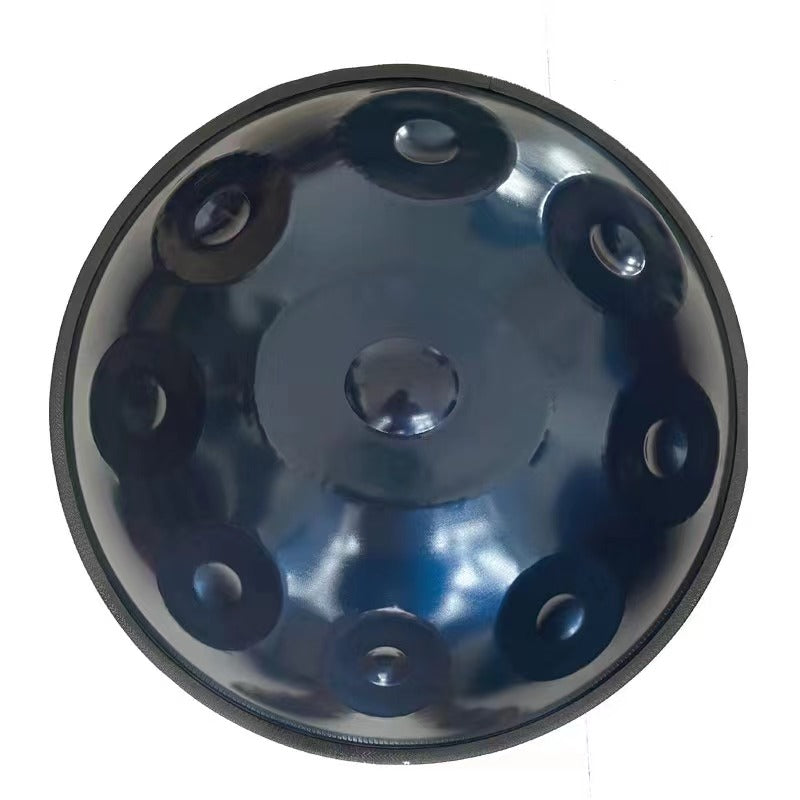
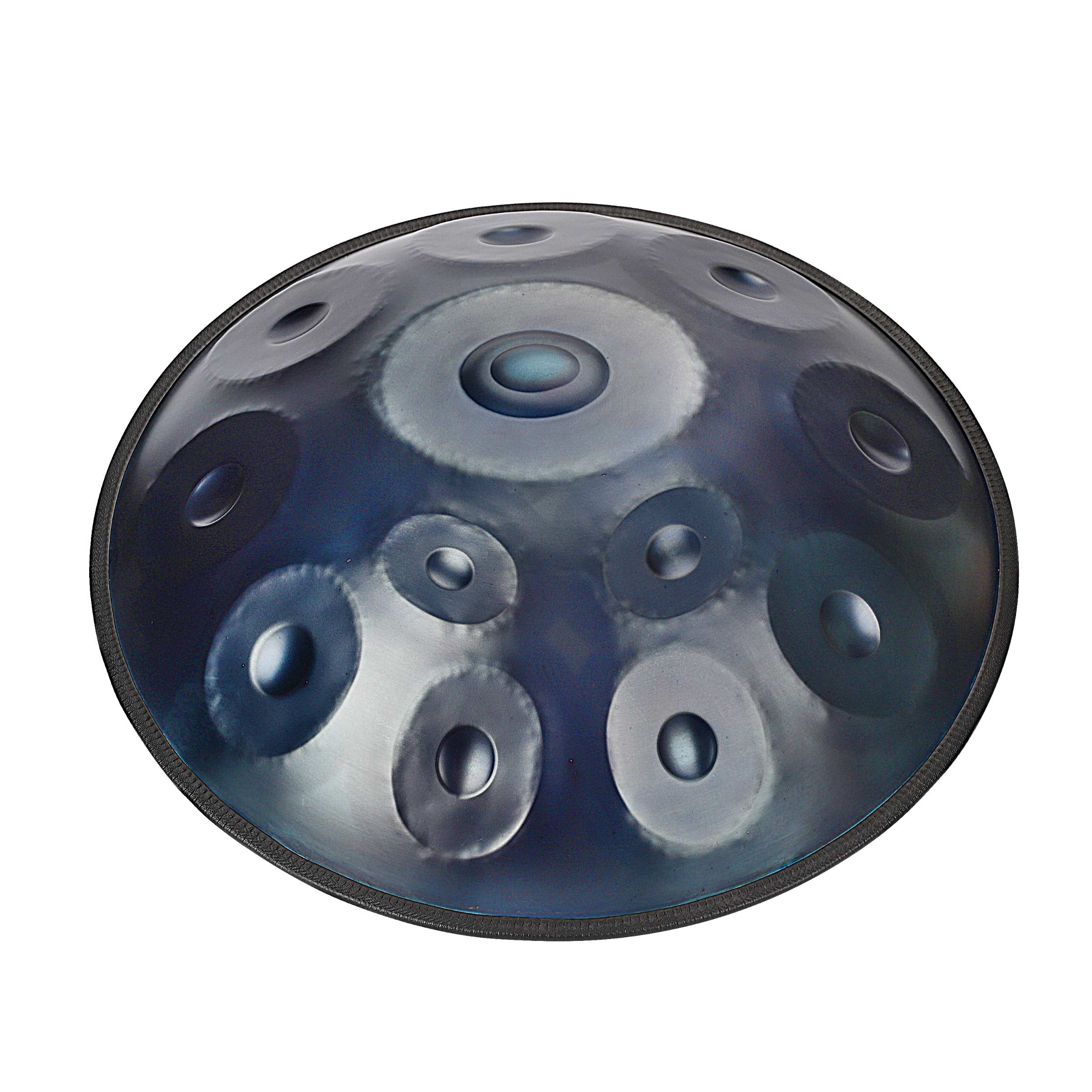
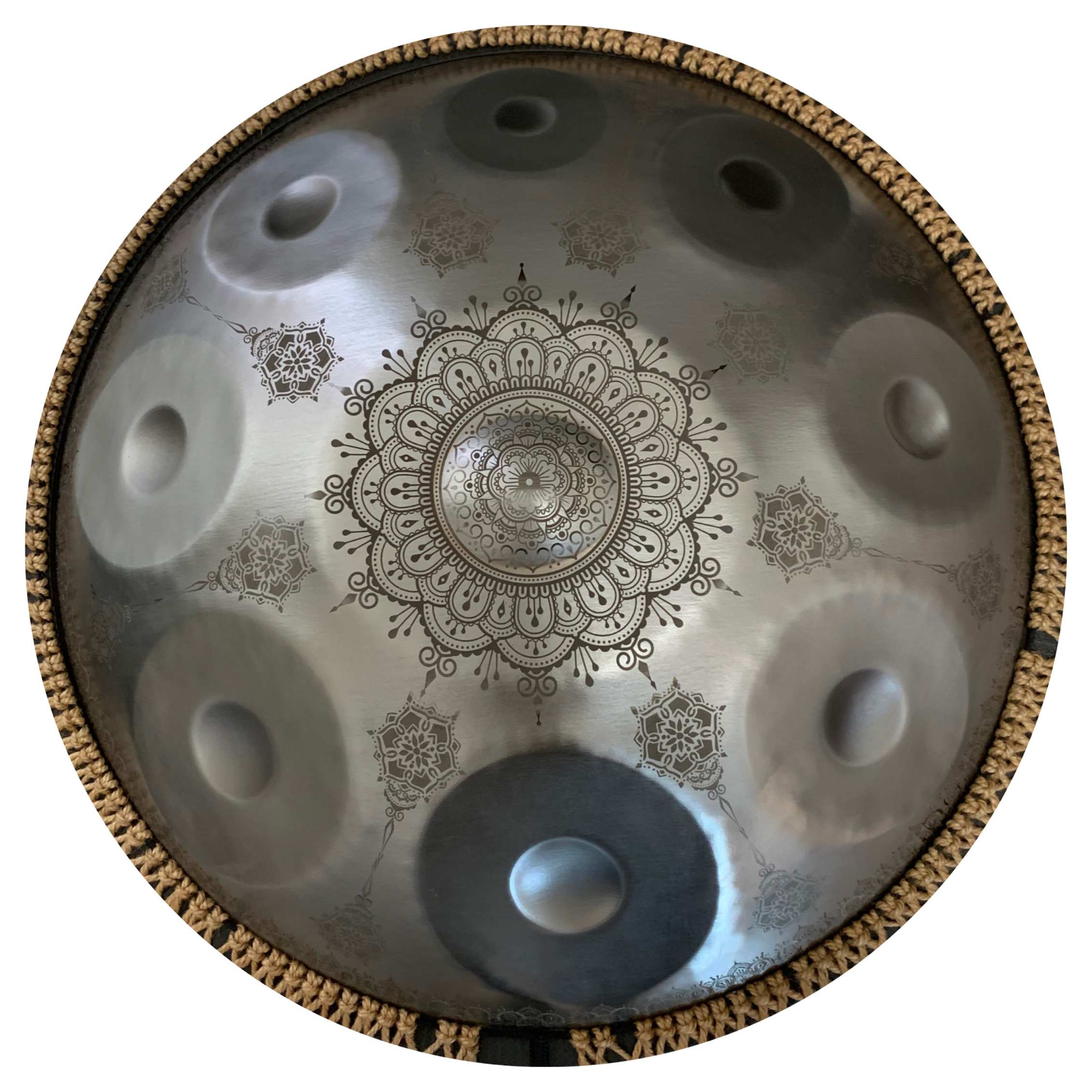
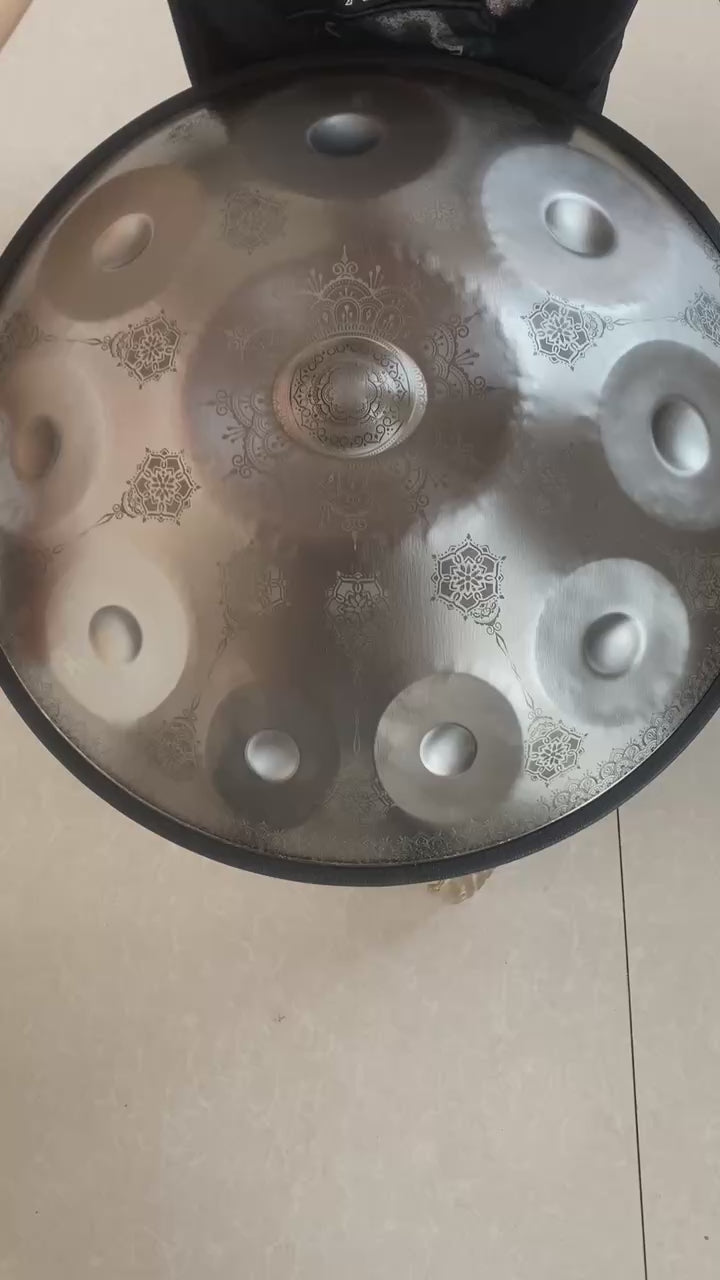
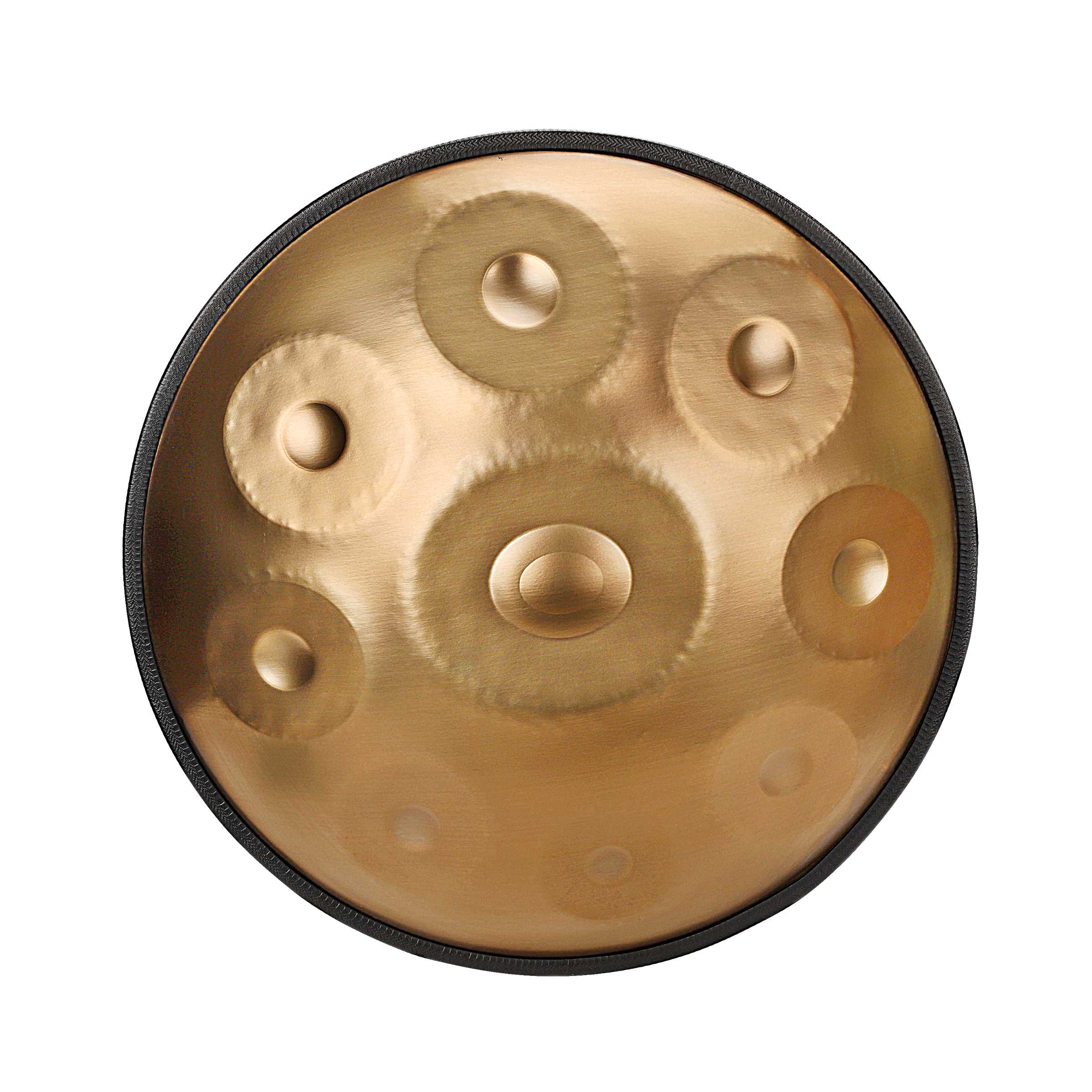
While mastering the different types of steelpan requires dedication to the mallet-striking technique and an understanding of concave acoustics, the turn of the 21st century saw a radical evolution in this instrument family. Acoustic engineers and metal artisans inverted the architecture of the traditional steelpan, creating a convex, UFO-shaped instrument designed to be played exclusively with the hands and fingers. This innovation birthed the Handpan Drum Instrument.
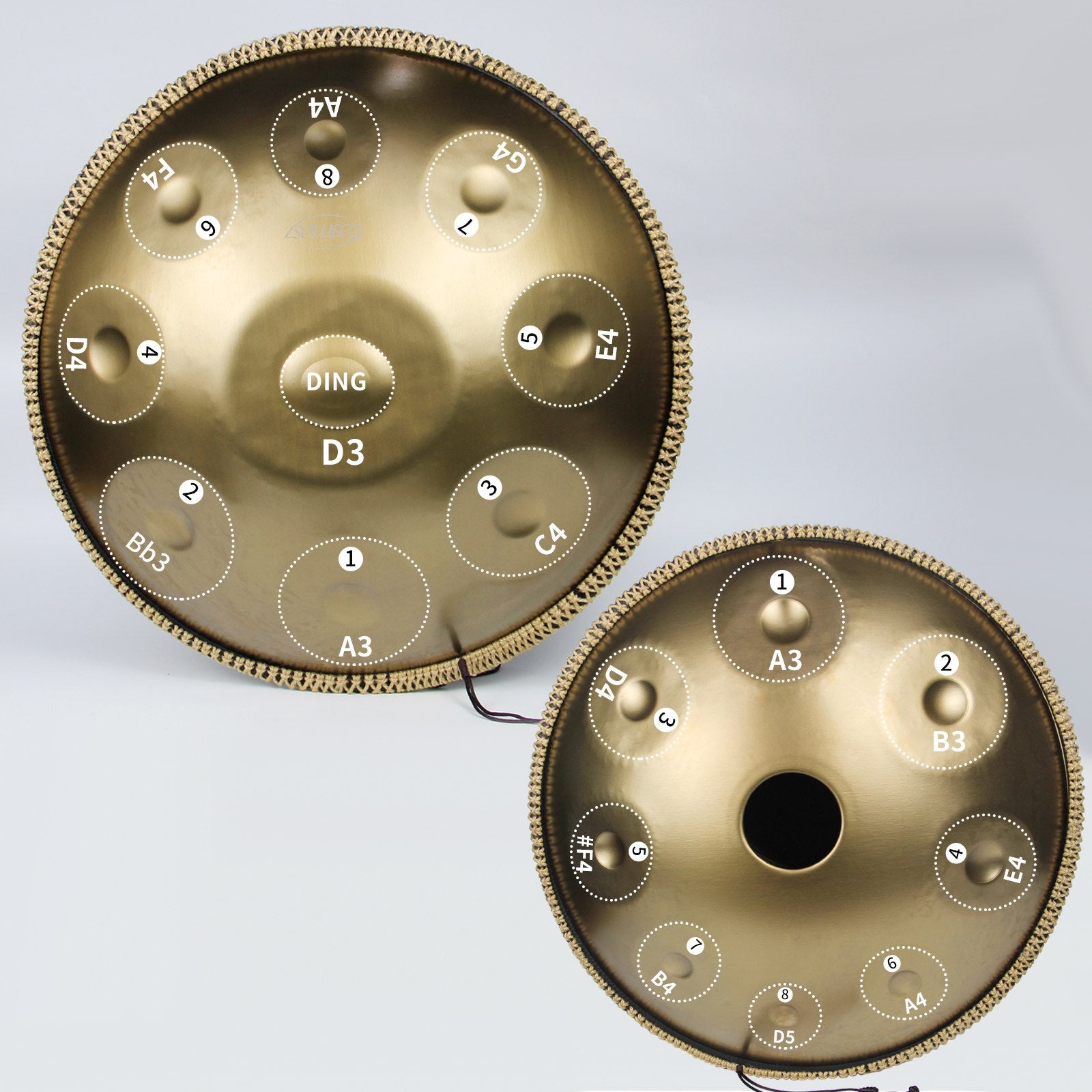
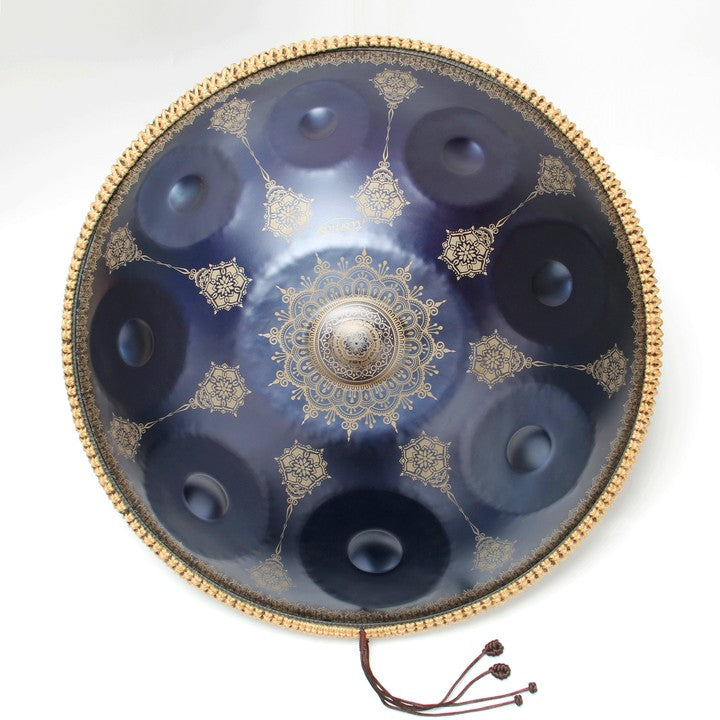
Unlike the different types of steelpan, which are open at the bottom, a handpan consists of two deeply drawn steel hemispheres glued or welded together, featuring a central sound hole (the Gu) on the bottom shell. This creates a Helmholtz resonator, giving the handpan a deeply hypnotic, sustained, and incredibly warm tone that contrasts with the bright, sharp attack of a mallet-struck steelpan. At Cosmos Handpan, we utilize advanced nitriding and stainless steel treatments to ensure our instruments are highly resistant to rust and hold their tuning through aggressive play, representing the absolute pinnacle of this metallurgical evolution.
4. Selecting the Right Instrument for Your Musical Journey
While traditional steelbands require you to choose among the different types of steelpan based on your orchestral role, modern handpans are entirely self-contained solo instruments. From our experience, selecting the correct handpan relies entirely on the number of notes and the specific scale (such as D Minor, Kurd, or Celtic) you wish to explore. We recommend carefully matching the instrument's complexity to your current skill level and compositional goals.
For those taking their first steps into this mesmerizing acoustic world, we offer the dedicated Handpan for Beginners. This instrument is specially tuned for ease of play and rapid learning, providing a highly intuitive layout that eliminates dissonant note combinations. Moving slightly up in complexity, our 9 Notes Handpan is perfect for focused, melodic exploration and remains a highly beginner-friendly performance tool. The central ding surrounded by 8 tone fields provides a mathematically perfect, complete diatonic or pentatonic scale.
As players transition into intermediate compositions, they require a broader harmonic vocabulary. For this, we highly recommend the 10 Notes Handpan, which serves as the balanced standard for modern players seeking a versatile instrument, or the 12 Notes Handpan, which features an expanded range (often utilizing bottom notes) for complex compositions and multi-layered chordal structures. Finally, for the master percussionist pushing the boundaries of acoustic performance, the 17 Notes Handpan is our ultimate professional instrument with an extended scale, designed specifically for advanced, rapid-fire polyrhythmic compositions. Regardless of your choice, every Cosmos Handpan Drum Instrument represents a general-purpose, high-quality option suited for various music styles, from ambient meditation to fast-paced busking.
5. Summary Table: Traditional Steelpan vs. Modern Handpan
To assist musicians and acoustic enthusiasts in differentiating these closely related instruments, we have compiled a summary matrix comparing traditional different types of steelpan with the modern handpan.
| Acoustic Feature | Traditional Steelpan | Modern Handpan (Cosmos Handpan) |
|---|---|---|
| Playing Method | Rubber-tipped wooden or aluminum mallets. | Direct contact with fingers, thumbs, and hands. |
| Topography | Concave (bowl-shaped) playing surface. | Convex (dome-shaped) playing surface. |
| Resonating Chamber | Open-bottom cylindrical skirt. | Closed spherical shell with a bottom port (Helmholtz). |
| Tonal Quality | Bright, sharp attack, loud projection, tropical timbre. | Warm, ethereal, deeply sustained, meditative timbre. |
| Scale Structure | Chromatic (can play in any musical key). | Diatonic/Pentatonic (fixed to a specific, harmonious scale). |
| Orchestral Role | Requires multiple different types of steelpan for full range. | Self-contained solo instrument combining rhythm and melody. |
6. Frequently Asked Questions (FAQs)
Are the different types of steelpan tuned the same way as a handpan?
The foundational metallurgical physics are highly similar. Both instruments require a master tuner to isolate a specific area of steel and align the fundamental frequency with an octave and a perfect fifth harmonic. However, because a traditional steelpan is concave and played with a mallet, the tension mapping differs significantly from the convex architecture of a handpan.
Can I use mallets on a Cosmos Handpan?
From our experience, we strongly recommend against using mallets on any high-quality handpan. Unlike the different types of steelpan, which are designed for high-impact mallet strikes, the delicate tuning fields of a handpan can be permanently detuned or physically warped by the concentrated force of a mallet. Handpans are engineered specifically for the softer impact of human fingertips.
Which Cosmos Handpan is best for someone transitioning from a traditional Tenor pan?
If you are accustomed to the rapid melodic capabilities of a traditional lead pan, we recommend our 12 Notes Handpan or 17 Notes Handpan. These instruments provide the expanded range necessary for the complex melodic runs and intricate chord progressions that an experienced steelpan player will naturally want to execute.
Why do bass steelpans require so many drums?
Acoustic physics dictates that lower frequency sound waves require larger physical surface areas to vibrate effectively. In the different types of steelpan, you cannot fit an entire bass scale onto a single 22-inch diameter drum head. Therefore, the notes must be spread across six or even nine separate drums to achieve the necessary baritone and bass registers.