Every aspiring musician, sound therapist, and percussionist encounters the exact same mesmerizing moment: you hear the ethereal, resonant chime of a handpan echoing across a stone courtyard or through an online acoustic session, and you immediately decide you must own one. The instrument looks simple, sculpturally clean, and endlessly intuitive. Yet stepping into the commercial marketplace reveals an intimidating landscape of chaotic price points spanning from $200 on third-party import portals to $4,000 from European boutique artisan waiting lists. Confusing scale names like Celtic, Kurd, Pygmy, and Hijaz collide with conflicting technical debates over nitriding ovens, stainless alloys, Hertz frequencies, and hammer marks. If you purchase blindly, you run a massive risk of receiving an untuned metallic bowl that sounds like a construction site oil drum, rings with harsh dissonant overtones, and frustrates your musical progress. Learning how to pick a good handpan is not about chasing the highest price tag; it is about evaluating structural acoustics, mechanical metallurgy, and harmonic alignment with an educated eye. As instrument makers and acoustic tuners who shape nitrogen-treated shells, calibrate pneumatic hammers, and voice compound overtone fields daily at Cosmos Handpan, we believe buyers deserve direct, unvarnished guidance. Here is our field-tested breakdown of the seven essential tips you must master to pick a good handpan that inspires your playing and holds its tuning for years to come.

Quick Answer: How to Pick a Good Handpan
To successfully pick a good handpan, evaluate prospective instruments across seven non-negotiable physical and acoustic criteria: (1) Audit the 1:2:3 Harmonic Triad (verify that every tone field cleanly isolates its fundamental, octave, and compound fifth without clashing); (2) Choose Metallurgy by Your Desired Tempo (select stainless steel for slow, ambient meditation and long singing sustain; choose nitrided steel for fast, percussive, articulate rhythms); (3) Lock In a Versatile Universal Scale (standardize on a 9-note or 10-note D Minor Kurd for mistake-free improvisation and universal tutorial compatibility); (4) Select 440Hz for Collaboration or 432Hz Strictly for Solo Work; (5) Avoid Note Overcrowding (resist 14+ note mutant shells as a beginner to eliminate acoustic cross-talk and choked resonance); (6) Test Dynamic Velocity and Touch Sensitivity (ensure the instrument speaks clearly under a gentle finger tap without requiring hard strikes); and (7) Verify Maker Provenance and Retuning Support (never buy anonymous unbranded shells that cannot be serviced). For most first-time players, starting with a proven, balanced instrument like the Cosmos Handpan Golden Elegance 9-Note D Minor guarantees immediate musical flow and lasting acoustic stability.
Article Directory
- Acoustic Mechanics: What Actually Defines a Good Handpan?
- Quick Summary Table: 7 Essential Inspection Criteria
- The 7 Tips to Pick a Good Handpan Analyzed in Depth
- Featured Instrument Spotlight: Cosmos Handpan Golden Elegance 9 Notes D Minor
- Direct Technical Comparison: Nitrided Steel vs. Stainless Steel vs. Tongue Drums
- Pros and Cons: Hand-Hammered Artisanal Handpans vs. Mass-Stamped Copies
- Operational Realities: Intuitive Expression vs. Fixed Harmonic Scales
- Who Needs a Professional Handpan vs. Who Should Choose Alternatives
- Costly Mistakes Buyers Make When Purchasing a Handpan
- Essential Pre-Purchase Sourcing Checklist
- Expert Tuner Verdict: The Definitive Handpan Sourcing Blueprint
- Frequently Asked Questions
- Authoritative Acoustics References & Standards
Acoustic Mechanics: What Actually Defines a Good Handpan?
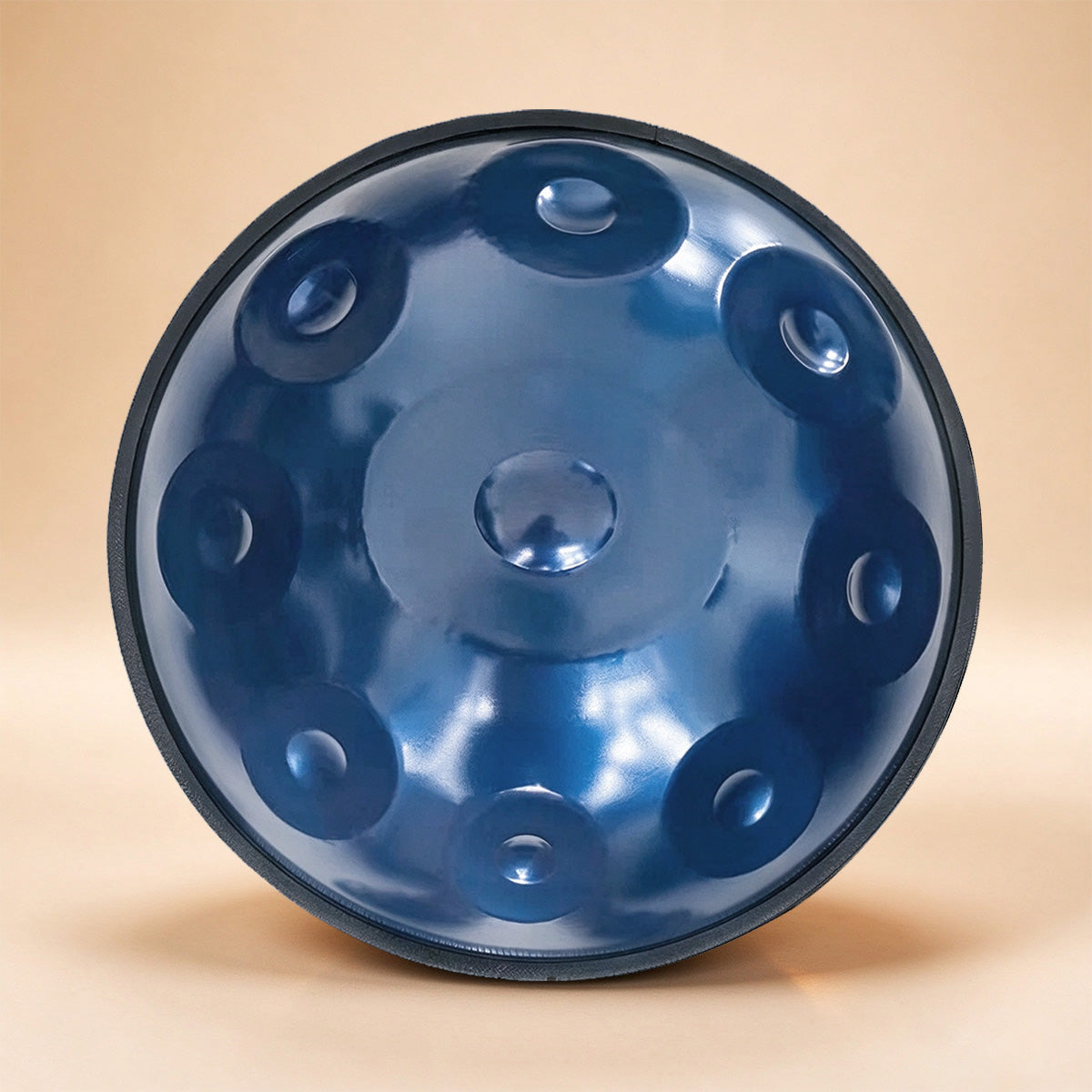
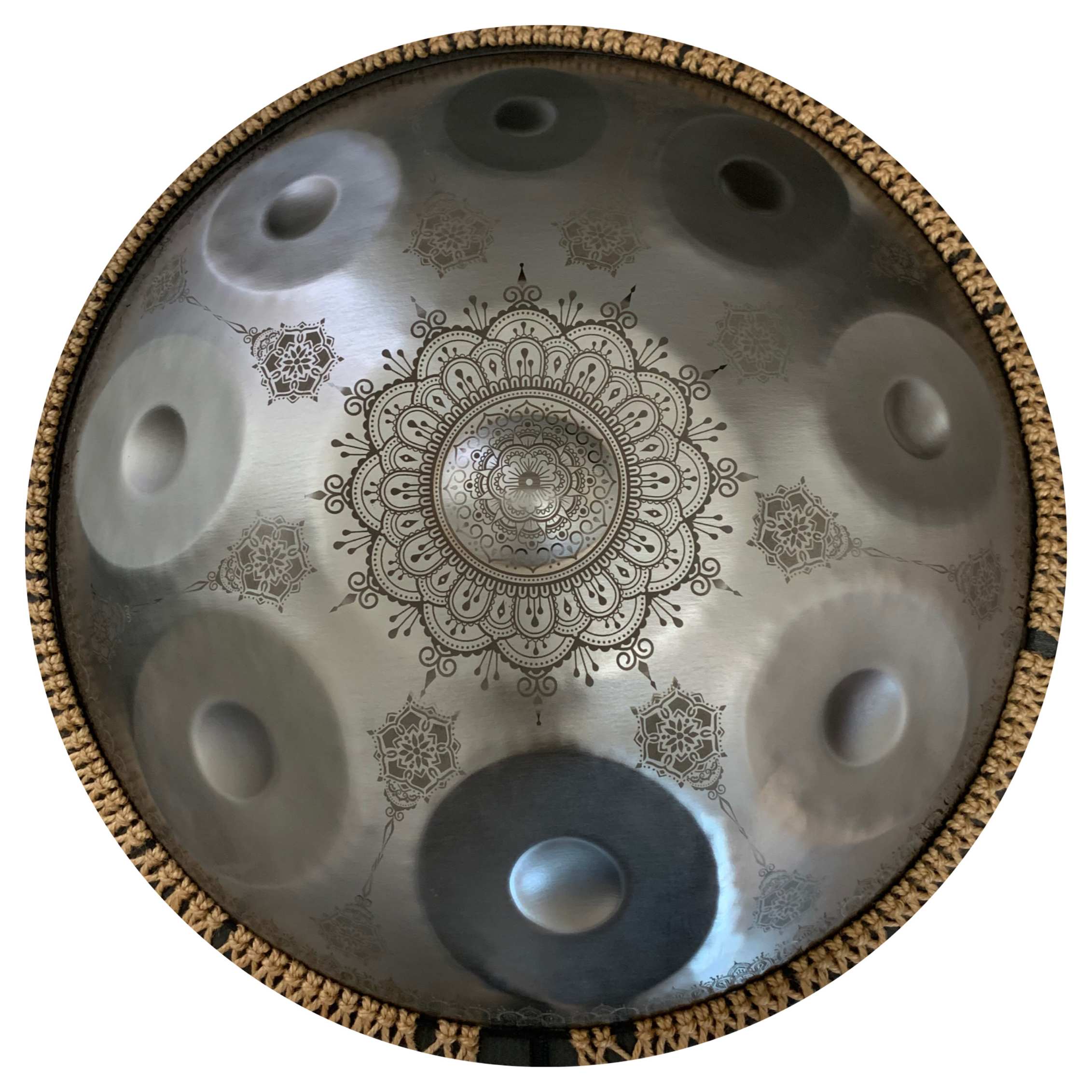
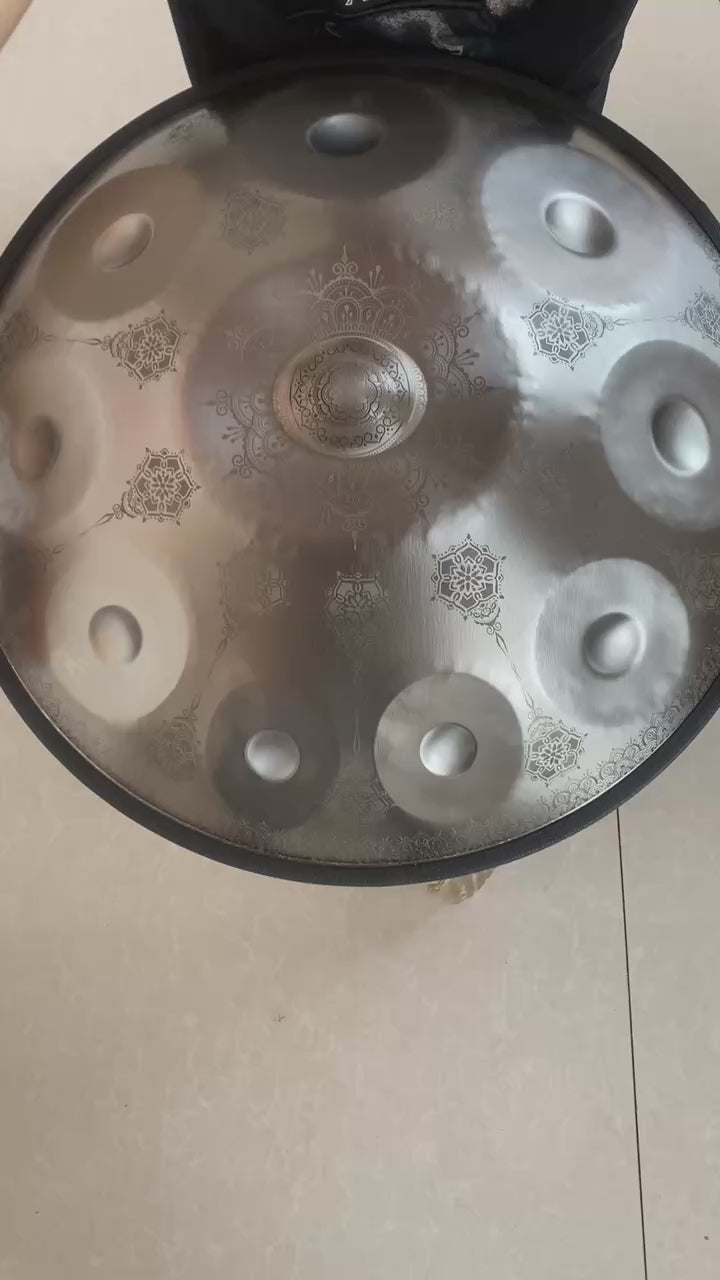
To evaluate what you need to pick a good handpan with genuine authority, you must understand the physical mechanics of struck sheet metal idiophones. Originally created in Switzerland in 2000 under the name "Hang," a handpan consists of two deep-drawn, compound-curved steel half-shells joined at the rim with structural epoxy. The bottom shell features a central acoustic port called the "Gu," which acts as a Helmholtz resonator, establishing the internal bass chamber. The top shell contains the central bass dome—known as the "Ding"—surrounded by a circular chorus of tone fields.
What separates an authentic, musical instrument from a useless piece of decorative hardware is the presence of compound overtone voicing. In a legitimate handpan, every individual tone field is not a single note; it is a meticulously stretched, multi-frequency membrane shaped by tens of thousands of precision hammer strikes. When struck correctly with the fleshy pad of your finger, each tone field must oscillate in three distinct acoustic modes simultaneously:
- The Fundamental ($f_0$): The dominant base pitch of the note, generated across the entire active area of the dented tone field.
- The Octave ($2f_0$): An overtone tuned precisely one octave above the fundamental, localized along the longitudinal (long) axis of the elliptical tone field.
- The Compound Fifth ($3f_0$): An overtone vibrating at an octave plus a fifth above the fundamental, calibrated along the transverse (short) axis of the tone field.
This 1:2:3 mathematical frequency ratio is what creates the shimmering, bell-like cathedral choir effect unique to high-end handpans. If a manufacturer lacks the manual skill or tooling to voice these overtones, the note sounds dead, metallic, and hollow. In our testing across workshop tuning rigs, confirming this compound resonance is the single most vital step when you pick a good handpan, because bargain knockoffs routinely omit overtone tuning entirely to cut labor costs.
Quick Summary Table: 7 Essential Inspection Criteria
| Inspection Tip | Primary Evaluation Metric | Target Benchmark | Critical Failure Prevented | Musical Impact |
|---|---|---|---|---|
| 1. Harmonic Integrity | 1:2:3 Frequency Triad ($f_0, 2f_0, 3f_0$) | Zero pitch deviation on octave/fifth axes | Hollow, tinny, unmusical thud | Produces signature cathedral sustain |
| 2. Steel Metallurgy | Nitrided DC04 vs. Stainless (AISI 430/Ember) | Nitrided for rhythm; Stainless for meditation | Rapid rust, muddy acoustic bleed | Controls sustain duration and attack crispness |
| 3. Scale Architecture | Modal layout & interval spacing | D Minor Kurd / Amara (9 to 10 notes) | Dissonant clashing, beginner frustration | Enables mistake-free improvisation from day one |
| 4. Tuning Reference | Concert 440Hz vs. Holistic 432Hz | 440Hz (ISO 16 standard) for multi-instrument play | Inability to jam with guitars, pianos, flutes | Irreversible once steel is tuned and set |
| 5. Note Density | Shell surface real estate (21–22 inch diameter) | 9 to 10 notes maximum on top shell | Acoustic cross-talk, dampened resonance | Maintains wide, comfortable striking targets |
| 6. Dynamic Sensitivity | Activation threshold under light velocity | Clear voice under a light finger-pad tap | Hand fatigue, denting from hard strikes | Unlocks nuanced dynamic touch and ghost notes |
| 7. Maker Provenance | Documented workshop history & retuning access | Verified maker with accessible maintenance services | Discarding instrument when a note drifts | Ensures your multi-hundred-dollar asset lasts decades |
The 7 Tips to Pick a Good Handpan Analyzed in Depth
1. Audit the 1:2:3 Harmonic Triad on Every Tone Field
The first and most non-negotiable step to pick a good handpan is inspecting the internal harmonic alignment of every note. When evaluating an instrument—whether through an uncompressed audio recording or in person—do not merely tap the center of the note. You must isolate its individual acoustic axes.
How to test harmonic integrity in practice:
- Test the Fundamental: Strike the flat sweet spot between the central dimple and the outer boundary using the soft pad of your thumb. It should produce a round, deep, stable pitch that matches the note's specified letter.
- Isolate the Octave Harmonic: Lightly place the tip of your index finger on the exact geometric center of the dimple to mute the fundamental. With your other hand, lightly tap the outer perimeter along the long axis of the ellipse. You should hear a clear, chime-like harmonic singing exactly one octave higher.
- Isolate the Compound Fifth: Keep the center muted, and tap the outer perimeter along the short axis. You should hear a bright, crystalline tone ringing an octave plus a fifth above the fundamental.
2. Match the Metallurgy to Your Preferred Playing Tempo
Novice buyers frequently assume that all handpans are stamped from identical metal. In reality, the metallurgy of the shell fundamentally dictates the sustain, percussive response, and environmental durability of the instrument. When you set out to pick a good handpan, you must choose between two dominant metallurgical pathways:
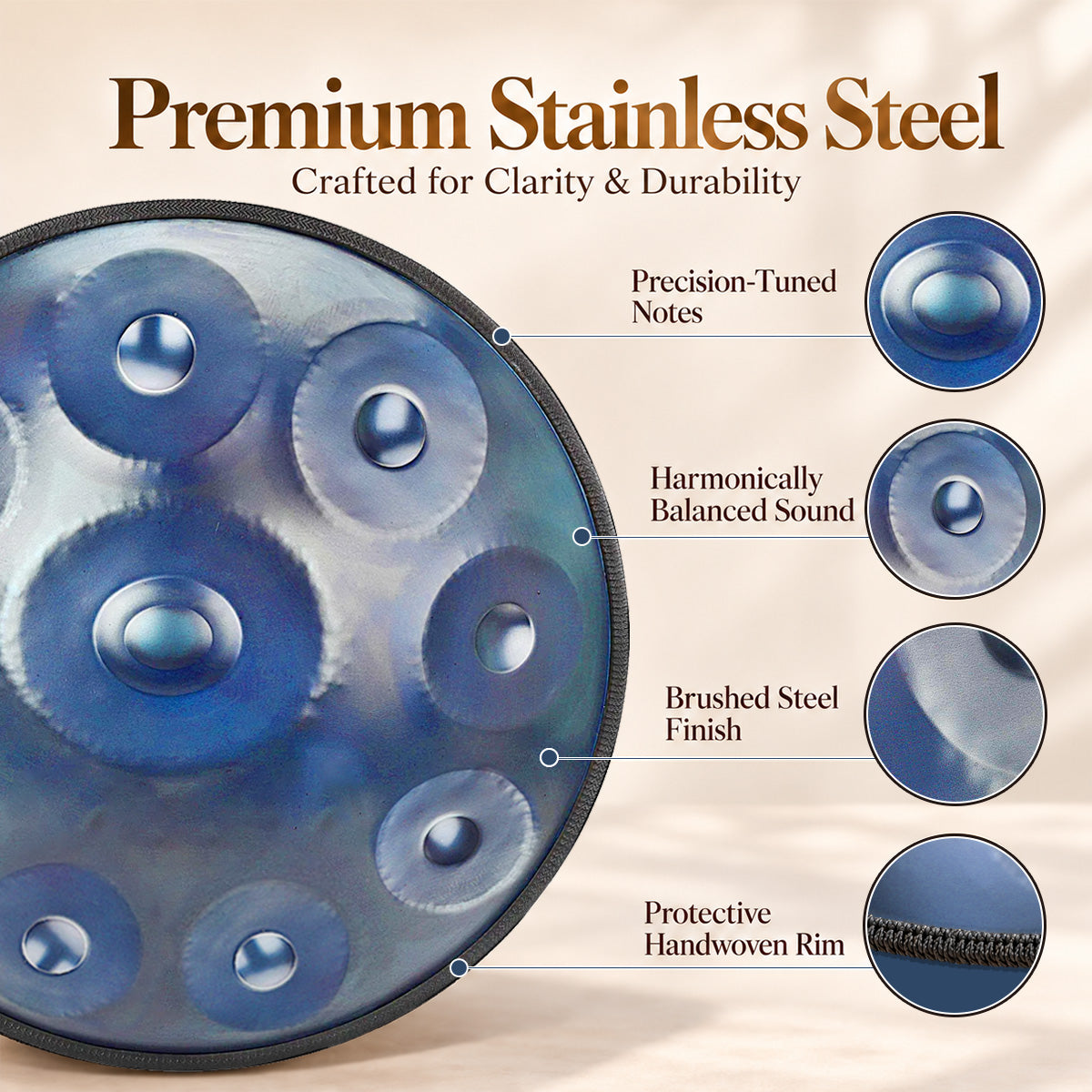
- Nitrided Steel (DC04 Deep-Drawn Steel): The traditional standard. Raw steel half-shells are subjected to an industrial gas-nitriding furnace where nitrogen atoms diffuse into the outer iron lattice, hardening the metal into a ceramic-like state. Nitrided handpans deliver a crisp, punchy, percussive attack with a controlled, medium sustain (3 to 5 seconds). Because individual notes decay relatively quickly, they do not wash over one another. For heavy-duty applications, fast syncopated beats, and players coming from a drumming background, nitrided steel is the undisputed champion. It resists rust well, but still requires periodic conditioning with natural oils.
- Stainless Steel (AISI 430 / Ember Alloys): The modern ambient standard. Stainless alloys contain high concentrations of chromium and nickel, giving the steel an exceptionally low internal damping coefficient. Stainless steel handpans produce an ultra-long, singing, cathedral-like sustain (5 to 8+ seconds) with warm, shimmering overtones. If you play slow, meditative, introspective soundscapes, stainless steel is magnificent. Furthermore, it is completely immune to rust, making it the premier choice for humid or coastal climates. However, if you attempt to play lightning-fast polyrhythms on a stainless pan, the long sustain causes adjacent notes to bleed together into an indistinct acoustic soup.
3. Choose a Versatile Scale with Zero Discordant Notes
Unlike a guitar or piano, you cannot retune a handpan on the fly to switch from a minor key to a major key. The musical scale hammered into the steel is the permanent emotional personality of that instrument. Choosing an overly complex or dark exotic scale is the leading cause of buyer's remorse among beginners.
When you prepare to pick a good handpan, we strongly advise first-time buyers to choose an integral minor scale, specifically D Minor Kurd (or D Celtic Minor / Amara):
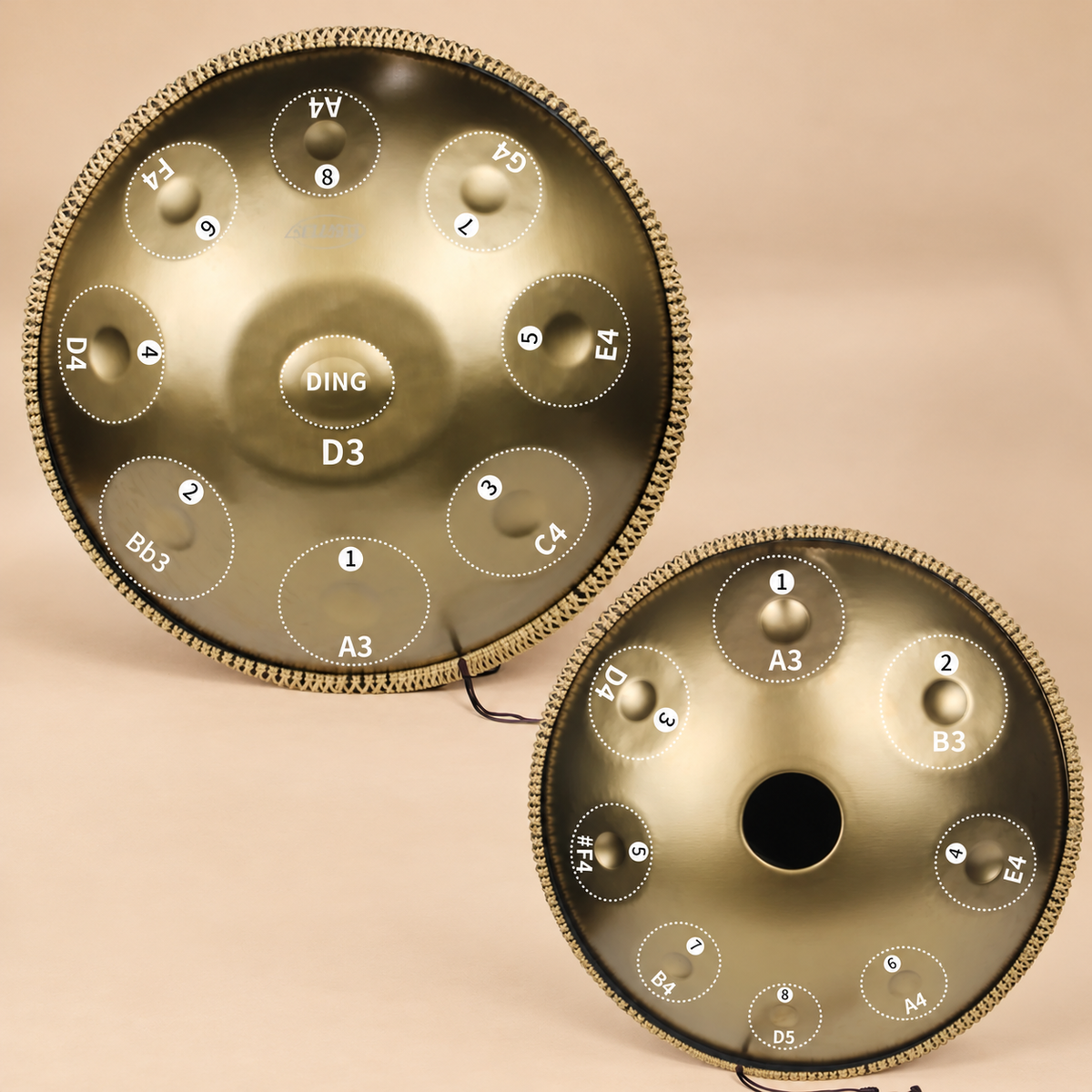
- The D Minor Architecture: Built around a low D3 central Ding, surrounded by A3, Bb3, C4, D4, E4, F4, G4, and A4.
- Mistake-Free Improvisation: This layout contains no harsh half-step clashes that create unresolved dissonance. Every single note harmonizes beautifully with every other note, allowing you to enter an effortless creative flow state within five minutes of playing.
- Educational Compatibility: Over ninety percent of video masterclasses, sheet tabs, and tutorials published across the global handpan community are arranged specifically for D Minor. Sourcing an obscure scale in G# Major or F Dorian means you will be completely unable to follow standard learning materials.
4. Choose 440Hz for Jamming or 432Hz Strictly for Solo Meditation
When customizing an instrument, you will be asked to select your base reference pitch: standard 440Hz or alternative 432Hz. This is not a digital software switch; it is physically tuned into the depth and curvature of the hammered steel membranes. Once set, it cannot be changed without hammering every note on the instrument.
Here is the practical reality you must know before you pick a good handpan:
- 440Hz (The International Concert Standard): Standardized under international guidelines governed by the International Organization for Standardization: ISO 16 Standard Tuning Frequency, 440Hz is the universal pitch used by modern orchestras, acoustic guitars, pianos, and synthesizers. If you ever plan to jam with friends, record in a commercial studio, or play alongside other instruments, you must choose 440Hz. A 432Hz handpan will sound noticeably out of tune when played alongside any standard 440Hz instrument.
- 432Hz (The Holistic & Meditative Standard): Proponents of 432Hz celebrate its slightly warmer, darker acoustic feel, associating it with natural acoustic resonance and biological relaxation. In our testing across sound therapy clinics, 432Hz does deliver a soothing, less piercing acoustic presence. If you are a solo yoga instructor or sound bath practitioner who will never perform with other musicians, 432Hz is a deeply calming choice. For deeper insight into sonic wellness, review our research on handpan therapy benefits and handpan music benefits.
5. Avoid Note Overcrowding: The 9-to-10 Note Sweet Spot
A widespread psychological bias among first-time buyers is assuming that more notes automatically make a better instrument. You see a standard 9-note handpan, then spot a 17-note mutant shell packed with bottom notes, and assume the 17-note version gives you more value for your money. This is a severe mechanical misunderstanding.
A standard handpan shell measures roughly 21 to 22 inches (53 to 56 cm) in diameter. There is a finite amount of surface area on that steel dome. When an artisan hammers a tone field, the acoustic vibration ripples through the surrounding interstitial steel. If you cram twelve, fourteen, or seventeen notes onto a single top shell:
- Acoustic Cross-Talk: Striking one note causes adjacent tone fields to vibrate sympathetically, creating an unpleasant buzzing interference and muddy overtones.
- Choked Resonance: To prevent cross-talk, the tuner must create deep isolation grooves and heavily damp the boundaries, which kills the instrument's open, singing sustain.
- Cramped Striking Zones: For beginners who have not yet developed surgical finger precision, tiny, crowded tone fields lead to accidental double-strikes and missed notes.
6. Test Dynamic Velocity and Touch Sensitivity
A high-performance handpan speaks with a whisper. When you test an instrument, you should not have to pound on the steel with heavy force to produce a blooming, resonant sound. In fact, if an instrument requires a hard hit to activate its voice, its internal stress fields are improperly balanced.
Perform the "Velocity Sensitivity Test":
- Gently tap the Ding and tone fields using only the light, natural weight of your finger pad, releasing immediately like touching a hot stove. A superior handpan responds instantaneously, producing a clear fundamental and subtle overtones even at pianissimo (ultra-soft) volumes.
- Next, strike the note with firm, medium velocity. The volume should expand cleanly without breaking into harsh metallic distortion or jarring frequency buzzes.
- Check the interstitial area: tap the un-tuned bare metal between the tone fields. It should produce a dry, wooden, ceramic-like "tak" sound that can be used for percussive slaps without setting off wild, discordant ringing in the tuned notes.
7. Verify Maker Provenance, Warranty, and Accessible Retuning Services
The final, vital tip to pick a good handpan is acknowledging that a handpan is an acoustic living sculpture. Over two to four years of regular playing, the microscopic crystal boundaries within the hammered steel experience slight mechanical stress relaxation. Eventually, every well-loved handpan will require a minor retuning touch-up.
Before transferring funds to any seller, verify their operational longevity and maintenance support:
- Avoid Anonymous Third-Party Marketplace Dropshippers: If you purchase an unbranded handpan from a general e-commerce marketplace, you have zero recourse when a note goes flat. Local tuners will frequently refuse to work on low-grade metal because un-nitrided budget steel does not hold a hammer strike.
- Check for Dedicated Maker Support: Buy directly from established workshops that stand behind their tuning stability with clear warranties and dedicated service channels. Review our company heritage on the cosmoshandpan Story page, explore direct customer assistance via Contact Cosmoshandpan, or join our global network through cosmoshandpan Affiliates.
- Demand Comprehensive Bundle Protection: A good handpan must ship with a heavy-duty padded backpack case featuring rigid protection plates over the Ding, a sturdy stand, and micro-fiber care cloths. Shipping a bare instrument invites transit damage that instantly ruins the tuning.

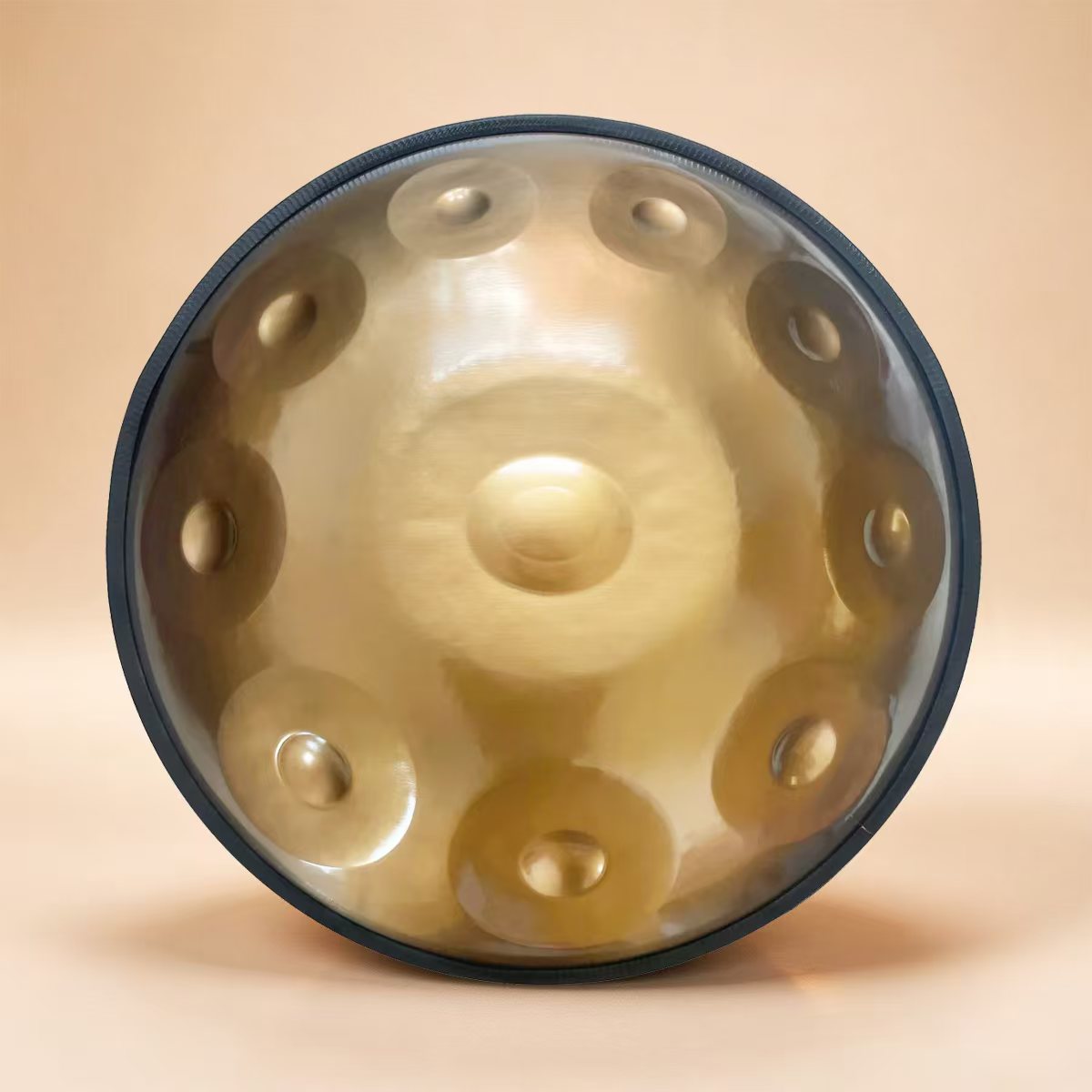
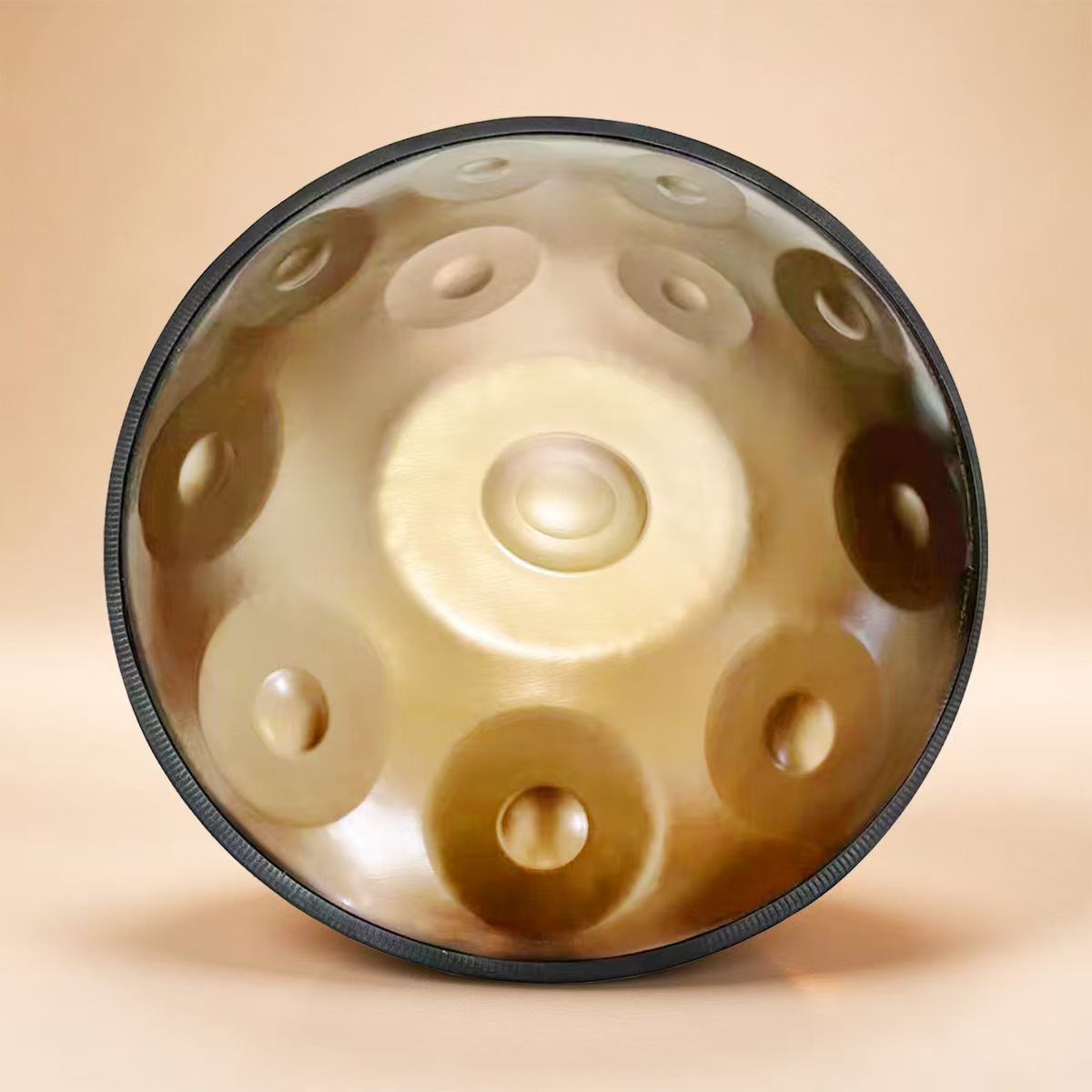
Featured Masterpiece: Cosmos Handpan Golden Elegance – 9 Notes D Minor
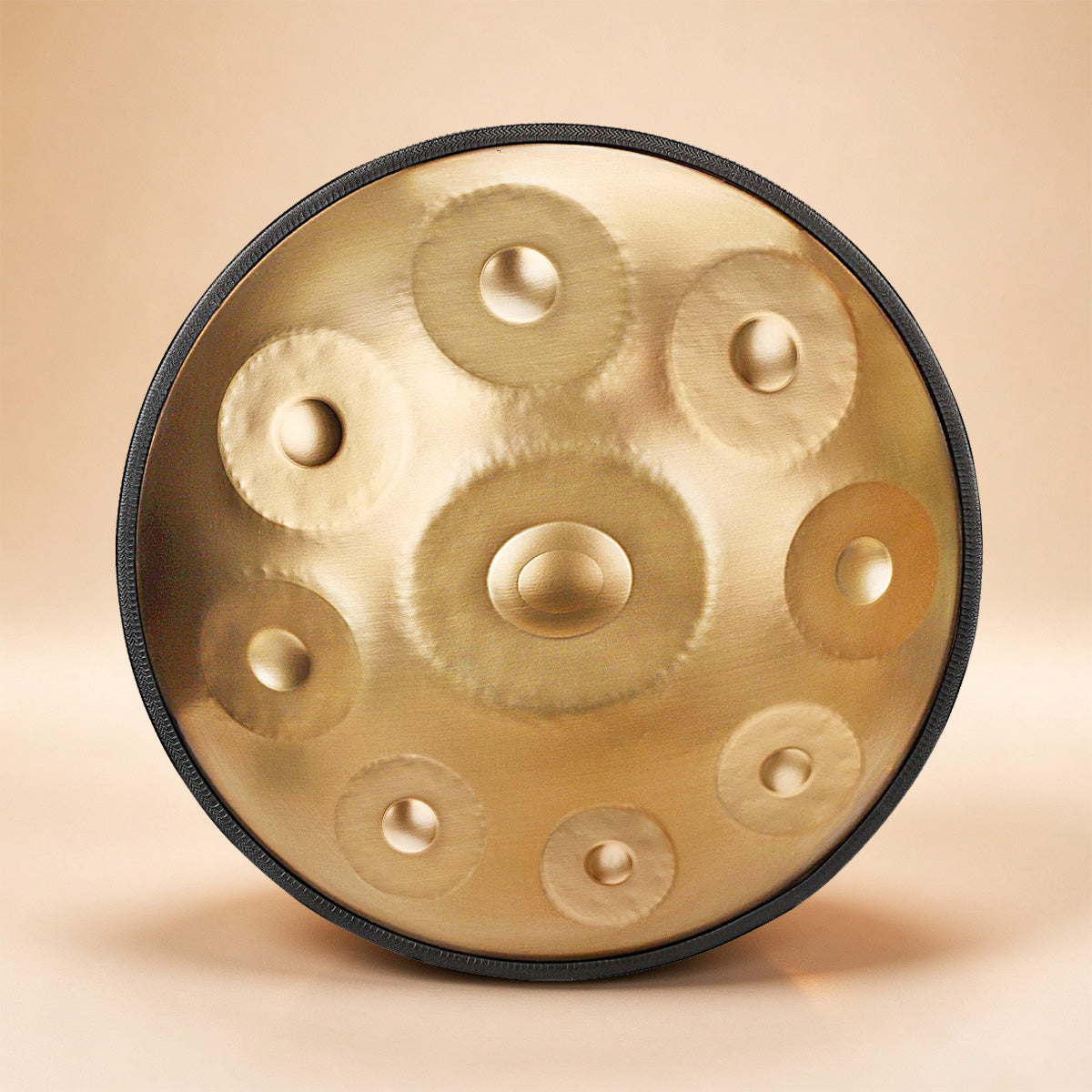
Engineered to solve the common pitfalls first-time buyers face, the Cosmos Handpan Golden Elegance combines certified harmonic stability with an intuitive, mistake-free D Minor acoustic layout.
| Scale Architecture | D Minor 9-Note Layout (D3 / A3, Bb3, C4, D4, E4, F4, G4, A4) |
| Tuning Standards Available | Concert 440Hz (Universal Jamming) or Holistic 432Hz (Sound Therapy) |
| Acoustic Resonance | Calibrated 1:2:3 fundamental, octave, and compound fifth harmonic alignment |
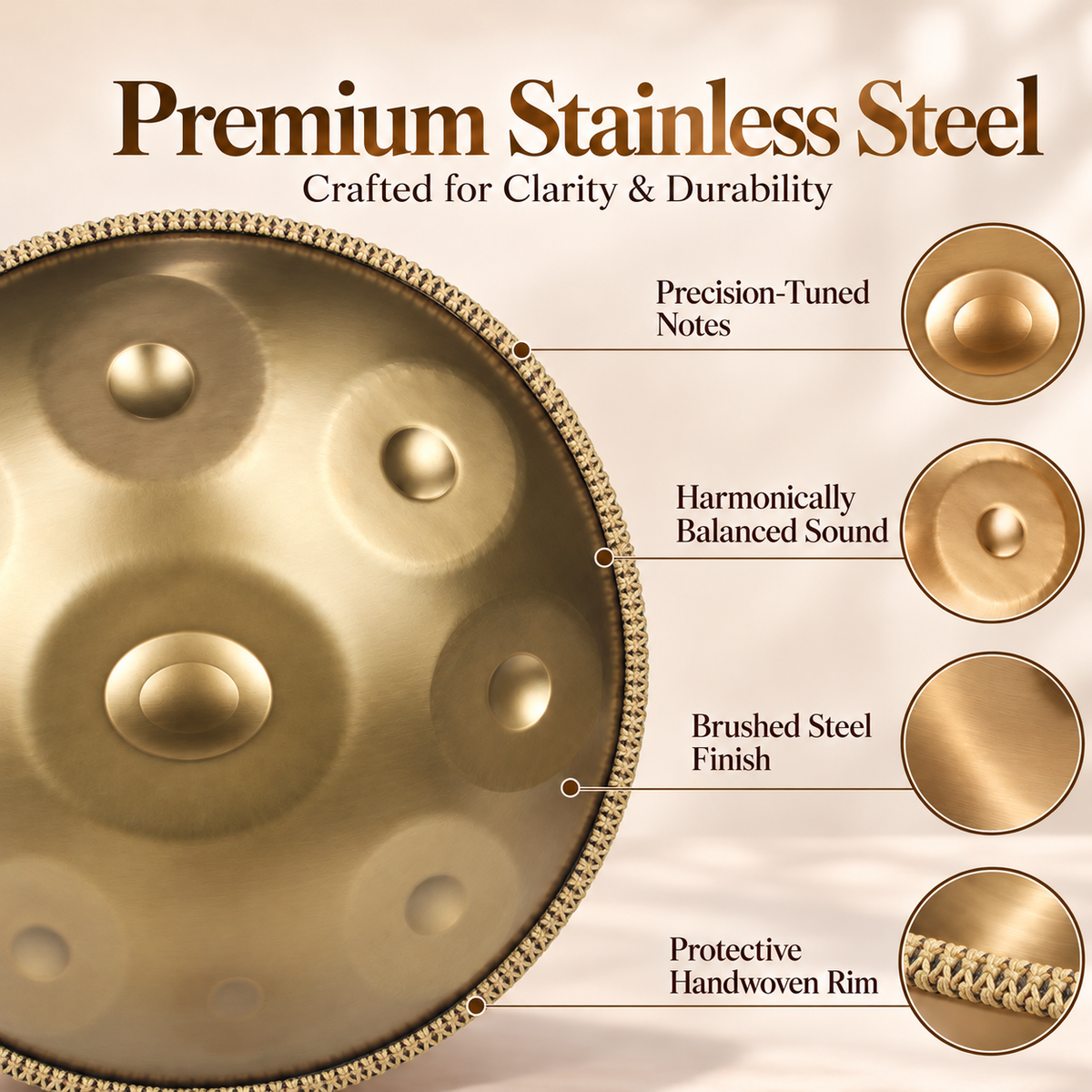
| Surface Finish & Treatment | Golden Elegance corrosion-resistant nitriding with scratch-resistant protective luster |
| Ideal Use Cases | First-time handpan buyers, daily meditation, sound baths, street performance |
| Included Gift Set Bundle | Heavy-duty padded travel bag, sturdy foldable stand, soft mallets, microfiber cloth |
Artisan Sourcing Advice: Eliminate marketplace guesswork and start your musical journey with certified harmony. Explore complete audio samples and specifications on the official Cosmos Handpan Golden Elegance - 9 Notes D Minor Gift Set portal.
Direct Technical Comparison: Nitrided Steel vs. Stainless Steel vs. Tongue Drums
| Evaluation Vector | Nitrided Steel Handpan | Stainless Steel Handpan | Laser-Cut Steel Tongue Drum |
|---|---|---|---|
| Sustain Duration | Medium (3 to 5 seconds); controlled decay | Ultra-Long (5 to 8+ seconds); singing echo | Short to Medium (Dry resonance) |
| Percussive Attack | Crisp, punchy, ceramic-like note separation | Soft, warm, liquid, subtle transient click | Muffled with fingers; loud with rubber mallets |
| Rust & Moisture Defense | High (Requires periodic oil conditioning) | Exceptional (Immune to sweat and humidity) | Moderate (Dependent on exterior paint coating) |
| Playing Technique | Fleshy finger pads, thumb slaps, knuckles | Gentle finger pads, slow meditative caresses | Primarily rubber mallets; firm finger taps |
| Best Musical Setting | Fast tempo, street busking, rhythmic jams | Sound healing, yoga, ambient meditation | Casual music education, children, camping |
| Average Price Range | $800 – $2,200 | $900 – $2,500 | $100 – $350 |
Pros and Cons: Hand-Hammered Artisanal Handpans vs. Mass-Stamped Copies
| Manufacturing Route | Authentic Musical Strengths (Pros) | Real-World Operational Liabilities (Cons) |
|---|---|---|
|
Artisanal Master Handpan (e.g., Cosmos Handpan Production) |
|
|
|
Mass-Stamped Bargain Copy (Unbranded $200–$400 Marketplaces) |
|
|
Operational Realities: Intuitive Expression vs. Fixed Harmonic Scales
Every commercial musical instrument represents an artistic compromise. Sourcing a handpan requires understanding what the instrument was designed to do, and where its physical boundaries lie.
The Real Musical Superpowers:
- Instant Flow-State Accessibility: Unlike a violin or flute that requires months of embouchure and finger positioning before producing a clean tone, a handpan produces breathtaking, perfectly harmonized sound within five minutes of learning the basic finger-pad bouncing technique. There are no "wrong notes" within a calibrated scale, unlocking immediate therapeutic stress reduction.
- Acoustic Portability and Tactile Intimacy: An acoustic handpan requires zero amplifiers, cables, or electricity. Resting comfortably on your lap, the vibrations resonate directly into your thighs and torso, creating a tactile, somatic feedback loop that electronic synthesizers cannot replicate. If you do need silent headphone practice, explore modern digital handpan instruments as an auxiliary tool.
The Inescapable Structural Limitations:
- Zero Musical Key Flexibility: You cannot play a song written in G Major on a D Minor handpan. If you perform in an eclectic band that changes keys every set, you must transport multiple handpans to the gig, each costing significant capital and occupying substantial trunk space.
- Physical Vulnerability: You cannot treat a handpan like a wooden djembe or steel tongue drum. A single accidental drop off a table onto concrete will flatten a tone field's dimple, knocking three harmonics out of tune and requiring specialized shipping to a master tuner to reconstruct the stress field.
Who Needs a Professional Handpan vs. Who Should Choose Alternatives
Every musical budget should match your artistic goals. Knowing whether you genuinely need an authentic hand-tuned handpan or should explore accessible percussion alternatives prevents buyers from overspending or experiencing buyer's remorse.
Who Must Invest in a Quality Handpan:
- Sound Healing & Meditation Facilitators: If you facilitate sound baths, breathwork journeys, or clinical wellness sessions, clients perceive the difference in overtone purity instantly. A cheap, dissonant instrument disrupts the meditative state, whereas a rich stainless or nitrided handpan induces immediate nervous system down-regulation.
- Percussionists Seeking Melodic Expression: If you are a drummer, djembe player, or percussionist who wants to add melodic composition to your rhythmic arsenal, the handpan is the ultimate hybrid of polyrhythm and melody.
- Busking & Ambient Stage Performers: The hypnotic visual and acoustic presence of an authentic handpan draws crowds like a magnet, providing unmatched organic acoustic projection in public spaces.
Who Should Choose Steel Tongue Drums or Digital Pads:
- Unsupervised Young Children: If you want an instrument for a young child to explore sound in a playroom, buying a delicate $1,000 handpan is financial recklessness. A child will inevitably strike the metal with hard plastic toys or drumsticks. Buy a rugged, indestructible powder-coated Tongue Drum that can withstand heavy mallet play without drifting out of tune.
- Musicians Requiring Full Chromatic Compositions: If your musical repertoire demands complex jazz chord progressions, sharp accidentals, and continuous key modulations, buy a chromatic digital synthesizer or mallet controller. A fixed-pitch handpan will frustrate your compositional needs.
Costly Mistakes Buyers Make When Purchasing a Handpan
Acoustic Advisory: The "Cheap Marketplace Wok" Trap
The single most devastating blunder in the handpan world is purchasing an unbranded $250 instrument from massive third-party e-commerce retail sites. These items are mass-stamped out of cheap, un-tempered sheet iron by automated factory presses that have zero understanding of harmonic acoustics. They sound like metallic trash cans, possess zero octave harmonics, and cannot be retuned by any professional artisan because the low-grade steel lacks the structural memory to hold a hammer strike. You will end up throwing it in the recycling bin.
- Playing with Hard Sticks or Drum Mallets: We see this heartbreaking mistake constantly: a buyer unpacks their new handpan, grabs wooden drumsticks, and strikes the Ding with full force. Rigid sticks dent the precision-hammered apex of the tone field, collapsing the internal arch. Always play with the soft fleshy pads of your fingers, or use specialized ultra-soft, padded rubber mallets engineered specifically for handpan steel.
- Neglecting Rust Protection in Humid Climates: Nitrided steel is corrosion-resistant, not rust-proof. If you live near an ocean, practice outdoors on damp grass, or sweat heavily on the shell and store it wet inside a foam-padded bag, orange rust bloom will appear across the tone fields within weeks. Always wipe your instrument dry with a microfiber cloth after every session, and apply a thin protective layer of specialized natural oil once a month.
- Storing the Handpan Long-Term Inside Its Carrying Bag: Padded travel bags are designed for transport, not long-term storage. Closed-cell foam and synthetic linings trap ambient humidity inside the bag, creating a micro-greenhouse that accelerates corrosion. When at home, store your handpan out in the open on a dedicated stand in a dry, ventilated room.
- Choosing an Ultra-Complex 14-Note Layout for Your First Pan: First-time buyers often believe that buying an expansive bottom-note mutant handpan will save them money in the long run. In reality, having eight notes on the bottom of the shell makes the instrument physically awkward to balance on your lap, muffles the sound against your knees, and complicates the learning curve. Master the primary 9-note top circle before adding bottom notes.
Essential Pre-Purchase Sourcing Checklist
Before issuing payment to any handpan maker or online store, audit prospective instruments against these four non-negotiable craftsmanship standards:
1. Verified Raw Audio & Video Demonstration
Never buy an instrument based purely on studio-rendered promotional photography. Demand an unedited, high-quality audio recording of the exact scale layout being played. Listen closely with professional headphones:
- Does each note ring with a clear, pure pitch, or is there an ugly, metallic buzzing noise?
- When the Ding is struck, do adjacent notes hum softly in harmonious sympathy, or do they vibrate discordantly?
- Does the sustain decay smoothly without fluttering or sudden acoustic choking? Accelerate your ear training using specialized handpan learning apps to evaluate pitch purity.
2. Certified Heat Treatment and Nitriding Consistency
Inquire about the steel hardening process. High-end handpans utilize deep-drawn DC04 German steel or high-grade stainless alloys that undergo controlled atmosphere oven nitriding or industrial annealing. Controlled heat-treatment relieves internal stress in the sheet metal, locking the crystal matrix in place and ensuring that the harmonics stay true through years of regular playing.
3. Comprehensive Bundle Accessories
A handpan cannot be transported or maintained bare. Ensure the purchase includes:
- A heavy-duty, high-density padded backpack travel bag with reinforced ABS plastic shell shields protecting the tone fields from external baggage impacts.
- A sturdy, portable aluminum or solid wood handpan stand that cradles the bottom rim without dampening the Gu resonance hole.
- Microfiber cleaning cloths and verified care instructions.
4. Verified Manufacturer Story & Community Reputation
A reputable brand does not hide behind anonymous overseas drop-shipping accounts. Inspect the maker's background, workshop ethics, and customer support channels. Review authentic community testimonials and warranty support before committing your capital.
Expert Tuner Verdict: The Definitive Handpan Sourcing Blueprint
In our professional assessment across decades of acoustic metal shaping and global community performance, learning how to pick a good handpan should be an empowering, transformative experience, not an exercise in anxiety. Sourcing an instrument with confidence comes down to a clear, unambiguous law of musical physics: Do not chase exotic complexity until you have mastered fundamental harmony.
Here is your definitive, field-tested purchasing blueprint:
- For 90% of First-Time Buyers: Select a 9-Note D Minor (Kurd or Celtic) Handpan tuned to 440Hz. It provides complete freedom from discordant mistakes, unlocks thousands of free educational video tutorials, allows seamless jamming with other musicians, and delivers maximum acoustic resonance across a clutter-free 22-inch shell.
- Choose Your Metallurgy Based on Your Soul's Tempo: If you seek slow, cosmic, meditative soundscapes for personal yoga and relaxation, choose Stainless Steel for its angelic, endless sustain. If you are a rhythm-driven drummer who wants to play crisp, fast, syncopated beats, choose Nitrided Steel for its articulate percussive attack.
- Invest in Turnkey Instrument Sets: Partner with a dedicated, specialist provider like Cosmos Handpan. Sourcing an engineered, master-tuned instrument like the Cosmos Handpan Golden Elegance 9-Note D Minor Set guarantees certified 1:2:3 harmonic alignment, durable nitrided surface protection, a dedicated travel case, and ongoing support, allowing you to bypass marketplace scams and begin your musical journey with uncompromised sound from your very first tap.
Frequently Asked Questions
To pick a good handpan, verify that every tone field contains three tuned frequencies: the fundamental base pitch, an octave along the longitudinal axis, and a compound fifth along the transverse axis. Striking the edge of the tone field should isolate these overtones cleanly. If tapping the perimeter produces a dull thud or a clashing metallic dissonance, the overtones are missing or mistuned.
For beginners focused on meditation, slow melodies, or sound therapy, stainless steel is ideal due to its singing, long sustain and natural rust resistance. For players with drumming backgrounds who prefer fast, syncopated rhythms, nitrided steel is superior because its shorter sustain prevents rapid notes from bleeding into a muddy acoustic blur.
D Minor Kurd (D3 / A3, Bb3, C4, D4, E4, F4, G4, A4) is widely considered the best scale when you pick a good handpan. It offers a balanced, melancholic yet uplifting emotional range with zero discordant intervals, and over 90 percent of global instructional courses and sheet music are arranged for D Minor.
Cheap factory-pressed instruments priced under $400 skip the labor-intensive manual hammer tuning required to voice the octave and fifth overtones. They use soft, un-nitrided sheet iron that drifts out of tune within weeks, and their metal lacks the crystalline structural tension needed to project resonant, bell-like tones.
Authoritative Acoustics References & Standards
- International Organization for Standardization: ISO 16:1975 Acoustics – Standard Tuning Frequency (Standard musical pitch A = 440 Hz)
- Acoustical Society of America (ASA): Research Papers on Non-Linear Modal Coupling and Acoustics of Struck Steel Idiophones
- Stanford University CCRMA: Center for Computer Research in Music and Acoustics – Physical Modeling of Dented Shell Membranes