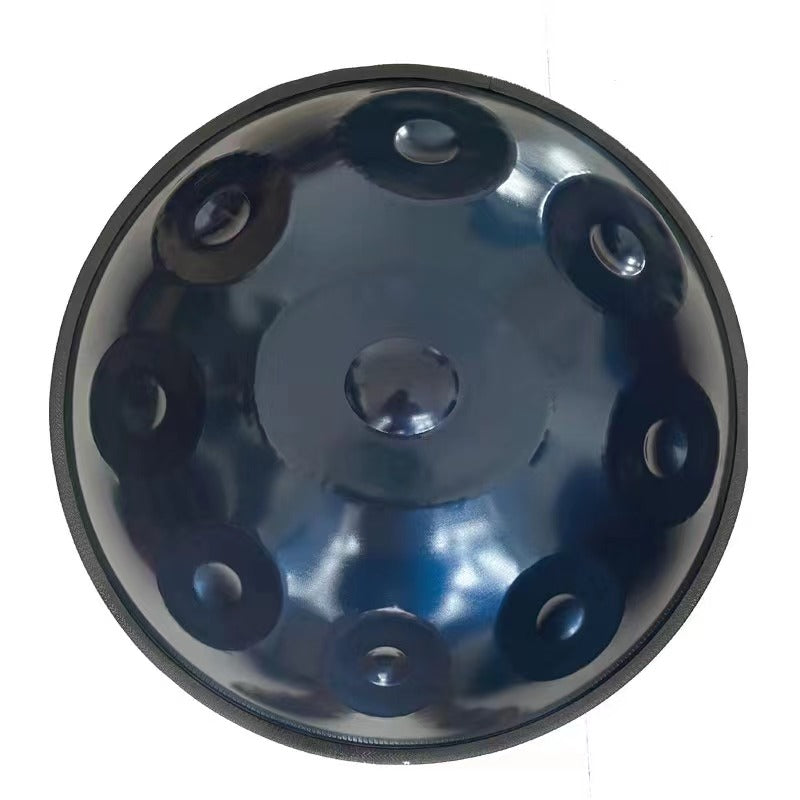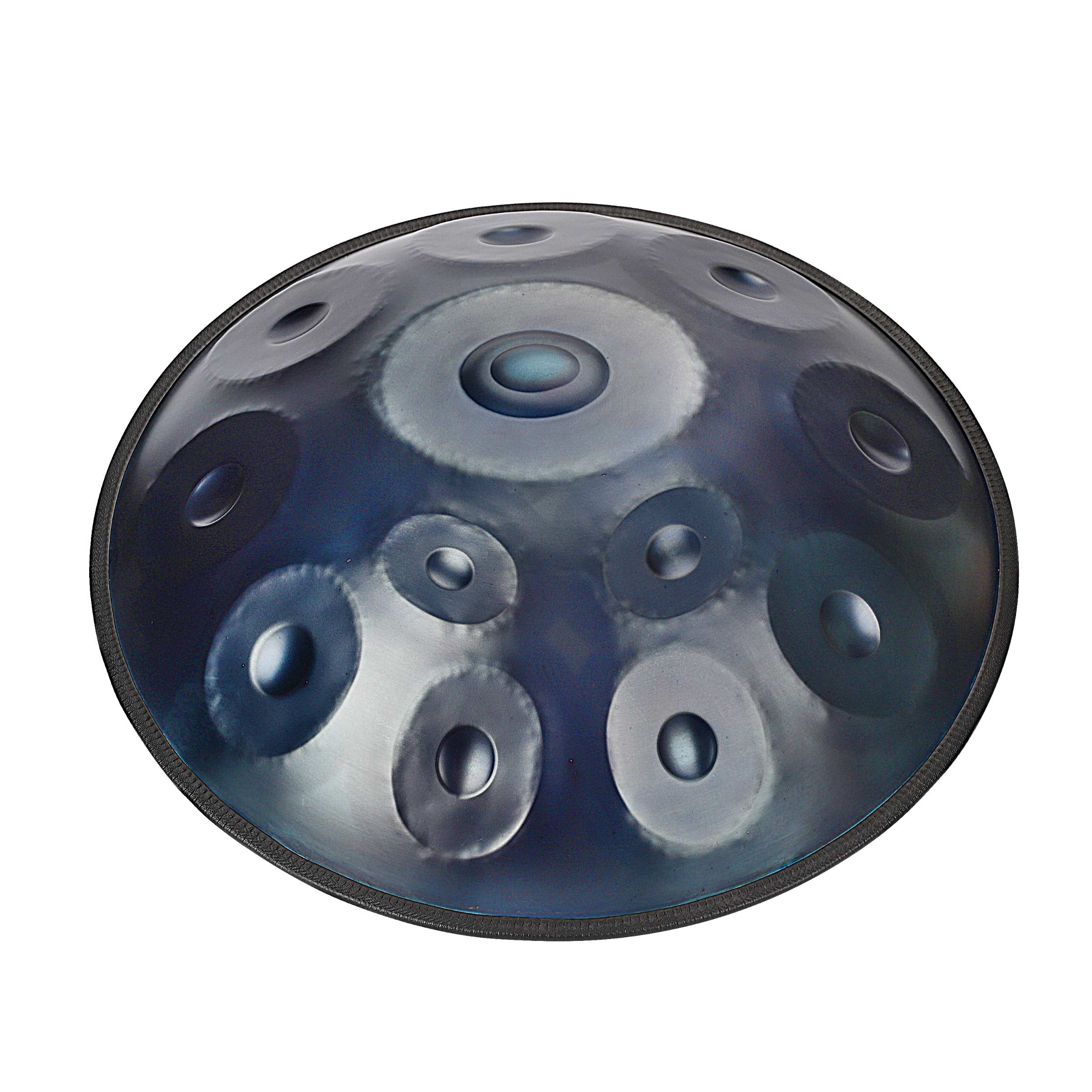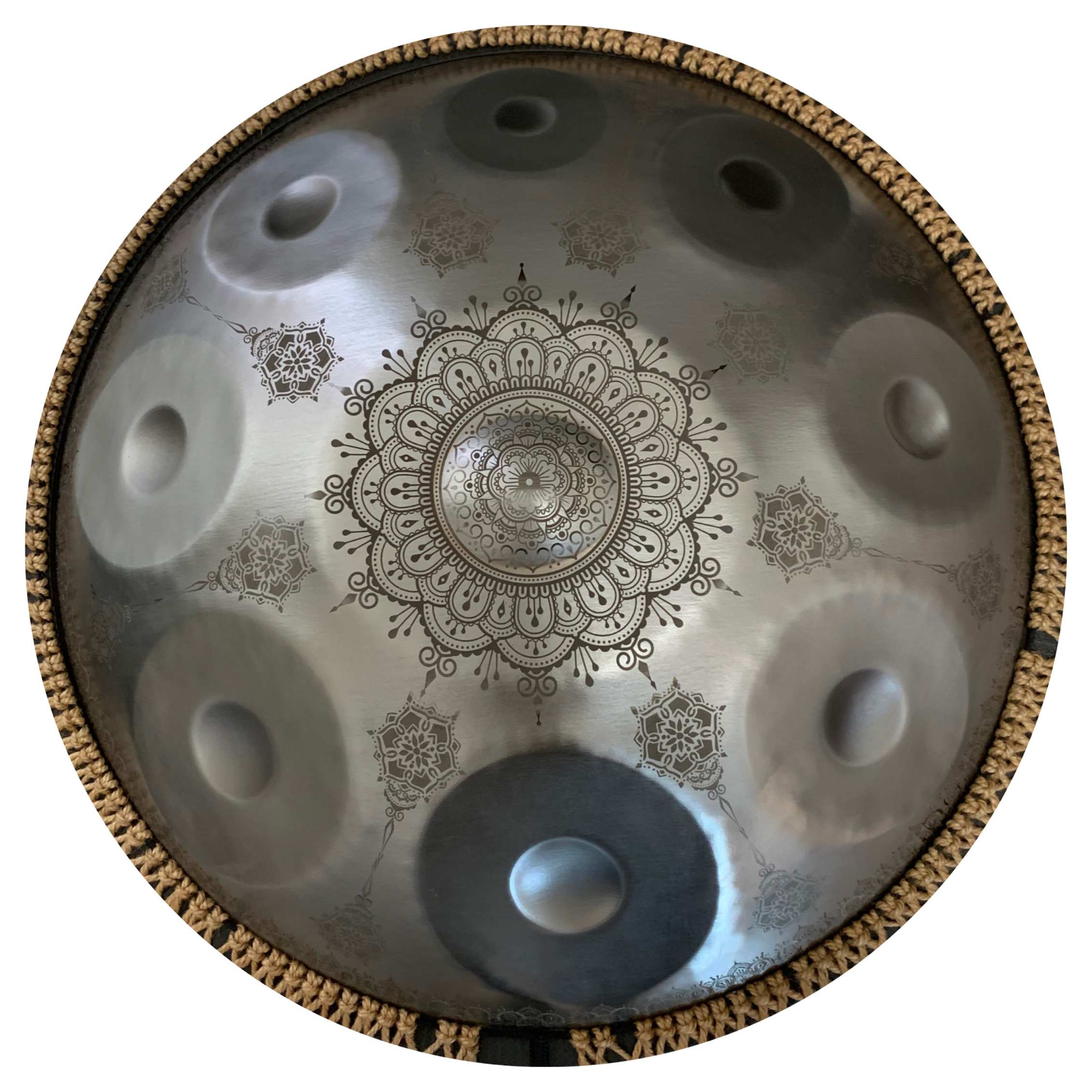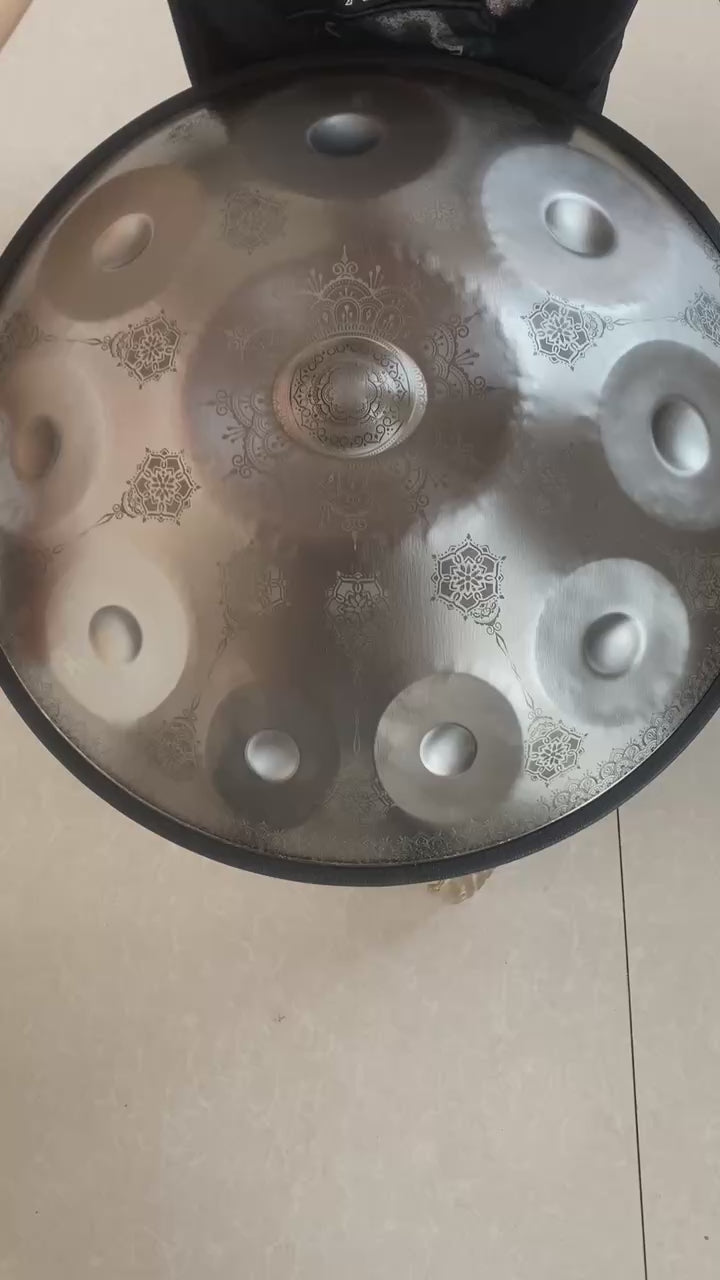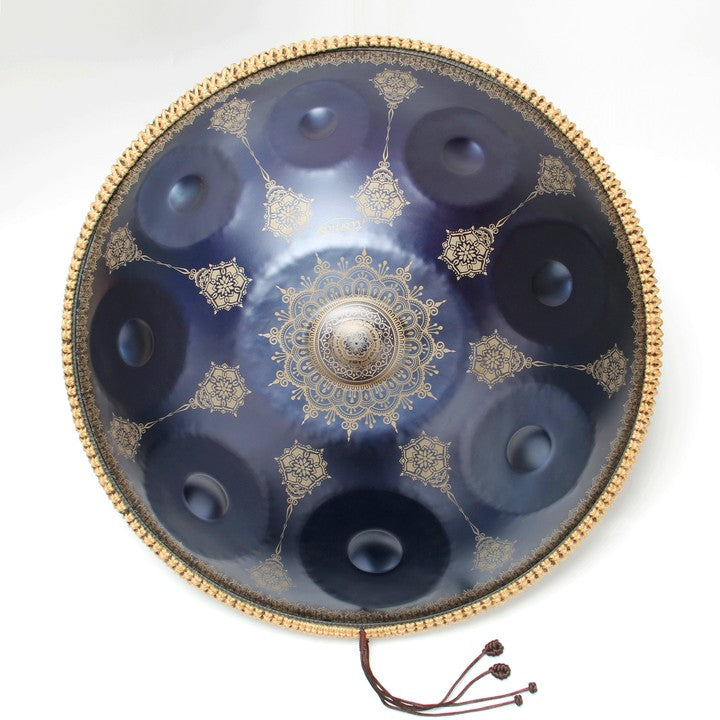
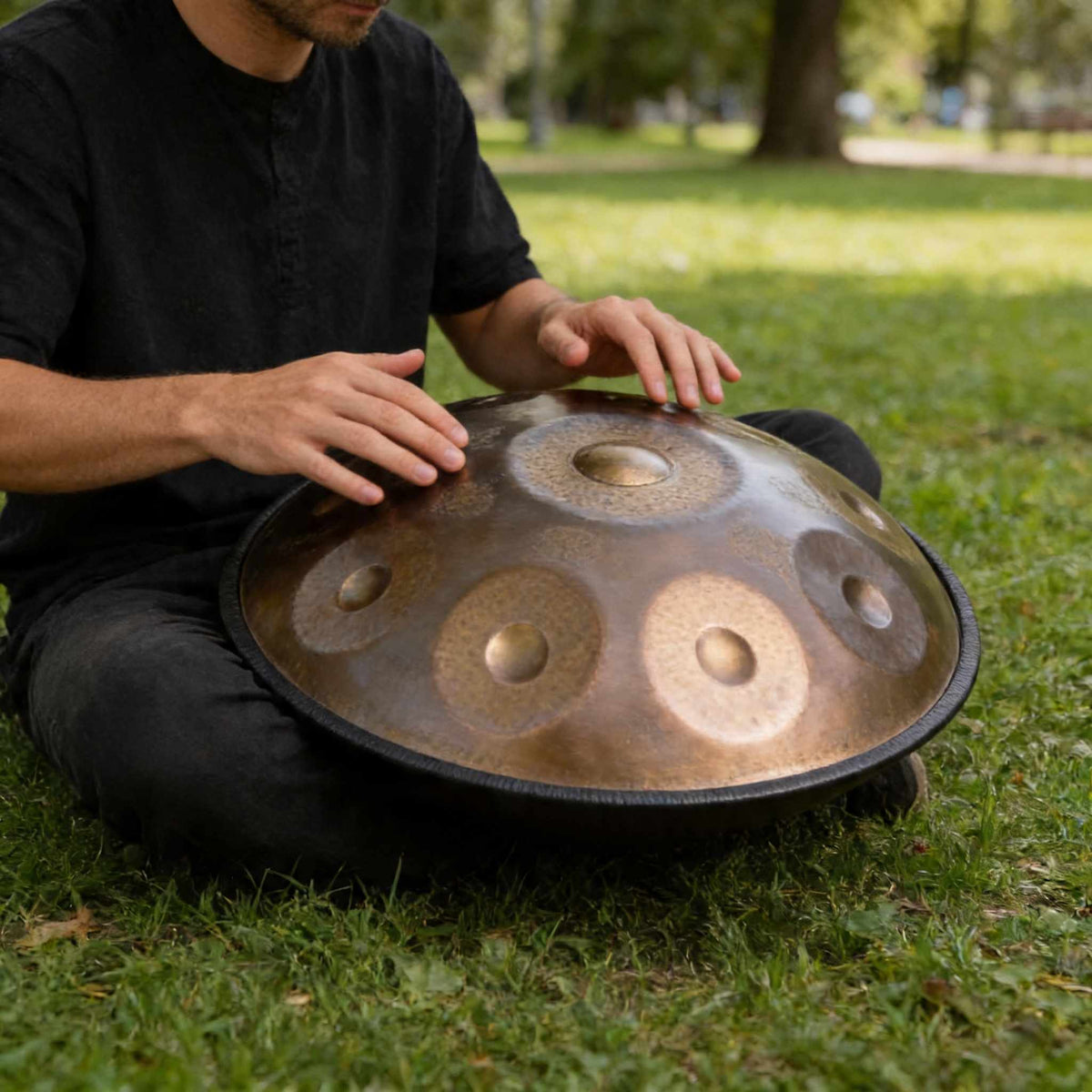
Too many online retailers describe steel handpans as mystical instruments that hold eternal resonance without maintenance. In reality, a handpan is an acoustic steel vessel shaped under high tensile tension, and believing marketing myths about indestructible tuning leads straight to ruined sound sculptures. The definitive answer to whether a handpan go out of tune is an absolute yes. Every handpan can drift out of pitch under physical abuse, thermal shock, metallurgical creep, or poor manufacturing.

A handpan does not feature tuning pegs, bridges, or machine heads you can twist with a wrench. Each tone field relies on three precisely hammered acoustic frequencies: the fundamental note, the octave overtone along the longitudinal axis, and the compound fifth overtone along the transversal axis. When one of those acoustic axes shifts even a few cents, the tone becomes dissonant and flat. Understanding how and why steel detunes will save you hundreds of dollars in re-tuning fees and help you make a smart investment when choosing your next instrument.
Quick Answer: How and Why Does a Handpan Lose Its Tuning?
A handpan can go out of tune from three primary causes: hard percussive striking with mallets, drumsticks, or aggressive slapping; thermal exposure such as leaving the shell inside a hot car trunk or direct summer sunlight; and cheap untempered raw steel alloys that relax internal tension over time. Premium nitrided or STL 430 stainless steel instruments played exclusively with clean hand technique maintain stable pitch for 3 to 7 years. Low-cost unbranded imports often detune within 3 to 6 months due to unstable compressive residual stress. If individual overtones wobble or clash with the fundamental, the pan requires professional hammer retuning by a skilled maker.
Table of Contents
- Acoustic Physics: How a Handpan Tone Field Is Built and Tuned
- Quick Summary: Tuning Lifespan and Risk Factors
- The Top 5 Real-World Reasons a Handpan Goes Out of Tune
- Material Comparison: Stainless Steel vs. Nitrided Steel vs. Raw Steel
- Pros and Cons of Professional Retuning vs. Instrument Replacement
- Who Needs Multi-Note Handpans vs. Who Should Choose a Tongue Drum
- Featured Instrument: Cosmos Double-Sided 17 Notes D Minor Handpan
- Common Mistakes Players Make That Ruin Pitch Stability
- Essential Buying Considerations for Long-Term Tuning Stability
- Expert Recommendation and Purchasing Verdict
- Frequently Asked Questions (FAQ)
- Authoritative References
Acoustic Physics: How a Handpan Tone Field Is Built and Tuned
To understand why an instrument detunes, you must look at how sound is locked into sheet steel. A bare handpan shell starts as two hydroformed or deep-drawn metal hemispheres. A master tuner uses pneumatic hammers and precision manual finishing hammers to indent dimples and sculpt elliptical tone fields. Each tone field is surrounded by an interstitial zone called the dampening ring or tone border, which acoustically isolates that pitch from adjacent notes.
Every single note on a high-grade Handpan is tuned to three distinct frequencies simultaneously:
- The Fundamental: The base pitch produced when you strike the central dimple or flat tone membrane.
- The Octave (2:1 Ratio): Tuned into the longer longitudinal axis of the dimpled ellipse, sounding exactly one octave above the fundamental.
- The Compound Fifth (3:1 Ratio): Tuned into the shorter transversal axis, vibrating at an octave plus a fifth above the fundamental.
When you strike a tone field, all three frequencies resonate together, producing the warm, ethereal chime characteristic of the instrument. Because these three frequencies are held in place solely by the metal's internal compressive stress, any physical shock, extreme thermal expansion, or structural denting that alters the curvature of the ellipse causes the frequencies to drift apart. When the octave and fifth slip out of harmonic alignment, the note loses its sustain and produces an unpleasant beating acoustic interference.
Quick Summary: Tuning Lifespan and Risk Factors
The table below outlines the real-world stability expectations across different steel treatments, playing habits, and maintenance routines:
| Steel Metallurgy & Build Type | Expected Tuning Stability | Primary Detuning Vulnerability | Rust Resistance | Ideal Use Case |
|---|---|---|---|---|
| STL 430 Stainless Steel | 4 to 7+ Years under normal play | Severe blunt drops or hard percussion hits | Exceptional (Rust-proof) | Meditative performance, warm climates, busking |
| Gas-Nitrided DC04 Steel | 3 to 5 Years with hand technique | Surface corrosion, high humidity, sun heat | High (Requires light oiling) | Fast percussive styles, dry studio setups |
| Untreated Low-Carbon Raw Steel | 6 Months to 1.5 Years | Spontaneous metal creep, rust pitting | Poor (Prone to rapid oxidation) | Budget student trials; avoid for serious work |
| Factory Mass-Produced Cheap Imports | 3 to 9 Months typical | Poor annealing, unstable tension boundaries | Low to Moderate | Decorative pieces; rarely worth retuning |
The Top 5 Real-World Reasons a Handpan Goes Out of Tune
1. Overstriking and Hard Mallet Impacts
From our experience on the workbench, aggressive striking is the number one cause of sudden pitch failure. Handpans are built for finger pads, thumbs, and knuckle taps. Striking a tone field with hard rubber drumsticks, wooden mallets, or excessive slap-bass force flexes the steel past its elastic limit. When steel deforms plastically rather than elastically, the membrane cannot spring back to its calibrated arch. This immediately knocks the fundamental flat and kills harmonic sustain.
2. Severe Thermal Shock and Direct Solar Radiation
Leaving your instrument baking in direct sun on a beach or inside a parked car in summer will quickly ruin its tuning. When sheet metal heats past 50 to 60 degrees Celsius (120 to 140 degrees Fahrenheit), the steel expands non-uniformly. While temporary heat causes notes to sound flat temporarily, extreme heat combined with internal tensile stress causes the crystalline grain structure of the steel to relax permanently. Once the shell cools down, the original tuning matrix fails to return to zero, leaving the scale dissonant.
3. Inadequate Heat Treatment and Unstable Metal Annealing
Quality handpan crafting requires multiple thermal curing cycles in a specialized kiln to relieve unwanted structural stress while preserving the hammer work. Cheap manufacturers cut corners by skipping repeated annealing cycles. As a result, the internal stress within the steel slowly normalizes on its own over a few months of normal playing. The instrument detunes spontaneously on the shelf without ever being dropped or mishandled.
4. Drop Impacts, Transport Accidents, and Bag Pressure
A handpan does not need to crack to lose its pitch. A minor impact against a doorframe, a slip off a lap onto a hardwood floor, or heavy luggage stacked on top of a soft gig bag during air travel will compress the rim or dent the apex. Even a hairline distortion of the shell rim alters tension across every adjacent tone field on that hemisphere, throwing multiple notes out of tune simultaneously.
5. Rust Pitting and Atmospheric Corrosion
On non-stainless instruments, moisture from sweaty hands, coastal salt air, and trapped condensation inside travel bags attacks raw iron. Rust does not just look bad; it eats away microscopic layers of steel. Because note pitch is directly tied to the thickness and mass of the vibrating steel membrane, rust pitting changes the physical weight of the tone field, causing it to drift sharp or lose its harmonic overtones entirely.
Material Comparison: Stainless Steel vs. Nitrided Steel vs. Raw Steel
Selecting the right alloy dictates not only sound texture and sustain, but also how well the steel resists mechanical and environmental detuning:
| Evaluation Metric | Stainless Steel (STL 430) | Nitrided Carbon Steel | Untreated Carbon Steel |
|---|---|---|---|
| Acoustic Sustain & Tone | Very long, cathedral-like sustain; rich harmonics | Medium-short sustain; crisp, punchy percussive attack | Muffled sustain; thin overtones |
| Pitch Stability Over Time | Exceptional; highly resilient crystal lattice | High; hardened ceramic-like nitrided layer | Poor; relaxes easily under room temperature shifts |
| Resistance to Accidental Overplay | High (Forgiving elastic limit) | Moderate (Can deform if struck hard) | Low (Deforms readily under impact) |
| Climate & Humidity Resilience | Impervious to rust; ideal for coastal and outdoor play | Requires monthly protective oil coats (Phoenix/Froglube) | Rusts rapidly without weekly waxing |
| Retuning Complexity | Requires an experienced stainless tuner | Standard tuning hammer techniques apply | Often impossible; metal refuses to hold new shape |
Pros and Cons of Professional Retuning vs. Instrument Replacement
When a handpan goes out of tune, players must evaluate whether paying for professional restoration makes commercial and musical sense:
| Course of Action | Practical Advantages (Pros) | Limitations and Practical Drawbacks (Cons) |
|---|---|---|
| Professional Retuner Service |
|
|
| Upgrading to a Modern Stainless Pan |
|
|
Who Needs Multi-Note Handpans vs. Who Should Choose a Tongue Drum
In our testing, player expectations often do not match the physical realities of hammered steel instruments. Choosing the right format from the start prevents tuning headaches later.
Who Needs a Multi-Note Professional Handpan:
- Performers, Recording Artists, and Sound Healers: If you require rich, multi-layered overtones and expressive dynamics, a handpan is unmatched. Beginners should start with an accessible 9 Notes handpan or an expansive 10 Notes handpan before stepping up to complex layouts.
- Dedicated Hand Percussionists: Musicians willing to practice proper fingertip touch will enjoy years of pitch stability from our premier 12 Notes handpan range. Check our detailed handpan notes chart to choose the right musical scale.
- Players in Humid or Outdoor Climates: Anyone busking outdoors or practicing near oceans needs the rust resistance of stainless steel. Review pricing dynamics in our comprehensive handpan price guide and see our breakdown of how much does a handpan cost.
Who Does Not Need a Handpan (Better Alternatives):
- Classrooms and Young Children: Kids naturally hit instruments with sticks and toys. A hammered handpan will detune in days under that treatment. Invest instead in a heavy-gauge laser-cut Tongue Drum, which uses slit steel tongues that are virtually impossible to knock out of pitch.
- Aggressive Drum-Kit Percussionists: If you play with heavy drumsticks or hard mallets, do not buy a handpan. The thin steel will deform immediately.
Featured Instrument: Cosmos Double-Sided 17 Notes D Minor Handpan
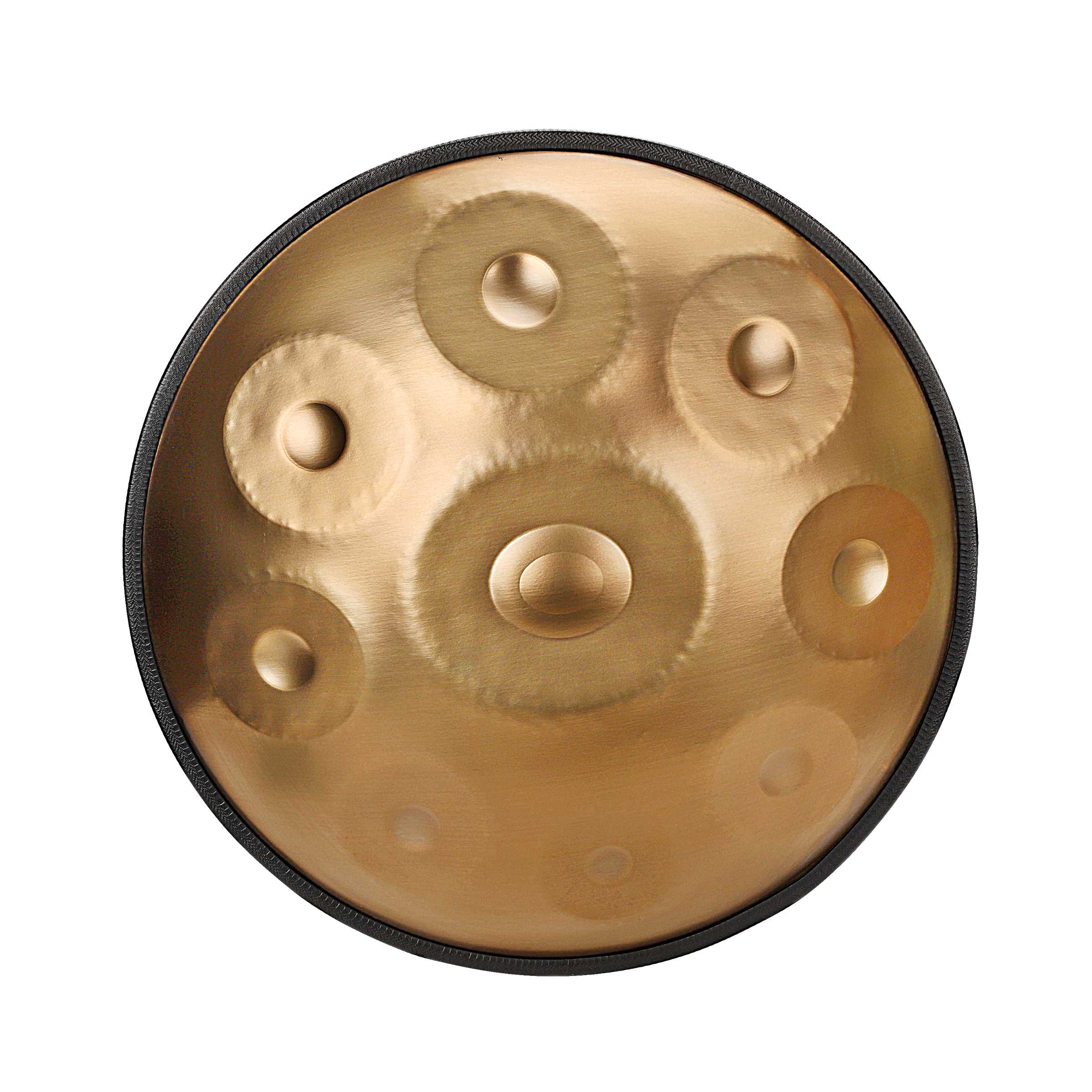
When selecting a handpan designed for rock-solid pitch stability across varied climates, the choice of raw alloy and heat treatment makes all the difference. Cheap low-carbon drums detune quickly, but Cosmoshandpan engineered the 17-note double-sided series to solve this metallurgical problem.
Cosmos Double-Sided Handpan - 17 Notes D Minor Gift Set
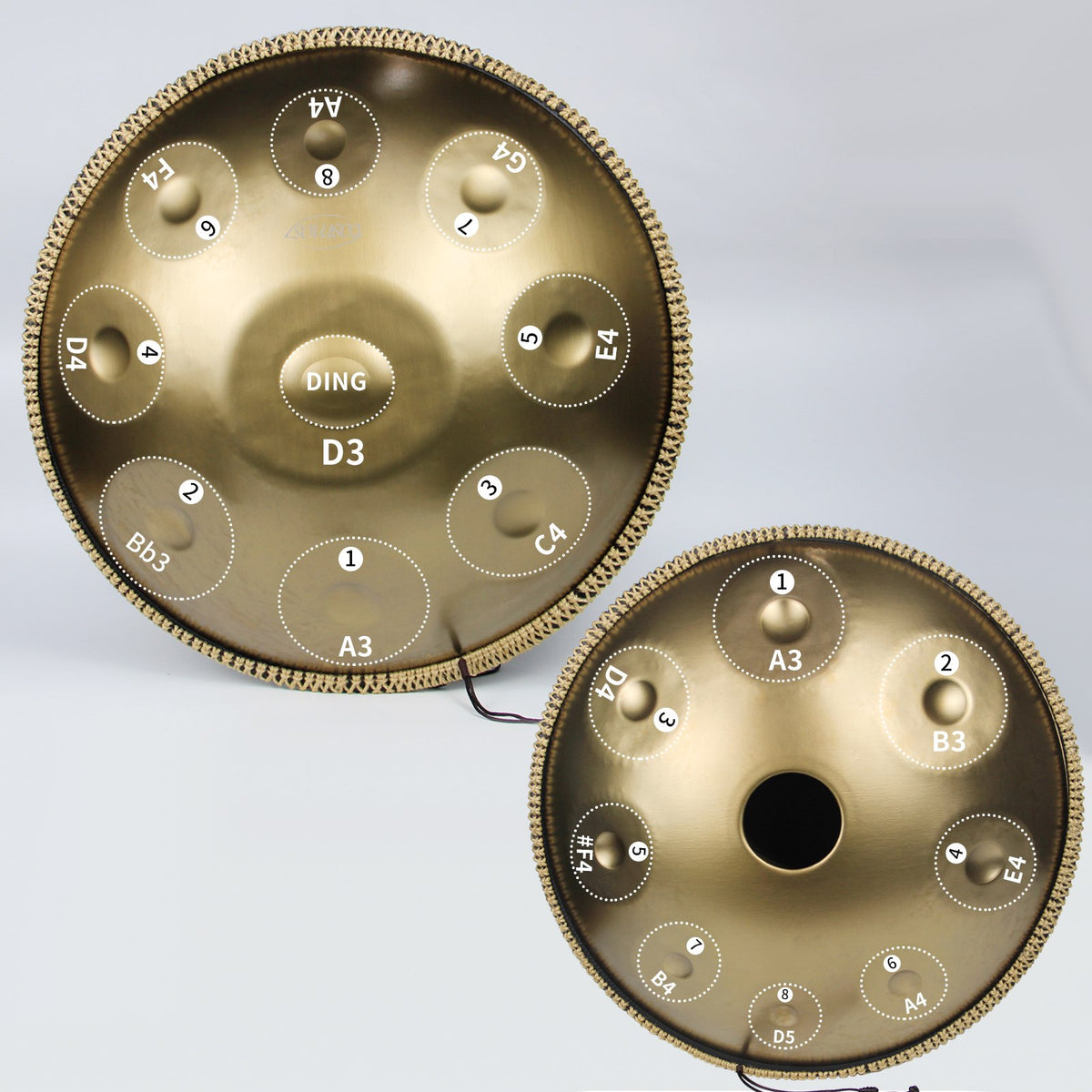
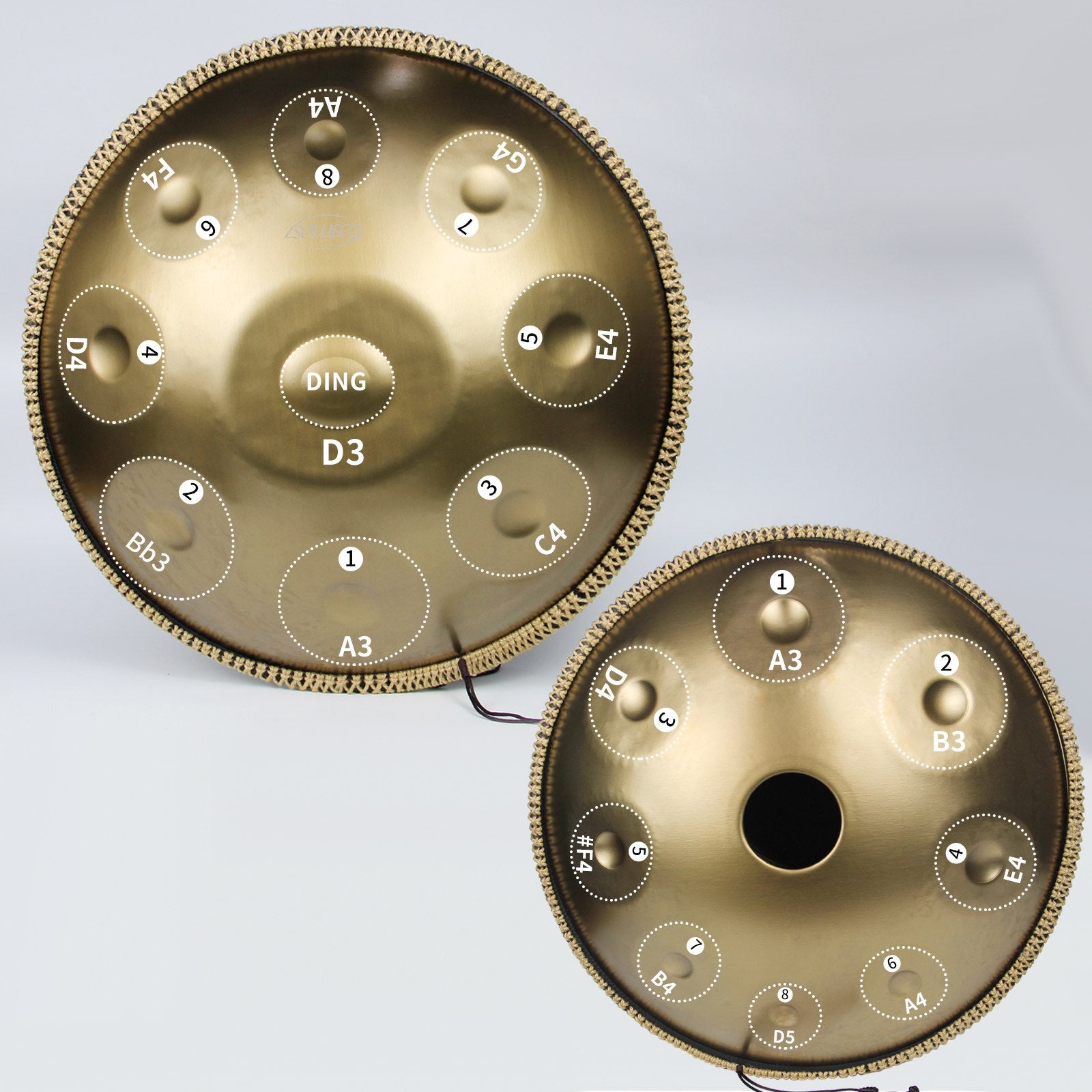
Constructed from premium STL 430 stainless steel, the Cosmos Double-Sided 17 Notes Handpan delivers long acoustic sustain, rich harmonic depth, and exceptional resistance to rust and detuning. Featuring 9 primary notes on the top shell and 8 resonant bottom notes, this versatile sound sculpture offers an expansive D Minor scale for both meditative relaxation and advanced melodic performance.
View complete musical specifications on the 17 Notes handpan product page, read our background on the cosmoshandpan Story, or connect directly through Contact Cosmoshandpan.
Common Mistakes Players Make That Ruin Pitch Stability
From our testing and instrument repair audits, players frequently damage their handpan's pitch by making these simple mistakes:
- Letting Inexperienced Friends Play with Rings and Jewelry: A metal ring striking a tone field is essentially a tiny metal hammer hitting an acoustic membrane. Metal-on-metal contact creates point micro-dents that instantly throw off high-frequency octave overtones. Always remove rings and bracelets before touching the shell.
- Storing the Handpan Inside a Closed Soft Gig Bag: Travel bags are meant for transport, not long-term storage. Closed bags trap ambient humidity, creating a microclimate that accelerates rust along internal borders. Store your pan on an open wooden stand in a climate-controlled room.
- Using Mallets with Hard Cores: While soft yarn or padded rubber mallets can be used gently on steel tongue drums, using mallets on a handpan transfers impact energy too quickly into the dimples. Play exclusively with clean, bare hands to protect internal tuning tension.
- Rushing Into Bargain Marketplaces: Purchasing an unbranded $200 handpan from general e-commerce platforms is a common trap. Those drums are rarely heat-treated properly and go out of tune within weeks. Review verified recommendations in our guide on the best handpan for beginners and explore our handpan buying guide.
Essential Buying Considerations for Long-Term Tuning Stability
Before purchasing a handpan, verify these four technical criteria with the maker or vendor:
- Steel Grade and Nitriding Depth: Insist on STL 430 stainless steel or deeply gas-nitrided steel. Stainless steel provides the highest resistance to detuning from temperature swings and humidity, while nitriding case-hardens carbon steel against accidental dents.
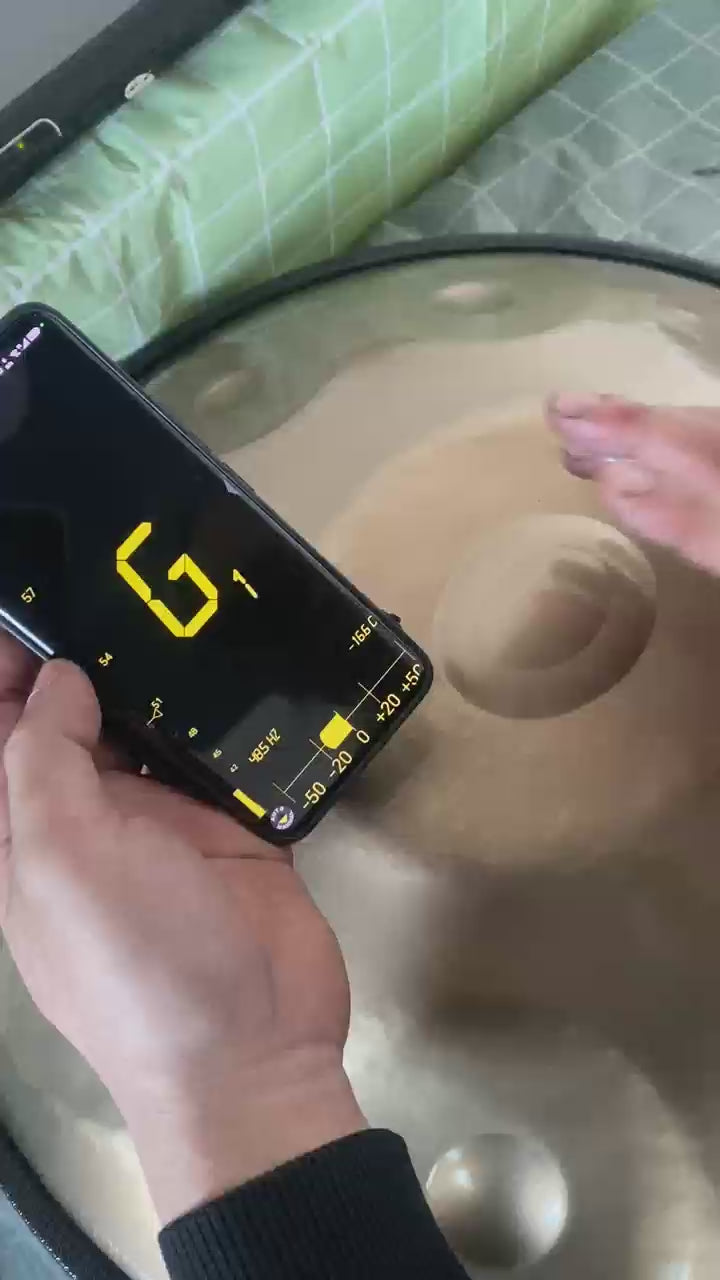
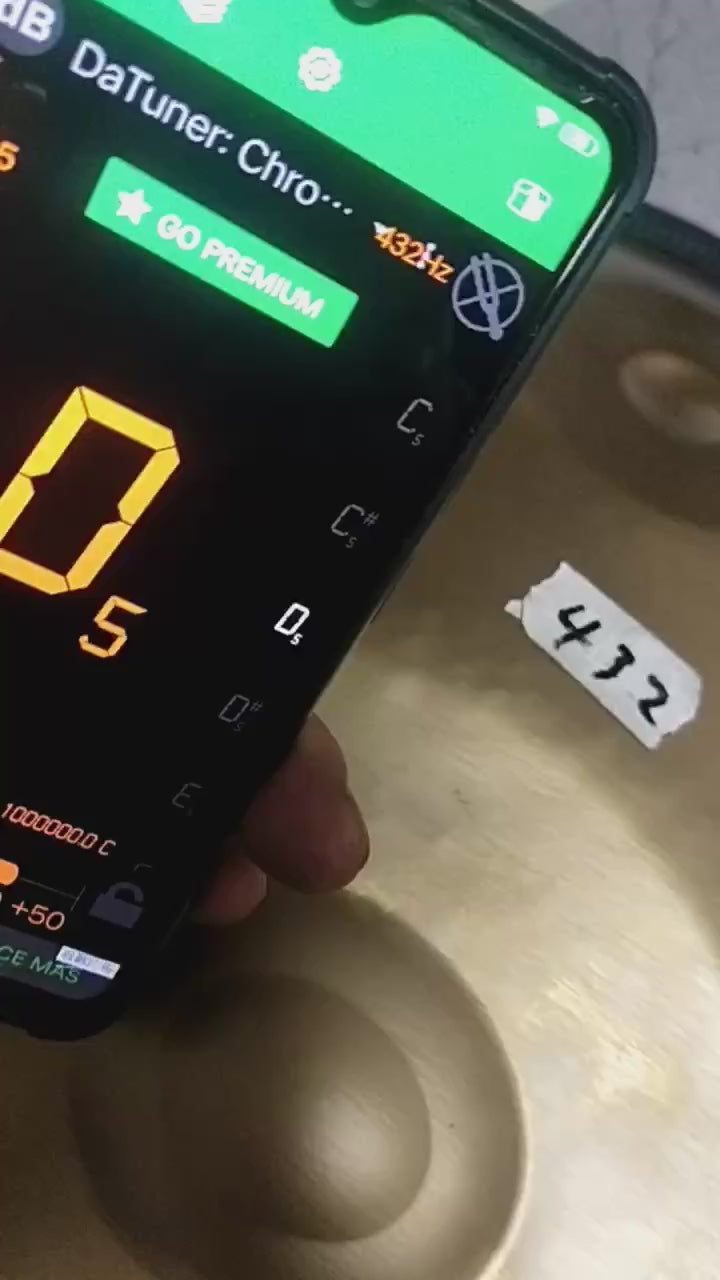
- Reference Frequency (440Hz vs. 432Hz): The 440Hz standard is essential if you plan to jam with acoustic guitars, pianos, or digital synthesizers. The 432Hz frequency is favored for solo meditation and sound therapy. Choose the frequency that matches your playing environment from the start, as retuning an entire drum from 432Hz to 440Hz is rarely possible.
- Bottom Note Geometry: On extended instruments with bottom notes, ensure the lower dimples are indented cleanly with enough clearance so they do not hit your knees or lap while playing.
- Community Presence and Affiliate Integrity: Purchase from builders who maintain transparent player communities and partner networks, such as the cosmoshandpan Affiliates program, which ensures long-term customer service and tuning support.
Expert Recommendation and Purchasing Verdict
In most professional situations, treating a handpan like a disposable percussion toy is an expensive error. Can a handpan go out of tune? Yes, without question. However, whether your instrument goes out of tune in six months or stays stable for six years depends on the steel grade you buy and how you treat it.
We recommend avoiding cheap, non-heat-treated carbon steel drums. For absolute peace of mind, long acoustic sustain, and strong pitch stability, invest in an STL 430 stainless steel drum like the Cosmos Double-Sided 17 Notes D Minor Handpan. Stainless steel resists accidental impact, remains unaffected by coastal humidity, and holds its fundamental and harmonic overtones across changing seasons. Play with finger pads, keep metal rings off the tone fields, never leave the drum in a hot car, and your handpan will remain an inspiring musical companion for years to come.
Frequently Asked Questions (FAQ)
Can a handpan go out of tune from normal playing?
A properly heat-treated, master-tuned handpan will not go out of tune from gentle, proper finger-play. However, playing with heavy slaps, wearing metal rings, using sticks or mallets, or exposing the drum to severe temperature changes will stretch the metal and knock harmonic overtones out of tune over time.
How much does it cost to get a handpan retuned?
Professional retuning by an experienced maker typically costs between $150 and $350 USD, depending on how many notes have drifted and whether dents must be pulled out. You must also factor in the cost of insured round-trip shipping to and from the tuning workshop.
Can I tune a handpan myself at home?
No. You should never attempt to tune a handpan yourself with standard household hammers or punches. Handpan tuning requires balancing three interrelated acoustic frequencies (fundamental, octave, and fifth) on a micro-millimeter scale. Hitting a tone field without specialized training and dedicated tuning hammers will permanently ruin the note membrane.
Does leaving a handpan in the sun ruin its tuning?
Yes. Leaving a steel handpan in direct sunlight or in a hot car causes uneven thermal expansion across the upper and lower shells. Extreme heat can relax the internal compressive stress hammered into the tone fields. While the pitch may recover slightly once cooled, severe heat exposure often causes permanent detuning.
Which handpan material stays in tune the longest?
High-grade STL 430 stainless steel and properly gas-nitrided carbon steel offer the longest tuning stability. Stainless steel provides high elastic resilience and total immunity to rust, making it the most durable choice for players in varying climates.
Authoritative References
- Acoustical Society of America (JASA): Modal Analysis and Acoustics of Caribbean Steelpans and Handpans
- ASM International: Stress-Relief Annealing and Residual Stress Metallurgy in Drawn Sheet Steels
- International Organization for Standardization: ISO 6892-1 Metallic Materials Tensile Testing at Ambient Temperature
```