A Celtic minor handpan is one of the most practical choices for players who want an expressive, atmospheric instrument without having to master complicated music theory first. Its minor tonal character creates a reflective, sometimes mysterious sound, while its carefully selected notes make spontaneous melodies and flowing improvisation accessible.
But there is an important buying detail: “Celtic minor” is not a single universal note layout. Different makers use different root notes, octave arrangements, and additional tones. Before purchasing, you should check the actual note chart rather than relying on the scale name alone.

A Celtic minor handpan is a handpan tuned to a minor-based scale commonly associated with a gentle, introspective, and atmospheric musical character. Many instruments use a D-based Celtic minor arrangement, but note layouts vary by maker.
- Scale structure: A minor-mode collection of notes, often arranged around a central Ding.
- Common tonal center: D is a popular option, although other root notes are available.
- Playing style: Improvisation, ambient music, meditation, solo playing, and acoustic ensembles.
- Beginner suitability: High when the note layout is coherent and the player understands the Ding and surrounding tones.
- Buying priority: Check the exact note names, octave positions, tuning reference, and instrument recording before choosing.
Our recommendation: choose a Celtic minor handpan for its sound and musical possibilities, not just because the scale name sounds appealing. The actual notes and tuning quality matter more than the label.
| Quick Summary | What to Know |
|---|---|
| What it is | A handpan tuned to a minor-oriented scale layout with a distinctive atmospheric character. |
| How it works | Each tuned tone field produces a specific pitch; the Ding provides a central tonal reference. |
| Main benefits | Expressive melodies, accessible improvisation, rich harmonic atmosphere, and strong suitability for solo playing. |
| Main limitation | Its mood and note selection may not suit every musical style; layouts differ between manufacturers. |
| Best for | Beginners, ambient musicians, meditation practitioners, and players who enjoy minor tonal colors. |
| Not ideal for | Players who primarily want bright major-key melodies or need a specific arrangement without checking note compatibility. |
| Buying priority | Exact scale chart, tuning stability, sound recording, build quality, and note count. |
1. What Is a Celtic Minor Handpan?
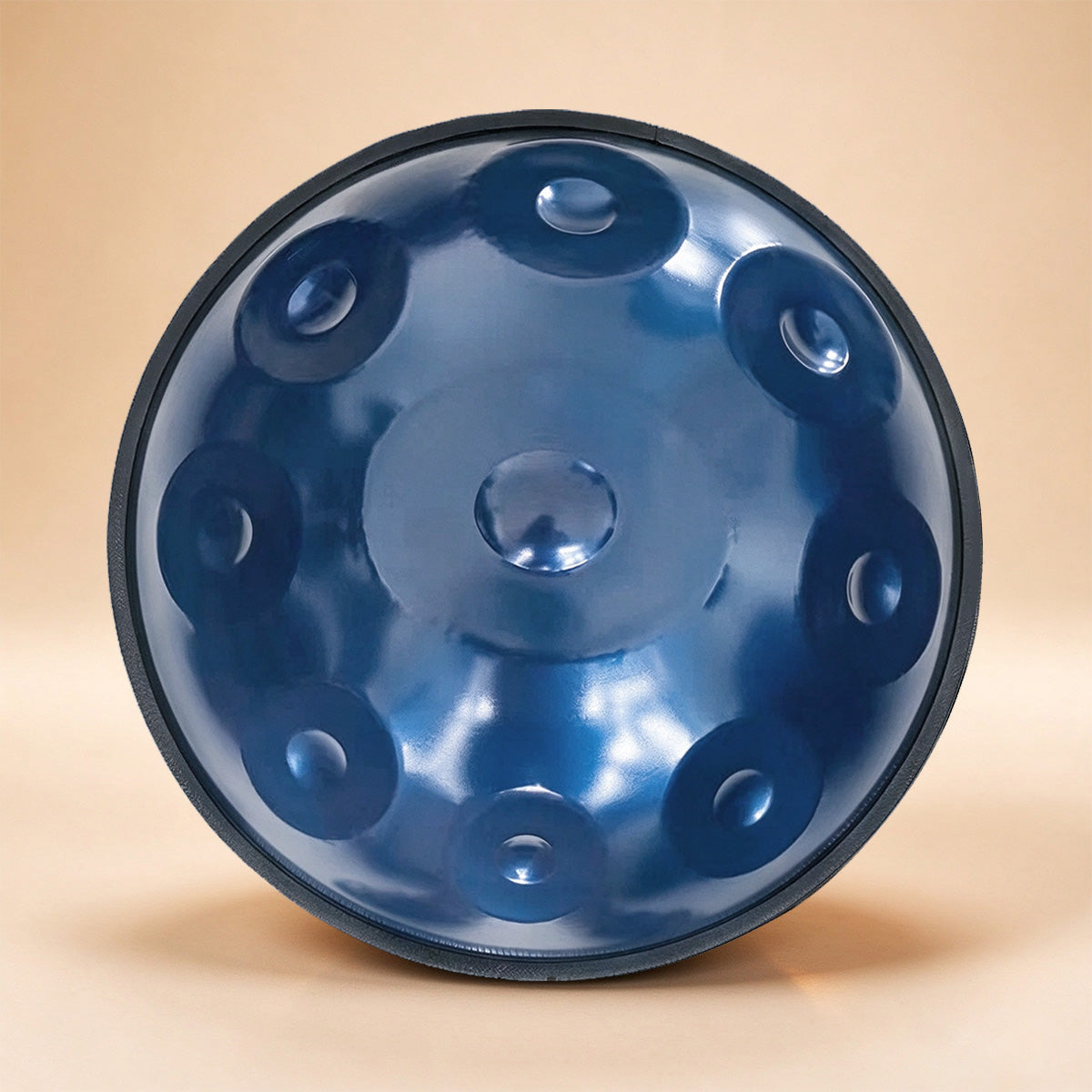
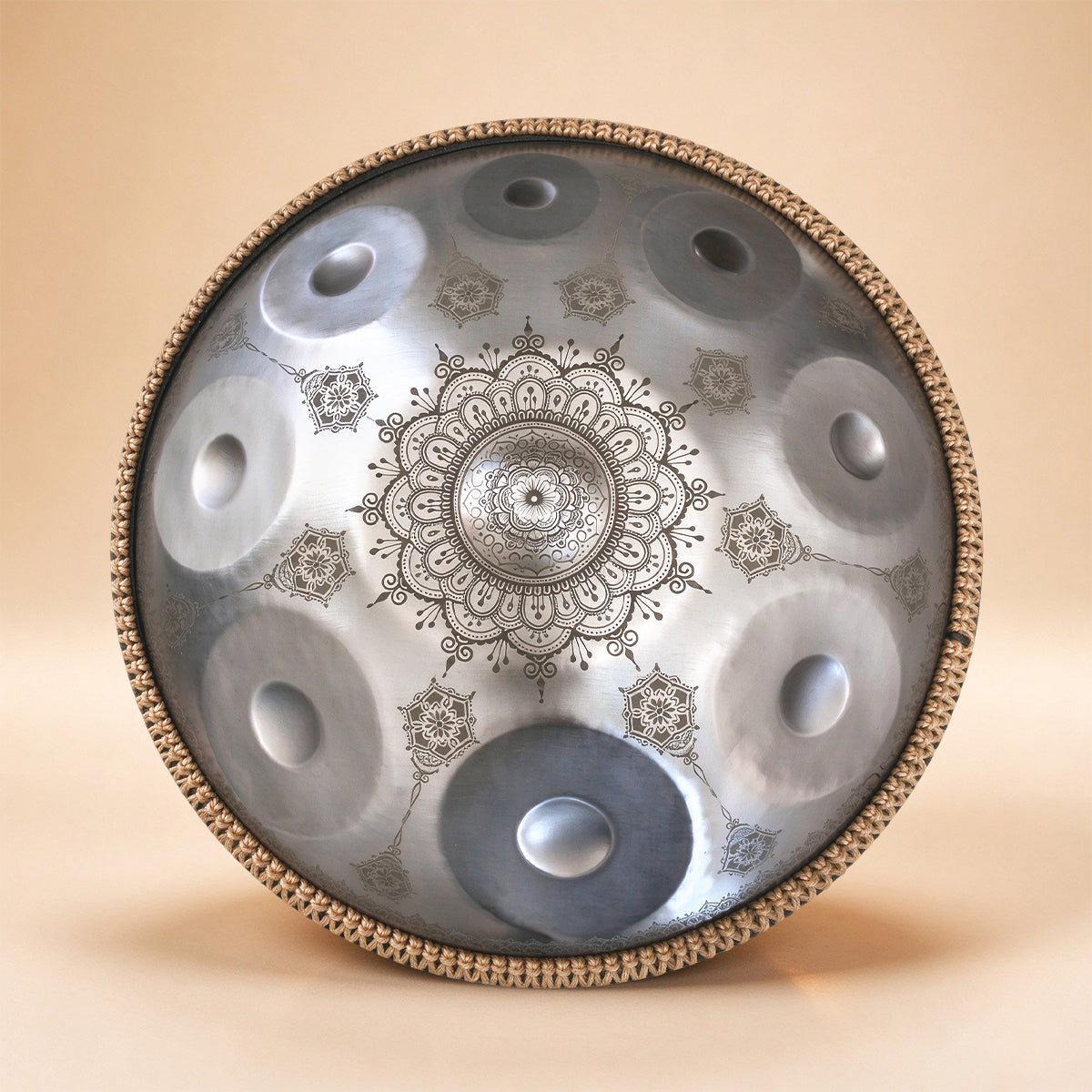
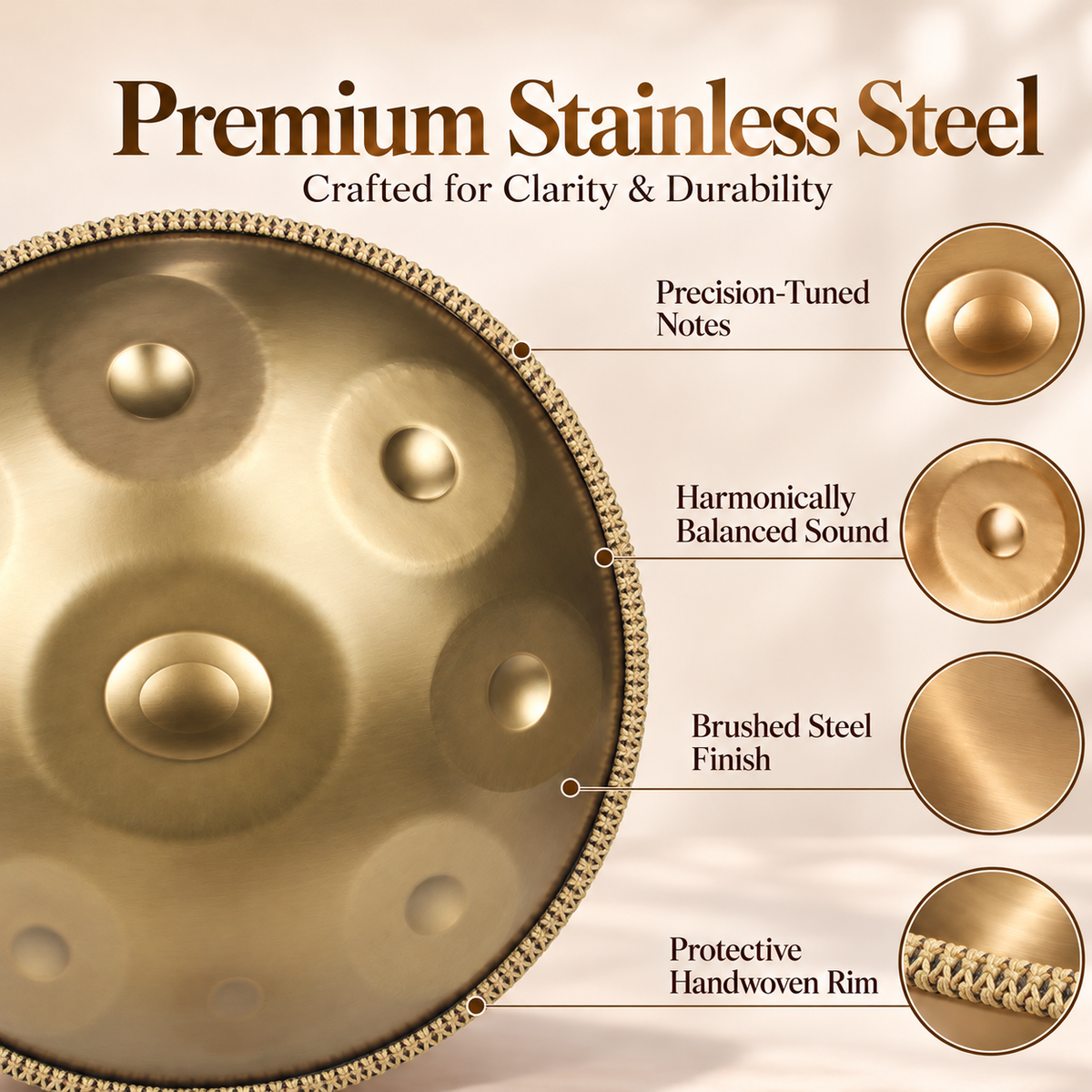
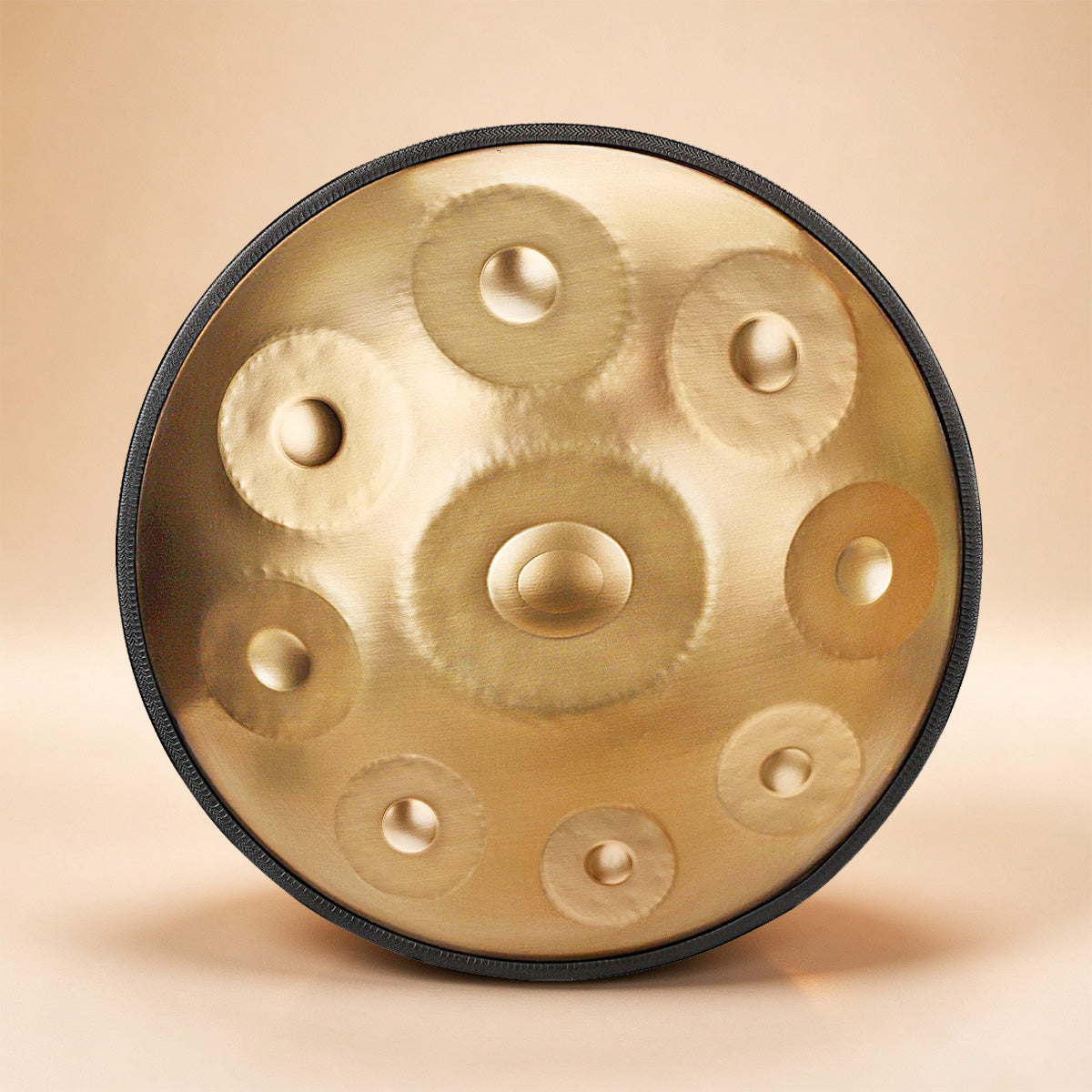
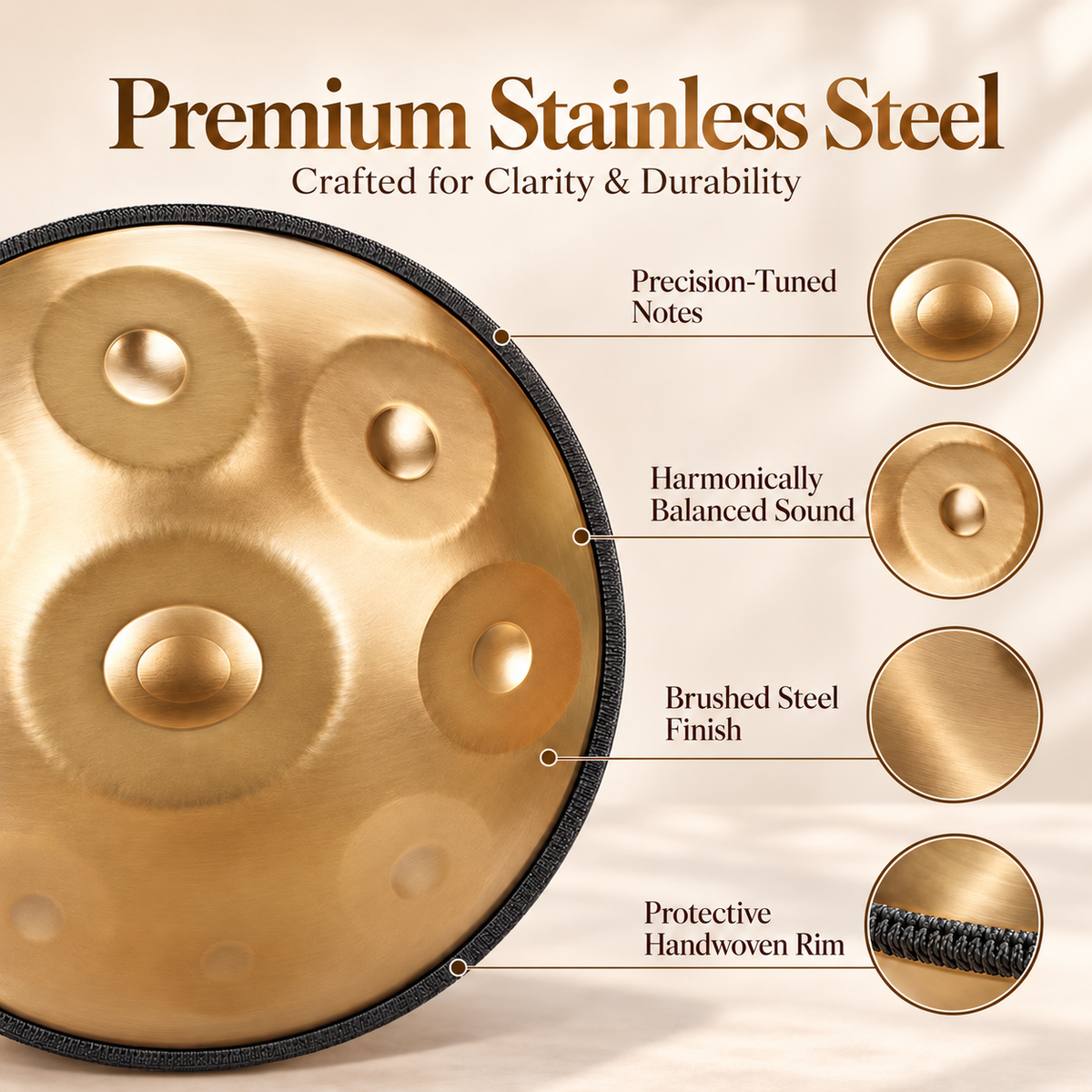
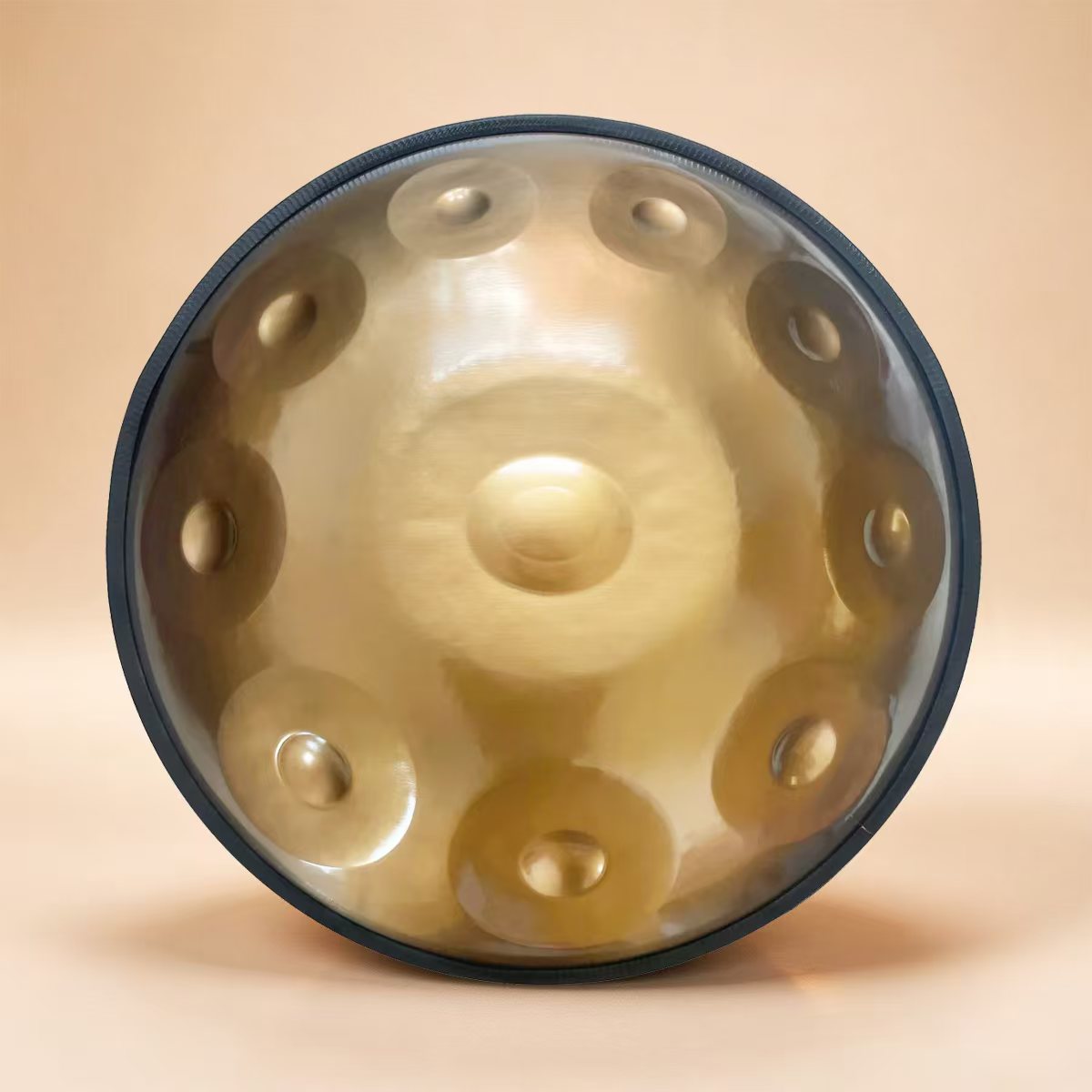
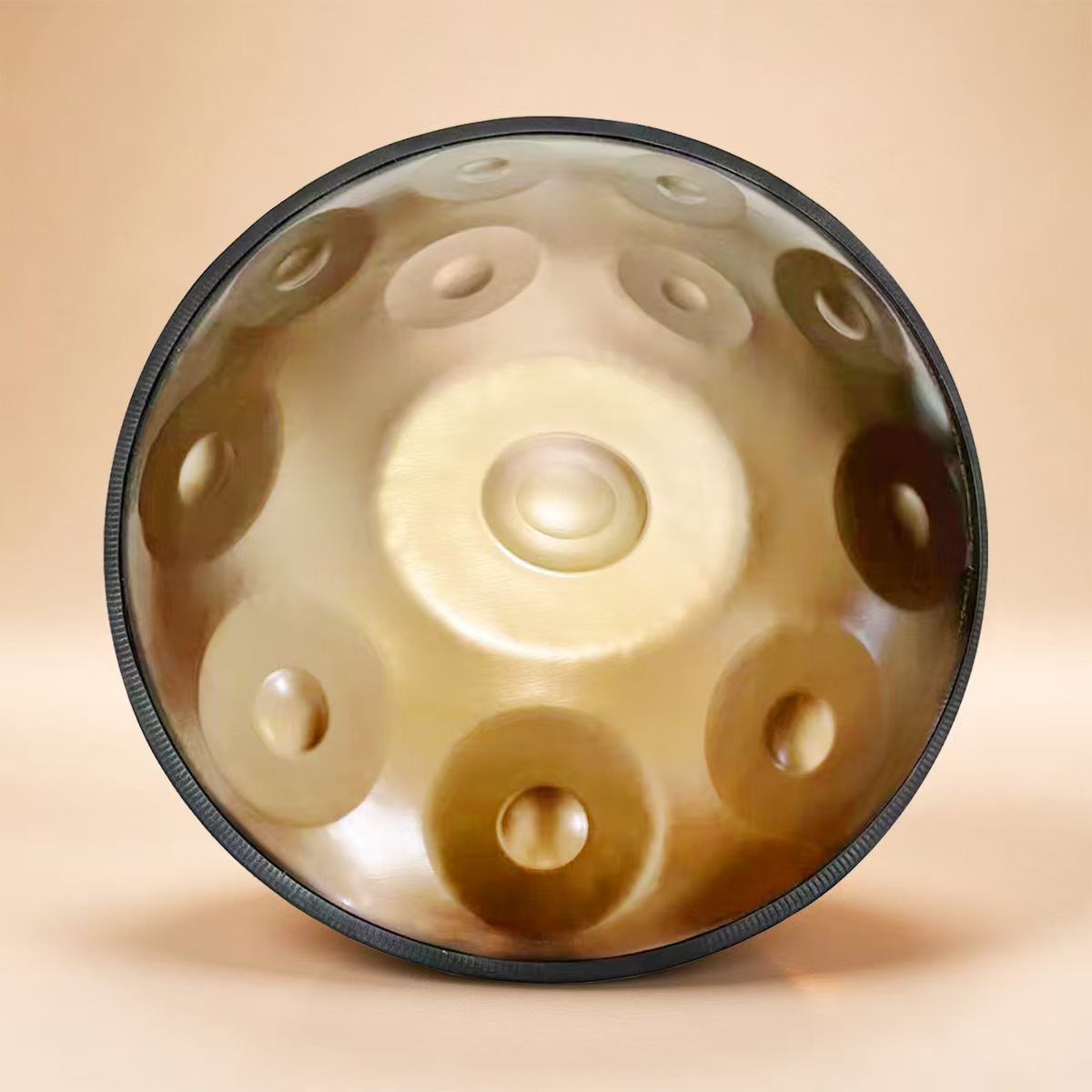
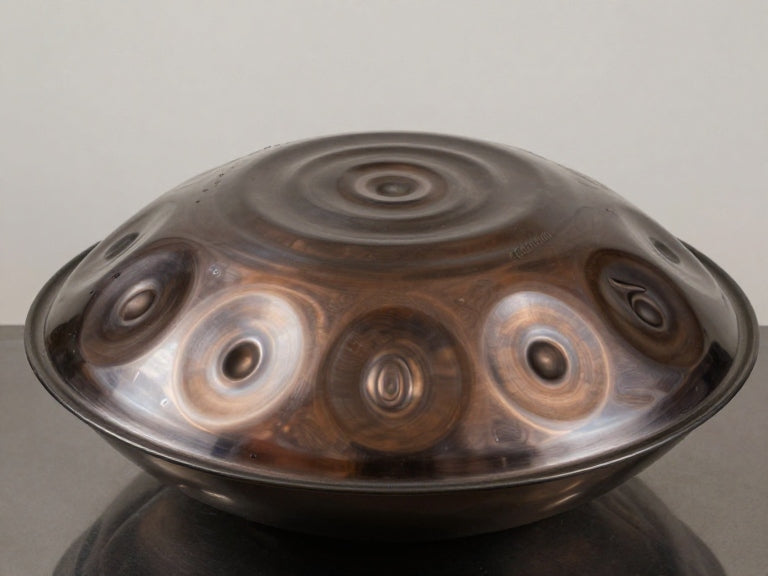
A Celtic minor handpan is a steel percussion instrument tuned to a minor-based collection of pitches. Its notes are arranged in individual tone fields across the upper shell, with a central Ding that usually establishes the tonal center. Players create melodies by striking these fields with their hands or fingers.
The word “Celtic” describes a musical scale family and the sound associated with certain note arrangements. It does not mean the instrument is an ancient Celtic artifact or that every Celtic minor handpan follows one internationally fixed tuning specification.
In practical terms, players are usually attracted to this scale because it offers a balance between melancholy and warmth. It can sound contemplative without becoming excessively dark, and it supports flowing melodic phrases that work well in solo performance.
Why players choose this scale
- Atmosphere: Minor tonal relationships create a reflective and emotionally expressive sound.
- Improvisation: A well-designed note layout allows players to explore melodies without constantly worrying about incompatible notes.
- Musical flexibility: It can work for ambient compositions, slow melodic passages, meditation sessions, and acoustic performances.
- Accessible learning: Beginners can develop musical phrases by exploring relationships between the Ding and surrounding notes.
However, do not assume every instrument marketed as Celtic minor will sound identical. A D-based arrangement and an instrument in another tonal center can have different pitch ranges and musical relationships. The maker's exact note chart is the specification you should trust.
2. Celtic Minor Handpan Scale Structure Explained
The scale structure determines which notes are available and how they relate to one another. Understanding this is more useful than memorizing a product name because it helps you evaluate whether a handpan can support the music you want to play.
What does minor mean?
In Western music theory, a natural minor scale follows the interval pattern:
Whole – Half – Whole – Whole – Half – Whole – Whole
For example, the D natural minor scale contains:
D – E – F – G – A – B♭ – C – D
These eight positions include the octave repetition of the starting note. The interval pattern creates the familiar natural minor sound.
However, a handpan marketed as Celtic minor may use a different scale construction or a specific subset and arrangement of pitches. Some Celtic-inspired handpan layouts include intervals that differ from the natural minor scale. This is why the term should not be treated as a complete note specification.
Why the Ding matters
The Ding is the central tone field, usually located in the middle of the instrument. It often establishes the root or tonal center around which the surrounding notes are organized.
When you play the Ding followed by nearby notes, you begin to hear the character of the scale. The relationship between the central tone and the other fields is what gives the instrument its musical identity.
How notes are arranged around the shell
Most handpans place the Ding in the center and distribute additional tone fields around it. The arrangement is designed to make the instrument playable from different directions. A player can move between adjacent notes, alternate hands, and create repeating patterns without needing a conventional keyboard layout.
For beginners, this physical arrangement is a major advantage. You can explore musical phrases by following the note positions and listening to how each pitch resolves toward the Ding.
3. Which Notes Are on a Celtic Minor Handpan?
There is no single note list that applies to every Celtic minor handpan. The exact notes depend on the maker's chosen scale, root note, octave arrangement, and number of tone fields.
Some instruments use a D-centered Celtic-inspired layout, while others are built around a different tonal center. Even when two instruments share the same scale name, their upper notes may differ. That difference affects the melodies you can play and how easily you can coordinate with another musician.
Understanding the note chart
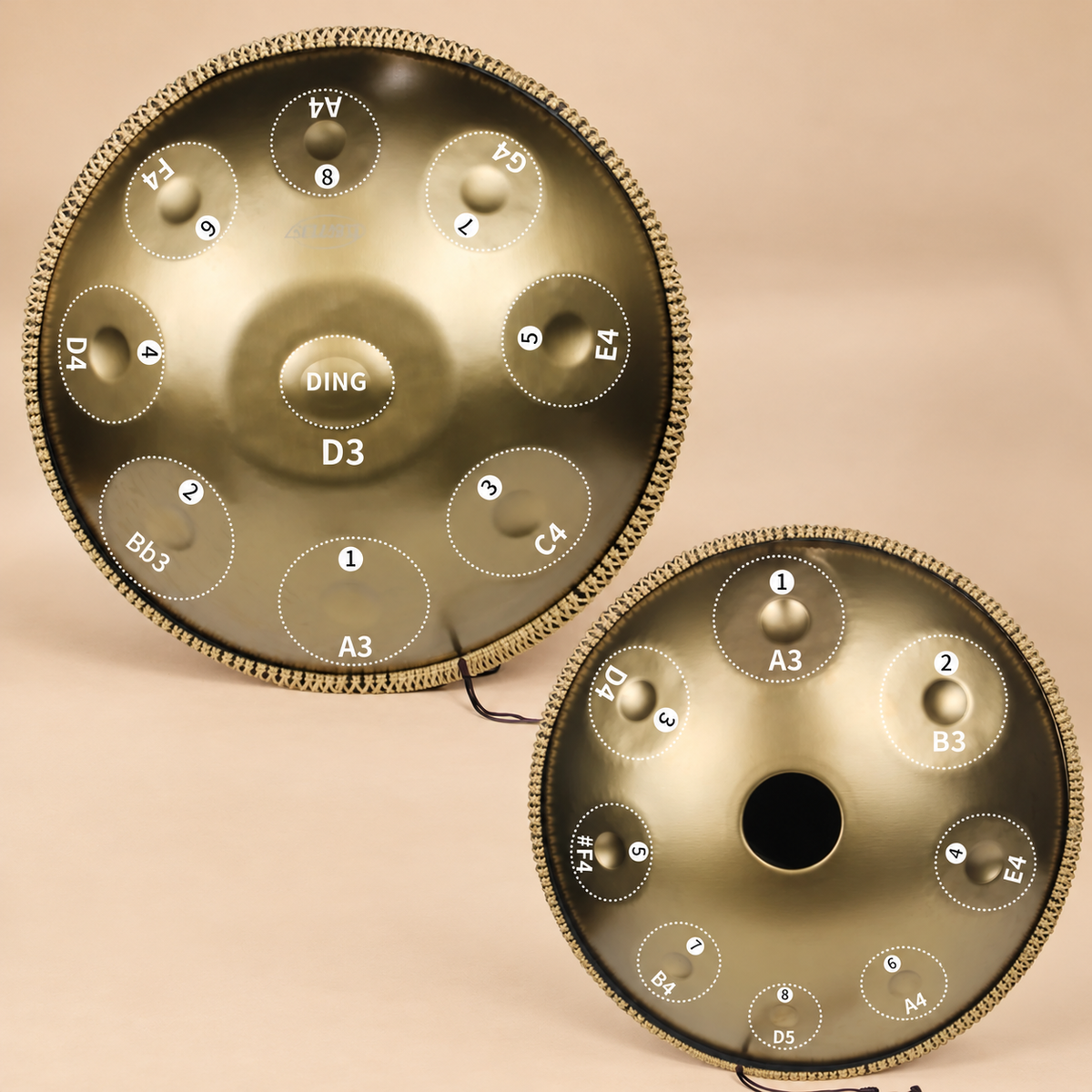
A handpan note chart usually identifies each tone field by pitch name and octave. For example, D3, A3, C4, and F4 indicate different pitches, not simply different note categories. The number after the letter identifies the octave in scientific pitch notation.
When reviewing a chart, check these details:
- Ding: Identify the central pitch and confirm whether it is the root note.
- Surrounding notes: Check the full list rather than assuming all instruments use the same sequence.
- Octave positions: Confirm whether the notes are in a comfortable range for your preferred playing style.
- Additional notes: Some layouts include higher or lower tones that expand melodic possibilities.
- Tuning reference: Confirm whether the instrument is tuned to A=440 Hz or A=432 Hz if this matters to your musical setup.
For a more detailed explanation of pitch names and their positions, see our guide to understanding handpan notes. You can also use the handpan notes chart as a reference when comparing different scale layouts.
Why two Celtic minor handpans can have different notes
Handpan makers have some flexibility in how they arrange and extend a scale. One instrument may prioritize a compact, beginner-friendly range, while another may add high notes for more complex melodies.
This is not automatically a quality difference. A smaller layout can be easier to learn and may have more space between tone fields. A larger layout can offer more melodic options, but it may also require more coordination and a higher budget.
Our advice is straightforward: do not buy a handpan based on a scale label alone. Ask for a complete note chart and an unedited sound sample of the actual instrument or a representative instrument from the same production specification.
4. How Does a Celtic Minor Handpan Sound?
The Celtic minor handpan is commonly selected for its atmospheric and expressive character. Its minor-oriented intervals can create a sense of reflection, mystery, and emotional depth. Depending on the exact layout and playing technique, the sound can be gentle and meditative or rhythmic and dramatic.
Warm, reflective melodies
Slowly moving between the Ding and nearby notes can create a calm musical phrase. This is one reason minor handpans are popular among players who compose ambient music or use handpans during relaxation sessions.
Rhythmic improvisation
A Celtic minor layout is not limited to slow playing. With controlled alternating-hand patterns, muted notes, and rhythmic accents, players can build more energetic passages. The scale provides the pitch material; the player's timing and dynamics determine much of the musical expression.
Does the scale sound sad?
Not necessarily. Minor scales are often associated with melancholy, but the emotional result depends on tempo, rhythm, register, dynamics, and the notes emphasized. A Celtic minor handpan can sound peaceful, cinematic, mysterious, or uplifting depending on how it is played.
From our perspective, this emotional flexibility is more important than choosing a scale because of a fashionable description. Listen to actual recordings and decide whether the instrument's character fits the music you want to make.
5. How to Play a Celtic Minor Handpan
You do not need advanced music theory to begin playing a Celtic minor handpan. A good starting method is to learn the Ding, identify the surrounding notes, and build short phrases using a relaxed alternating-hand technique.
Step 1: Learn the central note
Start by striking the Ding gently with a relaxed fingertip. Listen to its pitch and sustain. Avoid hitting the center too hard. A controlled touch usually produces a clearer and more balanced sound than excessive force.
Step 2: Explore neighboring tone fields
Play one nearby note at a time, returning to the Ding after each note. Listen to how each pitch feels in relation to the tonal center. This helps you recognize which notes create tension and which feel more resolved.
Step 3: Build a four-note phrase
Choose a small group of notes and play them in a repeating sequence. Keep the rhythm simple. Once the phrase feels natural, change the order or leave a short pause between notes.
Step 4: Develop alternating-hand coordination
Practice using both hands rather than relying on one dominant hand. Alternating hands makes it easier to develop steady rhythms and reach tone fields around the shell.
Step 5: Control dynamics and sustain
A handpan is not simply a collection of notes to strike as quickly as possible. The quality of the performance depends on touch, timing, resonance, and silence. Allow notes to ring, and avoid playing every tone at the same volume.
Spend the first week learning the Ding and five or six surrounding notes. Practice short patterns slowly before attempting complex rhythms. A nine-note instrument is often sufficient for developing control, musical timing, and confidence.
6. Celtic Minor vs. D Minor and Other Handpan Scales
One of the most common buying mistakes is treating Celtic minor and D minor as interchangeable terms. They are not necessarily the same scale layout. D minor describes a tonal center and scale family; Celtic minor is used by makers for particular minor-oriented handpan configurations that may use a different interval selection.
| Scale Type | Typical Musical Character | Playing Strength | What to Check Before Buying |
|---|---|---|---|
| Celtic minor | Atmospheric, reflective, and expressive. | Flowing improvisation and ambient melodies. | Exact scale formula and note chart; names vary between makers. |
| D minor | Warm, familiar minor-key character. | Accessible melodic exploration and compatibility with D minor music. | Exact D minor variant and octave arrangement. |
| Integral | Often associated with a balanced, versatile minor sound. | Melodic improvisation and broad musical use. | Maker-specific note arrangement and tuning. |
| Amara | Minor-oriented, mellow, and expressive. | Relaxed playing and melodic exploration. | Root note, intervals, and available range. |
| Major scale | Often brighter and more openly uplifting. | Major-key melodies and certain ensemble settings. | Whether the scale supports the music you intend to play. |
Celtic minor or D minor: which should you buy?
Choose a D minor handpan if you specifically want a D minor note collection and expect to play with musicians or recordings in that key. Choose a Celtic minor model if you prefer the particular sound of the maker's Celtic-inspired layout and are comfortable with its note selection.
Do not assume that a Celtic minor instrument will automatically play along with every D minor backing track. Compare the actual pitches and octaves. A scale name alone is not enough to guarantee compatibility.
If you are still learning how handpan scales relate to one another, our handpan note chart guide is a useful starting point.
7. How Many Notes Should a Celtic Minor Handpan Have?
For most first-time buyers, a nine-note handpan is a sensible starting point. It provides enough tones for simple melodies and improvisation without making the playing surface unnecessarily complicated.
More notes are useful when you already understand the scale and want a wider range. However, a larger note count does not automatically mean a better instrument. The tuning, tone-field response, note spacing, and overall sound quality matter more.
| Note Count | Best For | Advantages | Trade-Offs |
|---|---|---|---|
| 9 notes | Beginners and casual players. | Simple layout, approachable learning curve, and sufficient range for basic improvisation. | Fewer options for extended melodies and complex arrangements. |
| 10 notes | Developing players. | Additional melodic choices without a dramatic increase in complexity. | Requires more familiarity with note positions. |
| 12 notes | Intermediate players and experienced hobbyists. | More melodic range and greater compositional flexibility. | Can require more hand coordination and a larger budget. |
| 13 or more notes | Advanced players with specific musical goals. | Expanded pitch range and additional performance possibilities. | Layout, tuning consistency, and accessibility become especially important. |
For a more detailed buying decision, read how many notes a handpan should have. You can also compare Cosmos Handpan's nine-note beginner handpans, 10-note handpans, and 12-note handpans.
8. Buying a Celtic Minor Handpan: What Actually Matters?
A handpan is a tuned instrument, not a decorative steel bowl. Its value depends on how accurately and consistently the tone fields respond, how the notes relate to one another, and whether the instrument suits the player. We recommend judging the instrument in this order.
1. Confirm the exact scale and note chart
Ask for the note names and octave positions. If you plan to play with a piano, guitar, keyboard, or backing track, make sure the instrument's pitches are compatible with the music you want to perform.
2. Listen to a real sound sample
Listen for clear note separation, balanced sustain, and consistent response across the instrument. A polished promotional video may use close microphones or audio processing. Whenever possible, request an unedited recording with each note played individually and then in a short musical phrase.
3. Check tuning and stability
Every tone field should produce the intended pitch without obvious unwanted buzzing or excessive rattling. Ask how the maker checks tuning and what support is available if the instrument arrives with a problem.
4. Understand 432 Hz and 440 Hz
These numbers refer to different reference pitches for tuning, commonly described by the frequency assigned to A4. They do not determine whether a handpan is inherently more relaxing, healthier, or musically superior.
Choose the reference that suits your other instruments and playing preferences. If you plan to perform with musicians using standard A=440 Hz tuning, a 440 Hz handpan may be the more convenient choice. For a deeper explanation, read our 432 Hz handpan guide.
5. Check size, weight, and portability
A handpan needs to be comfortable to hold or position on a stand. Check the instrument's diameter, weight, and included case. If you travel regularly, protective storage is not an optional luxury. It helps reduce the risk of dents and accidental impacts during transport.
Our guide to standard handpan size explains why dimensions matter for both playing comfort and portability.
6. Compare the complete package
Some handpans are sold as instruments only, while others include a protective bag, stand, mallets, or cleaning cloth. These accessories can make a beginner purchase more convenient, but they should not distract from the instrument's tuning and sound quality.
9. Common Mistakes When Choosing a Celtic Minor Handpan
- Assuming all Celtic minor layouts are identical: Ask for the actual notes and scale formula.
- Choosing by appearance alone: A beautiful finish cannot compensate for poor tuning or inconsistent tone fields.
- Buying too many notes too early: More notes can increase complexity without improving the beginner's playing experience.
- Confusing 432 Hz with a scale: Frequency reference and musical scale are separate specifications.
- Ignoring octave positions: Two instruments can share note names but place them in different octaves.
- Expecting a handpan to play every song: The instrument's note collection limits which melodies and backing tracks will fit naturally.
- Using excessive force: A handpan responds to controlled touch; hard strikes do not automatically create better tone.
- Ignoring after-sales support: Ask about tuning support, transport protection, and the process for handling damage or defects.
10. A Beginner-Friendly Alternative: Cosmos Handpan Golden Elegance D Minor
If you are attracted to the expressive sound of a Celtic minor handpan but are still learning how to choose a scale, it may be worth starting with a clearly specified minor instrument. The Cosmos Handpan Golden Elegance is a nine-note D Minor model designed for approachable improvisation.
It is not marketed as a Celtic minor handpan, and we would not describe it as one. Its value is that it offers a defined D Minor layout for buyers who want a straightforward entry into minor-key handpan playing.

Cosmos Handpan Golden Elegance - 9 Notes D Minor Gift Set
Scale: D Minor, nine-note layout.
Tuning options: 432 Hz or 440 Hz.
Sound: Clear sustain with a smooth, calming tone.
Recommended for: First-time handpan buyers, meditation, relaxation, and small performances.
Included accessories:
- Protective carry bag
- Handpan stand
- Pair of mallets
- Cleaning cloth
This is a practical choice for a beginner who wants a defined minor scale and a ready-to-use accessory package.
Is this the right alternative for a Celtic minor buyer?
It depends on what attracted you to Celtic minor in the first place. If you mainly want a reflective, minor-oriented sound and an accessible nine-note layout, D Minor is worth listening to. If you specifically want a Celtic minor interval structure, do not substitute D Minor without comparing the actual note chart.
For beginners, the Golden Elegance package removes some of the accessory decisions involved in buying a first instrument. The included stand and carry bag are useful practical additions. More importantly, the buyer can focus on learning the notes and developing a consistent playing technique.
Cosmos Handpan offers a wider selection of handpans for players comparing different layouts and musical preferences. If you are also considering a more compact melodic percussion instrument, the tongue drum collection is another option, although its playing feel and sound characteristics differ from a handpan.
11. Celtic Minor Handpan: Pros and Cons
| Pros | Cons and Trade-Offs |
|---|---|
| Expressive minor-oriented sound with strong atmospheric character. | May not suit players who primarily want bright major-key melodies. |
| Supports spontaneous melodic improvisation. | Exact note layouts vary between makers, so the scale name alone is insufficient. |
| Can work well for solo playing, ambient music, and meditation sessions. | Playing with other instruments requires attention to key, octave, and tuning reference. |
| Compact note layouts can be approachable for beginners. | Some smaller layouts may feel limiting to advanced players seeking a wider range. |
| Distinctive sound can help establish a recognizable musical mood. | Not every Celtic minor instrument has the same tonal quality or tuning consistency. |
12. Our Expert Recommendation: Is a Celtic Minor Handpan Worth Buying?
Yes, if you genuinely like its sound and the note layout supports the music you want to play. The Celtic minor handpan is a strong choice for players who enjoy atmospheric melodies, expressive improvisation, and a minor tonal character.
But we would not recommend buying one simply because it is described as beginner-friendly or because the scale name is popular. A handpan is a long-term instrument. Its note arrangement, tuning quality, and response should determine the purchase.
For beginners
Start with a nine-note or similarly compact layout. Learn the Ding, practice simple patterns, and focus on touch and timing. A well-made nine-note instrument is a better learning investment than a larger instrument that overwhelms you.
For intermediate players
Consider a 10- or 12-note layout if you can already improvise comfortably and need additional pitches for longer melodies. Compare the exact note chart with your existing instrument before upgrading.
For performers and experienced musicians
Prioritize tuning accuracy, consistent note response, octave balance, and compatibility with your ensemble. Ask for detailed sound samples and the full scale specification. A more expensive instrument is justified only when it delivers a meaningful improvement in musical range, sound quality, or performance reliability.
Choose the Celtic minor handpan for its specific musical character, not as a generic label for every minor-sounding instrument. Verify the notes, listen to the instrument, and buy the layout that fits your playing goals. If you want a simpler entry point into minor-key handpan music, a clearly specified nine-note D Minor model such as the Cosmos Handpan Golden Elegance is a sensible alternative.
13. Frequently Asked Questions About Celtic Minor Handpans
What notes are in a Celtic minor handpan?
There is no single universal note list for every Celtic minor handpan. The exact pitches depend on the maker's scale design, root note, octave arrangement, and number of tone fields. Always request the complete note chart before buying.
Is Celtic minor the same as D minor?
No. D minor refers to a specific minor tonal center and scale family. Celtic minor is a maker-used scale description for a particular minor-oriented handpan layout. Some instruments may share notes, but the terms should not be treated as interchangeable.
Is a Celtic minor handpan good for beginners?
It can be. A compact and coherent note layout makes improvisation accessible, especially when the player learns the Ding and nearby tones first. Beginners should prioritize a well-tuned instrument with a clear note chart rather than choosing the highest possible note count.
Does a Celtic minor handpan sound sad?
It can sound reflective or melancholic, but the emotional effect depends on tempo, rhythm, dynamics, and playing technique. A Celtic minor handpan can also sound peaceful, mysterious, cinematic, or uplifting.
How many notes should a beginner handpan have?
Nine notes are a practical starting point for many beginners. This provides enough variety for basic melodies and improvisation while keeping the layout manageable. Players with more experience may prefer 10, 12, or more notes.
Can I play a Celtic minor handpan with a guitar?
Yes, if the guitar part is arranged in a compatible key and octave range. Check the exact pitches on the handpan note chart and tune the guitar accordingly. Do not rely only on the scale name.
What is the difference between 432 Hz and 440 Hz handpans?
These are different tuning references, commonly referring to the frequency assigned to A4. Neither is automatically better. Choose the reference that works with your other instruments and musical preferences.
Can I use a Celtic minor handpan for meditation?
Yes. Its expressive minor-oriented sound can work well in meditation and relaxation settings. The player's touch, volume, pacing, and musical choices are more important than assuming a particular scale has a guaranteed therapeutic effect.
Is a 12-note Celtic minor handpan better than a nine-note model?
Not automatically. A 12-note model offers more pitches and can support more varied melodies, but it may require greater coordination and cost more. A nine-note model can be a better purchase for someone learning the instrument.
How do I know if a Celtic minor handpan is well tuned?
Listen to each note individually and in combination with the Ding. Look for stable pitch, clear response, balanced sustain, and no obvious unwanted buzzing. Ask the maker about tuning checks and after-sales support before purchasing.
Final Thoughts
The Celtic minor handpan offers a distinctive musical character for players who enjoy reflective, expressive, and atmospheric melodies. Its appeal comes from the relationship between the Ding and surrounding notes, not simply from the word “Celtic” in a product title.
Before you buy, verify the exact scale structure, note names, octave positions, and tuning reference. Choose a compact layout if you are learning, and consider a larger note range only when your playing ability and musical goals justify it.
At Cosmos Handpan, we believe the right instrument should make you want to play more often. Choose the sound that inspires you, but make the final decision with the note chart and actual instrument performance in front of you.
References
- MusicTheory.net – Minor Scales. A foundational explanation of natural minor scale construction and interval relationships.
- Encyclopaedia Britannica – Scale (Music). Background on musical scales, pitch organization, and the role of intervals.
- Sound On Sound – Understanding Tuning. Practical background on tuning references and pitch relationships in musical instruments.