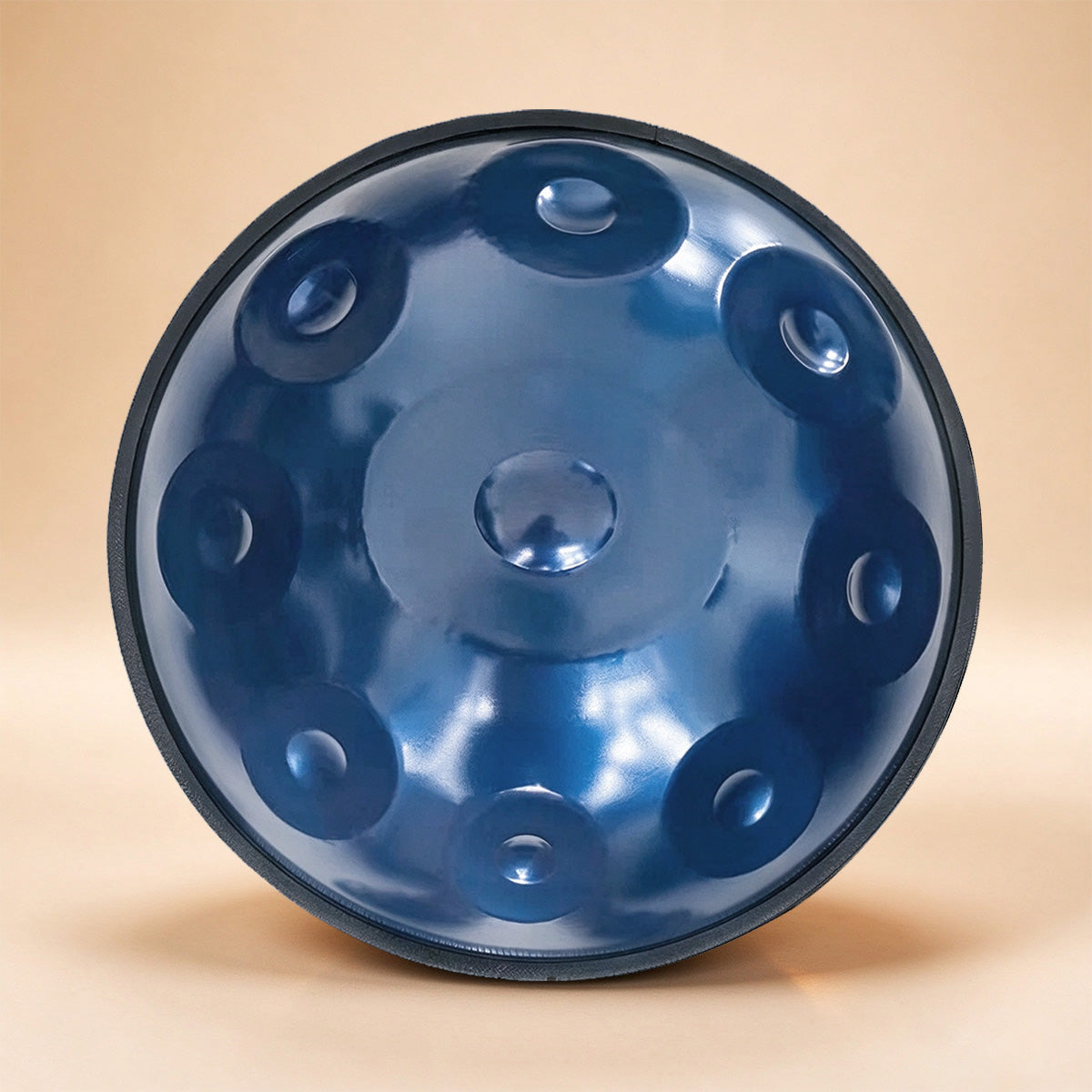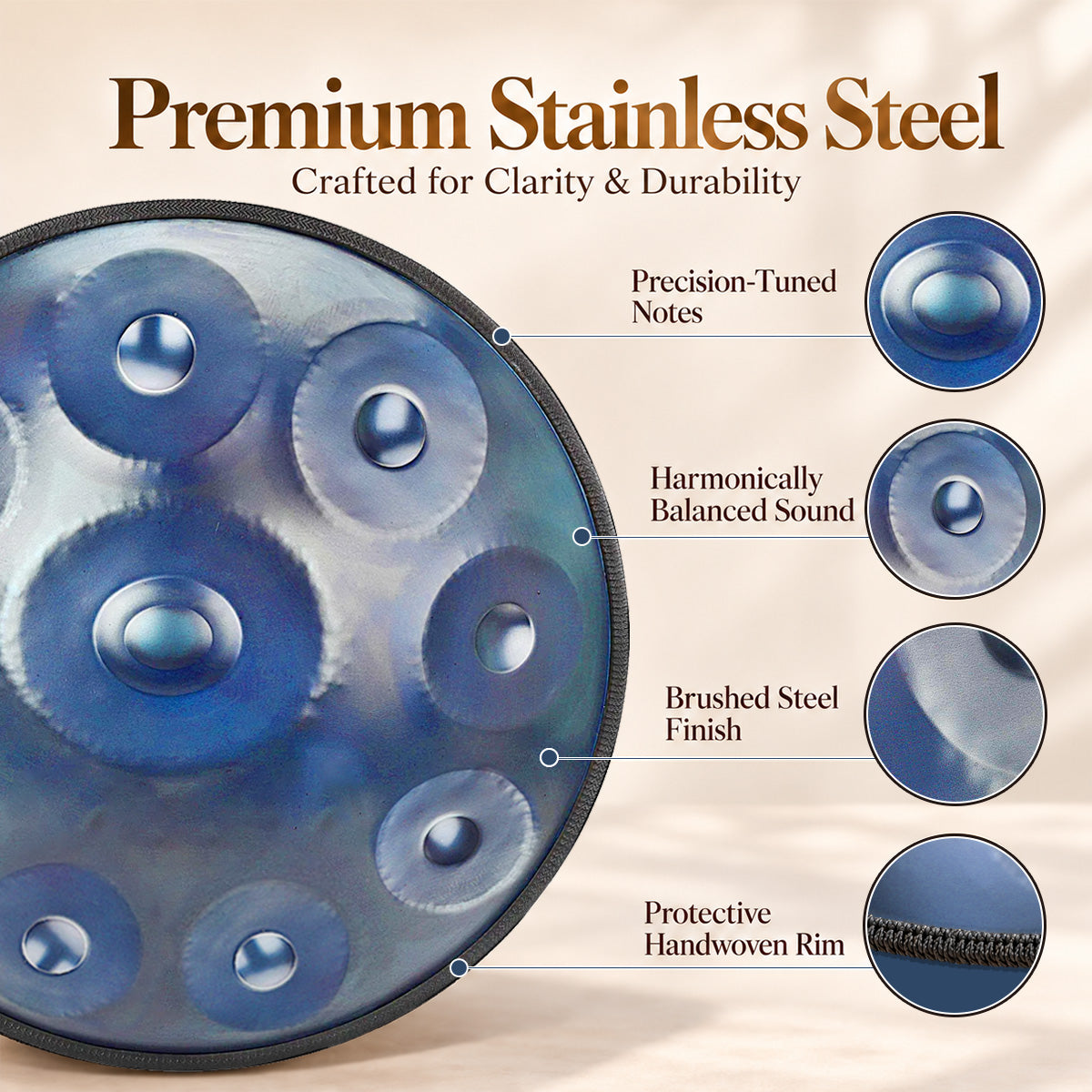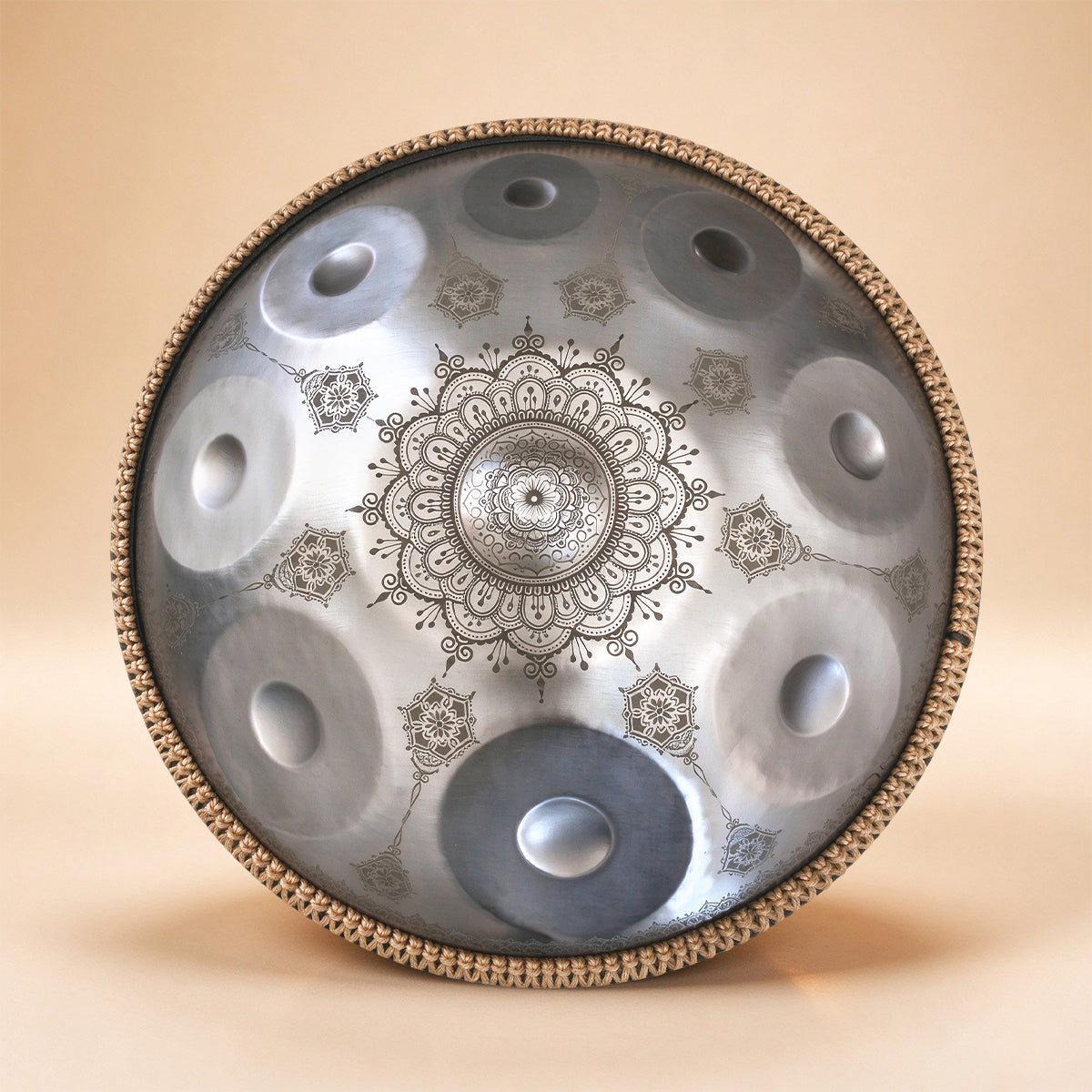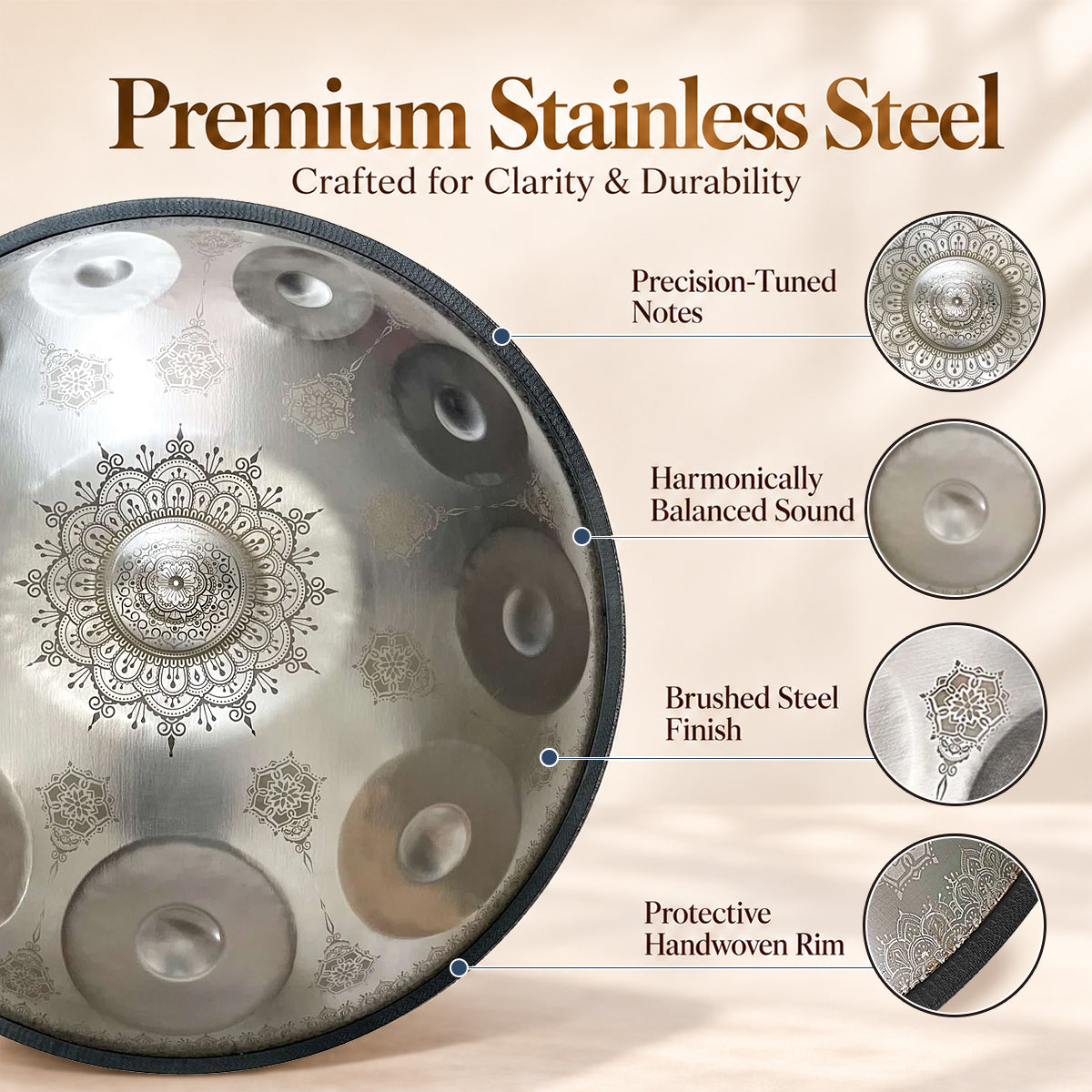
Choosing a handpan is largely choosing a scale. Unlike a guitar or keyboard, a conventional handpan is built around a specific collection of tuned notes. You cannot simply change key when your musical interests change. Buy a scale that suits your ear and playing goals, and the instrument can remain inspiring for years. Choose one only because its name sounds attractive, and you may find its musical character does not fit the way you actually play.
This handpan scales list covers popular minor, major, pentatonic, modal and world-music-inspired options. It explains their typical musical character, gives illustrative note patterns where useful, and helps you decide which scale makes sense for your first instrument, meditation sessions, improvisation or performance. Cosmos Handpan's recommendation is simple: listen to the actual instrument, check its complete note layout, and choose the sound you want to return to every day.

Which Handpan Scale Should You Choose?
For many first-time players, a D Minor or D Kurd-style handpan is a practical starting point because minor scales offer a familiar, flexible foundation for improvisation. Celtic Minor and Amara are also popular choices for players who prefer an open, flowing sound. If you want brighter melodies, explore major or Aegean-style scales. If you want a more distinctive interval pattern, consider Hijaz, but listen carefully before buying because its strong character is not everyone's preference.
There is no universally best handpan scale. The best choice is the one whose notes, register and musical character match your taste and the situations in which you plan to play.
Quick Answer: Handpan Scales at a Glance
- Best starting point for many beginners: D Minor or D Kurd-style layouts.
- For flowing, gentle improvisation: Celtic Minor, Amara or selected pentatonic scales.
- For bright, uplifting melodies: Major, Aegean or Sabye-style scales.
- For dramatic, distinctive intervals: Hijaz or other Middle Eastern-inspired layouts.
- For spacious, repetitive patterns: Pygmy and other pentatonic-inspired scales.
- Before buying: Check the actual note list, number of notes, ding pitch, tuning reference and sound sample. Scale names alone are not enough.
Our advice: If this is your first handpan, do not pay extra for an unusual scale until you know what you enjoy playing. A familiar, flexible layout is usually a more useful first purchase than a rare scale chosen on appearance or name alone.
What Is a Handpan Scale?
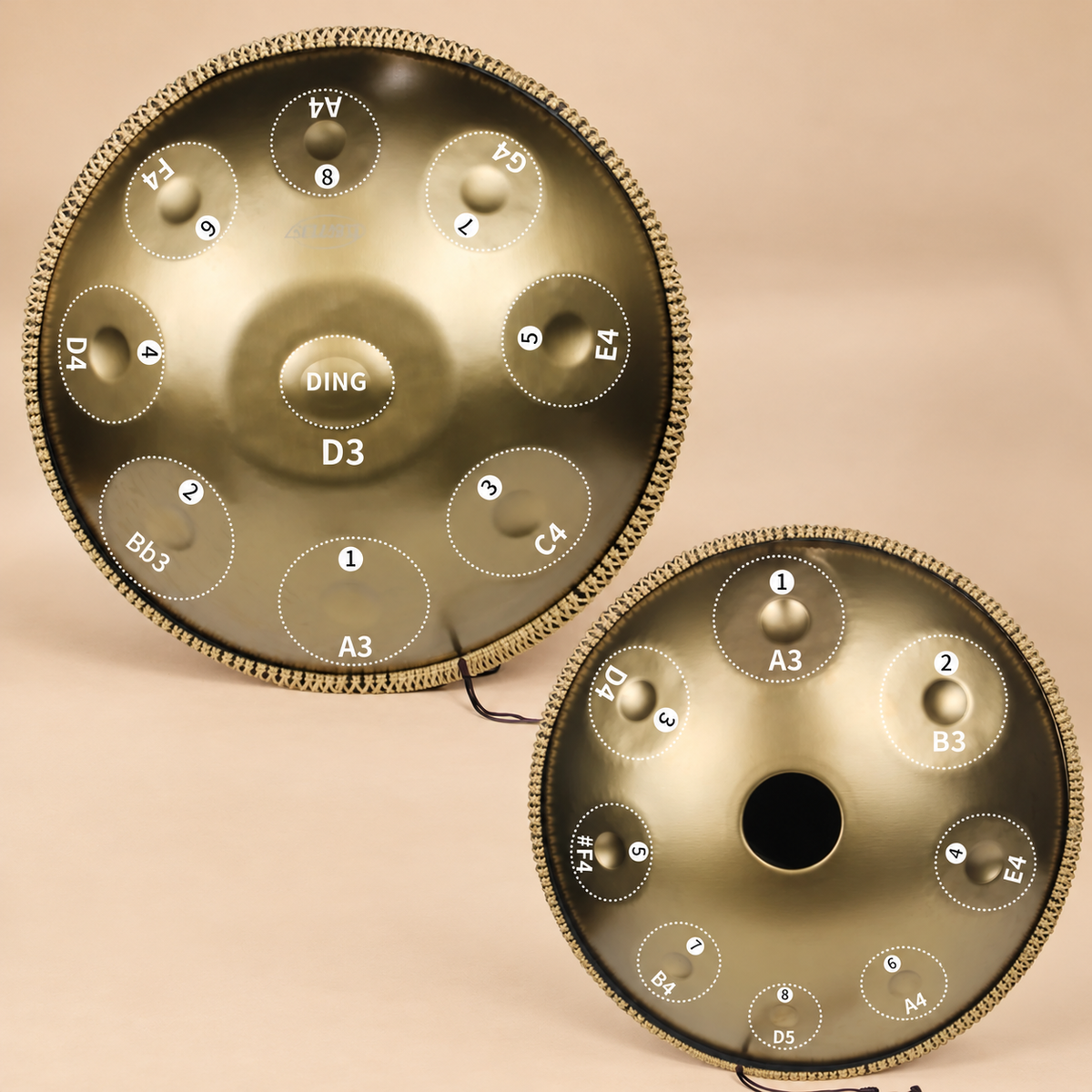
A handpan scale is the fixed collection of pitches built into the instrument. The central note is commonly called the ding, while the surrounding tone fields provide the other notes. Together, these notes determine which melodic patterns are available and how the instrument sounds when you improvise.
In Western music theory, a scale is defined by its notes and the intervals between them. A major scale, for example, uses a different interval pattern from a natural minor scale. That difference changes the relationships between notes and gives each scale its distinctive musical character. The University of Puget Sound's Music Theory for the 21st-Century Classroom explains the interval structures behind major and minor scales.
On a handpan, the scale is not just a label on a product page. It is the instrument's musical vocabulary. If the notes work naturally with the melodies you like, improvisation becomes more intuitive. If the scale feels unfamiliar or too restrictive for your musical goals, you may struggle to develop ideas even when the instrument itself is well made.
How Does a Handpan Scale Work?
When you strike a tone field, it produces a tuned pitch. Playing different fields in sequence creates a melody; playing them in combinations creates harmonic color and rhythmic patterns. Because the instrument is designed around a particular set of notes, many combinations are intentionally compatible within its scale.
This makes handpans approachable for spontaneous playing, but it does not mean every note combination will automatically sound musical. Timing, touch, dynamics, phrasing and repetition still matter. A scale gives you the available notes; your playing choices create the music.
Does a Handpan Have One Standard Scale?
No. Handpans are available in many keys and scale families. The name can also be inconsistent between makers. Two instruments marketed under similar names may have different note layouts, added bass notes or octave arrangements. Some labels describe a familiar Western mode, while others are community or maker names for a particular arrangement.
15 Popular Handpan Scales List
The following list covers scale families commonly encountered when shopping for handpans. The descriptions are practical listening guides, not strict promises about how every instrument will sound. The steel, tuning, register, note arrangement and playing technique all influence the final result.
1. D Minor

D Minor is a familiar starting point for players who enjoy a warm, reflective sound. It is based on the natural minor scale when the full seven-note form is used: D, E, F, G, A, Bb and C. Actual handpan layouts may repeat notes across octaves or omit some scale degrees to fit the instrument's design.
Best for: Beginners, relaxed improvisation, melodic practice and players who want a recognizable minor-key foundation. If you are buying your first handpan, a well-made D Minor instrument is worth serious consideration.
2. D Kurd
D Kurd is one of the most recognized names in the handpan world. It is commonly associated with a D-centered natural-minor layout, although the exact note list should always be checked with the maker. Its familiar minor character makes it approachable for players who want to explore melodies without beginning with an unusual interval pattern.
Best for: First-time buyers, solo playing and players who want a versatile minor sound. Do not assume every D Kurd listing has the same arrangement; compare the actual notes.
3. Celtic Minor
Celtic Minor is often described as open, flowing and gentle. Many layouts use a reduced selection of minor-scale notes, which can make certain melodic phrases feel spacious. The name is not a universal technical standard, and some makers use Celtic Minor and Amara interchangeably.
Best for: Relaxed improvisation, repeating melodic motifs and players who prefer a less crowded note selection.
4. Amara
Amara is another popular minor-oriented handpan family. Depending on the maker, it may share much of its musical vocabulary with Celtic Minor. The particular notes included and the way they are distributed across the instrument are what matter in practice.
Best for: Players who enjoy minor melodies with an open, spacious feel. Compare the note chart with Celtic Minor before deciding between similarly named instruments.
5. Integral
Integral is a name used for certain minor-inspired handpan layouts. The exact configuration can vary, so it should be treated as a model-specific scale name rather than a universal formula. Its appeal is generally its expressive minor character and the melodic possibilities of its selected notes.
Best for: Players who already know they enjoy minor scales and want to explore a particular maker's interpretation.
6. Hijaz
Hijaz is recognized by its distinctive interval movement and strong Middle Eastern-inspired color. In a common Western equal-tempered approximation, a D-centered Hijaz pattern may include D, Eb, F#, G, A, Bb and C, although handpan layouts differ. The characteristic gap between certain neighboring notes gives the scale a dramatic identity.
There is an important musical distinction here: the Arabic maqam tradition is richer than a simple Western scale label. The National Library of Israel's overview of maqam in Arabic music explains how intervals and melodic structures work together in this tradition. A handpan labeled Hijaz is an instrument-specific interpretation, not a complete substitute for learning the maqam tradition.
Best for: Experienced improvisers, distinctive melodic phrases and players who specifically enjoy this interval character. We would not recommend buying Hijaz purely because it sounds unusual in a short product video.
7. Pygmy
Pygmy scales are commonly associated with pentatonic-inspired note collections and spacious, repetitive improvisation. Some versions have a deep, grounded sound, while others offer a brighter register. The exact notes and number of available pitches depend on the model.
Best for: Repetitive rhythmic patterns, meditative playing and players who prefer a compact note collection rather than a large range of melodic options.
8. Major
Major scales are a practical choice for players who prefer bright, open melodic movement. Their interval structure differs from minor scales, and a full major layout can support familiar melodies and a more clearly major-key sound.
Best for: Upbeat compositions, melodic practice and players who want to explore major-key music. Check the exact key if you intend to play with guitar, piano or other instruments.
9. Aegean
Aegean is a name associated with bright, spacious and often modal or major-oriented handpan layouts. Some versions use a pentatonic selection, while expanded models may include more notes. That distinction matters: a five-note layout can feel very different from a larger version with additional scale degrees.
Best for: Players who enjoy clear, open melodic phrases and want a different color from familiar minor handpans.
10. Sabye
Sabye is a scale name found in major-oriented handpan selections. It is often chosen by players looking for a bright and accessible sound. As with other named scales, the maker's note chart should be treated as the final authority on the instrument's actual pitches.
Best for: Bright improvisation, positive melodic themes and players who prefer major-oriented musical material.
11. Akebono
Akebono is inspired by a Japanese pentatonic scale tradition. Its note selection can create a spacious sound with a distinctive melodic identity. Because pentatonic layouts contain fewer notes than many seven-note scales, players often find it easier to build short motifs and repeat them with variations.
Best for: Minimalist melodies, spacious improvisation and players drawn to Japanese-inspired musical colors.
12. Equinox
Equinox is a handpan scale name used for certain layouts that balance bright and minor-oriented qualities. The actual musical character depends on the exact notes rather than the name itself. Listen to the full instrument and inspect its note chart before deciding whether it suits your style.
Best for: Players who want a less conventional sound and are comfortable comparing note layouts rather than buying by scale name alone.
13. Mystic
Mystic is another maker or community scale name associated with particular minor and modal note combinations. It may appeal to players who prefer a more atmospheric sound, but there is no single universal Mystic formula used by every maker.
Best for: Players who have listened to the exact model and specifically enjoy its note relationships.
14. Raga-Inspired Scales
Some handpans use note collections inspired by Indian raga traditions. These can introduce distinctive melodic possibilities, but a fixed handpan layout is only a limited representation of a much broader musical system. A raga is not simply a list of notes; its identity also involves characteristic melodic movement, emphasis and performance conventions.
Best for: Musicians interested in exploring Indian-inspired melodic colors. If you want to study a particular raga seriously, use dedicated musical instruction rather than assuming a handpan scale label teaches the tradition.
15. Custom and Extended Scales
Some makers offer less common note combinations, additional bottom notes or extended layouts. These instruments can provide more range and more options for experienced musicians. However, extra notes are only useful when you know how you intend to use them.
Best for: Experienced players, composition work and musicians who have outgrown a smaller layout. For beginners, a larger or unusual scale is not automatically an upgrade.
Handpan Scales Comparison Table
Use this table to narrow your shortlist. The mood descriptions are general listening impressions, not scientific properties or guaranteed emotional effects. The same scale can sound different depending on the instrument's tuning, register, construction and performer.
| Scale | General Musical Character | Typical Playing Strength | Suitable For | Buying Advice |
|---|---|---|---|---|
| D Minor | Warm, reflective, familiar | Flexible minor-key melodies | Beginners and solo players | Strong first option if you enjoy minor music |
| D Kurd | Expressive, minor-oriented | Familiar melodic foundation | Beginners and regular practice | Check the maker's exact note layout |
| Celtic Minor | Open, flowing | Spacious melodic patterns | Relaxed improvisation | Compare directly with Amara |
| Amara | Gentle, open minor color | Repeated motifs and improvisation | Casual and developing players | Do not rely on the name alone |
| Integral | Minor-inspired, expressive | Distinctive melodic movement | Players with a clear sound preference | Review the specific model's notes |
| Hijaz | Dramatic, distinctive | Strong interval contrast | Experienced improvisers | Listen before buying; not a universal beginner choice |
| Pygmy | Spacious, repetitive | Compact melodic patterns | Meditative and rhythmic playing | Check whether the layout is pentatonic |
| Major | Bright, open | Major-key melodies | Upbeat music and accompaniment | Match the key to other instruments |
| Aegean | Bright, airy | Open melodic phrasing | Improvisers and intermediate players | Check whether it is a five- or seven-note layout |
| Sabye | Bright, major-oriented | Accessible melodic patterns | Players who prefer major sounds | Compare actual note list and audio |
| Akebono | Spacious, pentatonic-inspired | Short motifs and repetition | Minimalist improvisation | Good when you specifically like its melodic color |
| Equinox | Modal, varied | Individualized melodic exploration | Curious intermediate players | Choose by listening, not the label |
| Mystic | Atmospheric, model-dependent | Distinctive note combinations | Players seeking a less common layout | Ask for a full note chart |
| Raga-inspired | Tradition-specific melodic color | Exploration of selected note sets | Musicians with relevant musical interests | Understand the inspiration and limitations |
| Custom / Extended | Depends on the chosen notes | Wider range and more options | Advanced players and composers | Upgrade only when you need the extra notes |
How to Choose a Handpan Scale by Playing Purpose
The quickest way to narrow the handpan scales list is to start with how you expect to use the instrument. Do not begin with the longest scale chart or the most unusual name. Begin with the music you want to make.
For Beginners: Choose Familiarity and Flexibility
For beginners, D Minor, D Kurd-style and Celtic Minor layouts are sensible starting points if you enjoy minor-key music. These options give you a clear musical direction without requiring advanced theory before you can begin experimenting.
We recommend listening to several instruments in the same scale before comparing different scale families. This helps you separate the sound of the scale from differences in steel, tuning, sustain and recording quality. Our handpan for beginners guide can help you plan your first steps after choosing an instrument.
For Meditation and Relaxed Playing
Many players prefer minor-oriented or pentatonic layouts for slow, repetitive playing. D Minor, Celtic Minor, Amara and selected Pygmy models are worth auditioning if you enjoy gentle melodic movement. However, no scale guarantees a particular mental or therapeutic effect. Your playing style, volume, musical preferences and listening environment all matter.
If sound and wellbeing are part of your interest, read about how handpan music may affect the listening experience and our discussion of handpans in therapy settings. Treat these as broader context, not a promise that one scale delivers a medical benefit.
For Live Performance and Songwriting
If you plan to perform with other musicians, the scale's key becomes more important. A handpan that sounds beautiful on its own may be awkward to combine with a guitar, keyboard, flute or vocal arrangement if the notes do not fit the music. Ask what key the other instruments use and whether they can accommodate your handpan.
For songwriting, consider whether you need a full seven-note collection, a compact pentatonic layout or additional bass notes. A wider selection can expand your options, but only if you can use those notes musically.
For Experienced Players: Consider Modal Variety and Range
Once you understand your preferred scale family, less common layouts can be worthwhile. Hijaz, Akebono, custom modes and extended instruments offer different note relationships and creative possibilities. At this stage, the question is not whether the scale is beginner-friendly. It is whether its exact notes give you new musical ideas.
For advanced players, we recommend comparing the full note chart and playing sample rather than relying on a short description such as "mysterious" or "exotic." Those adjectives are not a substitute for hearing the intervals.
How Notes, Layout and Note Count Affect a Handpan Scale
Scale choice is only one part of the buying decision. The number of notes, the position of the tone fields, the central ding and any bottom notes affect how the instrument feels to play.
What Is the Difference Between a Scale and a Note Count?
A 9-note handpan does not necessarily contain nine different notes. Some notes may repeat at different octaves. A 10-note instrument may add a new pitch, repeat an existing pitch or include a lower note. The number of tone fields tells you how many playing areas are available, not how many unique pitch classes the scale contains.
This distinction matters when comparing models. A player who wants more melodic options should inspect the unique notes, not simply buy the instrument with the highest number printed in its title. Read our guide to how many notes a handpan should have before paying extra for an expanded layout.
Why the Ding Note Matters
The ding is the central note and often establishes the tonal center of the instrument. A D-centered handpan and a C-centered handpan may share some note names, but they do not create the same overall musical reference. The ding also affects how you coordinate with other instruments.
When buying, check the ding pitch and the surrounding note list together. Do not choose based on the root note alone.
What Does 432Hz or 440Hz Mean?
432Hz and 440Hz usually refer to the reference tuning standard used for the instrument, not its scale name or the lowest note. The choice matters most when playing with other instruments or recordings that use a different reference pitch. For solo practice, the sound you prefer may be the deciding factor, but ensemble players should confirm compatibility.
Cosmos Handpan provides further detail in its 432Hz handpan guide. If you are comparing instruments, ask the maker to confirm the tuning reference and the intended compatibility with your other musical equipment.
Does Handpan Size Change the Scale?
Scale and physical size are separate specifications, although they influence the overall instrument design. Shell diameter, note-field dimensions and the spacing between tone fields affect playing comfort and layout possibilities. A larger instrument is not automatically better, and a smaller instrument is not automatically easier for every player.
Check the standard handpan size guide when comparing physical dimensions. If possible, consider how comfortably your hands reach the fields and whether the instrument suits your preferred playing posture.
Pros and Cons of Common Handpan Scale Families
Each scale family creates opportunities and limitations. The right choice depends on your musical goals, not on a ranking that claims one scale is objectively superior.
| Scale Family | Pros | Cons | Our Practical View |
|---|---|---|---|
| Minor-oriented | Familiar melodic language; many options for reflective and expressive playing | May not suit players who prefer bright major-key melodies | A strong first shortlist for players who enjoy minor music |
| Pentatonic | Compact note collection; useful for repeated motifs and spontaneous improvisation | Fewer available pitches can limit some melodic ideas | Worth buying when you genuinely enjoy its spacious sound |
| Major-oriented | Bright character; useful for major-key melodies and accompaniment | May feel less suitable for players who prefer darker minor colors | Choose it for the sound, not because it is assumed to be happier |
| Hijaz and modal | Distinctive intervals and a strong musical identity | Can be less familiar to beginners and more specific in character | Best after listening carefully to the exact instrument |
| Extended / custom | More notes or range can expand composition options | Higher cost and more complex playing decisions | Upgrade when you can identify the musical limitation you want to solve |
Handpan Buying Considerations: What to Check Before You Order
Two handpans with the same scale label can still differ significantly in tone, sustain, response and build quality. When choosing an instrument, evaluate the actual product rather than buying from a scale name or marketing description alone.
1. Ask for the Complete Note Chart
Confirm the ding, every surrounding note, octave placement and any bottom notes. If the seller cannot provide a clear note chart, you do not have enough information to compare the instrument properly.
2. Listen to a Full Sound Demonstration
A short clip of one attractive phrase is not enough. Look for a demonstration that plays every note individually and includes several musical patterns. Listen for consistent tone, clean response and a sustain length that suits your playing style.
3. Compare Tuning and Build Quality
A scale can be attractive on paper but disappointing if the instrument is poorly tuned. Ask about the tuning reference, quality control and after-sales support. Handpans are precision-tuned instruments; avoid treating them as generic metal percussion products.
4. Decide Whether More Notes Are Worth the Price
A 12-note or extended handpan may provide more range than a 9-note instrument, but the extra notes only create value if you use them. Beginners often benefit more from learning one coherent layout than from paying for additional notes they cannot yet incorporate into their playing.
Compare the 9-note beginner handpan collection, 10-note handpan collection and 12-note handpan collection according to your experience and intended use.
5. Check Accessories and Protection
A suitable carry bag helps protect the instrument during storage and transport. A stand can improve playing comfort, while a cleaning cloth supports routine care. Check what is included rather than assuming every product bundle contains the same accessories.
Cosmos Handpan Recommendation: A Practical First Instrument
For a first purchase, we generally recommend starting with a well-made instrument in a scale you already enjoy hearing. The goal is not to own the most complicated handpan. It is to have an instrument that encourages regular practice, supports your musical interests and feels comfortable to play.

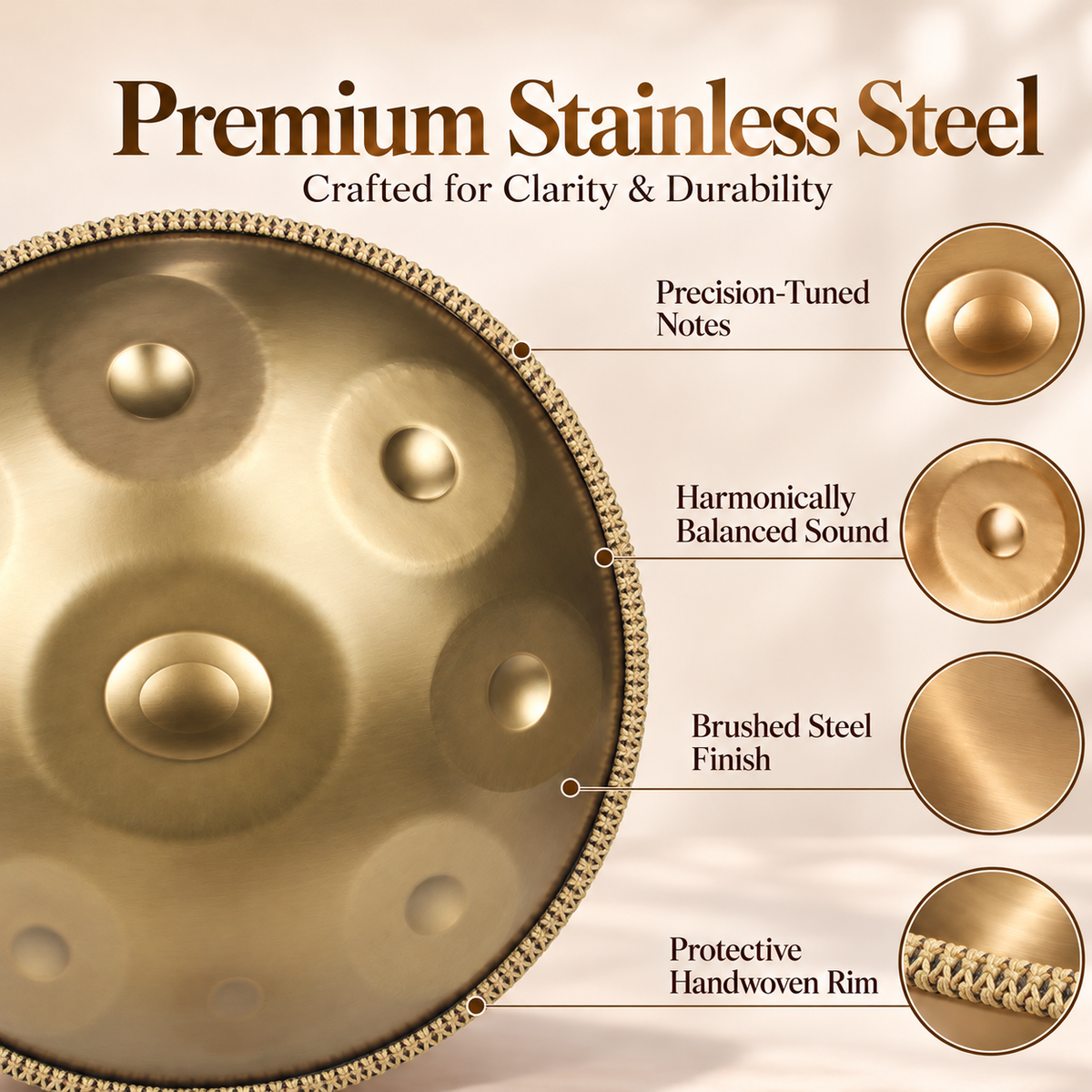
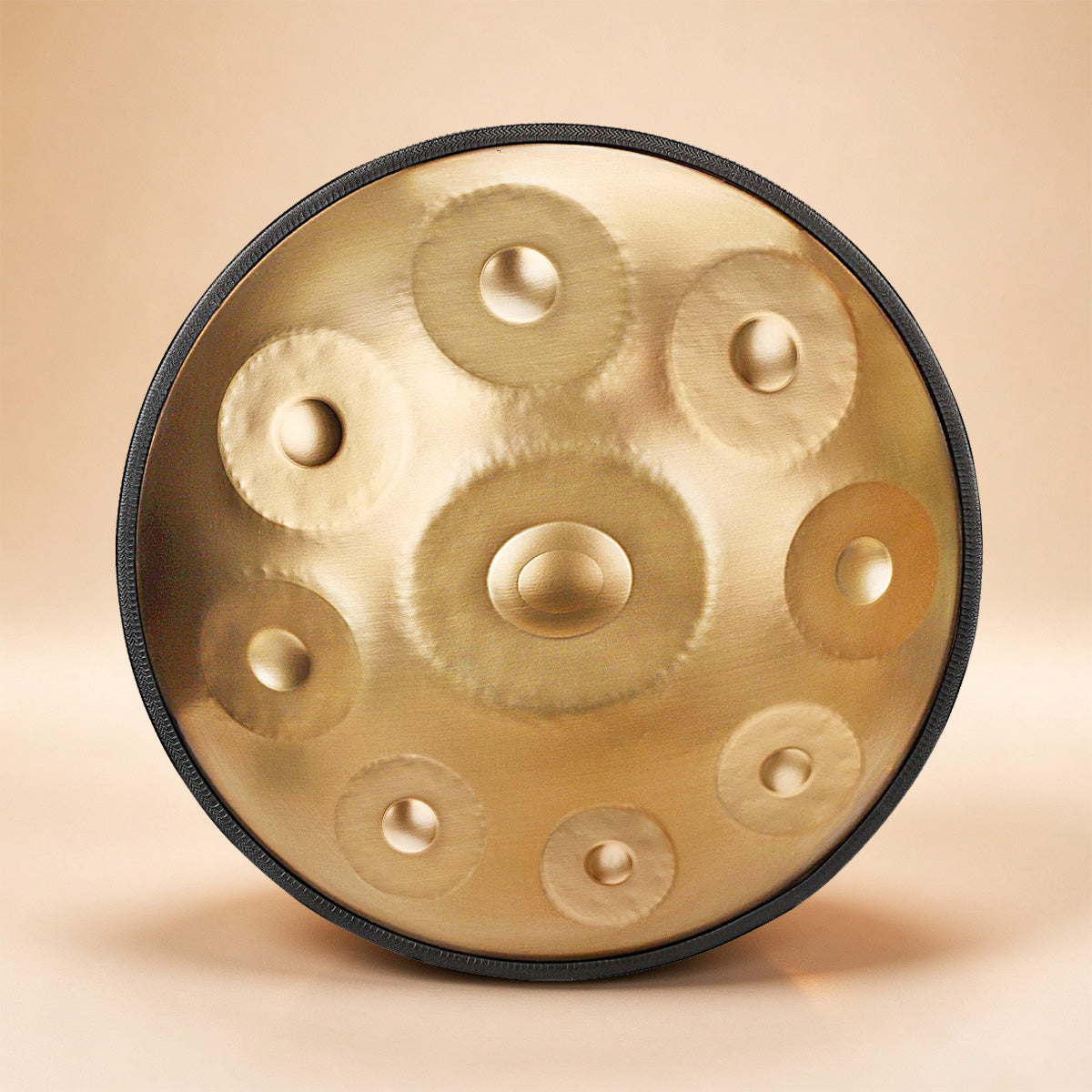
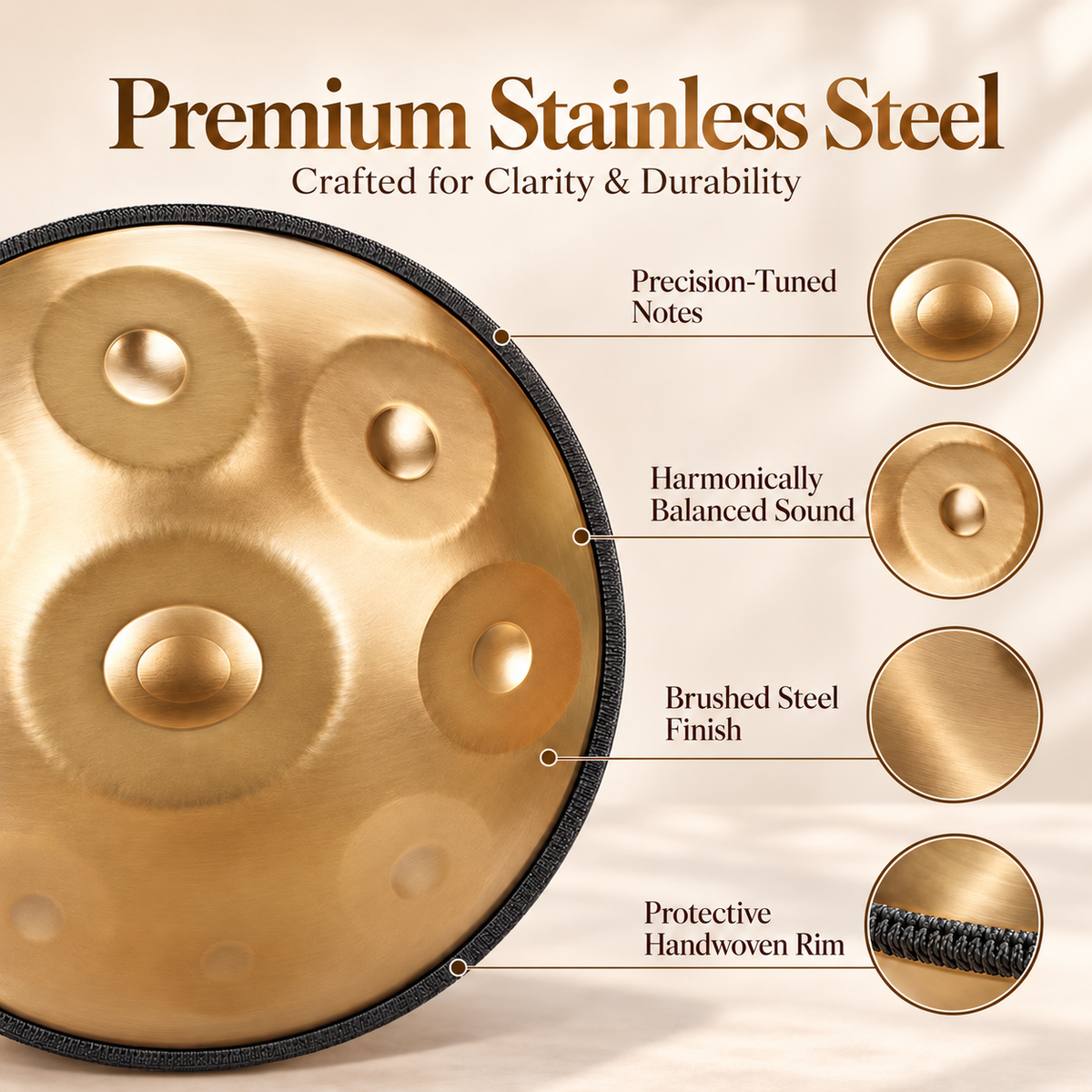
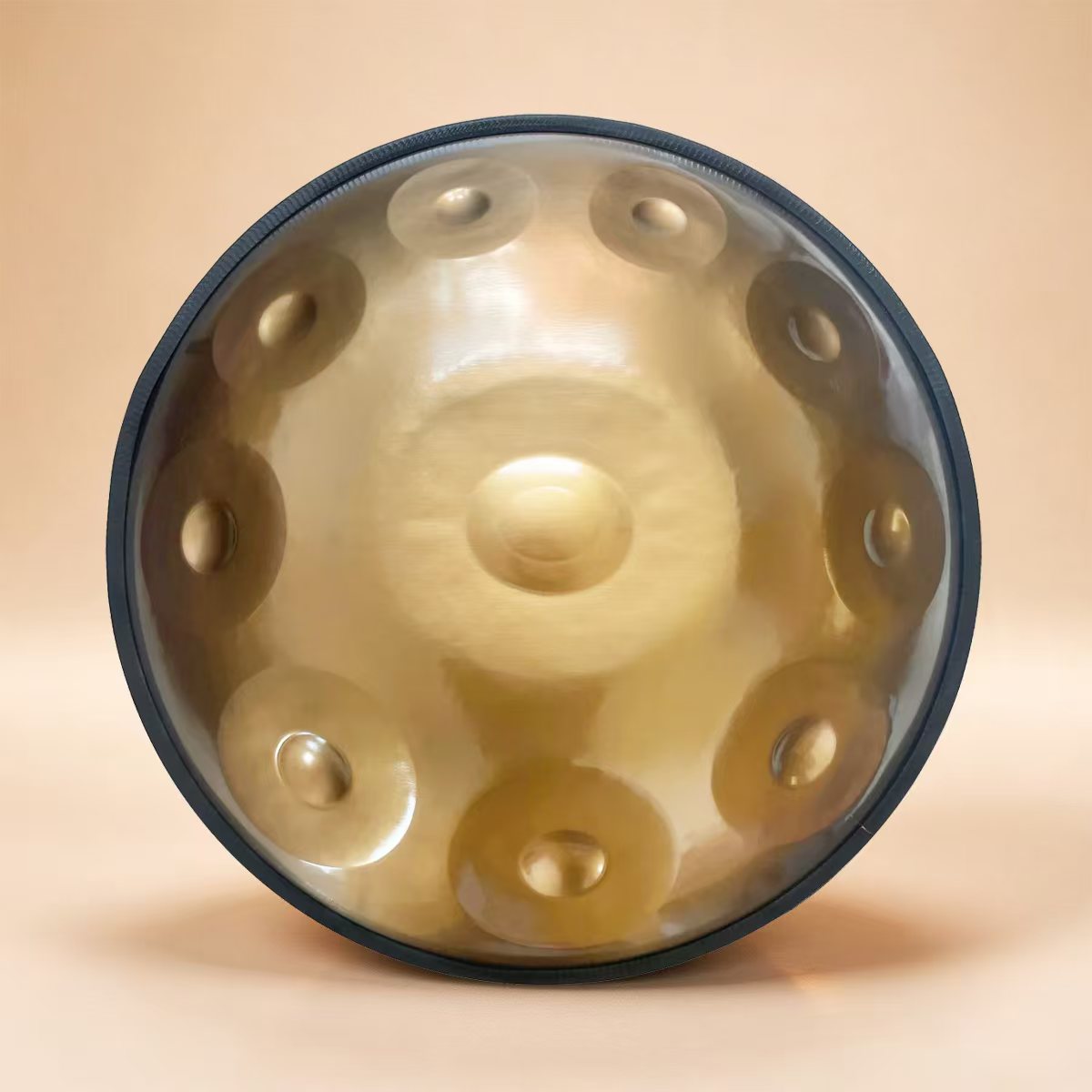
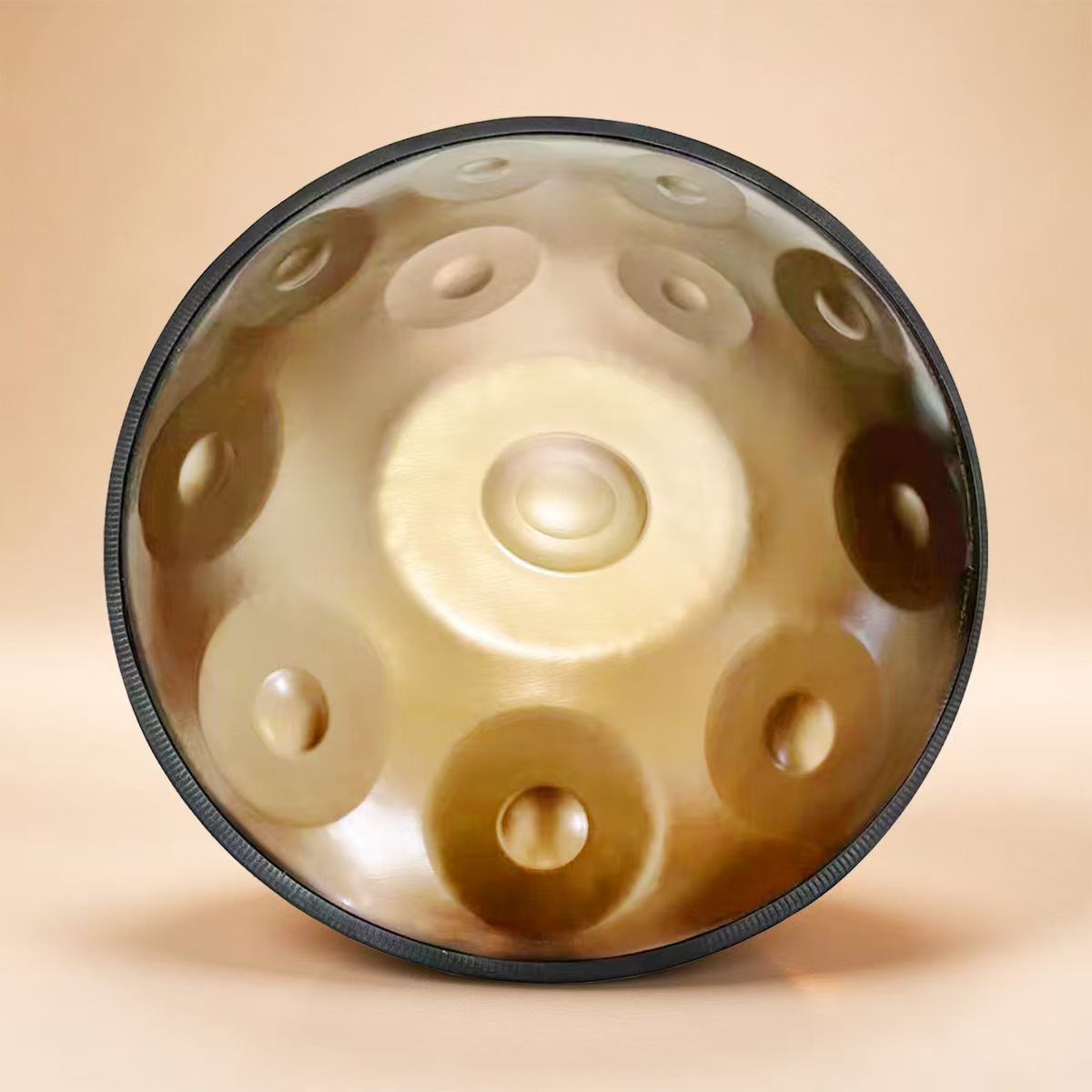
Cosmos Handpan Golden Elegance – 9 Notes D Minor Gift Set
This 9-note D Minor handpan is designed for first-time buyers who want a straightforward instrument for learning, improvisation and relaxed playing. Its D Minor layout offers a familiar minor-key starting point, while the golden finish gives it a distinctive appearance.
Scale: D Minor, 9-note layout
Tuning options: 432Hz or 440Hz
Sound: Clear sustain with a smooth, calming tone
Suitable for: First-time buyers, meditation, relaxation and small performances
Included gift set: Protective carry bag, handpan stand, pair of mallets and cleaning cloth.
Choose the tuning reference that suits your playing plans, particularly if you intend to play with other instruments. Confirm the exact note chart and selected tuning option before ordering.
Is a 9-Note D Minor Handpan Worth Buying?
For a beginner who wants a manageable layout and enjoys minor-key music, a 9-note D Minor handpan is a sensible starting point. It avoids the assumption that more notes automatically mean a better instrument. You can concentrate on touch, rhythm, melodic phrasing and learning the relationship between the notes.
For experienced musicians, the decision is different. If you already have a smaller handpan and regularly find yourself needing notes outside its range, an expanded layout may be a worthwhile second instrument. If you mainly play short improvisations and repetitive patterns, upgrading simply to increase the note count may offer little practical benefit.
Cosmos Handpan's approach is to match the instrument to the player rather than treating a larger scale as an automatic upgrade. If you are unsure whether D Minor, Celtic Minor, Hijaz or another layout fits your goals, contact Cosmos Handpan with your preferred music style and experience level before choosing.
Common Mistakes When Choosing a Handpan Scale
Choosing by Scale Name Alone
Scale names are not always standardized across makers. The same label may refer to slightly different note collections or layouts. Always compare the actual notes and listen to the exact model.
Assuming Minor Means Sad and Major Means Happy
Minor and major describe musical interval structures. They can influence the character listeners perceive, but they do not dictate a single emotion. Rhythm, tempo, dynamics, register and performance style can change the impression considerably.
Buying the Most Unusual Scale First
A rare scale may sound impressive in a demonstration, but it can be a poor first purchase if you do not enjoy its musical vocabulary. Choose a distinctive layout because you like its sound, not because it appears more advanced.
Confusing Note Count With Musical Range
More tone fields do not always mean more unique notes. Check the actual pitch collection and octave range. A carefully designed 9-note instrument may suit your playing better than a larger instrument with notes you rarely use.
Ignoring Tuning Compatibility
If you plan to play with a guitar, piano, ensemble or backing tracks, confirm the key and reference tuning. A handpan that works beautifully for solo playing may require more planning when used with other instruments.
Expecting the Instrument to Teach You Automatically
A scale can make improvisation more accessible, but progress still requires practice. Learn a few basic rhythms, explore repeated patterns and develop control over touch and dynamics. For structured practice, see our guide to handpan learning apps and tools.
Frequently Asked Questions About Handpan Scales
1. What is the most popular handpan scale?
D Kurd and D Minor-style handpans are among the most commonly encountered options. They are popular with beginners because their minor-oriented note collections provide a familiar foundation for improvisation. Popularity does not make them the right choice for every player, so listen to the actual instrument before buying.
2. Which handpan scale is best for beginners?
D Minor, D Kurd-style and Celtic Minor are practical starting points for many beginners who enjoy minor-key music. Choose the one whose sound you prefer and whose note layout feels intuitive. A clear sound demonstration and complete note chart are more useful than relying on a scale name alone.
3. What is the difference between D Minor and D Kurd?
The terms are often used in closely related ways in handpan listings, but they should not be assumed to mean identical layouts. A full D natural minor scale contains D, E, F, G, A, Bb and C. Handpan makers may arrange, repeat or omit notes differently. Check the exact note chart for the instrument.
4. What is the difference between Celtic Minor and Amara?
Celtic Minor and Amara are sometimes used interchangeably by handpan makers, but naming and note layouts are not universal. Compare the complete pitch collection and octave arrangement rather than assuming the two names always describe exactly the same instrument.
5. Which handpan scale is best for meditation?
Many players prefer minor-oriented or pentatonic layouts for slow, repetitive playing. D Minor, Celtic Minor, Amara and selected Pygmy instruments are worth listening to. There is no single scale that guarantees a meditative or therapeutic effect; personal preference and playing style matter.
6. Is Hijaz a good handpan scale for beginners?
Hijaz can be a good choice if you specifically enjoy its distinctive interval pattern. However, it has a strong musical identity and may feel less familiar to players who are new to modal music. Beginners should listen to several complete demonstrations before choosing it as a first instrument.
7. Does a handpan scale change after purchase?
A conventional handpan is built around a fixed set of tuned notes. Changing it to a different scale is not a routine adjustment like changing the tuning of a guitar. Specialist tuning work may correct or adjust individual pitches, but it should not be treated as a simple way to convert one scale into another.
8. Is a 9-note or 12-note handpan better?
Neither is automatically better. A 9-note handpan can be easier to approach and may provide everything a beginner needs. A 12-note instrument can offer additional melodic range, but it is worth paying for only if you will use those extra notes. Compare the unique pitches and octave range rather than the note count alone.
9. What does 432Hz mean on a handpan?
432Hz generally refers to the reference tuning pitch used for the instrument, rather than its scale or lowest note. The alternative commonly encountered is 440Hz. If you plan to play with other instruments or recordings, confirm that their reference tuning is compatible.
10. Can two handpans with the same scale name sound different?
Yes. Makers may use different note layouts under similar scale names, and the steel, construction, register, tuning and playing technique also affect the sound. Ask for the complete note chart and a recording of the exact instrument you intend to buy.
11. Can I play a handpan with a guitar or piano?
Yes, but you should check the handpan's key, available notes and reference tuning against the other instrument. A handpan with a compatible key and note collection is generally easier to use in an arrangement. Some combinations require transposition or a carefully adapted accompaniment.
12. Should I buy a custom handpan scale?
A custom scale can be worthwhile if you have a clear musical goal and understand the notes you want. It is usually not the best first purchase for someone who is still learning what scale families they enjoy. Start with familiar options, develop your preferences and consider a custom layout when you can explain what the standard choices do not provide.
References
The following sources provide additional context for scale intervals and the musical traditions behind some handpan scale names.
- Music Theory for the 21st-Century Classroom – University of Puget Sound. An educational music theory text covering major and minor scales, intervals and scale structures.
- The Maqām in Arabic Music – National Library of Israel. Background on maqam, interval relationships and the structure of Eastern musical scales.
- Research on Maqam Al Hijaz – University of Southampton Repository. Academic research discussing Hijaz intervals and its relationship to musical traditions.
The best handpan scale is not the rarest, the largest or the one with the most impressive name. It is the one that gives you musical ideas you want to explore. Compare the notes, listen to the instrument, check the tuning and choose a layout that fits the way you want to play. That is a much better basis for a handpan purchase than chasing a trend.