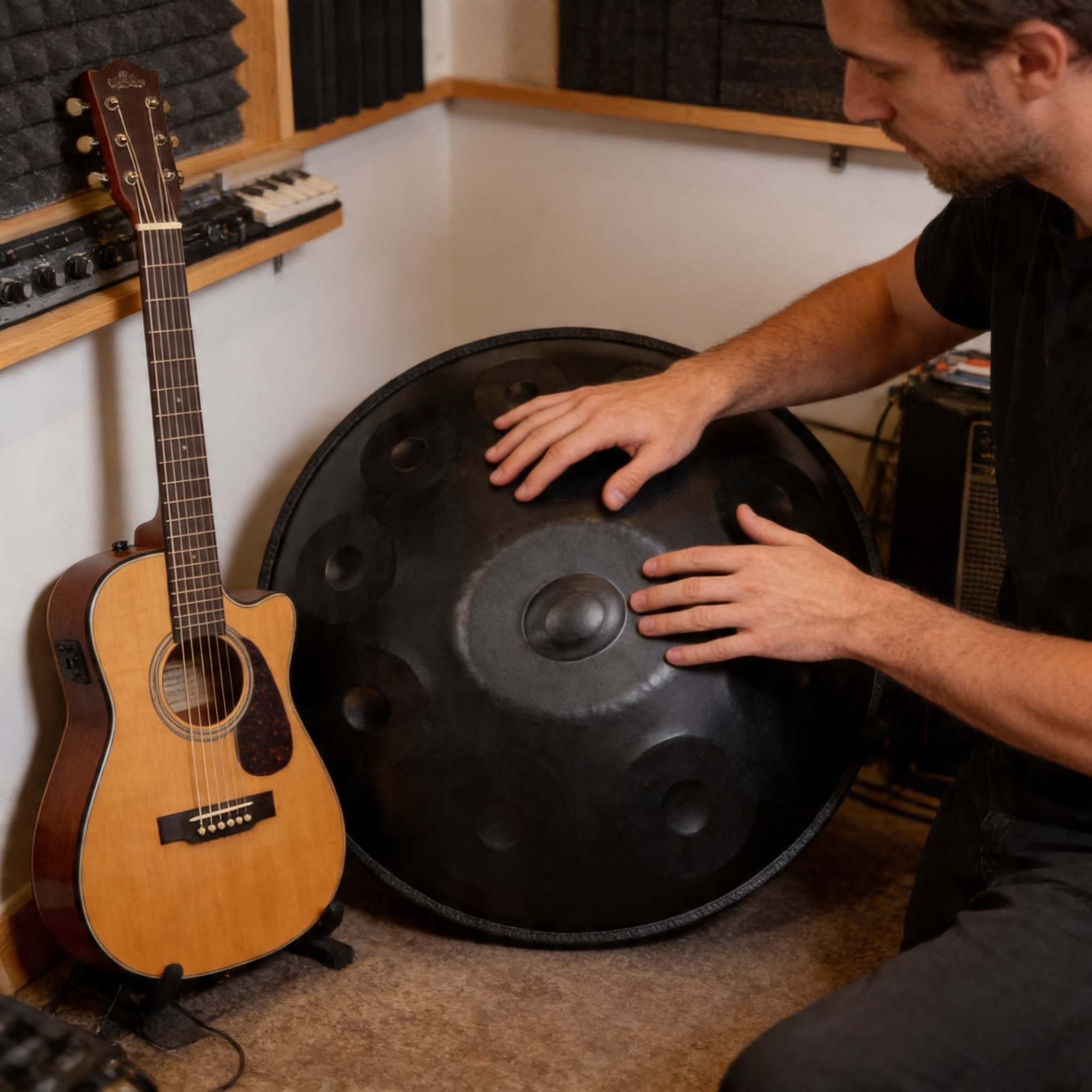
Stepping into the world of melodic percussion can feel intimidating. Whether you are seeking an instrument for deep meditation, sound therapy, or just a relaxing hobby after a high-stress workday, the barrier to entry for traditional musical instruments is notoriously high. You are forced to memorize complex chord progressions, struggle with embouchure, or endure bleeding fingertips on steel guitar strings. However, if you want to bypass years of tedious practice and experience instant musical gratification, you need to learn how to play steel tongue drum for beginners.

At CosmosHandpan, we engineer and supply premium acoustic steel instruments to a global audience. From our experience, the steel tongue drum (often referred to as a tank drum) is the most forgiving, accessible, and resilient melodic instrument on the market today. Unlike its larger, more delicate cousin—the handpan—a tongue drum is virtually indestructible and requires absolutely zero musical background to sound beautiful.
In this comprehensive, opinionated guide, we will break down exactly what this instrument is, the acoustic physics of how it works, and the definitive techniques required to play steel tongue drum for beginners. We will explain not only the mechanics of striking the instrument, but whether it is actually worth using and buying compared to other percussion options on the market.
Quick Answer: How to Play Steel Tongue Drum for Beginners
To successfully play steel tongue drum for beginners, you must understand that the instrument is tuned to a fixed, harmonious scale (usually pentatonic). This means you cannot play a "wrong" or dissonant note.
The basic technique: Rest the drum flat on your lap or on a padded table. Using the included rubber mallets, strike the center of a cut "tongue" and pull the mallet away immediately—like touching a hot stove. Leaving the mallet on the steel will choke the vibration. Alternate strikes between the left and right sides of the drum to easily walk up and down the scale. Once comfortable, you can transition to using the pads of your fingers for a softer, warmer, and more intimate tone.
Table of Contents
- What It Is and How It Works
- The Benchmark: Cosmos 14-Inch Drum
- Step-by-Step: How to Play Steel Tongue Drum for Beginners
- Benefits and Limitations of the Instrument
- Comparison Table: Tongue Drum vs. Handpan
- Who Should Use It & Who Does Not Need It
- Common Mistakes to Avoid
- Crucial Buying Considerations
- Expert Recommendation
- Frequently Asked Questions (FAQ)
What It Is and How It Works
Before you sit down to play steel tongue drum for beginners, you must understand the acoustic engine in your lap. A steel tongue drum is a hollow, enclosed resonant chamber typically constructed from high-carbon steel or a specialized steel-titanium alloy. On the top hemisphere of the drum, specific U-shaped or V-shaped slits are laser-cut into the metal. These cut-outs are the "tongues."

How it works is a masterclass in physics. Each tongue acts as an independent cantilever. When you strike it, the tongue vibrates at a specific frequency dictated by its length, width, and the mass of the steel. Larger tongues vibrate slower, producing deep, low-frequency bass notes. Smaller tongues vibrate rapidly, producing bright, high-frequency treble notes.
Furthermore, the entire hollow body of the drum acts as a Helmholtz resonator. When a tongue is struck, it pushes air inside the chamber, forcing it out of the sound hole at the bottom, creating a rich, lingering sustain that echoes like a singing bowl. Because the notes are physically cut into the alloy, the tuning is permanent. You will never need to research how to tune a handpan or tongue drum; the physics of the metal dictates the pitch forever.
The Benchmark: Cosmos 14-Inch Drum
In our testing and manufacturing, the size and material density of the drum directly dictate how easy it is to play steel tongue drum for beginners. We engineered our flagship model specifically to overcome the limitations of cheap, tinny alternatives found on generic marketplaces.
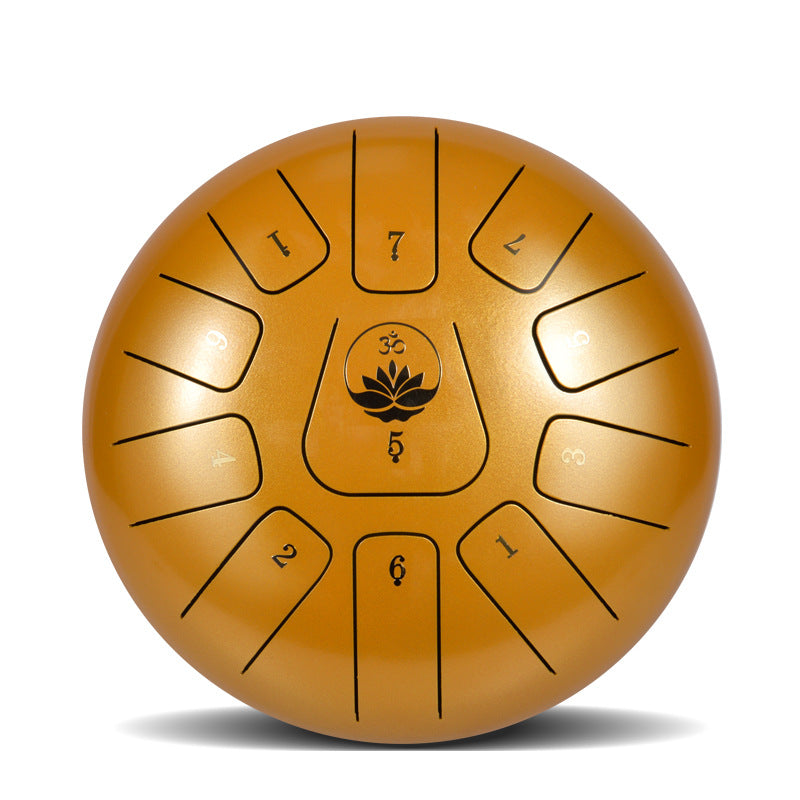
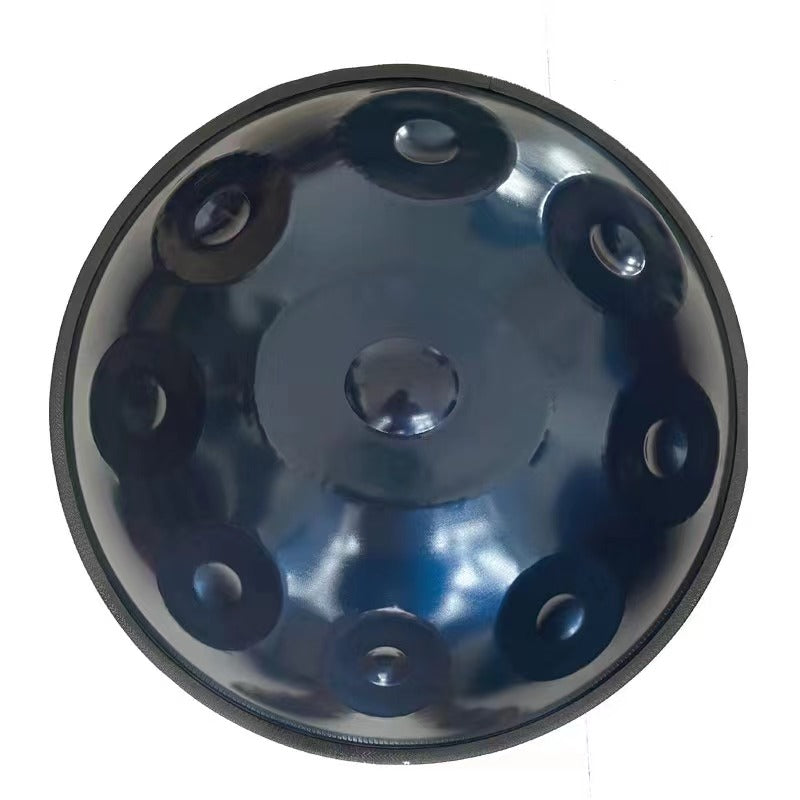
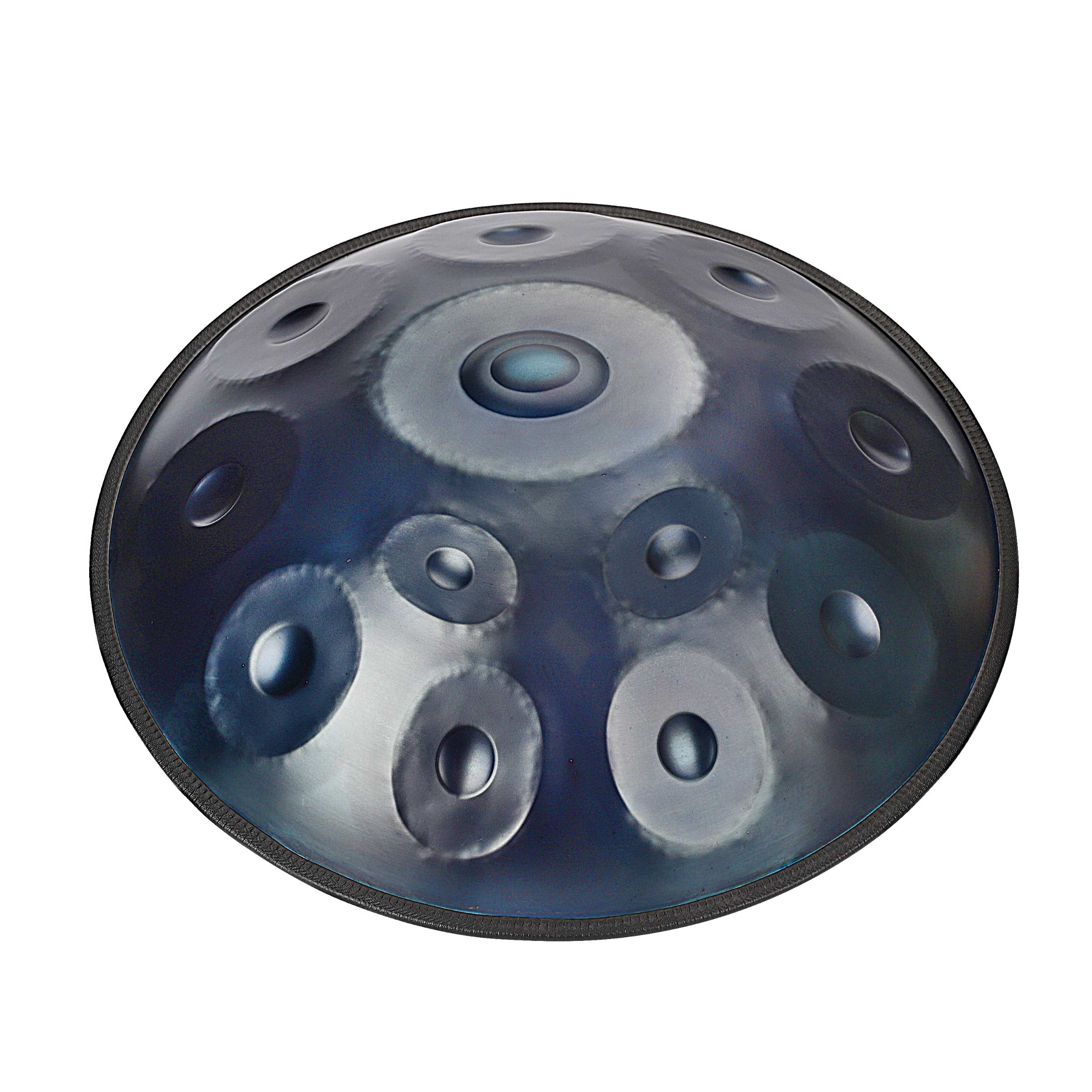
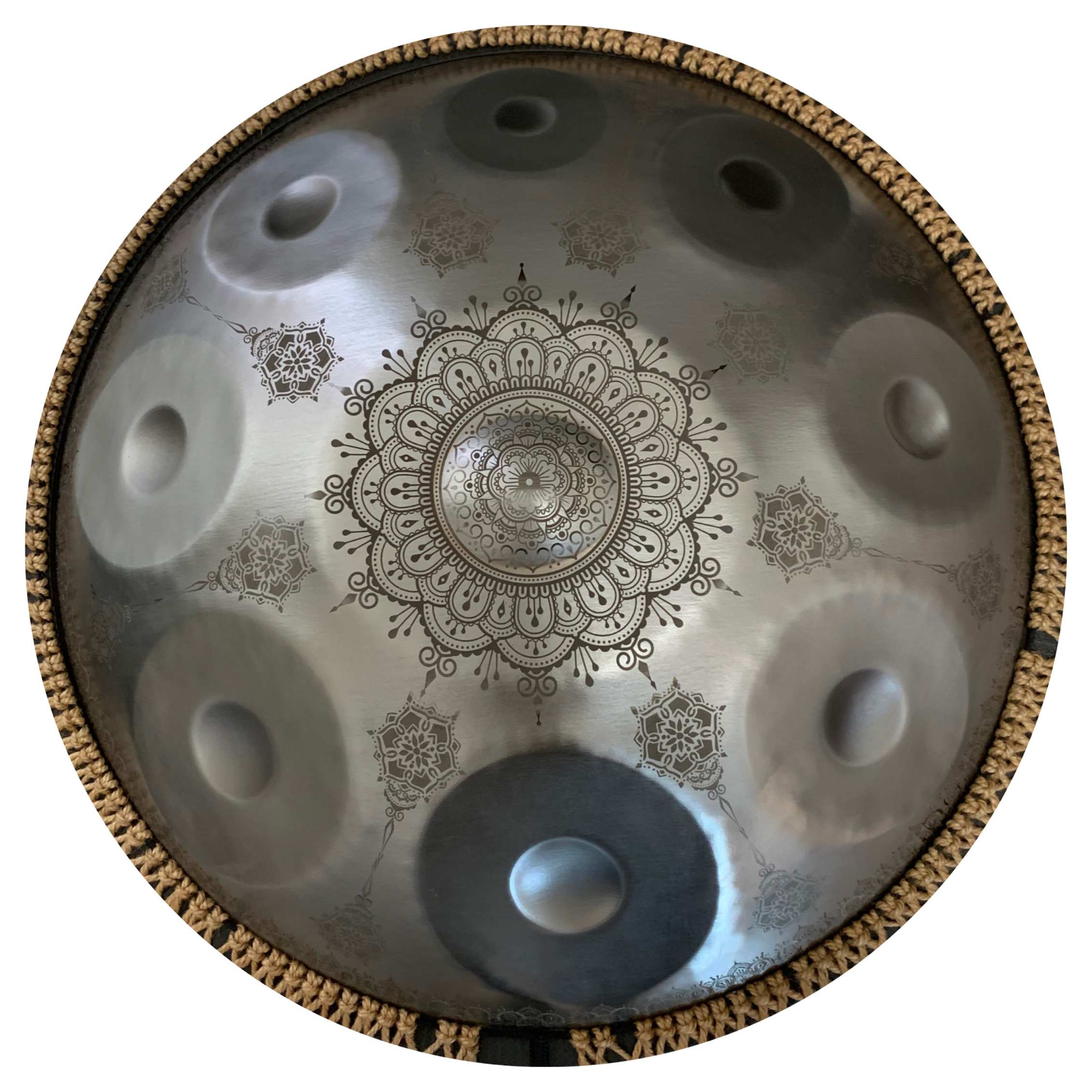
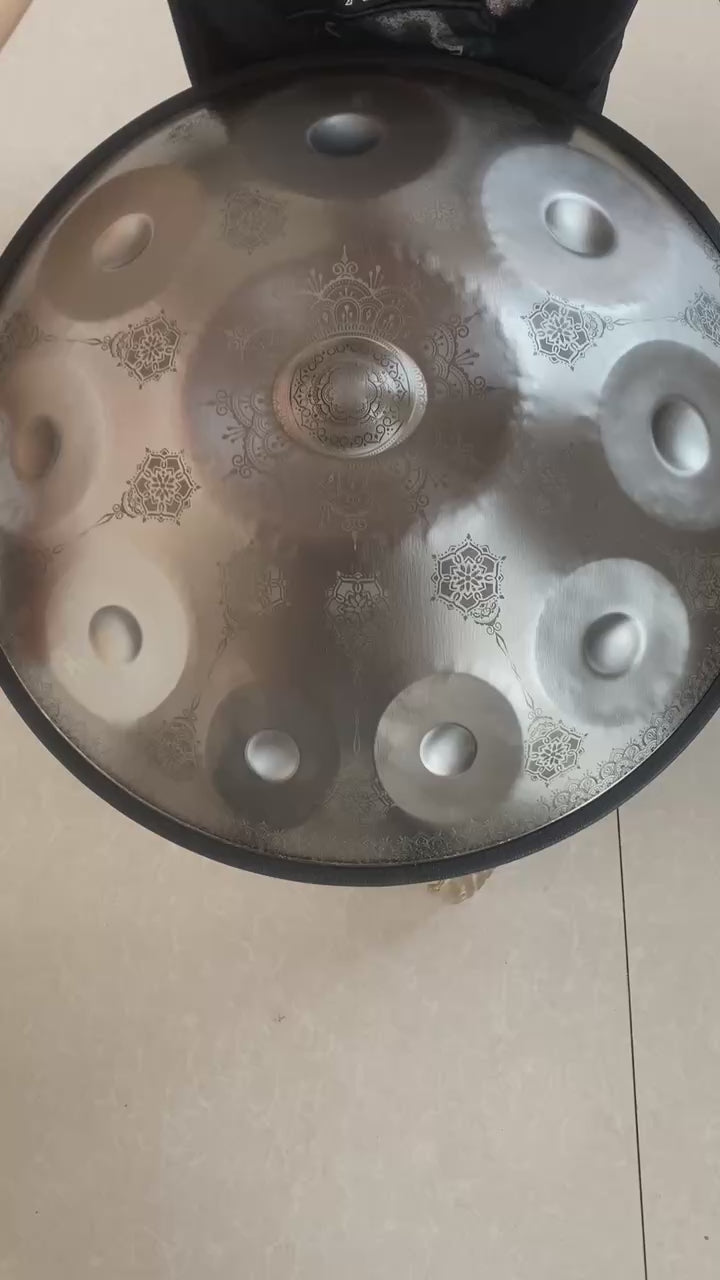
Cosmos Steel Tongue Drum - 14 Inch 11 Notes Gift Set
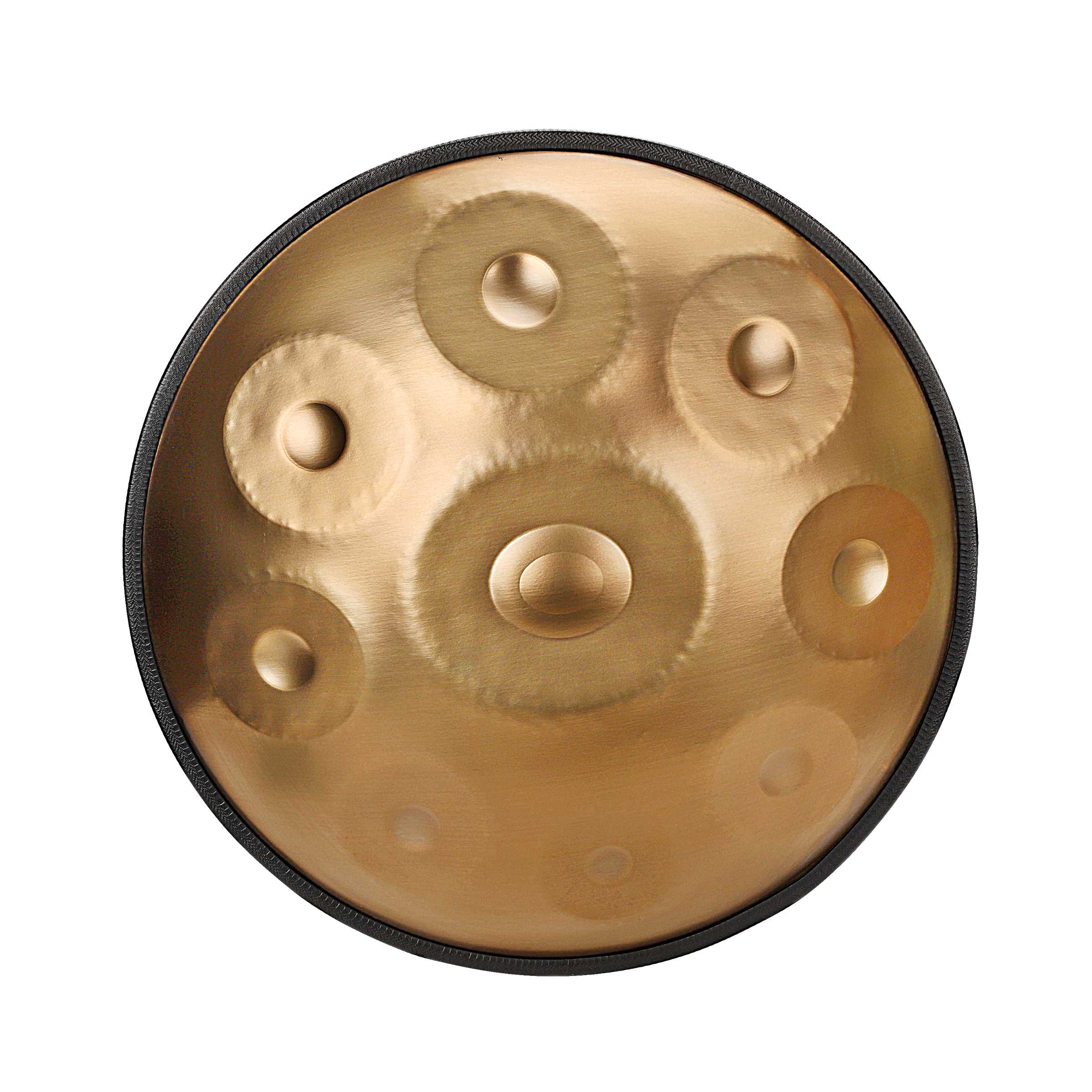
The Cosmos Steel Tongue Drum | 14 Inch 11 Notes Tank Drum for Yoga & Meditation is explicitly designed for accessible melodic percussion. Its compact layout supports intuitive rhythm and melody playing, making it the premier choice for sound therapy and relaxation.
- Note Options: 11 precisely tuned notes.
- Material: Premium Steel-Titanium alloy (highly corrosion-resistant).
- Application: Ideal for meditation, yoga, and acoustic outdoor sessions.
Step-by-Step: How to Play Steel Tongue Drum for Beginners
If you have just unboxed your instrument, here is the unfiltered, practical truth on how to play steel tongue drum for beginners. Do not overthink it. The instrument is engineered to guide you.
1. Posture and Positioning
To extract the best resonance, the drum must be allowed to breathe. In most professional situations, we recommend sitting cross-legged and resting the drum entirely on your lap, or placing it on a designated padded stand. Do not place the drum flat on a hard wooden table without rubber feet; the hard surface will block the bottom sound hole and completely kill the bass resonance.
2. Understanding the Layout
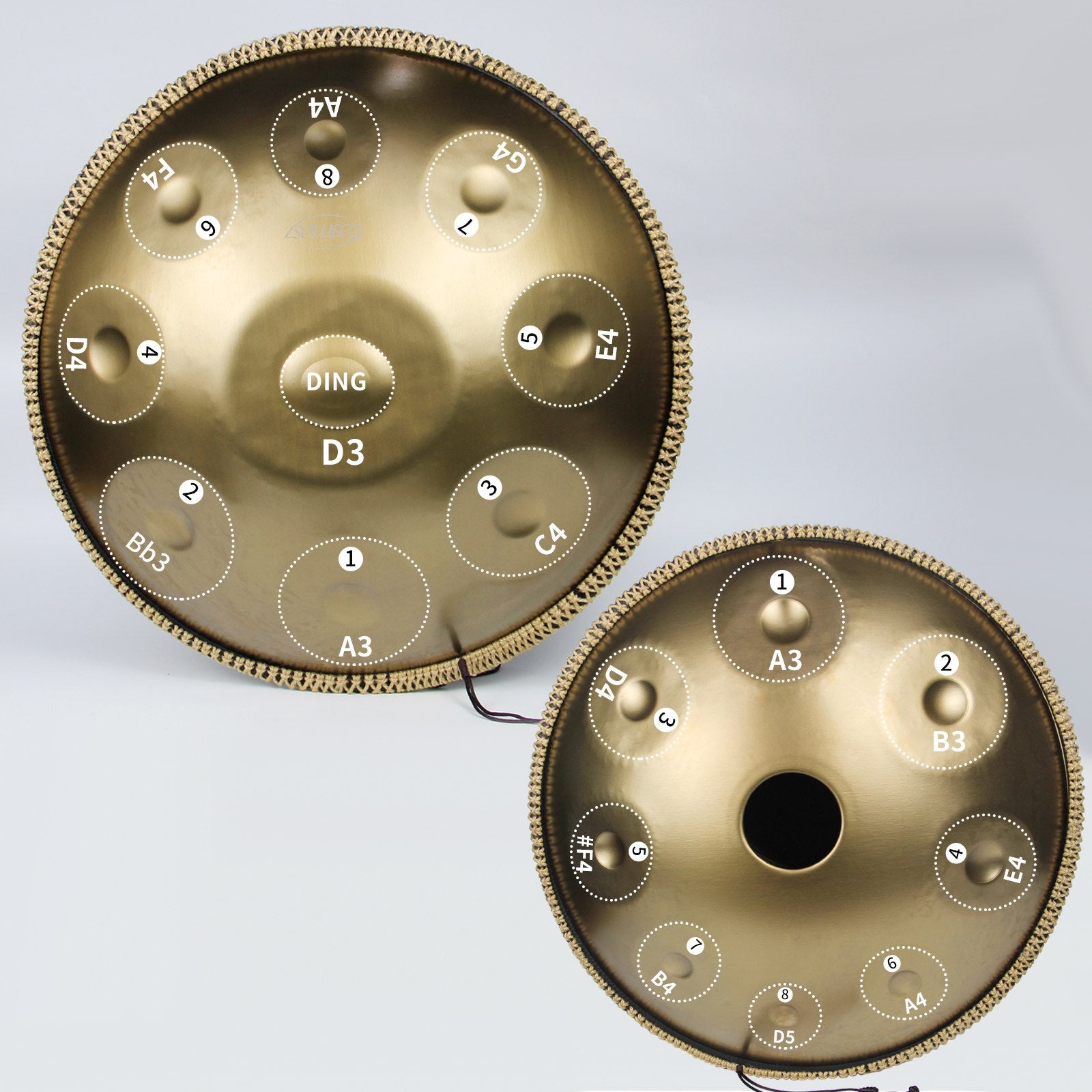
Before striking, study your handpan notes chart or tongue drum layout. The largest tongue (usually at the bottom center, closest to your body) is the root note—the lowest pitch. The notes then alternate left to right in an ascending zig-zag pattern. To play a simple ascending scale, strike the bottom root note, then the lowest note on the left, then the lowest on the right, moving your way up to the top of the drum.
3. The Striking Technique: Mallets vs. Hands
When learning to play steel tongue drum for beginners, you have two choices for striking the instrument: rubber mallets or your bare hands.
Playing with Mallets: We recommend that all beginners start here. Hold the mallet loosely between your thumb and index finger. Strike the center of the tongue and let the mallet bounce off immediately. Think of the tongue as a hot stove. If you press the mallet into the steel and leave it there, you will choke the vibration, resulting in a dull "thud." The mallet does the work for you, producing a loud, ethereal, and sustained tone.
Playing with Hands: This is a more advanced technique that yields a much warmer, intimate, and muted sound. You must use the fleshy pad of your index or middle finger, or the side of your thumb. Strike the tongue with a swift, flicking motion of the wrist. It requires building slight calluses and mastering a quick release. Do not hit the drum with your knuckles or the flat palm of your hand.
| Technique | Pros (Benefits) | Cons (Limitations) |
|---|---|---|
| Rubber Mallets | Effortless volume; crystal clear attack; massive sustain; zero finger pain. | Can sound overly bright or "chime-like"; less tactile connection to the instrument. |
| Bare Hands / Fingers | Warm, organic, woody tone; allows for complex multi-finger rolls and ghost notes. | Much quieter; requires weeks of practice to generate consistent volume without finger fatigue. |
Benefits and Limitations of the Instrument
We believe in commercial and practical judgment. To fully embrace how to play steel tongue drum for beginners, you must understand both the strengths and the boundaries of your hardware.
The Benefits: The primary benefit is absolute durability. For heavy-duty applications—like taking an instrument on a rugged hiking trip, leaving it in a hot car, or letting children play with it—a steel-titanium tongue drum is invincible. It is immune to humidity, resistant to rust, and impossible to knock out of tune. Furthermore, the pentatonic scales mean you can close your eyes, hit any combination of notes, and it will sound like a composed masterpiece. It provides immediate stress relief.
The Limitations: The trade-off for this durability is a lack of dynamic range. A tongue drum has a somewhat compressed volume ceiling; hitting it harder does not necessarily make it louder, it just makes the steel sound harsh. Additionally, because the scale is fixed, you cannot play complex classical compositions that require chromatic notes (sharps and flats). If your goal is to join a jazz band, this is not the instrument for you.
Comparison Table: Tongue Drum vs. Handpan
Many consumers confuse the steel tongue drum with the much larger, more expensive handpan. If you are researching how much does a handpan cost, you will quickly realize why the tongue drum is the preferred entry point.
| Feature | Steel Tongue Drum | Handpan (Pantam) |
|---|---|---|
| Sound Generation | Laser-cut steel tongues vibrating. | Hammer-tuned dimples (tone fields) on a steel shell. |
| Durability & Tuning | Virtually indestructible. Never requires re-tuning. | Delicate. Requires professional re-tuning every 1-2 years. |
| Playing Method | Mallets (Recommended) or Hands. | Hands only (Mallets will destroy the tuning). |
| Price Range | $50 - $300 (Highly accessible). | $800 - $3,000+ (Significant investment). |
Who Should Use It & Who Does Not Need It
For beginners and sound therapists: If your goal is personal meditation, yoga class accompaniment, or simply exploring music without the pressure of reading sheet music, the steel tongue drum is the ultimate tool. It is also an exceptional educational tool for children, fostering rhythm and pitch recognition without the frustration of learning complex fingerings.
For commercial users: Spas, wellness retreats, and holistic healing centers should buy tongue drums in bulk. Their ease of sanitization and inability to be broken by heavy-handed clients make them a high-ROI asset for client waiting rooms or therapeutic sessions. Exploring a 432 hz handpan guide can also shed light on why certain frequencies are preferred in these commercial wellness settings.
Who does not need it: If you are an experienced percussionist looking for extreme dynamic expression, complex harmonic overtones, and massive volume projection for stage performances, do not buy a tongue drum. You should immediately bypass it and invest in the best handpan for beginners to achieve the professional acoustic depth you require.
Common Mistakes to Avoid
When observing customers learning to play steel tongue drum for beginners, we routinely see the same three errors that ruin the acoustic experience.
- The "Dead Strike": Striking the tongue and letting the mallet or finger linger on the metal. This absorbs the kinetic energy and completely kills the sustain. Always utilize a rapid, bouncing strike.
- Hitting the Edges: The sweetest, most resonant tone lives in the exact center of the U-shaped tongue. Striking the base or the thin edges of the cut will produce a discordant, metallic clank.
- Overpowering the Drum: Hitting the drum as hard as you can will not increase the volume; it will force the metal into chaotic, inharmonic vibrations. Play softly and let the Helmholtz chamber do the amplifying.
Crucial Buying Considerations
When you are ready to make a purchase, do not be fooled by cheap, colorful 6-inch toys. Size matters in acoustics. A drum smaller than 10 inches physically lacks the internal air volume required to produce low, soothing bass notes. They will sound like tinny glockenspiels.
We recommend a 14-inch diameter as the sweet spot for a rich, resonant tone that is still portable. Furthermore, consider your note count. If you are wondering how many notes should a handpan have, the same logic applies here: 11 to 13 notes provide a full octave plus a few expressive extensions without crowding the surface area and causing unwanted cross-talk between the tongues.
Expert Recommendation
"From our experience designing and distributing acoustic steel instruments globally, the steel tongue drum is the most democratized musical instrument in existence. You cannot make a mistake on it."
If you are serious about bringing melodic percussion into your daily life, stop hesitating. We recommend the 14-Inch, 11-Note Cosmos Steel Tongue Drum in a Titanium-Steel alloy. It offers the perfect equilibrium of portability, rich sustain, and indestructible build quality. You will spend zero hours tuning and hundreds of hours enjoying pure, resonant tranquility. Pick up the mallets, strike the center of the tongues, and let the physics of the metal guide your intuition.
Frequently Asked Questions (FAQ)
Is it easy to play steel tongue drum for beginners?
Yes, it is exceptionally easy. Because the instrument is tuned to a fixed pentatonic or diatonic scale, there are no wrong notes. You can play intuitively by striking the tongues with mallets or your hands to create immediate, harmonious melodies without reading sheet music.
Should I use mallets or my hands to play?
For absolute beginners, we recommend using the provided rubber mallets. Mallets produce a louder, clearer, and more sustained tone with minimal effort. Playing with your hands requires building finger calluses and mastering a swift 'slap and release' technique, which can take weeks to develop.
Do steel tongue drums go out of tune?
In most professional situations, a high-quality steel tongue drum will never go out of tune. The notes are physically cut into the steel, meaning the pitch is permanently fixed by the metal's geometry, unlike a handpan which requires professional re-tuning if struck too hard.
Authoritative References & Further Reading
To ensure our readers have access to the highest standards of acoustic education and musical theory, we reference the following authoritative organizations:
- Percussive Arts Society (PAS) - The premier global organization for drummers and percussionists, providing extensive research on striking techniques and percussive acoustics.
- American Music Therapy Association (AMTA) - Governing body detailing the clinical benefits and applications of resonant, intuitive instruments in psychological and physical therapy.
- University of New South Wales (UNSW) Acoustics - Authoritative academic research on Helmholtz resonance, fluid dynamics in enclosed acoustic chambers, and vibrational physics of steel plates.