The categorization of sound-producing devices is a foundational discipline within the field of organology, the scientific and historical study of musical instruments. When acoustic engineers, musicologists, and professional luthiers discuss the mechanics of sound generation, they universally refer to the Hornbostel-Sachs system. Established in 1914 by Erich Moritz von Hornbostel and Curt Sachs, this classification framework remains the definitive global standard. It logically divides all global sonic devices into distinct types of musical instruments based exclusively on the primary vibrating material that generates the initial sound wave.

From our experience at Cosmos Handpan, understanding these different types of musical instruments is not merely an academic exercise. It is a critical requirement for musicians seeking to expand their sonic palette, composers orchestrating complex arrangements, and beginners attempting to select their first instrument. By comprehending the physics behind how air, strings, membranes, and solid materials resonate, artists can make highly informed decisions regarding their musical journey. In this authoritative analysis, we will deconstruct the 5 primary types of musical instruments, exploring the acoustic mechanics, historical context, and practical applications of each category.
Table of Contents
- 1. Idiophones: The Resonant Solids
- 2. Membranophones: The Stretched Skins
- 3. Chordophones: The Vibrating Strings
- 4. Aerophones: The Directed Air
- 5. Electrophones: The Electronic Generation
- 6. Summary Table: Analyzing the 5 Types of Musical Instruments
- 7. Frequently Asked Questions (FAQs)
- 8. Academic and Industry References
1. Idiophones: The Resonant Solids
Among the different types of musical instruments, the idiophone is arguably the oldest and most fundamental. An idiophone generates sound primarily by way of the instrument's own vibrating material, without requiring strings, membranes, or external electronic oscillators. The solid material itself—whether wood, metal, or stone—is struck, scraped, rubbed, or shaken to initiate a complex series of harmonic and inharmonic overtones.
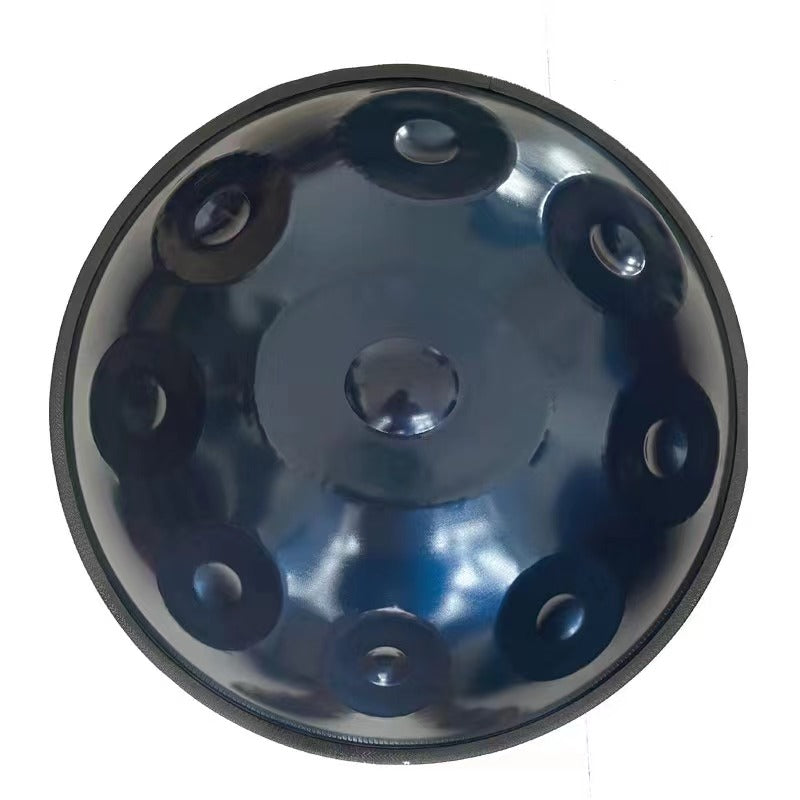
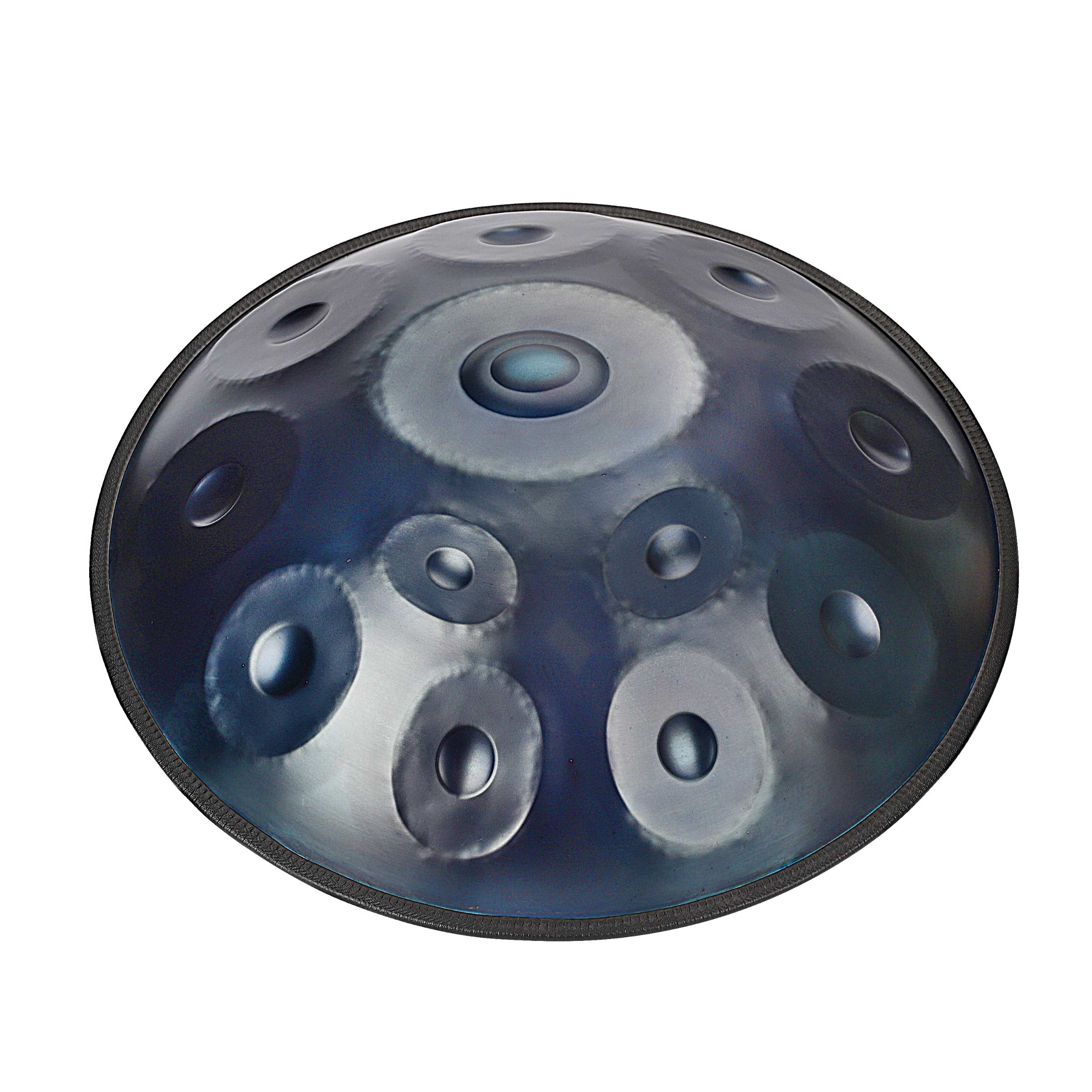
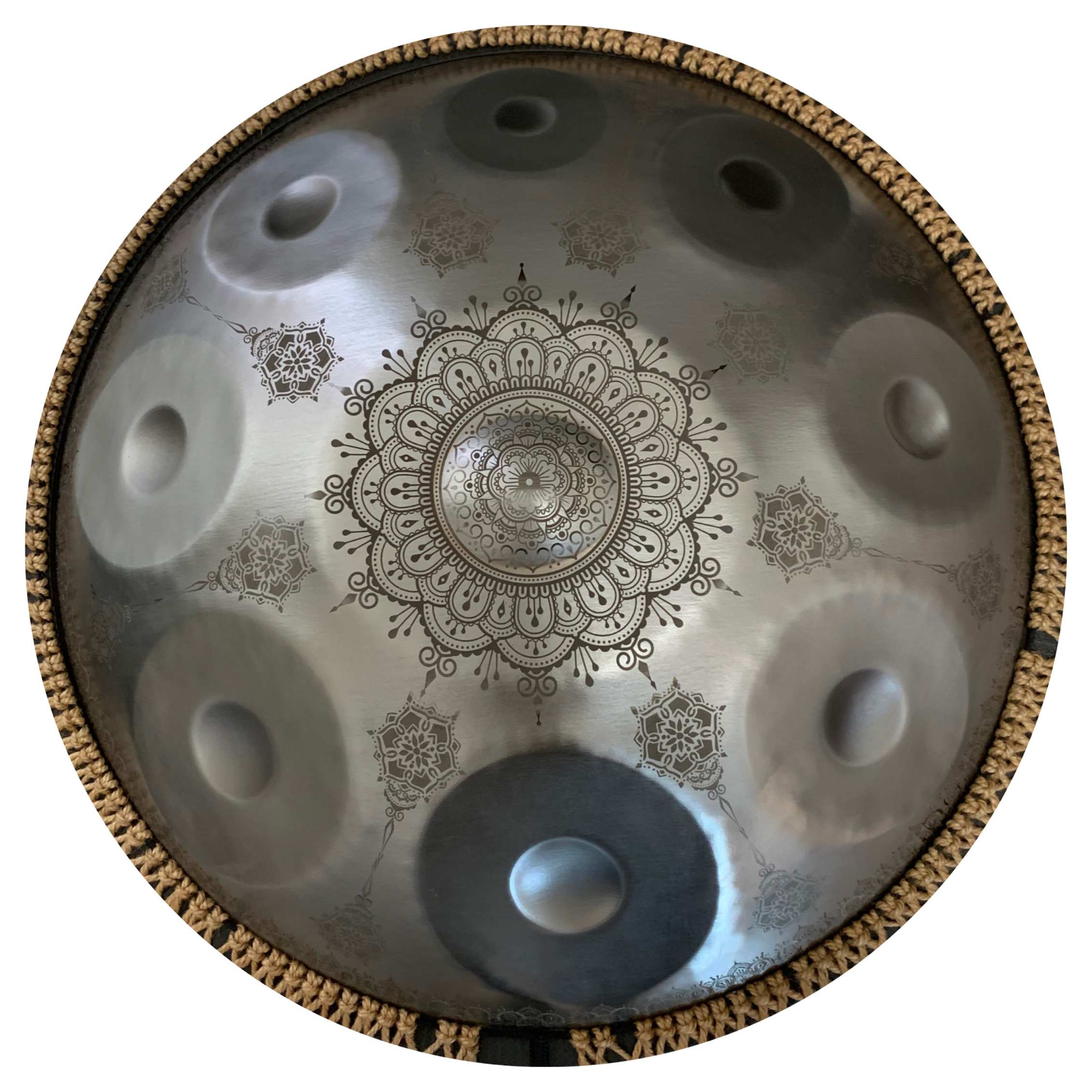
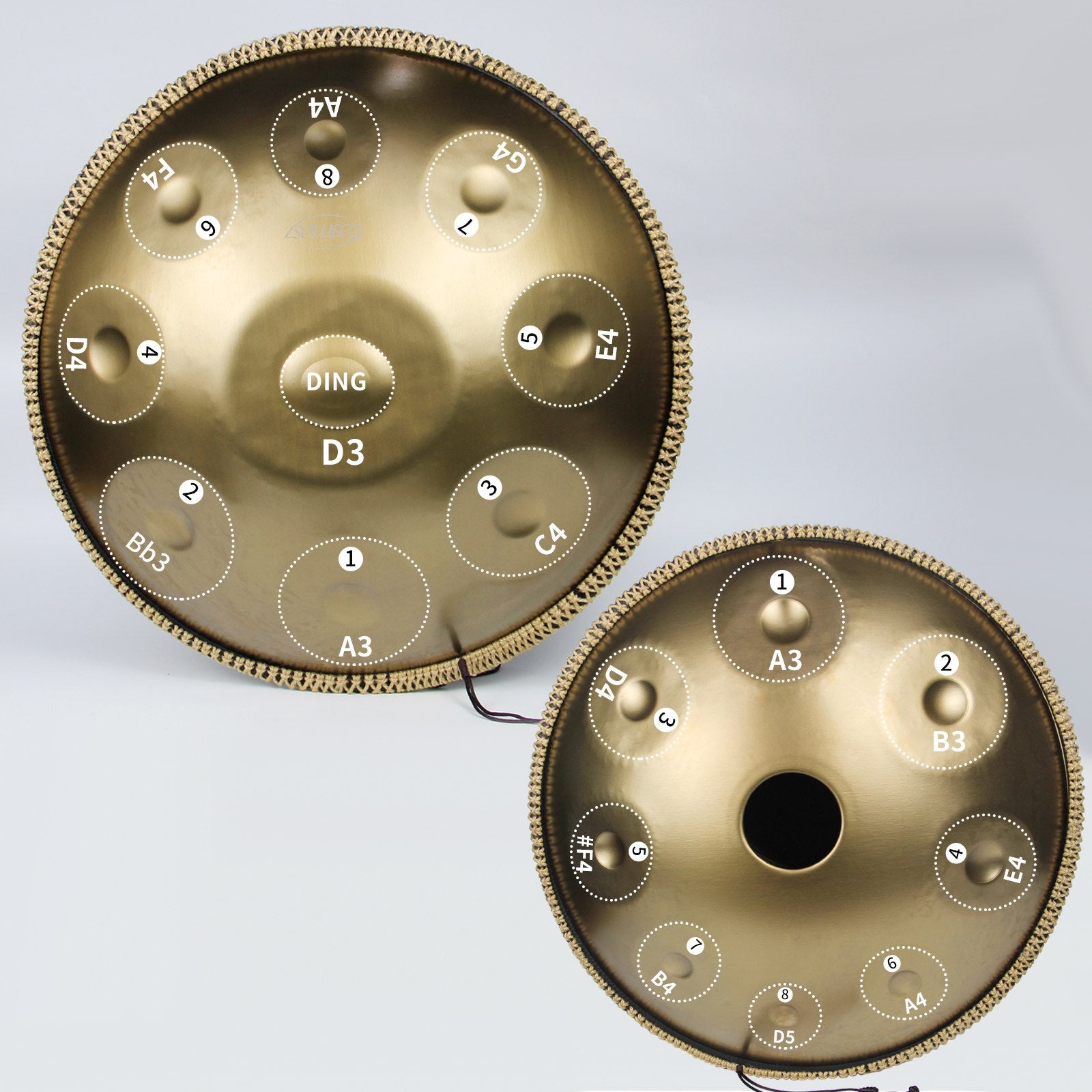
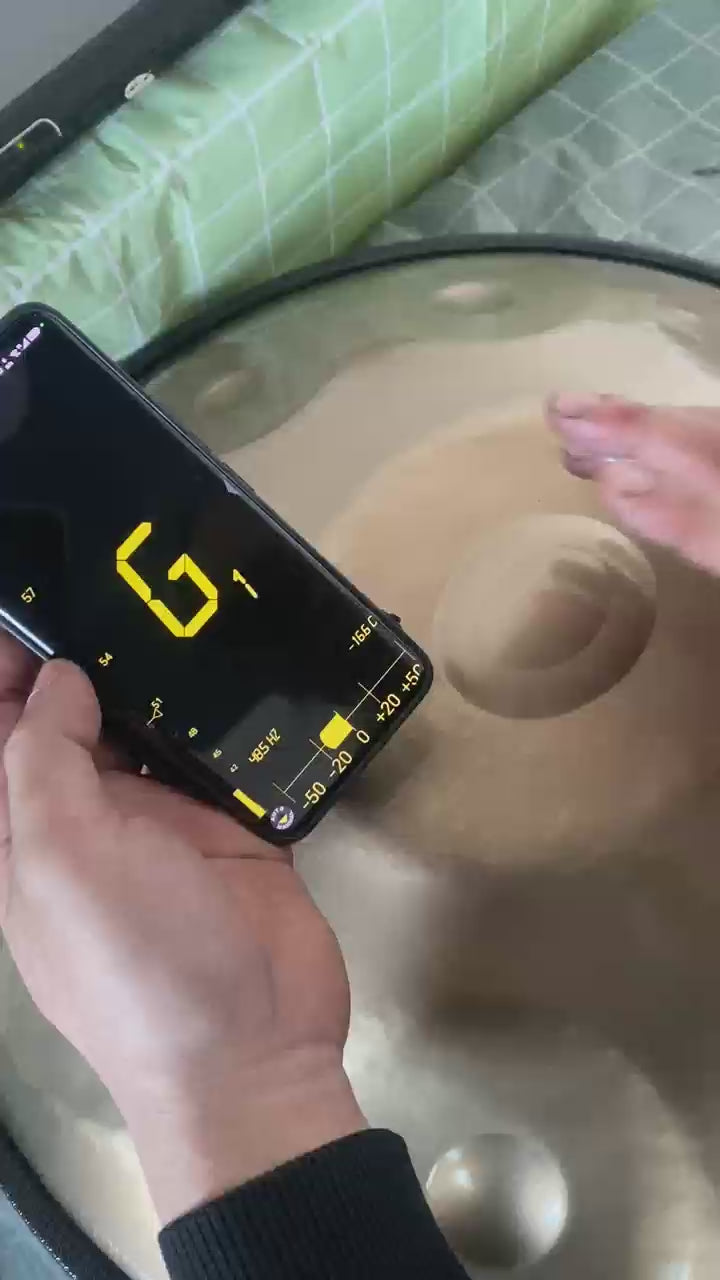
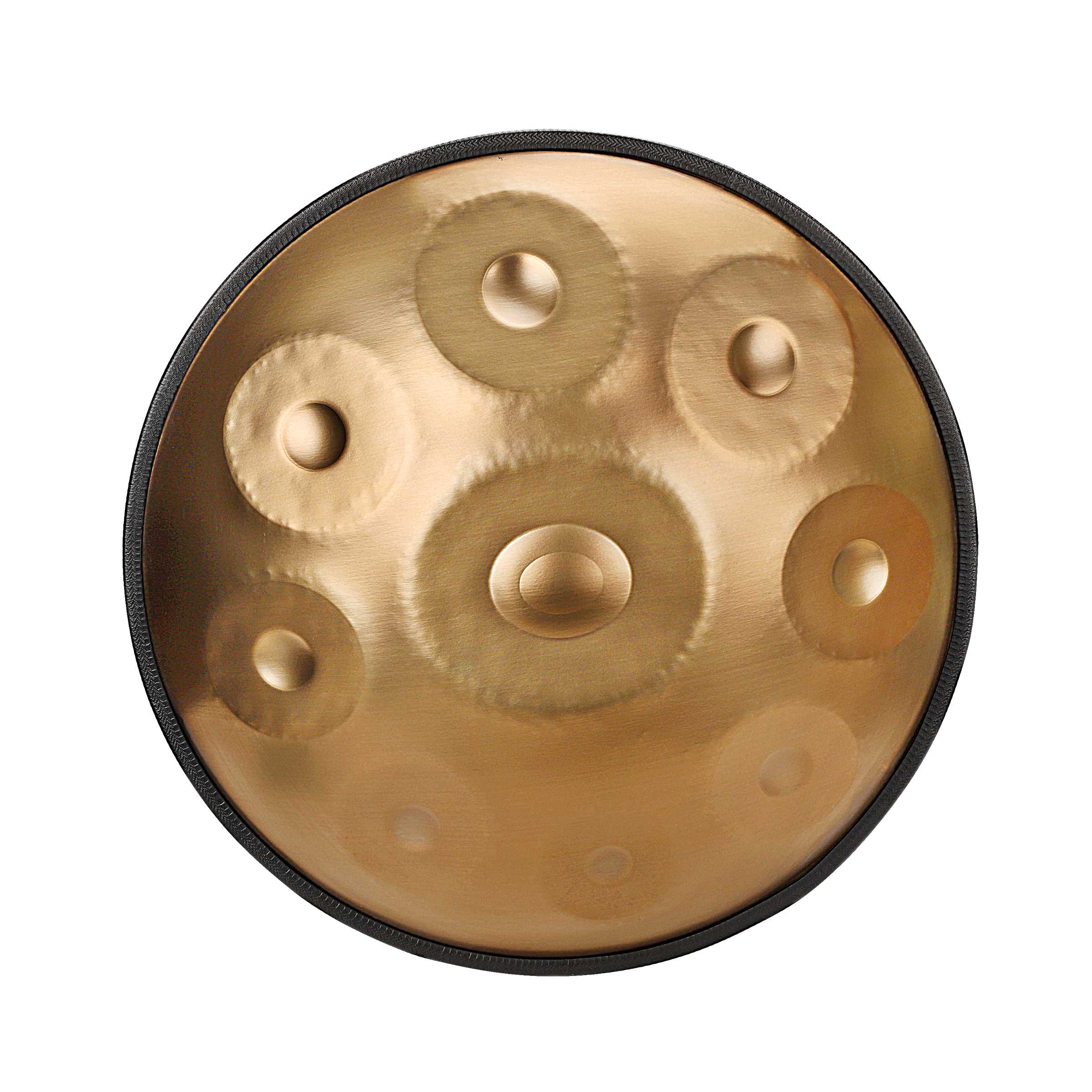
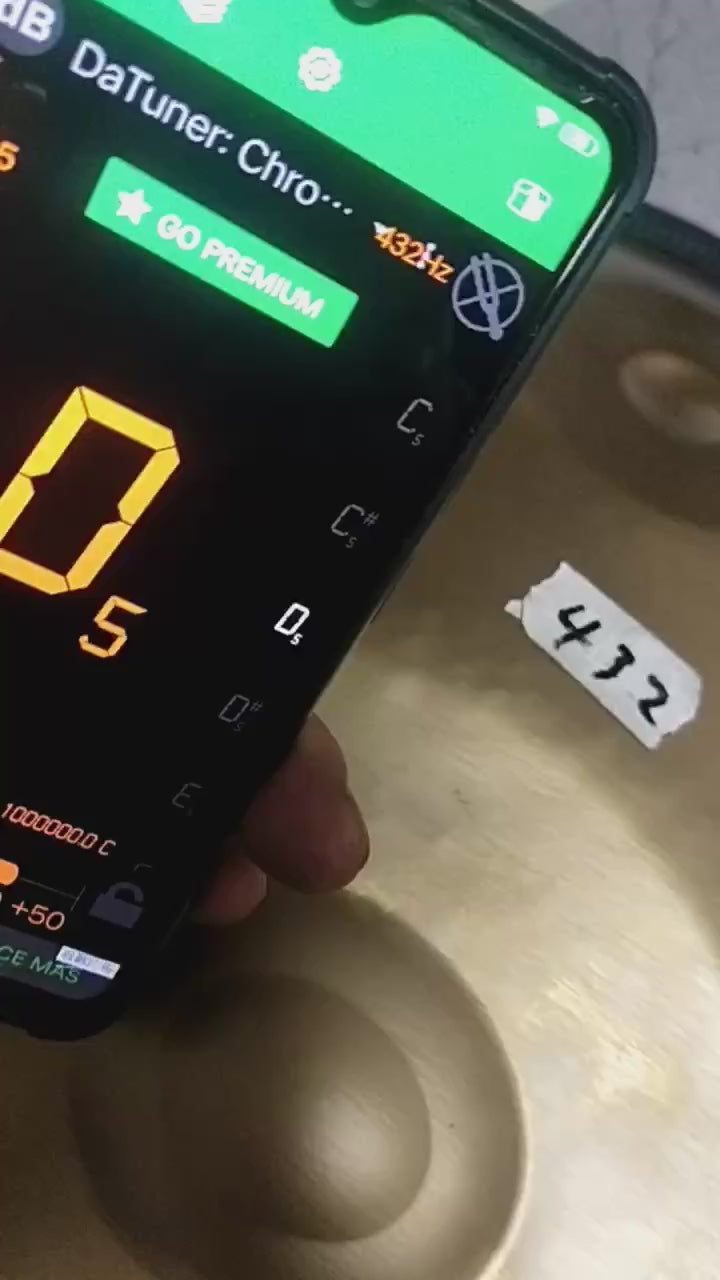
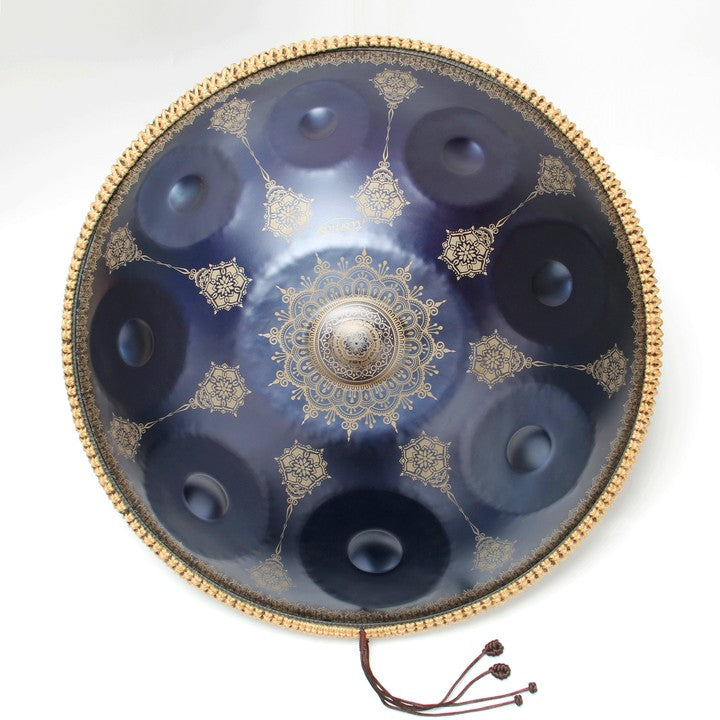
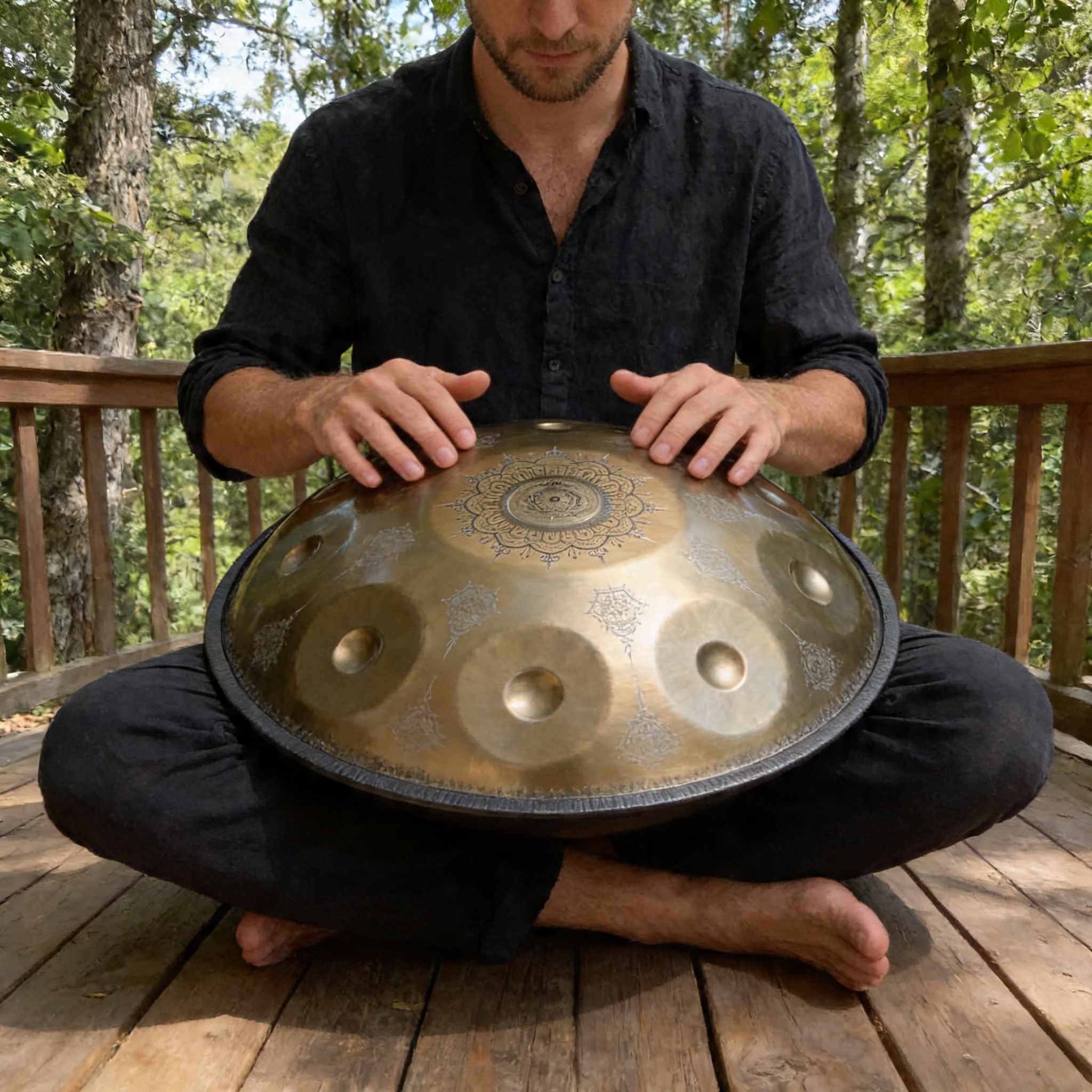
The acoustic principle governing idiophones relies on the excitation of specific modal frequencies within a rigid structure. When struck, the kinetic energy from the mallet or hand translates into structural vibrations. A prime example of modern idiophonic engineering is the handpan. As specialists in this specific category of the 5 types of musical instruments, we at Cosmos Handpan dedicate extensive research to the metallurgical properties of nitrided steel and stainless steel to maximize resonance, sustain, and harmonic tuning.
The Handpan: A Modern Idiophonic Masterpiece
The handpan operates on the principle of Helmholtz resonance coupled with tuned modal areas on a convex steel shell. When discussing the various types of musical instruments, the handpan stands out because each "tone field" is meticulously hammered to contain a fundamental note, an octave harmonic, and a compound fifth. From our experience, the architectural layout of these tone fields drastically alters the player's cognitive and physical interaction with the instrument.

We recommend selecting an instrument that aligns with your current technical proficiency and long-term compositional goals. The specific model you choose will also influence How much time does it take to learn handpan. A larger array of notes provides more musical freedom but presents a steeper learning curve for absolute beginners. We recommend the following from our elite Cosmos Handpan catalog to achieve the best results for your specific musical journey:
- 9 Notes Handpan: Perfect for focused, melodic exploration and beginner-friendly performance.
- 10 Notes Handpan: Balanced standard for modern players seeking a versatile instrument.
- 12 Notes Handpan: Expanded range for complex compositions and intermediate musicians.
- 17 Notes Handpan: Ultimate professional instrument with an extended scale for advanced compositions.
- Handpan for Beginners: Specially tuned for ease of play and rapid learning.
-
Handpan Drum Instrument: General-purpose high-quality options for various music styles.
2. Membranophones: The Stretched Skins
The second category within the 5 types of musical instruments is the membranophone. A membranophone produces sound primarily by way of a vibrating stretched membrane. Traditionally constructed from animal hides, modern membranophones utilize synthetic polymers such as Mylar to ensure consistent acoustic impedance regardless of ambient humidity and temperature.
The physics of membranophones involve striking the membrane, which initiates a series of circular and diametric vibrational modes across the surface. These modes, unlike the harmonic series found in strings, are mathematically inharmonic, which gives drums their characteristic percussive "thud" rather than a sustained, definable pitch. However, specific types of musical instruments within this category, such as the orchestral timpani or the Indian tabla, feature specific bowl shapes that filter out inharmonic overtones, allowing the drum to be tuned to a precise fundamental pitch.
When analyzing membranophones against other types of musical instruments, the interaction between the vibrating membrane and the acoustic shell (the body of the drum) is critical. The shell acts as a resonant chamber, amplifying specific frequencies and projecting the acoustic energy outward. This principle is why a snare drum sounds sharply different from a deep bass drum, despite both functioning as membranophones.
3. Chordophones: The Vibrating Strings
Chordophones represent one of the most mechanically complex types of musical instruments. A chordophone generates sound primarily through the vibration of a stretched string between two fixed points. Pianos, violins, guitars, harps, and cellos all fall into this expansive acoustic category.
The fundamental pitch produced by a chordophone is determined by the string's length, mass (thickness), and tension. According to Mersenne's laws of stretched strings, increasing the tension raises the frequency, while increasing the length or mass lowers the frequency. However, a vibrating string alone displaces very little air, rendering it almost inaudible. Therefore, all acoustic chordophones rely on a soundboard.
From our experience in acoustic engineering, the soundboard acts as a mechanical impedance matching device. The vibrations from the string are transferred through a bridge to a large, resonant piece of wood (typically spruce or cedar). The soundboard moves a massive volume of air, translating the string's kinetic energy into audible acoustic waves. This coupling of strings to a resonant body makes chordophones highly dynamic types of musical instruments, capable of extreme expressive nuances ranging from delicate pizzicato to aggressive bowed fortissimo.
4. Aerophones: The Directed Air
Aerophones are types of musical instruments where a mass of air is the primary vibrating agent. Unlike chordophones or membranophones, there are no strings or skins required. Instead, the musician directs a stream of air into or across a specifically shaped resonant tube. Flutes, trumpets, clarinets, oboes, and pipe organs are all classified as aerophones.
Aerophones are further subdivided based on the mechanism used to set the air column into vibration. For example, edge-blown aerophones (like flutes) rely on Bernoulli's principle, where the player blows air across a sharp edge, creating an oscillating vortex that drives the resonance of the tube. Reed aerophones (like saxophones) utilize a thin piece of cane that vibrates against a mouthpiece to modulate the air stream. Brass instruments utilize the player's own vibrating lips (lip-reed mechanism) coupled with a cup-shaped mouthpiece.
The pitch of an aerophone is altered by changing the effective length of the vibrating air column. This is achieved by opening and closing tone holes along the body of the instrument or by utilizing mechanical valves that route the air through additional lengths of brass tubing. As foundational types of musical instruments, aerophones require immense physiological control from the player, integrating breath support, embouchure tension, and precise finger dexterity.
5. Electrophones: The Electronic Generation

The final and most recent addition to the Hornbostel-Sachs classification system is the electrophone. As technology progressed in the 20th century, a new category was required for types of musical instruments where sound is primarily generated by electrical means. This category includes analog synthesizers, digital samplers, theremins, and digital drum machines.
It is important to distinguish true electrophones from electronically amplified acoustic instruments. For instance, an electric guitar is technically still a chordophone, as the initial vibration comes from a physical string, even though a magnetic pickup translates that vibration into an electrical signal. A true electrophone generates its initial waveform via electronic oscillators. These waveforms (sine, square, sawtooth, triangle) are then shaped using filters (subtractive synthesis), amplitude envelopes, and low-frequency oscillators (LFOs).
The integration of electrophones has drastically expanded the boundaries of global music production. By untethering sound generation from physical acoustic constraints, electrophones allow composers to synthesize entirely new sonic textures that cannot be replicated by any of the other four types of musical instruments.
6. Summary Table: Analyzing the 5 Types of Musical Instruments
To assist our readers in fully understanding the distinctions between the different categories of sonic generation, we have provided an expert summary matrix below.
| Classification | Primary Sound Source | Acoustic Mechanism | Prominent Examples | Cosmos Handpan Integration |
|---|---|---|---|---|
| Idiophones | Solid Material (Metal, Wood) | Structural modal vibration via striking or friction. | Handpans, Cymbals, Xylophones, Gongs | We engineer premium 9 to 17-note handpans using precision-tuned nitrided steel. |
| Membranophones | Stretched Membrane (Skin, Mylar) | Inharmonic diametric vibrations across a tensioned surface. | Snare Drums, Timpani, Congas, Bongos | Frequently paired with handpans in acoustic percussion ensembles. |
| Chordophones | Stretched Strings (Steel, Nylon) | Transverse wave propagation transferred to a soundboard. | Pianos, Guitars, Violins, Harps | Excellent harmonic accompaniment for melodically tuned idiophones. |
| Aerophones | Column of Air | Standing wave resonance within a physical tube. | Flutes, Trumpets, Saxophones, Pipe Organs | Contrasts percussive instruments with sustained, breath-controlled legato. |
| Electrophones | Electronic Circuits | Voltage controlled oscillators and digital signal processing. | Synthesizers, Theremins, Drum Machines | Used to process acoustic signals or generate hybrid electronic/acoustic compositions. |
7. Frequently Asked Questions (FAQs)
Why is it important to know the different types of musical instruments?
From our experience as instrument crafters, understanding the acoustic classification of types of musical instruments is vital for effective orchestration and mixing. By knowing how an instrument generates sound, audio engineers and composers can better manage frequency masking and dynamic range, ensuring each instrument occupies a distinct space within a musical arrangement.
Under which of the 5 types of musical instruments does the Cosmos Handpan fall?
The handpan is classified strictly as an idiophone. It produces sound through the vibration of its own steel body. Unlike membranophones, there is no stretched skin across the top; the entire convex shell is meticulously tuned to resonate at specific modal frequencies when struck.
Are acoustic pianos considered chordophones or idiophones?
An acoustic piano is officially classified as a chordophone. While the player presses keys that trigger felt hammers to strike the internal mechanism (similar to how one strikes an idiophone), the actual source of the vibration that produces the pitch is the tensioned steel string. Therefore, it falls under the chordophone category among the types of musical instruments.
8. Academic and Industry References
To ensure the highest standard of technical accuracy regarding the Hornbostel-Sachs classification system and acoustic physics, we recommend consulting the following authoritative sources: