Cosmos Handpan | Handpan Scales and Buying Guides
A Pygmy Scale handpan is worth considering if you want an instrument with a distinctive, earthy sound, a strong sense of atmosphere, and plenty of room for intuitive improvisation. It is not simply another minor scale, and it does not sound or feel like every other handpan tuning. Its appeal comes from its particular interval relationships, melodic movement, and the way its notes interact when played slowly or rhythmically. Before buying one, however, you should understand what the name means, how Pygmy tunings differ between makers, and whether this musical character actually suits the way you want to play.

Quick Answer: What Makes a Pygmy Scale Handpan Special?
A Pygmy Scale handpan is a handpan tuned to a scale commonly associated with an earthy, atmospheric, and rhythmically expressive musical character. Depending on the maker and exact tuning, it may feature distinctive interval combinations that create a sound different from familiar major and natural minor scales.
Its five defining characteristics are its distinctive tonal structure, mysterious mood, improvisational flexibility, rhythmic potential, and dependence on accurate tuning and note layout. It is particularly attractive to players who enjoy exploratory music, ambient performance, and expressive improvisation. It is less suitable for buyers who specifically want familiar major-scale melodies or straightforward access to conventional pop arrangements.
| Quick summary | What buyers should know |
|---|---|
| Instrument type | Steel handpan tuned to a Pygmy-type musical scale |
| Sound character | Often earthy, atmospheric, mysterious, and rhythmically engaging |
| Musical structure | Distinctive interval relationships; exact notes depend on the tuning |
| Playing style | Improvisation, melodic exploration, repeating patterns, and ambient music |
| Difficulty | Accessible to beginners, with more advanced possibilities as technique develops |
| Best for | Players seeking an unusual tonal color and freedom to explore |
| Potential limitation | May be less convenient for familiar major-key songs and conventional arrangements |
| Buying priority | Exact note list, root note, tuning accuracy, sustain, dynamic response, and craftsmanship |
| Our recommendation | Choose by listening to the actual instrument and checking its complete tuning, not by the Pygmy label alone |
1. What Is a Pygmy Scale Handpan?
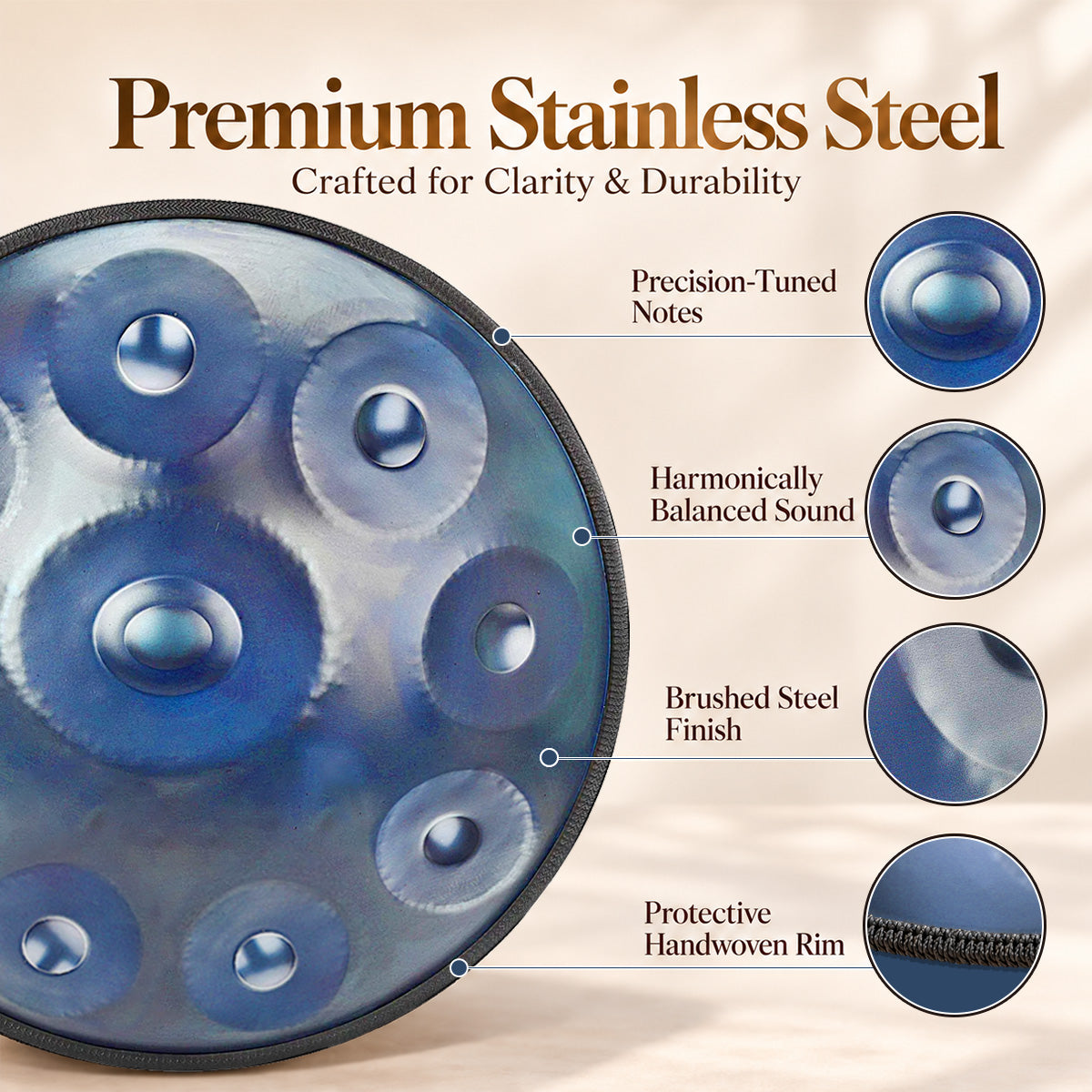
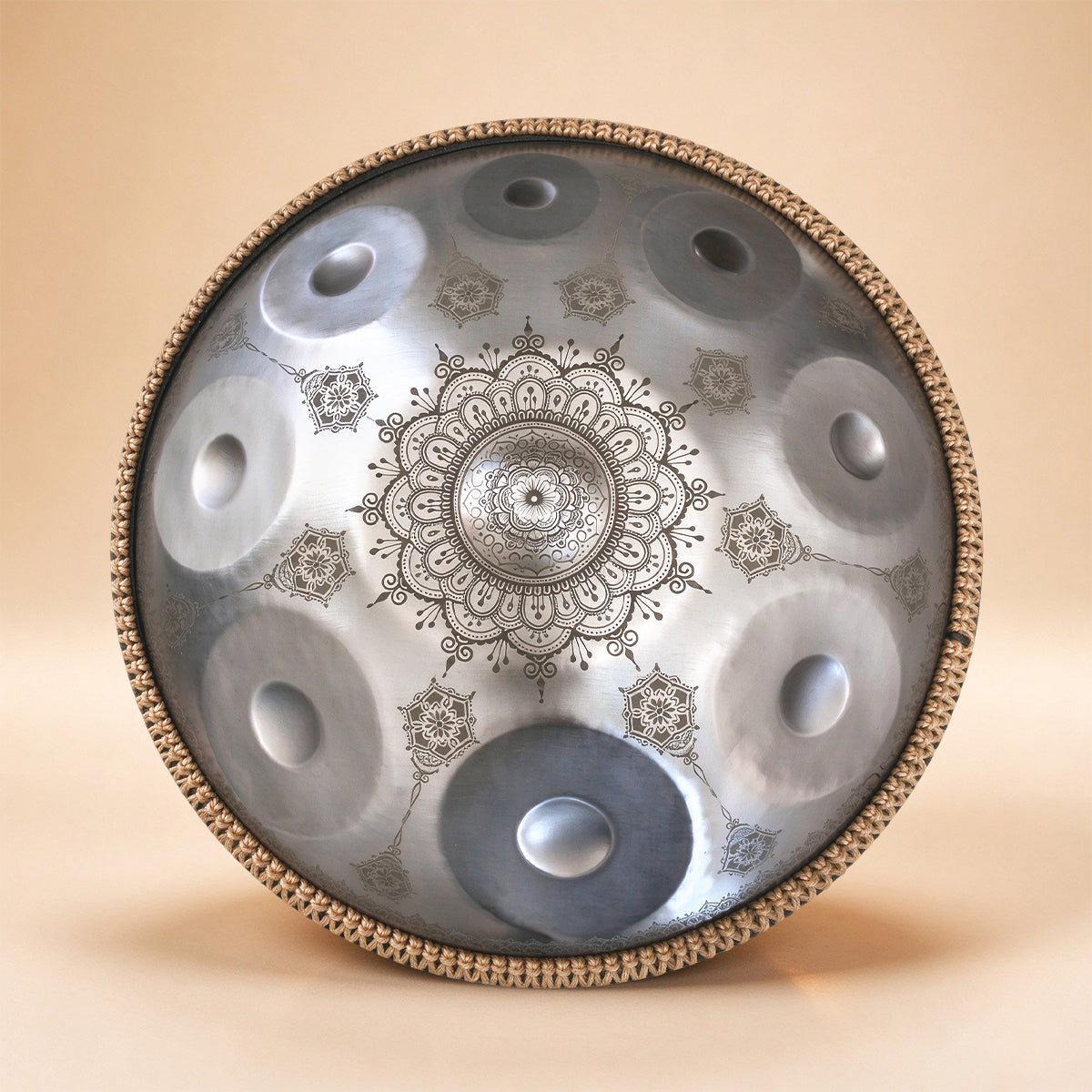
A Pygmy Scale handpan is a steel percussion instrument whose notes are arranged according to a Pygmy-type scale. The term describes a musical tuning identity rather than a single standardized instrument specification. This distinction matters when shopping: two handpans advertised as Pygmy may not contain exactly the same notes, use the same root note, or produce identical melodic possibilities.
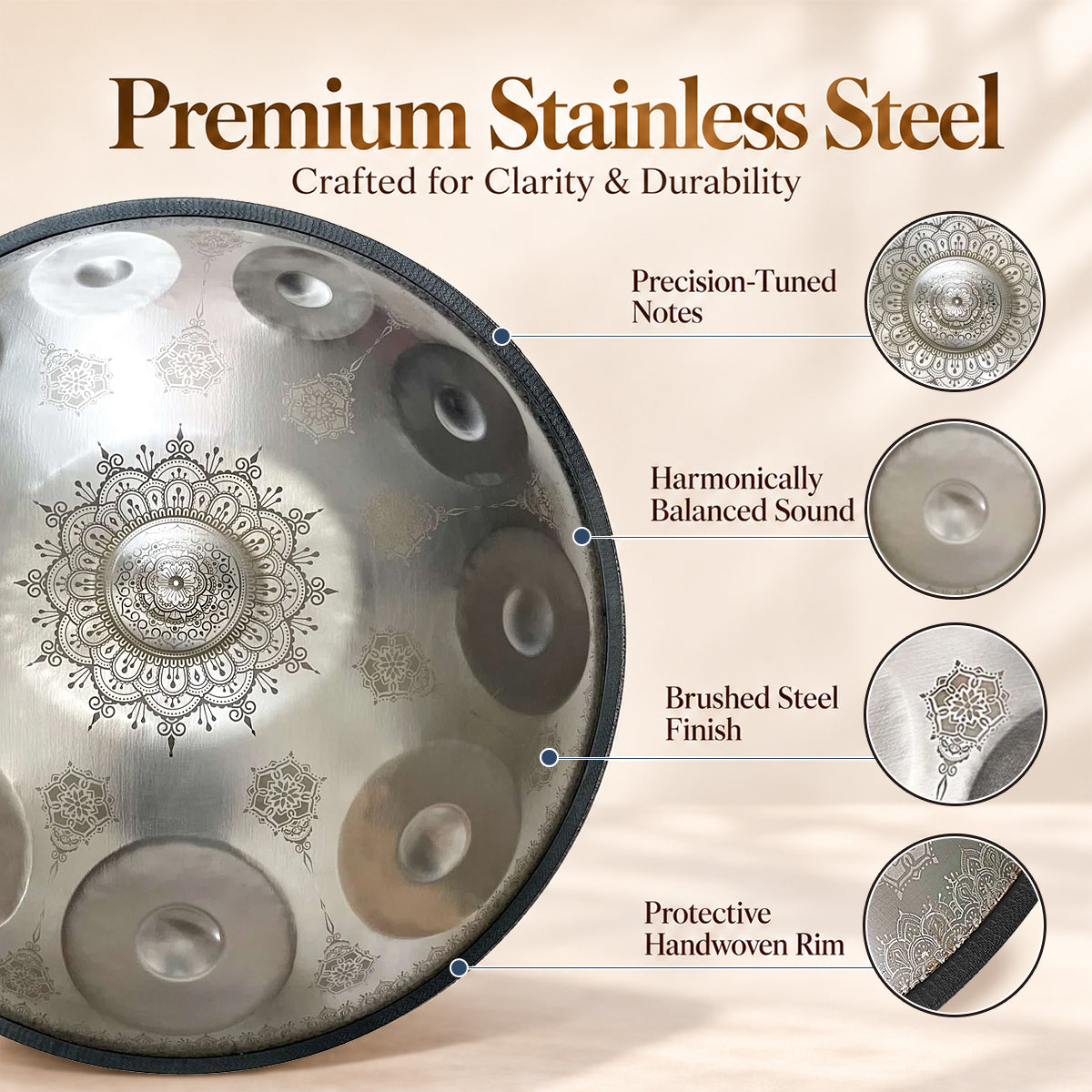
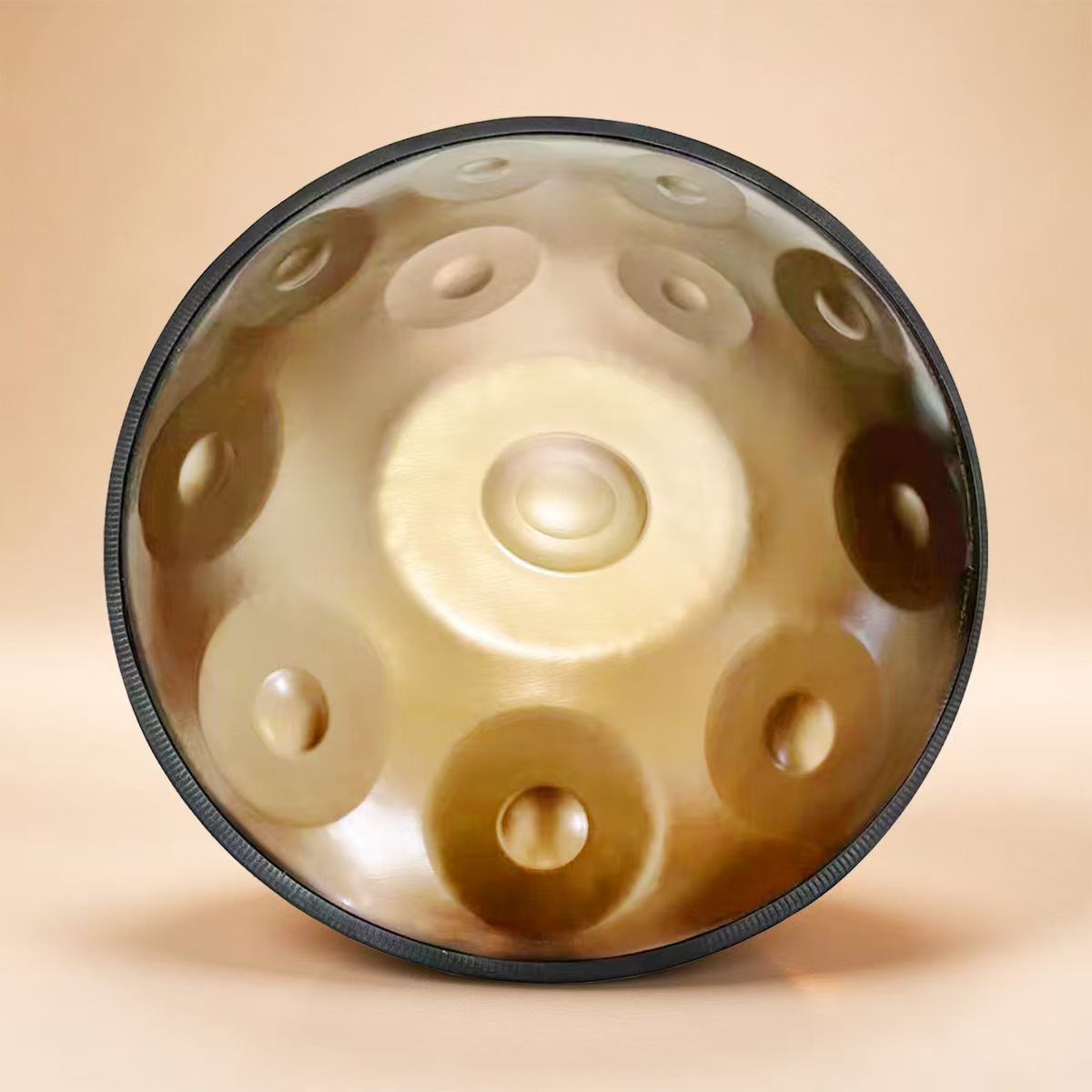
Like other handpans, the instrument generally has a central note surrounded by additional tuned tone fields. Each note field is carefully shaped and tuned so that it produces a fundamental pitch together with important harmonic components. Players create melodies and rhythms by striking these areas with their fingers and hands.
The Pygmy designation is also not a guarantee of one universal interval formula. Makers may use different note selections and octave arrangements, and naming conventions are not always consistent across manufacturers. That is why experienced buyers check the actual note list instead of assuming that the scale name tells the whole story.
Is a Pygmy Scale Handpan Different from a Standard Minor Handpan?
Yes, potentially. A natural minor handpan generally follows a familiar minor-scale structure, while a Pygmy-type tuning may use a different combination of intervals and scale degrees. The result can feel less predictable to someone accustomed to conventional Western melodies.
For buyers, the practical difference is musical freedom versus familiarity. If you want an instrument that encourages you to explore sound combinations without constantly following familiar songs, a Pygmy tuning may be appealing. If your priority is playing recognizable melodies and accompanying conventional music, a more familiar tuning may be easier to integrate.
2. Five Main Characteristics of the Pygmy Scale Handpan
Characteristic 1: A Distinctive and Unconventional Tonal Structure
The first characteristic of a Pygmy Scale handpan is its distinctive arrangement of musical intervals. Rather than relying on the familiar major-scale sound that many people recognize immediately, Pygmy-type tunings can create a more unusual relationship between notes.
This changes how melodies develop. A simple sequence of neighboring notes may sound more exploratory, while repeated notes can create a strong musical identity without requiring complicated technique. The exact effect depends on the specific tuning and note arrangement.
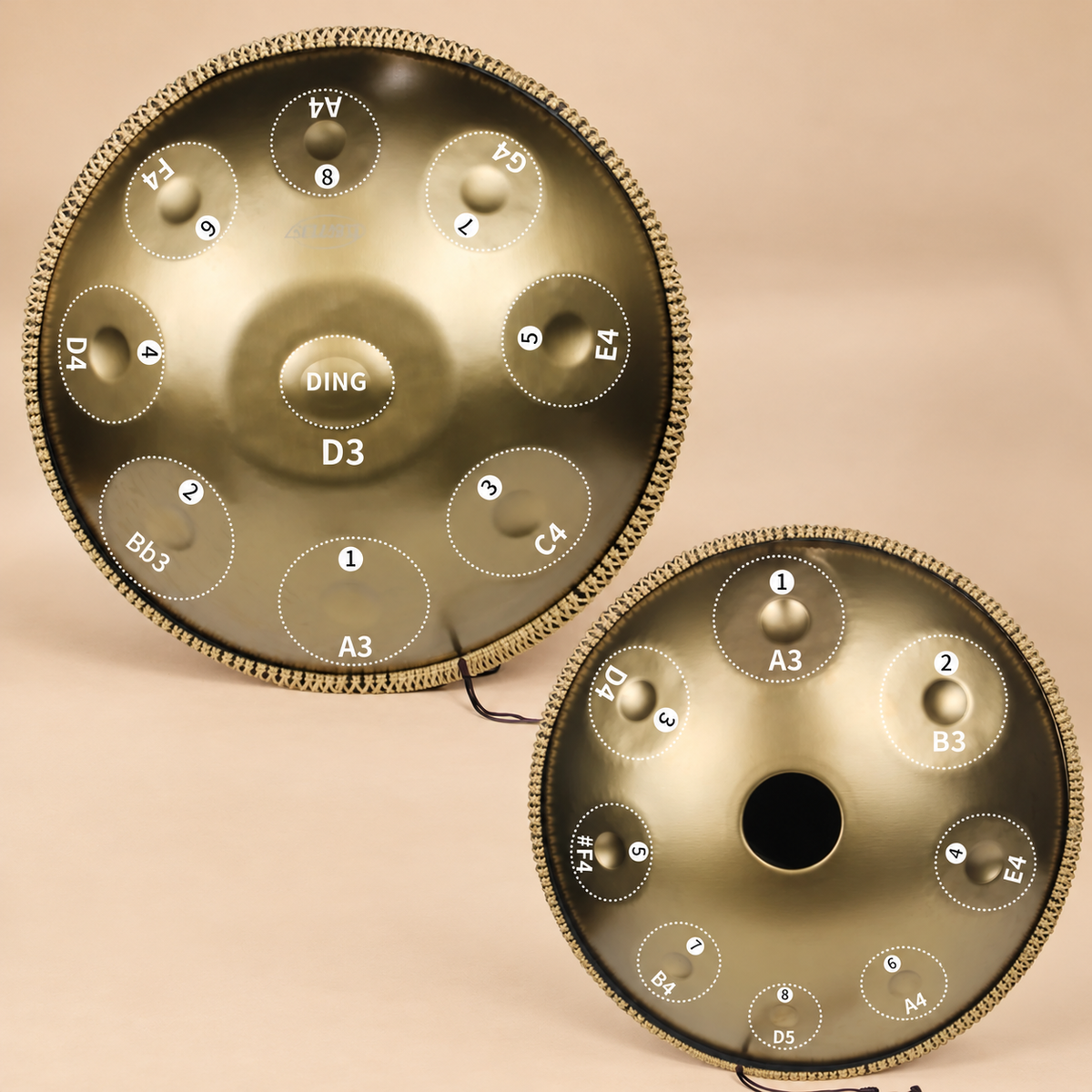
From a practical perspective, this is one of the biggest reasons people choose the Pygmy Scale. It provides a different musical vocabulary. However, buyers should request a complete note chart because the name alone does not tell you which intervals are present.
If you are unfamiliar with handpan note layouts, our guides to the handpan notes chart and understanding handpan notes explain how to read note names and identify the musical range of an instrument.
Characteristic 2: An Earthy, Mysterious, and Atmospheric Sound
Many players are drawn to the Pygmy Scale because of its atmospheric character. Depending on the particular tuning, instrument construction, and playing technique, the music can feel earthy, spacious, reflective, or slightly mysterious.
That sound is not created by the scale name alone. Steel quality, shell construction, note-field geometry, tuning accuracy, and harmonic balance all influence the final result. A well-made instrument should have clearly defined notes that blend musically without excessive unwanted ringing.
In our view, this is a scale worth listening to before purchasing rather than judging from a written description. The same tuning can sound quite different when played on instruments with different sustain, dynamic response, and tonal balance.
For meditation and ambient music, this atmospheric quality can be particularly attractive. For fast, melody-driven arrangements, however, you should test whether the instrument's tonal character matches your musical preferences.
Characteristic 3: Excellent Potential for Improvisation
A Pygmy Scale handpan can be particularly enjoyable for improvisation. Its distinctive note relationships encourage players to experiment with short melodic phrases, repeated motifs, and changes in rhythmic emphasis.
Unlike learning a conventional song note by note, improvisation allows you to discover combinations through listening and repetition. Beginners can start with a small group of notes and gradually develop more complex patterns as their confidence improves.
For example, you might begin with the central note, alternate between two surrounding notes, and introduce a repeated rhythmic figure. Once the pattern feels natural, add another note to create a longer phrase. The aim is not to play as many notes as possible. It is to create a musical conversation between rhythm, pitch, and silence.
Characteristic 4: Strong Rhythmic and Melodic Versatility
The Pygmy Scale is not limited to slow or meditative music. Its musical potential depends on how the player combines melody and rhythm. Repeating bass-like patterns, alternating hand movements, syncopation, and short melodic responses can create engaging performances.
This is important for buyers who want one instrument for more than a single musical environment. A Pygmy-type handpan may be used for solo improvisation, ambient recordings, small acoustic performances, or rhythmic compositions, provided the specific tuning suits the arrangement.
However, versatility does not mean universal compatibility. If you regularly perform with guitarists, keyboard players, or singers, check the root note and actual scale notes against the music you expect to play. A tuning that sounds beautiful alone may require more arrangement work when combined with other instruments.
Characteristic 5: Note Layout and Tuning Quality Have a Major Impact
The fifth characteristic is less about musical mood and more about instrument quality. A Pygmy Scale handpan is only enjoyable when its note fields are accurately tuned and respond consistently to the player's touch.
Every note should have a recognizable pitch and a controlled harmonic structure. Notes that are poorly balanced can sound unpleasant when played together. Excessive sympathetic ringing, inconsistent sustain, or weak response can also make improvisation more difficult.
For serious buyers, tuning accuracy should take priority over decorative finishes or marketing descriptions. Check whether the manufacturer provides a note chart, audio demonstrations, tuning information, and support for maintenance or retuning.
To understand the practical side of instrument maintenance, read our guide on how to tune a handpan. Handpan tuning is a specialist task; beginners should not attempt to adjust note fields themselves.
3. What Does a Pygmy Scale Handpan Sound Like?
The best way to understand a Pygmy Scale handpan is to listen to the relationship between its notes rather than focusing on one isolated pitch. Its distinctive scale structure can produce musical phrases that feel different from conventional major and minor melodies.
For Meditation and Relaxation
Slow playing allows the notes to resonate and interact. Players can leave space between strikes, use gentle dynamics, and build a continuous atmosphere through repeating phrases. This is one reason atmospheric tunings appeal to people who enjoy reflective music and sound-based relaxation.
For Improvisational Performance
Improvisation benefits from the instrument's distinctive tonal palette. Instead of relying on a fixed song structure, players can create short motifs and gradually vary them. Changing the rhythm while keeping the same group of notes can produce noticeably different musical results.
For Recording and Ensemble Playing
When recording, consider sustain and harmonic overlap. A handpan with very long sustain can sound beautiful in a spacious solo recording but may create a crowded mix when combined with other instruments. In ensemble situations, the exact tuning and root note become particularly important.
Our advice is to listen to recordings made in more than one setting. A solo demonstration tells you about the instrument's immediate character; an ensemble recording gives you a better idea of how it fits into a broader musical arrangement.
4. Pygmy vs. Minor vs. Major Handpan Scales
Choosing a handpan scale is fundamentally a musical decision. There is no objectively best scale for every player. The right option depends on the sound you prefer, the music you want to create, and whether you need compatibility with other instruments.
| Comparison factor | Pygmy-type scale | Natural minor scale | Major scale |
|---|---|---|---|
| Musical identity | Distinctive, unconventional interval character | Familiar minor-key structure | Familiar major-key structure |
| Typical listening impression | Often earthy, atmospheric, or mysterious | Often reflective, emotional, or dramatic | Often bright, open, or uplifting |
| Improvisation | Encourages exploration of distinctive note relationships | Accessible for minor-key melodic improvisation | Accessible for familiar major-key melodies |
| Familiar song compatibility | Depends heavily on exact tuning and arrangement | Useful for many minor-key arrangements | Useful for many major-key arrangements |
| Beginner experience | Accessible, but may require adjustment to unfamiliar intervals | Often straightforward for players who know minor music | Often intuitive for players familiar with major melodies |
| Best suited to | Exploratory playing and distinctive musical expression | Reflective melodies and familiar minor-key music | Bright melodies and conventional major-key music |
| Buying consideration | Verify the exact note list and tuning identity | Check root note and available note range | Check compatibility with intended songs and ensemble |
Which Scale Should Beginners Choose?
For beginners, a familiar D Minor handpan can be a practical starting point because its musical character is accessible and there are many learning resources for minor-key improvisation. A Pygmy Scale can also be suitable for beginners, particularly those who prefer an unusual sound and do not need to follow conventional songs.
We recommend listening to both before purchasing. Do not choose a scale simply because it is described as more advanced or more spiritual. Your willingness to practice will depend much more on whether you enjoy the sound.
If you are comparing different instrument levels, explore our 9-note beginner handpans, 10-note handpans, and 12-note handpans.
5. How to Play a Pygmy Scale Handpan
You do not need advanced music theory to begin playing a Pygmy Scale handpan. The instrument is designed to be played through controlled hand and finger strikes, and its note arrangement makes it possible to explore simple musical patterns without reading traditional sheet music.
Start with the Central Note
Find the central tone field, often called the ding, and learn how it sounds when struck gently. Use it as a reference point for exploring the surrounding notes. Pay attention to how long the sound continues and how it interacts with other tones.
Learn Two- and Three-Note Patterns
Choose two nearby notes and alternate between them. Once the movement becomes comfortable, introduce a third note. Try changing the order while keeping a steady pulse. This helps you understand the scale's musical character without overwhelming your hands.
Develop Control Before Speed
Use relaxed fingers and controlled contact. Hitting the steel harder does not necessarily produce a better tone. Excessive force can make the sound harsh and reduce your control over timing and dynamics.
Build Your Own Repeating Motifs
A short repeating pattern is an effective way to develop improvisational confidence. Start with a simple phrase, leave a moment of silence, and repeat it with one small change. Over time, you can combine several motifs into a longer performance.
Use Learning Resources to Understand the Layout
Although the Pygmy Scale encourages exploration, understanding note names and their relationships will make practice more productive. Our guide on how many notes a handpan should have explains how note count affects musical range and playing options.
You can also explore handpan learning apps and online practice tools if you prefer structured lessons or visual note references.
6. Pros and Cons of the Pygmy Scale Handpan
| Pros | Cons |
|---|---|
| Distinctive musical character compared with familiar major tunings | May not suit players who primarily want conventional major-key melodies |
| Encourages improvisation and experimentation | Some note relationships may initially feel unfamiliar |
| Can create atmospheric solo performances | Ensemble compatibility depends on exact tuning and arrangement |
| Works with both slow and rhythmic playing approaches | Not every Pygmy-labeled instrument has the same note structure |
| Can remain musically interesting as technique develops | Quality differences between instruments can significantly affect the experience |
| Offers an alternative to common beginner scale choices | Learning materials may be less standardized than for popular tunings |
From a buying perspective, the Pygmy Scale is worth considering when you genuinely enjoy its tonal character. It is not worth paying a premium simply because the scale has an unusual name. Tuning quality, sound consistency, craftsmanship, and the actual note arrangement should determine the value.
7. How to Choose the Right Pygmy Scale Handpan
When buying a Pygmy Scale handpan, focus on five practical criteria: exact tuning, sound quality, construction, note count, and manufacturer support. These factors will influence your playing experience much more than the color or decorative finish.
1. Confirm the Exact Note List
Ask the seller for the full note layout, including the central note, surrounding notes, octave placement, and any additional tones. If two manufacturers use the same Pygmy label but different note selections, the instruments may support different musical phrases.
For players who intend to perform with other musicians, this information is essential. You need to know the actual pitches before planning arrangements or purchasing additional instruments.
2. Listen to an Unedited Sound Demonstration
A good sound demonstration should show the instrument being played at different dynamics. Listen for note clarity, sustain, harmonic balance, and unwanted buzzing. Avoid relying exclusively on heavily processed recordings because effects can hide weaknesses in the instrument.
3. Check Tuning and Harmonic Quality
Handpan notes require careful tuning. Each tone field has a complex acoustic behavior, and a well-made instrument should produce a stable, coherent sound when played with normal technique. Ask whether the maker performs tuning checks and what support is available if a note becomes unstable.
4. Choose the Right Number of Notes
More notes provide additional melodic options, but they also affect the layout, cost, and learning process. A compact instrument may be easier to manage for beginners, while experienced players may appreciate additional notes for broader musical arrangements.
5. Evaluate the Manufacturer, Not Just the Product Page
A reliable handpan manufacturer should provide clear product specifications, real sound samples, information about materials and tuning, realistic delivery expectations, and after-sales support. Ask about protective packaging and how the instrument should be maintained during storage and transport.
For buyers who are still comparing manufacturers, learn more about the Cosmos Handpan story and the company's approach to its instruments. You can also contact Cosmos Handpan to clarify product details before making a purchase.
Cost-Benefit Analysis: What Is Worth Paying More For?
Paying more can make sense when the difference is supported by better tuning consistency, improved craftsmanship, more detailed quality control, a useful note layout, or stronger after-sales support. These are features that influence the instrument every time you play it.
By contrast, an expensive finish or an extra note is not automatically worth the additional cost. For beginners, a well-tuned, manageable instrument is generally a better investment than a complicated model that exceeds their current musical needs.
8. How Many Notes Should a Pygmy Scale Handpan Have?
Note count should be based on your playing goals rather than the assumption that more notes always mean a better instrument. A 9-note handpan can provide enough material for extensive improvisation, while instruments with additional notes can expand melodic possibilities and playing range.
| Note configuration | Best suited to | Buying advice |
|---|---|---|
| 9 notes | Beginners, simple improvisation, and focused musical exploration | Choose this when ease of learning and manageable cost are priorities |
| 10 notes | Players wanting additional melodic options | Check whether the extra note meaningfully expands your preferred playing style |
| 12 notes | Intermediate and experienced players seeking a broader range | Consider the layout and whether you will actually use the additional notes |
These configurations are general buying categories, not universal definitions of a Pygmy tuning. The actual scale and note selection must still be verified. A 9-note instrument with a well-designed layout may be more enjoyable than a poorly arranged 12-note model.
For a more detailed buying decision, read our guide to standard handpan size. Physical dimensions and note count should be considered together when evaluating comfort, portability, and sound.
9. Cosmos Handpan: A Beginner-Friendly Alternative to Explore
If you like the atmospheric appeal of unusual handpan tunings but are not yet sure which scale to buy, it is sensible to compare a Pygmy-type instrument with a familiar minor-scale model. This gives you a clearer reference point for judging tonal character, ease of learning, and musical flexibility.

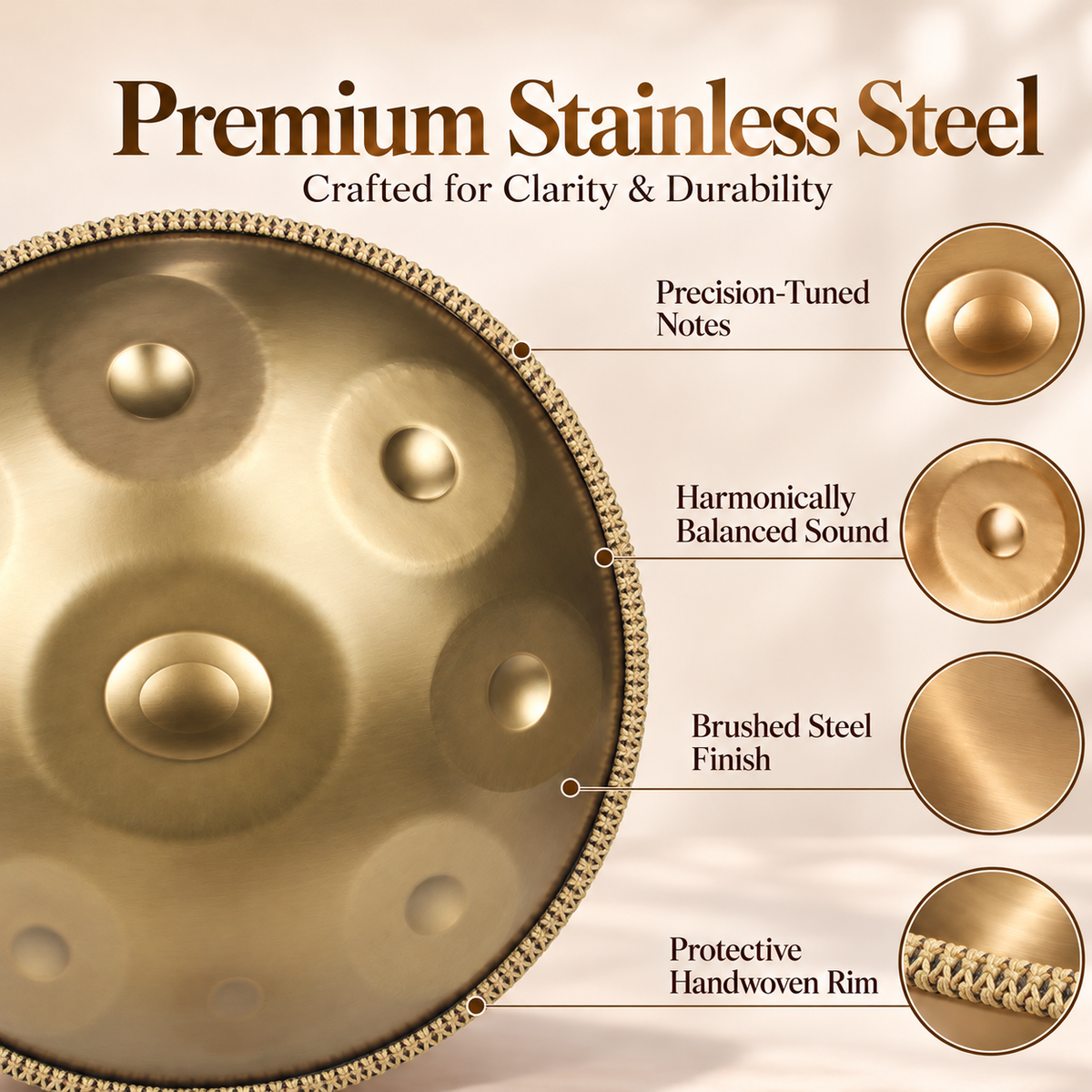
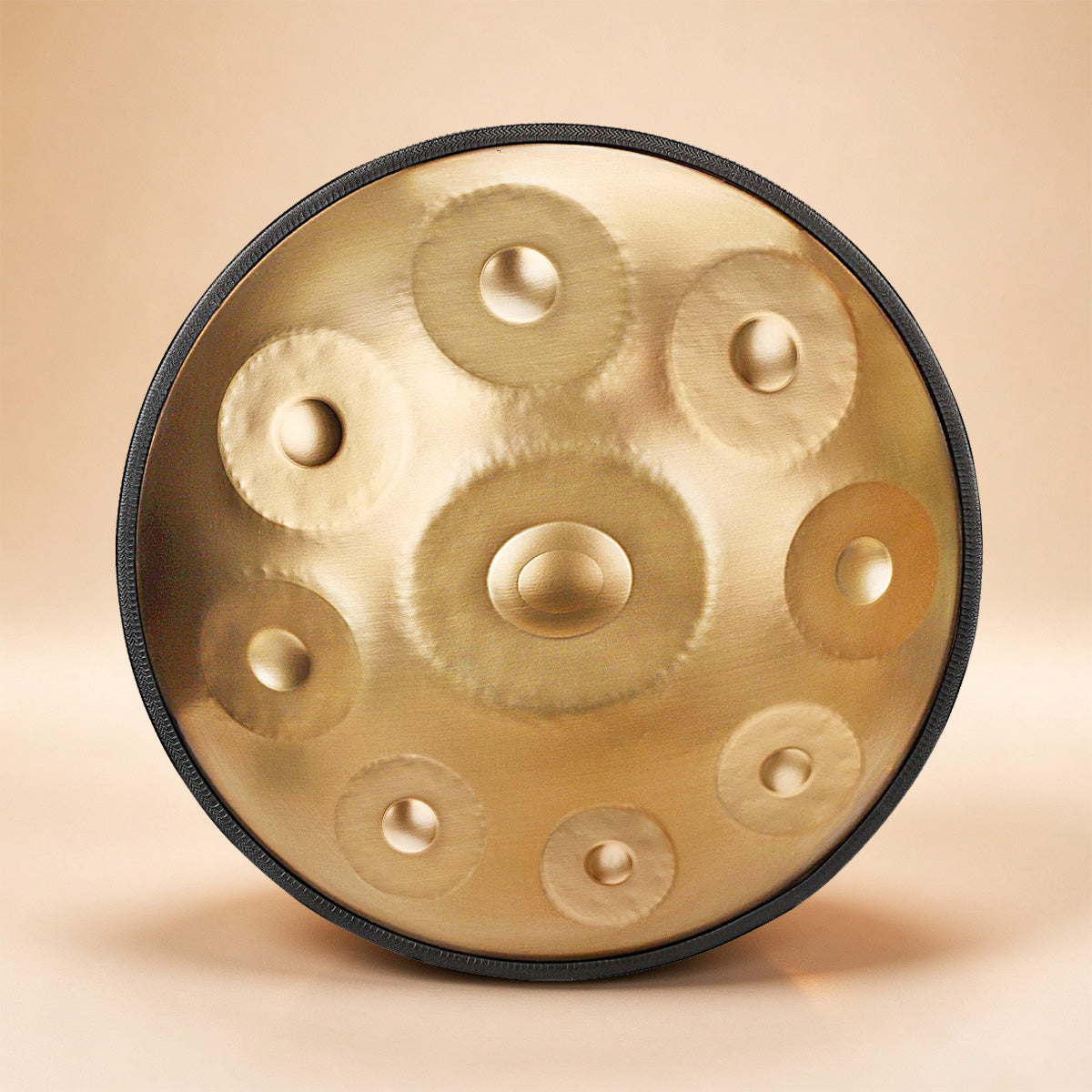
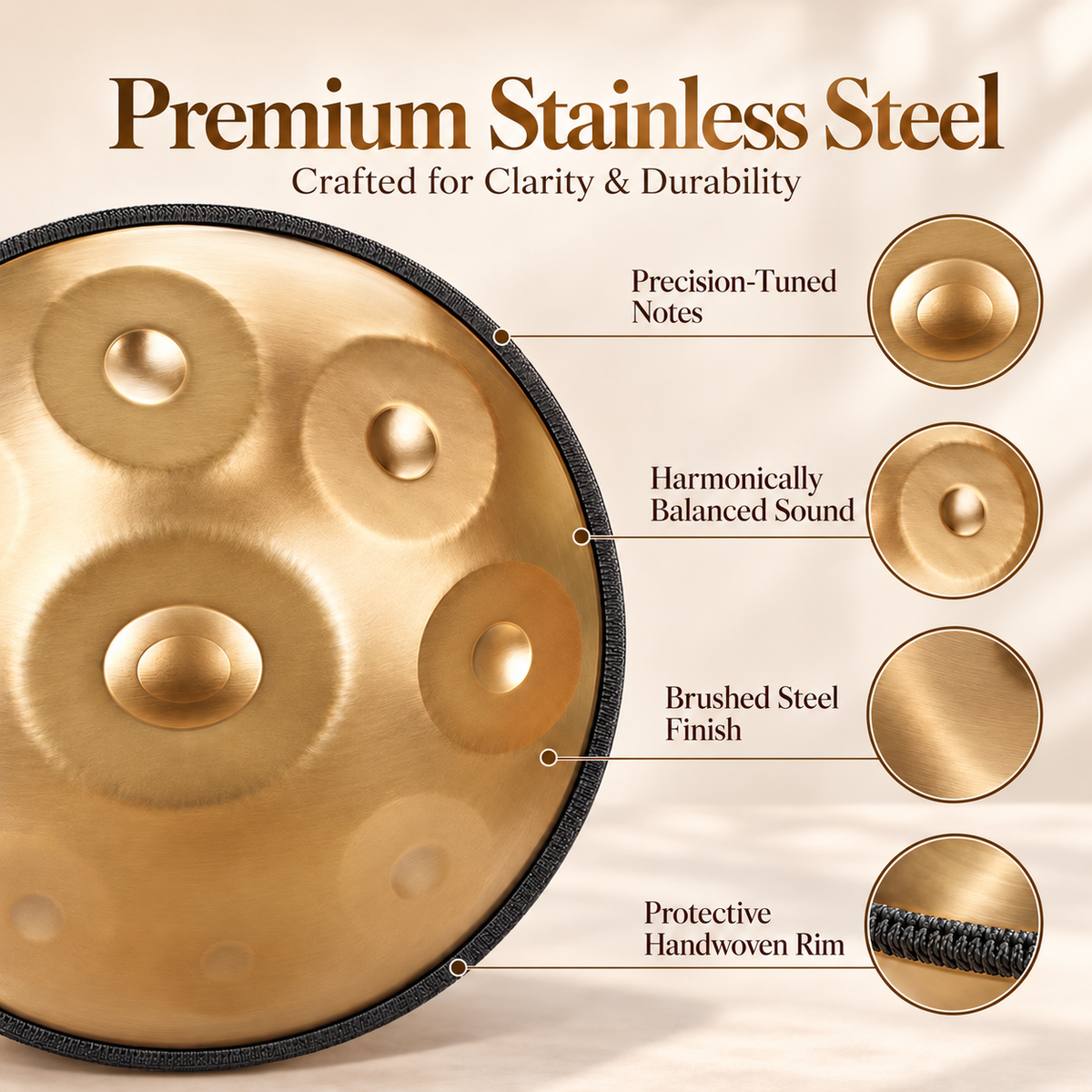
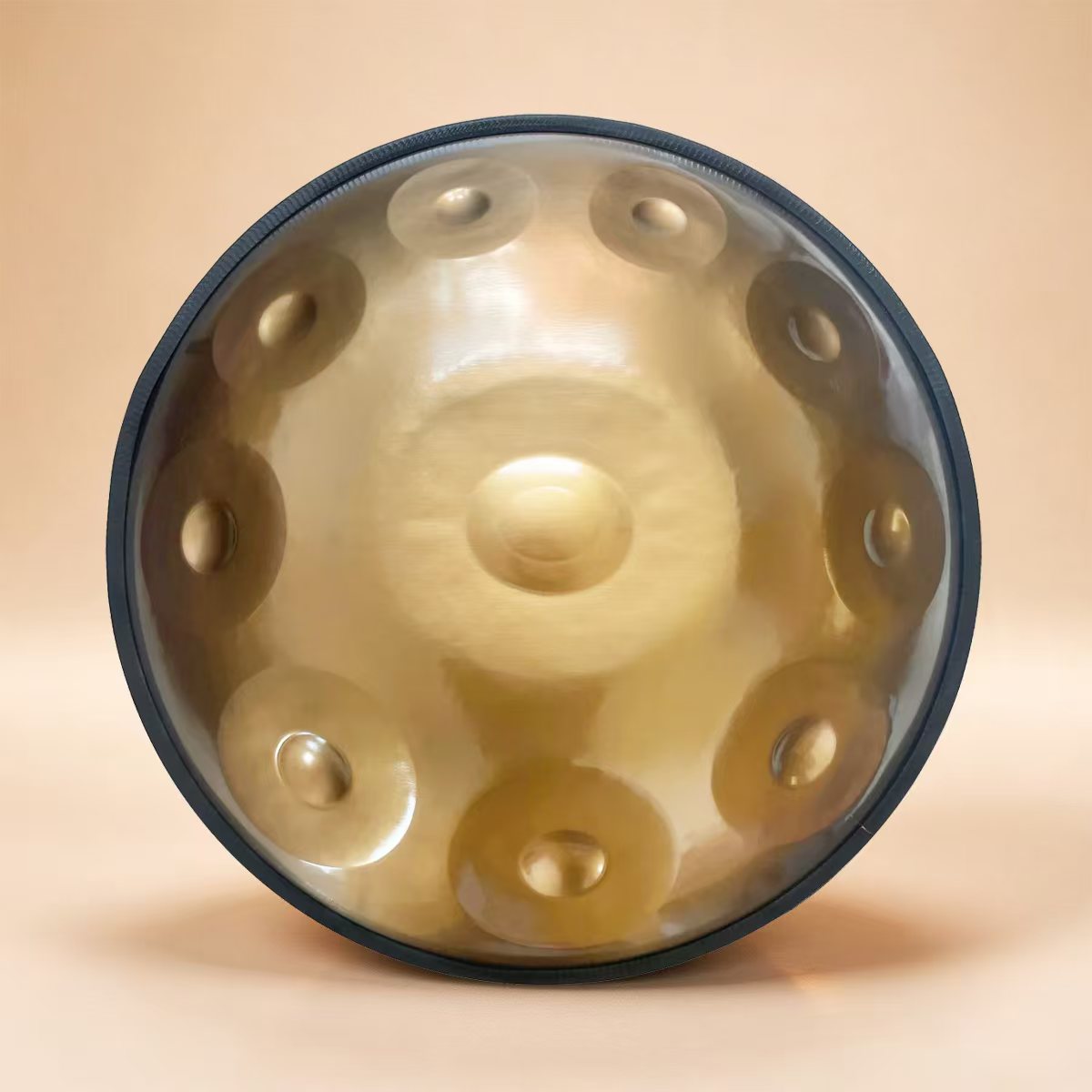
Cosmos Handpan Golden Elegance - 9 Notes D Minor Gift Set
Scale: D Minor, 9-note layout.
Tuning options: 432Hz or 440Hz.
Best for: First-time handpan buyers, meditation, relaxation, and small performances.
Sound character: Clear sustain with a smooth, calming tone.
Included accessories:
- Protective carry bag
- Handpan stand
- Pair of mallets
- Cleaning cloth
Why Consider a 9-Note D Minor Handpan?
The Golden Elegance is not a Pygmy Scale instrument. It is a D Minor alternative for customers who prefer a more familiar minor-key starting point. Its 9-note configuration keeps the layout relatively manageable, while the included accessories make it convenient for someone purchasing their first handpan.
The choice between this D Minor model and a Pygmy Scale handpan should come down to the sound you want. If you prefer familiar minor-key improvisation and a straightforward beginner setup, the Golden Elegance is worth considering. If you specifically want the distinctive interval character of a Pygmy tuning, choose a model whose actual note chart confirms that musical structure.
Should You Choose 432Hz or 440Hz?
Both tuning references are available for the Golden Elegance. The practical difference is the reference pitch used to tune the instrument. A 440Hz A reference is widely used in contemporary musical settings, while 432Hz is an alternative reference some players prefer for personal listening reasons.
Neither tuning reference automatically makes an instrument more relaxing, more accurate, or musically superior. If you plan to play with other instruments or recorded music, compatibility should guide your choice. Read our 432Hz handpan guide before deciding.
10. Common Mistakes When Buying a Pygmy Scale Handpan
Mistake 1: Assuming Every Pygmy Scale Is Identical
The Pygmy label does not guarantee an identical note sequence across manufacturers. Always ask for the exact tuning and listen to the actual instrument.
Mistake 2: Choosing by Appearance
A polished surface or attractive finish cannot compensate for poor tuning. Sound quality should be your primary consideration.
Mistake 3: Buying More Notes Than You Need
Additional notes are useful only when they expand your musical possibilities. If you are still learning basic handpan technique, a simpler layout may be more practical.
Mistake 4: Expecting Every Scale to Play Every Song
Handpans are tuned instruments with specific pitch collections. A Pygmy-type instrument may not fit familiar songs without adaptation. Check the note list before buying if you have particular songs or ensemble arrangements in mind.
Mistake 5: Ignoring Maintenance and Storage
Steel handpans need sensible care. Keep the instrument clean and dry, avoid unnecessary impacts, and use a protective case during transport. Follow the manufacturer's maintenance instructions rather than applying unsuitable chemicals or abrasive materials.
Mistake 6: Assuming a More Expensive Handpan Is Always Better
Price should reflect craftsmanship, tuning quality, materials, support, and overall value. A more expensive instrument is not automatically a better match for your musical needs.
11. Expert Recommendation: Is the Pygmy Scale Handpan Right for You?
From our experience helping buyers understand handpan configurations, the most important decision is whether the scale's musical personality matches the way you want to play. A Pygmy Scale handpan is not simply a decorative variation of a standard instrument. Its note relationships can influence every melody, rhythmic pattern, and improvisation you create.
For Beginners
Choose a Pygmy Scale if you genuinely enjoy its sound and are comfortable learning through exploration. You do not need advanced music theory, but you should be willing to become familiar with its specific note layout. If you want a more familiar starting point, a 9-note D Minor handpan is a practical alternative.
For Experienced Players
Focus on the exact note selection, octave range, harmonic balance, and how the tuning expands your existing musical vocabulary. If you already own a minor-scale handpan, a Pygmy-type instrument may offer a different tonal direction rather than simply duplicating what you have.
For Performers and Recording Musicians
Check root-note compatibility, sustain, and the way the instrument sits alongside other instruments. Request audio demonstrations with different playing dynamics and, if possible, ensemble recordings. These details matter more than promotional descriptions of the scale's mood.
For Buyers Comparing Handpan Manufacturers
Prioritize transparent tuning information, consistent quality control, real audio demonstrations, protective packaging, and responsive after-sales support. Ask questions before ordering rather than assuming that every model with the same scale name offers the same experience.
Our Final Verdict
The Pygmy Scale handpan is an excellent option to investigate if you want distinctive tonal colors, atmospheric musical expression, and freedom to improvise. Its biggest strength is its individual musical character. Its main limitation is that the scale name alone does not guarantee a standardized note arrangement or compatibility with familiar songs.
We recommend choosing the instrument by its actual notes and sound, not by the label. Listen carefully, compare the tuning with your musical goals, and invest in craftsmanship before decorative extras. That is the more reliable way to find a handpan you will continue enjoying for years.
12. Frequently Asked Questions About the Pygmy Scale Handpan
1. What is a Pygmy Scale handpan?
A Pygmy Scale handpan is a steel handpan tuned to a Pygmy-type musical scale. It is known for a distinctive tonal character and can encourage atmospheric playing and improvisation. Exact note arrangements vary between makers, so buyers should check the complete tuning chart.
2. What does a Pygmy Scale handpan sound like?
Depending on its exact tuning and construction, a Pygmy Scale handpan can sound earthy, mysterious, atmospheric, and expressive. Its tonal identity comes from the relationship between its notes rather than one specific pitch.
3. Is a Pygmy Scale handpan good for beginners?
Yes. Beginners can learn basic rhythms and improvisation on a Pygmy Scale handpan without advanced music theory. However, players who prefer familiar melodies may find a common minor or major tuning easier to understand initially.
4. What is the difference between Pygmy and D Minor handpans?
A D Minor handpan follows a familiar minor-key structure, while Pygmy-type handpans use a different and potentially more unconventional combination of intervals. The actual difference depends on the specific note list and octave arrangement.
5. How many notes should a Pygmy Scale handpan have?
A 9-note configuration can be sufficient for beginners and focused improvisation. Instruments with 10 or 12 notes can provide additional melodic options. The best configuration depends on the exact tuning, note layout, and playing experience.
6. Can you play meditation music on a Pygmy Scale handpan?
Yes. Its atmospheric tonal possibilities can work well for slow improvisation, reflective music, and sound-based relaxation. Gentle dynamics and space between notes help create a spacious performance.
7. Is a Pygmy Scale handpan difficult to learn?
Basic playing techniques are accessible to beginners. Learning the specific note relationships and developing more advanced improvisation takes practice, just as it does with other handpan scales.
8. Is a Pygmy Scale handpan better than a minor handpan?
Neither is universally better. A Pygmy-type tuning may suit players who enjoy distinctive and exploratory musical patterns, while a familiar minor tuning may be more convenient for conventional minor-key melodies and arrangements.
9. What should I check before buying a Pygmy Scale handpan?
Check the exact note list, root note, tuning accuracy, sustain, harmonic balance, construction quality, audio demonstrations, warranty, and after-sales support. Do not rely on the scale name alone.
10. Can a Pygmy Scale handpan be used with other instruments?
Yes, but compatibility depends on the actual pitches and root note. Check the tuning against the instruments and songs you intend to play. Some arrangements may require adaptation.
11. What is the difference between 432Hz and 440Hz handpans?
These numbers refer to alternative tuning reference pitches. A 440Hz reference is widely used in contemporary music, while 432Hz is an alternative preference. Neither is automatically more relaxing or better for every player. Choose based on musical compatibility and personal preference.
12. How do I maintain a Pygmy Scale handpan?
Keep it clean and dry, use a protective carry bag, avoid impacts, and follow the manufacturer's care instructions. If the instrument develops tuning problems, consult a qualified handpan technician instead of attempting to reshape the note fields yourself.
13. References and Further Reading
The following specialist and academic resources provide additional context on musical scales, handpan construction, and instrument tuning. They are useful starting points for understanding why note relationships and acoustic design matter when choosing a handpan.
- Encyclopaedia Britannica - Musical Scale. Background on the organization of pitches and interval relationships in musical scales. Read the musical scale reference.
- University of New South Wales - Music Acoustics. Educational material on sound, musical instruments, and acoustic principles. Explore the music acoustics resources.
- Journal of the Acoustical Society of America. Peer-reviewed research covering musical acoustics, vibration, and sound production. Explore the acoustics research journal.