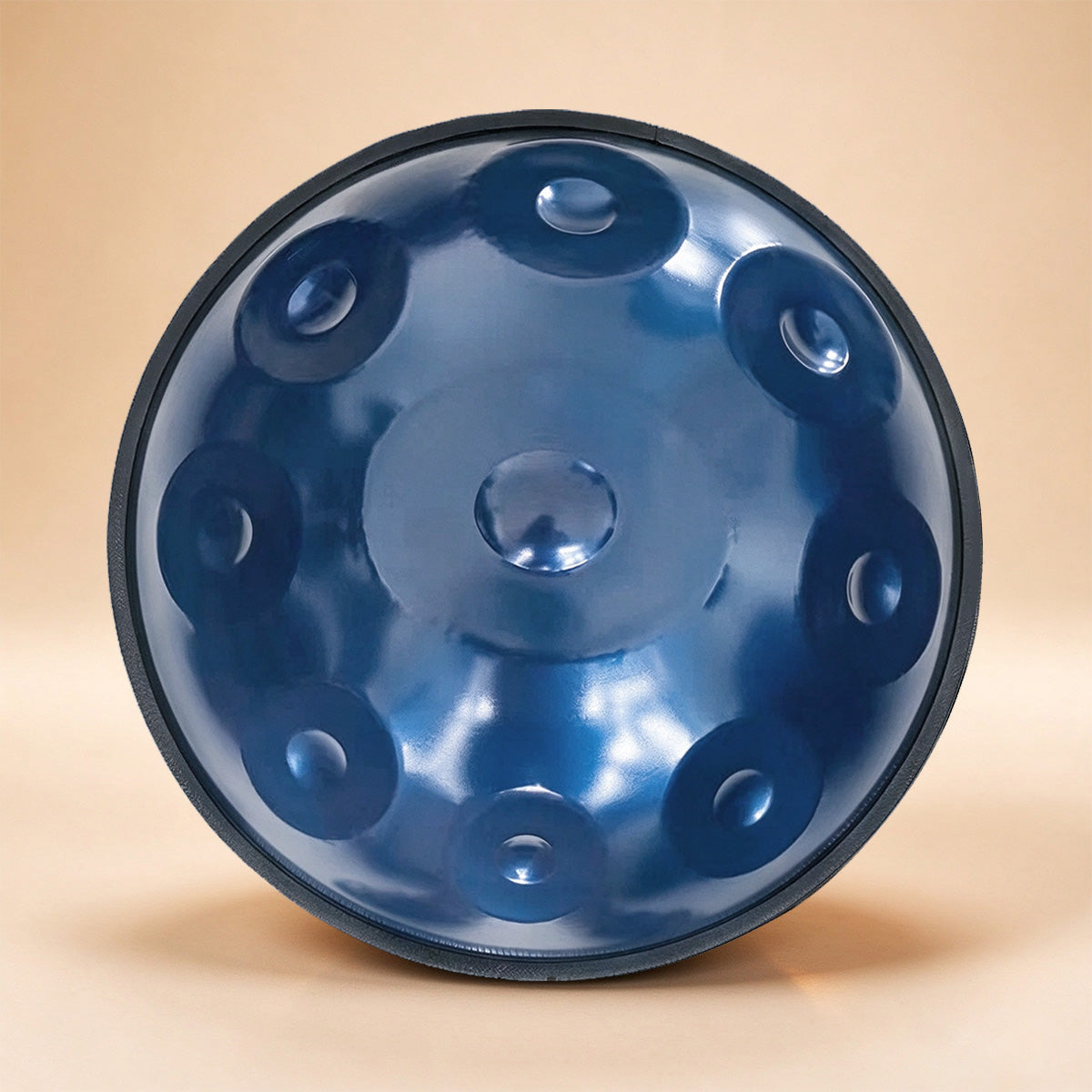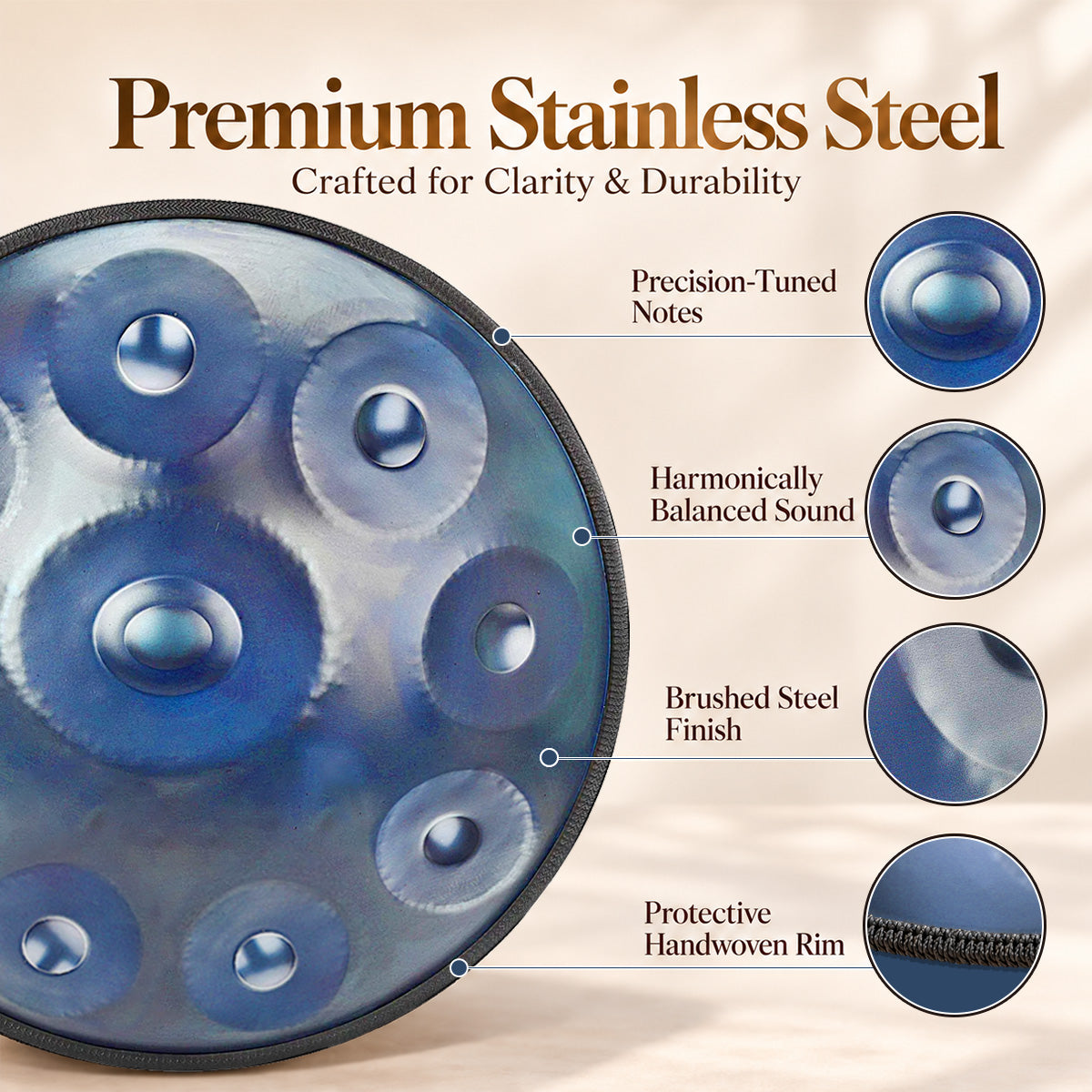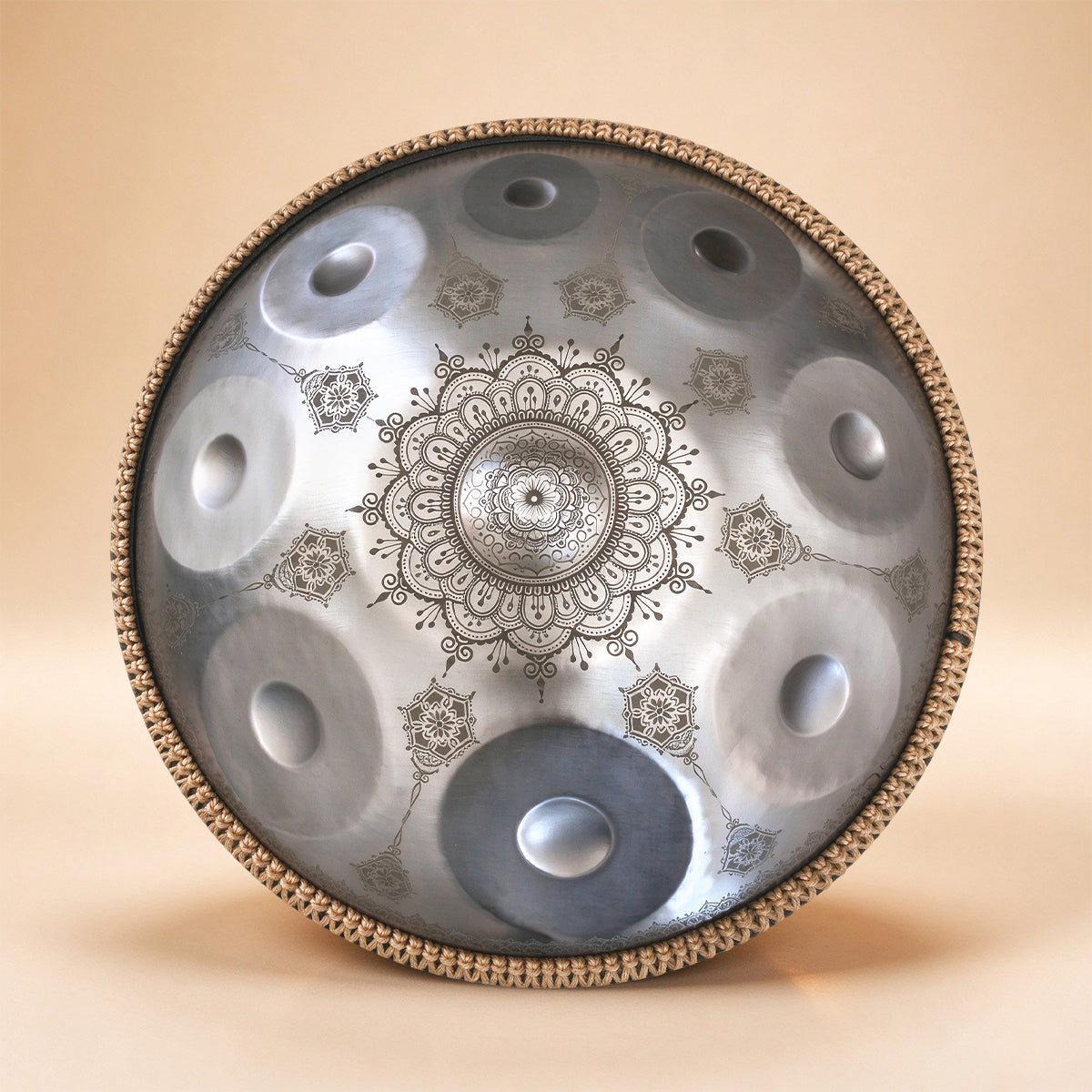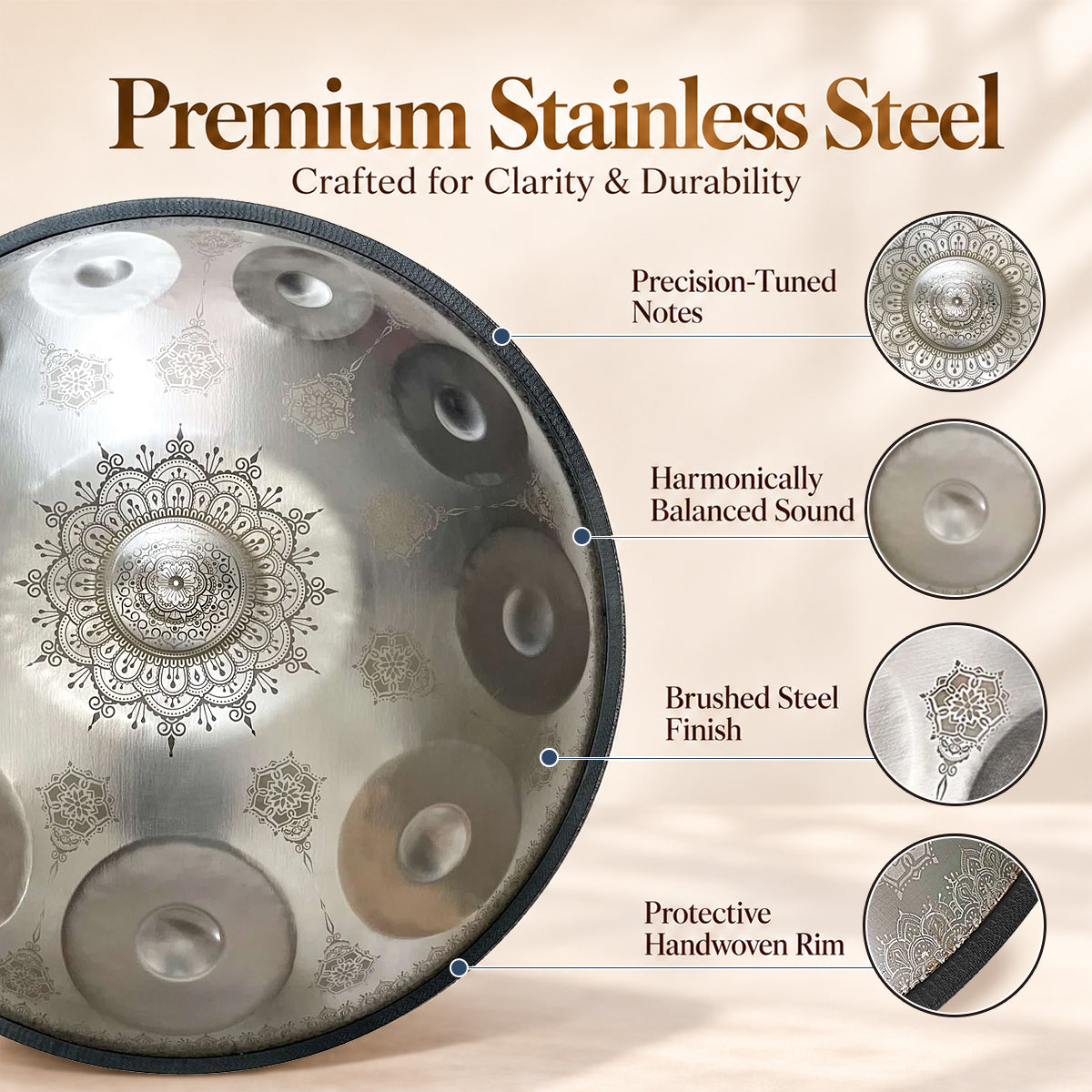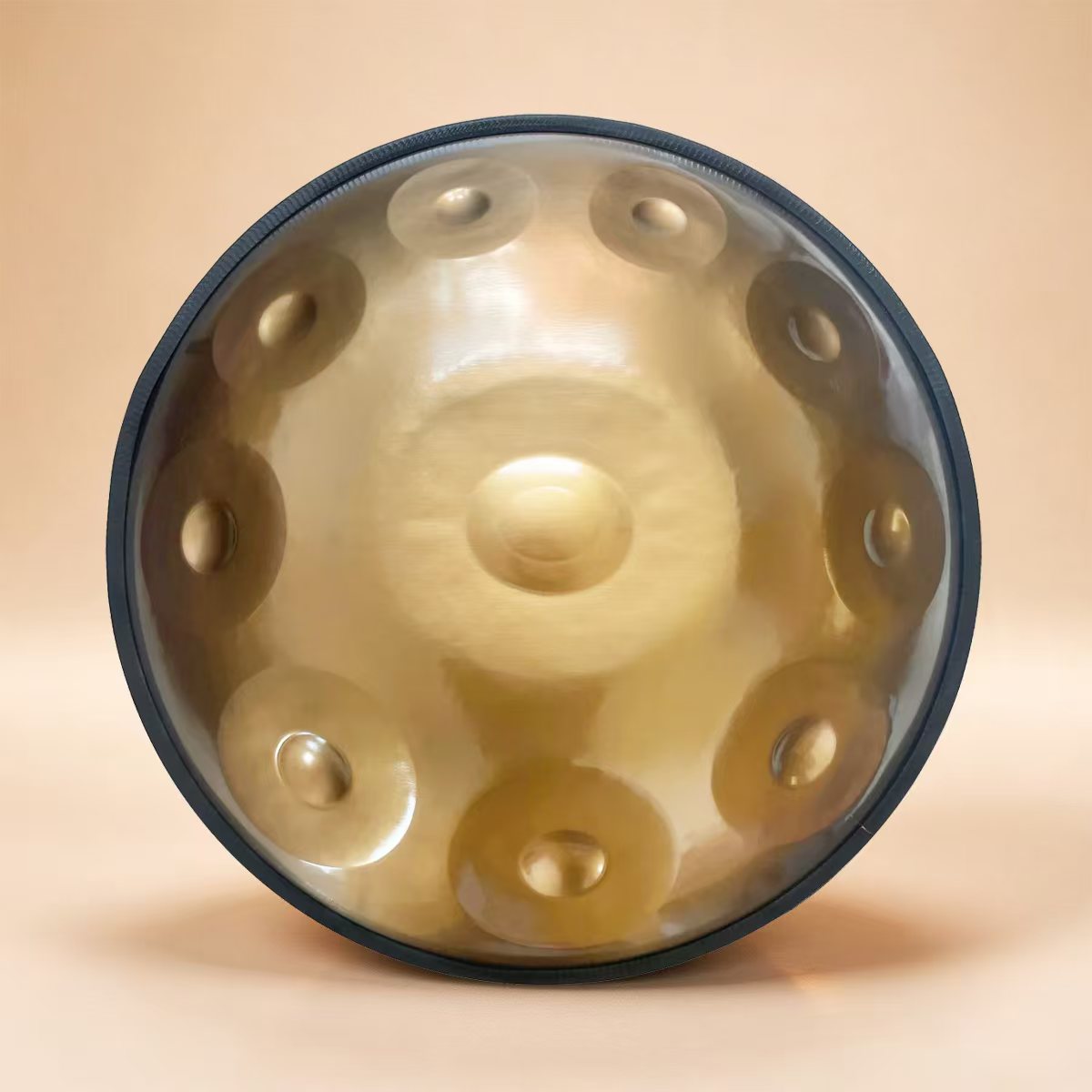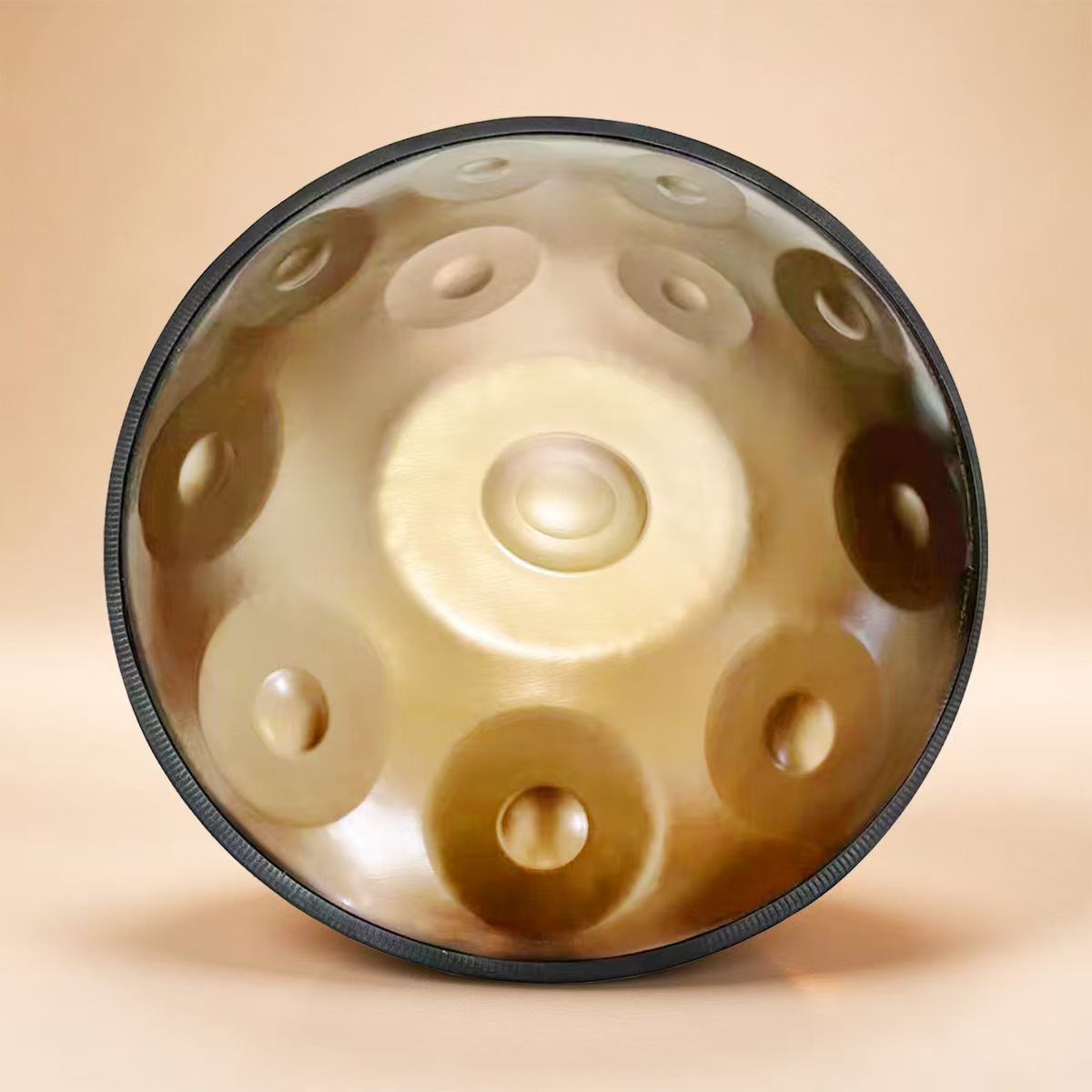
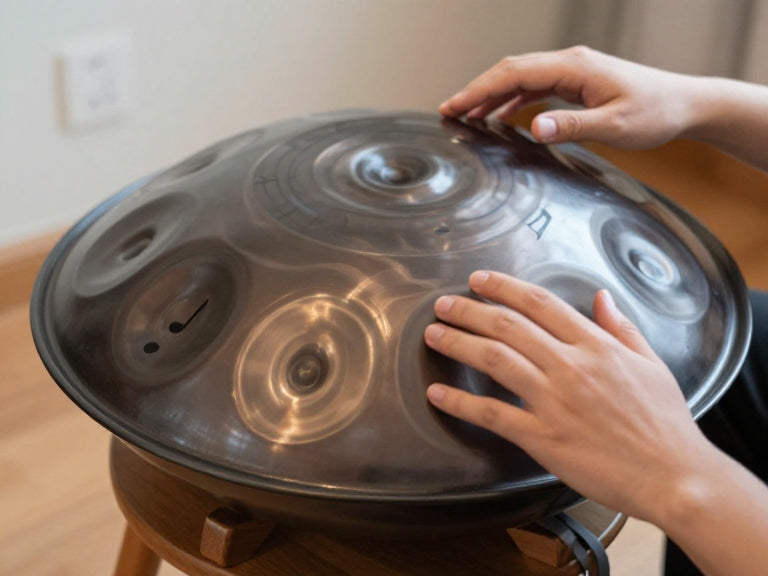
A C Aeolian handpan is a strong choice if you want a minor scale with a reflective, atmospheric sound and enough musical depth for expressive improvisation. Its natural minor structure creates a darker emotional palette than a major scale, but it is not limited to sad or serious music. Played with thoughtful phrasing, the scale can sound peaceful, cinematic, meditative, mysterious, or deeply expressive. The important buying decision is whether its note layout and musical character match the kind of music you want to create.

Quick Answer: What Is a C Aeolian Handpan?
A C Aeolian handpan is tuned around the C natural minor scale: C, D, E♭, F, G, A♭, and B♭. These seven notes form the natural minor mode, also known as the Aeolian mode. The scale has a minor tonic and a distinctive combination of whole steps and half steps that gives it a contemplative, atmospheric character.
We recommend C Aeolian for players who enjoy minor-key melodies, ambient music, meditation, and improvisation with a thoughtful emotional quality. It is less suitable if you specifically want a bright major-scale sound or a handpan designed around a different tonal center. Before purchasing, check the exact note layout, octave range, tuning reference, and whether the instrument includes the notes you need for your preferred style.
| Key detail | C Aeolian handpan | What it means for players |
|---|---|---|
| Scale family | Natural minor / Aeolian mode | A minor tonal center with a characteristic interval pattern. |
| Scale notes | C, D, E♭, F, G, A♭, B♭ | Seven pitch classes provide the basic scale vocabulary. |
| Emotional character | Reflective, atmospheric, introspective | Useful for expressive melodies and spacious improvisation. |
| Musical applications | Ambient, meditative, cinematic, folk-inspired improvisation | Works well when melody and dynamics are allowed to breathe. |
| Difficulty | Accessible to beginners, with room for advanced phrasing | The scale is manageable, but musical expression takes practice. |
| Buying priority | Note layout, tuning quality, sustain, tone, and craftsmanship | The scale name alone does not guarantee a good instrument. |
What Is a C Aeolian Handpan?
A C Aeolian handpan is a steel percussion instrument tuned to a musical arrangement based on C Aeolian, the natural minor scale beginning on C. The note C acts as the tonal center, meaning melodies and phrases often feel resolved when they return to C.
The word "Aeolian" refers to one of the seven traditional musical modes. In modern music theory, it is commonly understood as the natural minor scale. It is built from the same notes as an E-flat major scale, but the musical center is C rather than E-flat. That change in tonal center changes how the notes feel and how melodies resolve.
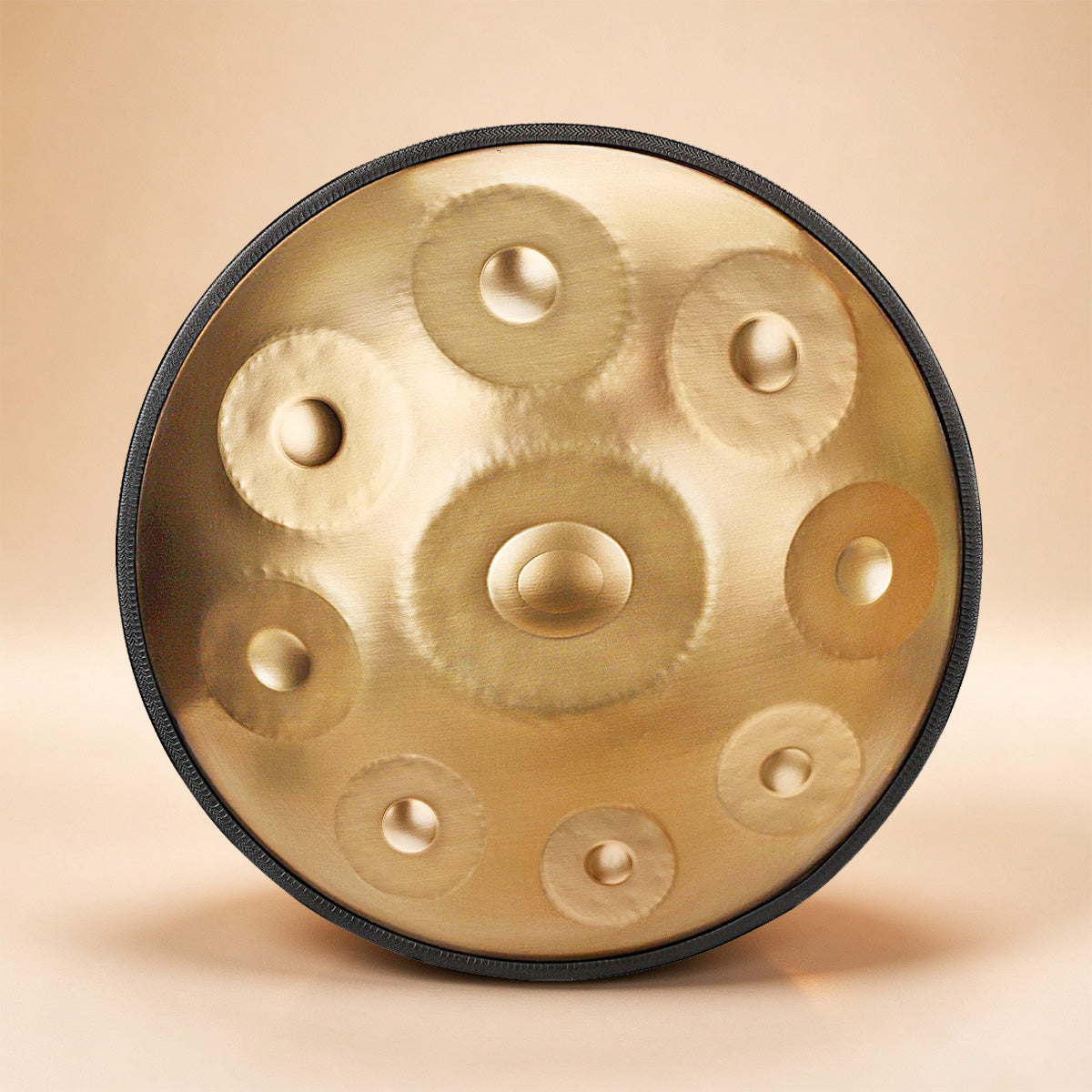
On a handpan, the central note is often called the ding. Additional tone fields are arranged around it, allowing the player to create melodies, repeating patterns, and layered rhythms by striking different areas of the instrument with the hands.
One important distinction: a scale name does not tell you everything about a handpan. Two C Aeolian instruments can have different note counts, octave placements, layouts, tuning references, and sound characteristics. A seven-note scale description identifies the basic pitch collection, not necessarily the full instrument configuration.
C Aeolian Handpan Notes and Musical Intervals
The C Aeolian scale contains seven notes: C, D, E♭, F, G, A♭, and B♭. The pattern of whole steps and half steps is what gives the scale its natural minor identity.
The Seven Notes of C Aeolian
| Scale degree | Note | Interval from C | Musical role |
|---|---|---|---|
| 1 | C | Root / tonic | The tonal center and point of resolution. |
| 2 | D | Major second | Creates movement away from the root. |
| ♭3 | E♭ | Minor third | Establishes the minor quality. |
| 4 | F | Perfect fourth | Supports melodic movement and suspension. |
| 5 | G | Perfect fifth | Provides a strong relationship with the tonic. |
| ♭6 | A♭ | Minor sixth | Adds depth and a characteristic minor color. |
| ♭7 | B♭ | Minor seventh | Creates an open, unresolved quality before returning to C. |
The C Aeolian Interval Pattern
The natural minor scale follows this interval sequence:
Whole – Half – Whole – Whole – Half – Whole – Whole
In semitones, the sequence is 2–1–2–2–1–2–2. This is the same interval pattern used by natural minor scales in other keys. If you understand this pattern, you can recognize the Aeolian sound even when the tonal center changes.
Why the Minor Third Matters
The E♭ is especially important because it forms a minor third above C. This interval is one of the main reasons C Aeolian sounds different from C major. In C major, the third is E natural. In C Aeolian, it is E♭. That single change contributes strongly to the minor character.
The A♭ and B♭ also matter. They help establish the natural minor color and give players melodic options that do not sound like a simple major-scale melody with a different starting note.
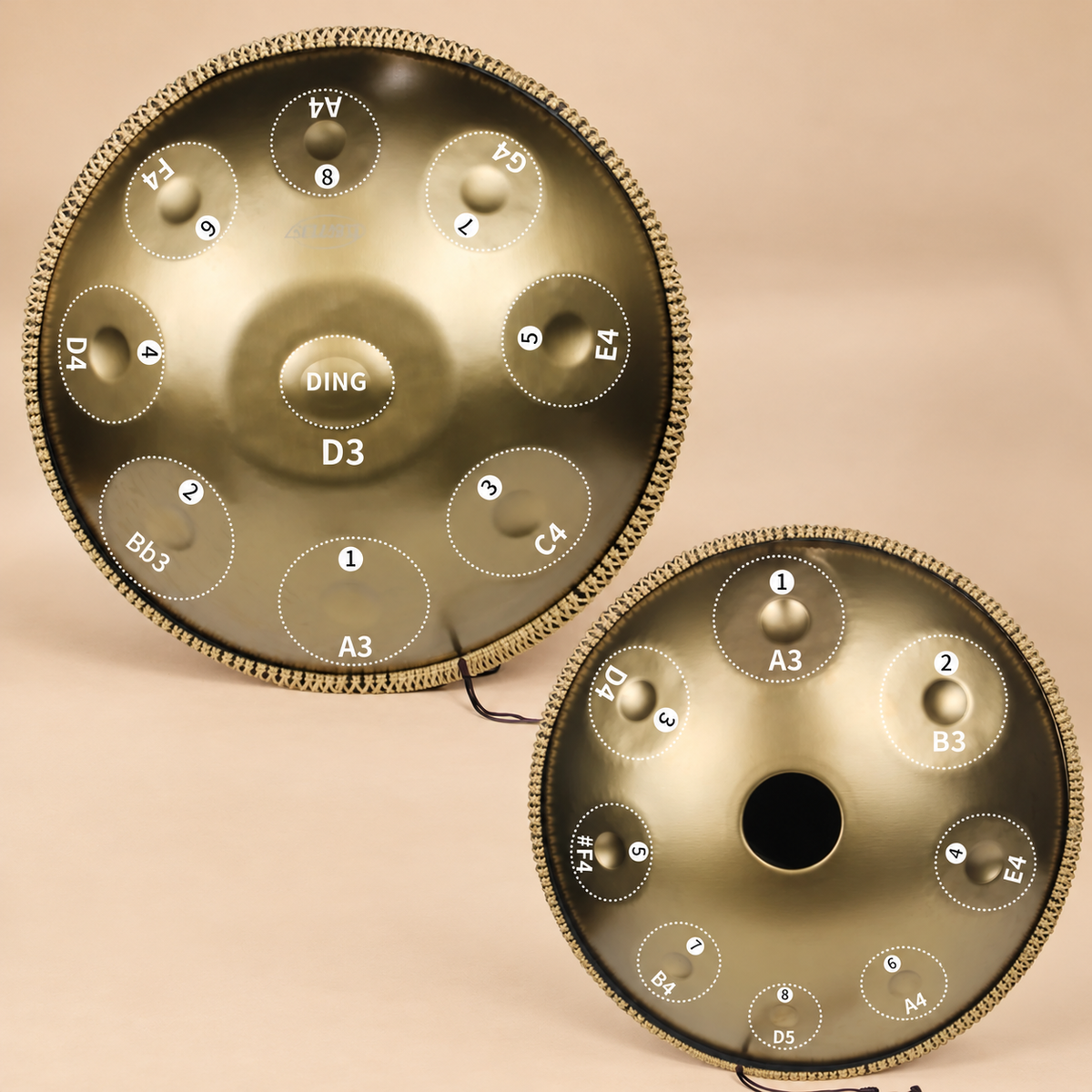
For a more visual understanding of how tone fields are arranged, see the Cosmos Handpan guide to the handpan notes chart and our article on understanding handpan notes.
Sound and Musical Characteristics of a C Aeolian Handpan
The C Aeolian handpan is often associated with a reflective, moody, and spacious sound. That description is useful, but it should not be treated as a strict emotional rule. The same scale can sound gentle, dramatic, hopeful, mysterious, or rhythmic depending on tempo, dynamics, note choices, and the way phrases are shaped.
1. Reflective and Introspective Mood
The natural minor structure gives C Aeolian a different emotional foundation from a major scale. It works particularly well for slow melodic phrases, sustained notes, and music that leaves space between musical ideas. This is one reason players often consider minor handpans for personal practice, meditation, and quiet performance settings.
2. Strong Tonal Center
The C note provides a clear home base. Returning to C after exploring other notes can make a phrase feel complete. Beginners can use this relationship to create simple musical statements without needing advanced theory. Start with C, move through a few neighboring notes, and return to C to hear how the phrase settles.
3. Melodic Flexibility
C Aeolian includes both stable and more expressive scale degrees. The root and fifth provide a strong foundation, while the minor third and minor sixth contribute much of the scale's distinctive color. Players can create simple repeating motifs or develop longer melodies by changing rhythm and note order.
4. A Natural Fit for Ambient and Meditative Playing
Long sustain and spacious phrasing can work well with the C Aeolian scale's atmospheric character. A slow pattern with pauses allows each note to develop. For a meditation setting, consistent volume and a comfortable tempo are often more effective than playing many notes quickly.
5. Performance Depends on the Instrument, Not Just the Scale
Scale choice is only one part of the sound. Steel type, shell construction, note-field shaping, tuning accuracy, sustain, dynamic response, and the player's touch all influence the final result. A well-tuned instrument with clear note separation is more useful than a handpan selected only because its scale name sounds appealing.
How to Play and Improvise on a C Aeolian Handpan
You do not need advanced music theory to begin playing C Aeolian. The scale gives you a defined group of notes, and the handpan layout makes it possible to explore simple melodies by ear. The key is to develop control before trying to play quickly.
Start with the Root Note
Find the central C note and listen carefully to its sustain. Play it softly, allow the sound to decay, and repeat. This helps you recognize the tonal center and develop a consistent touch.
Build a Simple Three-Note Motif
Try a short phrase using C, E♭, and G. These notes form a C minor triad and provide a straightforward introduction to the scale's minor sound. Play the notes slowly in different orders, then pause before returning to C.
Explore the Full Scale Gradually
Once the three-note motif feels comfortable, add D, F, A♭, and B♭. Do not rush to use every note in every phrase. A simple melody with clear timing often sounds more convincing than a long sequence of unrelated strikes.
Use Repetition to Create Musical Structure
Choose a short pattern and repeat it several times. Change one note or the rhythm on the next repetition. This creates variation while preserving a recognizable musical idea. For example, you might play C–E♭–G, pause, then answer with B♭–A♭–G before returning to C.
Control Dynamics and Sustain
Handpan playing is not simply about striking each note. The force and location of each touch affect the attack and tone. Practice soft strikes, clear articulation, and even timing. Avoid hitting the instrument too hard in an attempt to make it louder; excessive force can produce an unpleasant sound and reduce control.
Advantages and Limitations of a C Aeolian Handpan
C Aeolian is a compelling scale for players who prefer minor-key music, but it is not automatically the best first handpan for everyone. Its value depends on the music you want to make and whether the available note layout supports your playing goals.
Key Advantages
- Distinctive minor character: The natural minor structure provides a reflective and atmospheric sound palette.
- Accessible improvisation: Players can explore melodies within a defined scale without needing to learn complex chord progressions first.
- Useful tonal center: Returning to C gives beginners a practical way to create phrases that feel resolved.
- Expressive melodic options: The minor third, minor sixth, and minor seventh create several recognizable colors.
- Suitable for varied settings: With appropriate phrasing, the scale can work for personal practice, meditation, recording, and small performances.
Limitations to Consider
- Minor sound is not everyone's preference: If you want a consistently bright, celebratory major-key character, C Aeolian may not be your first choice.
- Scale-specific note collection: The standard seven-note collection does not automatically provide every note needed for music in other keys or modes.
- Layout varies between instruments: A C Aeolian handpan with a limited note range may restrict some melodies compared with a larger configuration.
- Technique still matters: A minor scale does not make an instrument easier to play well. Timing, touch, and musical phrasing require practice.
- Sound quality is not guaranteed by scale: Tuning stability, sustain, note separation, and craftsmanship must be assessed separately.
| Pros | Cons |
|---|---|
| Atmospheric natural minor sound. | May not suit players who prefer bright major-key music. |
| Clear C tonal center for learning and improvisation. | Limited note collection may restrict some cross-key arrangements. |
| Works for slow melodies and expressive rhythmic patterns. | Musical depth still depends on technique and practice. |
| Can be suitable for beginners and experienced players. | Different layouts and octave ranges can make buying comparisons difficult. |
| Distinctive character for ambient and reflective music. | Scale name alone says little about tuning quality or craftsmanship. |
C Aeolian vs. Other Handpan Scales: Which Should You Choose?
Choosing between handpan scales is a musical decision, not simply a technical one. The best approach is to listen to each scale and consider the emotional character, note layout, and musical styles you want to explore. The comparisons below describe broad tendencies; the exact sound also depends on instrument tuning, register, and playing technique.
| Scale | General character | Best suited to | Choose it when... |
|---|---|---|---|
| C Aeolian | Reflective, atmospheric, minor | Ambient melodies, introspective improvisation, meditative playing | You want a natural minor scale with C as the tonal center. |
| D Minor | Warm, expressive, familiar minor sound | Beginners, relaxation, melodic improvisation | You prefer a D-centered minor scale and find its note layout comfortable. |
| C Major | Bright, open, generally uplifting | Simple major-key melodies and cheerful musical ideas | You prefer a major-scale sound over a minor one. |
| A Minor | Natural minor, familiar and versatile | Minor-key practice and arrangements built around A | You want a different minor tonal center and compatible musical references. |
| Other modal scales | Varies by mode and note collection | Distinctive melodic colors and more specialized improvisation | You have listened to the scale and specifically like its interval character. |
C Aeolian vs. D Minor
Both are minor-scale choices, but their tonal centers differ. C Aeolian uses C as its root, while a D natural minor scale uses D, E, F, G, A, B♭, and C. Their interval patterns are the same, but the absolute pitches differ. This matters when playing with other instruments, matching recordings, or choosing a handpan to complement an existing musical setup.
If you are new to the instrument, a D Minor model can be a practical starting point because many beginner-oriented handpans are offered in D Minor. Cosmos Handpan's 9 Notes handpan collection is a useful place to compare beginner-friendly options.
C Aeolian vs. C Major
These scales share the same root but have different note structures. C major contains E, A, and B, while C Aeolian contains E♭, A♭, and B♭. The difference changes the musical character significantly. If you want bright major melodies, choose C major. If you prefer a natural minor sound, C Aeolian is the more direct fit.
How Note Count Changes the Decision
Two handpans in the same scale can offer different playing possibilities if one has more notes or a wider octave range. A larger instrument may provide additional melodic options, but it can also increase complexity and price. Read our guide on how many notes a handpan should have before paying extra for a larger layout.
Who Should Choose a C Aeolian Handpan?
Good Choice for Beginners Who Like Minor Music
A C Aeolian handpan can be beginner-friendly if the note layout is clear and the instrument is well tuned. Beginners do not need to understand every mode before playing. They can start by learning the root, building simple motifs, and exploring the scale by ear.
However, a beginner should not buy a scale just because it is described as easy. Listen to recordings of the exact scale and, if possible, try the instrument. A scale that inspires you to practice is usually a better choice than one selected only because it is popular.
Good Choice for Ambient and Meditative Musicians
Players who create slow, spacious music may appreciate the natural minor character of C Aeolian. The scale can support repeating patterns, gentle melodic movement, and phrases that resolve around C. Sustain and tuning quality become particularly important in this setting because lingering notes are exposed rather than hidden by fast playing.
Good Choice for Songwriters and Multi-Instrumentalists
If you already play guitar, piano, keyboard, or another melodic instrument, consider how C Aeolian fits your existing music. The scale is useful when you want to work in C natural minor or explore the same pitch collection from a different tonal perspective. Check octave placement and note availability before buying if you plan to arrange music with other instruments.
Who May Prefer Another Scale?
- Players who strongly prefer bright, major-key melodies.
- Musicians who need a handpan to match a specific song in another key.
- Beginners who have listened to C Aeolian and do not connect with its minor character.
- Players who need an expanded note range but are considering a limited-layout instrument.
Buying a C Aeolian Handpan: What to Check Before You Pay

The scale is only the starting point. A good handpan should be comfortable to play, musically coherent, and reliably tuned. In most professional situations, experienced buyers pay close attention to the instrument's sound and construction rather than choosing by finish or note count alone.
1. Confirm the Complete Note Layout
Ask the seller for the full list of notes, including octave designations where available. A product described as C Aeolian may include additional notes beyond the seven scale degrees. Confirm the actual arrangement and whether the layout gives you the range needed for your music.
2. Listen to Every Note Individually
Request a clear recording that demonstrates every tone field. Listen for consistent tuning, clean attacks, sustain, and unwanted buzzing or rattling. A polished product photograph cannot tell you whether the notes sound balanced.
3. Check Tuning Reference and Pitch Stability
Handpans may be offered at different reference pitches, commonly 440Hz and sometimes 432Hz. These are different tuning references, not different musical scales. A C Aeolian instrument can be tuned around either reference. If you play with other musicians or recorded music, choose a reference that fits your existing setup.
Do not assume 432Hz is automatically more relaxing or healthier than 440Hz. Such claims require evidence and should not be used as a substitute for evaluating sound quality, tuning accuracy, and personal preference.
4. Evaluate Steel, Finish, and Craftsmanship
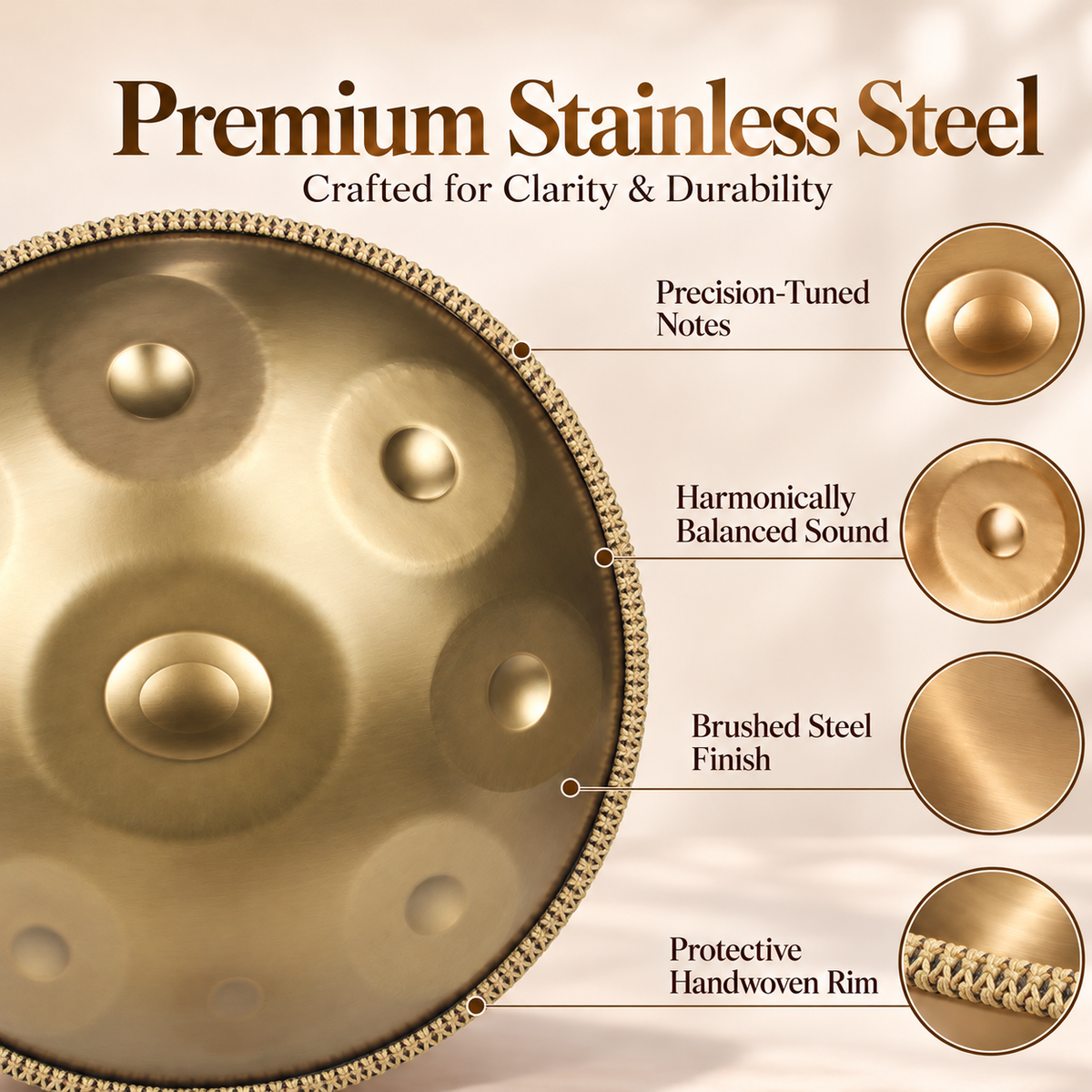
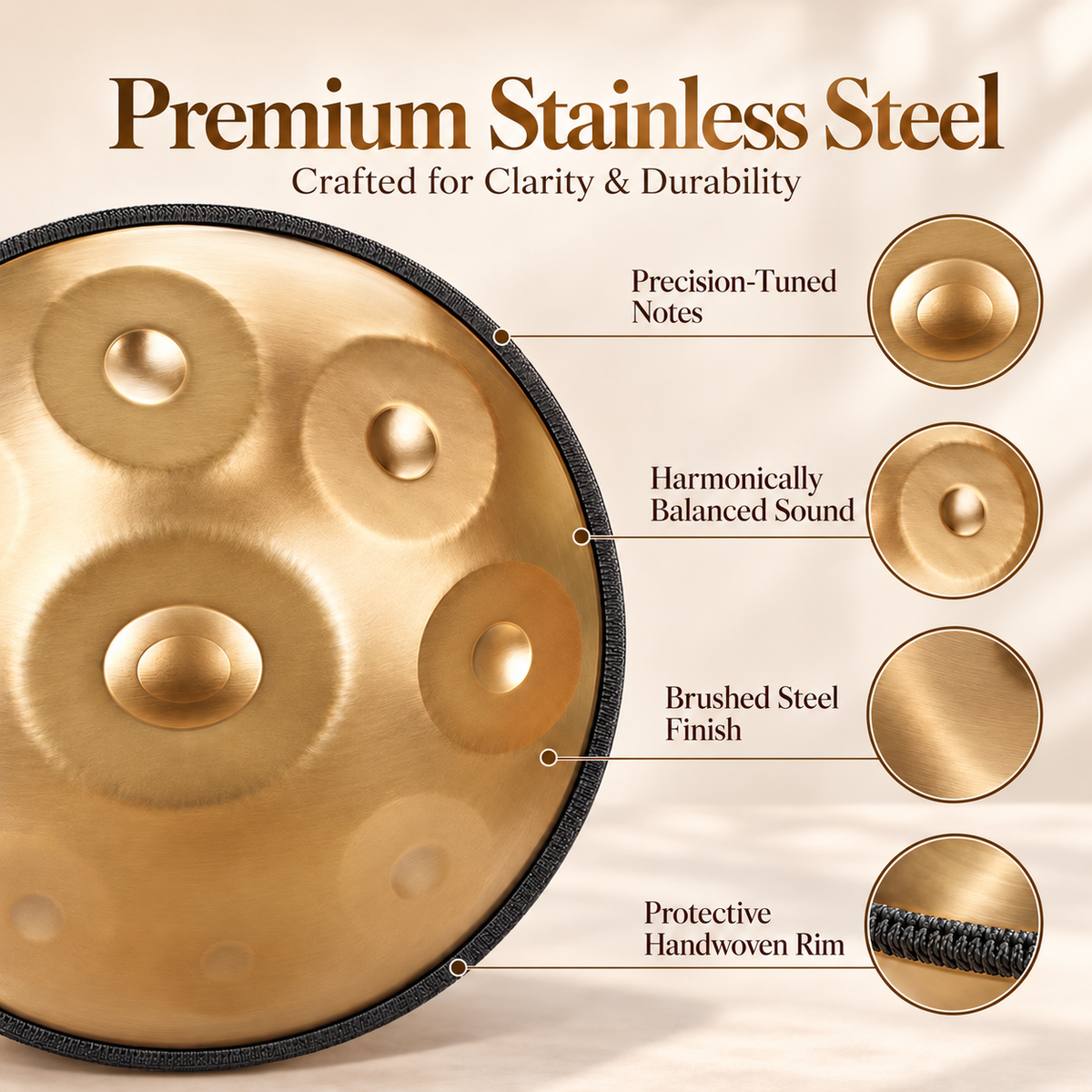
Ask what material the handpan is made from and how it is treated or finished. Different steel types and manufacturing methods can affect tone, sustain, maintenance, and resistance to corrosion. The seller should explain care requirements clearly. Inspect the instrument for visible damage and ask how it should be cleaned and stored.
5. Compare Note Count with Your Actual Needs
A 9-note handpan can be a sensible starting point for many beginners because it provides a manageable layout. A 10- or 12-note model may offer more melodic range, but additional notes are only valuable if you know how you will use them. Compare the 10 Notes handpan collection and 12 Notes handpan collection if you want to explore larger configurations.
6. Check Accessories, Packaging, and After-Sales Support
A handpan is a precision musical instrument and should be transported and stored carefully. A protective bag is useful for travel. A stand can improve playing comfort, while cleaning accessories help with routine maintenance. Check whether these items are included or sold separately.
Also confirm the seller's return policy, warranty, shipping protection, and support process. If the instrument arrives with a tuning or physical issue, you should know who to contact and how the problem will be handled.
7. Compare Price Against Instrument Quality
The cheapest handpan is not necessarily the best value. A lower price may reflect simpler finishing, limited support, fewer included accessories, or a different manufacturing approach. At the other end, a premium price does not guarantee that the scale or tone will suit you.
For a more complete cost comparison, read Cosmos Handpan's guide to how much a decent handpan costs. Compare the instrument itself, tuning quality, included accessories, shipping, warranty, and service before making a decision.
A Cosmos Handpan Option for Minor-Scale Beginners
If you are exploring minor-scale handpans, Cosmos Handpan's Golden Elegance 9 Notes D Minor Gift Set is one beginner-oriented option to consider. It is not a C Aeolian instrument, so it should not be treated as a direct substitute for one. However, it offers a useful comparison for buyers who like the expressive character of minor scales and want a manageable first handpan.

Cosmos Handpan Golden Elegance - 9 Notes D Minor Gift Set
A beginner-friendly 9-note D Minor handpan with a warm golden finish and a note layout designed for accessible improvisation.
- Scale: D Minor, 9-note layout
- Tuning options: 432Hz or 440Hz
- Sound: clear sustain with a smooth, calming tone
- Suggested uses: first-time playing, relaxation, meditation, and small performances
- Included: protective carry bag, handpan stand, pair of mallets, and cleaning cloth
Is This a Good Alternative to C Aeolian?
It can be a good alternative if you are flexible about the tonal center and prefer the D Minor sound. Both C Aeolian and D natural minor use a natural minor interval pattern, but they contain different absolute pitches. That means the instruments are not interchangeable when playing with a specific key, recording, or musical arrangement.
If your priority is specifically C Aeolian, buy an instrument tuned and laid out for C Aeolian. If your priority is a beginner-friendly minor handpan and you enjoy the sound of D Minor, the Golden Elegance set is worth comparing. Cosmos Handpan's brand story provides more information about the company and its approach to handpan instruments.
Common Mistakes When Choosing or Playing a C Aeolian Handpan
- Confusing C Aeolian with C major. They share the same root but have different notes and emotional character. Confirm the scale before ordering.
- Assuming every C Aeolian handpan has the same layout. Note count, octave placement, and additional tones can differ between models.
- Buying based on sound labels alone. Terms such as warm, mystical, calming, or cinematic are subjective. Listen to recordings of the actual instrument.
- Ignoring the tuning reference. If you plan to play with other musicians or recordings, check whether the instrument is tuned to 432Hz or 440Hz.
- Paying for more notes without a purpose. Extra notes can be useful, but a larger layout may not improve the experience for a beginner who is still learning basic touch and timing.
- Striking too hard. Handpans respond to controlled touch. Excessive force can make notes sound harsh and reduce musical control.
- Neglecting instrument care. Follow the manufacturer's cleaning, handling, and storage instructions to help protect the steel and tuning.
- Expecting the scale to create the music automatically. A good scale offers musical possibilities, but phrasing, rhythm, dynamics, and practice are what turn notes into a performance.
Expert Recommendation: Is a C Aeolian Handpan Worth Buying?
Yes, a C Aeolian handpan is worth considering if you genuinely enjoy natural minor music and want an instrument for expressive, atmospheric playing. Its seven-note scale offers a clear tonal center and enough material for simple melodies, repeating patterns, and more developed improvisation. It is particularly appealing to players who prefer reflective music over a consistently bright major-key sound.
But do not choose it just because a product description calls it emotional, healing, or meditative. Listen to the scale first. Check the complete note layout. Compare the instrument's sustain, tuning, tone separation, and build quality. If you plan to perform or play with other musicians, make sure the key and tuning reference suit your setup.
For beginners, a well-tuned 9-note handpan with a clear layout can be a more sensible investment than a complex instrument with extra notes you are unlikely to use. For experienced players, a larger layout may be worthwhile if it expands the melodic range you actually need. The best upgrade is one that adds musical possibilities rather than simply increasing the specification count.
Cosmos Handpan offers different note configurations and beginner-oriented options for players comparing their first instrument. If you are unsure whether C Aeolian or another minor scale is right for you, contact the team through the Cosmos Handpan contact page and clarify the note layout and sound before placing an order.
Frequently Asked Questions About C Aeolian Handpans
1. What notes are in the C Aeolian scale?
The C Aeolian scale contains C, D, E♭, F, G, A♭, and B♭. It is the C natural minor scale and follows the interval pattern whole, half, whole, whole, half, whole, whole.
2. Is C Aeolian the same as C Minor?
C Aeolian is another name for the C natural minor scale. It is different from harmonic minor and melodic minor, which use altered notes in certain musical contexts.
3. What does a C Aeolian handpan sound like?
It generally has a reflective, atmospheric, and minor-key character. Depending on tempo, phrasing, and dynamics, it can sound calm, mysterious, dramatic, or expressive.
4. Is C Aeolian a good scale for beginners?
Yes, it can be suitable for beginners who enjoy minor music. The seven-note scale provides a manageable starting point for learning simple melodies and improvisation. The clarity of the instrument's note layout and tuning quality are also important.
5. What is the difference between C Aeolian and D Minor?
Both use the natural minor interval pattern, but they have different tonal centers and absolute pitches. C Aeolian contains C, D, E♭, F, G, A♭, and B♭. D natural minor contains D, E, F, G, A, B♭, and C.
6. Is C Aeolian suitable for meditation music?
It can work well for meditation and relaxation music because its minor character can support spacious, reflective melodies. The effect depends on the player's phrasing, volume, tempo, and the listener's personal preference.
7. Should I choose a 9-note or 12-note C Aeolian handpan?
A 9-note layout can be a practical starting point for many beginners. A 12-note layout may provide additional melodic range, but it is worth paying more only if you intend to use the extra notes. Compare the complete note layout before buying.
8. Is 432Hz or 440Hz better for a C Aeolian handpan?
Neither reference is universally better. Choose 440Hz if compatibility with standard-tuned instruments and recordings is important to you. Consider 432Hz if you prefer that reference and understand that it may not match recordings or instruments tuned to 440Hz.
9. Can I play songs in other keys on a C Aeolian handpan?
You can adapt melodies that use compatible notes, but the instrument's fixed note collection may not contain every pitch required by another key. If you need to play specific songs or collaborate with other instruments, compare the required notes with the handpan's full layout.
10. What should I check before buying a C Aeolian handpan?
Check the complete note layout, tuning reference, sound samples for every note, sustain, note separation, steel and finish, included accessories, warranty, shipping protection, and after-sales support. Listen to the instrument before deciding whenever possible.
References
The following music theory and instrument-care resources provide useful background for understanding the Aeolian mode, minor scales, and the care of steel percussion instruments.
- musictheory.net: Music Theory Lessons — Foundational explanations of scales, intervals, and musical relationships.
- Encyclopaedia Britannica: Mode in Music — Background on musical modes and their role in tonal organization.
- Sweetwater InSync: Music and Instrument Guides — Practical educational resources on musical instruments, tuning, and performance equipment.