If you are buying your first handpan, the number of notes can look like the most important specification on the product page. It is not. A handpan with 17 notes is not automatically more musical, more professional, or better value than a 9-note instrument. What matters is whether its note layout, scale, playing range, and sound suit the music you actually want to make.
For most beginners, we recommend starting with a well-made 9-note or 10-note handpan in a familiar scale such as D Minor. It gives you enough musical material to learn melody, rhythm, phrasing, and improvisation without making the instrument unnecessarily demanding. More experienced players may benefit from 12, 15, or 17 notes when they have a clear reason to need the expanded range.

Quick Answer: How Many Notes Should a Handpan Have?
For most first-time players, 9 to 10 notes are enough. Choose 12 notes if you already play comfortably and want more melodic options. Consider 15 to 17 notes when you have the technique and musical goals to use the expanded range.
More notes give you access to additional pitches and musical possibilities, but they also increase the number of playing areas you must learn to control. A carefully tuned, well-balanced 9-note handpan can be a better purchase than a poorly designed 17-note instrument.
1. What Does the Number of Notes on a Handpan Mean?
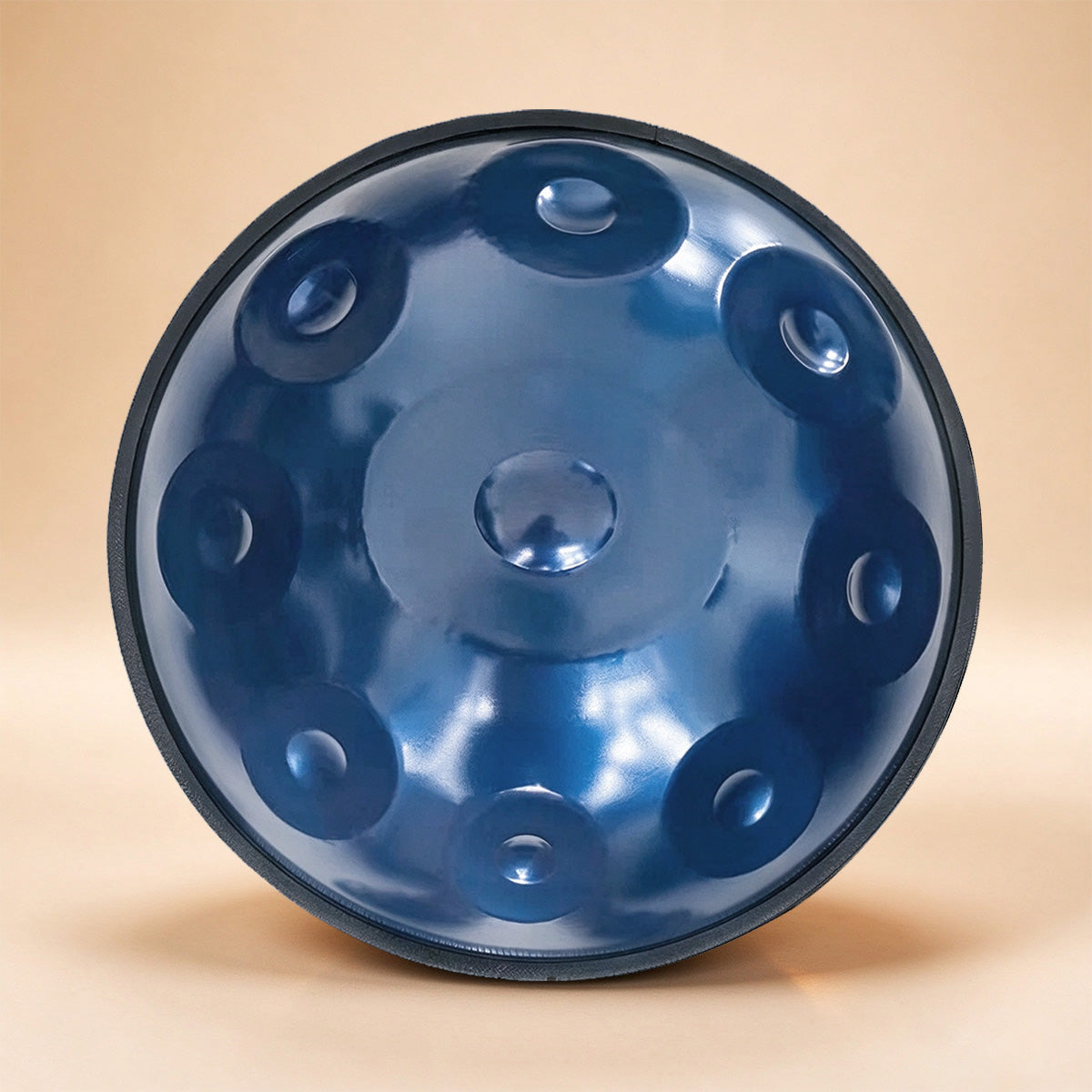
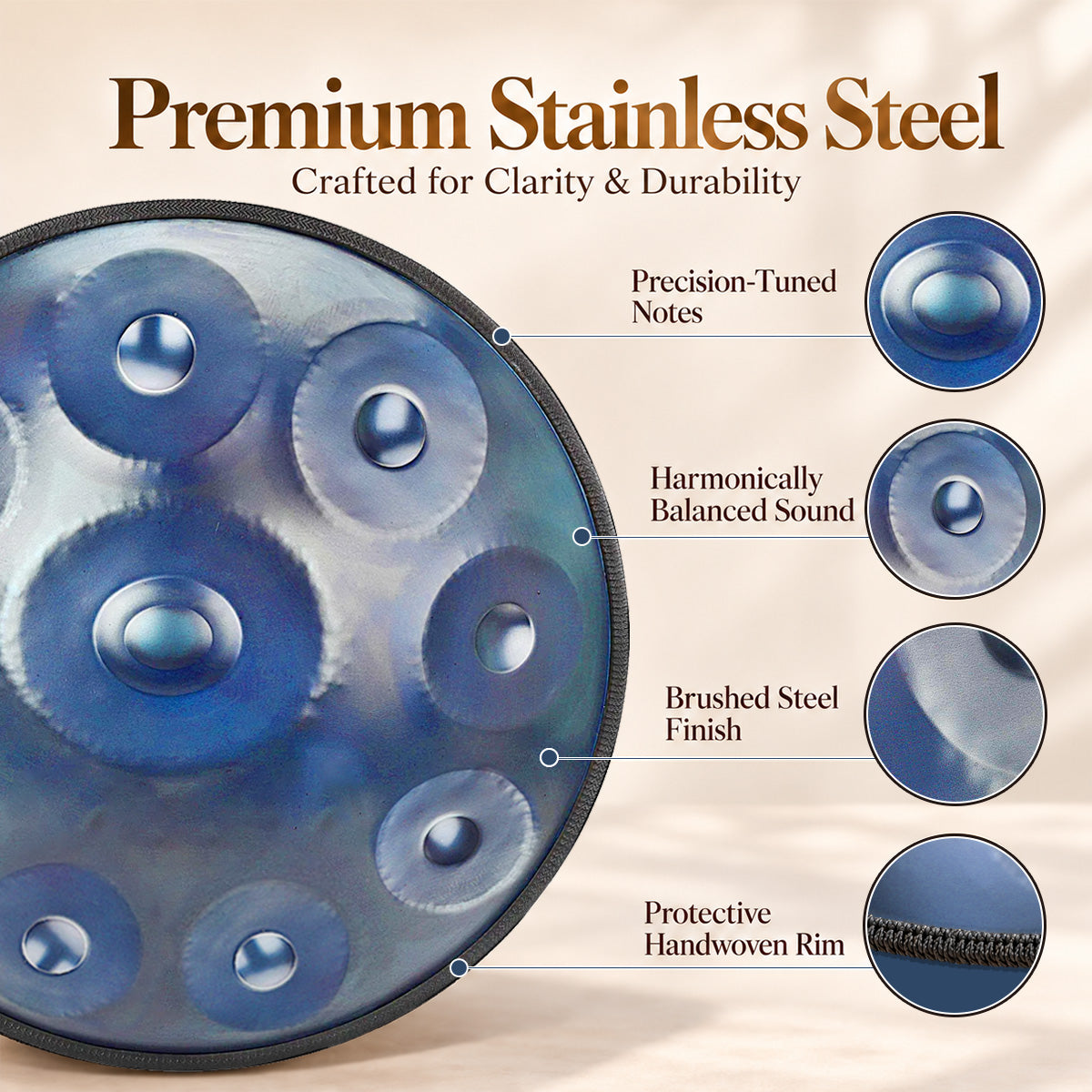
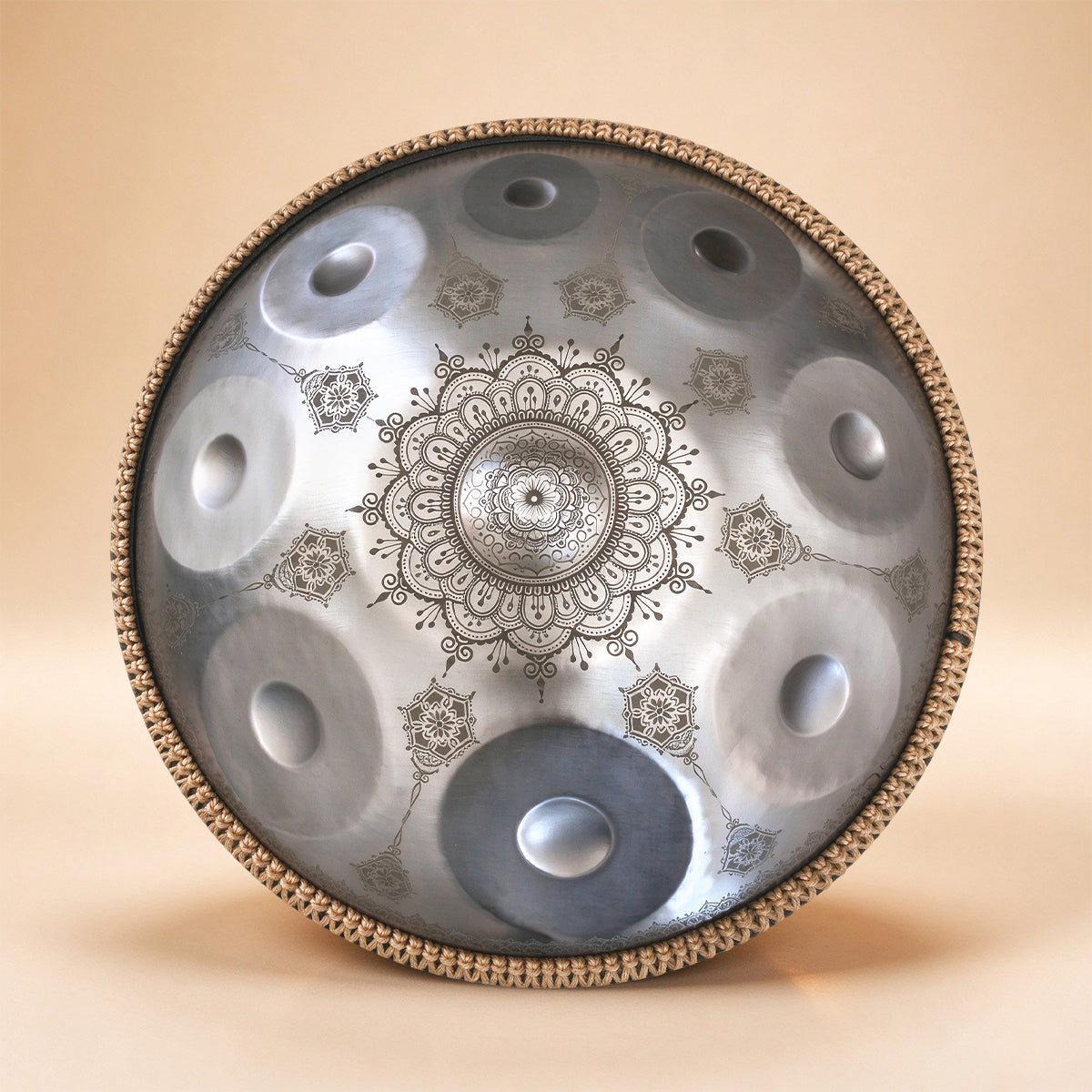
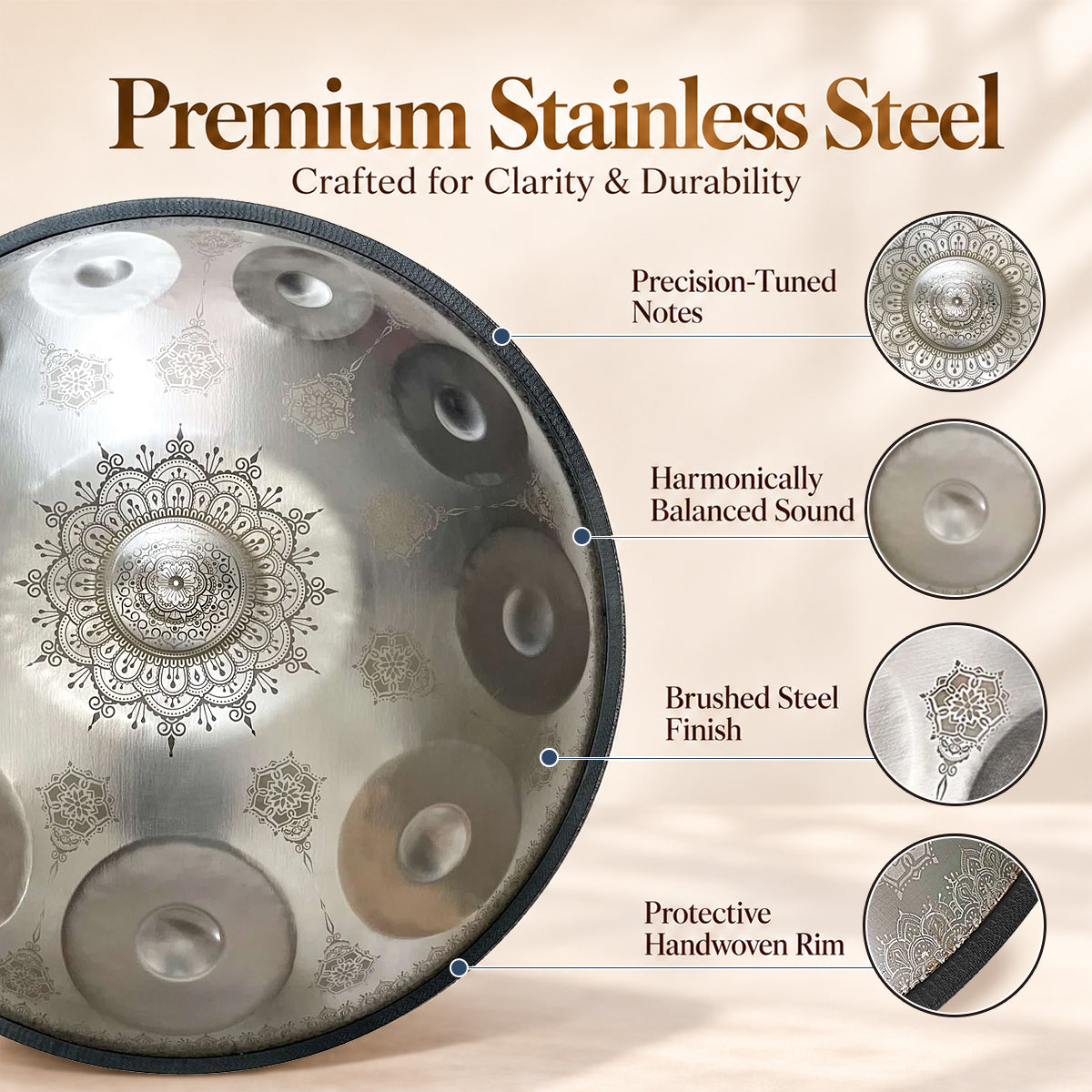
A handpan is a tuned percussion instrument made from two shaped metal shells joined together. Its playing surface contains distinct tone fields. Each tone field is carefully formed and tuned to produce a specific pitch, often with a fundamental tone and accompanying upper partials that contribute to the instrument's characteristic sound.
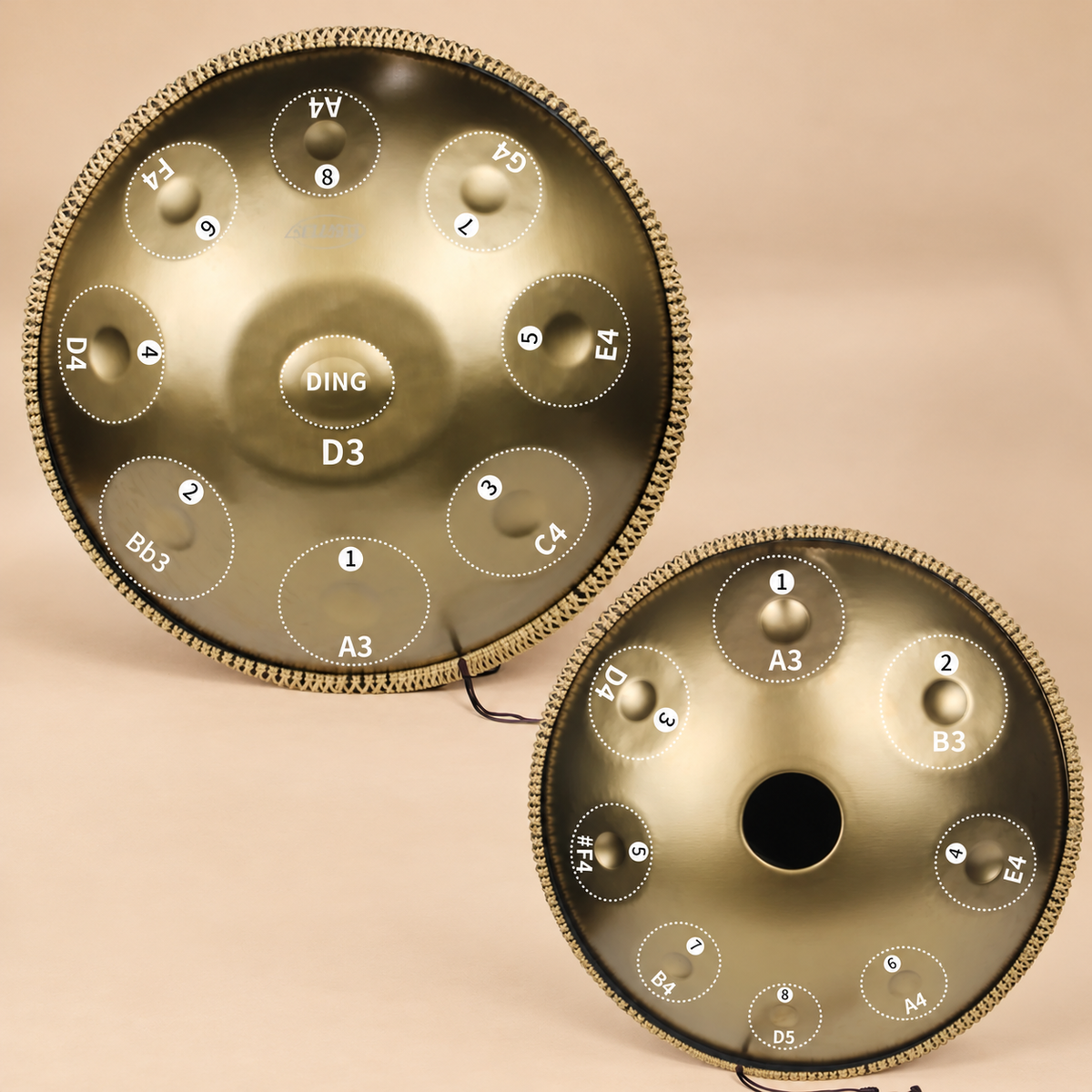
When a seller describes a handpan as having 9, 10, or 12 notes, the number generally refers to the playable note fields on the instrument. The central note is commonly called the ding, while the surrounding tone fields form the rest of the layout. Some instruments add notes on the underside, creating a double-sided design with a larger playing range.
Note count is therefore a practical description of how many distinct pitches are available to the player. It does not tell you everything about the instrument. Two handpans with the same number of notes can sound and feel very different because of their scale, tuning quality, note arrangement, sustain, dynamic response, and craftsmanship.
For a visual overview of note positions, use our handpan notes chart. It is much easier to understand a note layout when you can see where each pitch sits on the playing surface.
2. How Many Notes Should a Handpan Have?
There is no universal ideal number, but there is a sensible starting point for each type of player. The best choice is the smallest note layout that comfortably supports the music you want to play. That approach keeps learning manageable and avoids paying for notes that may rarely be used.
For beginners: 9 or 10 notes
A 9-note handpan is an excellent starting point for someone learning handpan technique from scratch. The layout is relatively easy to understand, the available notes are usually sufficient for melodic improvisation, and players can concentrate on developing touch, timing, and musical expression.
A 10-note handpan offers one additional pitch without dramatically changing the learning experience. If the extra note is placed in a useful position and belongs naturally to the scale, it can add flexibility without overwhelming a new player.
For beginners, we would rather see money spent on tuning consistency, comfortable note placement, a suitable scale, and a protective case than on a high note count alone. Explore our 9-note beginner handpans if you want a focused instrument that is easier to approach.
For developing players: 10 to 12 notes
Once you can play clean notes, maintain a steady rhythm, and move confidently around the instrument, additional pitches can become useful. A 12-note handpan may offer more melodic choices and help you develop longer phrases or explore different musical ideas.
This is often the most practical middle ground for players who have moved beyond their first instrument but do not need a highly expanded layout. The extra notes should add meaningful musical options, not simply increase the specification count.
Our 10-note and intermediate handpan selection is a useful place to compare layouts if you are ready for more than a basic setup.
For experienced players: 12 to 17 notes or more
Advanced players may benefit from a larger note range, particularly if they compose, perform, accompany other musicians, or want to explore more complex melodic patterns. Additional notes can extend the instrument's range and create more options for transitions, phrasing, and composition.
But a larger instrument also requires more precise movement. The player must know where the additional pitches are, control unwanted contact with neighboring tone fields, and maintain an even sound across the instrument. If you cannot use the extra notes musically, they add complexity without adding much value.
For players with a clear reason to expand their range, Cosmos Handpan offers 12-note and advanced handpan options, as well as a 17-note double-sided D Minor handpan.
3. 9 vs. 10 vs. 12 vs. 17 Notes: Which Is Best?
The following table is a practical buying guide, not a strict grading system. The best note count depends on the player's experience, the instrument's layout, and the musical role it needs to fill.
| Note Count | Best For | Main Advantage | Main Limitation | Our Verdict |
|---|---|---|---|---|
| 9 notes | Beginners, casual players, meditation and personal practice | Simple layout that supports focused learning and improvisation | Smaller pitch range for more ambitious compositions | Best starting point for most first-time buyers |
| 10 notes | Beginners who want a little more flexibility | One extra pitch without a major increase in complexity | Value depends on whether the added note is musically useful | A sensible step up when the layout suits your goals |
| 12 notes | Developing and intermediate players | More melodic options and a wider playing range | Requires better control and familiarity with the layout | Strong all-round choice for players ready to progress |
| 15–17 notes | Experienced players, composers, performers | Expanded range and greater compositional flexibility | More complex layout, technique demands, and often higher cost | Worth buying when you know how you will use the extra notes |
Quick summary table: choosing by experience
| Your Situation | Recommended Note Count | What to Prioritize |
|---|---|---|
| First handpan, no musical background | 9 notes | Comfortable layout, accessible scale, stable tuning |
| First handpan, some musical experience | 9–10 notes | Scale compatibility and note arrangement |
| Regular player seeking more options | 10–12 notes | Useful added pitches and consistent response |
| Performer or composer | 12–17 notes | Range, layout, dynamic control, and musical application |
| Experienced player seeking a second instrument | Depends on the existing instrument | Complementary scale, range, and playing role |
One point deserves emphasis: a 17-note handpan is not automatically an upgrade from a 9-note model. It is a different tool. If your playing is based on short melodic phrases, repeating patterns, and meditative improvisation, a smaller layout may remain the more satisfying instrument.
4. How Do Handpan Notes Work?
Understanding the layout helps you choose the right number of notes. Most handpans are arranged around a central ding, with surrounding notes positioned so that players can reach them using their hands and fingers. Each tone field is tuned to a particular pitch within the instrument's scale.
The ding and surrounding notes
The ding is usually the central tone field and often provides a tonal anchor for improvisation. The surrounding notes form the rest of the scale. Players combine these pitches through alternating taps, repeated patterns, accents, and pauses to create melody and rhythm.
The physical layout matters. A handpan with more notes may place some pitches on the underside or in positions that require different hand movements. This can be musically useful, but it changes how the instrument is played. Before choosing a larger handpan, make sure you are comfortable with its actual layout rather than relying only on the number printed in the product title.
Scale matters as much as note count
A handpan's scale determines the collection of pitches available to the player and has a major influence on its musical character. D Minor is a popular choice because its note relationships make it approachable for many styles of improvisation. Other scales can sound brighter, darker, more tense, or more spacious depending on their intervals and arrangement.
More notes within one scale do not necessarily mean more musical freedom than fewer notes in another. A smaller handpan with a scale that suits your musical taste may inspire more playing than a larger instrument whose sound does not connect with you.
Our guide to understanding handpan notes and note charts explains how note positions and scale relationships help players navigate the instrument.
How tuning frequency fits into the decision
Some handpans are offered at 440Hz or 432Hz reference tuning. This is a separate specification from note count. It describes the reference pitch standard used for the instrument's tuning; it does not determine how many notes the handpan has or whether it is inherently easier to play.
If you plan to play with other musicians or recorded music, check which reference pitch your ensemble or backing tracks use. Matching the tuning reference can make collaboration easier. If you mainly play alone, choose based on the instrument's sound and your preferences, while understanding that changing a handpan's tuning is not a casual adjustment.
5. Benefits and Limitations of Different Handpan Note Counts

Why fewer notes can be an advantage
- Faster orientation: A compact layout is easier to memorize, especially for players without previous music training.
- More attention to technique: You can focus on clean strikes, hand balance, timing, and dynamics instead of constantly searching for additional pitches.
- Lower entry cost in many product ranges: Simpler configurations may be more accessible, although price still depends heavily on maker, material, tuning, and finish.
- Less visual and physical complexity: A smaller note arrangement can make spontaneous playing feel more natural.
Why more notes can be an advantage
- Expanded melodic range: Additional pitches can make longer phrases and more varied compositions possible.
- More arrangement options: Experienced players can explore more transitions and musical ideas.
- Greater creative flexibility: A larger layout may support particular compositions or performance approaches that a smaller instrument cannot reproduce.
- Potentially useful as a second instrument: A larger or double-sided handpan can complement a player's existing instrument and broaden their sound palette.
Pros and cons: small versus large note layouts
| Smaller Layout: 9–10 Notes | Larger Layout: 12–17 Notes |
|---|---|
| Pros: Easier to learn, simpler navigation, often a more approachable first purchase, enough pitches for many improvisational styles. | Pros: Wider pitch range, more compositional choices, useful for advanced playing and certain performance settings. |
| Cons: Fewer available pitches and less range for complex arrangements. | Cons: More demanding technique, potentially higher purchase cost, more complex layout, extra notes may go unused. |
| Best decision: Choose this when your priority is learning, personal enjoyment, and expressive playing without unnecessary complexity. | Best decision: Choose this when you can identify specific musical needs that the additional notes will meet. |
6. How to Choose the Right Note Count and Scale
In most professional situations, the decision should begin with the music and playing context, not the largest available specification. We recommend asking four questions before comparing individual models.
Question 1: Are you learning from scratch?
If you have never played a handpan, start with a manageable note layout. A 9-note D Minor instrument gives you a focused environment in which to develop hand technique and learn how the notes relate to one another. You can make expressive music without needing a large range.
For a structured introduction, read our step-by-step handpan beginner guide. It can help you understand basic playing posture, striking technique, and how to build a regular practice routine.
Question 2: What kind of music do you want to play?
If you enjoy slow, reflective improvisation, a compact scale may provide everything you need. If you want to compose longer melodies, play with other instruments, or explore more elaborate arrangements, a larger note range may be useful.
Do not assume that a particular note count creates a particular emotional effect. Mood comes from scale intervals, phrasing, rhythm, dynamics, tempo, and the player's touch. A 9-note instrument can sound expressive and sophisticated in skilled hands.
Question 3: Will you play alone or with other musicians?
Solo players have more freedom to choose an instrument based on personal preference. Players working with guitarists, keyboards, singers, or other tuned instruments should pay closer attention to the scale and reference pitch. A larger note count does not solve a scale mismatch.
If collaboration is a regular part of your plans, ask whether the instrument's scale and tuning reference will work with the music you intend to perform.
Question 4: Can you comfortably reach and control the notes?
More note fields can change hand movement and playing posture. This is particularly relevant for double-sided models. Before purchasing, study the layout, dimensions, and playing demonstrations. A note that exists on paper is only useful if you can reach it cleanly and consistently.
7. Common Mistakes When Choosing Handpan Note Count
Mistake 1: Buying the highest note count you can afford
This is one of the least useful ways to choose a handpan. More notes may increase the instrument's range, but they do not automatically improve sound quality or musical expression. Buy the range you can use, not the range that looks most impressive in a listing.
Mistake 2: Ignoring the scale
Two 9-note handpans can have very different musical characters. If you buy based only on note count, you may end up with an instrument whose sound does not match your taste. Listen to recordings or demonstrations of the exact scale before making a decision.
Mistake 3: Assuming every note is equally easy to play
Note placement, instrument size, tuning, and the player's hand span all influence accessibility. Larger or double-sided models may require more practice to navigate. Check whether the instrument's arrangement is suitable for your experience level.
Mistake 4: Treating tuning frequency as a quality ranking
Neither 432Hz nor 440Hz should be treated as a shortcut for judging craftsmanship or sound quality. The relevant questions are whether the instrument is accurately tuned, whether its notes remain stable, and whether its reference pitch suits your playing context.
Mistake 5: Overlooking tuning stability and after-sales support
A handpan is a carefully tuned acoustic instrument. It can be affected by impacts, mishandling, and unsuitable storage. Ask about the maker's tuning process, care recommendations, warranty terms, and support if a note becomes unstable. Our guide to handpan tuning and maintenance explains why tuning should be treated as specialist work rather than a casual do-it-yourself adjustment.
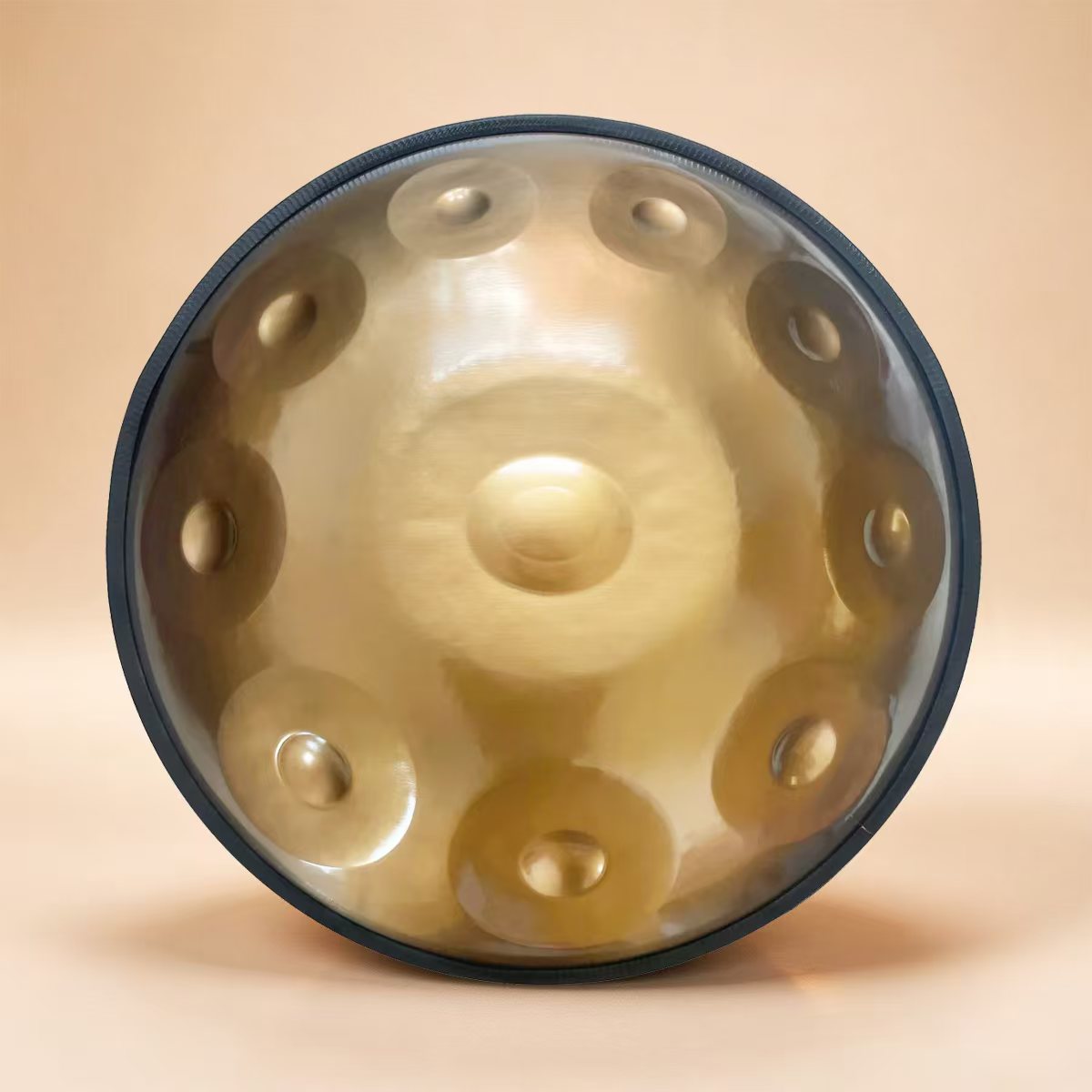
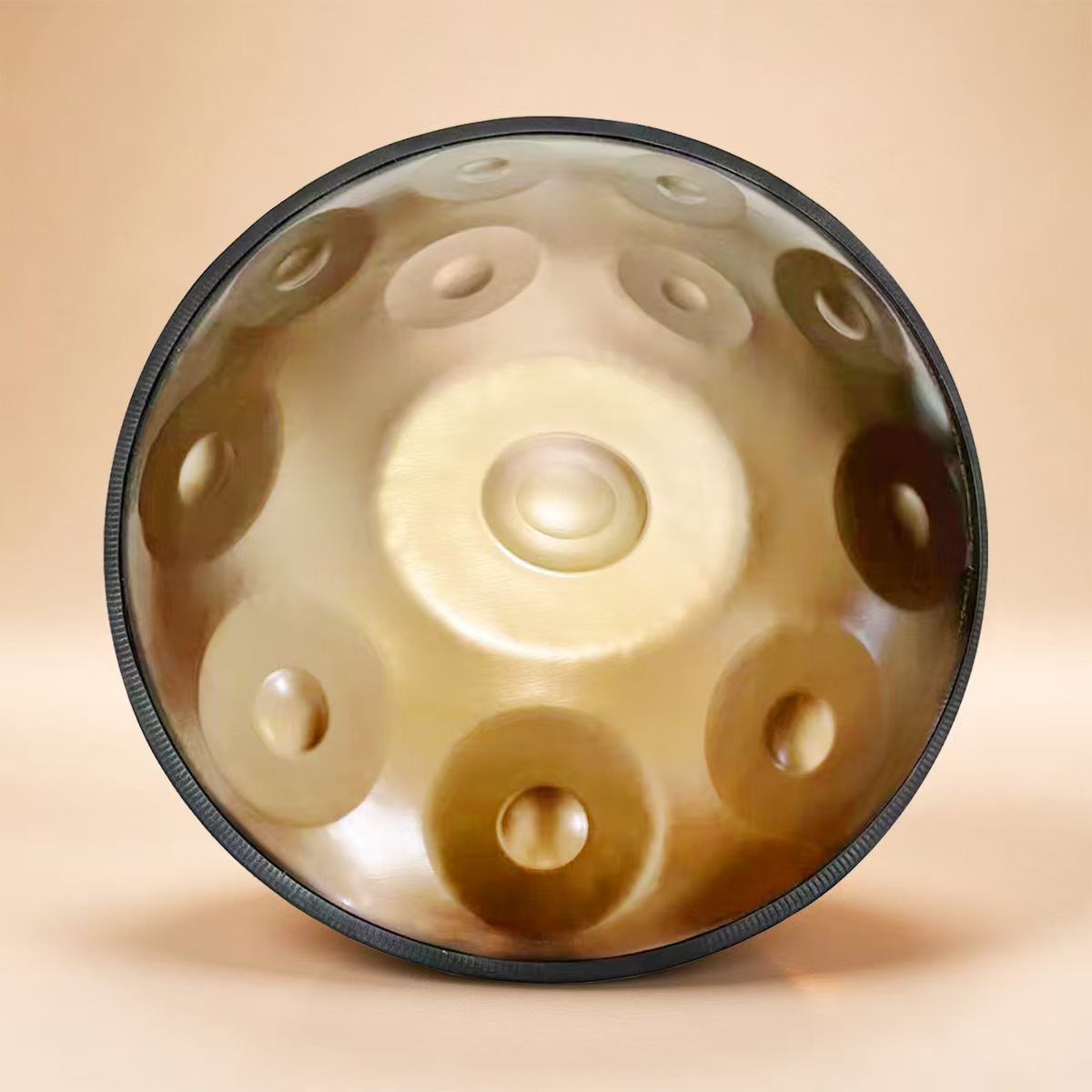
8. A Beginner-Friendly Example: Cosmos Handpan Golden Elegance 9 Notes D Minor
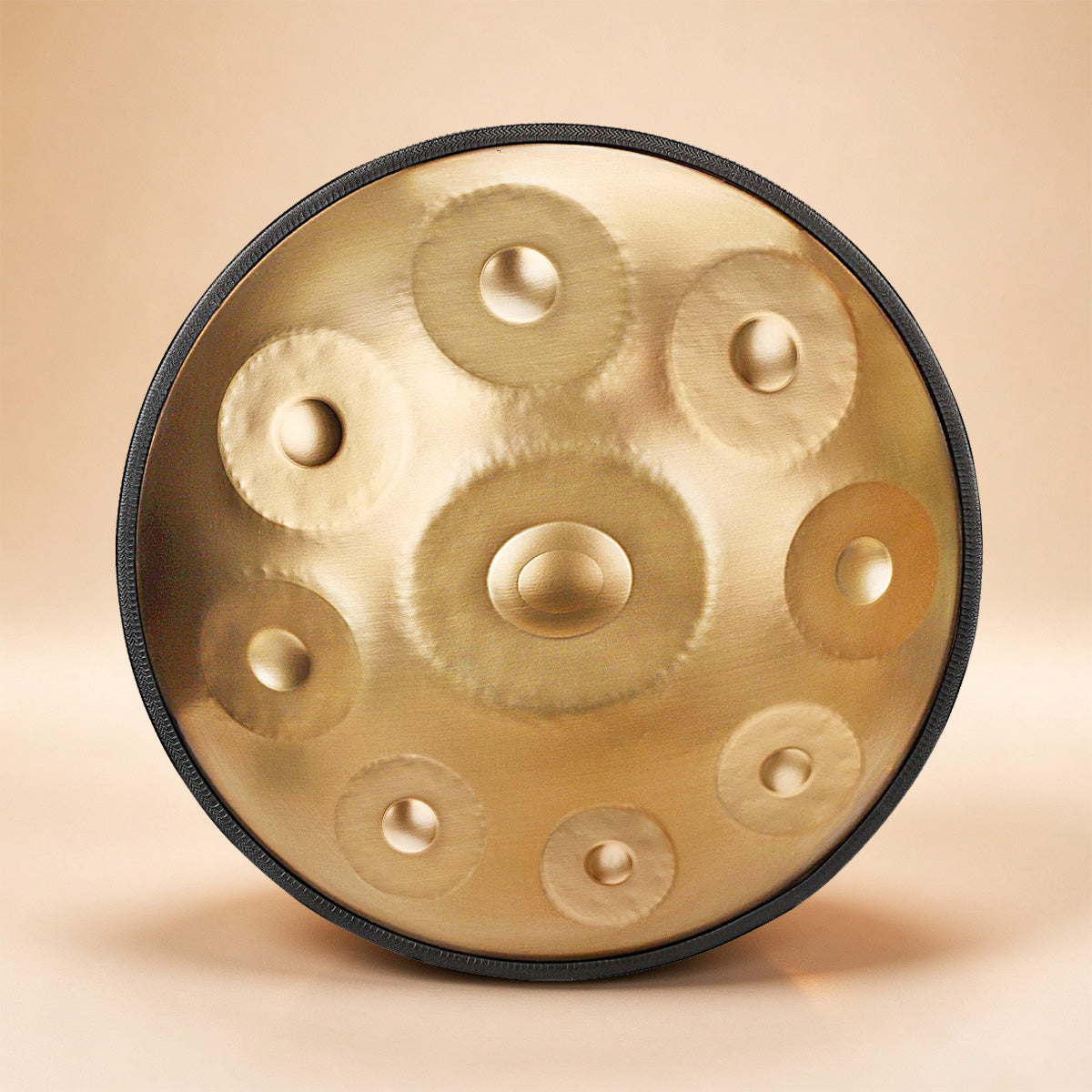
For a first-time buyer, the Cosmos Handpan Golden Elegance 9 Notes D Minor Gift Set is a practical example of a focused beginner configuration. It uses a 9-note D Minor layout, offers a choice of 432Hz or 440Hz tuning, and includes useful accessories that make it easier to start playing without sourcing every item separately.

Cosmos Handpan Golden Elegance – 9 Notes D Minor Gift Set
A beginner-friendly 9-note handpan designed for first-time players, personal practice, meditation, relaxation, and small performances.
Scale: D Minor, 9-note layout
Tuning options: 432Hz or 440Hz
Sound: Clear sustain with a smooth, calming tone
Included: Protective carry bag, handpan stand, pair of mallets, and cleaning cloth
Why does this configuration make sense for beginners? Because it focuses on the essentials. The D Minor layout provides a practical starting point for improvisation, while nine notes keep the playing surface relatively straightforward. The included carry bag and stand are useful for storage and practice, and the cleaning cloth supports routine care.
The instrument is also suitable for buyers who want a handpan for quiet personal playing, meditation sessions, or small informal performances. It is not intended to replace a larger instrument for advanced compositions that require a wider pitch range. That is a limitation worth understanding before purchase, not a defect.
From our perspective, a first handpan should encourage you to play regularly. A clear, manageable layout and a sound you enjoy are more valuable at this stage than extra notes you may not yet know how to use.
9. When Should You Upgrade to a Handpan with More Notes?
Do not upgrade simply because you have been playing for a certain number of months. Upgrade when your current instrument creates a specific musical limitation that you can describe.
For example, you may find that a melody you want to compose needs pitches outside your current layout. You may want to play a wider range of phrases, develop a more complex arrangement, or add a second instrument that complements the scale of your first handpan. These are meaningful reasons to consider 12, 15, or 17 notes.
Signs you may be ready for more notes
- You can play the existing notes cleanly and consistently.
- You understand the scale and can improvise without constantly searching for pitches.
- You have specific musical ideas that your current layout cannot support.
- You are comfortable learning additional note positions and movement patterns.
- You have considered whether a second scale or a different instrument would be more useful than simply adding notes.
If you are considering a substantial expansion, a 17-note double-sided handpan may be appropriate. Cosmos Handpan's 17-note D Minor double-sided model is an option to examine when you specifically want a broader playing range and are ready to work with a more complex layout.
For players who want to expand their musical setup without buying another acoustic instrument, digital alternatives may also be worth comparing. Our guide to digital handpan instruments explores a different approach to practice and performance.
10. Expert Recommendation: Choose the Notes You Will Actually Play
Our recommendation is simple: start with 9 or 10 notes unless you already have a clear musical reason to choose more. For a beginner, the most important qualities are accurate tuning, a scale you genuinely enjoy, comfortable note placement, consistent sustain, and a maker that can provide useful after-sales support.
Choose 12 notes when you are developing as a player and want a wider range without moving immediately to a highly complex layout. Choose 15 to 17 notes when you compose, perform, or have specific arrangements that need the additional pitches. More notes are worth paying for only when they expand what you can actually play.
Cosmos Handpan offers options across beginner, intermediate, and larger note configurations. That makes it possible to choose according to your current ability rather than treating one specification as the right answer for everyone. For most new players, a well-made 9-note D Minor handpan is a sensible first investment. Learn the instrument, develop your technique, and upgrade when your music—not a product specification—gives you a reason.
11. Frequently Asked Questions About Handpan Note Count
1. Is a 9-note handpan enough?
Yes. A 9-note handpan is enough for many beginners and experienced players who enjoy improvisation, repeating melodic patterns, and expressive solo playing. It provides a focused range that can support a surprising amount of musical variety. A larger instrument is only necessary when you need pitches beyond that layout.
2. Is a 10-note handpan better than a 9-note handpan?
Not automatically. A 10-note model offers one additional pitch, which may provide useful flexibility if the note fits the scale and layout. However, tuning quality, sound, note placement, and the player's musical needs matter more than the difference between nine and ten notes.
3. Is a 12-note handpan good for beginners?
It can be, especially for someone with previous musical experience. However, most first-time players do not need 12 notes to begin learning. A 9- or 10-note layout is often easier to navigate and allows beginners to focus on technique and musical expression.
4. Are 17-note handpans worth buying?
They can be worth buying for experienced players, composers, and performers who need an expanded range. The additional pitches can support more complex arrangements, but the larger layout requires more familiarity and control. If you are still learning basic technique, a 17-note model may add complexity without delivering a practical benefit.
5. Does more notes mean better handpan sound quality?
No. Note count describes the number of playable pitches, not the quality of tuning or tone. A well-made 9-note handpan can have excellent sustain, balance, and musical character. Assess tuning accuracy, consistency between notes, sound quality, and craftsmanship separately.
6. What is the best handpan scale for beginners?
D Minor is a popular starting point because it offers an approachable sound for improvisation and is widely available. However, the best scale is the one whose sound you enjoy and whose pitches suit the music you want to play. Listen to demonstrations before choosing.
7. Can you play handpan music with only 9 notes?
Absolutely. Nine notes can support melodies, rhythmic patterns, improvisation, and meditative music. The player's timing, dynamics, touch, phrasing, and use of silence often have a greater effect on musical expression than the total number of notes.
8. Should I buy a handpan tuned to 432Hz or 440Hz?
Choose according to your playing context and preference. If you plan to play with other musicians or recorded tracks, check the reference pitch they use. Neither frequency automatically makes a handpan better; accurate tuning and a sound you enjoy are more important.
9. Can I add more notes to my existing handpan?
Adding tone fields is not a simple upgrade. A handpan's shell geometry, note placement, and tuning relationships are carefully designed. Modifying an existing instrument can affect its structure and tuning. If you need more pitches, consult a qualified maker about the instrument's possibilities or consider buying a second handpan.
10. How do I know when it is time to upgrade my handpan?
Upgrade when your current note range repeatedly limits music you want to create and you can confidently play the existing notes. If you are still developing clean strikes, timing, and basic improvisation, more practice is likely to provide greater value than buying a larger instrument.
References and Further Reading
These sources provide additional context on musical pitch, tuning, and the acoustical principles behind tuned percussion instruments.
- Encyclopaedia Britannica – Classification of Musical Instruments. Background on how musical instruments are classified by sound production and construction.
- National Institute of Standards and Technology – SI Units: Frequency. Reference information on frequency as a measurable physical quantity.
- International Organization for Standardization – ISO 16, Acoustics: Standard Tuning Frequency. International reference for the standard tuning frequency of 440Hz.