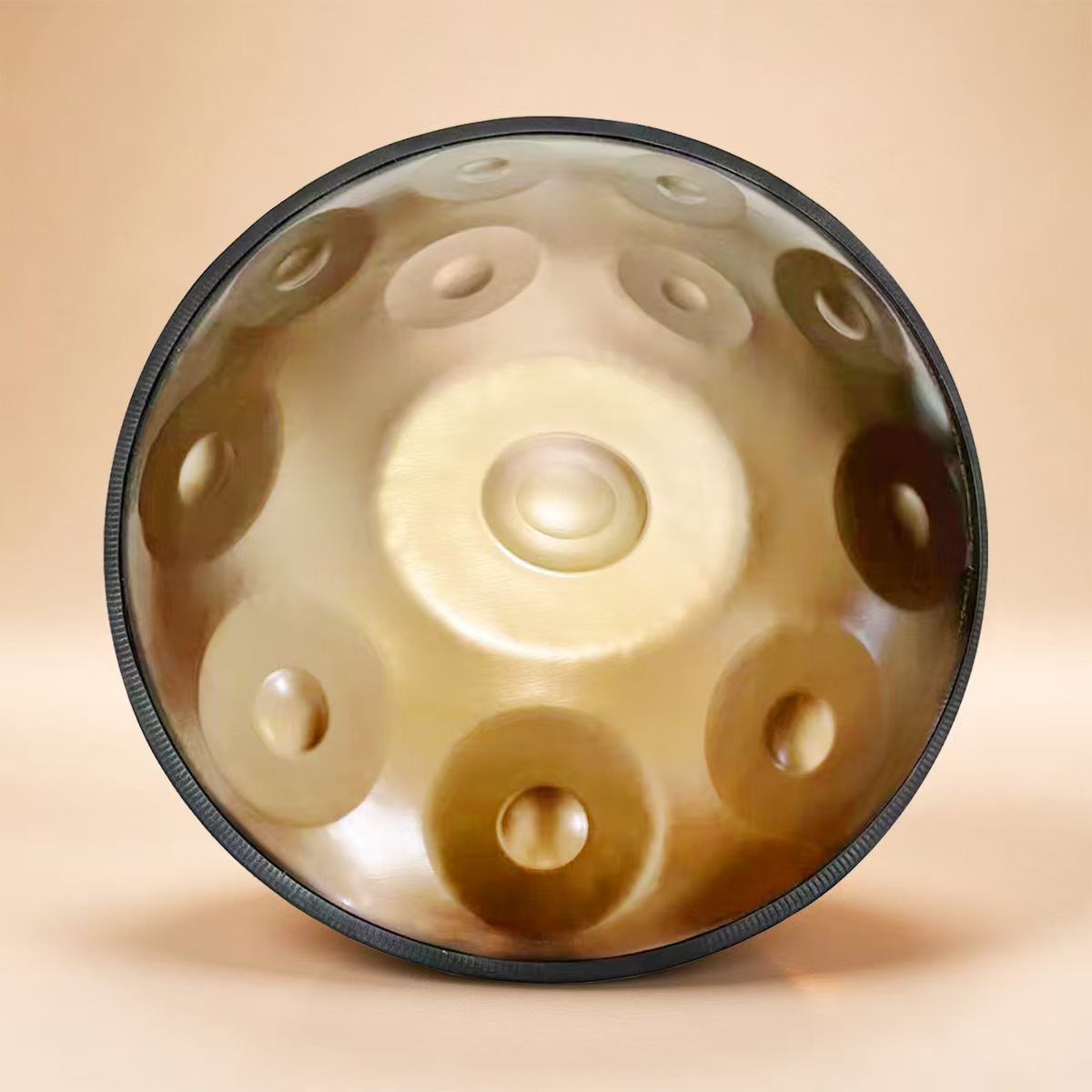
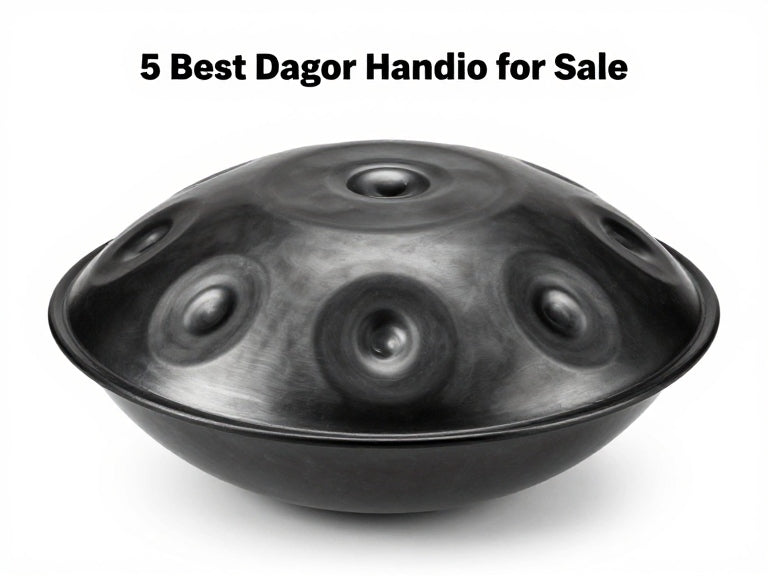
A D Major handpan is worth considering if you prefer bright, open melodies over the darker, more introspective character of many minor-key handpans. Its major-scale intervals create a more uplifting musical palette, making it attractive for relaxed improvisation, melodic compositions, meditation sessions, and playing with other instruments.
However, D Major handpans are less common than D Minor Kurd models. That means buyers have fewer ready-made choices, and the difference between an affordable instrument and a professionally tuned handpan deserves careful attention. The best purchase is not necessarily the one with the most notes or the most attractive finish. It is the instrument with a scale you genuinely enjoy, stable tuning, balanced tone fields, and dependable after-sales support.
In this guide, we compare five D Major handpan options and buying routes, explain realistic price expectations, and show what to check before ordering. We also clarify an important distinction: D Major and D Minor are different scales, so a D Minor instrument is not a substitute if you specifically want D Major.

Quick Answer: Which D Major Handpan Should You Buy?
For most buyers, the Instruments du Monde 9-note D Major handpan is a strong ready-to-order option at a listed price of $1,499. If you want a more compact beginner layout, consider the Aura D Major 8. If you want a European-made instrument with a defined D Major tuning, compare the Schlagwerk SaBye. For a more specialized instrument, Saraz offers D Major variations and custom configurations.
Expect approximately $875–$1,900 for the specific entry-to-premium models listed here, while professional custom builds can cost substantially more. Prices and availability can change; verify the current product page, shipping terms, and delivery estimate before purchasing.
| Model or buying route | Notes / tuning | Listed price or price basis | Best for | Our verdict |
|---|---|---|---|---|
| Instruments du Monde D Major | 9 notes; 432 or 440 Hz | $1,499 | Buyers wanting a ready-to-order D Major set | Strong all-round option with accessories |
| Aura D Major 8 Beginner Series | 8 tone fields; D Major | $875 | Beginners and players who prefer a compact layout | Good entry point if cosmetic-grade terms are acceptable |
| Schlagwerk SaBye HP8DSA | 8 tone fields; D Major without the 4th | $1,867.99 listed by Sweetwater | Buyers seeking a defined manufacturer model | Worth considering for its specific tuning and brand support |
| Saraz D Major 8–9 note configurations | Multiple D Major note layouts | Custom quote / availability varies | Players who want a specific note arrangement | Best when customization matters more than immediate delivery |
| Saraz D Major 9–12 note configurations | Extended D Major layouts | Custom quote / availability varies | Experienced players seeking additional range | Choose only when you know which extra notes you need |
Prices are listed-market reference points checked for this guide, not guaranteed quotations. The two Saraz entries describe configuration choices from its D Major scale range rather than two independently priced stock SKUs. Confirm current production availability directly with the maker.
What Is a D Major Handpan?
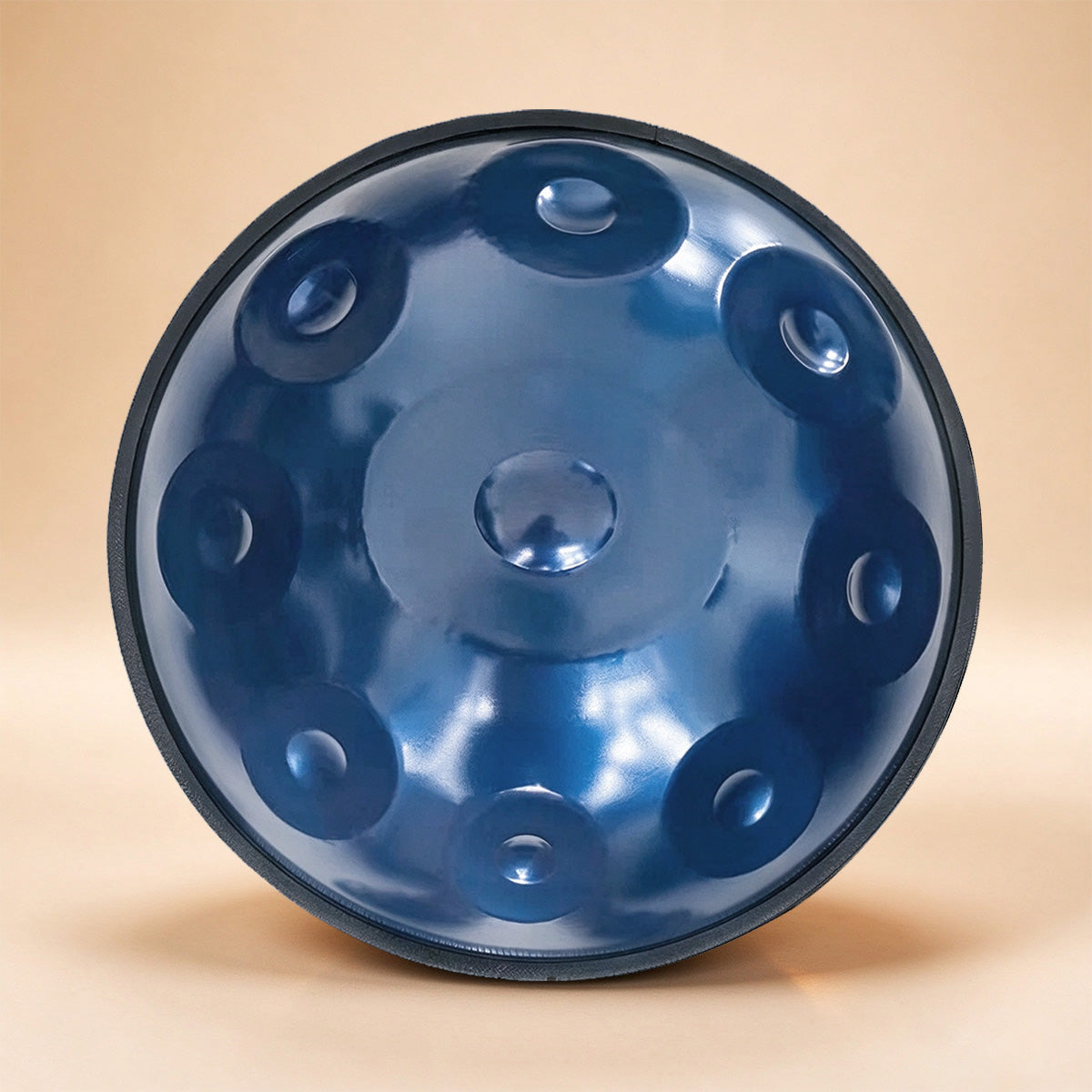
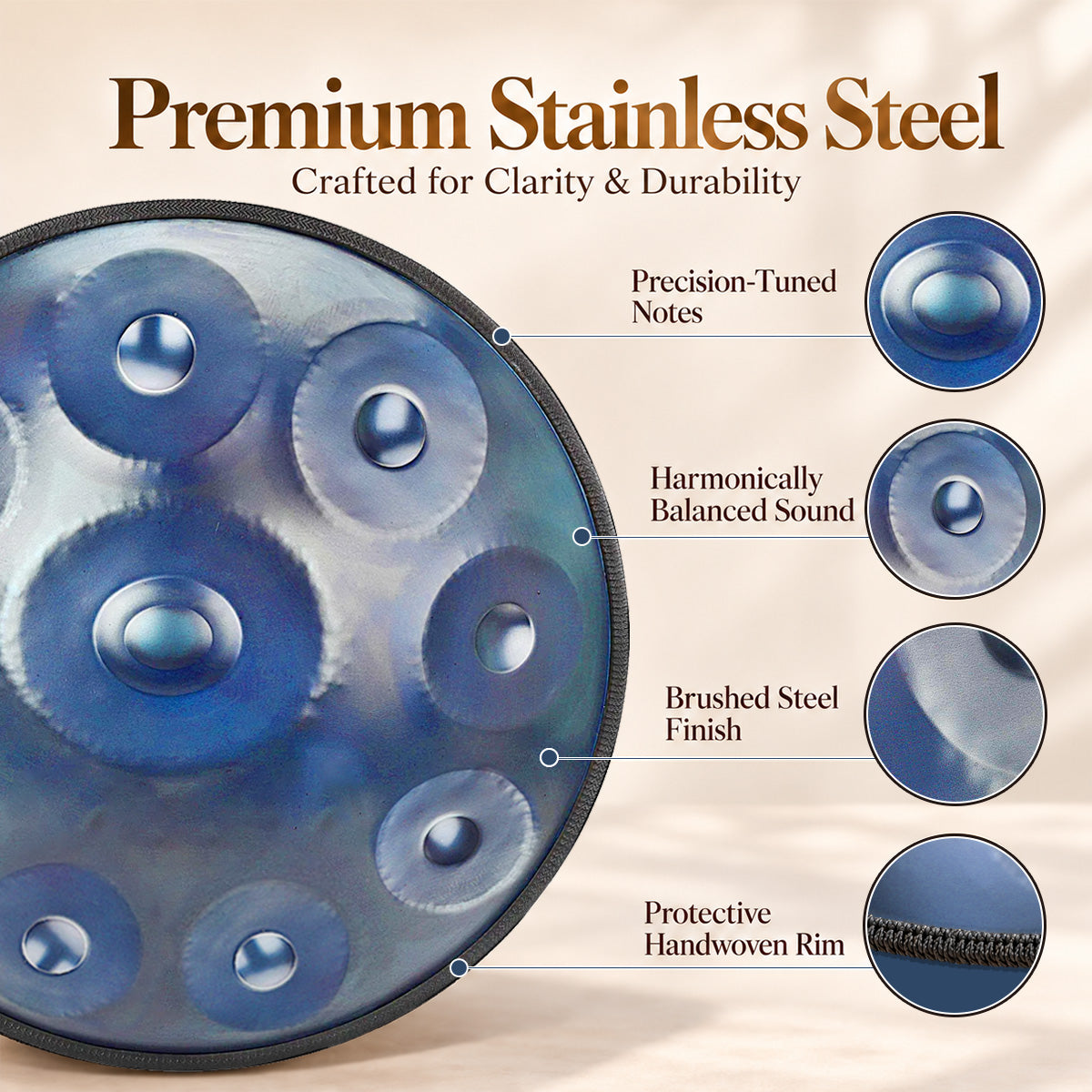
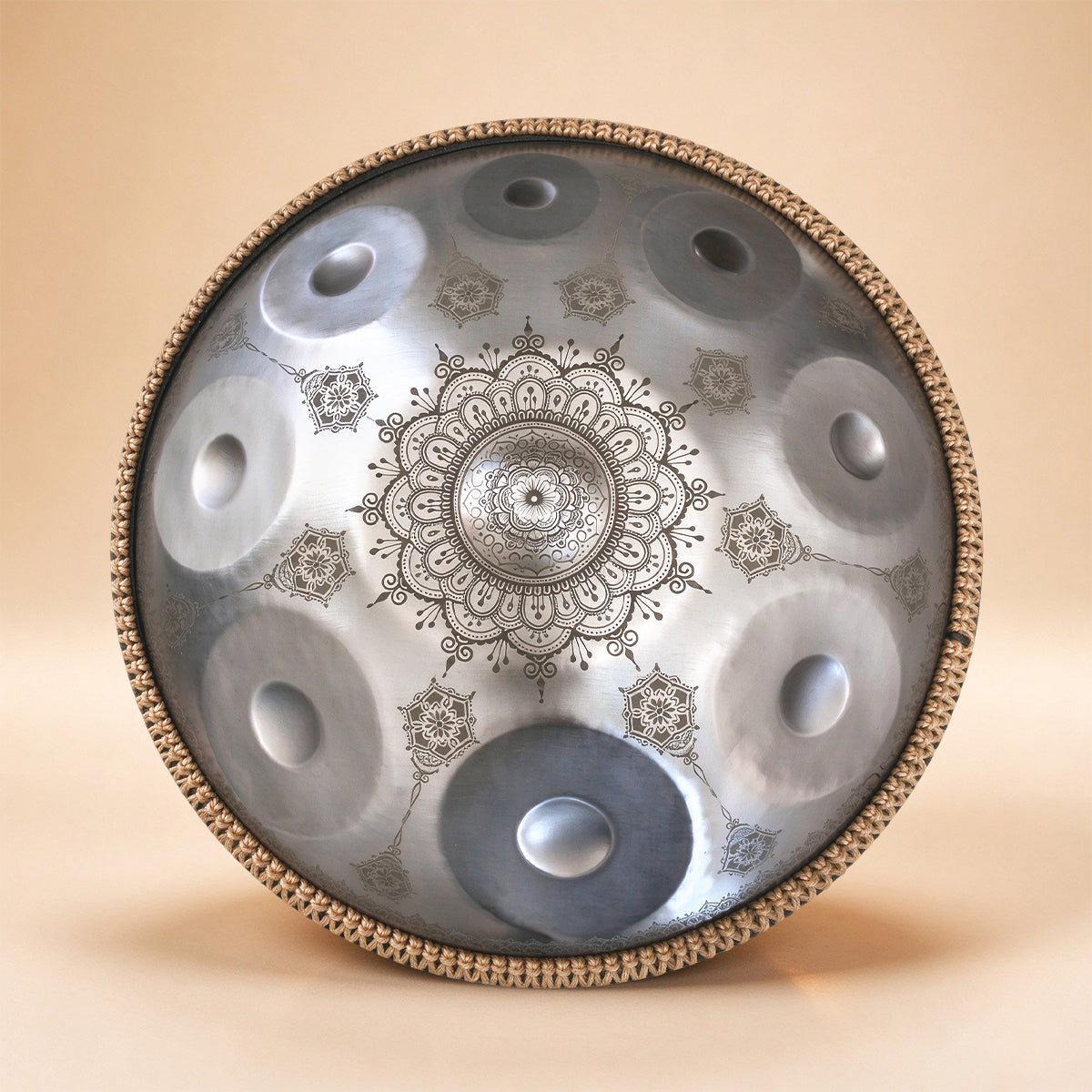
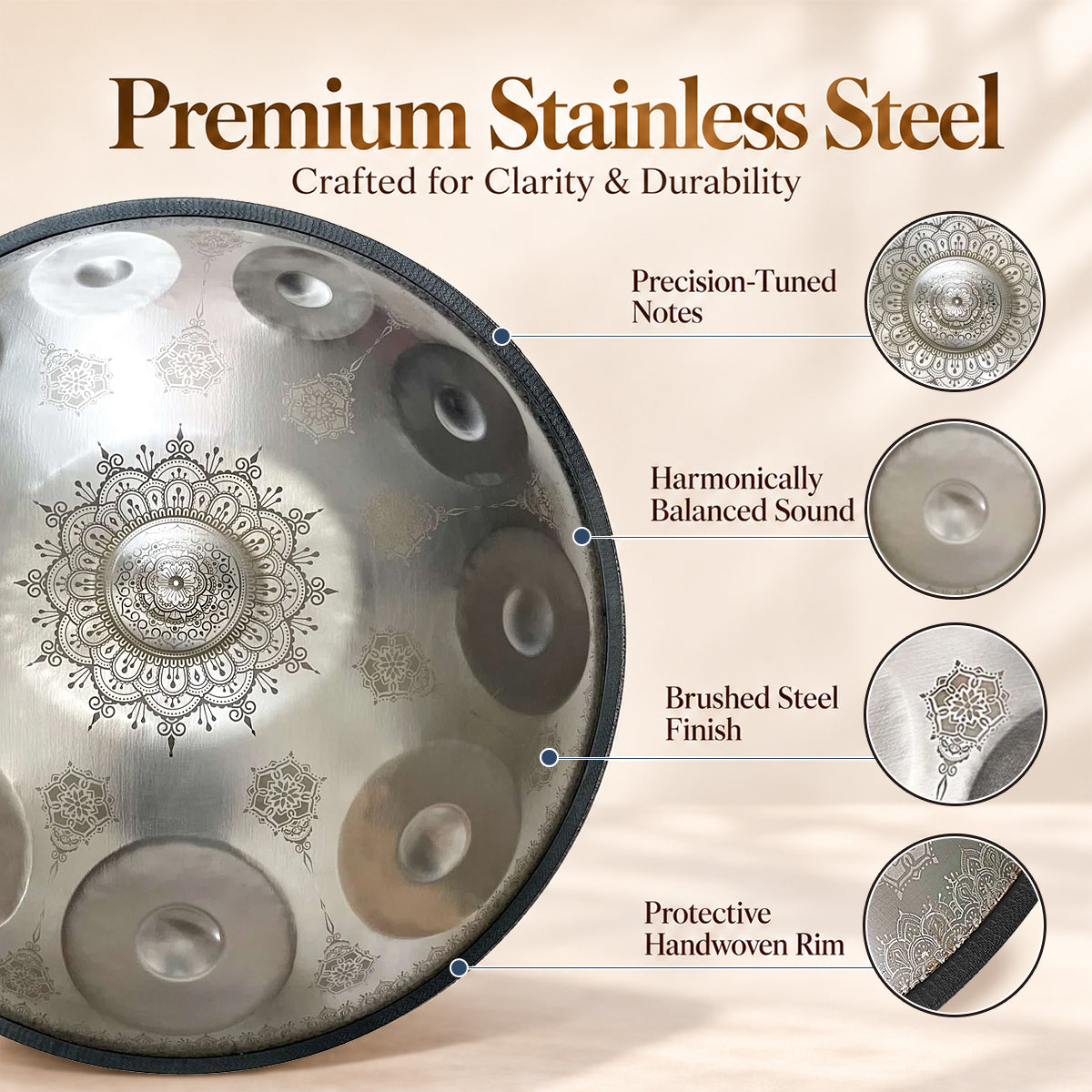
A D Major handpan is a steel percussion instrument tuned around the D Major scale. It has a central low note, commonly called the ding, surrounded by raised tone fields. Each tone field is carefully shaped and tuned to produce a specific pitch. When struck with the hands or fingers, the fields create a resonant sound that combines melody, rhythm, and sustained overtones.
A typical D Major note collection uses notes from the D Major scale: D, E, F#, G, A, B, and C#. The exact arrangement varies between makers and models. Some instruments omit certain scale degrees or use a selected subset to keep the playing layout compact and harmonically coherent. Always check the actual note list instead of relying on the scale name alone.
How does a D Major handpan work?
Each tone field is formed and tuned to vibrate at a defined pitch. The central ding generally provides the tonal anchor, while the surrounding notes create melodic movement. The shell acts as a resonating body, allowing the notes to ring and interact. A player's touch, striking position, and dynamics influence the attack and tone.
Because the instrument is tuned to a fixed scale, the notes are selected to work together musically. This makes improvisation accessible, but it does not mean every handpan sounds the same. Tuning accuracy, shell construction, material, note-field response, and the maker's skill all affect the finished instrument.
Why choose D Major instead of D Minor?
D Major is generally associated with a brighter, more open and uplifting tonal character. D Minor Kurd, by contrast, is widely chosen for its minor-key atmosphere and broad improvisational vocabulary. Neither scale is objectively better. The right choice depends on the music you want to create.
For beginners, D Major can be appealing if you naturally prefer major-key melodies. For experienced players, it can add a different tonal color to an existing collection. If you plan to play with other musicians, check their instruments' keys and tuning references before buying.
5 Best D Major Handpan for Sale
These recommendations focus on identifiable D Major models and maker configurations rather than simply listing popular D Minor handpans. Availability differs by seller: some are ready to order, while custom configurations require a direct inquiry.
1.Cosmos Handpan Golden Elegance - 9 Notes D Minor Gift Set
$649.00 USD
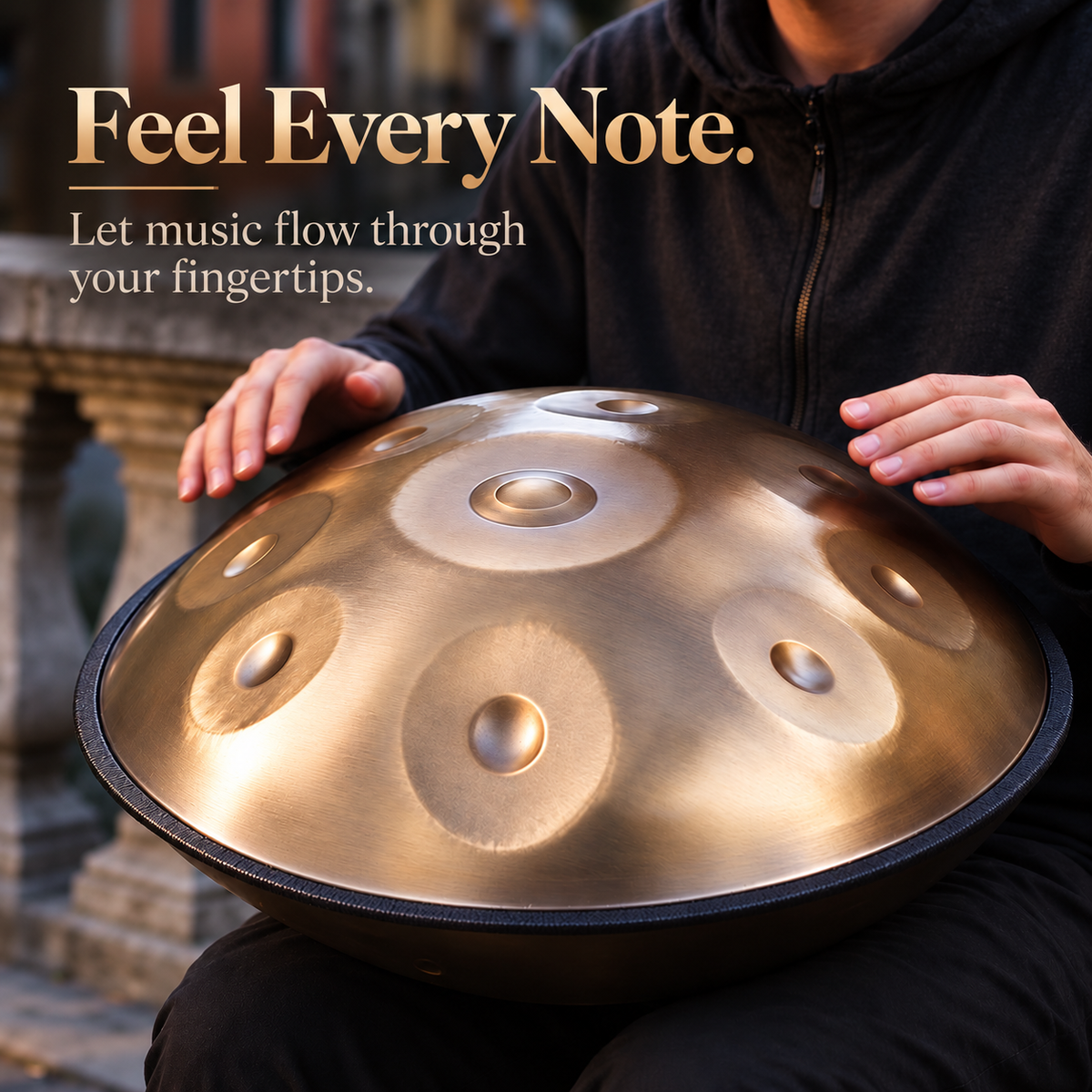
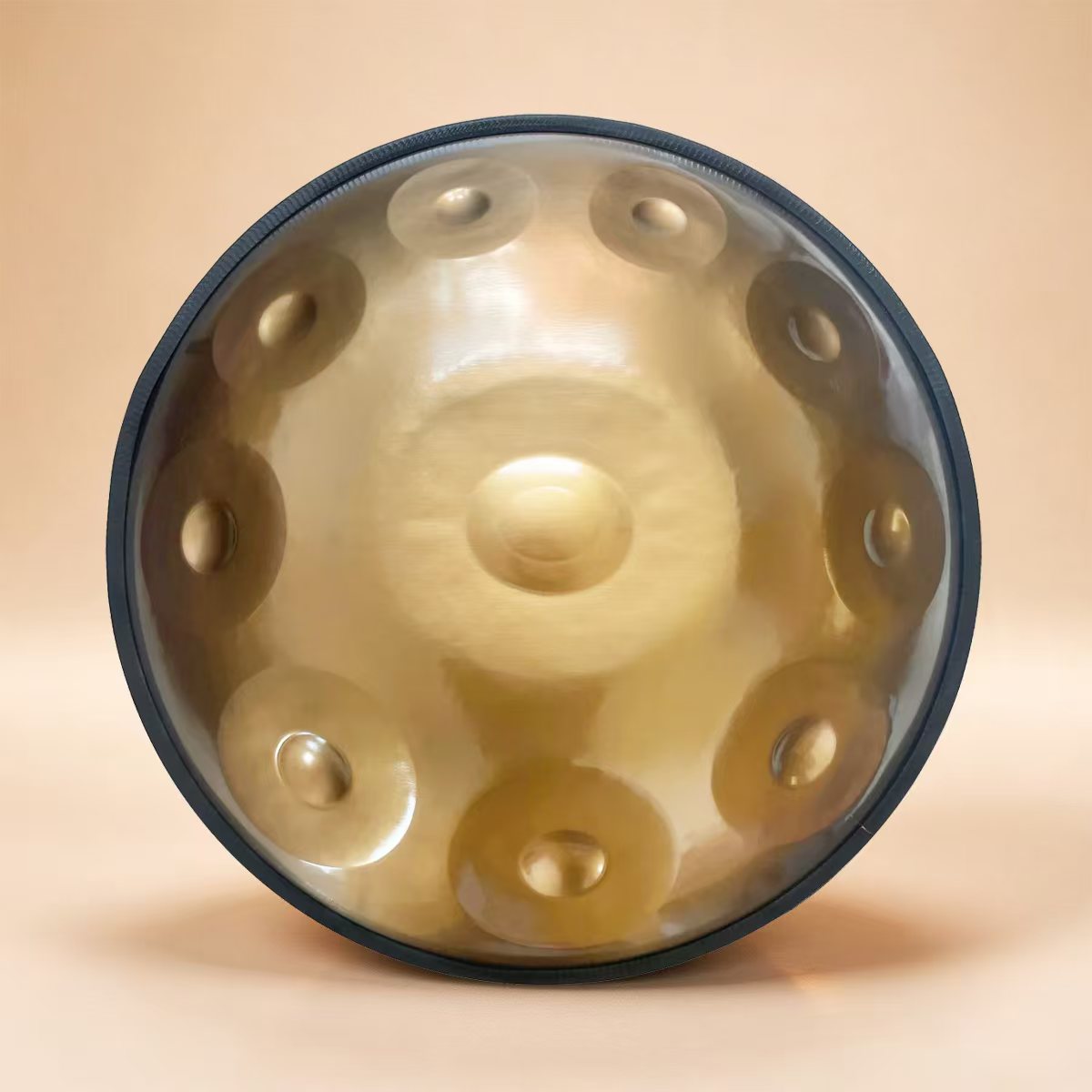
This golden-finish handpan features a nine-note D Minor scale. Its accessible layout is suitable for beginners exploring melodic playing, meditation, relaxation, and creative expression.
Included in the set:
- 1 × Golden Elegance 9-note D Minor handpan
- 1 × Protective carry bag
- 1 × Handpan stand
- 1 × Pair of mallets
- 1 × Cleaning cloth
2. Aura Handpan D Major 8 - Beginner Series
Listed price: $875
View Aura D Major Beginner Series
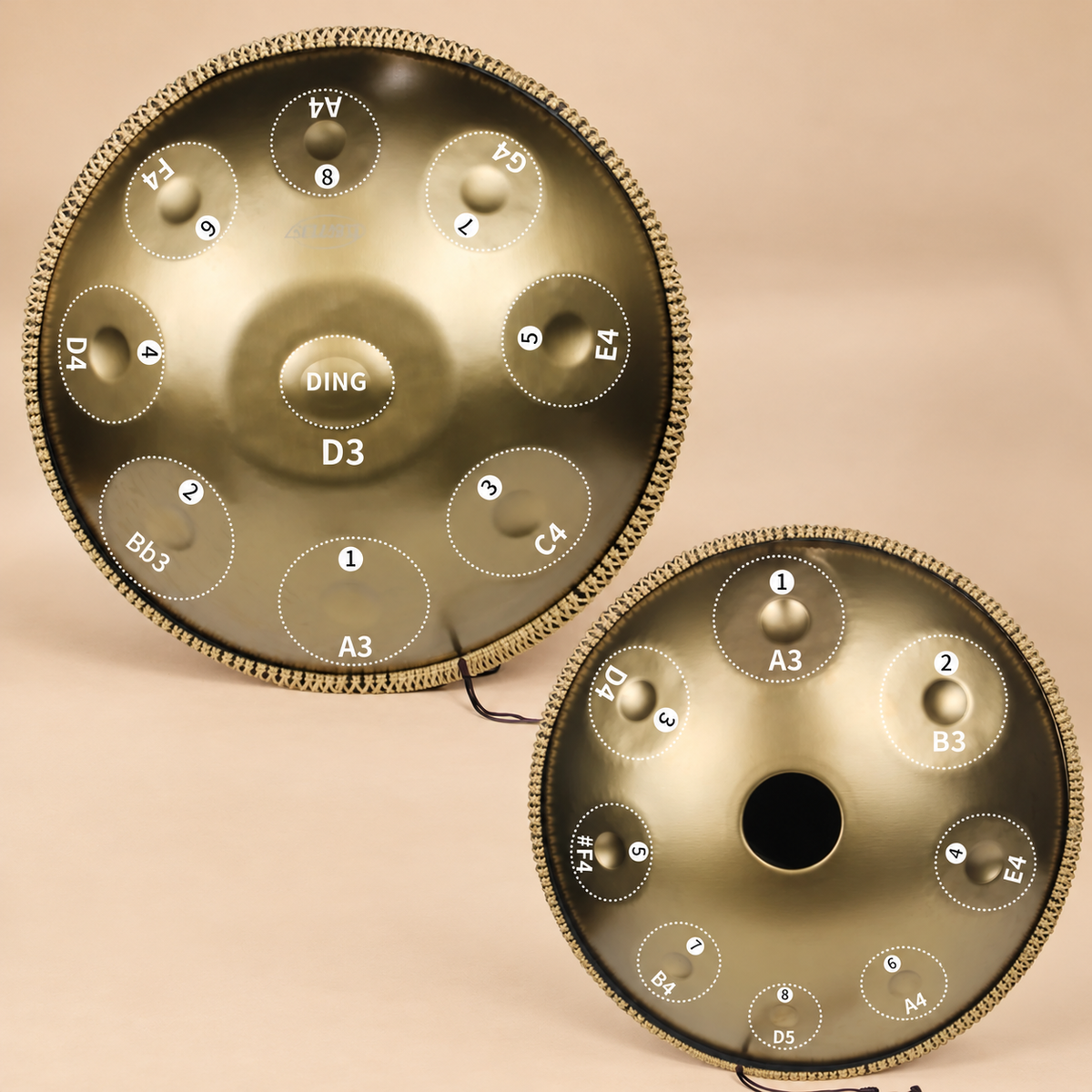
Aura's D Major 8 is designed around a compact note collection: D, A, B, C#, D, E, F#, and A, with the central D serving as the tonal anchor. Its limited layout is useful for players who want to learn melodic patterns without immediately managing a larger number of tone fields.
The manufacturer describes this as a beginner-series instrument made from untreated low-carbon steel. It also notes that beginner-series instruments may have cosmetic marks or scratches because of the shortened production process. Buyers should read those conditions carefully before ordering.
- Scale: D Major 8
- Note layout: Compact D Major configuration
- Material: Untreated low-carbon steel
- Best for: Beginners who want a simpler layout and lower entry price
Our verdict: A sensible entry point if the eight-note arrangement matches your playing goals. The price is attractive compared with some professional handpans, but do not overlook the cosmetic-condition disclaimer. Ask for a current sound sample and clarify care requirements, warranty coverage, and return conditions.
3. Schlagwerk SaBye HP8DSA D Major 8-Note Handpan
Listed price: $1,867.99 at Sweetwater
View Schlagwerk HP8DS SaBye at Sweetwater
The Schlagwerk SaBye is a defined eight-tone D Major configuration. Its tuning omits the fourth scale degree, giving it a selected note set rather than a complete seven-note scale repeated across registers. The manufacturer describes the model as accessible to beginners while also suitable for musical and meditative applications.
The official product information lists a transport backpack and protective cover as included accessories. Sweetwater has listed the model at $1,867.99 and indicated that it can be ordered, with an estimated delivery period shown on its listing. Confirm the latest delivery estimate before checkout.
- Model: HP8DSA SaBye
- Scale: D Major without the fourth
- Note count: 8 tone fields
- Best for: Buyers who want a specific, established D Major configuration
Our verdict: Worth considering when you prefer the SaBye note arrangement and want to buy through a recognized musical-instrument retailer. Its higher price should be justified by the instrument's sound, construction, included protection, and support—not by the brand name alone.
4. Saraz D Major 8-9 Note Handpan Configurations
Price: Request a current quote
Explore Saraz D Major scale configurations
Saraz offers several D Major note arrangements, including options in its eight-to-nine-note range. Its published scale information includes layouts using D, A, B, C#, E, F#, and G in different combinations. This matters because the exact note selection influences the chords and melodies available on the instrument.
For a player who already understands the sound they want, the ability to compare note configurations is more valuable than simply selecting the first D Major model available. Saraz also describes the D Major scale as compatible with certain related scales, including B Minor and E Dorian.
- Scale: D Major variations
- Layouts: Multiple eight-to-nine-note options
- Ordering: In-stock and custom-order availability varies
- Best for: Players with a specific melodic or harmonic preference
Our verdict: A strong route for buyers who want to choose a particular note arrangement rather than accept a generic specification. However, custom availability and lead time need direct confirmation. Request a quote that states the exact notes, material, tuning reference, case, and delivery schedule.
5. Saraz D Major 9-12 Note Extended Configurations
Price: Custom quotation; depends on layout and build
Discuss extended D Major options with Saraz
Extended D Major layouts are aimed at players who need more melodic range than a compact eight- or nine-note handpan can provide. Saraz publishes D Major configurations in a nine-to-twelve-note range, with additional upper or lower notes depending on the chosen layout. Not every possible combination is necessarily available as a finished instrument, so ask which configuration can currently be built.
More notes can expand melodic options, but they also increase the importance of note placement, tuning balance, and the player's technique. A larger note count is not an automatic upgrade for every musician.
- Scale: D Major
- Layout: Extended nine-to-twelve-note configurations
- Ordering: Confirm custom-build availability
- Best for: Experienced players who know which extra notes they need
Our verdict: Consider an extended configuration only if you can name the musical limitation you are trying to solve. If you are still learning basic patterns, a well-tuned nine-note handpan is usually a more sensible investment.
D Major Handpan Comparison: Which Model Offers the Best Value?
| Option | Price position | Layout | Main advantage | Potential drawback | Recommended buyer |
|---|---|---|---|---|---|
| Instruments du Monde | Mid-to-premium | 9 notes | Ready-made model with accessory bundle | Verify exact note layout and tuning before dispatch | Most first-time D Major buyers |
| Aura Beginner Series | Entry-to-mid | 8 notes | Simple layout and lower listed price | Cosmetic marks may be present | Beginners and budget-conscious players |
| Schlagwerk SaBye | Premium | 8 notes | Defined D Major without the fourth | Higher price and retailer delivery estimate | Buyers who specifically prefer SaBye tuning |
| Saraz 8-9 note | Custom / quote | 8-9 notes | Choice of note arrangement | Availability and lead time require confirmation | Players with a clear scale preference |
| Saraz 9-12 note | Custom / quote | 9-12 notes | More melodic range | More complex layout and higher customization needs | Experienced players |
D Major Handpan Price Ranges: What Should You Expect to Pay?
Handpan prices vary widely because instruments are not mass-produced in the same way as many conventional percussion products. The tuning work is specialized, and the quality of the finished instrument depends heavily on the maker's process and quality control. A low price may be tempting, but it is not a bargain if the notes are unstable or the seller cannot provide meaningful support.
| Budget range | What to expect | What to check carefully | Our buying view |
|---|---|---|---|
| Below $800 | Entry-level, beginner-series, or budget marketplace instruments | Exact tuning, note response, finish, seller identity, warranty | Buy only with clear demonstrations and a realistic return policy |
| $800–$1,500 | More established entry-to-midrange options and selected ready-made models | Steel type, tuning stability, accessories, support | A sensible target for many first-time buyers |
| $1,500–$2,000 | Premium retail models and established maker configurations | Individual instrument quality, service, delivery, and case protection | Worth considering when sound and support justify the premium |
| $2,000+ | Specialist or professional instruments and custom builds | Maker reputation, detailed note layout, tuning, and retuning access | Best for committed players who can evaluate the upgrade |
For a beginner, spending more does not automatically lead to faster progress. A reliable, well-tuned instrument with a manageable note layout is a better investment than a complicated custom model that exceeds your current needs. For professional use, the value calculation changes: consistent tuning, expressive response, durability, and access to the maker can justify a higher price.
How to Choose the Right D Major Handpan Scale
The scale is the most important decision because it defines the instrument's musical vocabulary. You can change your playing technique over time, but you cannot casually convert a D Major handpan into D Minor by changing a setting. Retuning is a specialist process used to restore or adjust a note's pitch; it is not a simple scale switch.
Listen to the complete scale, not just a short demonstration
Short promotional clips can make almost any handpan sound attractive. Listen to a full demonstration in which the player moves through every note, plays slow melodies, and uses several combinations. Pay attention to whether you enjoy the sound of the scale as a whole, not only the central ding.
Check the exact note list
Different D Major models may omit or add notes. A compact configuration can feel focused and easy to learn, while a fuller layout may provide more melodic options. Read our guide to understanding handpan notes before choosing a layout.
If you are unsure how note combinations work, our handpan notes chart can help you understand the relationship between scale names, note positions, and playing possibilities.
How Many Notes Should a D Major Handpan Have?
For most first-time buyers, eight or nine notes are enough to develop timing, touch, melody, and improvisation. A compact layout keeps the playing surface manageable and allows you to focus on musical expression rather than constantly searching for additional notes.
A ten-to-twelve-note instrument can be worthwhile when you already understand your preferred scale and need more range. Additional notes may support more elaborate melodies, but they do not automatically improve the sound or make the instrument more professional.
| Note count | Advantages | Limitations | Who should choose it? |
|---|---|---|---|
| 8 notes | Simple layout and focused scale | Fewer melodic options | Beginners and players who prefer simplicity |
| 9 notes | Good balance of range and accessibility | Still limited compared with extended layouts | Most new buyers and general players |
| 10-12 notes | More melodic possibilities and register options | Requires more familiarity with the layout | Intermediate and experienced players |
| Extended layouts | Greater range and specialized musical options | Higher cost and more complex playing surface | Advanced players with specific musical goals |
Before upgrading, identify what your current instrument cannot do. If you regularly run out of melodic range, extra notes may be useful. If your challenge is timing, tone control, or musical phrasing, more notes will not solve it. Read our practical guide on how many notes a handpan should have.
Steel Type, Tuning Frequency and Sound Quality
Stainless steel
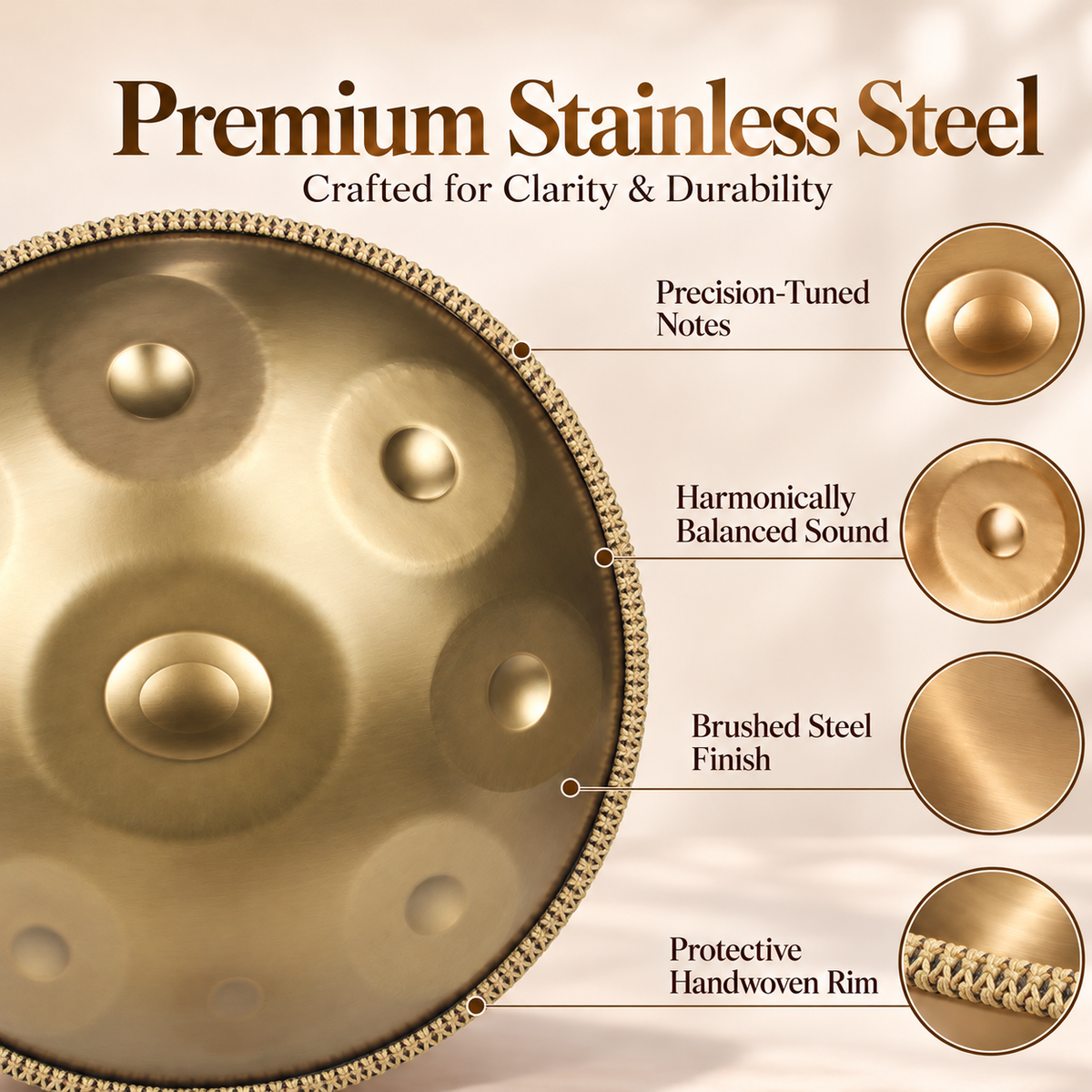
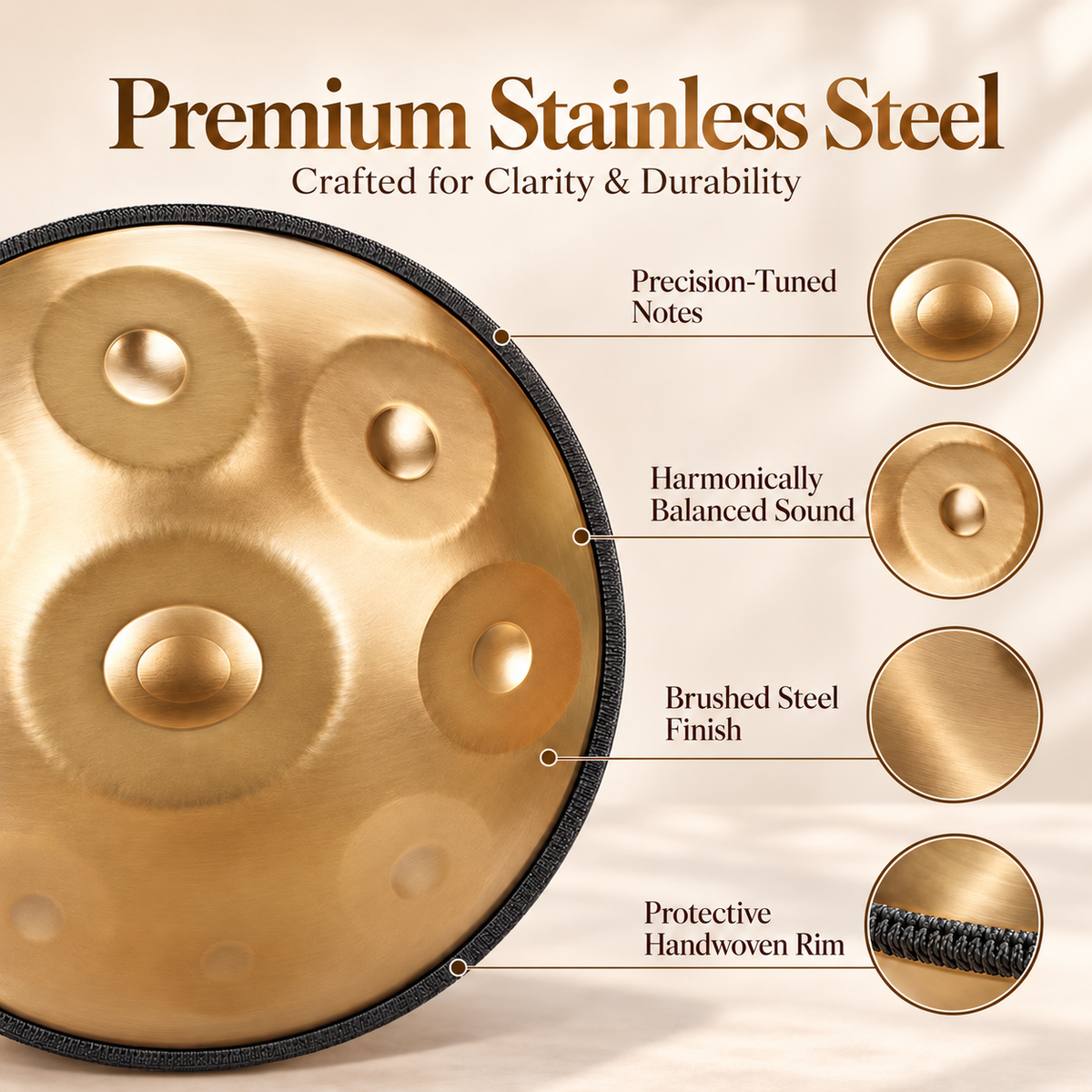
Stainless steel handpans are often selected for their longer sustain and resistance to corrosion. The extended resonance can create a spacious sound, but it also asks the player to control overlapping notes. For slow, expressive playing, that sustain can be attractive. For fast patterns, you may need more attention to muting and timing.
Nitrided steel
Nitrided steel is commonly chosen for a more controlled, percussive response and a different maintenance profile. It can suit players who prefer clearer separation between notes. However, material alone does not determine quality. Shell construction, tuning, and the maker's technique remain critical.
432 Hz versus 440 Hz
These are tuning references, not quality grades. A 440 Hz instrument is generally easier to combine with instruments and backing tracks that use the common concert-pitch reference. A 432 Hz handpan may suit players who specifically prefer that reference for solo practice or a coordinated musical setup.
Do not buy a 432 Hz model because a seller claims that the frequency automatically creates healing effects or superior sound quality. Those claims should not replace a practical listening test. Our 432 Hz handpan guide explains the tuning choice in more detail.
Check tuning quality before finish and decoration
A beautiful finish cannot compensate for a poorly tuned instrument. Listen for clear note attacks, balanced sustain, and unwanted buzzing or interference between tone fields. Each note should respond naturally without requiring excessive force. If one note sounds noticeably different from the rest, ask the maker to explain whether that is part of the design or a tuning issue.
Pros and Cons of Buying a D Major Handpan
| Pros | Cons |
|---|---|
| Bright, open tonal character that suits uplifting melodies. | Fewer ready-made options may be available than common D Minor models. |
| Can support intuitive improvisation within its fixed scale. | The note layout is fixed and cannot be casually changed after purchase. |
| Offers a different musical color for players who already own minor-key handpans. | Playing with other instruments requires attention to key and tuning compatibility. |
| Compact eight- or nine-note layouts are approachable for beginners. | Some players may eventually want a wider melodic range. |
| Custom configurations allow more control over note selection. | Custom builds can cost more and take longer to produce. |
What to Check Before Buying a D Major Handpan
Whether you are ordering online or buying directly from a maker, use a consistent checklist. The instrument should be evaluated as a musical tool, not just as a decorative steel object.
- Confirm the scale: Ask for the exact D Major note list and a layout diagram.
- Confirm the tuning reference: Verify whether the instrument is 432 Hz or 440 Hz.
- Request a video of the exact instrument: A generic demonstration does not prove the condition or sound of the instrument being shipped.
- Listen to every note: Check response, sustain, balance, and unwanted buzzing.
- Ask about material: Confirm whether it is stainless, nitrided, or another steel construction.
- Check dimensions and weight: Confirm that the size is comfortable for your playing position and transport needs. Our guide to standard handpan size explains common dimensions.
- Review included accessories: Check whether a protective bag, stand, cleaning cloth, or other items are included.
- Understand warranty and retuning: Ask who can service the instrument if a note shifts over time.
- Check shipping protection: The instrument needs secure packaging that protects the shell and rim during transit.
- Read the return terms: Understand the inspection period, damage reporting process, and any return shipping costs.
Considering a D Minor Handpan? An Alternative from Cosmos Handpan
One point deserves special attention: the Cosmos Golden Elegance instrument below is a D Minor handpan, not a D Major handpan. It should not be purchased as a substitute if you specifically want the D Major scale. However, if you are comparing tonal character and are open to a minor-key instrument, it is a relevant alternative.
The Golden Elegance model uses a nine-note D Minor scale and is designed for accessible playing, relaxed melodies, and everyday musical exploration. Its complete accessory set makes it convenient for buyers who want the basic equipment in one package.
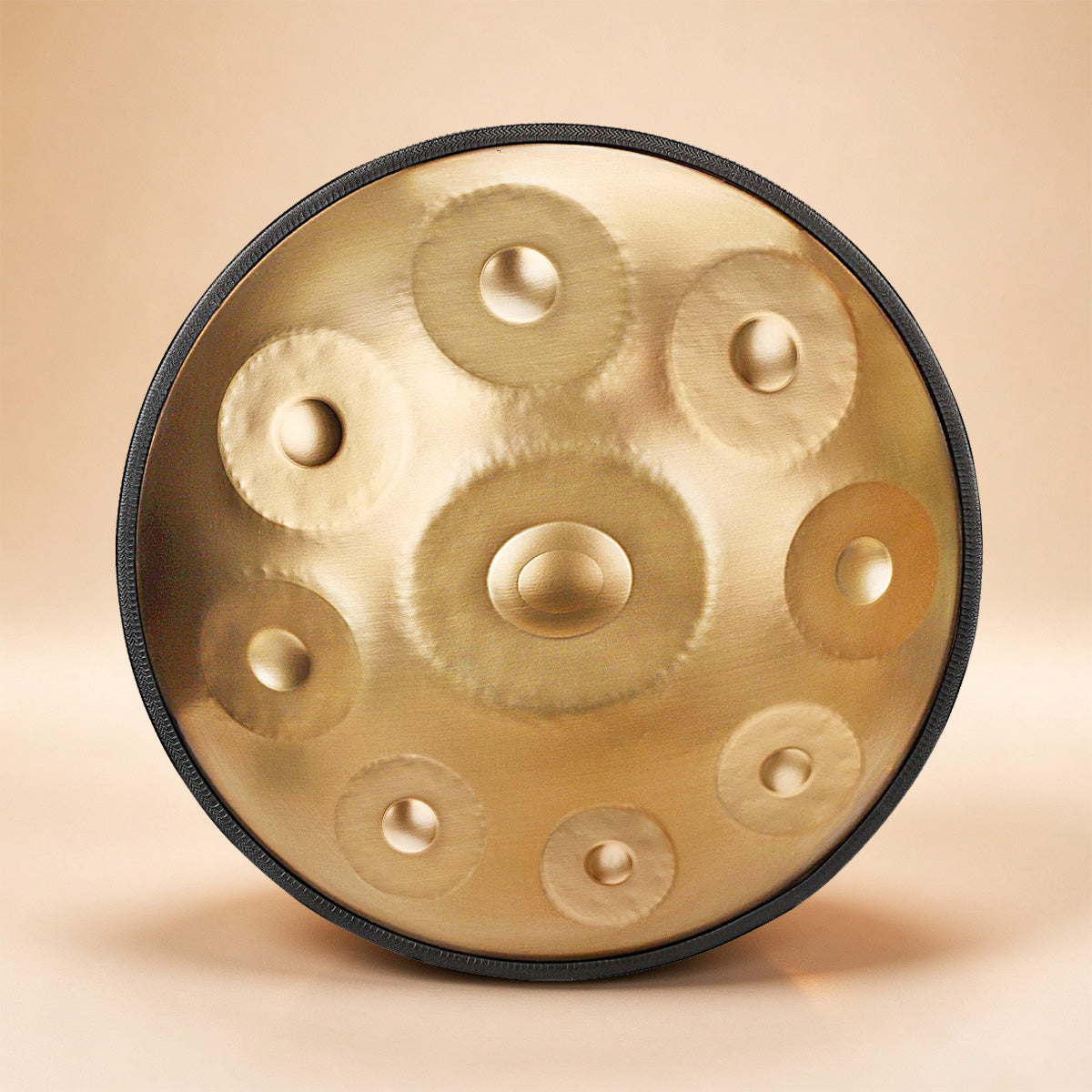
Cosmos Handpan Golden Elegance - 9 Notes D Minor Gift Set
$649.00 USD
This golden-finish handpan features a nine-note D Minor scale. Its accessible layout is suitable for beginners exploring melodic playing, meditation, relaxation, and creative expression.
Included in the set:
- 1 × Golden Elegance 9-note D Minor handpan
- 1 × Protective carry bag
- 1 × Handpan stand
- 1 × Pair of mallets
- 1 × Cleaning cloth
View Cosmos Golden Elegance handpan
This is a D Minor product. Confirm the scale and tuning details on the product page before ordering.
Cosmos Handpan focuses on making handpan selection more approachable for players at different stages. If you are new to the instrument, browse our 9-note handpan collection for compact layouts. Players looking for more range can compare our 10-note handpan collection and 12-note handpan collection.
If you are uncertain which scale or note count fits your goals, contact the Cosmos Handpan team before choosing. It is better to clarify the scale first than to buy a beautiful instrument that does not match the music you want to play.
Final Recommendation: Which D Major Handpan Is Best for You?
For most buyers, we recommend starting with a well-tuned eight- or nine-note D Major instrument. The Instruments du Monde model is a strong ready-to-order choice because it combines a defined nine-note layout with a useful accessory package. Aura is worth considering if you want a lower-cost beginner instrument and accept its stated cosmetic conditions. Schlagwerk is a premium option for buyers who specifically prefer its SaBye tuning.
Choose Saraz if you have a clear preference for a particular D Major note arrangement or need a custom layout. Extended configurations make sense for experienced players, but they are not essential for learning or enjoying the instrument.
Our final advice is simple: listen before you buy, verify the exact notes, choose the tuning reference that matches your musical plans, and confirm the maker's support policy. A handpan should inspire you to play repeatedly. That matters far more than a high note count, a decorative finish, or a marketing claim.
Frequently Asked Questions About D Major Handpans
1. Is a D Major handpan good for beginners?
Yes. A D Major handpan with eight or nine notes can be approachable for beginners because it offers a focused set of notes for learning melodies and rhythm. Choose a layout you enjoy hearing and avoid paying extra for extended notes before you need them.
2. How much does a D Major handpan cost?
The models in this guide range from approximately $875 to $1,867.99 for listed entry-to-premium options. Custom and professional instruments can cost more. Price depends on the maker, steel, tuning, note count, construction, accessories, and availability.
3. What is the difference between D Major and D Minor handpans?
D Major uses the notes of the D Major scale and generally has a brighter, more open tonal character. D Minor uses a different set of intervals and is commonly associated with a more introspective sound. They are different fixed scales, so check the exact note list before buying.
4. Should I buy an 8-note or 9-note D Major handpan?
An eight-note model is suitable if you want a compact, focused layout. A nine-note model may offer a little more melodic flexibility while remaining manageable for beginners. Compare the actual note arrangements because the number alone does not tell you which notes are included.
5. Is 432 Hz or 440 Hz better for a D Major handpan?
Neither is inherently better. A 440 Hz handpan is generally easier to play with instruments and recordings using standard concert pitch. A 432 Hz instrument may suit players who specifically prefer that tuning reference. Choose based on compatibility and listening preference, not unsupported claims about sound quality.
6. Is stainless steel better than nitrided steel for handpans?
Stainless steel is often selected for longer sustain and corrosion resistance, while nitrided steel commonly offers a more controlled, percussive response. These are general tendencies rather than guarantees. Tuning, shell construction, and maker quality matter just as much.
7. Can a D Minor handpan be retuned to D Major?
A handpan cannot normally be converted from D Minor to D Major through ordinary retuning. Retuning is generally used to restore or adjust existing notes, not redesign the entire scale. Buy the intended scale from the beginning.
8. How do I know whether a handpan is properly tuned?
Ask for a recording of the exact instrument with every note played individually and in combinations. Listen for clear response, balanced sustain, stable pitch, and unwanted buzzing or interference. If you are not experienced, ask a handpan player or professional tuner to evaluate the recording.
9. Is a handpan with more notes always better?
No. More notes can expand the melodic range, but they also add complexity and cost. A well-tuned eight- or nine-note instrument is sufficient for many players. Upgrade only when you have a clear musical reason for needing additional notes.
References
For product specifications and scale details, consult the original manufacturer and retailer information before placing an order. The following sources provide the primary specifications used in this comparison.
- Schlagwerk — SaBye Handpan D Major 8 Notes. Manufacturer specifications for the D Major SaBye tuning and included accessories.
- Saraz Handpans — D Major Scale. Published D Major note variations and custom-order information.
- Instruments du Monde — Handpan D Major. Product specifications, tuning choices, price, and included accessories.