1. Introduction: The Evolution of Melodic Steel
Stepping into the mesmerizing world of melodic steel instruments is a transformative experience. However, the sheer variety of scales, materials, and configurations can easily overwhelm a prospective buyer. The most frequent dilemma we encounter from both aspiring and experienced musicians is attempting to determine if a 9 or 10 note handpan better aligns with their creative aspirations. This is not merely a question of quantity; it is a fundamental choice regarding musical vocabulary, playing ergonomics, and acoustic clarity.

Table of Contents
- 1. Introduction: The Evolution of Melodic Steel
- 2. Understanding Handpan Architecture and Scale Layouts
- 3. The Case for the 9 Notes Handpan
- 4. The Case for the 10 Notes Handpan
- 5. Is a 9 or 10 Note Handpan Better? Our Expert Verdict
- 6. The Physics of Sound: Crosstalk and Sympathetic Resonance
- 7. Scaling Up: Moving to 12 and 17 Notes
- 8. Summary Table: 9 Note vs. 10 Note Comparison
- 9. Frequently Asked Questions (FAQs)
- 10. References and Acoustic Research
At Cosmos Handpan, we meticulously engineer every instrument to absolute acoustic perfection. The specific model you choose will also influence How much time does it take to learn handpan. A larger array of notes provides more musical freedom but presents a steeper learning curve for absolute beginners. To help you navigate this decision, we will break down the structural differences, the psychological impact of scale limitations, and the acoustic physics that make each configuration unique. By the end of this comprehensive guide, you will have the expert knowledge necessary to decide whether a 9 or 10 note handpan better suits your personal playing style.
2. Understanding Handpan Architecture and Scale Layouts
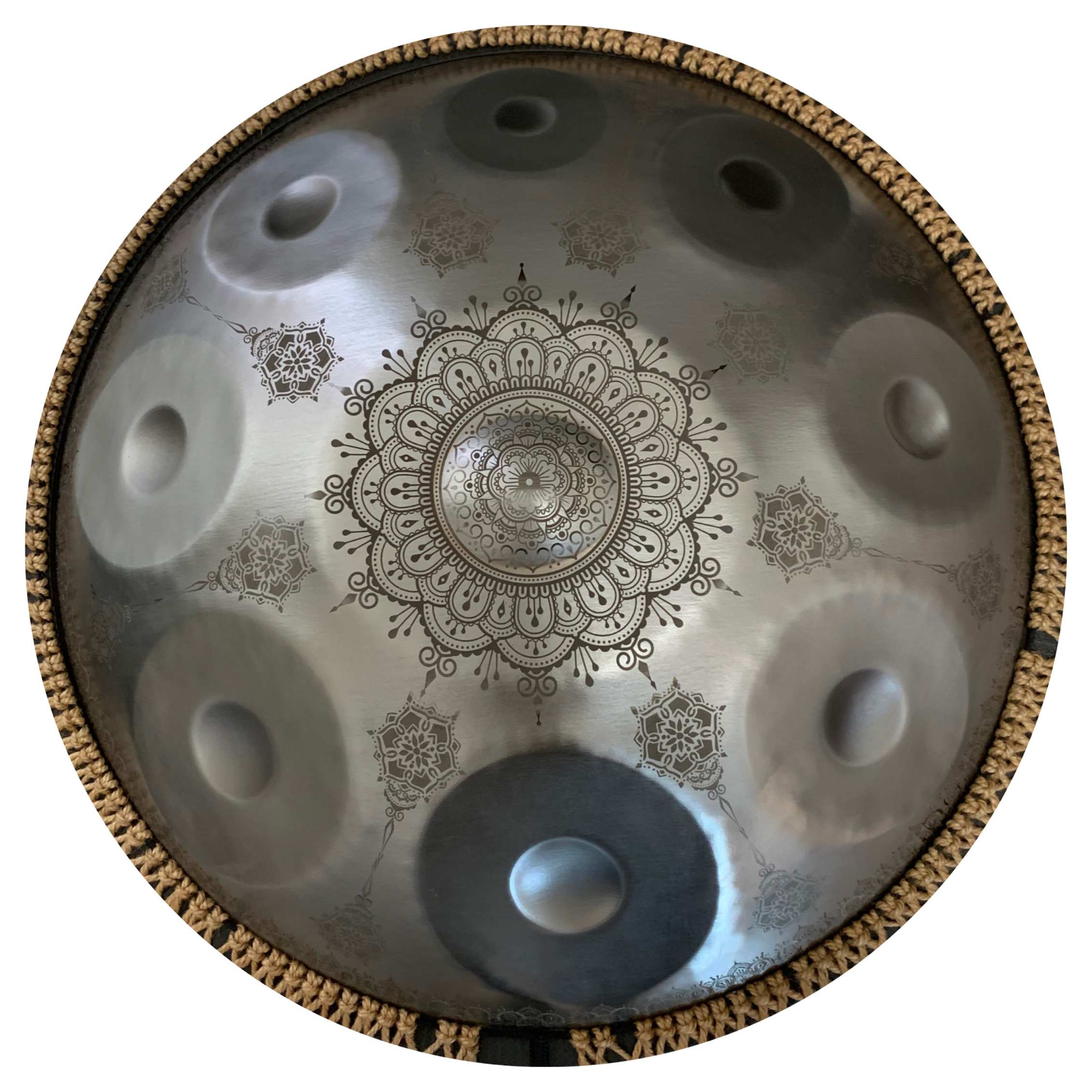
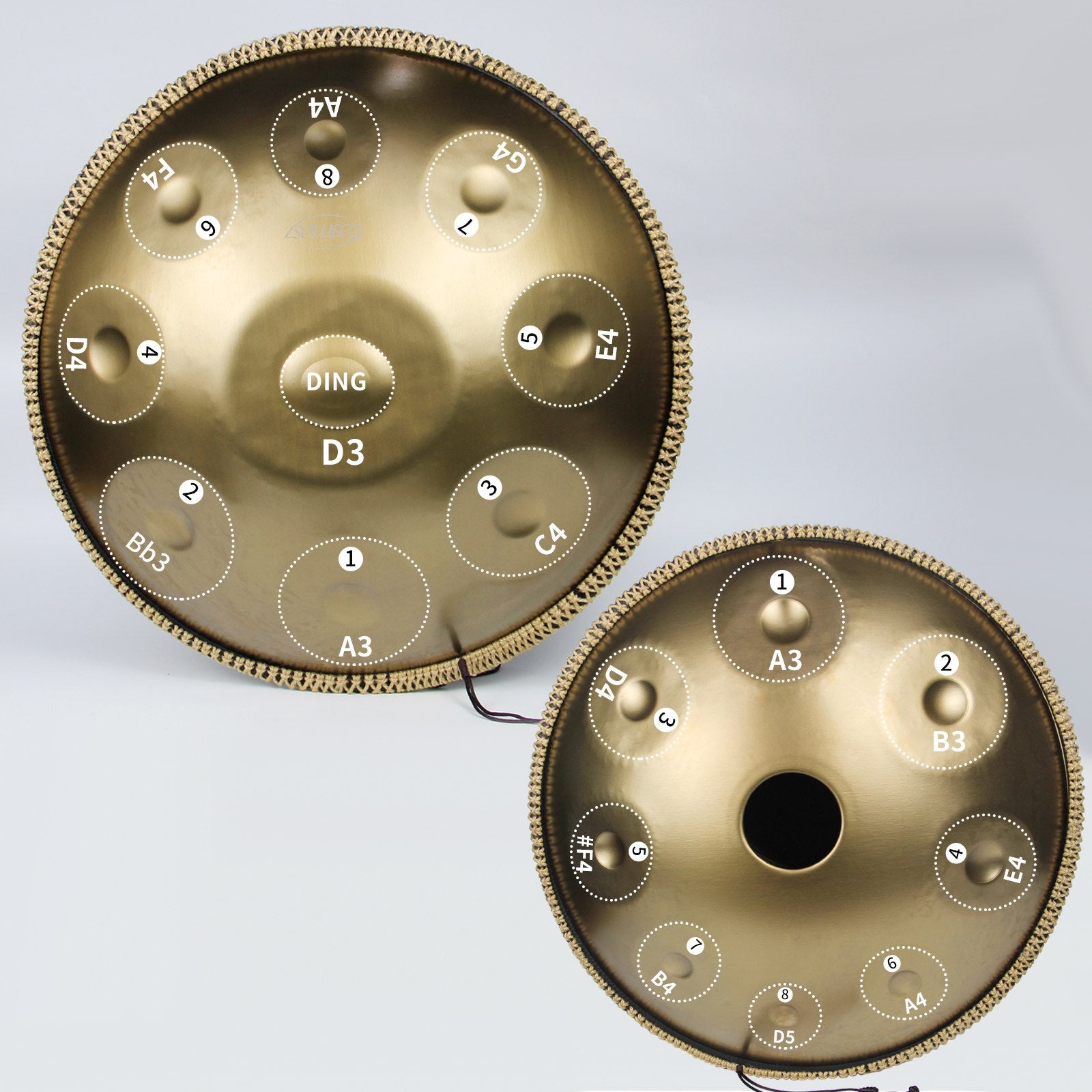
Before evaluating if a 9 or 10 note handpan better serves your needs, it is critical to understand how these instruments are structured. A traditional handpan consists of two bonded half-shells of nitrided or stainless steel. The top shell features a central dome known as the Ding, which provides the foundational bass note of the instrument. Surrounding the Ding is a chorus of circular or elliptical tone fields.
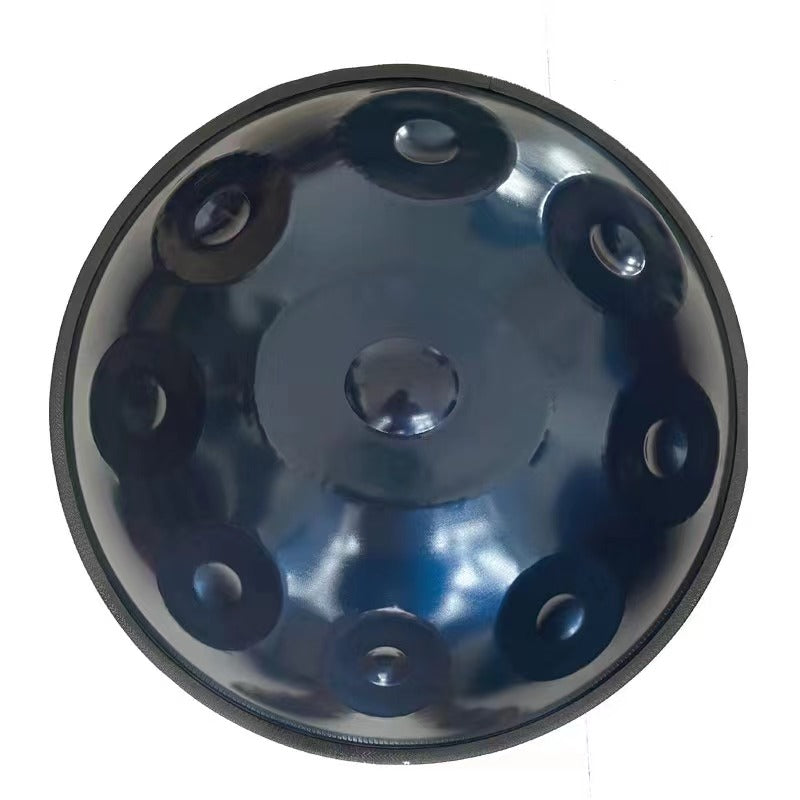
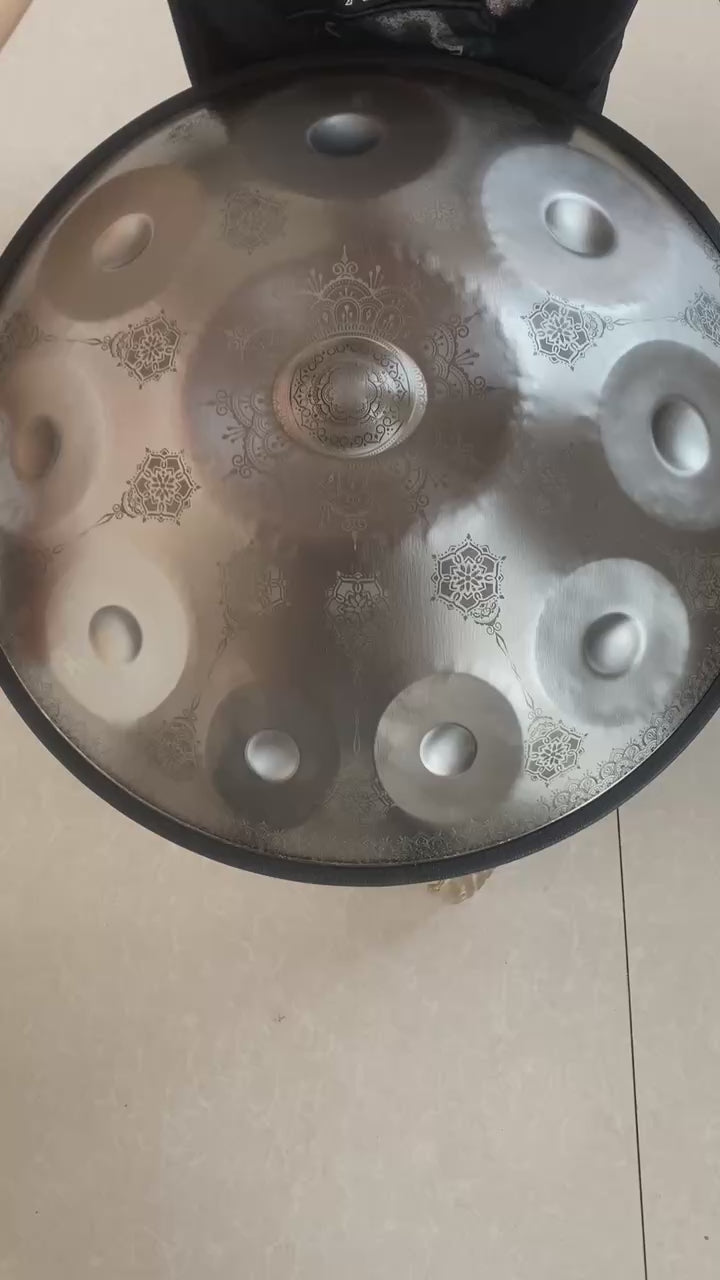
When an artisan refers to a "9 note" instrument, they are generally describing a layout featuring 1 Ding and 8 surrounding tone fields. Conversely, a "10 note" configuration typically features 1 Ding and 9 surrounding tone fields. While adding a single note may seem trivial to an outsider, it fundamentally alters the geometric spacing on the steel canvas. This spacing impacts everything from the instrument's overall sustain to the risk of activating unwanted frequencies.
3. The Case for the 9 Notes Handpan
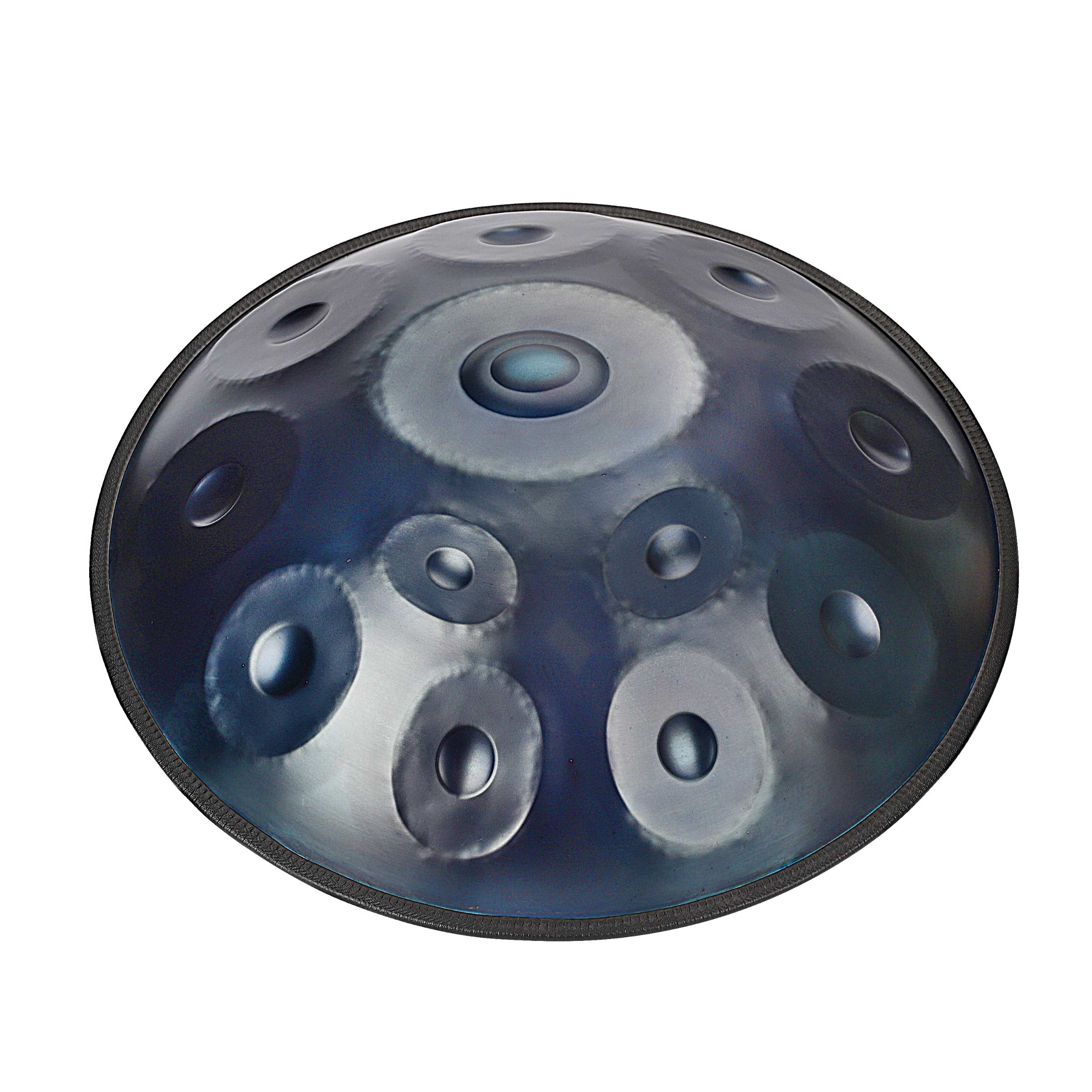
The 9 Notes Handpan is widely considered the modern classic. It is the direct descendant of the earliest melodic steel prototypes and remains the industry standard for a multitude of reasons.
Simplicity and Intuitive Play
From our experience, limitations breed immense creativity. The 9 Notes Handpan offers a perfectly curated scale—often a pentatonic, diatonic, or hexatonic variation—that removes the burden of overthinking. Because there are exactly eight notes in the surrounding circle, the layout is highly symmetrical. This geometric balance makes it incredibly intuitive for muscle memory. You do not have to search for the "right" note; the scale is designed so that almost any combination of strikes produces a harmonious, resolving melody.
Ideal for Beginners and Clean Resonance
If you are exploring a Handpan for Beginners, the 9-note configuration is exceptionally forgiving. Because there are fewer tone fields on the top shell, there is a significant amount of "dead" space (unhammered steel) between the notes. This spacing is crucial because it isolates the frequencies. When you strike a note on a 9 Notes Handpan, you are less likely to accidentally trigger a neighboring note. This results in a highly articulate, crisp, and clean sound profile. When comparing models, many audio purists argue that for purely acoustic clarity, a 9 or 10 note handpan better performs when leaning toward the 9-note due to this architectural isolation.
4. The Case for the 10 Notes Handpan

As players progress and demand more compositional flexibility, the 10 Notes Handpan has surged in popularity, becoming the preferred choice for contemporary performers and composers.
Expanded Musical Vocabulary
The inclusion of a 10th note (the 9th tone field in the chorus) often provides a critical extension to the scale. Usually, this extra note is added at the higher end of the register, completing a full octave from the lowest chorus note or providing a leading tone that allows for more complex chord progressions and tension-resolution dynamics. If you intend to play alongside other instruments, such as guitars, pianos, or cellos, having this extra degree of melodic freedom is invaluable.
The Modern Standard for Versatility
When clients ask us if a 9 or 10 note handpan better fits a professional setting, we frequently point to the 10-note. It strikes an elegant balance. It is not so crowded that the instrument becomes muddy, yet it offers enough range that you will not feel musically restricted after a year of rigorous practice. In our elite Cosmos Handpan catalog, the 10 Notes Handpan stands as the balanced standard for modern players seeking a versatile instrument. It allows for rich, rolling arpeggios and intricate polyrhythms that a 9-note might slightly constrain.
5. Is a 9 or 10 Note Handpan Better? Our Expert Verdict
To definitively answer whether a 9 or 10 note handpan better serves a musician, we must contextualize the player's goals. There is no objective "best" in the realm of acoustic art; there is only the optimal tool for a specific job.
We recommend the 9 Notes Handpan for individuals utilizing the instrument for sound healing, meditation, yoga accompaniment, and pure intuitive relaxation. The spacious layout and reduced risk of dissonant crosstalk make it a deeply soothing Handpan Drum Instrument. It allows the player to close their eyes and play entirely by feel, knowing every strike will yield a pure, isolated tone.
Conversely, we recommend the 10 Notes Handpan for individuals approaching the instrument from a traditional musical background, or those who wish to compose structured songs with distinct verses, choruses, and bridges. The extra note provides the necessary melodic vocabulary to keep compositions dynamic and engaging over long performances. From our experience, ambitious beginners who are willing to dedicate time to mastering their strike technique will not regret opting for a 10-note model, as it provides a higher ceiling for growth.
6. The Physics of Sound: Crosstalk and Sympathetic Resonance
Understanding whether a 9 or 10 note handpan better suits your ear requires a brief dive into acoustic physics. Handpans operate on the principle of sympathetic resonance. When you strike a tone field, the energy travels through the steel chassis. If an adjacent tone field shares a harmonic relationship (such as an octave or a perfect fifth), it will begin to vibrate sympathetically, creating the rich, ethereal chorus effect handpans are famous for.
However, squeezing 10 notes onto a standard 21-inch or 22-inch diameter shell means the tone fields are physically closer together. If the manufacturer lacks elite tuning expertise, this proximity leads to crosstalk—where striking one note causes a non-harmonic neighboring note to vibrate unpleasantly, muddying the sound. At Cosmos Handpan, our master tuners utilize advanced geometric modeling to isolate frequencies perfectly, ensuring our 10-note models sing just as clearly as our 9-note models. Therefore, when purchasing from a premier maker, you do not have to worry about whether a 9 or 10 note handpan better handles crosstalk; both will perform flawlessly.
7. Scaling Up: Moving to 12 and 17 Notes
While determining if a 9 or 10 note handpan better fits your current needs is the standard starting point, the journey of melodic steel does not end there. For musicians who have outgrown the standard configurations, Cosmos Handpan offers advanced layouts.
Our 12 Notes Handpan offers an expanded range for complex compositions and intermediate musicians. These instruments typically utilize the bottom shell (the Gu side) to house additional notes, known as "mutants." This keeps the top shell uncrowded while providing extended bass or treble registers.
For the true virtuoso, our 17 Notes Handpan represents the ultimate professional instrument with an extended scale for advanced compositions. These masterful creations require exceptional ambidexterity and deep music theory knowledge, allowing the player to modulate across different keys and execute highly complex classical and contemporary pieces.
8. Summary Table: 9 Note vs. 10 Note Comparison
To provide a clear, visual breakdown of whether a 9 or 10 note handpan better aligns with your requirements, we have compiled this expert comparison matrix.
| Feature / Specification | 9 Notes Handpan | 10 Notes Handpan |
|---|---|---|
| Layout Structure | 1 Ding + 8 Tone Fields | 1 Ding + 9 Tone Fields |
| Learning Curve | Highly intuitive; excellent for absolute beginners. | Moderate; requires slightly more strike precision. |
| Acoustic Isolation | Maximum space between notes; exceptionally clean sustain. | Closer note proximity; rich, intertwined harmonic resonance. |
| Compositional Freedom | Focused and melodic; great for meditative looping. | Expansive; ideal for complex melodies and chord variations. |
| Best Suited For | Sound therapy, meditation, intuitive playing. | Studio recording, modern performance, multi-instrumentalists. |
9. Frequently Asked Questions (FAQs)
10. References and Acoustic Research
Our commitment to excellence at Cosmos Handpan is grounded in rigorous acoustic science and metallurgical research. For further reading on the physics of tuned steel and sympathetic resonance, we recommend exploring the following authoritative resources:
- The Acoustical Society of America (ASA) - Research on Non-Linear Acoustics in Steel Instruments
- National Center for Biotechnology Information (NCBI) - The Psychological and Physiological Benefits of Music Therapy and Melodic Percussion
- American Physical Society (APS) - The Dynamics of Coupled Oscillators and Sympathetic Resonance in Metallic Shells