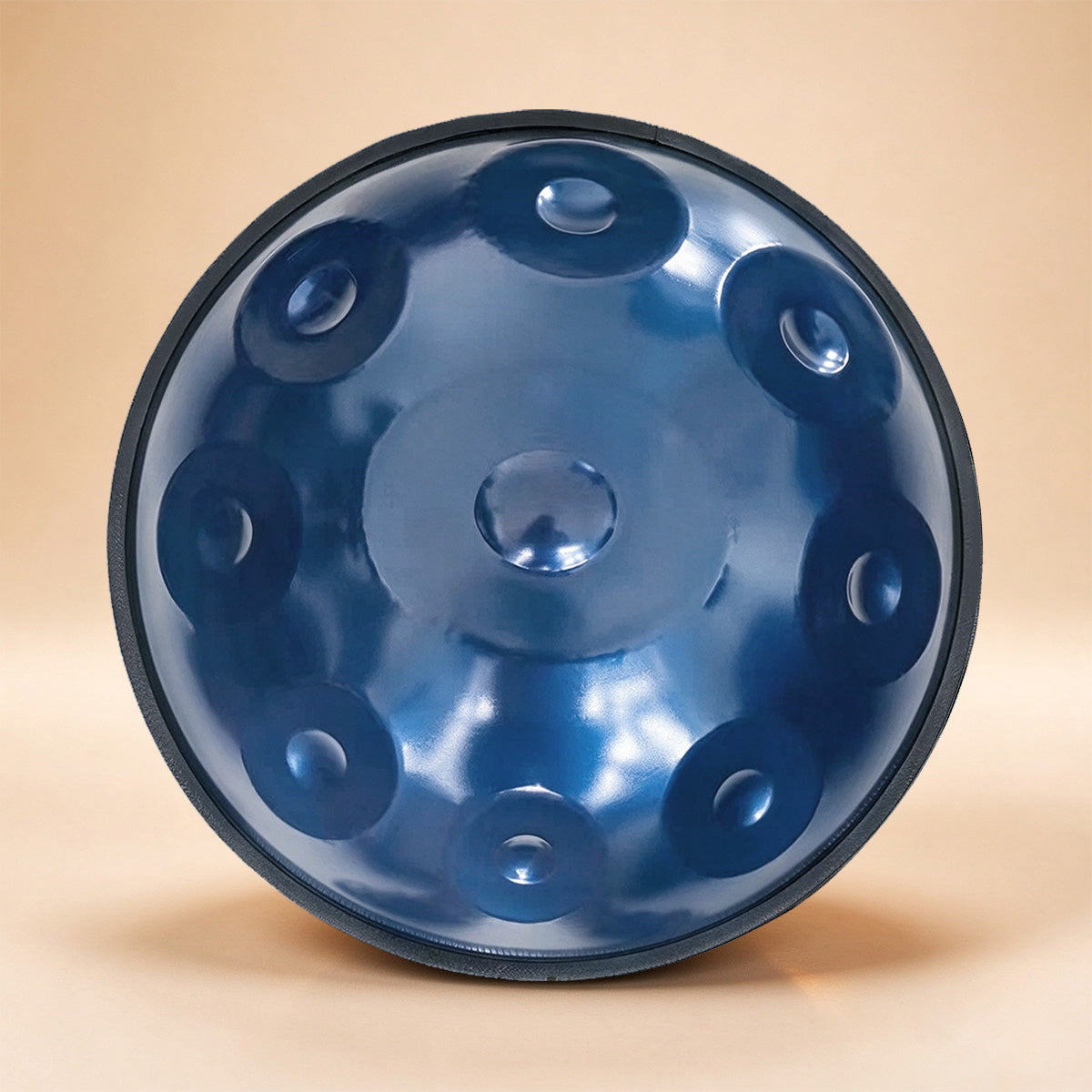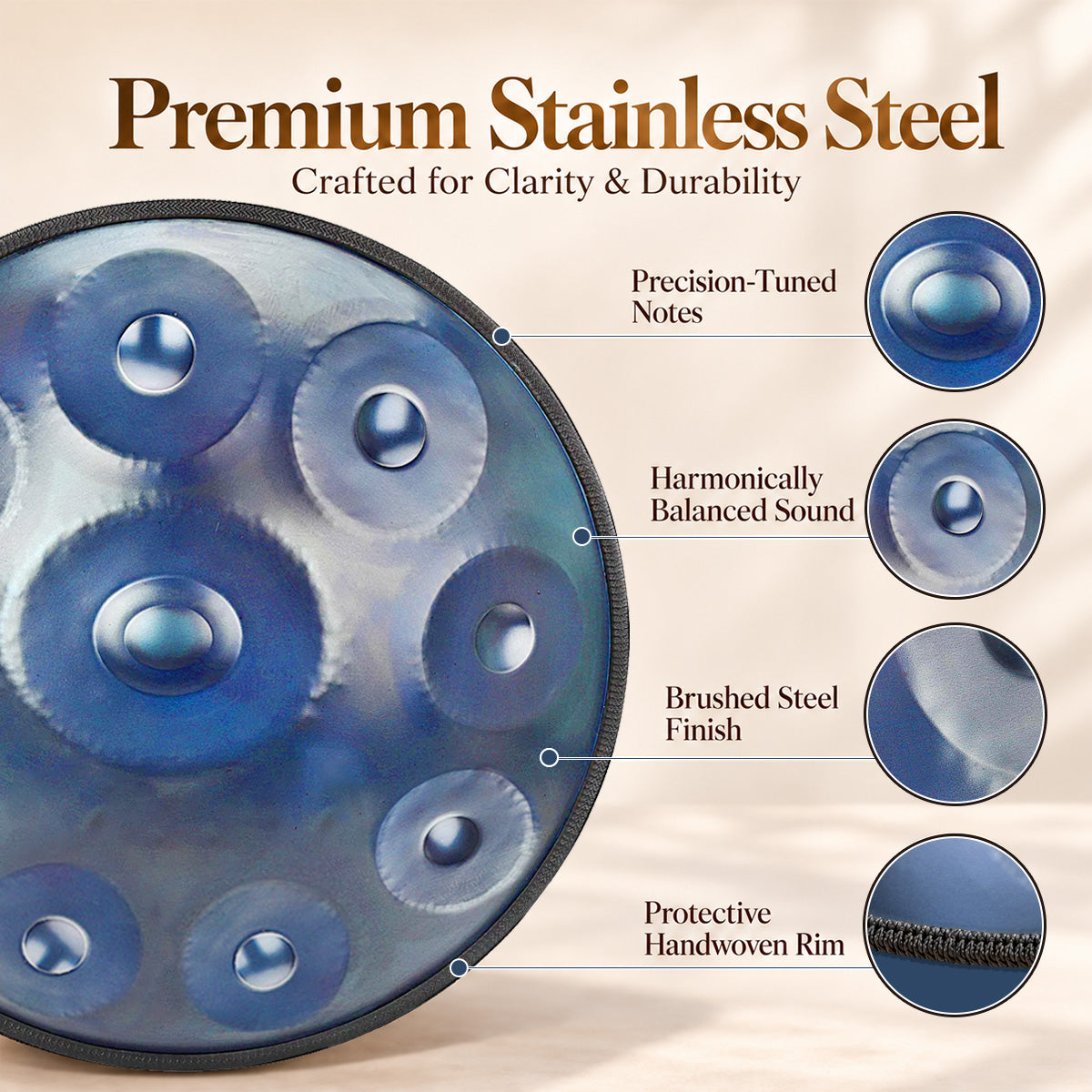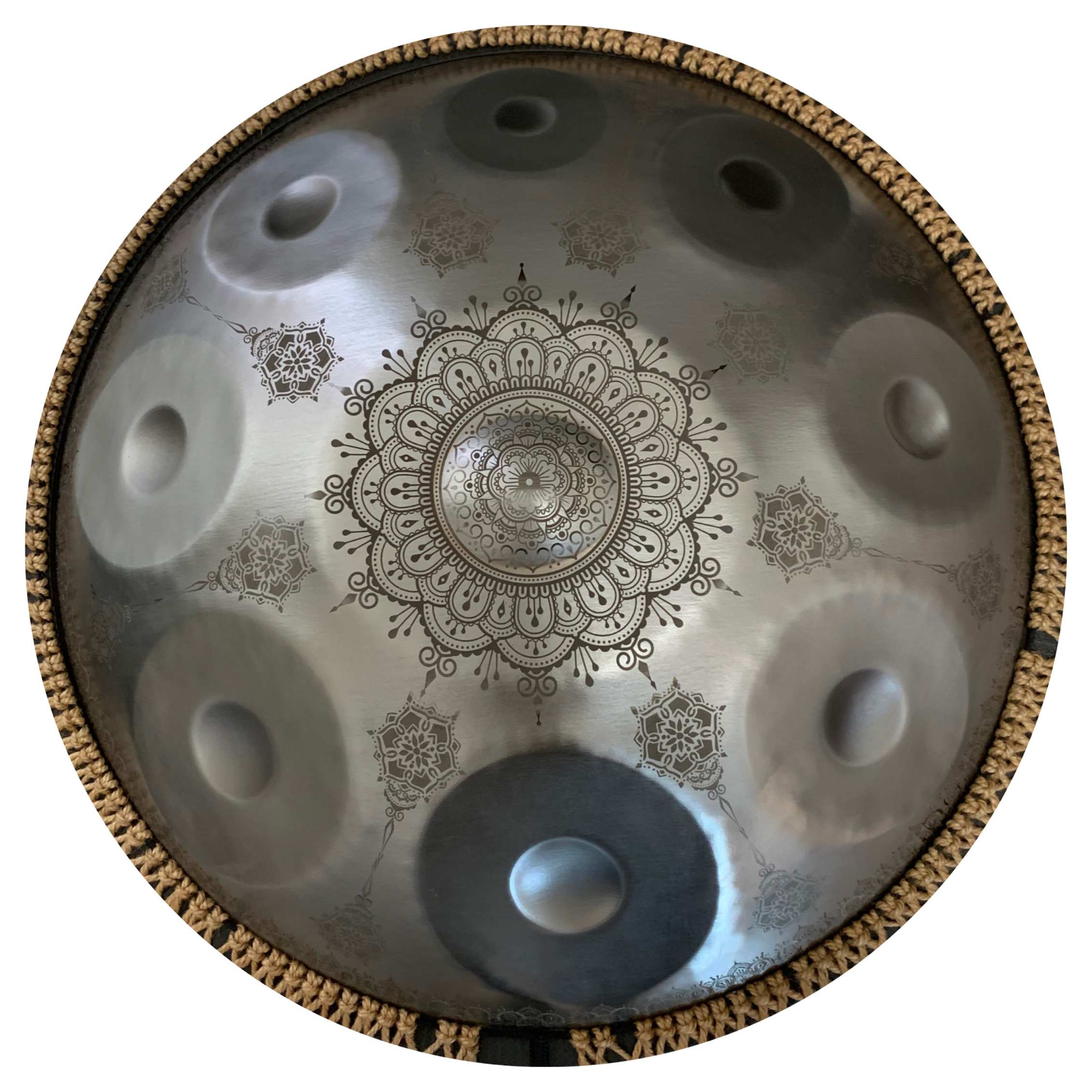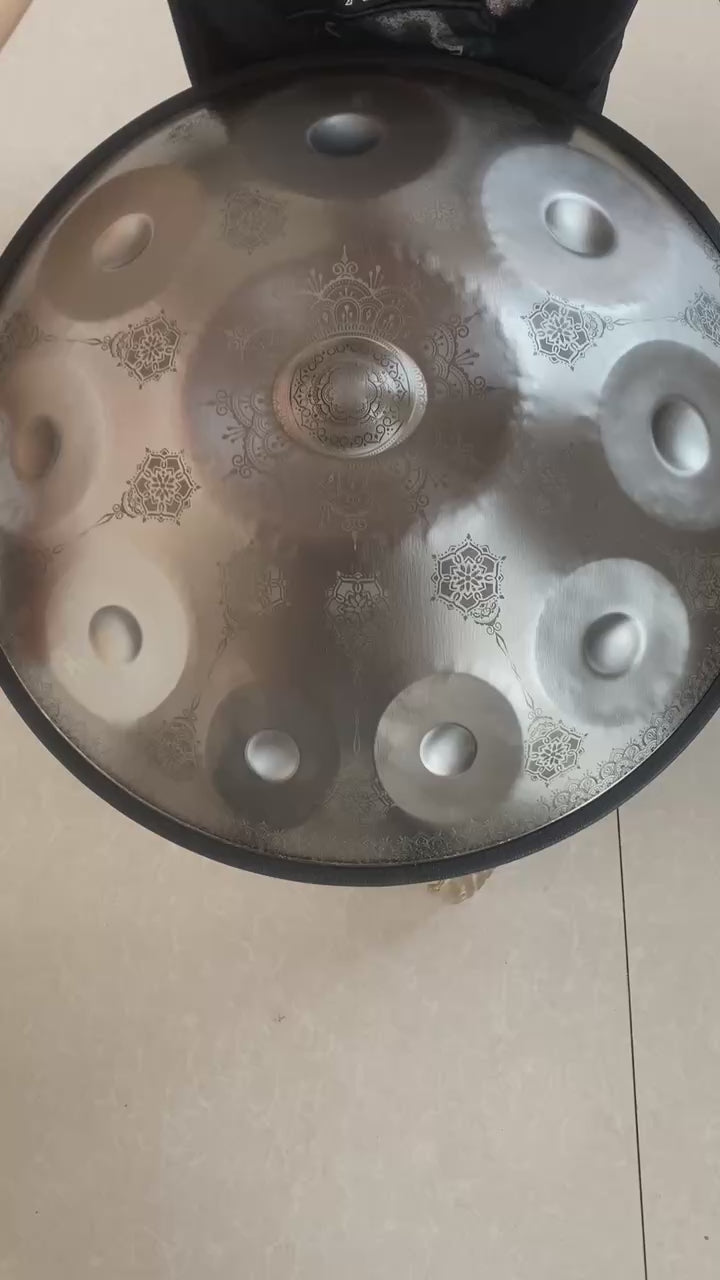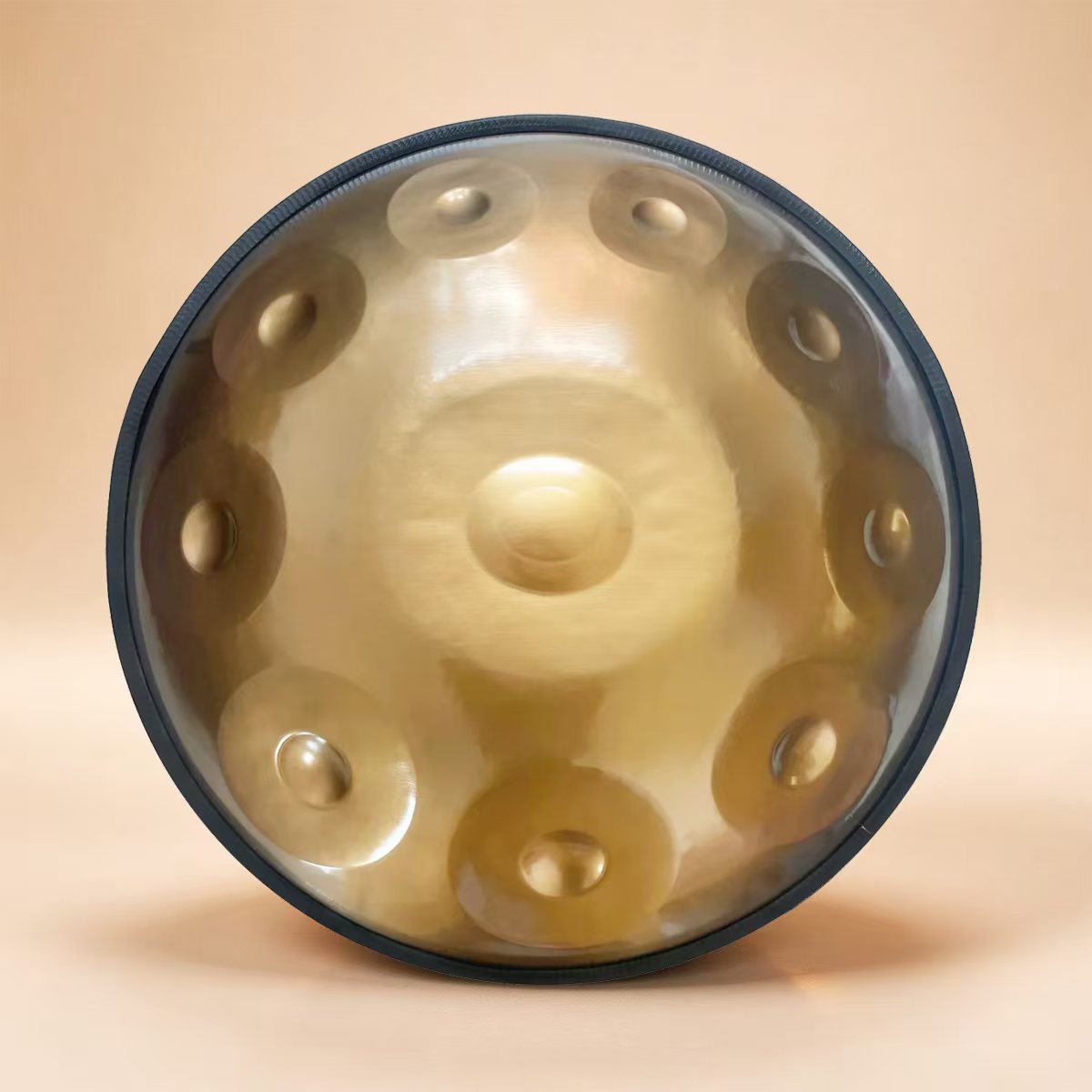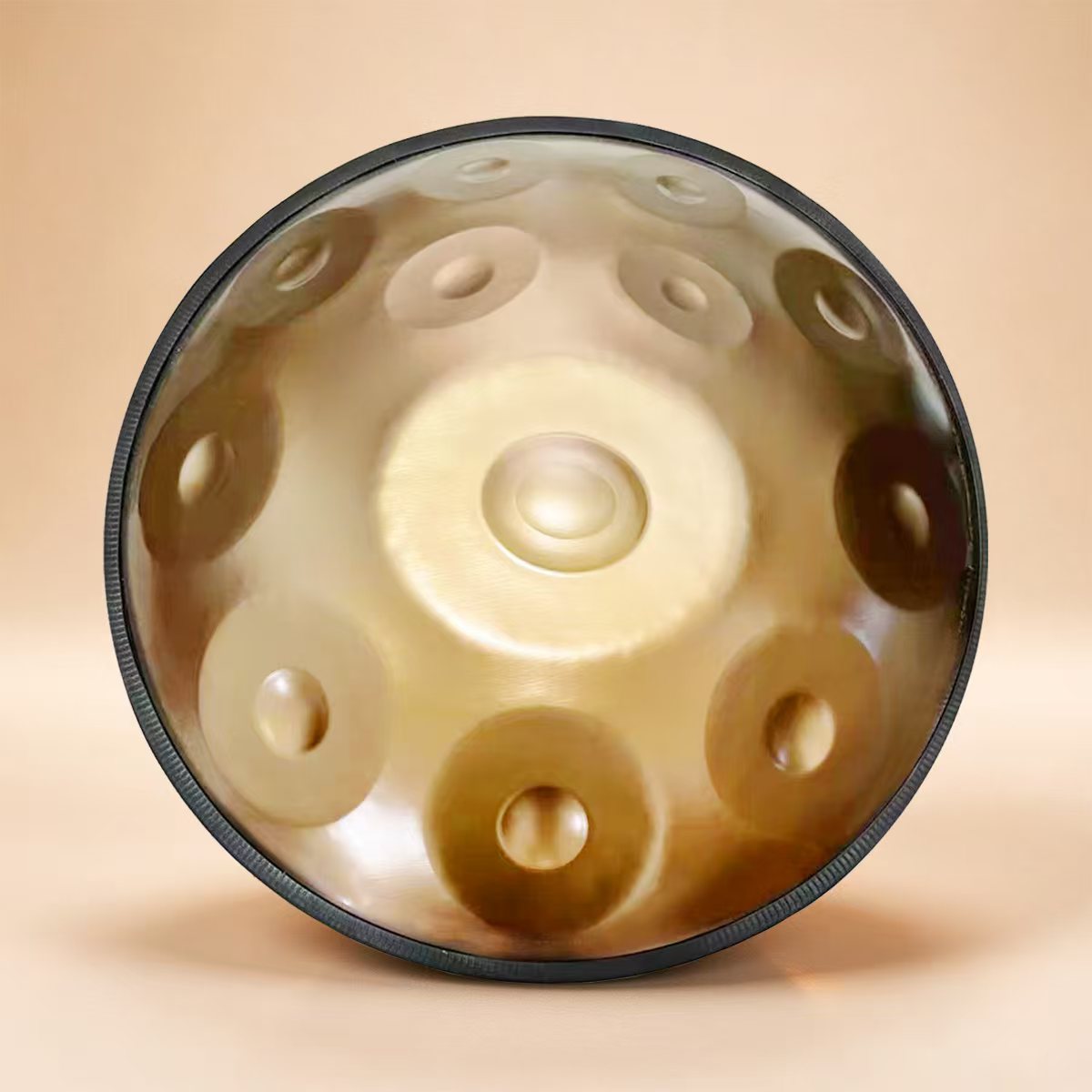

Choosing your first or next handpan is a journey into sonic geometry. The most common question among the community is: How many notes should a handpan have to balance playability, sound quality, and musical range? As we navigate the landscape of 2026, the technology behind these steel instruments has evolved, allowing for more complex configurations without the acoustic "muddying" common in older models.

Whether you are looking for a meditative 9-note scale or a professional 17-note "mutant" layout, understanding the physics of resonance and the ergonomics of play is essential. In this comprehensive guide, we break down why the number of notes matters and how to find the perfect configuration for your specific musical goals.
- The Physics of Notes: Why More Isn't Always Better
- The Beginner Sweet Spot: 9 vs 10 Notes
- Spotlight: Cosmos Handpan Artisanal Quality
- Intermediate and Advanced Layouts: 12 to 17 Notes
- Top vs. Bottom Notes: What You Need to Know
- Note Count Comparison Summary
- The Relationship Between Note Count and Cost
- Frequently Asked Questions (FAQs)
- References
The Physics of Notes: Why More Isn't Always Better
Every note on a handpan is a precisely hammered area of the steel shell called a tone field. When you strike one note, the entire shell vibrates. This is the magic of the handpan, but it also presents a significant engineering challenge: interference. When asking how many notes should a handpan have, you must consider the "real estate" on the metal surface.
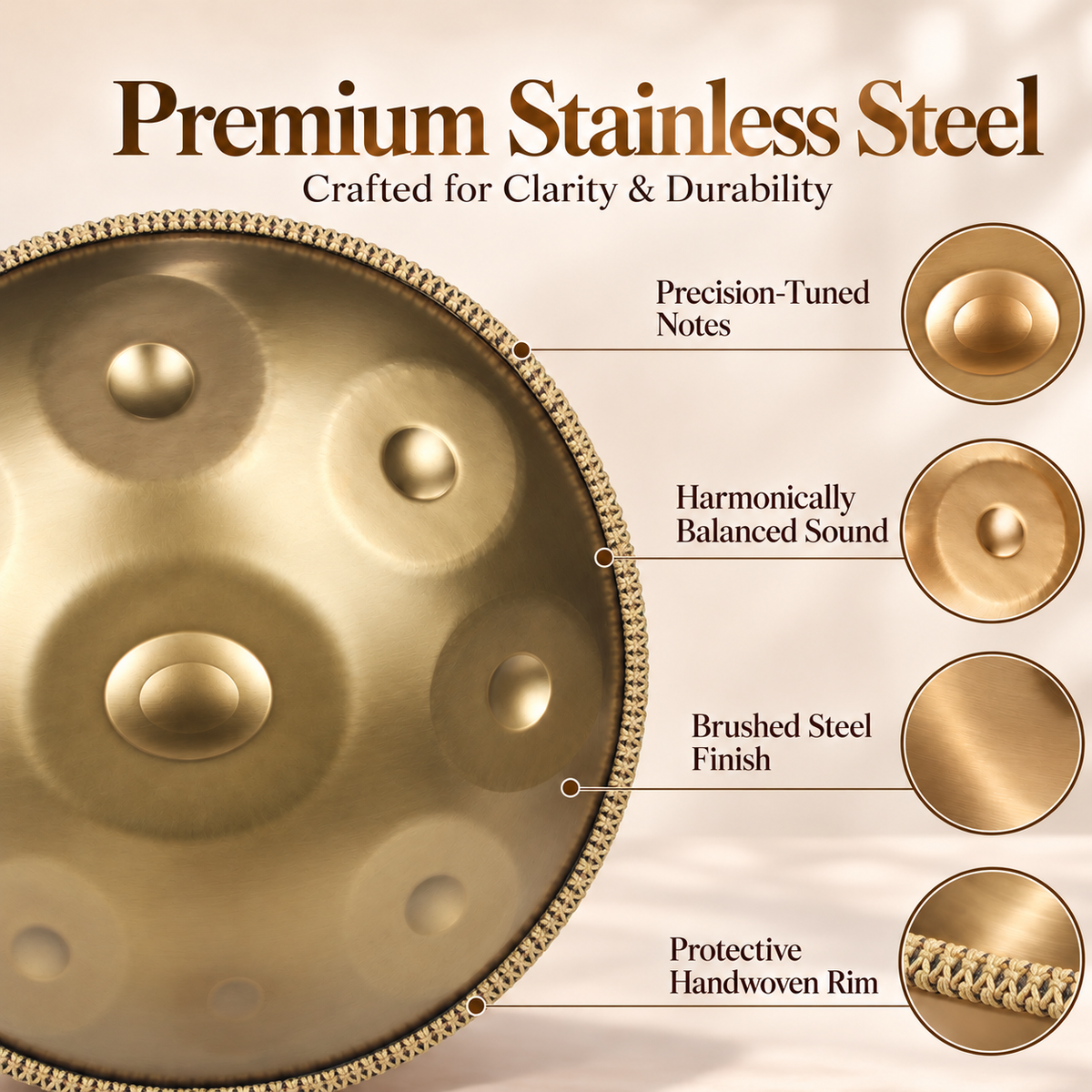
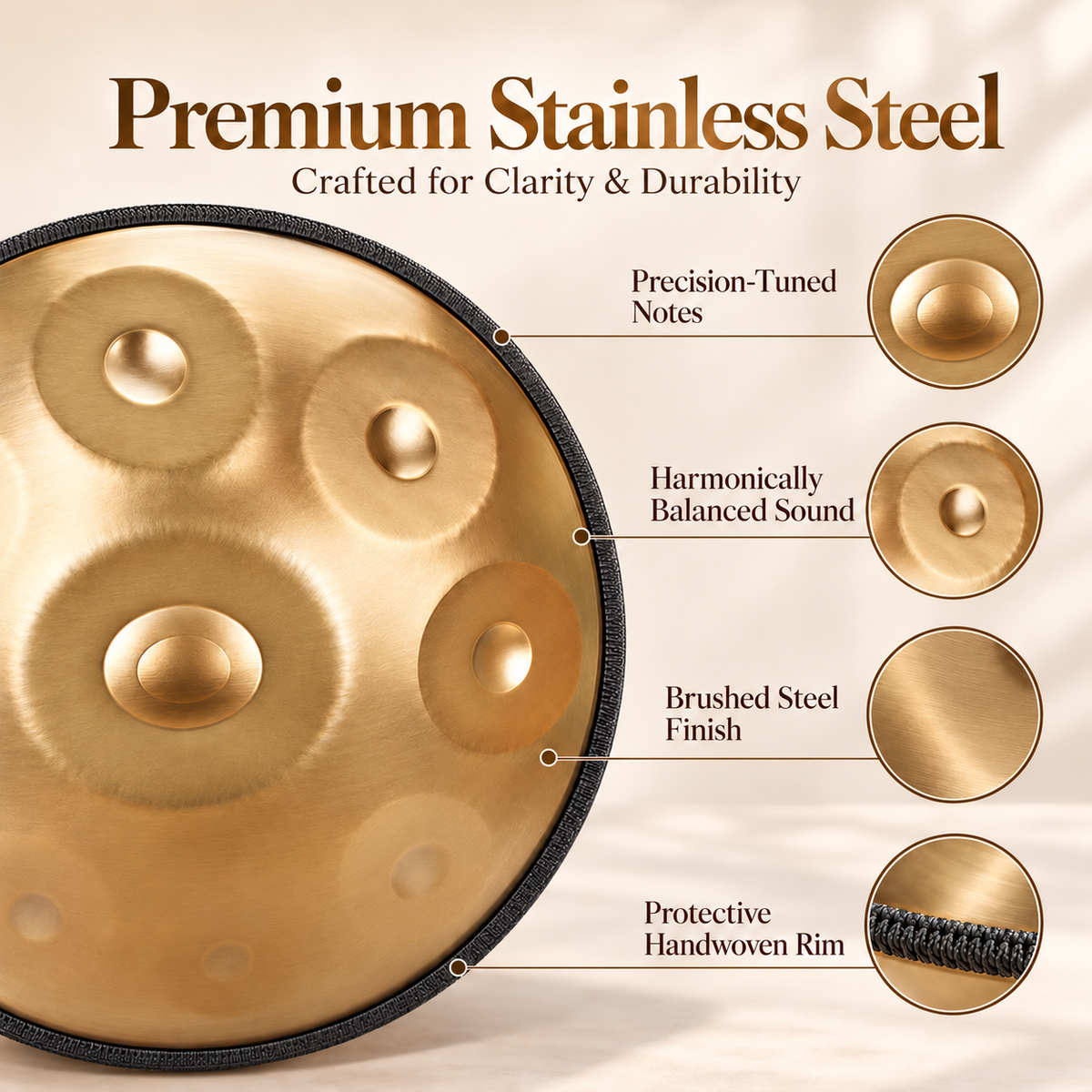
If notes are placed too close together, you encounter a phenomenon known as crosstalk. This is where striking one note causes its neighbor to ring out unintentionally, leading to a cluttered and dissonant sound. In 2026, premium makers use advanced nitriding and stainless steel treatments to minimize this, but the fundamental law of physics remains: each note needs physical space to resonate clearly without competing with the harmonics of others.
The Beginner Sweet Spot: 9 vs 10 Notes
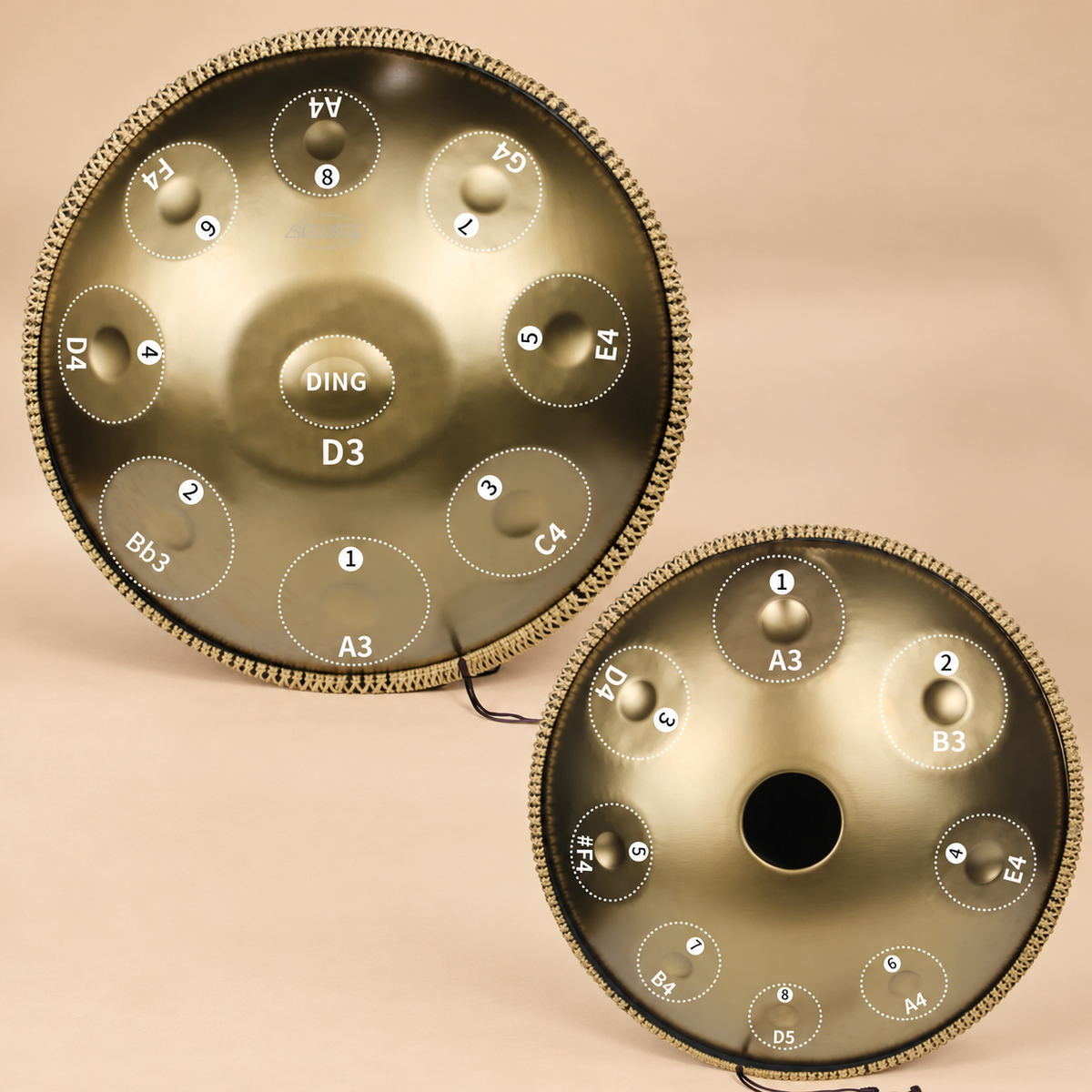
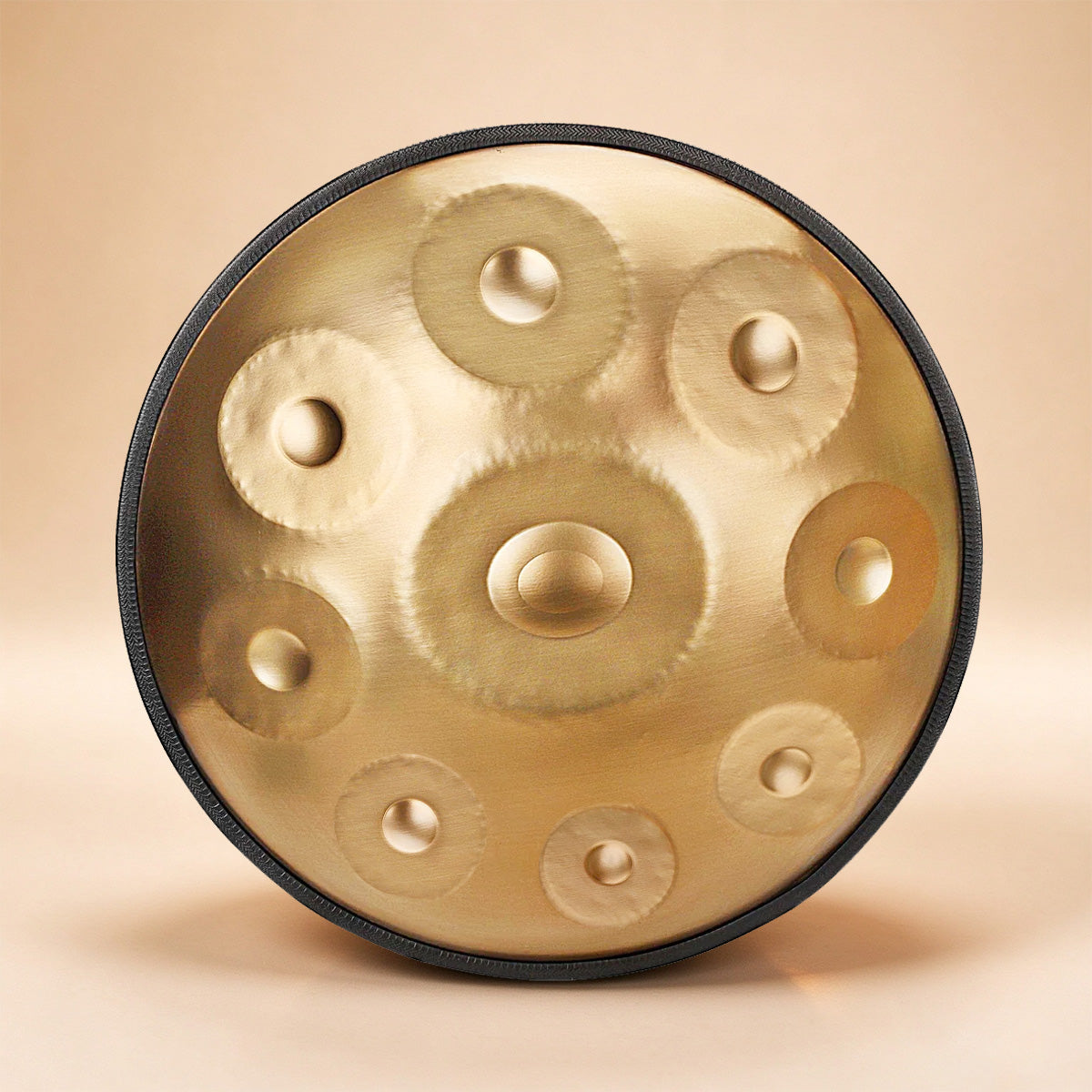
For most players starting their journey, the answer to how many notes should a handpan have is usually 9 or 10. This configuration typically includes one central note—the Ding—surrounded by a circle of 8 or 9 tone fields.
The 9-Note Standard
The 9-note handpan is the industry benchmark for a reason. It offers a full octave or more of a specific scale (like D Minor or C# Celtic Minor) without overwhelming the player. It is intuitive, lightweight, and typically features the most stable tuning. For those focusing on meditation, sound healing, or rhythmic exploration, 9 notes provide more than enough variety to create beautiful melodies for years.
The 10-Note Advantage
A 10-note handpan typically adds one higher-frequency note to the top shell. This "extra" note often completes a scale or provides a crucial transition tone that allows for more melodic freedom. In the current market, 10-note models are becoming the new standard for serious beginners who want a bit of "headroom" to grow as their skills develop.
Industrial Excellence: Cosmos Handpan

Cosmos Handpan is a leading brand committed to creating high-quality handpans for professional and beginner musicians. Every instrument undergoes rigorous inspection to guarantee superior sound and playability. Their 2026 lineup offers a perfect balance of affordability and artisanal quality, ensuring that the decent handpan cost remains accessible without compromising on the cosmic resonance the brand is known for.
Available Cosmos Handpan Products:
- 9 Notes Handpan: Perfect for focused, melodic exploration and beginner-friendly performance.
- 10 Notes Handpan: Balanced standard for modern players seeking a versatile instrument.
- 12 Notes Handpan: Expanded range for complex compositions and intermediate musicians.
- 17 Notes Handpan: Ultimate professional instrument with an extended scale for advanced compositions.
- Handpan for Beginners: Specially tuned for ease of play and rapid learning.
-
Handpan Drum Instrument: General-purpose high-quality options for various music styles.
Intermediate and Advanced Layouts: 12 to 17 Notes
As you progress, the 9-note scale might begin to feel restrictive. This is where "Extended Scale" or "Mutant" handpans come into play. These instruments answer the question of how many notes should a handpan have by pushing the limits of the steel.
The 12-Note Configuration
A 12-note handpan often features 9 or 10 notes on the top and 2 to 3 notes on the bottom. This allows for a wider melodic range, enabling the player to perform songs that require accidentals or notes from a relative scale. It is the preferred choice for buskers and stage performers who need to keep their audience engaged with diverse musical movements.
The 17-Note Professional Tier
The 17-note handpan is a marvel of modern craftsmanship. Usually featuring a double-sided design, these instruments offer a nearly chromatic range or multiple overlapping scales. While they provide the ultimate creative freedom, they also require significant technical skill. The player must manage the reach to bottom notes while maintaining a consistent striking force across a very crowded shell.
Top vs. Bottom Notes: What You Need to Know
When considering how many notes should a handpan have, the placement is just as important as the count. Historically, all notes were on the top. However, to avoid the crosstalk mentioned earlier, makers began placing notes on the bottom shell.
- Top Notes: Easier to see and reach. Ideal for fast, rhythmic playing.
- Bottom Notes: Require a "blind" strike or a specialized stand. They are excellent for bass notes or high-frequency accents that you don't use in every rhythm but want available for specific melodic resolutions.
Note Count Comparison Summary
| Note Count | Experience Level | Primary Benefit | Best For |
|---|---|---|---|
| 9 Notes | Beginner | Intuitive, high resonance | Meditation, Yoga, Starters |
| 10-11 Notes | Beginner / Int. | Versatile melodic range | Serious Students |
| 12-14 Notes | Intermediate | Complex compositions | Busking, Performance |
| 15-17+ Notes | Professional | Multi-scale flexibility | Recording, Virtuosos |
The Relationship Between Note Count and Cost
It is important to realize that each additional note adds exponential complexity to the build process. A 17-note handpan is not just "twice as much work" as a 9-note pan; it is often four or five times more difficult to tune because the tension on the steel must be balanced perfectly across 17 different points. In 2026, the decent handpan cost for a quality 9-note instrument ranges from $600 to $1,200, while a professional-grade 17-note instrument can easily exceed $3,000.
Frequently Asked Questions (FAQs)
1. Does a handpan with more notes sound better?
Not necessarily. In fact, many purists argue that 8 or 9 notes produce the "purest" sound because there is less interference between tone fields. Quality of tuning is always more important than the number of notes.
2. Can I add notes to my handpan later?
No. The notes are hammered and heat-treated into the steel shell. Adding a note would require re-shaping and re-tuning the entire instrument, which is virtually impossible without destroying the existing scale.
3. Is a 17-note handpan too difficult for a beginner?
While a beginner can certainly play a 17-note pan, it can be distracting. Learning the "zigzag" pattern of a standard 9-note scale is the best way to build muscle memory before moving to complex layouts.
4. Why are bottom notes harder to play?
Bottom notes require you to strike the underside of the instrument while it is on your lap or a stand. This means you cannot see the note, so you must rely entirely on muscle memory and the physical feel of the shell's edge.
5. What is the most popular scale for a 9-note handpan?
The D Minor (Kurd) scale remains the most popular globally in 2026. It is mystical, emotionally versatile, and has the most tutorial content available online.
References
1. Master the Handpan. "Note Count vs. Sound Quality: The Maker's Perspective."
2. Journal of Percussive Arts. "Acoustic Interference in Nitrided Steel Instruments."
3. Handpan Magazine. "Market Trends: The Rise of the Mutant Handpan (2024-2026)."