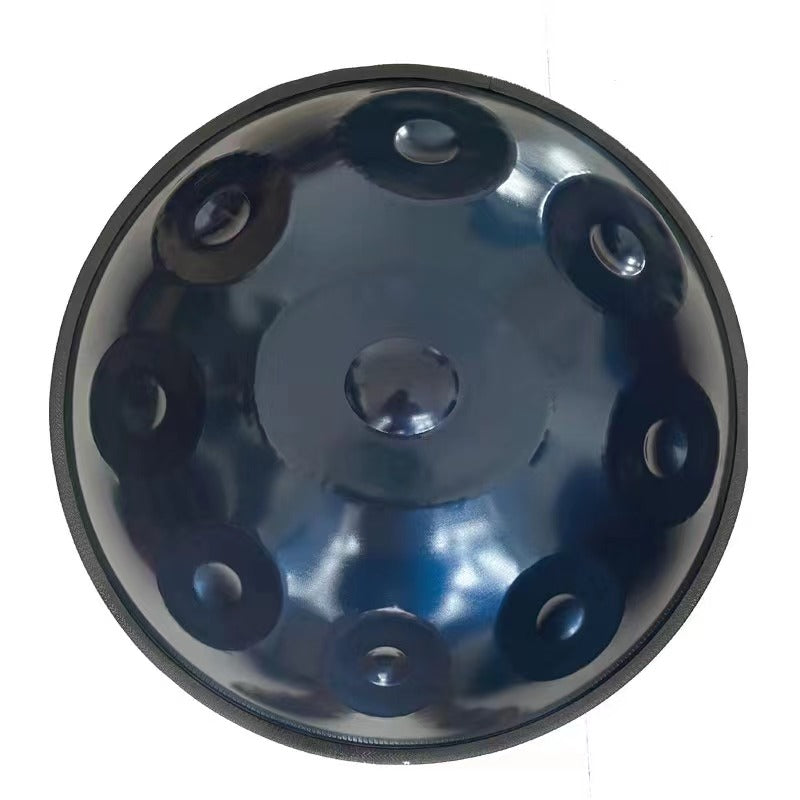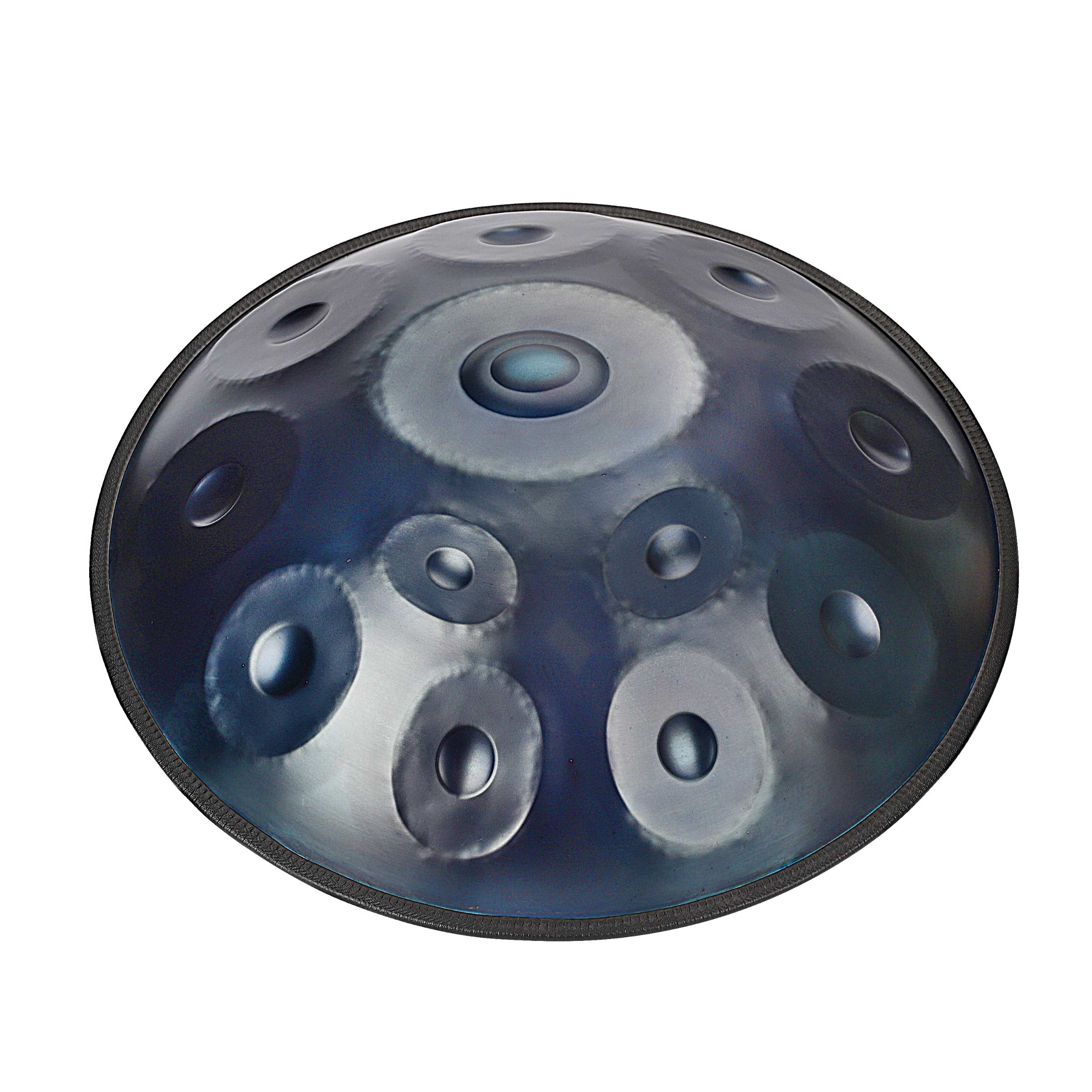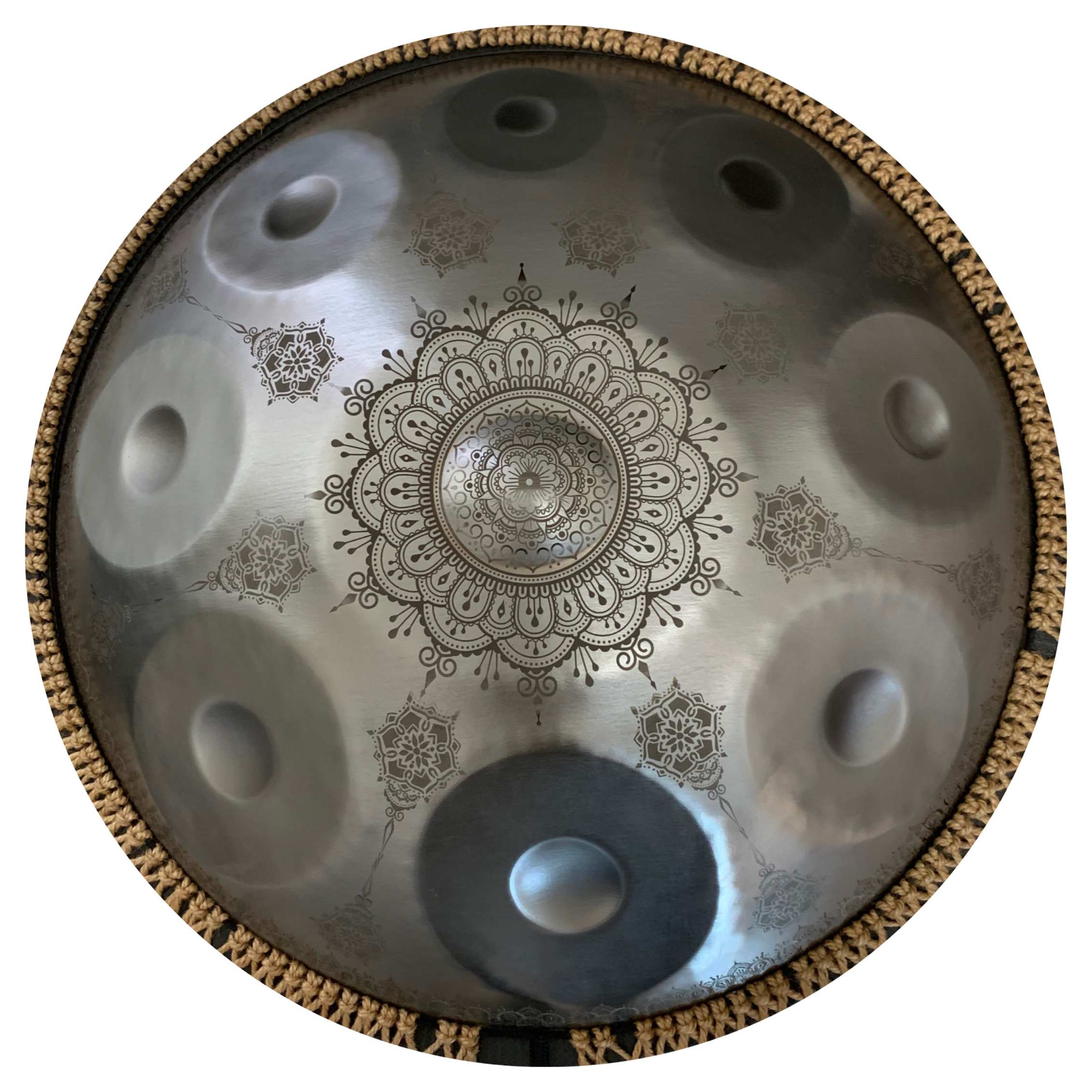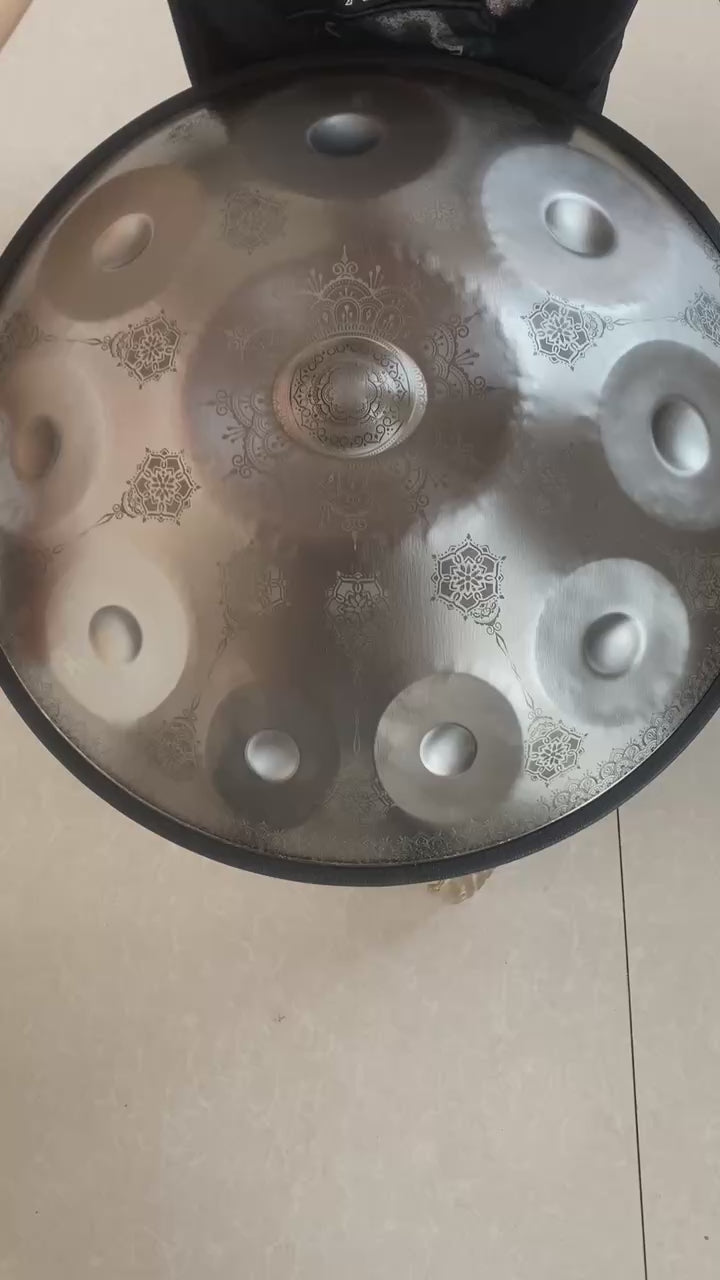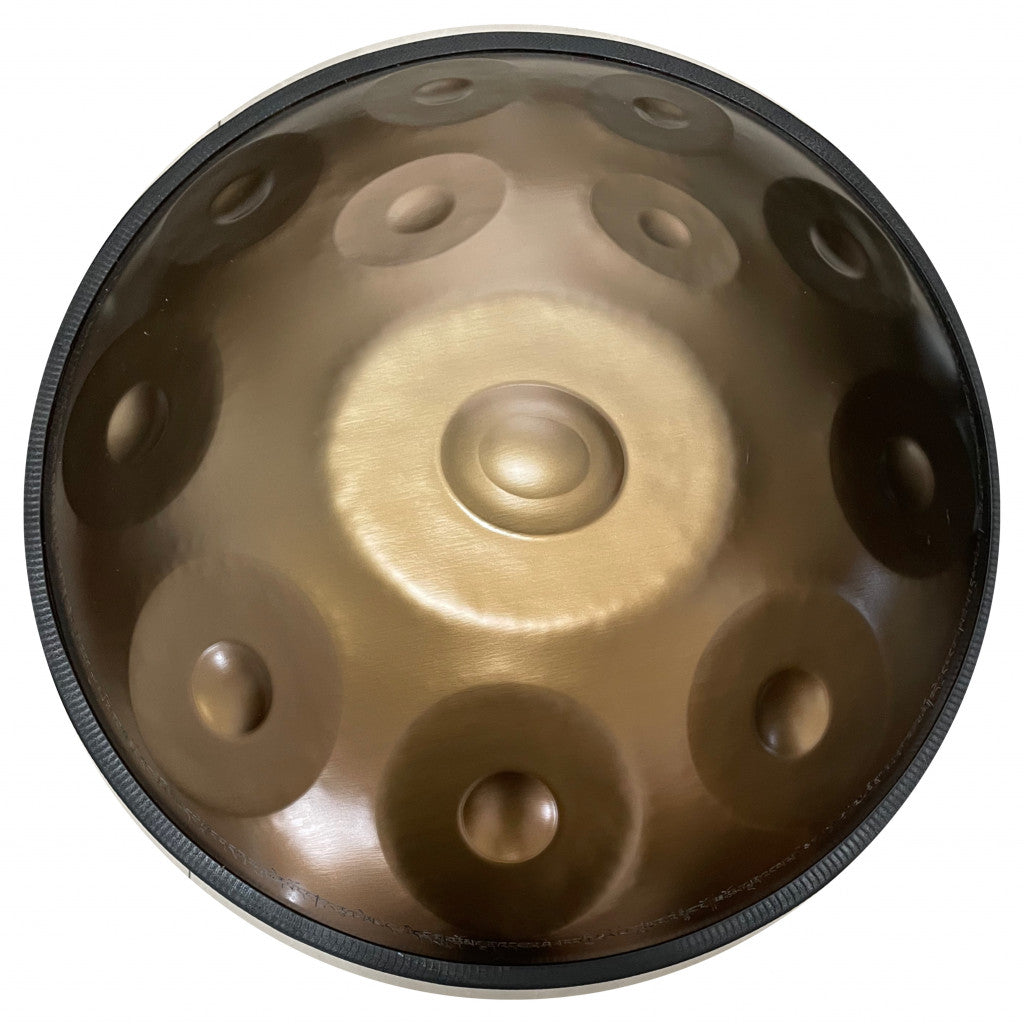
Every prospective handpan buyer, musician, and sound therapy practitioner eventually faces a confusing wall of naming conventions when browsing acoustic steel drums. You see instruments labeled simply as D Minor, others titled D Kurd, and still others categorized as D Celtic Minor, D Amara, or D Integral. Retailers frequently use these terms interchangeably, leading customers to wonder: is D Kurd the same as D minor, or are you looking at fundamentally different musical instruments? As handpan tuners and acoustic craftsmen who forge tone fields, hammer dimples, and calibrate fundamental and overtone ratios daily, we know firsthand that terminology confusion causes more buyer remorse than almost any other factor in the handpan world. Choosing the wrong scale variation can leave you with an instrument that clashes with online tutorials or frustrates your ability to improvise freely. Understanding the precise music theory and practical playing dynamics behind these scales is the single most critical step in making a confident, long-term buying decision.

Quick Answer: Is D Kurd the Same as D Minor?
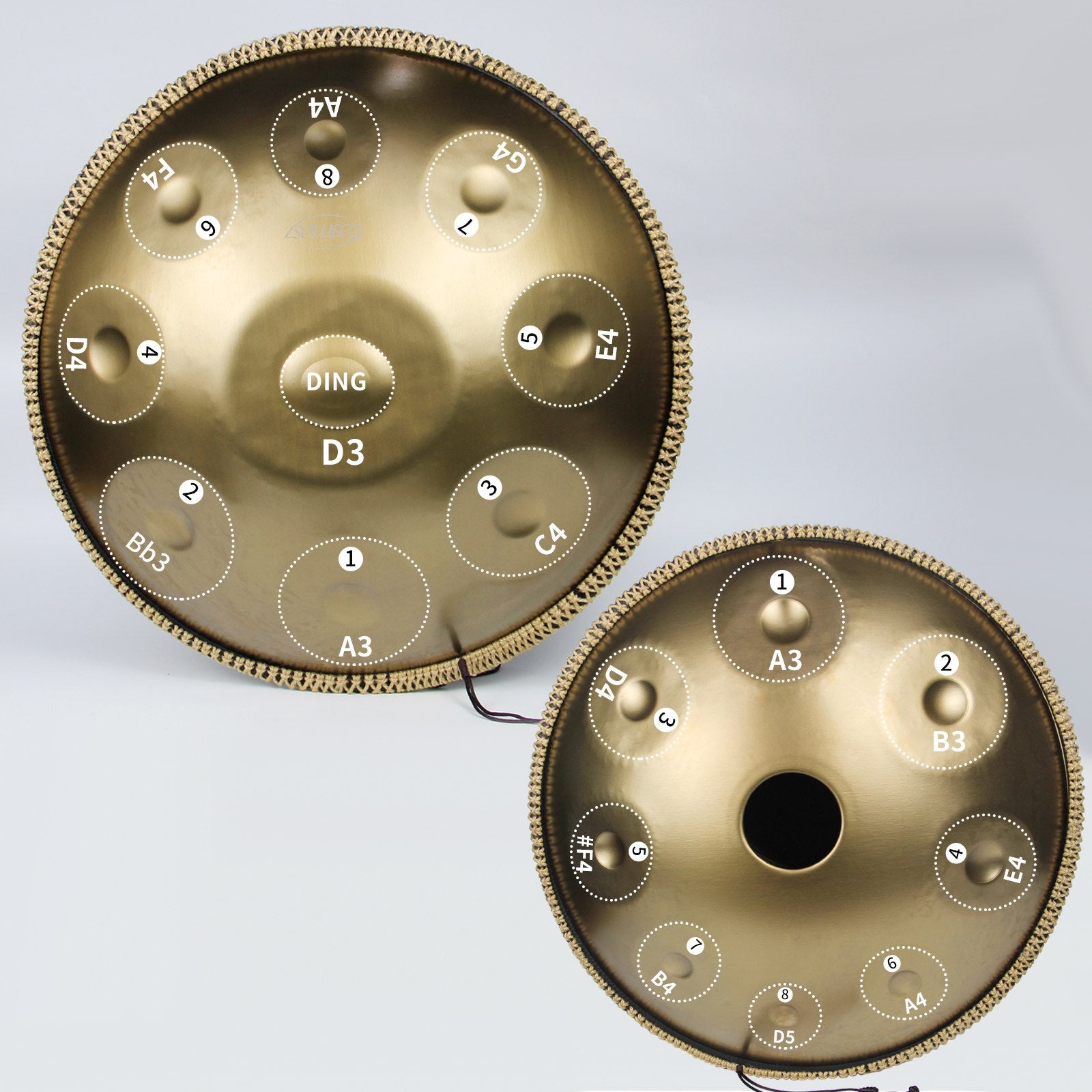
To answer directly: every D Kurd is a D minor scale, but not every D minor scale is a D Kurd. In Western music theory, D Kurd is the complete, full seven-note D Natural Minor scale (also known as D Aeolian), comprising the notes D, E, F, G, A, Bb (B-flat), and C. When builders create a standard 9-note D Kurd handpan, it features a central D3 Ding surrounded by A3, Bb3, C4, D4, E4, F4, G4, and A4. However, the umbrella term "D minor" is also applied to other popular handpan scales that omit certain notes—most notably D Celtic Minor (also called D Amara), which deliberately leaves out the Bb note to remove half-step dissonance. In modern handpan manufacturing, if an instrument is labeled a standard 9-note or 10-note D Minor, it is almost certainly a D Kurd layout. In our testing and professional experience, D Kurd is the gold standard for versatility, song composition, and tutorial compatibility.
Article Directory
- Defining the Terminology: D Kurd vs. The Western D Minor Scale
- Quick Summary Table: D Kurd vs. Other D Minor Handpan Variations
- How It Works: The Musical Anatomy of D Kurd and Half-Step Tensions
- Featured Scale Masterpiece: Cosmos Handpan Golden Elegance 9 Notes
- Core Benefits of Choosing a D Kurd Handpan
- Inherent Limitations: When D Kurd Can Challenge Beginners
- Direct Technical Comparison: D Kurd vs. D Celtic vs. D Integral vs. D Dorian
- Pros and Cons of the D Kurd Scale Architecture
- Who Should Choose D Kurd vs. Who Should Choose an Alternative
- Common Mistakes Buyers Make When Selecting D Minor Handpans
- Essential Buying Considerations: Note Count, Frequencies, and Materials
- Expert Tuner's Final Recommendation
- Frequently Asked Questions
- Authoritative References & Musicological Standards
Defining the Terminology: D Kurd vs. The Western D Minor Scale
To unravel whether D Kurd the same as D minor, we must trace both classical musicology and the specialized history of modern resonant steel sculpture. In traditional European classical music, the key of D minor has a single flat in its key signature: B-flat (Bb). The Natural Minor scale in the key of D consists of seven diatonic pitches: D (tonic), E (major second), F (minor third), G (perfect fourth), A (perfect fifth), Bb (minor sixth), and C (minor seventh). This mode is identical to the D Aeolian mode.
When the original Swiss creators of the Hang (PANArt) and subsequent European handpan pioneers began naming their sound sculptures in the early 2000s, they borrowed terms from global modal systems rather than using dry academic labels. The name "Kurd" originates from Middle Eastern and Arabic musicology, specifically the Maqam Kurd family. In traditional maqam theory, Kurd is built on a minor-sounding modal structure that directly mirrors the natural minor scale intervals when translated to equal temperament tuning.
In the global handpan maker community, the name D Kurd became the universally accepted moniker for a handpan tuned to the full diatonic D Natural Minor scale. Therefore, from a strict musicological standpoint, a D Kurd handpan is an authentic D Natural Minor instrument. However, the commercial marketplace frequently creates confusion because handpans are fixed-pitch acoustic idiophones. Unlike a piano or guitar, a handpan does not contain every chromatic pitch. A maker has only 8 to 12 tone fields on a single shell. Consequently, makers developed different variations of D minor by omitting certain notes to create distinct emotional atmospheres. While every D Kurd represents the D natural minor scale, not every instrument marketed simply as D minor carries the Kurd note arrangement.
Quick Summary Table: D Kurd vs. Other D Minor Handpan Variations
| Scale Designation | Musical Classification | Standard Note Layout (Ding + Tone Fields) | Missing Note vs. Full Scale | Acoustic & Emotional Character |
|---|---|---|---|---|
| D Kurd (9 Notes) | D Natural Minor (D Aeolian) | D3 / A3, Bb3, C4, D4, E4, F4, G4, A4 | None (Full 7-note diatonic scale) | Balanced, deeply emotional, cinematic, versatile |
| D Celtic Minor (D Amara) | Hexatonic Minor (6-note mode) | D3 / A3, C4, D4, E4, F4, G4, A4, C5 | Omits B-flat (Bb) completely | Peaceful, meditative, airy; zero half-step clash |
| D Integral | Hexatonic Natural Minor Variant | D3 / A3, Bb3, C4, D4, E4, F4, A4 | Omits G (4th degree) | Introspective, dark, moody, minimalist |
| D Dorian | Dorian Modal Minor | D3 / A3, B3 (Natural), C4, D4, E4, F4, G4, A4 | Uses B natural instead of Bb | Jazzy, uplifting, ancient, slightly bright minor |
| D Harmonic Minor | Harmonic Minor Scale | D3 / A3, Bb3, C#4 (C-sharp), D4, E4, F4, G4, A4 | Uses C# leading tone instead of C | Exotic, Middle Eastern, dramatic, tense |
How It Works: The Musical Anatomy of D Kurd and Half-Step Tensions
To understand why knowing whether D Kurd the same as D minor matters to your hands, you must look at how the notes sit physically around the drum. On a standard 9-note instrument, the central low dome—the Ding—is tuned to D3. Surrounding the Ding in a zig-zag alternating circle are eight tone fields:
- D3 (Tonic Root / The Ding): Anchors the deep bass resonance of the entire chamber.
- A3 (Perfect Fifth): Establishes harmonic stability and acts as the lower dominant.
- Bb3 (Minor Sixth): The defining note that gives D Kurd its natural minor identity.
- C4 (Minor Seventh): Provides resolution and open chord possibilities.
- D4 (Tonic Octave): Sits an octave above the Ding, creating rich fundamental coupling.
- E4 (Major Second): Bridges the gap between tonic and minor third.
- F4 (Minor Third): Confirms the distinctly minor, reflective quality of the scale.
- G4 (Perfect Fourth): Adds melodic movement and harmonic depth.
- A4 (Dominant Octave): Completes the upper chorus ring with high-frequency shimmer.
In our testing and musical analysis, the critical note that distinguishes D Kurd from other D minor variations is the B-flat (Bb3). In Western harmony, the distance between A3 and Bb3 is a minor second—a half-step interval. Similarly, the distance between E4 and F4 is another half-step interval. These half-steps are the emotional engine of Western music. They create tension that seeks resolution. When you strike A3 and quickly transition to Bb3, you evoke a yearning, cinematic melancholy familiar from famous movie soundtracks.
Conversely, in scales like D Celtic Minor (D Amara), the maker completely removes the Bb note. By eliminating Bb, they remove the half-step friction between A and Bb. That is why D Celtic Minor sounds inherently harmonious no matter which notes you strike together; it is impossible to create a sharp clash. But that safety comes at a cost: without Bb, you lose the ability to play full minor-sixth chords, resolve melodies traditionally, or play dozens of popular songs written in the natural minor key. When you consult an authoritative handpan notes chart, you will see that D Kurd gives you the full, uncompromised natural minor scale degrees, whereas other variants are filtered subsets.
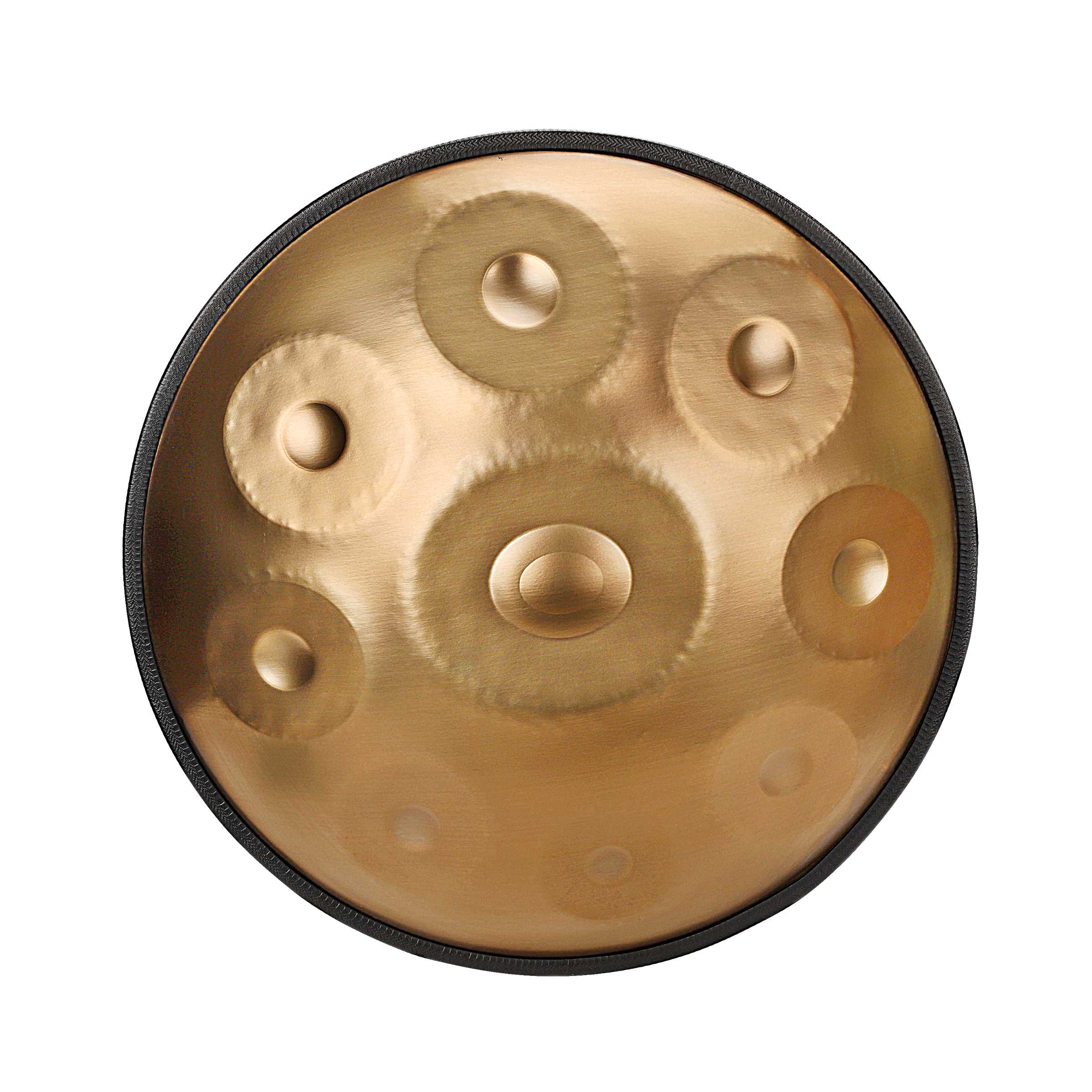
Scale Spotlight: Cosmos Handpan Golden Elegance (9 Notes D Minor)
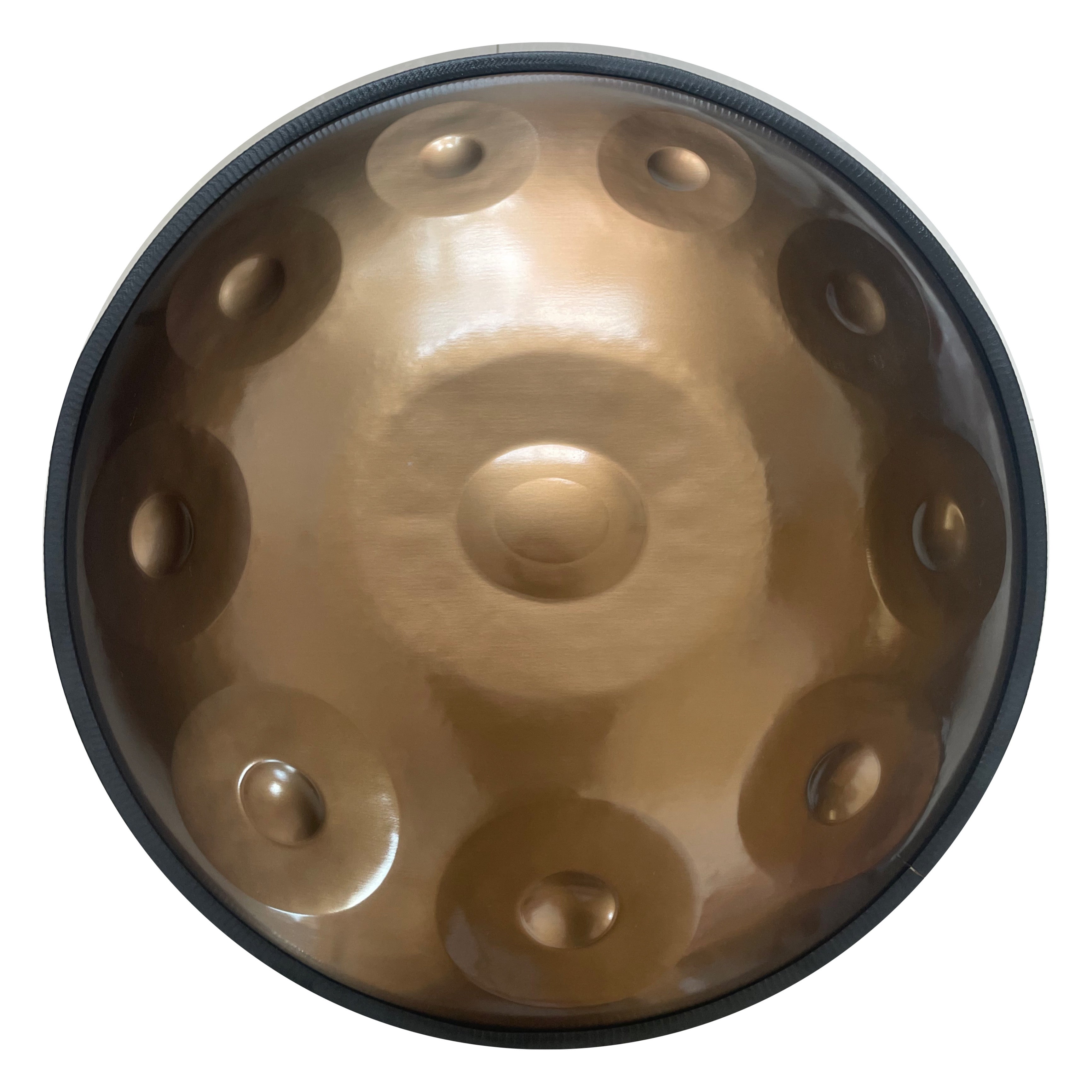
For players seeking the definitive D Kurd layout without guesswork, the Cosmos Handpan Golden Elegance provides an exquisitely calibrated 9-note D Minor arrangement (D3 / A3, Bb3, C4, D4, E4, F4, G4, A4). Engineered specifically for musical clarity, this instrument balances warm acoustic resonance with crystal-clear overtone isolation.
| Scale Architecture | Full D Natural Minor / D Kurd 9-Note Layout |
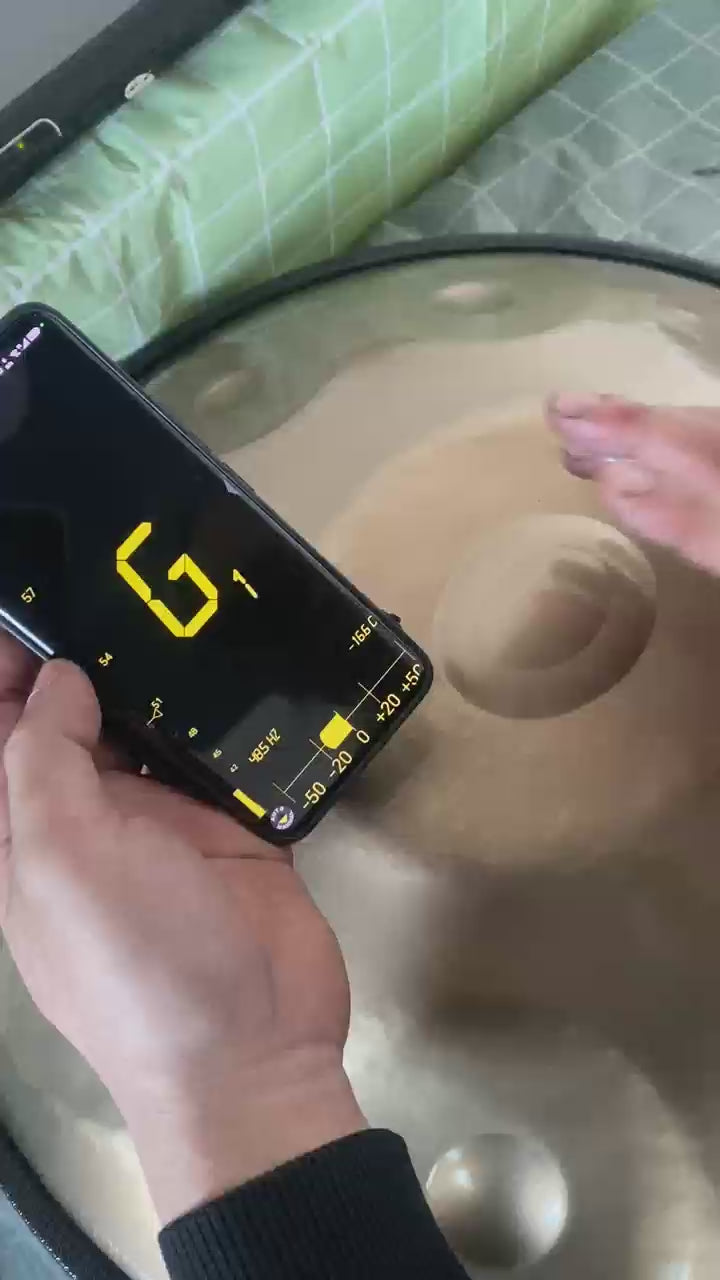
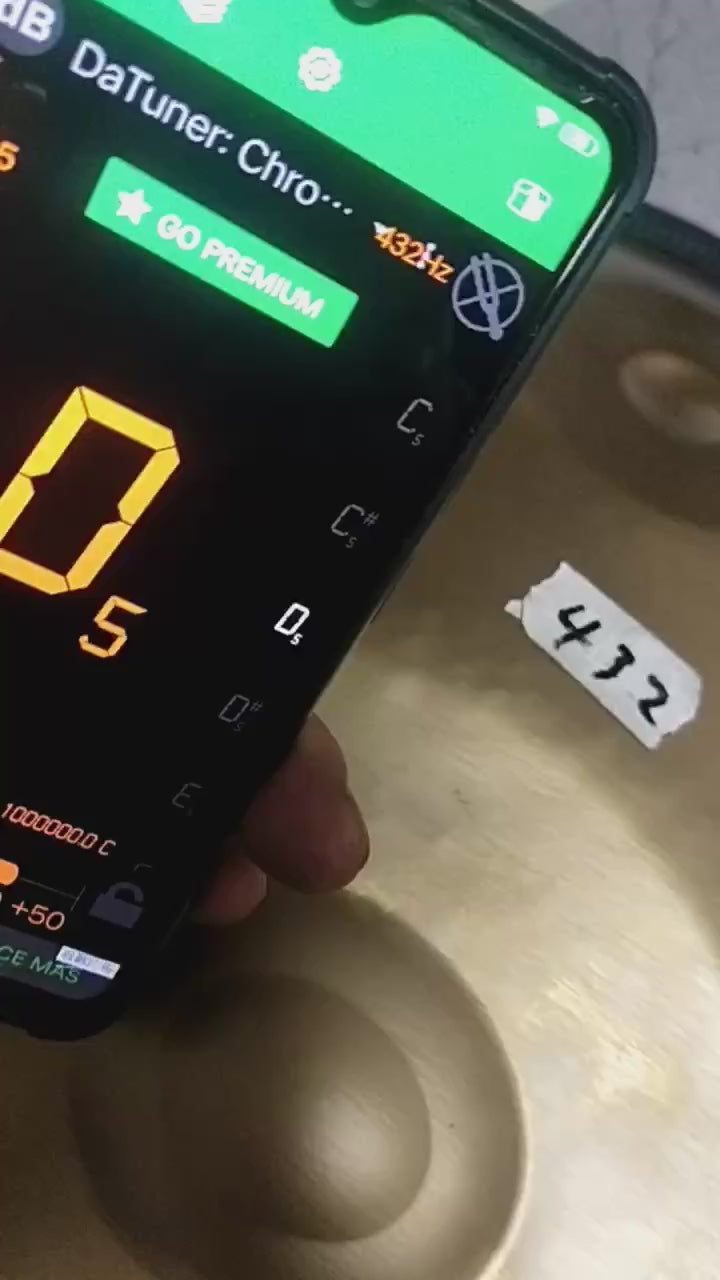
| Tuning Frequency | Available in standard concert pitch (440Hz) or healing pitch (432Hz) |
| Acoustic Profile | Prolonged singing sustain with isolated fundamental, octave, and compound fifth |
| Target Player | First-time buyers, meditation practitioners, composers, and buskers |
| Included Package | Heavy-duty padded travel bag, wooden display stand, mallets, micro-cloth |
Maker Assessment: This instrument eliminates the confusion between generic minor labels and true diatonic performance. Discover the full details on the Cosmos Handpan Golden Elegance Gift Set or browse our complete lineup of beginner-friendly 9 Notes handpan models.
Core Benefits of Choosing a D Kurd Handpan
From our experience building and tuning hundreds of sound sculptures, D Kurd is not just popular by chance. It has earned its place as the world's most widely owned handpan scale for very tangible practical reasons:
1. Unrivaled Compatibility with Online Tutorials and Sheet Music
More than 75% of all instructional handpan material produced globally—including video lessons from master players, sheet music, tablature books, and structured learning courses—is composed specifically for the D Kurd 9 or 10-note layout. If you purchase an obscure ethnic scale or a non-standard minor variant, you will find yourself constantly transposing exercises or discovering that the instructor is striking notes your instrument does not have. Choosing D Kurd ensures that almost every online tutorial works on your drum right out of the box.
2. Emotional Versatility: Balancing Melancholy with Uplifting Major Chords
While D Kurd is technically a minor scale, it contains major chord triads within its note architecture. Because it possesses F, A, and C (an F Major chord) as well as C, E, and G (a C Major chord), you are not locked into dark, mournful funeral music. An experienced player can transition seamlessly from a somber, meditative minor drone into an uplifting, joyful major progression simply by shifting focus from the low D-minor triad (D-F-A) to the relative major triad (F-A-C). This dual personality makes D Kurd far more musically rewarding over years of ownership.
3. Seamless Collaboration with Other Musicians
In most professional situations, handpans are played alongside acoustic guitars, cellos, flutes, pianos, and ambient synthesizers. Because D minor is one of the most fundamental keys in Western music, your musical collaborators will immediately know how to jam with you. Guitarists can drop their low E string to D (Drop-D tuning) and play along effortlessly. If you buy a complex micro-tonal scale, other musicians will struggle to find matching harmonies.
Inherent Limitations: When D Kurd Can Challenge Beginners
Despite its universal acclaim, D Kurd is not without limitations. Acknowledging these boundaries is essential to deciding whether it matches your playing goals:
- The Risk of Half-Step Dissonance: Because D Kurd includes the full diatonic minor scale, it features adjacent half-step intervals (A3 to Bb3, and E4 to F4). In our testing with absolute beginners who have zero musical background, striking A3 and Bb3 simultaneously with heavy force produces an abrasive, clashing discordance. If your primary goal is to close your eyes, strike notes completely at random without listening, and guarantee that every sound is peaceful, a hexatonic scale like D Celtic Minor or an intuitive Tongue Drum provides a more foolproof meditative safety net.
- Ubiquity and Lack of Sonic Exclusivity: Because D Kurd is the most popular scale in existence, your music will sound familiar. If you are an avant-garde recording artist seeking a rare, exotic, or shocking acoustic signature that immediately stands out on Spotify, D Kurd can feel somewhat conventional compared to Middle Eastern Hijaz or Japanese Akebono tunings.
- Octave Range Ceilings on 9-Note Drums: A standard 9-note D Kurd stops at A4. Advanced players often find themselves longing for the high Bb4 and C5 notes to complete full melodic runs up the register. This is why many experienced players eventually upgrade to an expanded 10 Notes handpan or an intricate 12 Notes handpan that includes bottom mutant notes.
Direct Technical Comparison: D Kurd vs. D Celtic vs. D Integral vs. D Dorian
| Scale Parameter | D Kurd | D Celtic Minor (Amara) | D Integral | D Dorian |
|---|---|---|---|---|
| Scale Type | 7-Note Heptatonic (Diatonic) | 6-Note Hexatonic | 6-Note Hexatonic | 7-Note Heptatonic Modal |
| Minor 6th Note (Bb) | Present (Essential character) | Absent (Removed) | Present | Replaced by Natural B |
| Half-Step Intervals | 2 Pairs (A-Bb and E-F) | 1 Pair (E-F only) | 2 Pairs (A-Bb and E-F) | 2 Pairs (B-C and E-F) |
| Tutorial Availability | Universal (75%+ of all content) | High (~15% of all content) | Moderate (~5% of all content) | Low (Specialized niche) |
| Improvisation Difficulty | Easy to Moderate (Requires ear) | Ultra-Easy (Zero clash risk) | Easy (Deep meditation) | Moderate (Requires modal ear) |
| Pop / Cinematic Utility | Maximum; covers hundreds of songs | Moderate; missing natural 6th | Moderate; missing 4th degree | High for folk, jazz, and funk |
Pros and Cons of the D Kurd Scale Architecture
| Scale Aspect | Practical Musical Advantages (Pros) | Operational Limitations & Realities (Cons) |
|---|---|---|
| Musical Versatility |
|
|
| Learning & Community |
|
|
Who Should Choose D Kurd vs. Who Should Choose an Alternative
Every handpan player has distinct goals, whether you are seeking meditative relaxation, stage performance, or casual backyard unwinding. Use this decision framework to match your needs to the correct scale:
Who Should Buy a D Kurd Handpan:
- First-Time Buyers and Beginners: If you are purchasing your very first handpan, buy a D Kurd. The sheer abundance of learning materials, song breakdowns, and structured courses will save you dozens of hours of frustration and keep you motivated. Review our guide on how many notes should a handpan have to select the right layout for your skill level.
- Songwriters, Buskers, and Performing Musicians: If you want to compose recognizable songs, accompany vocalists, or play covers of film scores like Game of Thrones or Gladiator, D Kurd provides the necessary diatonic notes that simplified hexatonic scales lack.
- Jam Session Enthusiasts: If you plan to play with other acoustic musicians or attend local handpan gatherings, D Kurd is the universal lingua franca that lets you lock into harmony with almost anyone.
Who Should Choose an Alternative Scale:
- Pure Sound Healers and Ambient Meditators: If you use your drum strictly for sound baths, guided yoga, and deep subconscious relaxation where you want zero melodic tension, choose D Celtic Minor (D Amara) or an ethereal Pygmy scale. The complete absence of the B-flat ensures a soft, dreamlike sonic journey that never sounds harsh.
- World Music and Middle Eastern Specialists: If you desire a distinctly exotic, snake-charmer, or Arabian sonic signature, skip D Kurd and look at a D Hijaz scale. Hijaz features an augmented second interval (between Bb and C#) that produces a dramatic desert vibe.
- Solo Virtuosos Seeking Massive Range: If you are an advanced percussive player who has already mastered a 9-note layout, you will outgrow basic scales quickly. We recommend investing in an expanded double-sided instrument such as our 17 Notes handpan, which adds bottom-shell bass notes and extended upper chromatic steps.
Common Mistakes Buyers Make When Selecting D Minor Handpans
Builder Warning: The most frequent mistake we witness is a customer purchasing a generic handpan marketed simply as "D Minor" under the assumption that all D minor drums are identical, only to realize upon unboxing that the maker supplied a D Celtic Minor lacking the crucial B-flat note required for their favorite tutorial.
- Failing to Audit the Note List Before Ordering: Never rely on the title of a product listing alone. Always look at the specific note chart stamped or listed by the maker. If the notes read D3 / A3, C4, D4, E4, F4, G4, A4, C5, it is a Celtic Minor. If the notes read D3 / A3, Bb3, C4, D4, E4, F4, G4, A4, it is an authentic D Kurd. Take time to read our detailed breakdown on understanding handpan notes before finalizing any purchase.
- Confusing Concert Pitch (440Hz) with Healing Tuning (432Hz): If you plan to play your handpan alongside other standard Western instruments (keyboards, guitars, flutes) or follow along with recorded audio tracks, you must purchase a 440Hz instrument. A 432Hz handpan sounds warm and relaxing when played completely alone, but it will sound horribly out of tune if played with standard 440Hz instruments. Explore our dedicated 432 hz handpan guide to understand the acoustic trade-offs.
- Assuming More Notes Are Always Better for Beginners: Novice buyers often assume that a 14 or 17-note handpan is superior to a 9-note model. In reality, cramming too many notes onto a standard 21-inch or 22-inch shell creates acoustic cross-talk (sympathetic resonance interference) and leaves smaller striking targets that are difficult for beginners to activate cleanly. Start with a balanced 9 or 10-note layout.
- Overlooking Shell Material Metallurgy: The material of the shell dictates how the scale breathes. Traditional nitrided steel produces a dry, ceramic-like, percussive tone with fast decay, ideal for quick rhythmic beats. Modern stainless steel produces long, cathedral-like sustain with lush singing overtones, which complements the emotional depth of D Kurd beautifully.
Essential Buying Considerations: Note Count, Frequencies, and Materials
Before investing in an authentic D Kurd or D Minor handpan, evaluate these four critical technical checkpoints with your supplier:
1. 9 Notes vs. 10 Notes: The Extra C4 or Low C3 Question
The standard baseline D Kurd is 9 notes (1 Ding + 8 chorus notes). However, many modern players prefer a 10-note D Kurd. On a 10-note model, makers typically add either a high C5 note on the top ring or an extra low C3 note on the shoulder. Having that extra note provides a complete eight-note octave scale from D4 up to D5, expanding your melodic range significantly for a modest increase in price.
2. Shell Diameter and Acoustic Sizing
Ensure the shell measures a standard 21.5 to 22 inches (55 cm) in diameter. Beware of compact 18-inch mini-pans tuned to D Kurd; miniature shells do not possess enough internal air volume to support the deep 146 Hz resonance of a low D3 Ding cleanly, resulting in weak, shallow bass projection. Learn more in our guide on standard handpan size metrics.
3. Compound Overtone Calibration Guarantee
Demand written confirmation that every tone field features verified 1:2:3 compound overtone tuning. On a quality handpan, striking the central dimple excites the fundamental pitch, while touching the longitudinal axis rings the octave harmonic, and touching the transverse axis rings the compound fifth harmonic. If a budget drum lacks these isolated overtones, the D Kurd scale will sound like an unvoiced, flat steel pot.
4. Exploring the Full Spectrum of Handpan Artistry
Your choice of scale is an expression of your musical voice. Whether you select a classic D Kurd or explore spiritual tuning frequencies discussed in our review of 1111 hz handpan meaning, ensure you purchase from dedicated craftsmen who back their work with professional retuning services and warranty support. Explore our flagship Handpan collection to hear authentic acoustic sound samples.
Expert Tuner's Final Recommendation
In our professional assessment as instrument makers and acoustic practitioners, the answer to whether D Kurd the same as D minor is clear: D Kurd is the truest, most complete expression of D Natural Minor available on a handpan. While other scales like D Celtic Minor (Amara) or D Integral share the same tonal center and key signature, they are simplified subsets that intentionally omit notes to prevent clashing.
If you are buying your first handpan or want an instrument that opens the doors to hundreds of online tutorials, seamless jams with other musicians, and expressive songwriting, choose D Kurd without hesitation. Settle for nothing less than an authentic 9-note layout (D3 / A3, Bb3, C4, D4, E4, F4, G4, A4) forged from high-grade stainless steel with isolated harmonic overtones. By choosing the universal language of the handpan community, you invest in an instrument that will inspire your playing, elevate your musical confidence, and deliver deep acoustic joy for years to come.
Frequently Asked Questions
Yes and no. D Kurd is a specific diatonic version of D minor, representing the complete D Natural Minor (D Aeolian) scale consisting of the notes D, E, F, G, A, Bb, and C. Every D Kurd handpan is in the key of D minor, but not every D minor handpan is a D Kurd, because other handpan scales like D Celtic Minor (D Amara) and D Integral are also in D minor but omit specific notes such as the minor sixth (Bb).
A standard 9-note D Kurd handpan features a central low Ding note tuned to D3, surrounded by an 8-note circle consisting of A3, Bb3, C4, D4, E4, F4, G4, and A4. This layout contains all seven natural minor scale degrees, with the tonic and dominant notes duplicated across octaves.
The primary difference is the presence of the B-flat (Bb) note. D Kurd includes Bb, providing a complete 7-note natural minor scale that allows for dramatic half-step emotional tension (A to Bb). D Celtic Minor omits the Bb entirely, creating a 6-note hexatonic scale with zero harsh half-step clashes, making Celtic Minor slightly more forgiving for pure ambient meditation.
D Kurd is the global standard because more than 75% of all online handpan tutorials, video lessons, song covers, and sheet music are arranged specifically for D Kurd. Choosing D Kurd guarantees that a beginner can follow virtually any educational program, jam with other musicians easily, and play both uplifting and melancholic chord progressions.
Authoritative References & Musicological Standards
- The Journal of the Acoustical Society of America (JASA): Modal Acoustic Analysis and Compound Overtone Coupling in Convex Steel Idiophones
- Oxford Music Online (Grove Music): Diatonic Natural Minor Scales, Aeolian Mode, and Middle Eastern Maqam Kurd Classifications
- International Organization for Standardization: ISO 16 Standard Tuning Frequency (A = 440 Hz Standard Pitch Specification)