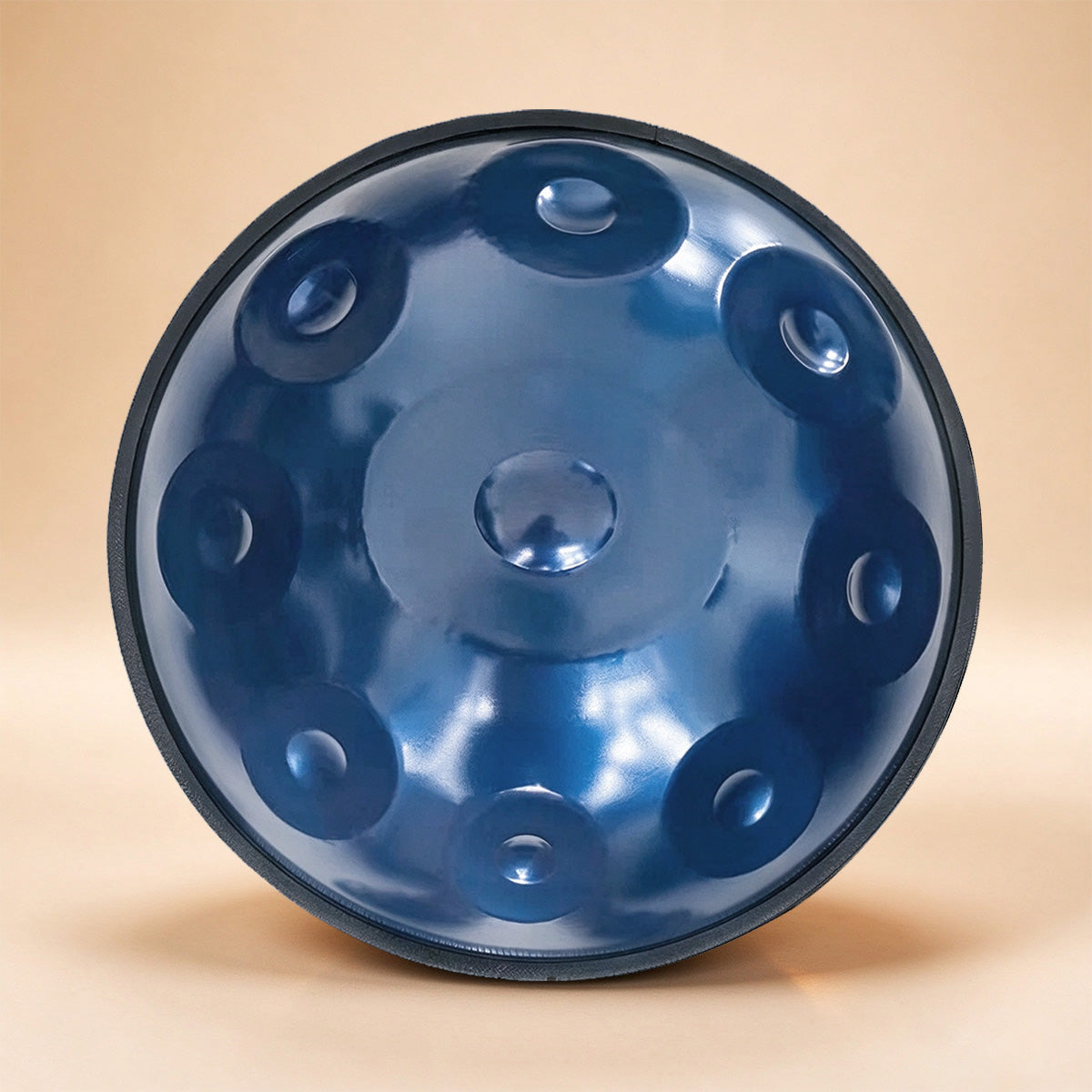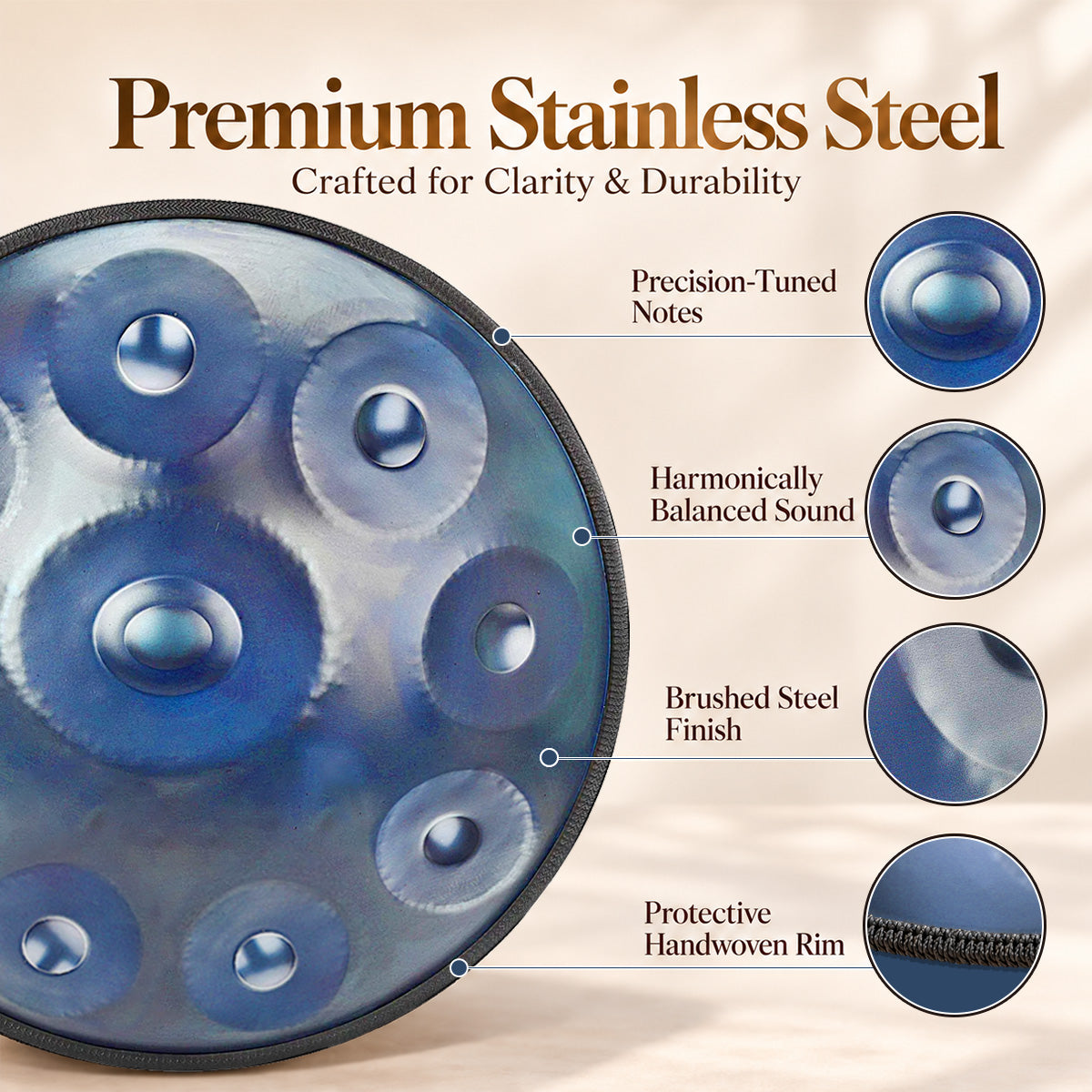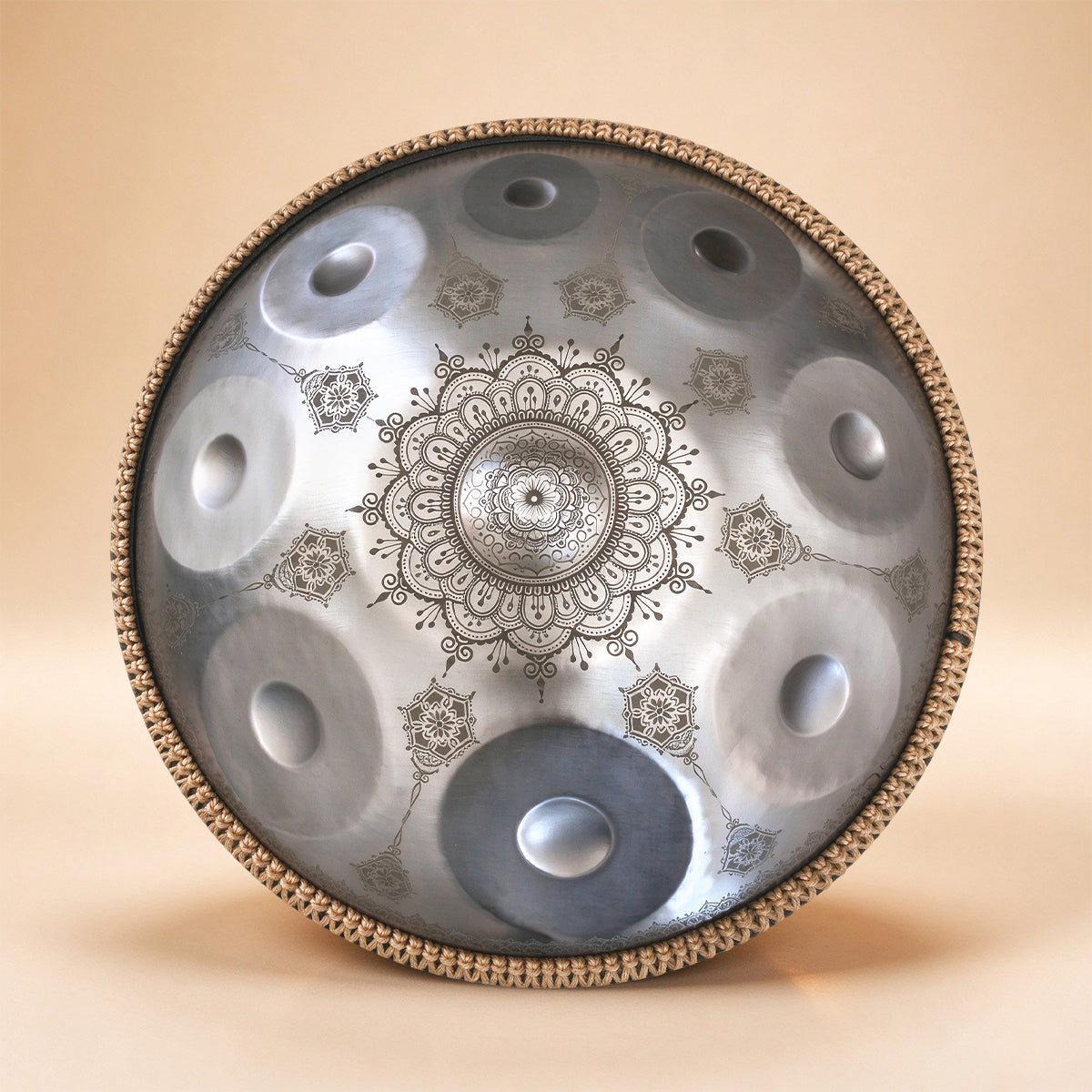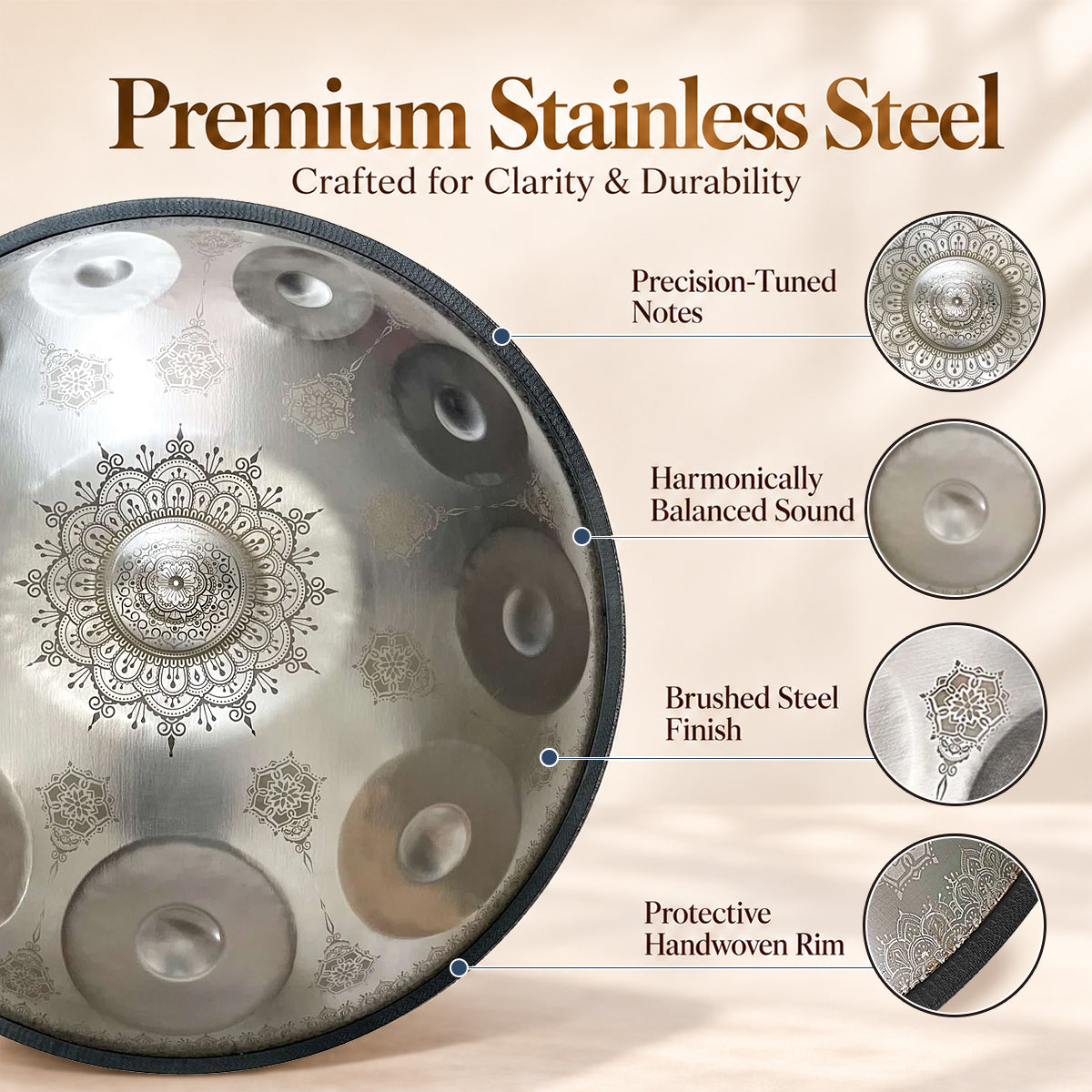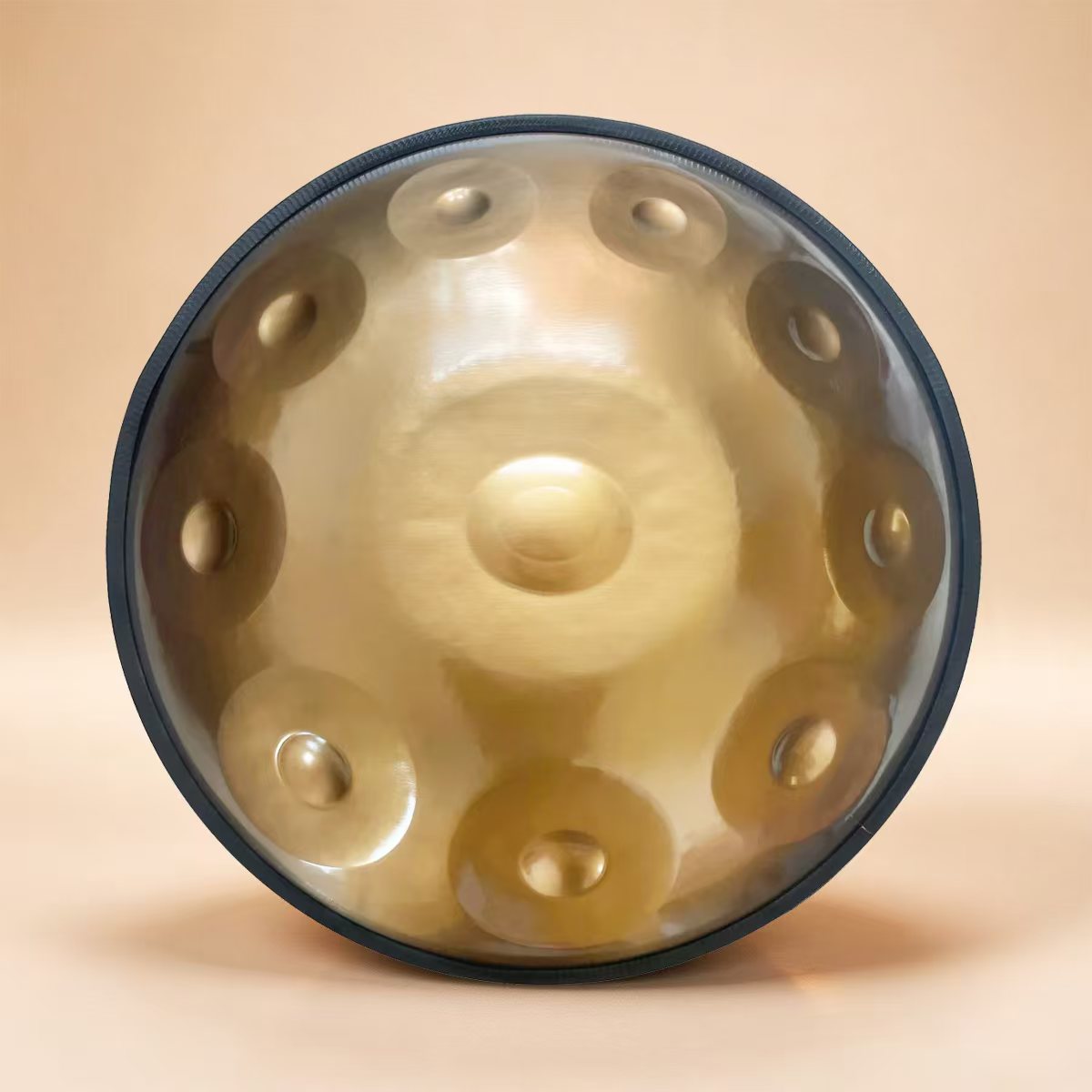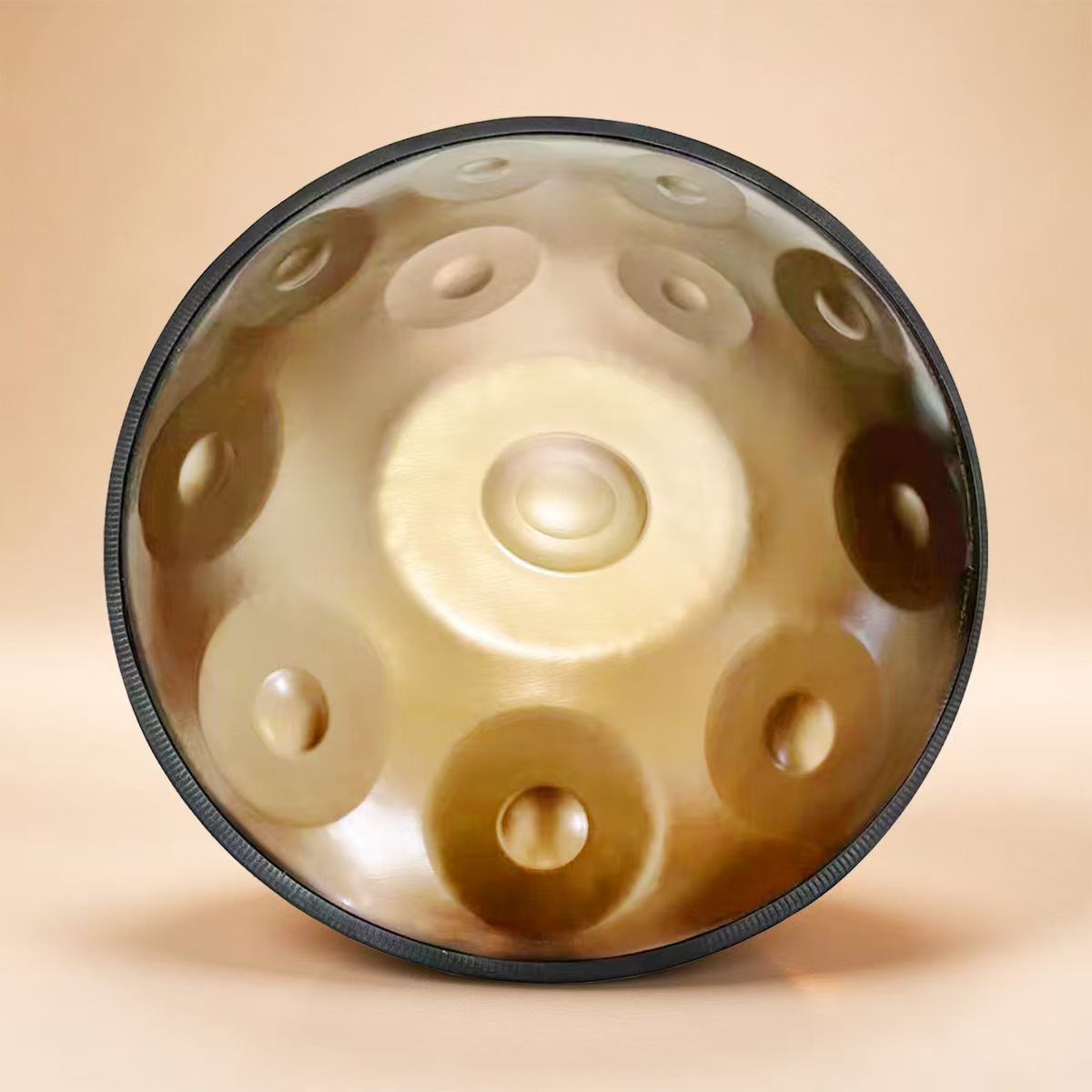
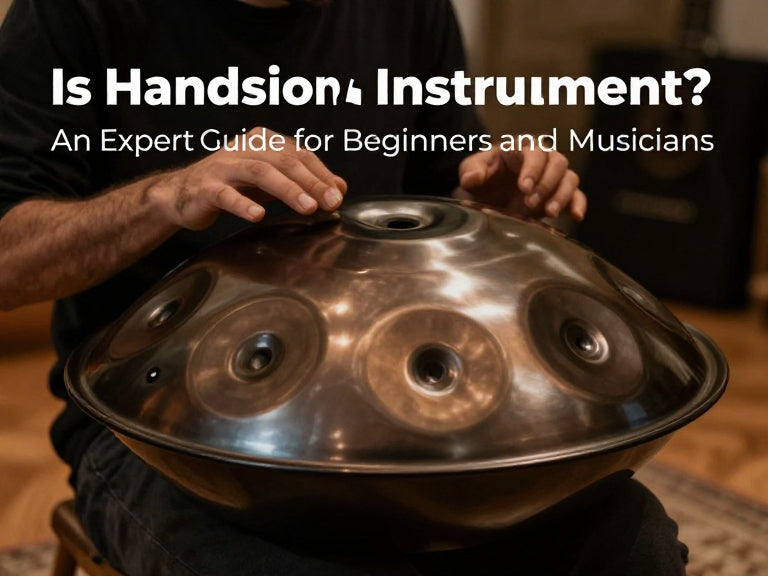
Yes, a handpan is a percussion instrument. You play it by striking its tuned steel tone fields with your fingers or hands, producing distinct musical notes with a resonant, lingering sound. However, unlike many traditional drums, a handpan is designed to produce pitched melodies and harmonies as well as rhythm. That makes it especially appealing to solo musicians, beginners, meditation practitioners, and performers who want an instrument that can create a complete musical atmosphere without a band.

If you are deciding whether to buy a handpan, the important distinction is this: a handpan belongs to the percussion family, but its musical role can be closer to a melodic instrument than to a conventional drum. Understanding that difference will help you choose the right instrument and decide whether it suits your playing style.
Yes. A handpan is a tuned, idiophonic percussion instrument. Its steel body vibrates when you tap the tuned tone fields, producing specific pitches. You do not need drumsticks, strings, or a mouthpiece. Most players use their fingertips and hands to create melodies, chords, rhythmic patterns, and sustained resonances.
Our recommendation: If you want a percussion instrument that can produce recognizable melodies with a relatively gentle learning curve, a handpan is an excellent option. If your priority is loud, complex drum rhythms or a broad chromatic range, compare it with other percussion and melodic instruments before buying.
Table of Contents
Quick Summary: Is a Handpan a Percussion Instrument?
| Question | Short Answer | What It Means for You |
|---|---|---|
| Is a handpan percussion? | Yes, it is a tuned percussion instrument. | You create sound by striking its metal body with your hands or fingers. |
| Does it play melodies? | Yes, within its tuned note layout. | You can play simple melodies, repeated motifs, and layered patterns. |
| Is it like a drum? | Partly, but not exactly. | It produces sound through impact, but its note fields are designed for specific pitches. |
| Is it suitable for beginners? | Often, yes. | A well-chosen scale can make musical exploration approachable without formal theory. |
| Can it replace a full drum kit? | Usually not. | It is better for melodic percussion, intimate performances, and atmospheric music than for powerful backbeats. |
| What should buyers prioritize? | Tuning, tone, build quality, scale, and support. | Do not choose based on appearance or note count alone. |
Why Is a Handpan Classified as a Percussion Instrument?
A handpan is classified as percussion because sound is produced when the player strikes the instrument. More specifically, it is an idiophone: the body of the instrument itself vibrates to create sound, rather than relying on stretched strings, a reed, or a separate drumhead to generate the primary tone.
This distinction matters because not every percussion instrument behaves like a traditional drum. A snare drum is commonly used for sharp rhythmic accents. A cymbal creates a broad wash of sound. A xylophone produces pitched notes from struck bars. A handpan also responds to impact, but its carefully shaped steel tone fields are tuned to specific pitches, allowing the player to perform melodies and repeating harmonic patterns.
Rhythm and melody in one instrument
When a player taps a handpan, the resulting sound has a pitch, an attack, and a decay. By alternating between different tone fields, the player can establish a rhythmic pulse while moving through a melody. The instrument can therefore occupy several musical roles:
- Melodic percussion: Playing a recognizable tune through the instrument's available notes.
- Rhythmic accompaniment: Repeating patterns that support movement or another instrument.
- Ambient performance: Using long resonances, pauses, and overlapping notes to create a spacious sound.
- Solo music: Combining bass notes, upper notes, and rhythmic accents into a self-contained performance.
From our perspective, calling the handpan simply a drum misses its most useful feature. It is a percussion instrument with a strong melodic identity. If you want an instrument that lets you create music without first mastering complex drum rudiments, this combination is a major advantage.
For more context on how the instrument developed, read our guide to handpan origin and history.
How Does a Handpan Work?
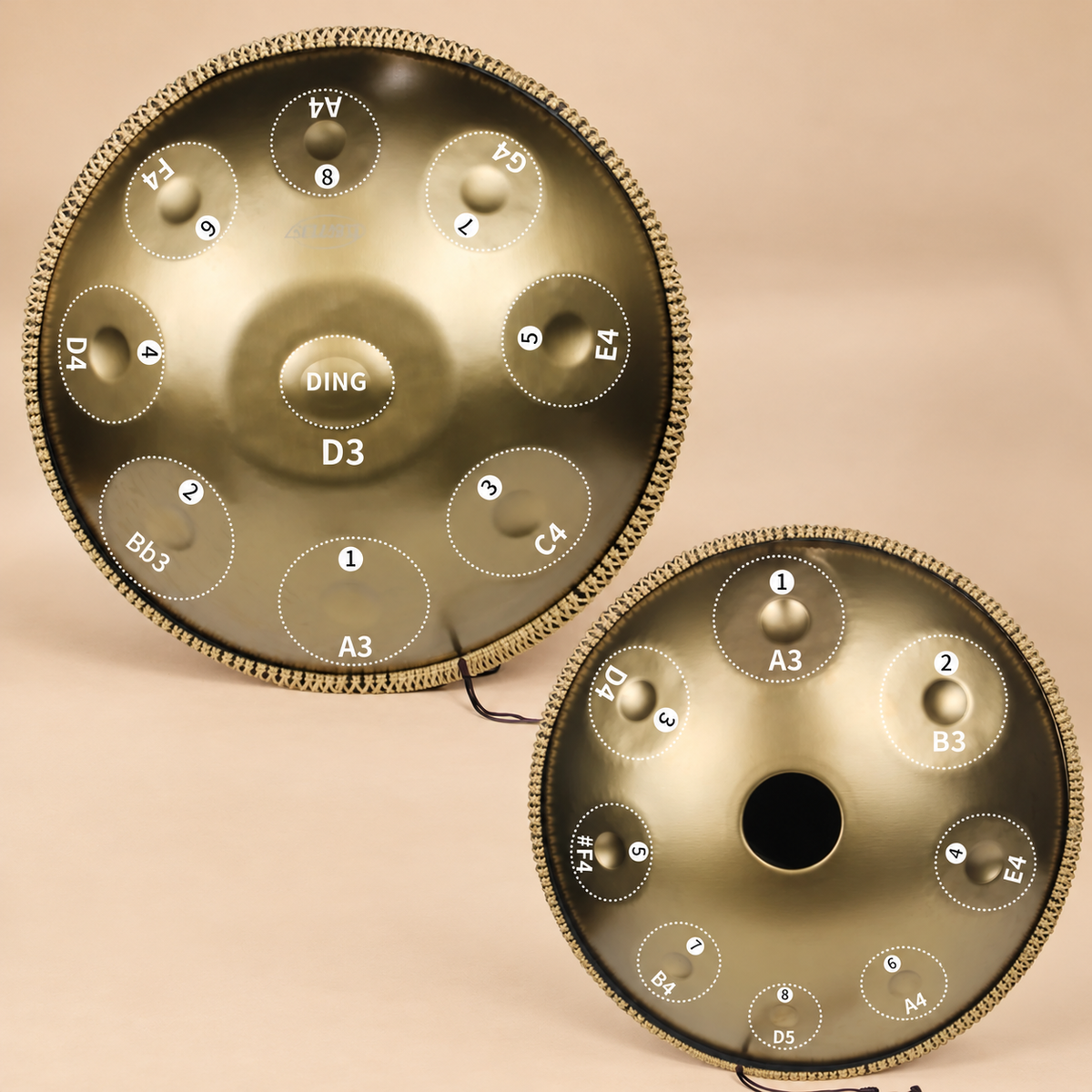
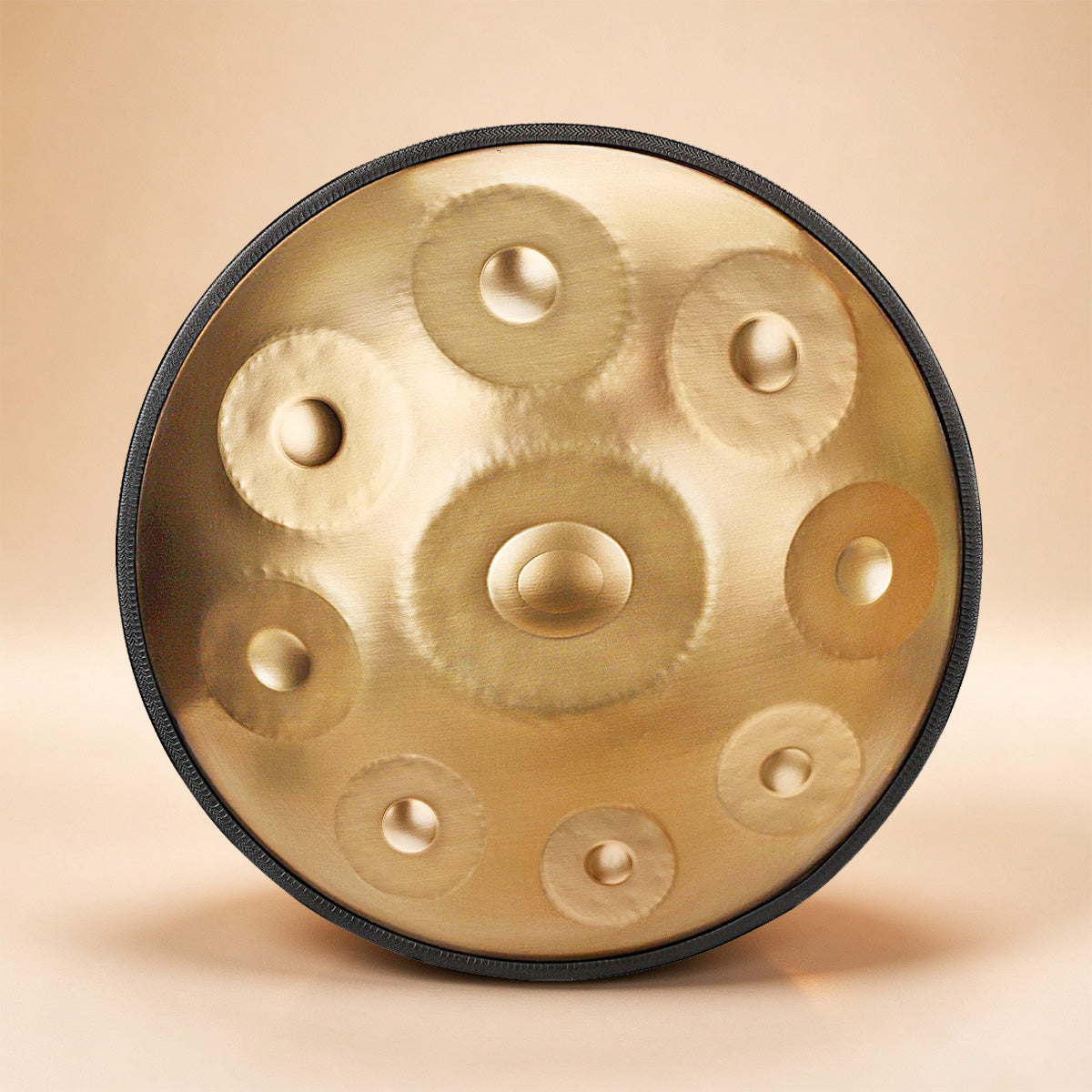
A handpan is generally formed from two shaped metal shells joined together. The upper shell contains a central note, often called the ding, surrounded by additional tuned tone fields. The lower shell commonly includes an opening that helps the instrument's body resonate. Exact designs vary by maker, and those differences can influence the instrument's response and tonal character.
1. The player strikes a tuned tone field
Each tone field is shaped and tuned to produce a particular pitch. A light, controlled fingertip strike excites the metal and produces the intended note. Unlike a drum that primarily emphasizes rhythmic impact, a handpan asks the player to balance timing with touch, accuracy, and note selection.
2. The metal vibrates and produces a pitched sound
The tone field vibrates at frequencies established during the tuning process. Its geometry and the surrounding metal affect how the note behaves. A good handpan should have a clear fundamental pitch and a controlled musical response, although the exact timbre differs between instruments.
3. Resonance gives the handpan its characteristic sustain
After the strike, the note continues to resonate and gradually fades. This sustain is central to the handpan's sound. Notes can overlap, creating a layered effect even when the player performs slowly. However, excessive overlapping can also make a performance sound muddy, particularly in a reverberant room.
4. Touch controls expression
Players vary their dynamics by changing the position, angle, and force of each strike. A hard hit is not automatically better. Striking too aggressively can create harsh attacks, reduce control, and potentially damage the instrument. Consistent, relaxed technique is more useful than raw force.
Benefits and Limitations of the Handpan as a Percussion Instrument
Key benefits
- Accessible musical exploration: Many handpans use a defined scale, which can make improvisation approachable for people without formal music training.
- Melody and rhythm together: One player can create a repeating groove while moving through pitched notes.
- Expressive dynamics: Small changes in touch can create subtle differences in attack, volume, and phrasing.
- Portable performance format: A handpan can work for home practice, small gatherings, outdoor sessions, and intimate performances when carried and handled properly.
- Distinctive acoustic tone: Its resonant steel sound offers a different texture from wood-based percussion, drum kits, or electronic pads.
Players interested in using music for relaxation may also appreciate the handpan's sustained tones and the slower playing styles often associated with it. However, music affects people differently; a handpan should not be presented as a guaranteed treatment for stress, anxiety, or a medical condition. Explore our article on handpan music benefits for a broader discussion.
Important limitations
- Limited note selection: Most handpans provide a particular set of pitches rather than every note available on a piano. Some melodies and arrangements will not fit the instrument's scale.
- Scale-specific playing: A handpan can sound harmonious within its intended note set, but that does not make every note combination musically effective.
- Technique still matters: Beginners may produce dull, uneven, or overly loud notes until they learn controlled fingertip strikes.
- Tuning requires care: Impact, poor storage, or unsuitable handling can affect tuning. Repairs and retuning may require a specialist.
- It is not a substitute for every percussion instrument: A handpan is not the best choice when the job requires a loud backbeat, a broad range of drum sounds, or a full chromatic melody.
In most professional situations, the handpan is worth buying when its distinctive tone and melodic layout fit the music you intend to make. It is less practical as a one-instrument solution for every genre, stage, or recording requirement.
Handpan vs. Other Percussion Instruments: Which Is Better?
The best instrument depends on whether you prioritize melody, rhythm, portability, volume, or versatility. A handpan is not universally better than a drum or tongue drum; it is better for specific jobs.
| Instrument | Sound Production | Primary Strength | Main Limitation | Best Use Case |
|---|---|---|---|---|
| Handpan | Struck, tuned steel tone fields | Melody, rhythm, and sustained resonance | Fixed note set and scale-dependent repertoire | Solo playing, ambient music, intimate live sets |
| Tongue drum | Struck, tuned metal tongues | Approachable melodic patterns and clear note separation | Sound character and dynamic range differ from a handpan | Beginners, classrooms, casual music-making |
| Frame drum | Struck membrane | Rhythmic expression and traditional patterns | Usually less suited to playing a full pitched melody | Accompaniment, folk music, rhythm-focused performance |
| Djembe | Struck membrane | Strong bass, open tones, and rhythmic projection | Does not provide a handpan-style tuned note layout | Ensembles, group drumming, energetic performances |
| Xylophone | Struck tuned bars | Clear pitches and structured melodic playing | Often needs mallets and a suitable stand; less compact in many configurations | Music education, ensembles, pitched percussion |
| Electronic percussion pad | Electronic triggering and sound playback | Wide sound selection, volume control, and recording integration | Requires electronic equipment and does not replicate the exact acoustic response | Production, amplified performances, flexible sound design |
Cosmos Handpan also offers tongue drums, which are worth comparing if you want an accessible melodic percussion instrument but prefer a different feel, sound, or budget. Listen to recordings of both instruments before deciding; their timbres and playing responses are not interchangeable.
Is a handpan better than a tongue drum?
Neither is automatically better. Choose a handpan if you prefer its nuanced steel resonance, expressive fingertip playing, and sound associated with contemporary handpan performance. Consider a tongue drum if you want a different tonal character and a straightforward instrument for casual playing or group activities. Compare the actual models rather than assuming every instrument in either category offers the same tuning quality or sound.
Handpan Pros and Cons
| Pros | Cons |
|---|---|
| Combines melody and rhythm in a compact acoustic instrument. | Its fixed scale restricts some musical arrangements. |
| Can be approachable for beginners who want to improvise. | Good tone and even tuning depend on careful manufacturing. |
| Offers sustained notes that support atmospheric and reflective music. | Overlapping notes can become muddy in acoustically live spaces. |
| Works well for solo practice and small performances. | It may not provide the projection or rhythmic power required for some ensembles. |
| Allows nuanced dynamics through hand technique. | Strikes, drops, and poor storage can cause damage or tuning problems. |
| Does not require amplification for many small acoustic settings. | Outdoor, noisy, or large-venue performances may still require microphones and sound reinforcement. |
Who Should Use a Handpan—and Who Does Not Need One?
A handpan is a strong choice for
- Beginners: Especially those who want to make musical phrases before learning advanced theory or traditional percussion techniques.
- Songwriters and instrumentalists: It can add a distinctive melodic-percussion layer to acoustic arrangements, recordings, or live sets.
- Meditation and movement facilitators: Its sustained sound can support reflective sessions, provided the instrument is appropriate for the setting and not represented as a medical treatment.
- Traveling or solo musicians: It offers a self-contained acoustic sound, although the size, weight, and protective case should be considered before frequent travel.
- Music educators: A carefully selected instrument can help introduce pulse, dynamics, pitch, and listening skills.
If you are new to the instrument, start with our practical handpan for beginners guide. It is more useful to learn basic touch, timing, and note transitions on one well-chosen instrument than to buy several instruments before developing a consistent playing technique.
A handpan may not be the right choice if
- You primarily want powerful, physically driving drum rhythms.
- You need a complete chromatic range for complex classical or jazz arrangements.
- You expect one instrument to cover every key and every musical style.
- You need a rugged instrument for rough handling, unsupervised transport, or high-impact performance.
- You are unwilling to protect the instrument, learn controlled strikes, or check tuning quality before purchase.
For heavy-duty rhythmic applications, a drum designed for projection is usually the more practical purchase. For complex melodic arrangements, a keyboard or another instrument with a wider pitch range may be more suitable. Buy the handpan because its particular strengths match your needs—not simply because it is popular or visually distinctive.
Buying Considerations: How to Choose the Right Handpan
Once you decide that a handpan fits your musical goals, the next step is choosing a model. Note count is useful, but it should not be the only factor. A well-made instrument with a comfortable note layout and dependable tuning is usually a better investment than a larger instrument that is difficult to control or does not suit your preferred music.
1. Choose the scale before comparing note counts
The scale determines which pitches are available and strongly influences the melodies you can play. A D Minor handpan is a common option for players who enjoy a reflective, atmospheric sound, but scale preference is personal. Listen to several scales and try playing slowly along with recordings before choosing. If you already work with a singer or ensemble, check whether the instrument's pitches fit the music you intend to perform.
2. Decide how many notes you genuinely need
A 9-note handpan can be a practical starting point for beginners because it provides a manageable layout for learning touch and building simple patterns. A model with more notes can expand melodic options, but extra notes do not automatically make an instrument better. They can increase the learning curve and may be unnecessary if you mainly play improvisational or meditative music.
| Configuration | Typical Advantage | Consider Before Buying | Best-Fit Player |
|---|---|---|---|
| 9 notes | Manageable layout and straightforward improvisation | Some melodies may require pitches outside the available scale | Beginners and casual solo players |
| 10 notes | Additional melodic options without a very large layout | Check note placement and whether the added pitches are useful to your repertoire | Players developing more varied patterns |
| 12 notes | More available pitches within the instrument's design | More notes do not guarantee better tuning, tone, or musical fit | Players who have a clear need for the additional range |
Explore the available 9-note handpans, 10-note handpans, and 12-note handpans from Cosmos Handpan to compare configurations. Treat these categories as starting points, not as a ranking in which more notes always means higher quality.
3. Evaluate tuning and note separation
Play each tone field separately and listen for a stable pitch, clear attack, and appropriate sustain. Then play adjacent notes and simple combinations. The notes should work together musically without obvious unwanted buzzing, rattling, or distracting dissonance caused by a manufacturing or tuning problem. A handpan can have a naturally complex timbre, so do not confuse normal resonance with a defect; if uncertain, ask the seller for a clear recording of individual notes as well as a musical demonstration.
4. Understand the tuning-frequency option
Some handpans are offered at 432 Hz or 440 Hz reference tuning. These figures refer to tuning standards for a reference pitch, not to a guarantee that one instrument sounds warmer, healthier, or more relaxing than the other. The choice matters most when you plan to play with other instruments, recorded music, or a group that uses a specific tuning reference. Match your intended musical context rather than buying based on unsupported claims about special effects.
5. Check the steel, finish, protection, and after-sales support
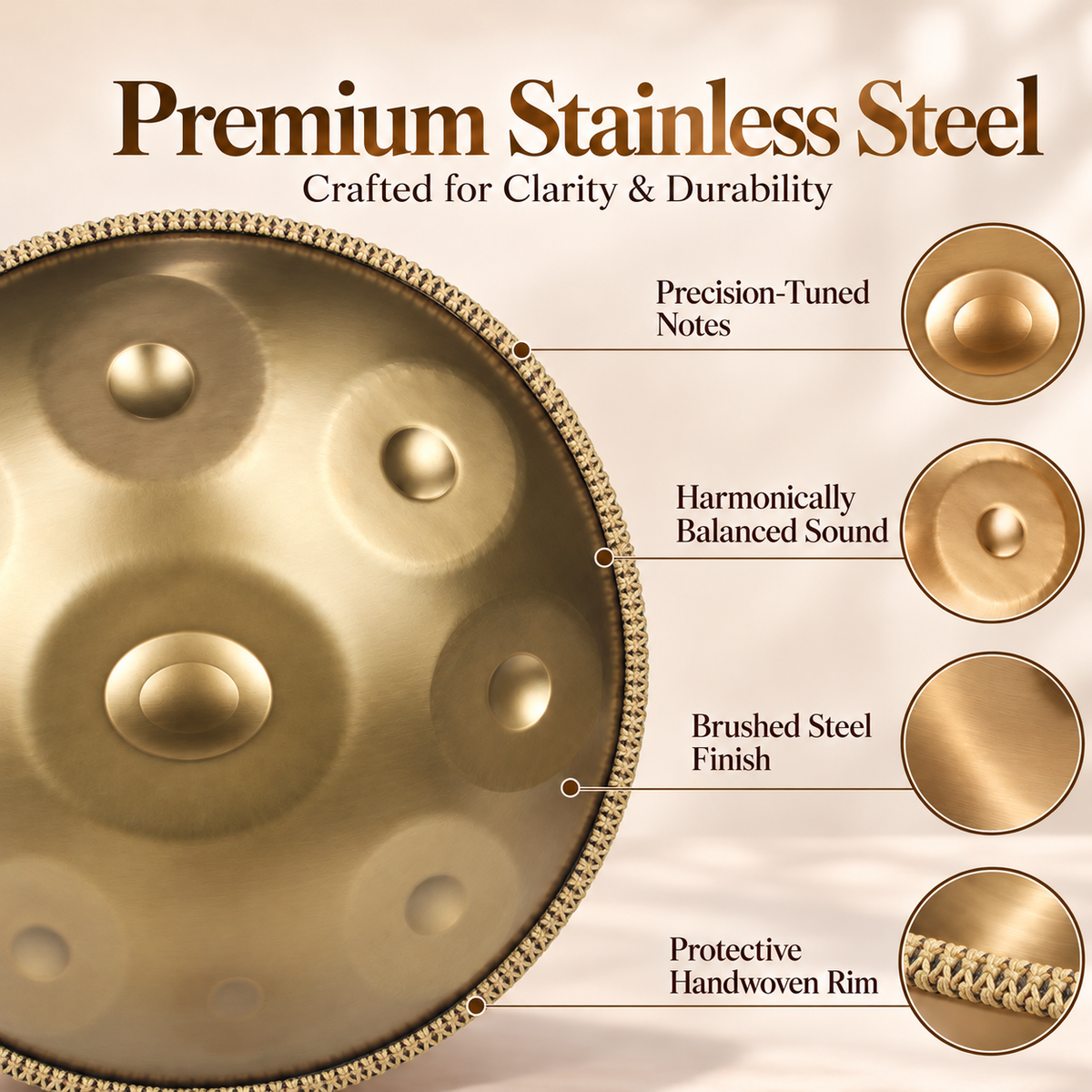
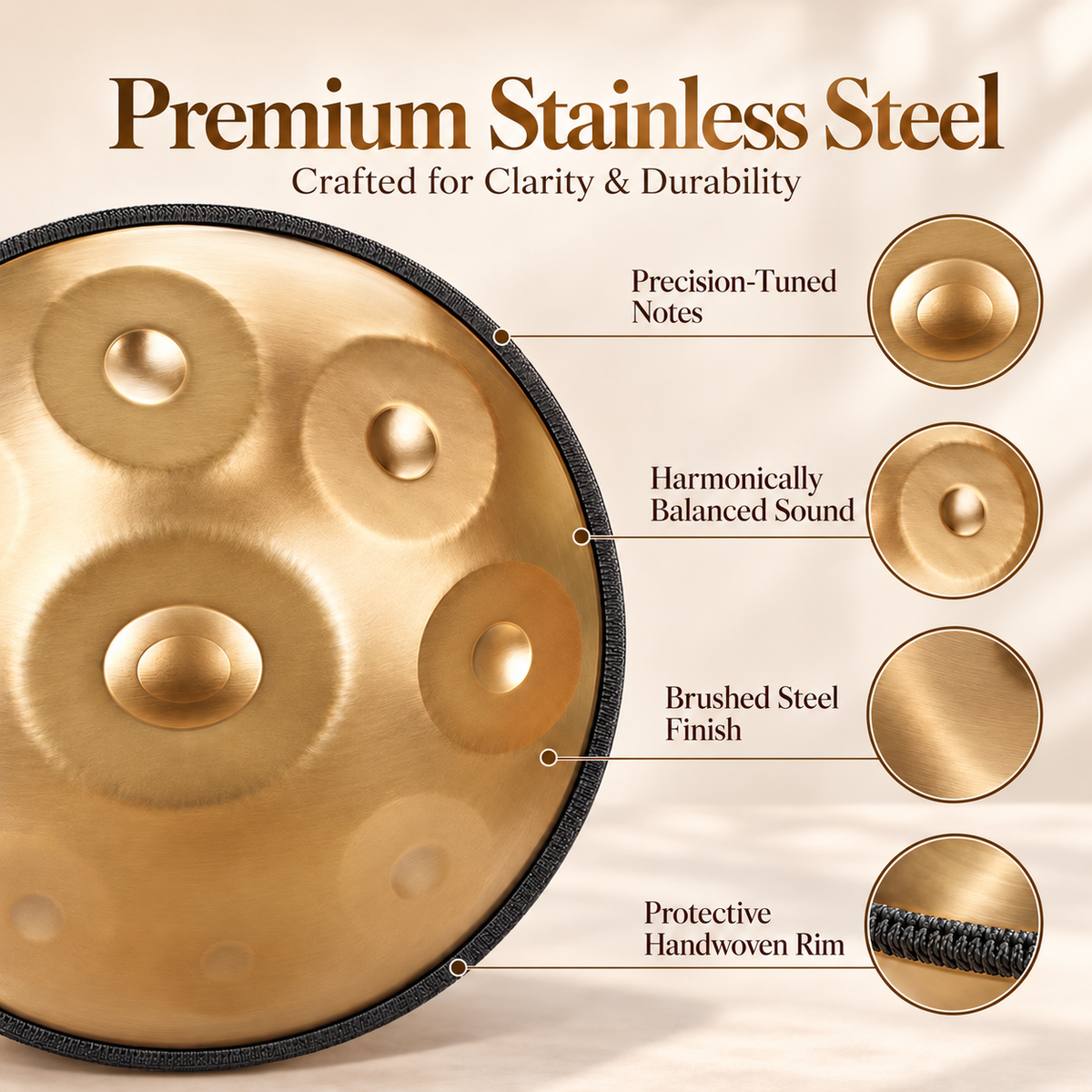
Ask the seller about the material, care requirements, protective packaging, warranty terms, and the process for handling tuning problems. Steel finishes vary, and appearance alone does not tell you whether an instrument is well tuned. A protective carry bag is particularly useful because an accidental impact can be costly. A stand can improve playing comfort, while a cleaning cloth helps maintain the surface according to the manufacturer's care instructions.
There is no single international specification that guarantees every handpan will sound good. Use basic quality-control principles: clear product specifications, consistent demonstrations, transparent return terms, and credible support are more meaningful than vague claims about being "professional grade."
Is Buying a Handpan Worth the Cost?
A handpan is worth the cost when you will use its particular acoustic sound regularly. Its value is not measured by note count alone. It depends on the consistency of the tuning, the musical response, how comfortable the layout feels, and whether the instrument supports the type of playing you want to do.
For a beginner, a reliable 9-note instrument can be a sensible investment if it has clear tuning, suits your preferred scale, and includes appropriate protection. Spending more for additional notes makes sense when you can identify specific melodies or performance requirements that the added pitches will support. If you are still uncertain whether you enjoy the handpan's playing technique, listen to live demonstrations or attend a workshop before committing to a premium model.
For commercial users such as performers, educators, and session facilitators, consider the cost of transport, maintenance, replacement protection, and the instrument's suitability for the venue. A handpan that sounds excellent in a quiet room may need careful microphone placement in a larger or noisier space. Buying the most expensive model without considering these factors is not a sound business decision.
Common Mistakes When Choosing or Playing a Handpan
Mistake 1: Assuming every percussion instrument is a drum
Percussion is a broad family. The handpan's pitched tone fields make it different from an unpitched drum, and its strengths are best understood as melodic percussion.
Mistake 2: Choosing by appearance alone
A beautiful finish cannot compensate for poor tuning or an uncomfortable layout. Listen to the instrument, compare individual notes, and review the seller's support policy before buying.
Mistake 3: Assuming more notes always means better value
Additional notes are useful only when they expand the music you actually want to play. For many beginners, control and musical confidence matter more than maximum range.
Mistake 4: Hitting harder to make the sound louder
Controlled technique usually produces a cleaner tone than forceful striking. Excessive impact can make notes harsh and increase the risk of damage. If you need more volume for a performance, consider appropriate amplification rather than striking harder.
Mistake 5: Ignoring the instrument's care requirements
Protect the handpan from impacts and follow the manufacturer's guidance for storage, cleaning, moisture, and temperature. Avoid improvising with aggressive cleaners or applying products that the manufacturer has not approved.
Mistake 6: Expecting every scale to fit every song
A handpan's available notes shape its musical possibilities. Check the scale before buying if you want to play specific songs or perform with other musicians. For recorded music, an appropriate digital instrument or arrangement may be more flexible; see our guide to digital handpan instruments.
Expert Recommendation: Which Handpan Should You Start With?
For most first-time buyers, we recommend prioritizing reliable tuning, a scale you genuinely enjoy, and a manageable note layout over a high note count. A 9-note D Minor model is a reasonable starting point if you want to learn improvisation, explore gentle melodic patterns, and play without needing an extensive music-theory background.

Cosmos Handpan Golden Elegance — 9 Notes, D Minor
This beginner-friendly handpan features a golden finish and a D Minor 9-note layout designed for accessible improvisation. It is intended for first-time buyers, home practice, relaxation-focused playing, and small performances.
- 9-note D Minor layout
- Available tuning options: 432 Hz or 440 Hz
- Clear sustain and a smooth tonal character
- Gift set includes a protective carry bag, handpan stand, pair of mallets, and cleaning cloth
Before ordering, confirm which tuning option you need, check the current product specifications, and ensure the scale fits your musical plans.
View the Golden Elegance 9-Note HandpanCosmos Handpan is one option to consider when comparing handpans for beginner and developing players. We recommend judging any brand by the instrument's actual sound, tuning consistency, product information, and customer support—not by marketing language alone. You can learn more about the company through the Cosmos Handpan story and contact the team through the Cosmos Handpan contact page if you need help comparing models.
My practical advice is simple: choose the instrument you can play comfortably and imagine using consistently. A well-matched handpan that encourages regular practice will deliver more value than a more complicated model that stays in its case.
Frequently Asked Questions
1. Is a handpan a percussion instrument?
Yes. A handpan is a tuned idiophonic percussion instrument. Its metal body vibrates when the player strikes the tone fields with their hands or fingers, producing distinct pitches that can be arranged into melodies and rhythmic patterns.
2. Is a handpan a drum or a melodic instrument?
It belongs to the percussion family, but it also functions as a melodic instrument. Unlike many conventional drums, a handpan has tuned note fields that allow players to perform melodies, harmonies, and rhythmic accompaniment.
3. Do you need musical experience to play a handpan?
No formal musical training is required to begin. A scale-based note layout can make exploration approachable, although consistent timing, controlled strikes, dynamics, and clean note transitions still take practice.
4. Is a handpan easier to learn than a drum?
It depends on the goal. Beginners may find simple handpan melodies approachable, while learning advanced dynamics and precise rhythmic control still requires practice. A drum may be easier for someone focused exclusively on basic beats, while a handpan may suit someone who wants both melody and rhythm.
5. What is the difference between a handpan and a tongue drum?
Both are tuned percussion instruments, but their construction, playing response, and tonal character differ. A handpan uses shaped steel tone fields, while a tongue drum produces sound through cut tongues in its shell. Compare real recordings and individual models before choosing.
6. How many notes should a beginner handpan have?
A 9-note handpan is a practical starting point for many beginners because the layout is manageable and supports improvisation. Choose 10 or 12 notes when you have a clear reason to expand your melodic options, rather than assuming more notes automatically mean better quality.
7. Is a 432 Hz handpan better than a 440 Hz handpan?
Neither tuning reference is universally better. Choose the one that suits the other instruments, recordings, or musical group you plan to play with. Claims that one reference automatically creates superior health or relaxation outcomes should not replace practical listening and compatibility checks.
8. Can a handpan replace a drum kit?
Not in most situations. A handpan can provide rhythm and melody, but it does not offer the same range of drum sounds, projection, or rhythmic roles as a full drum kit. It is better viewed as a distinctive melodic-percussion instrument than as a universal drum replacement.
9. Can a handpan be used for meditation or music therapy?
Its sustained, resonant tones may be suitable for meditation sessions or reflective music-making. However, personal responses vary, and a handpan should not be treated as a substitute for qualified medical or mental-health care.
10. What should I check before buying a handpan?
Check the scale, tuning reference, note layout, clarity of individual pitches, unwanted buzzing, sustain, construction, protective case, return policy, and after-sales support. If you cannot test it in person, request clear recordings of each note and a demonstration of the instrument played at different dynamics.
References
The following specialist and educational resources provide useful background on percussion classification, instrument construction, and handpan practice. Use them alongside actual instrument demonstrations when making a purchase decision.
- Encyclopaedia Britannica — Percussion Instrument. Background on the percussion family and how percussion instruments produce sound.
- Hangblog — Hang and Handpan Resources. Community-oriented information about the instrument, playing, and its development.
- Hang Music — Handpan and Hang Information. Additional context on the instrument and its musical characteristics.
Final Verdict
Yes, a handpan is a percussion instrument—but it is a melodic percussion instrument with a distinctive role. It combines struck sound production with tuned pitches, allowing one player to create rhythm, melody, and sustained resonance in a single performance.
If you want an approachable instrument for solo music, atmospheric arrangements, or expressive acoustic playing, a handpan is worth serious consideration. Prioritize tuning quality, scale compatibility, comfortable note placement, and after-sales support over appearance or note count alone. For many beginners, a carefully chosen 9-note model is a sensible starting point; more advanced configurations are worth considering when your musical needs justify them.
Explore the Cosmos Handpan collection to compare available instruments and choose a model that fits the way you want to play.