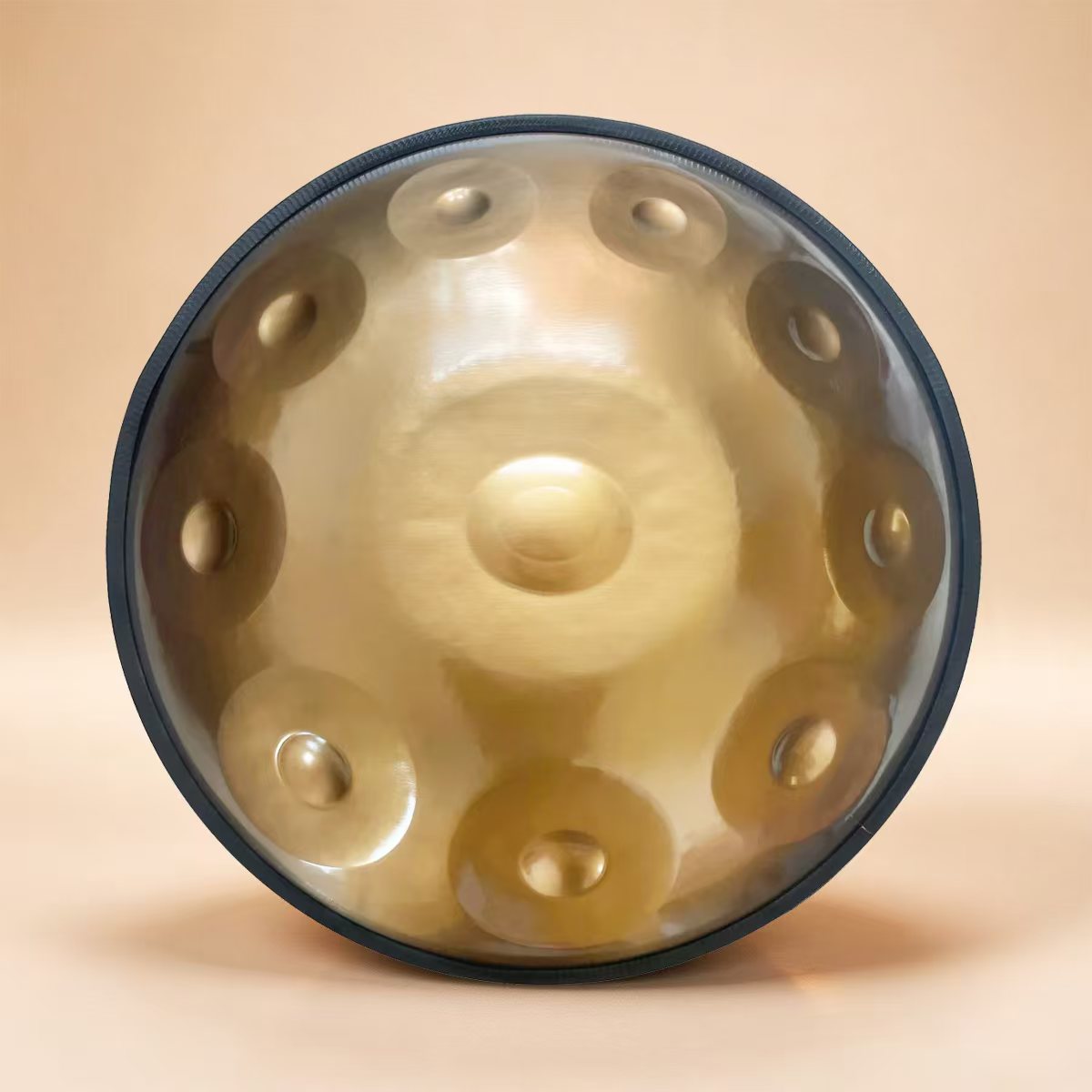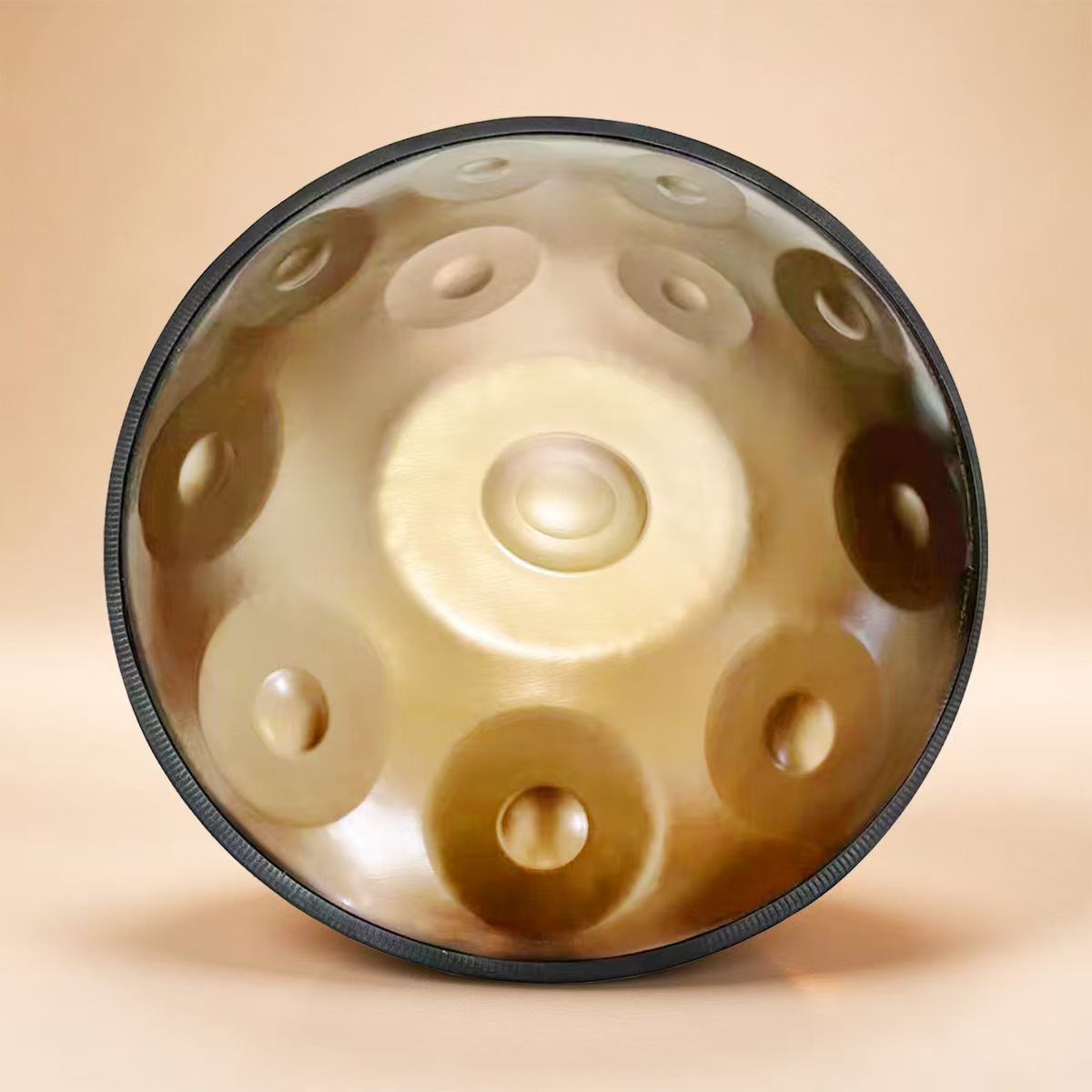
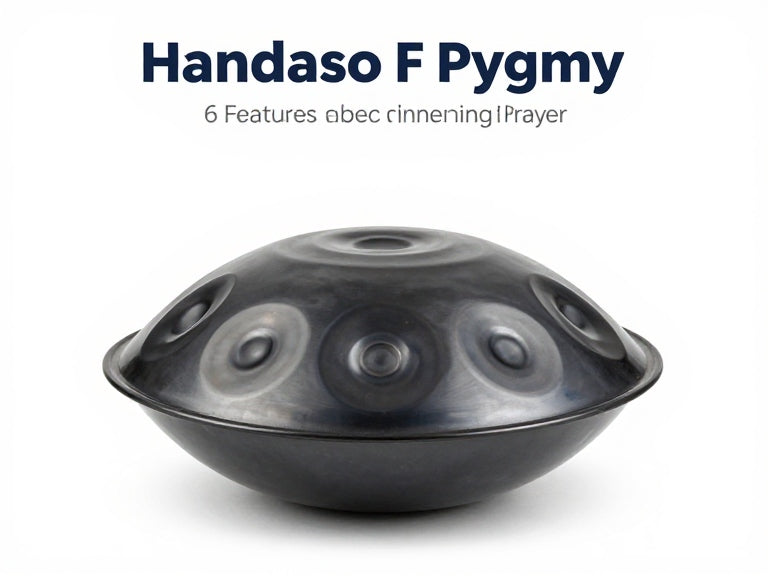
Handpan Scale Guide | F Pygmy | Cosmos Handpan
The handpan F Pygmy scale is worth considering if you want an instrument with a distinctive, atmospheric character, expressive melodic possibilities, and a sound that works particularly well for slow improvisation. But it is not automatically the best choice for every beginner. The scale's note arrangement, musical intervals, tuning, and playing feel matter more than the name printed on a product page.

If you are comparing handpan scales, our advice is to listen to an actual F Pygmy instrument before choosing it. A scale can look attractive in a specification list but feel completely different under your hands. Below, we explain six practical features, who benefits most from this scale, what to check before purchasing, and when another handpan may be a better investment.
Quick Answer: What Is a Handpan F Pygmy?
A handpan F Pygmy is a steel percussion instrument arranged around an F-centered Pygmy scale. Its note selection creates a particular melodic atmosphere, often suited to spacious improvisation, meditative playing, and expressive musical exploration. The exact mood and available musical patterns depend on the instrument's tuning, note layout, and maker's arrangement.
Our recommendation: Choose an F Pygmy handpan because you genuinely like its sound and note relationships, not simply because the scale is described as exotic or relaxing. Beginners should prioritize a comfortable note layout, stable tuning, clear sustain, and a good demonstration recording. Experienced players should pay closer attention to the precise note set and how it complements their existing instruments.
| Feature | What to look for | Why it matters |
|---|---|---|
| 1. F-centered tonal identity | Confirm the actual note list and tonal center | Determines the instrument's melodic character |
| 2. Pygmy-style note relationships | Listen to the intervals and transitions | Shapes the musical phrases you can create |
| 3. Expressive sound and sustain | Clear attacks, balanced notes, controlled resonance | Improves improvisation and recording quality |
| 4. Note layout and playability | Comfortable spacing and accessible playing field | Reduces awkward hand movement |
| 5. Tuning and craftsmanship | Consistent pitch, clean note separation, stable construction | Protects musical usability over time |
| 6. Versatility and musical fit | Match the scale to your playing goals | Helps you avoid buying an instrument you rarely use |
What Is a Handpan F Pygmy?
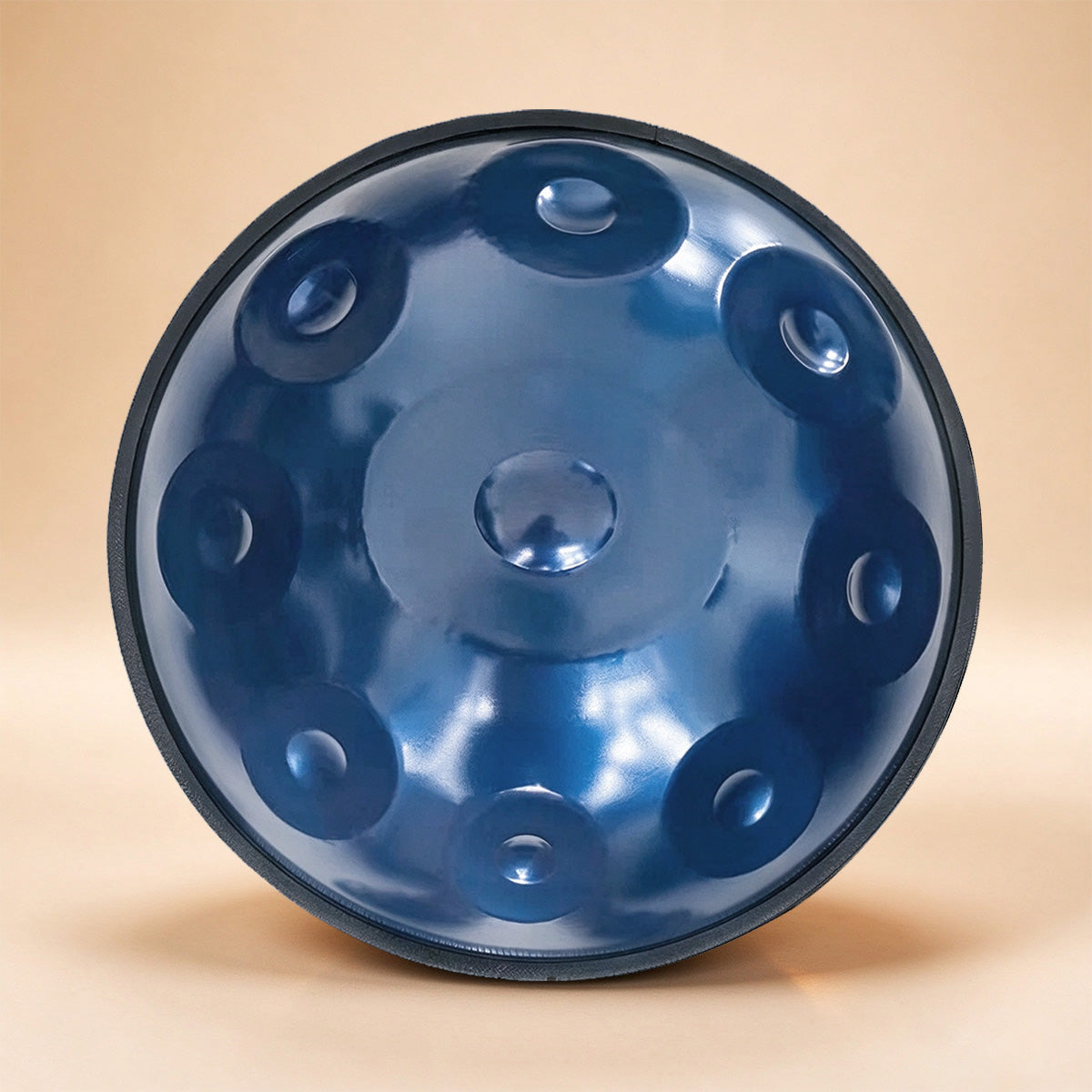
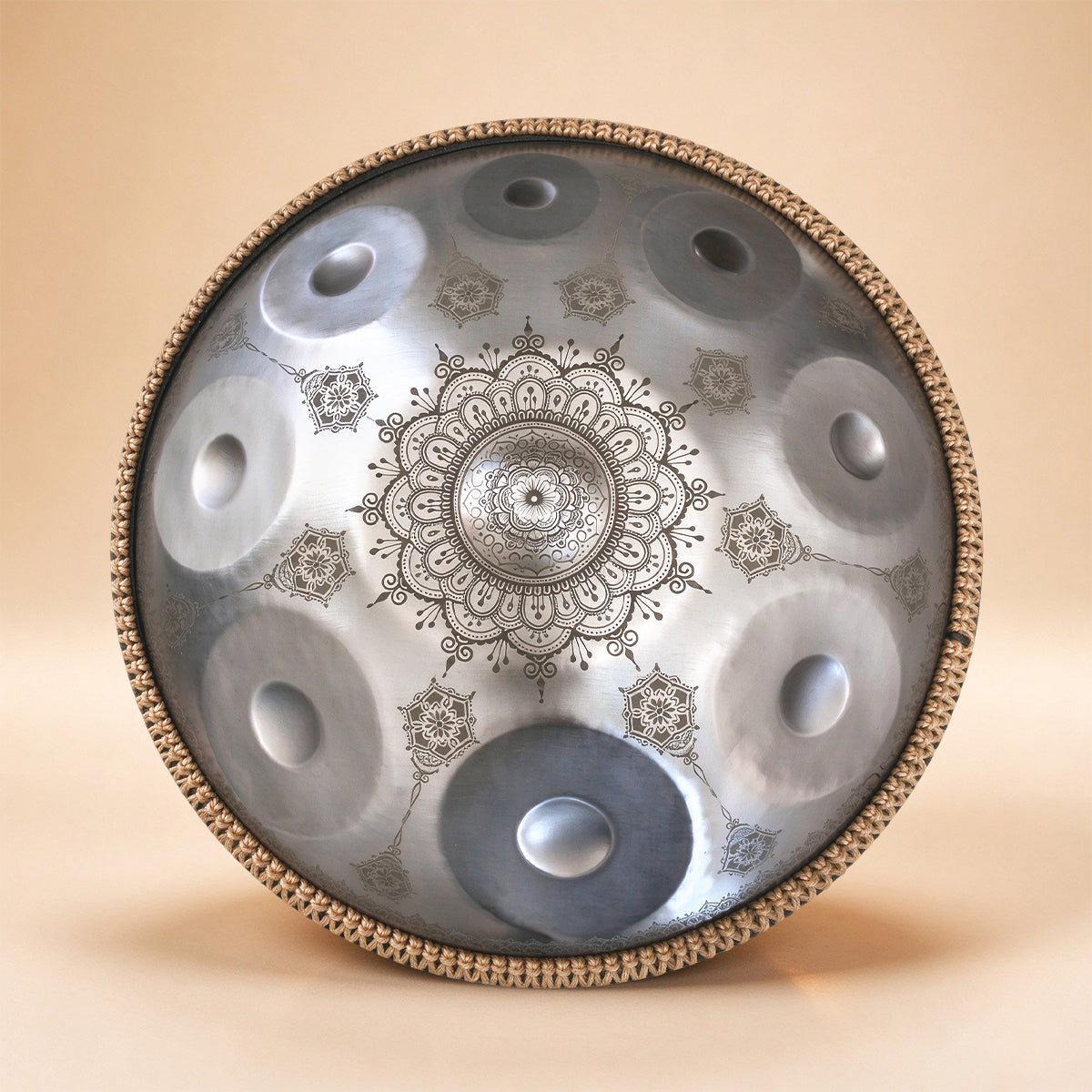
A handpan is a convex steel percussion instrument played mainly with the hands and fingers. Its central note and surrounding tone fields are carefully shaped and tuned so that each playing area produces a defined pitch. The player combines individual notes, repeated patterns, accents, and pauses to create melody and rhythm.
F Pygmy refers to a scale configuration centered around F and associated with the Pygmy family of handpan scales. The name describes a musical arrangement, not a universal manufacturing specification. Different makers may offer variations in note selection, octave placement, and total number of notes. That distinction is important: two instruments marketed as F Pygmy may not provide exactly the same playing experience.
For that reason, we do not recommend buying based on the scale label alone. Ask for the complete note list, a clear sound sample, and the exact tuning reference. If a seller cannot provide those details, you do not have enough information to make a confident purchase.
What Makes the F Pygmy Scale Different?
The appeal is its particular combination of pitches and intervals. Instead of approaching the instrument like a conventional piano keyboard, players explore a set of related notes arranged around the handpan's central tone. Certain note combinations may feel naturally connected, making it easier to develop repeating motifs and flowing improvisations.
However, there is no single emotional response that every listener will have. Descriptions such as mystical, meditative, dark, or uplifting are subjective. Listen to the actual instrument and decide whether its musical character suits you.
6 Features of Handpan F Pygmy
1. A Distinctive F-Centered Tonal Identity
The first feature is the instrument's F-centered tonal organization. The central note provides an important reference point for improvisation, while the surrounding notes create the melodic options available to the player.
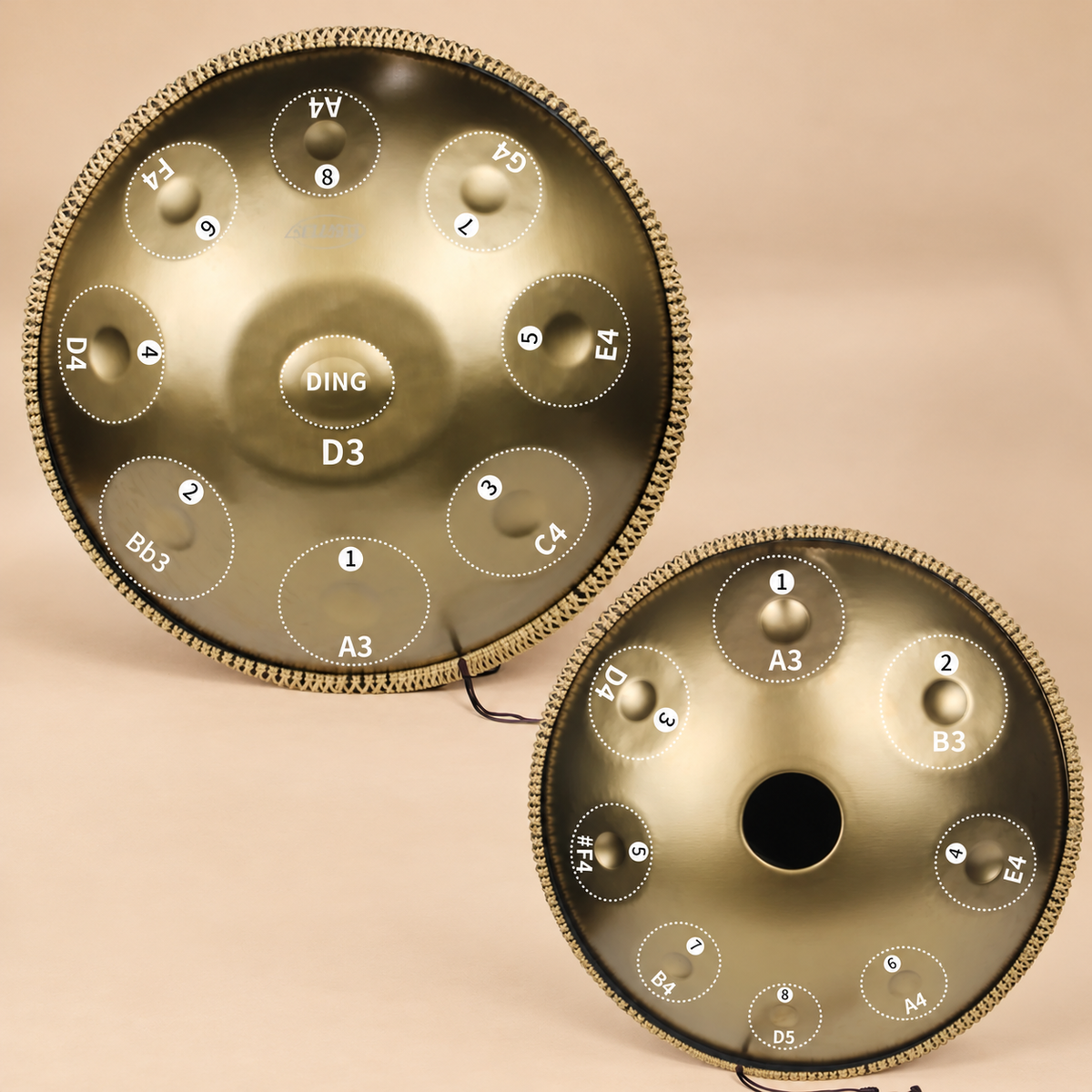
In practical terms, this means you should check more than the word "F" in the product title. Ask for the complete note chart. Confirm the octave and spelling of each note, and check whether the instrument includes any additional notes outside the core arrangement. These details determine which melodies and musical ideas are comfortable to play.
For beginners, a clearly documented note layout makes learning easier. You can use a handpan notes chart to understand how note names relate to the playing surface. If you are still learning musical notation, our guide to understanding handpan notes is a useful starting point.
Our practical advice: Do not assume every F Pygmy has an identical note sequence. Verify the actual configuration before comparing prices.
2. Pygmy-Style Intervals That Encourage Melodic Exploration
A scale is not simply a list of notes. The relationships between those notes shape how a melody feels and how easily one phrase leads into another. Pygmy-style arrangements are often selected by players who enjoy exploring atmospheric patterns rather than relying on familiar major-scale melodies.
For many players, the appeal is the ability to create a coherent musical phrase with a relatively small collection of notes. Repeated patterns, alternating tones, and changes in emphasis can produce a surprisingly wide range of musical expressions.
That does not mean the scale automatically makes improvisation easy. You still need to develop timing, touch, listening skills, and control over dynamics. A good scale gives you useful musical material; it does not replace practice.
Who benefits: Players who enjoy open-ended improvisation, ambient music, and experimenting with short melodic phrases. If your main goal is to reproduce familiar pop melodies, compare the F Pygmy note set with other scales before deciding.
3. Expressive Resonance and Sustained Sound
Handpan sound is shaped by steel selection, shell construction, note-field geometry, tuning work, and the player's technique. A well-made F Pygmy instrument should produce notes that speak clearly, remain distinguishable, and blend musically when several tones are played in sequence.
Sustain is particularly important for slow music. A note that continues resonating after the initial strike can overlap with the next note and create a fuller musical texture. Too much uncontrolled resonance, however, can make the instrument sound muddy. A short or uneven sustain can make phrases feel disconnected.
When evaluating a sound sample, listen with headphones if possible. Pay attention to three things:
- Attack: Does each note respond clearly without requiring excessive force?
- Balance: Do the central and surrounding notes have reasonably consistent volume and tonal quality?
- Decay: Does the sound fade naturally, or does it produce unwanted buzzing, rattling, or harsh overtones?
From our perspective, a balanced instrument is more valuable than one that simply sounds loud in a short promotional video. Clear note separation makes it easier to practice and record music.
4. A Note Layout Designed for Hands-On Playability
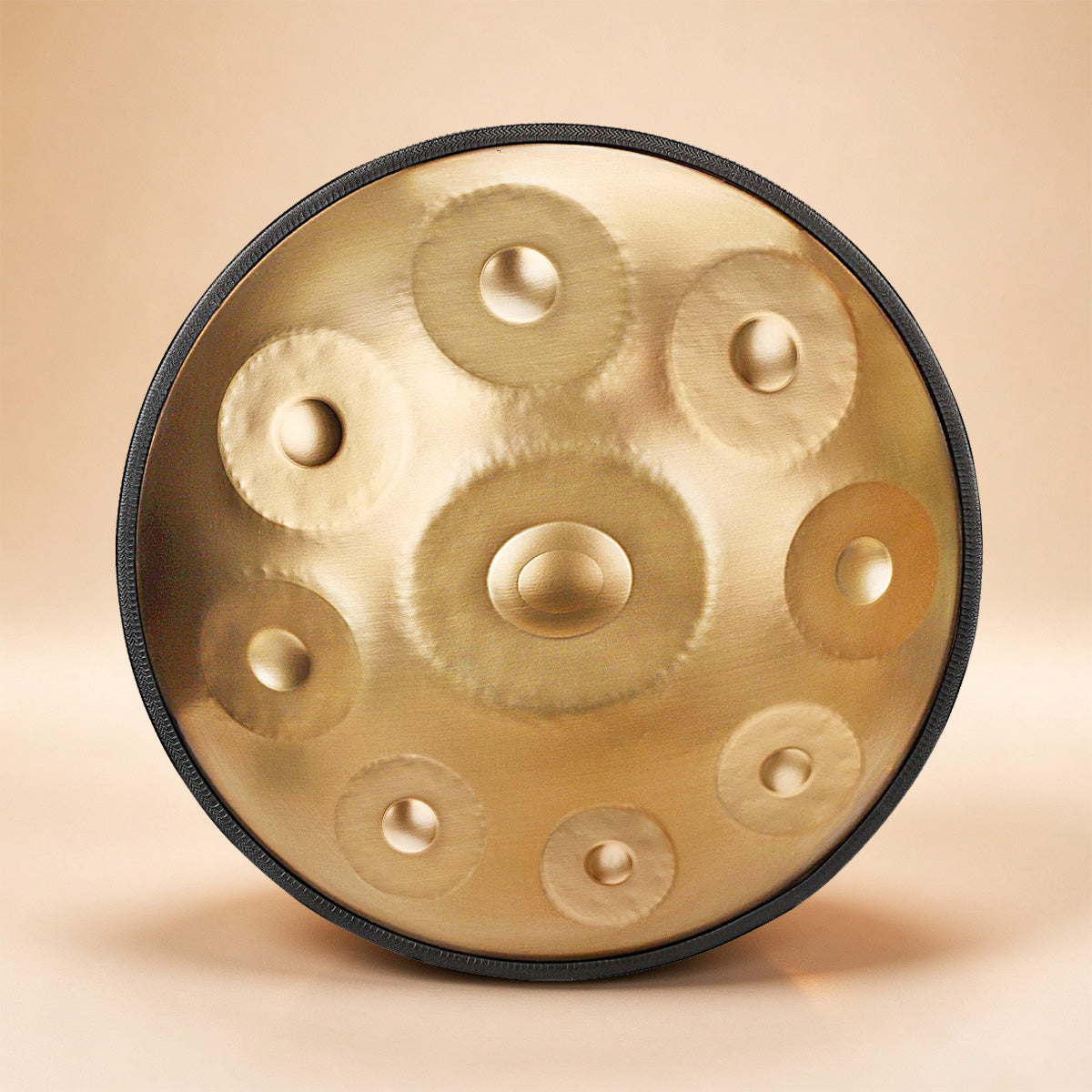
The physical arrangement of the notes affects how naturally you can move around the instrument. Most handpans place a central note in the middle and distribute additional tone fields around it. The exact arrangement differs between models and makers.
For a beginner, comfortable spacing is more important than having the largest possible note count. You should be able to reach the notes without stretching awkwardly or repeatedly striking neighboring tone fields by accident. Players with smaller hands should pay particular attention to instrument diameter and note placement.
Before buying, check the instrument's overall dimensions and ask for a top-down photograph. A video showing a player moving between notes is even more useful. Our article about standard handpan size explains why diameter and layout deserve attention during the buying process.
Our recommendation: Choose a layout that feels natural under your hands. More notes do not automatically make an instrument more playable.
5. Accurate Tuning and Consistent Craftsmanship
A handpan depends on precise tuning. Each tone field must produce its intended pitch while maintaining a controlled relationship with its associated overtones. If one note is noticeably unstable or produces distracting interference, it can affect the sound of the whole instrument.
When assessing an F Pygmy handpan, request a recording in which every note is played individually and then in simple combinations. Listen for inconsistent pitch, unwanted rattling, buzzing, or notes that sound substantially weaker than their neighbors.
Also ask the maker or retailer about the tuning reference, quality-control process, care instructions, and after-sales support. A product listing that only promises "beautiful sound" is not enough. Serious buyers need clear specifications and a realistic support policy.
Many handpans are offered at 440 Hz, while some makers also provide 432 Hz options. These are different tuning references, not quality grades. A 432 Hz instrument is not automatically more accurate, more relaxing, or better made than a 440 Hz instrument. Read our 432 Hz handpan guide if you are comparing these options.
Professional buying rule: Prioritize stable tuning and consistent note response before finish, color, or marketing claims.
6. Versatility for Meditation, Improvisation, and Small Performances
An F Pygmy handpan can be used in several musical settings, including solo improvisation, relaxation sessions, acoustic performances, and selected collaborative arrangements. Its usefulness depends on the actual note set and how it fits with the other instruments or musical material involved.
For solo practice, you have considerable freedom to explore patterns at your own pace. In a meditation or wellness setting, a sustained, controlled playing style can provide a gentle musical background. For live performance, the instrument's projection, tuning stability, and ability to blend with other instruments become more important.
There is one limitation worth understanding: a specific scale does not fit every song or ensemble. If you regularly play with guitarists, pianists, or other tuned instruments, ask for the exact notes and compare them with the music you intend to perform. A handpan that is excellent for solo improvisation may not be the easiest choice for every collaborative project.
Our advice: Buy for the music you expect to make most often. Do not pay extra for theoretical versatility that you are unlikely to use.
How Does a Handpan F Pygmy Work?
A handpan produces sound through tuned steel tone fields formed into its shell. When you tap a tone field with a controlled finger or hand movement, the metal vibrates at frequencies associated with the tuned note. The instrument's construction influences the fundamental pitch, overtones, response, and sustain.
The player creates music by combining these notes in rhythmic and melodic sequences. Unlike a keyboard, a handpan does not present a linear row of keys. Its circular arrangement encourages movement around the instrument, often allowing players to alternate between central and surrounding notes.
Does the F Pygmy Scale Limit What You Can Play?
It defines the available pitches, so it naturally limits which melodies can be played without adapting the music. That is not necessarily a disadvantage. A carefully selected scale can make improvisation more focused because the player works within a consistent group of notes.
For a detailed explanation of how note count affects musical options, see how many notes a handpan should have. The right number depends on your experience, playing style, and budget.
Benefits and Limitations of Handpan F Pygmy
| Benefits | Limitations |
|---|---|
| Distinctive tonal character for players who enjoy atmospheric improvisation. | The scale may not suit every familiar melody or musical arrangement. |
| A focused note set can help beginners explore musical phrases without a large number of choices. | Players still need to develop timing, touch, and dynamic control. |
| Can work for solo practice, ambient music, and selected small performances. | Compatibility with other instruments depends on the exact notes and tuning. |
| Expressive sustain can support slow, layered musical patterns. | Excessive or uneven resonance can make some instruments sound muddy. |
| Distinctive scale choice can add variety to an existing handpan collection. | A specialist scale may be less suitable as the only instrument for every player. |
F Pygmy vs Other Handpan Choices: Comparison Table
There is no universally best handpan scale. The useful comparison is between the sound you prefer, the notes you need, and how you intend to play. The table below gives a practical framework rather than claiming that every instrument in a scale family sounds identical.
| Buying factor | F Pygmy handpan | Common beginner D Minor handpan | Higher-note-count handpan |
|---|---|---|---|
| Main appeal | Distinctive Pygmy-style melodic character | Familiar, accessible starting point for many learners | More available pitches and expanded melodic options |
| Improvisation | Best when you like the specific interval relationships | Useful for learning basic patterns and musical phrasing | Can offer more choices but may require greater coordination |
| Beginner suitability | Good if the sound and note layout feel intuitive | Often a practical first-instrument choice | Depends on layout, spacing, and player experience |
| Musical flexibility | Defined by the exact F Pygmy note set | Defined by the instrument's D Minor configuration | Potentially broader, depending on note arrangement |
| What to verify | Full note list, tuning, and sound sample | Note layout, tuning stability, and build quality | Note spacing, note balance, and ease of access |
| Our buying advice | Choose for its specific sound, not the scale name alone | Consider it if you want a straightforward first handpan | Upgrade only when you can use the additional notes |
If you are completely new to the instrument, compare the F Pygmy with a beginner-friendly model before committing. Our best handpan for beginners guide explains what to prioritize when buying a first instrument.
Who Should Use a Handpan F Pygmy?
Good Fit: Improvisation-Focused Players
If you enjoy discovering melodies rather than following written arrangements, an F Pygmy may be a strong candidate. Its appeal comes from the specific relationships between the notes. Spend time listening to recordings and testing whether those relationships encourage the kind of phrases you naturally want to play.
Good Fit: Meditation and Relaxation Practitioners
Players who use music in meditation, breathwork, or relaxation sessions may appreciate the instrument's potential for sustained, unhurried patterns. The scale itself does not guarantee a therapeutic result. What matters is the sound, the playing approach, the setting, and the listener's response.
Good Fit: Experienced Players Expanding Their Collection
If you already own a handpan, an F Pygmy can add a different tonal palette. Before buying, compare the actual note set with your existing instrument. A second handpan is most useful when it adds musical possibilities rather than duplicating the same playing experience.
Who May Not Need One?
You may not need an F Pygmy if you are looking for a handpan that can cover a wide range of familiar songs, need a specific set of notes for ensemble work, or have not yet decided what kind of music you enjoy. In those situations, listen to several scales first. A common beginner configuration may be a more practical starting point.
Buying Considerations: What to Check Before You Order
1. Confirm the Full Note Configuration
Ask for a written list of every note, including octave information where provided. Do not rely on a product title alone. If you plan to play with another musician, share the note list with them before purchasing.
2. Listen to Every Note Separately
A short musical demonstration can hide uneven notes. Request a recording that plays each tone field individually, followed by a few combinations. This makes it easier to hear note balance, sustain, and possible unwanted noises.
3. Understand 432 Hz and 440 Hz Options
Choose a tuning reference based on your musical preferences and compatibility needs. If you already own instruments tuned to a particular reference, consistency may make ensemble playing easier. Neither number should be treated as a shortcut for judging craftsmanship.
4. Check the Instrument's Size and Weight
Handpan size affects portability, comfort, and the physical arrangement of the tone fields. If you plan to travel with the instrument or practice while seated, check dimensions and weight before ordering. A case that fits properly is also important for safe transport.
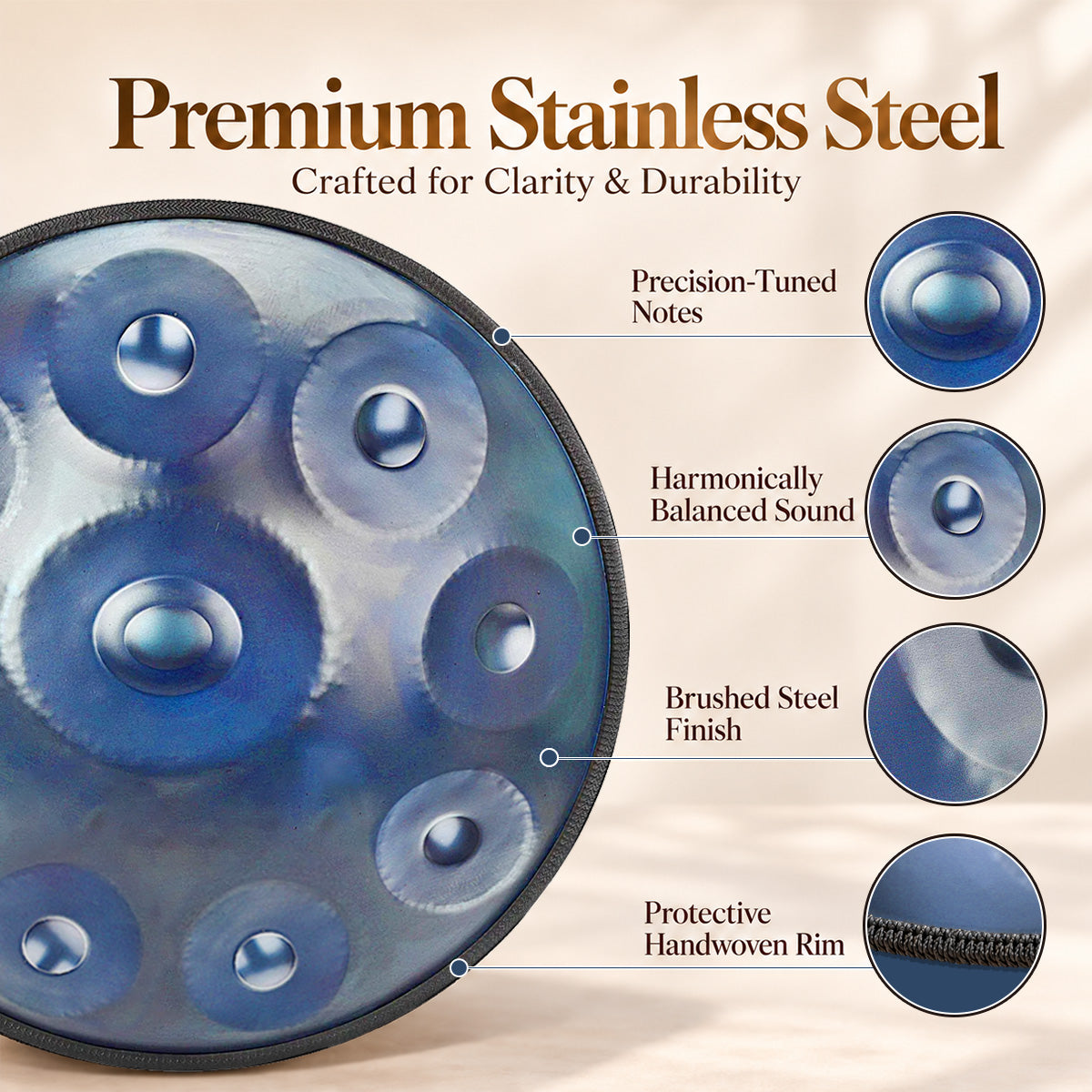
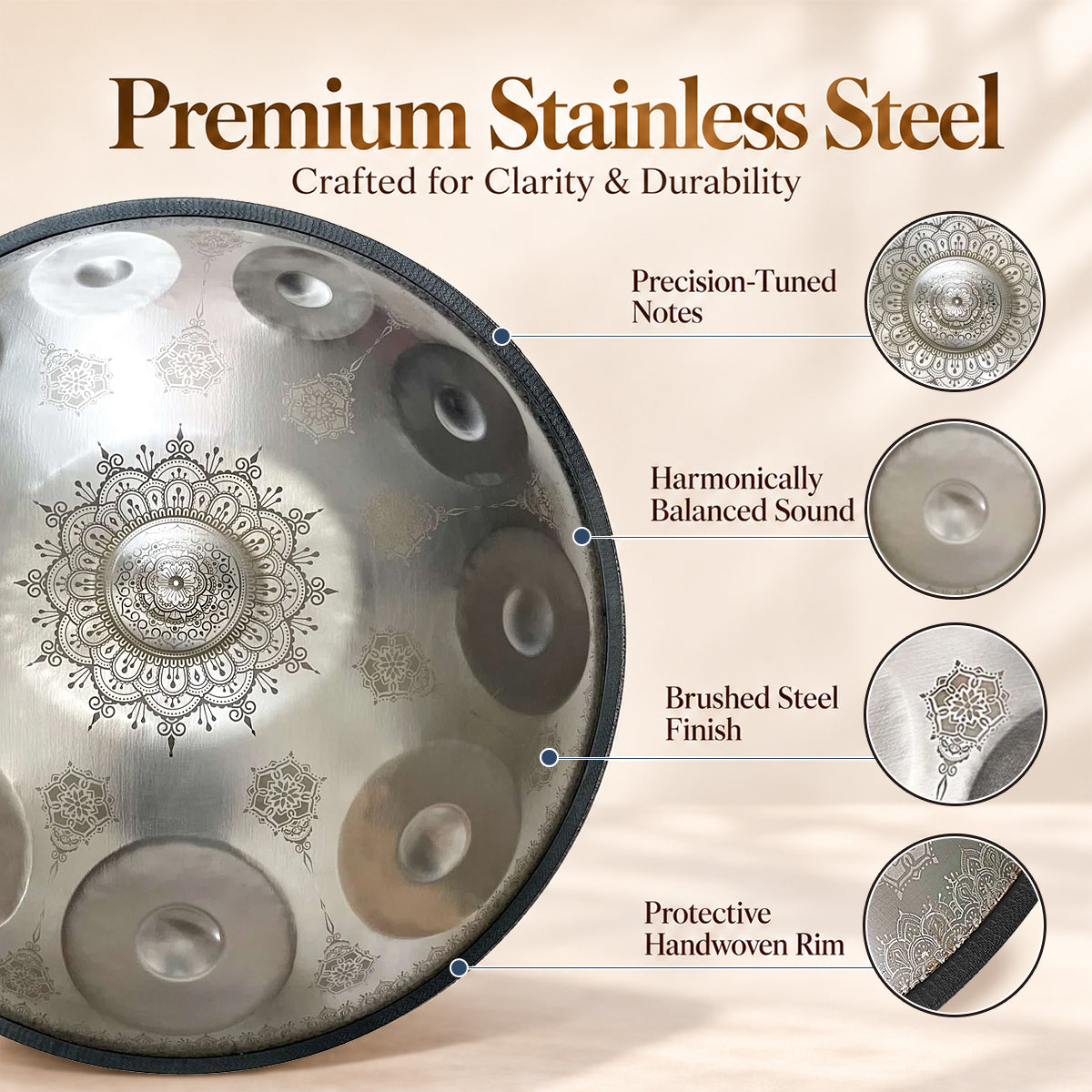
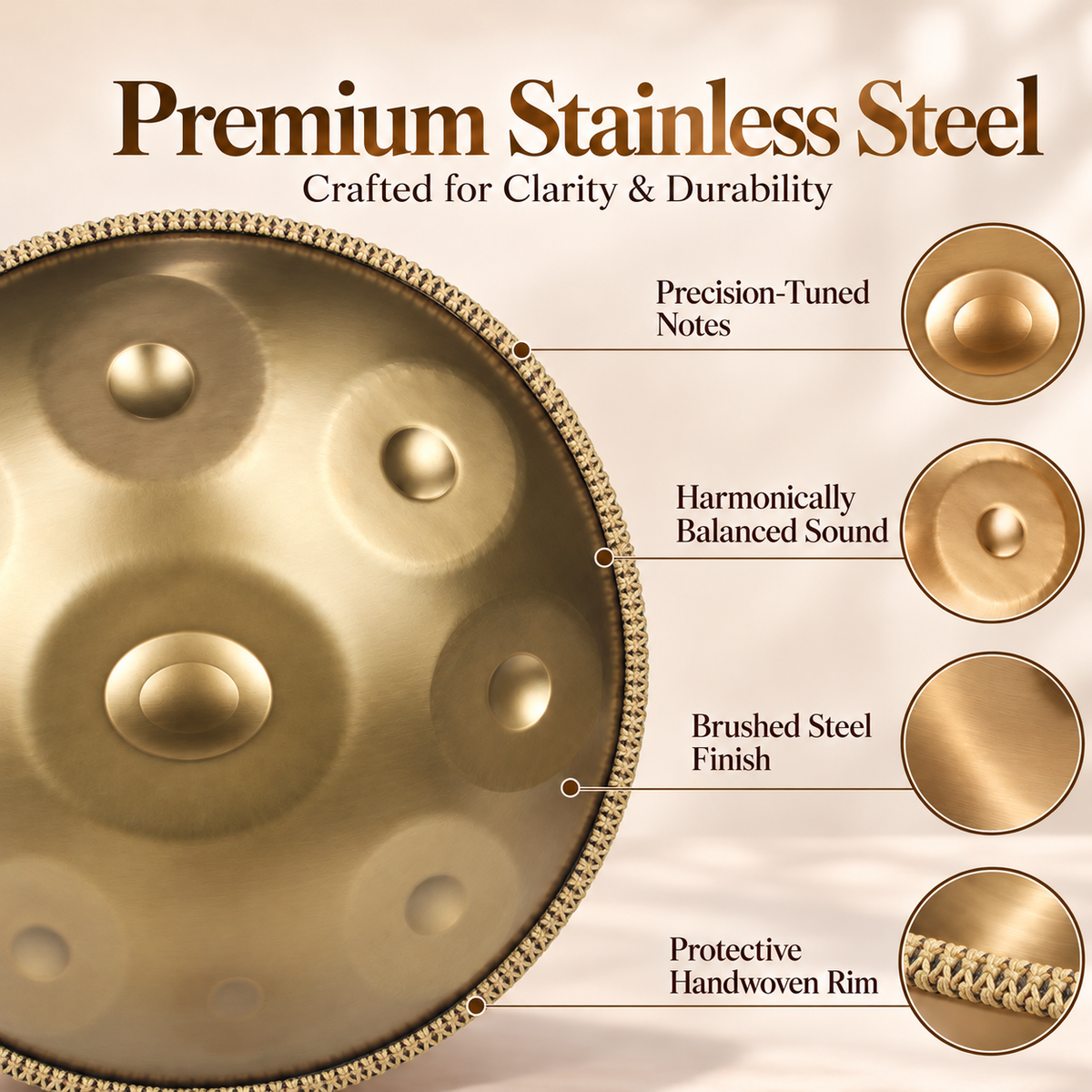
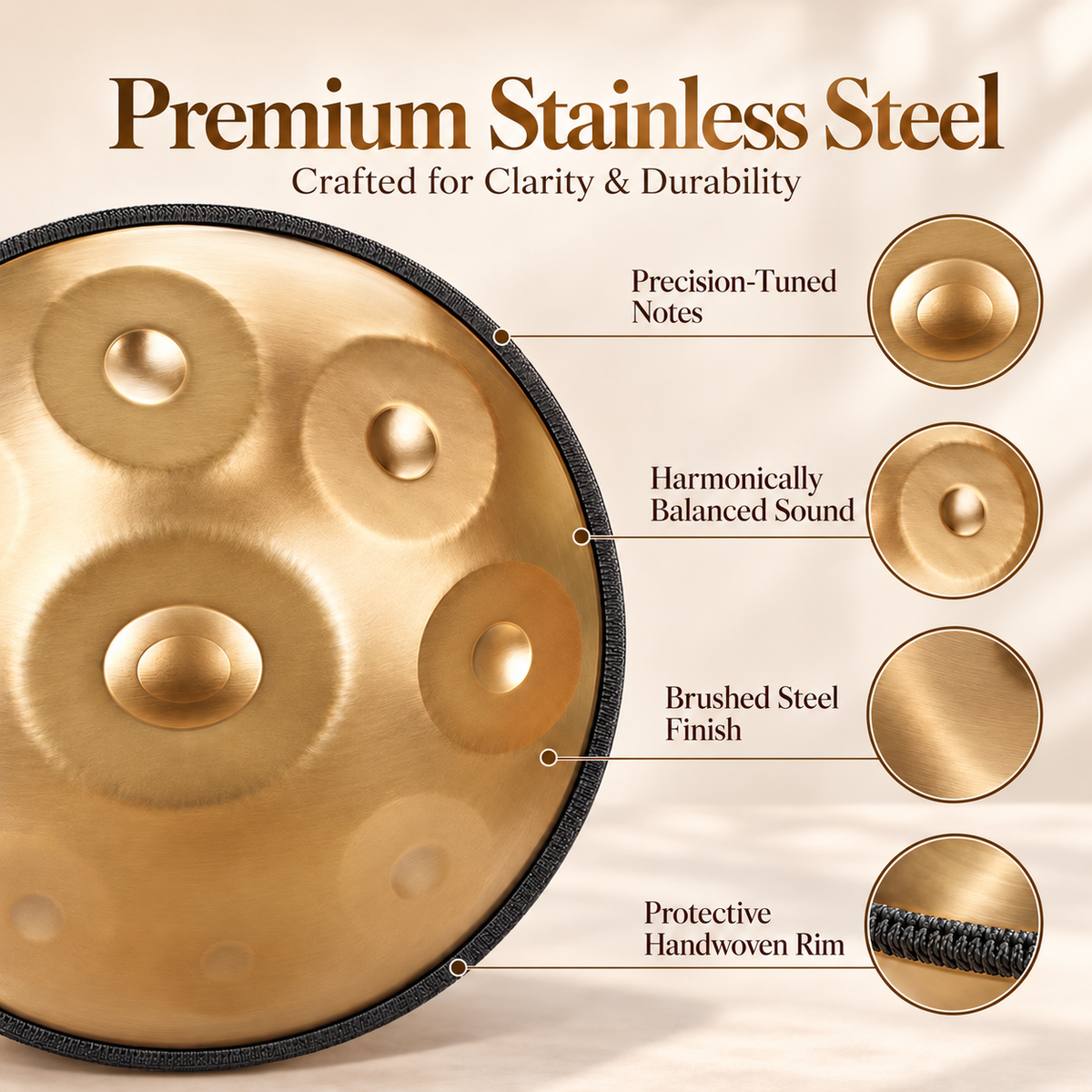
5. Evaluate the Steel, Finish, and Care Requirements
Ask what material and surface treatment the maker uses, how the instrument should be cleaned, and whether it needs special storage precautions. Steel instruments should be protected from moisture and physical impact. Follow the maker's care instructions rather than applying household chemicals or abrasive cleaners.
6. Compare the Complete Package
A handpan purchase may include a carry bag, stand, mallets, and cleaning cloth. These accessories can make the first weeks of ownership easier, but they should not distract from the instrument's sound and tuning quality. Compare what is included and whether the accessories are genuinely useful for your playing style.
7. Review Price and After-Sales Support
Handpan prices vary according to craftsmanship, material, tuning work, finish, note count, and included accessories. A very low price may mean compromises in consistency or support. A high price does not automatically prove superior sound. Read our handpan price guide and guide to how much a decent handpan costs before setting your budget.
Common Mistakes When Buying an F Pygmy Handpan
- Buying based only on the scale name: Different makers may use different note configurations. Always request the actual note list.
- Assuming every F Pygmy sounds the same: Construction, tuning, and playing technique all affect the final sound.
- Choosing more notes automatically: Additional notes are useful only if you can reach and use them comfortably.
- Confusing 432 Hz with better quality: Tuning reference and craftsmanship are separate considerations.
- Ignoring the sound sample: A polished photograph cannot tell you whether the notes are balanced or clean.
- Overlooking after-sales support: Ask about care, transport, tuning questions, and the seller's support process.
- Buying accessories before choosing the instrument: A complete gift set is convenient, but the handpan itself should determine the purchase.
Our Expert Recommendation: Is Handpan F Pygmy Worth Buying?
Yes, an F Pygmy handpan can be worth buying if you are drawn to its particular sound and have confirmed that its note layout fits your musical goals. It is not a scale we would recommend blindly to every first-time buyer. The right choice is the instrument that makes you want to play, supports the music you intend to create, and offers reliable tuning and construction.
For beginners: Focus on an approachable note layout, a clear demonstration recording, stable tuning, and a seller who explains the instrument's specifications. A nine-note instrument can be a sensible starting point if you want to learn basic handpan technique without an overly complex layout.
For intermediate players: Compare the F Pygmy note set with the instruments you already own. Consider whether the scale adds a genuinely different musical character. If it does, the purchase may be a meaningful expansion rather than an unnecessary duplicate.
For performers: Request detailed note information and test compatibility with your other instruments. For live work, also consider projection, consistency between notes, transport protection, and how quickly the instrument responds to controlled playing.
For meditation and relaxation use: Prioritize smooth response, balanced sustain, and a sound you personally enjoy hearing for extended periods. A particular frequency label or scale name cannot guarantee a specific emotional or health outcome.

Considering Your First Handpan? Explore Golden Elegance
The Cosmos Handpan Golden Elegance 9 Notes D Minor Gift Set is a beginner-friendly alternative for buyers who want a straightforward nine-note layout and an easy starting point for improvisation.
Scale: D Minor, nine-note layout.
Tuning options: 432 Hz or 440 Hz.
Sound: Clear sustain with a smooth tone.
Suitable for: First-time buyers, personal practice, relaxation, and small performances.
Included accessories: Protective carry bag, handpan stand, pair of mallets, and cleaning cloth.
If you like the idea of a focused note layout but are not certain that F Pygmy is the right scale, comparing a nine-note D Minor instrument is a practical way to understand what you want from your first handpan.
Explore Golden Elegance 9 Notes D MinorChoosing the Right Handpan Note Count
Note count is another buying decision that deserves attention. A nine-note handpan can be easier to approach because the playing area is relatively focused. A ten- or twelve-note configuration may provide additional melodic options, but the extra notes are useful only when they fit your technique and musical goals.
| Instrument level | Typical buyer | Practical consideration |
|---|---|---|
| 9-note handpans | Beginners and focused solo players | Simple layout and manageable starting point |
| 10-note handpans | Players seeking additional melodic options | More note choices while retaining a relatively compact layout |
| 12-note handpans | Experienced players and expanding musicians | More possibilities, with greater attention needed to reach and note arrangement |
Do not upgrade simply because a higher note count sounds more advanced. If you cannot use the extra pitches confidently, you may be paying for complexity rather than better music. Start with the layout that supports consistent practice, then expand when your playing develops.
Quick Summary Table: Is F Pygmy Right for You?
| Your priority | Our recommendation | Reason |
|---|---|---|
| Atmospheric improvisation | Consider F Pygmy | Its specific interval relationships may suit exploratory playing |
| First handpan purchase | Compare F Pygmy with a beginner-friendly D Minor model | Choose by sound and layout, not reputation alone |
| Playing with other instruments | Verify every note and tuning reference first | Compatibility depends on the actual pitch configuration |
| Meditation and relaxation sessions | Prioritize balanced tone and comfortable sustain | Sound quality matters more than marketing labels |
| Expanding an existing collection | Compare the F Pygmy note set with current instruments | A new scale should add useful musical options |
| Budget-conscious buying | Compare craftsmanship, support, and included accessories | The cheapest instrument is not necessarily the best value |
Frequently Asked Questions About Handpan F Pygmy
1. What is a handpan F Pygmy?
A handpan F Pygmy is a steel percussion instrument arranged around an F-centered Pygmy scale. Its exact note configuration can vary by maker, so buyers should request the complete note list and listen to a sound demonstration before purchasing.
2. Is F Pygmy a good handpan scale for beginners?
It can be suitable for beginners who enjoy its sound and find the note arrangement comfortable. However, the scale name alone does not make an instrument beginner-friendly. Clear note response, manageable layout, stable tuning, and good learning resources are more important.
3. What does F mean in F Pygmy?
F identifies the tonal center or root reference of the scale arrangement. The complete note list determines the actual pitches available for playing. Check the maker's specifications because octave placement and note configuration can differ.
4. Does every F Pygmy handpan have the same notes?
No. The term identifies a scale family or arrangement, but individual instruments may differ in note count, octave placement, and specific configuration. Always ask for the full note chart before buying.
5. Is F Pygmy better than D Minor?
Neither is universally better. F Pygmy may appeal to players who prefer its particular melodic character, while D Minor is a common choice for beginners seeking an accessible starting point. Listen to both and compare the exact note layouts.
6. Should I choose a 432 Hz or 440 Hz F Pygmy handpan?
Choose according to your musical preferences and the instruments you plan to play with. If you already own instruments tuned to a particular reference, matching that reference may simplify collaboration. Neither tuning is automatically superior in craftsmanship or sound quality.
7. How many notes should an F Pygmy handpan have?
The right number depends on the specific scale configuration and your experience. Beginners may prefer a focused layout, while experienced players may benefit from additional notes. Prioritize comfortable spacing and useful musical options rather than choosing the highest note count.
8. Can I use an F Pygmy handpan for meditation?
Yes. It can be used for slow improvisation and music in meditation or relaxation settings. The suitability depends on the instrument's sound, your playing style, and personal preference. A scale or frequency label does not guarantee a medical or therapeutic effect.
9. What should I check before buying an F Pygmy handpan?
Check the complete note list, tuning reference, individual note recordings, note balance, dimensions, material, care instructions, included accessories, warranty, and after-sales support. These details provide a much stronger basis for comparison than product photographs alone.
10. Is a more expensive F Pygmy handpan always better?
No. Price can reflect craftsmanship, materials, tuning labor, finish, and included accessories, but a higher price does not automatically guarantee a better instrument for your needs. Compare sound quality, tuning consistency, specifications, support, and overall value.
References
- Handpan.org – Community and educational resources for handpan players and enthusiasts.
- National Institute of Standards and Technology – Time and Frequency Division – Reference information on frequency and measurement standards.
- Encyclopaedia Britannica – Musical Scale – Background on pitch organization and musical scales.
Final verdict: The handpan F Pygmy is worth serious consideration when its actual sound and note relationships match the music you want to create. Confirm the note chart, listen to every tone, and prioritize tuning quality over marketing language. A well-chosen instrument should encourage you to play more often, not leave you wishing you had checked the specifications more carefully.