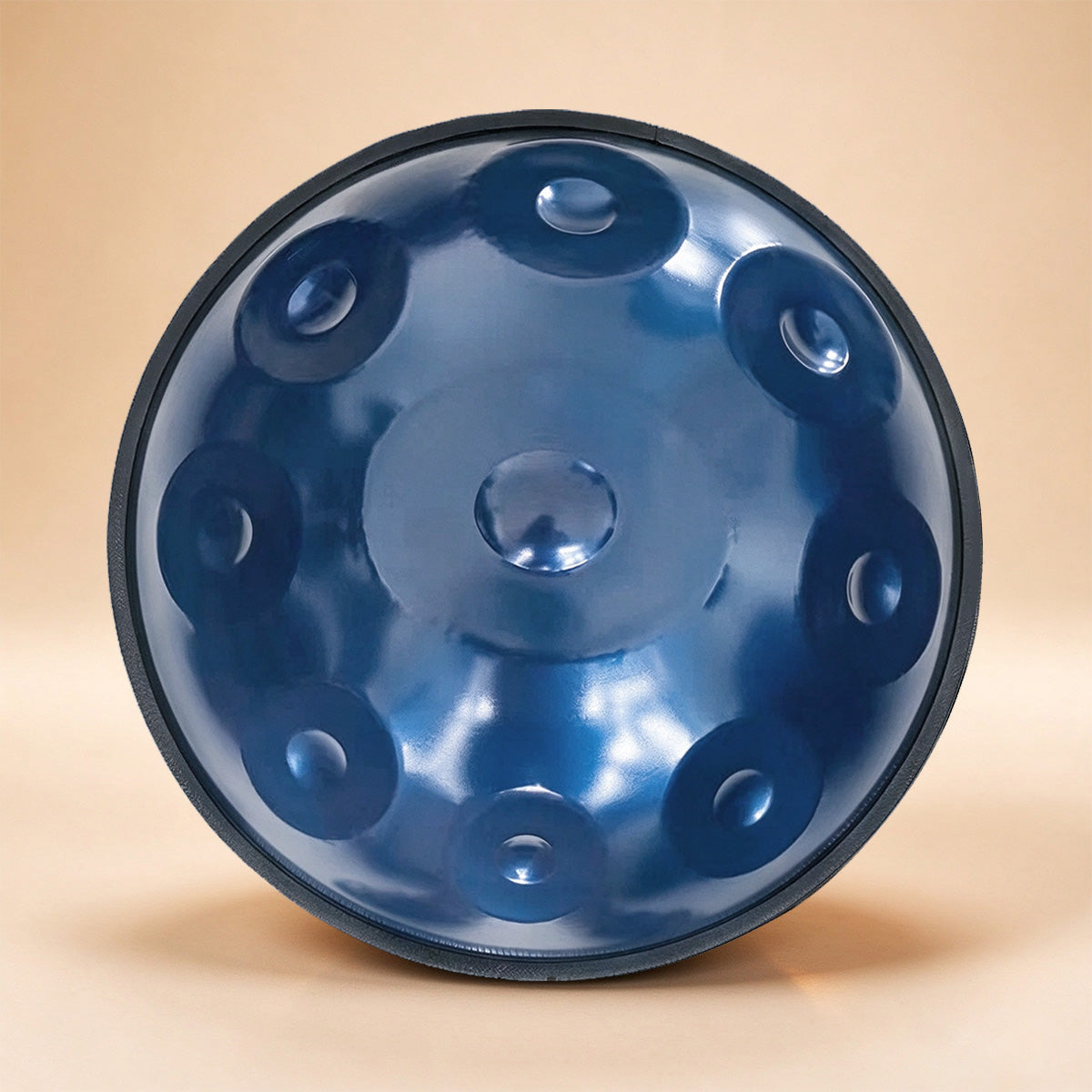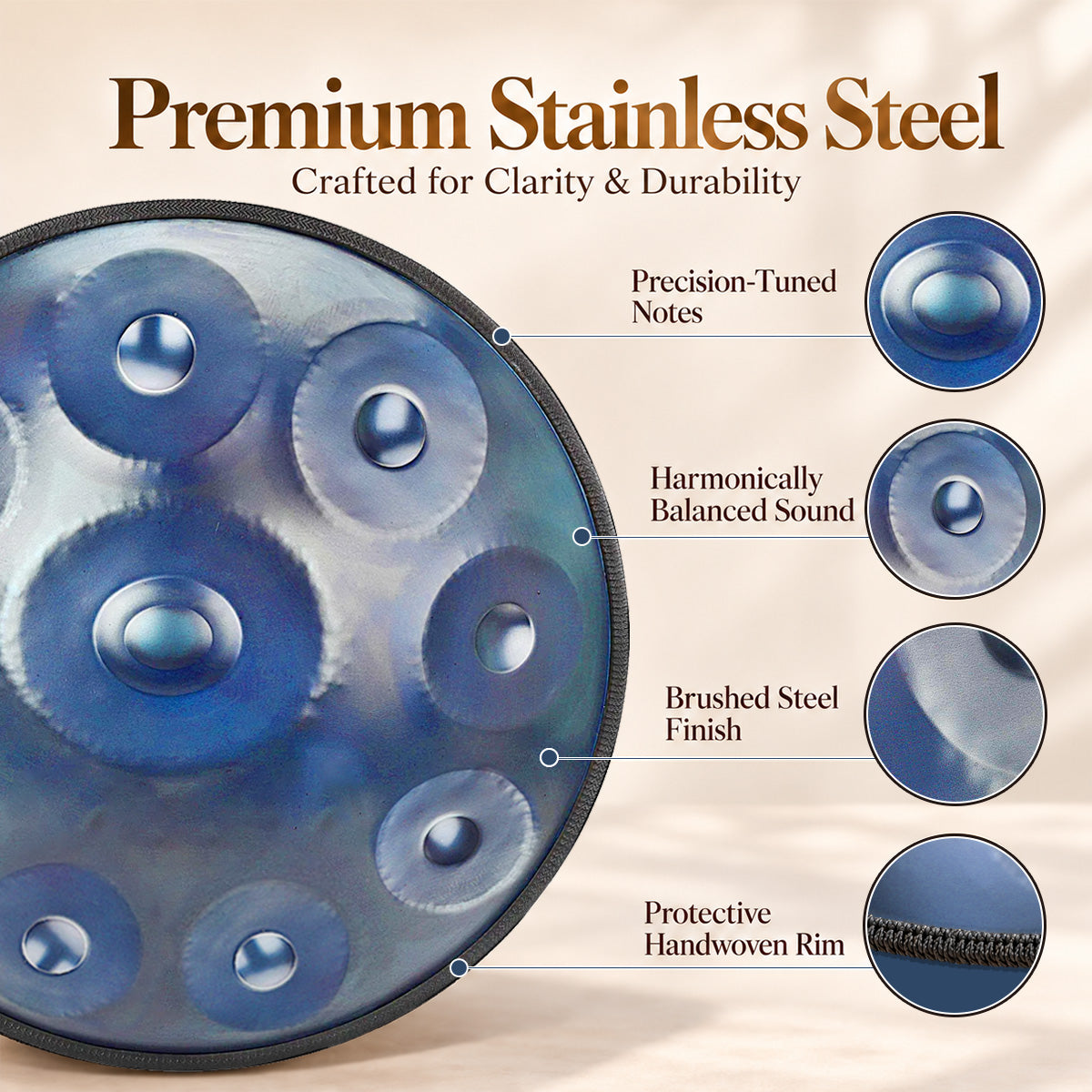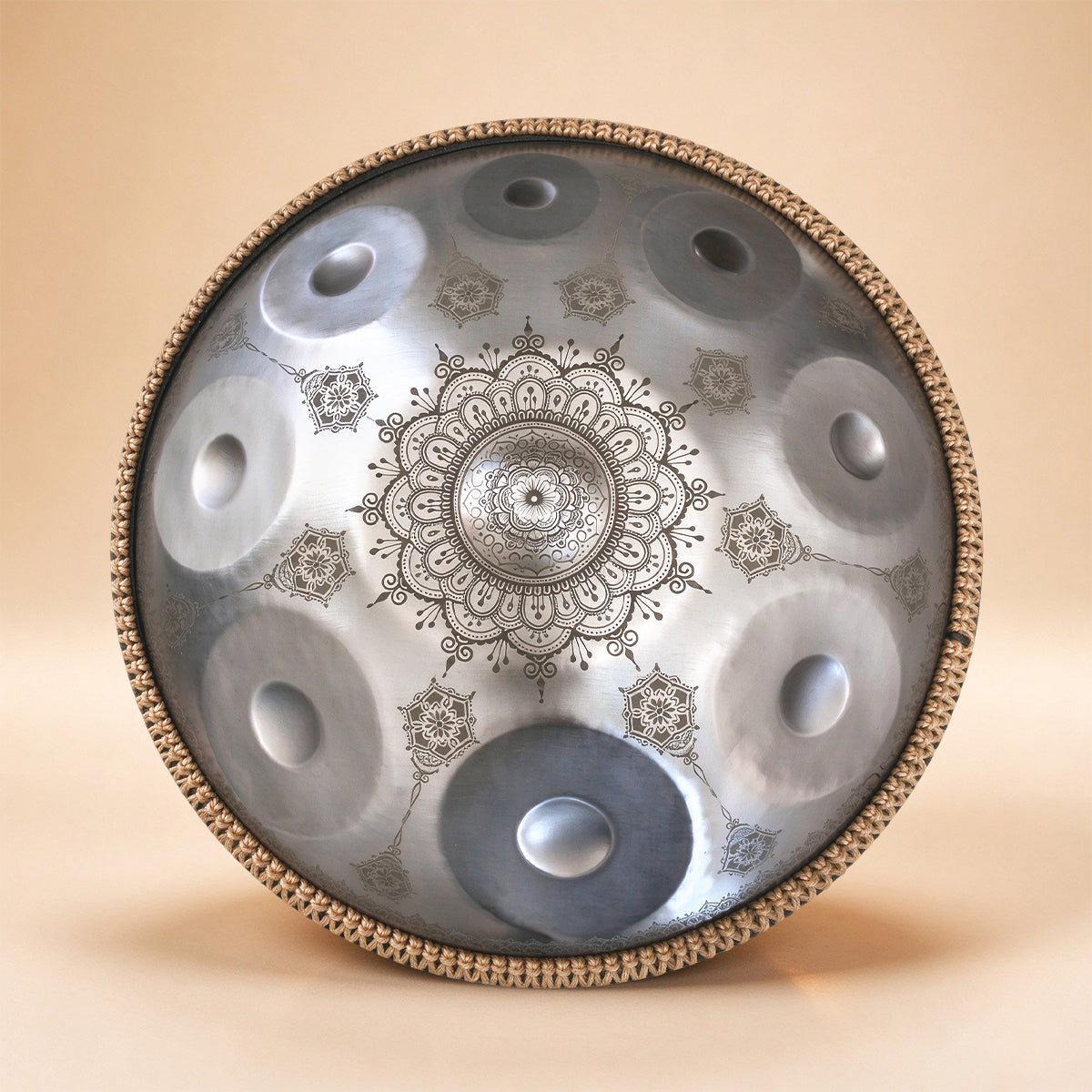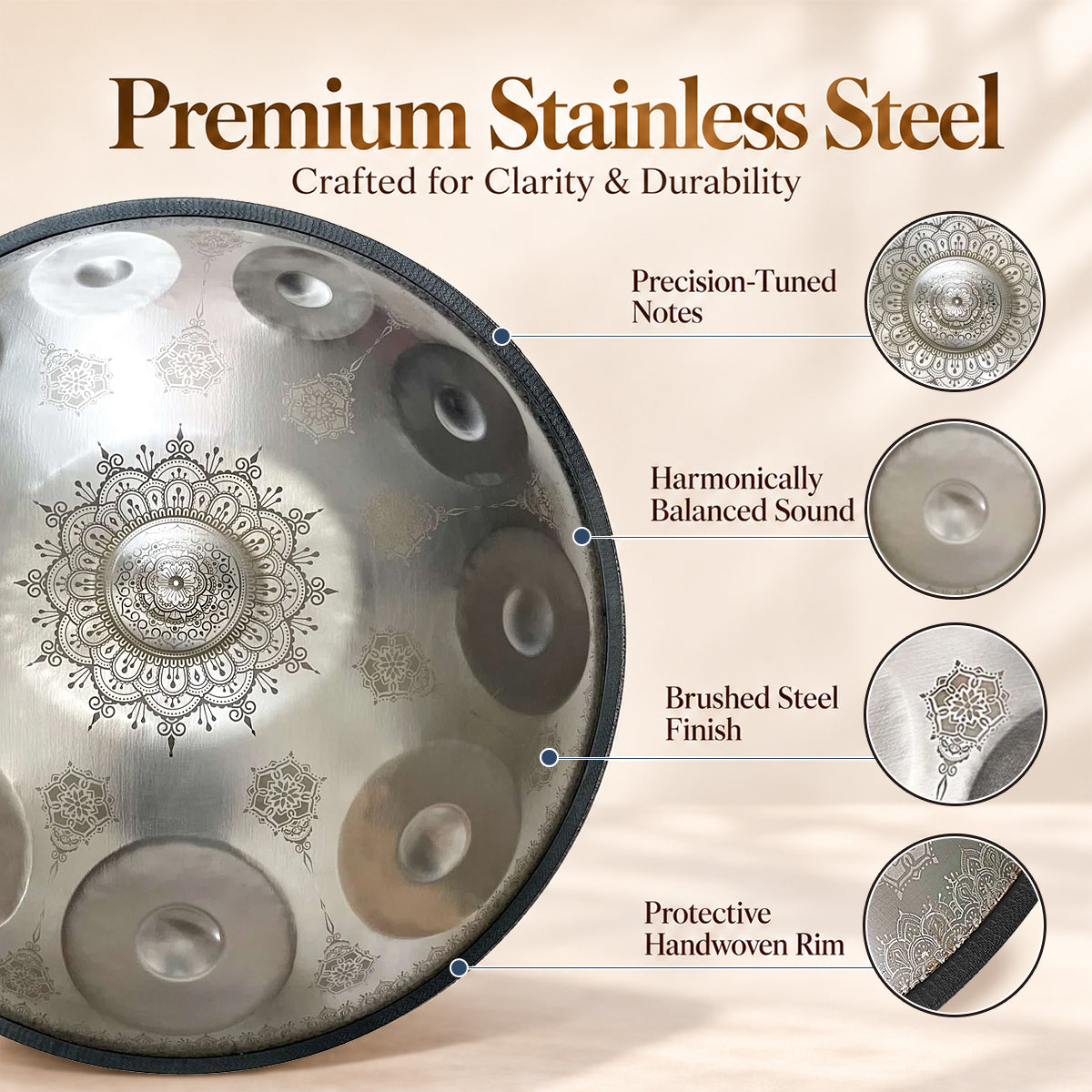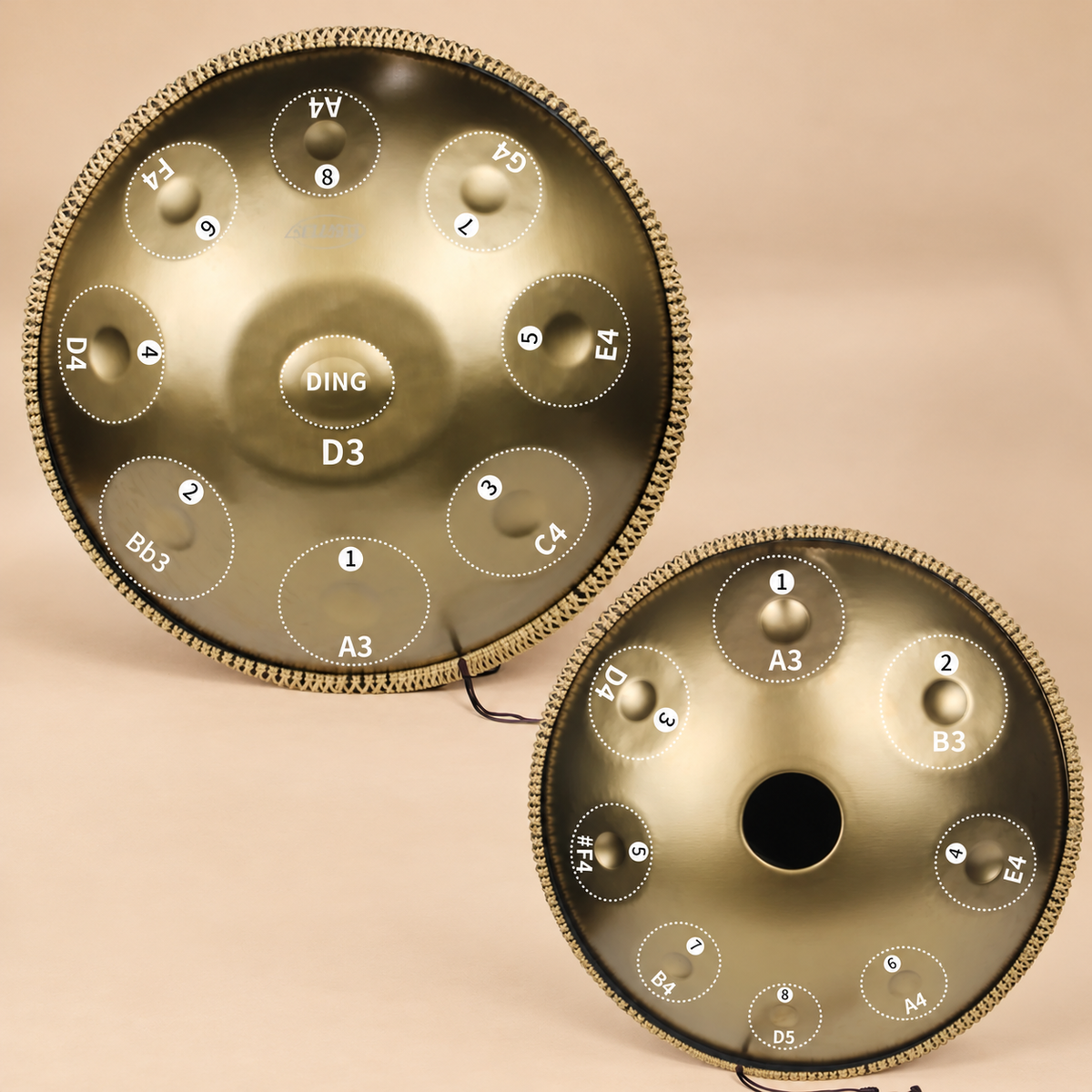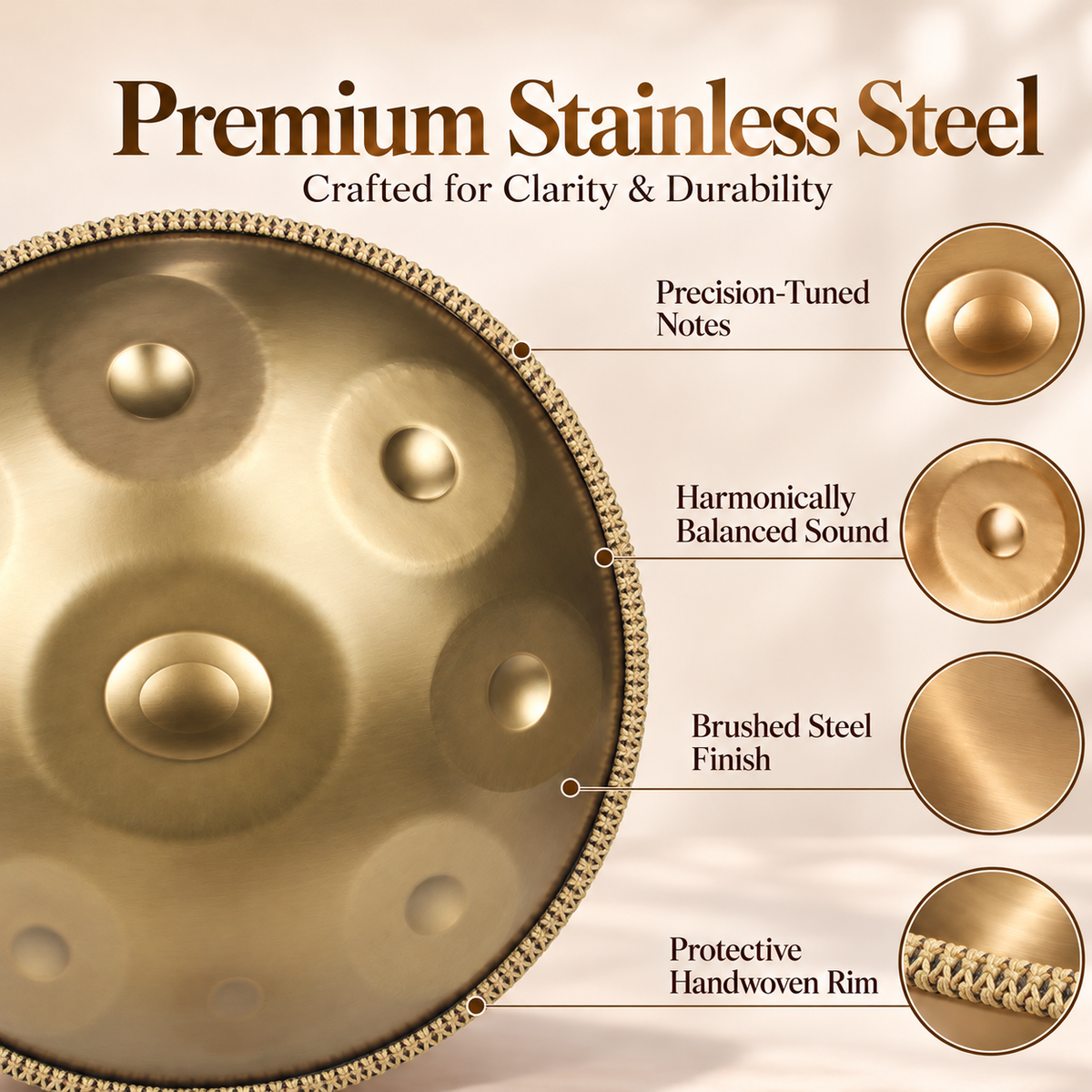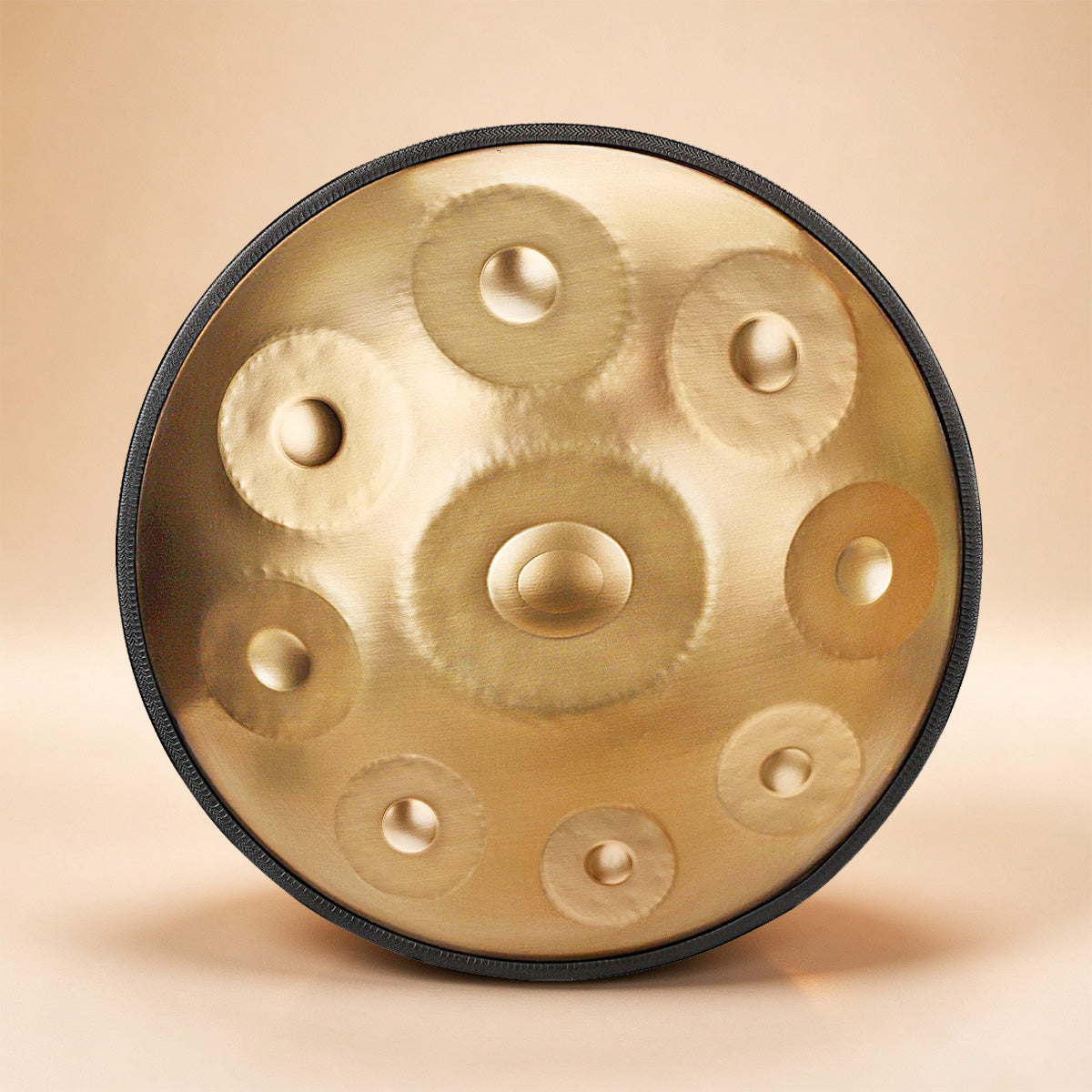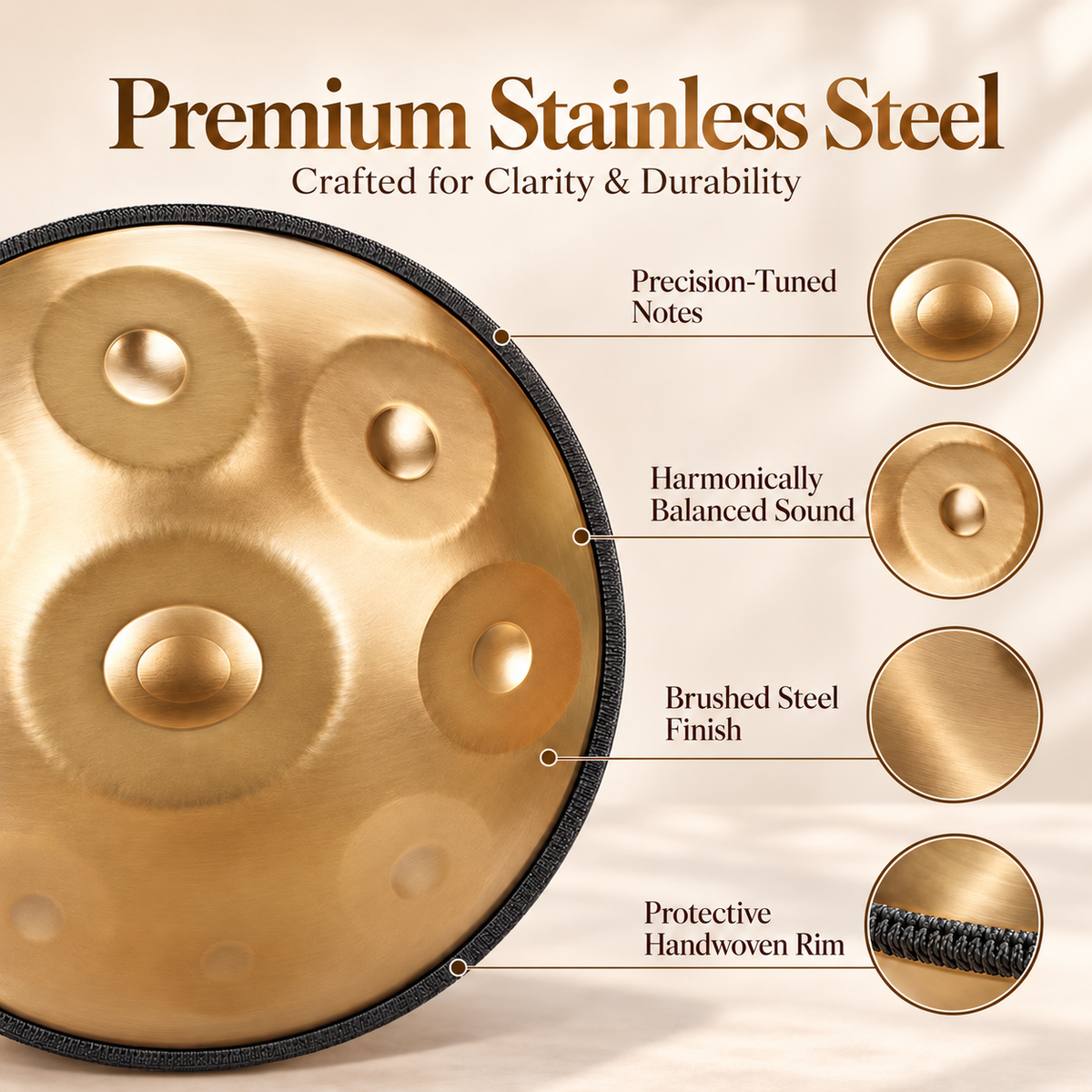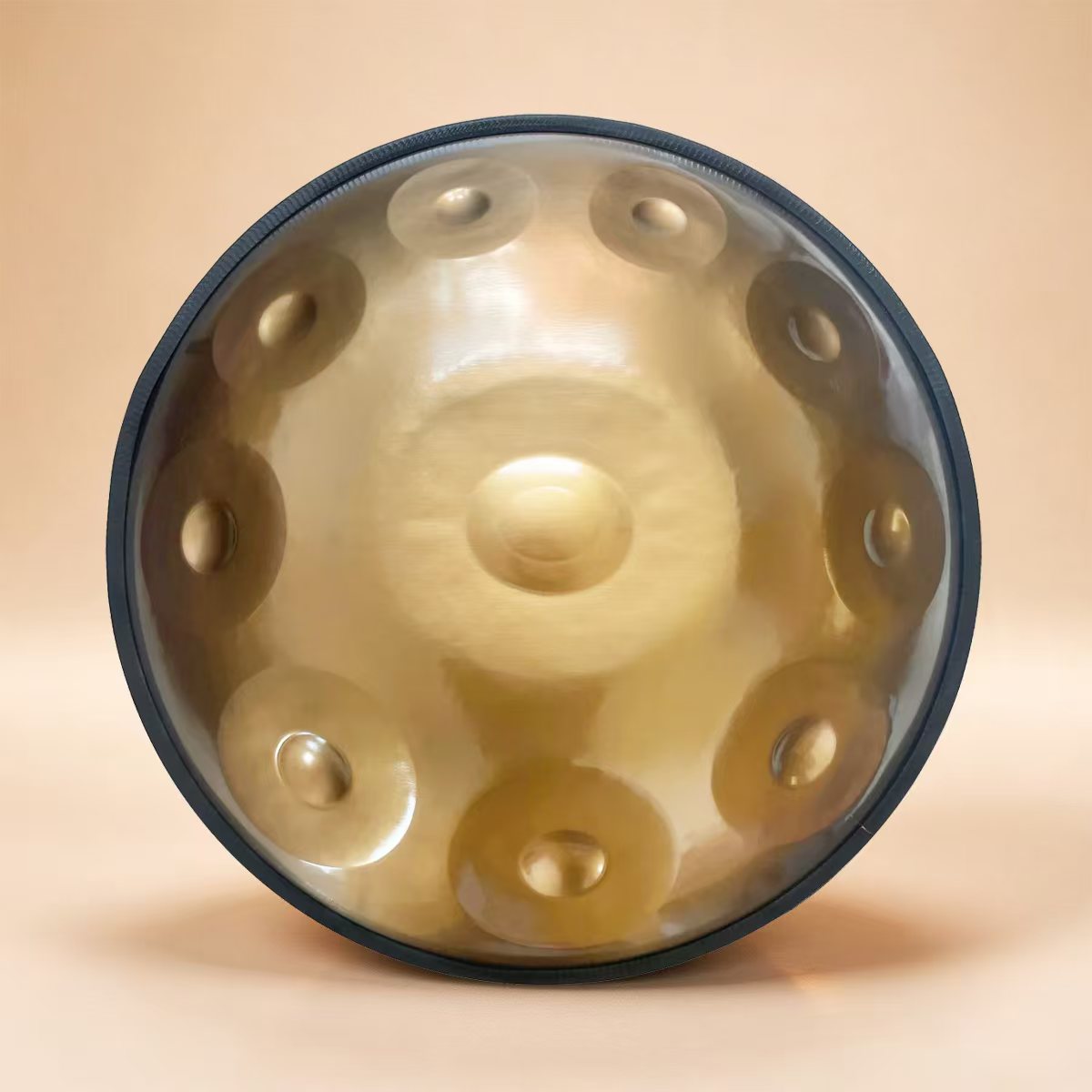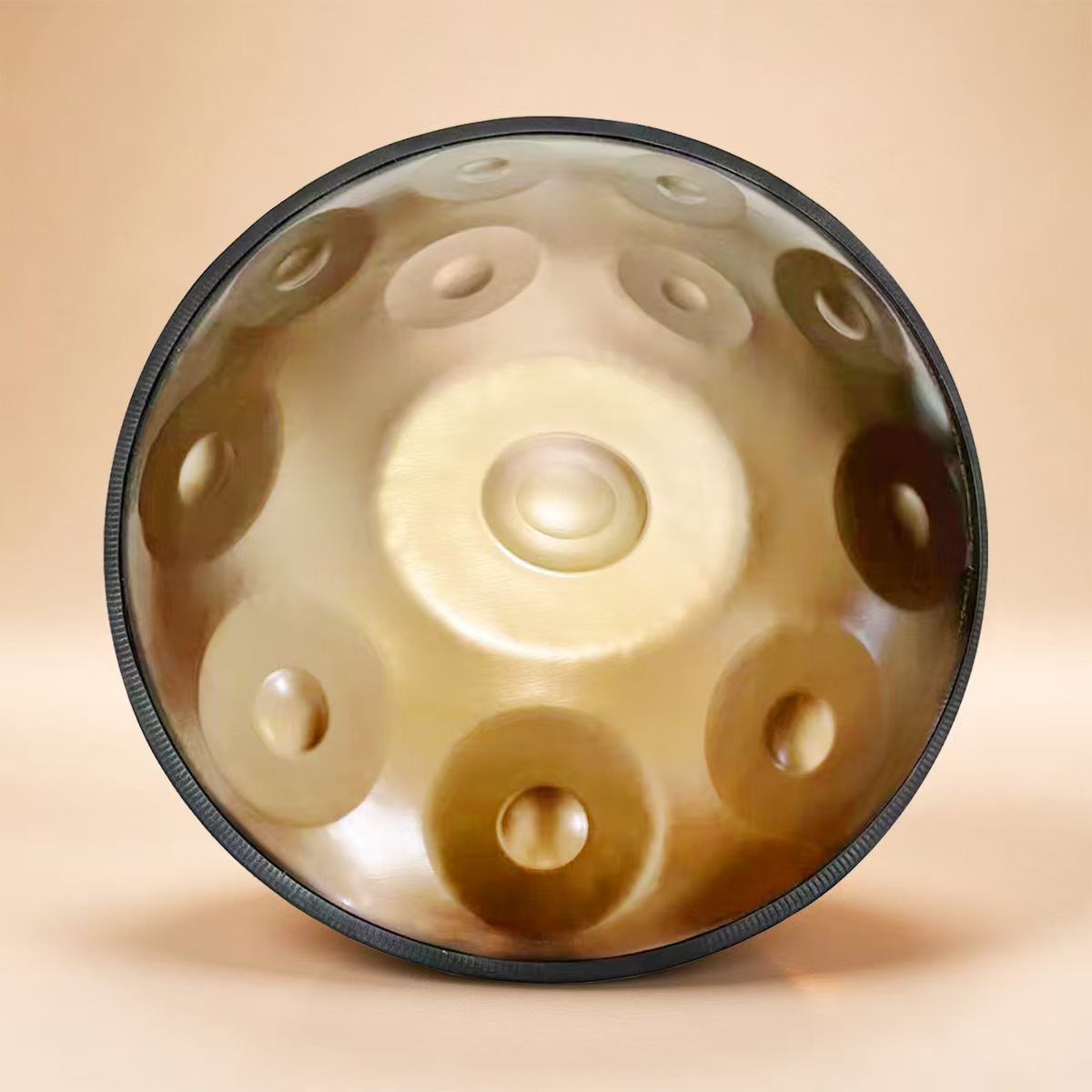
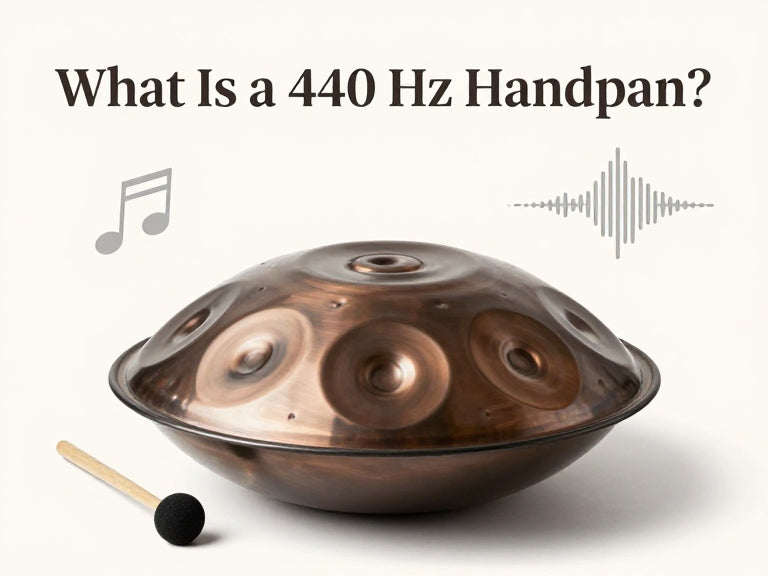
A 440 Hz handpan is a handpan tuned using A4 = 440 Hz as its reference pitch, the standard commonly used for concert-pitch music. If you are buying your first handpan, this is usually the most practical starting point when you plan to play with guitars, keyboards, orchestral instruments, or standard-pitch recordings. However, 440 Hz does not automatically make a handpan sound better than a 432 Hz instrument. Sound quality, scale, note layout, and craftsmanship matter just as much.

At Cosmoshandpan, we recommend choosing a tuning reference based on how you intend to play, rather than relying on claims that one frequency is inherently more relaxing or musical. A 440 Hz handpan is a strong all-around choice for compatibility. A 432 Hz model can be equally suitable if your musical setup or personal preference calls for it.
Quick Answer: What Is a 440 Hz Handpan?
A 440 Hz handpan uses A4, the A above middle C, at a reference frequency of 440 cycles per second. Its other notes are tuned to the pitches of a selected musical scale. The number describes the reference pitch, not the frequency of every note on the instrument.
- What it is: A handpan tuned to the A4 = 440 Hz concert-pitch reference.
- How it works: Carefully shaped metal tone fields produce individual notes arranged in a scale.
- Benefits: Convenient compatibility with many standard-pitch instruments and recordings.
- Limitations: It may not match instruments deliberately tuned to A4 = 432 Hz.
- Who should use it: Beginners, ensemble musicians, teachers, and players using standard-pitch backing tracks.
- Who may not need it: Players whose existing instruments and performances use a 432 Hz reference.
- Buying priority: Confirm tuning reference, scale, note count, sound quality, and seller support before ordering.
What Does 440 Hz Mean on a Handpan?
Hertz, abbreviated Hz, is a unit of frequency. One hertz represents one cycle per second. In music, A4 = 440 Hz means the note A above middle C is assigned a reference frequency of 440 cycles per second. This reference is widely known as standard concert pitch.
A handpan is a melodic percussion instrument with a central note, commonly called the ding, and surrounding tone fields that produce additional pitches. On a 440 Hz handpan, these notes are tuned in relation to the chosen scale and the A4 = 440 Hz reference. The central note is not necessarily 440 Hz, and the instrument's notes do not all share the same frequency.
This distinction is important when shopping. A product described as a 440 Hz D minor handpan communicates two different things: the reference pitch is 440 Hz, while D minor describes the scale. Neither detail tells you everything about the instrument's sound, note arrangement, or build quality.
Is 440 Hz the same as the key of the handpan?
No. Tuning reference and musical key are related but separate concepts. A D minor handpan can be made using a 440 Hz reference or a 432 Hz reference. Both can use the same named scale, but the corresponding pitches differ.
Think of the reference pitch as the standard used to establish the notes, while the scale defines the set of notes and their musical relationships. When buying a handpan for a specific song or ensemble, you should check both the reference and the scale. Matching only the frequency reference does not guarantee that every note will fit the music you want to play.
How Does a 440 Hz Handpan Work?
A handpan produces sound through carefully formed tone fields in a metal shell. Each field is shaped and adjusted to produce a defined musical pitch. Its sound also contains overtones and resonances that contribute to the character of the note.
Handpan tuning requires specialist metalworking. The maker adjusts the shape and tension of the tone fields to achieve the intended pitch and response. This is why a handpan cannot be switched from 432 Hz to 440 Hz in the same way that you change a digital keyboard setting.
Why craftsmanship matters more than the number alone
A tuning label is useful, but it cannot tell you whether an instrument is well made. A quality handpan should have coherent relationships between notes, a pleasing balance of fundamental tones and overtones, and a consistent response when played gently or firmly.
When evaluating a handpan, listen for notes that sound conspicuously out of tune with one another, unexpected buzzing, uneven sustain, or tone fields that respond inconsistently. These observations are more useful than choosing a product simply because its listing emphasizes 440 Hz.
Does a 440 Hz Handpan Sound Different from a 432 Hz Handpan?
Yes, the pitch reference differs, and that difference can be heard when comparable notes are played side by side. However, it is misleading to claim that every 432 Hz handpan sounds warm and relaxing while every 440 Hz handpan sounds bright or harsh. Those descriptions do not reliably predict the sound of an individual instrument.
When comparing the same reference note, 440 Hz is about 1.85% higher in frequency than 432 Hz. That is a relatively small difference, but it can be noticeable in a direct comparison. The overall character of a handpan depends on many other factors, including shell construction, tone-field geometry, scale, voicing, playing technique, room acoustics, and recording quality.
Does 432 Hz have special healing properties?
Some musicians and listeners prefer 432 Hz for aesthetic, personal, or meditative reasons. There is nothing wrong with choosing an instrument because you enjoy its sound. But a personal preference is not the same as scientific proof that a particular tuning reference automatically provides specific healing benefits.
If your main purpose is meditation, yoga, or quiet personal practice, choose a handpan that sounds inviting to you and encourages consistent playing. A 440 Hz instrument can be suitable for reflective music, just as a 432 Hz instrument can. The frequency label alone should not decide the purchase.
440 Hz vs. 432 Hz Handpan: Which Is Better for You?
| Buying factor | 440 Hz handpan | 432 Hz handpan | Our recommendation |
|---|---|---|---|
| Reference pitch | A4 = 440 Hz | A4 = 432 Hz | Choose the reference that matches your playing environment. |
| Standard-pitch ensembles | Usually the more straightforward option | May require a compatible setup or adjustment of other instruments | For conventional mixed-instrument playing, start with 440 Hz. |
| Backing tracks | Convenient when recordings use standard concert pitch | Tracks may need to match or be adjusted | Check the actual pitch reference of your recordings. |
| Solo practice | Suitable for expressive and meditative playing | Also suitable for expressive and meditative playing | Choose the sound and scale you enjoy most. |
| Sound character | Depends on the instrument's construction and voicing | Depends on the instrument's construction and voicing | Listen to the actual instrument rather than judging by frequency alone. |
| Compatibility with another handpan | Requires compatible reference and musical notes | Requires compatible reference and musical notes | Check both instruments' tuning and scale before playing together. |
| Changing tuning later | Requires specialist work | Requires specialist work | Buy the intended tuning from the outset whenever possible. |
| Best suited to | Many beginners, standard-pitch ensembles, and conventional recordings | Players with a 432 Hz setup or a clear preference for that reference | Let your actual musical needs determine the choice. |
Our verdict: If you are buying your first handpan and have no specific reason to choose 432 Hz, a 440 Hz model is the practical default. It reduces compatibility issues when playing with standard-pitch instruments. If your existing instruments are tuned around 432 Hz, or you deliberately want that setup, choose a matching instrument instead.
Benefits and Limitations of a 440 Hz Handpan
Main benefits
- Convenient ensemble compatibility: The reference aligns with a widely used concert-pitch standard, making it easier to coordinate with many conventional instruments.
- Practical for backing tracks: It is a sensible starting point for musicians who use recordings made at standard concert pitch.
- Beginner-friendly decision: New players can focus on hand technique, rhythm, phrasing, and note relationships without needing to manage an alternative reference pitch.
- Versatile performance use: A compatible instrument can work well in workshops, group sessions, and mixed-instrument performances.
- No restriction on musical mood: A 440 Hz reference can support quiet, reflective, atmospheric, rhythmic, and expressive playing.
Main limitations
- Not compatible with every setup: Instruments tuned to 432 Hz may not align directly with a 440 Hz handpan.
- Not a quality guarantee: The number says nothing by itself about tuning accuracy, sustain, tone balance, or workmanship.
- Not a player-adjustable setting: Changing the tuning reference is a specialist task, not a routine adjustment.
- Not everyone's preference: Musicians who deliberately work in a 432 Hz setup may prefer consistency across their instruments.
- Can be misrepresented in marketing: Frequency claims should not replace a careful assessment of sound quality or be treated as proof of guaranteed wellness effects.
Pros and cons table
| Pros | Cons |
|---|---|
| Uses a widely recognized concert-pitch reference. | May not match instruments intentionally tuned to another reference. |
| Practical for many beginners and ensemble players. | Does not guarantee superior sound or craftsmanship. |
| Convenient for many standard-pitch recordings. | Scale and available notes still need to match the music. |
| Supports many styles, including ambient and meditative playing. | Does not automatically provide a specific therapeutic benefit. |
| Allows buyers to focus on learning and musical development. | Retuning later can require specialist work and may not be worthwhile. |
For most first-time buyers, a 440 Hz handpan is worth considering for compatibility rather than supposed superiority. If you play alone and strongly prefer the sound of a 432 Hz instrument, that preference can be a sound reason to choose it. If you expect to play with guitarists, keyboardists, or standard-pitch backing tracks, 440 Hz is generally the more straightforward option.
Who Should Buy a 440 Hz Handpan?
Beginners learning at home
For beginners, the first priorities should be a manageable note layout, a scale you enjoy, and an instrument that responds consistently. A 440 Hz reference is sensible if you may eventually play with other musicians or learn from standard-pitch recordings.
Consider starting with a focused 9-note model. It offers enough possibilities for developing rhythm, coordination, dynamics, and melodic phrasing without requiring you to learn a large layout immediately. Cosmoshandpan's 9-note handpan collection is a useful place to compare beginner-oriented options.
Musicians playing with guitars, keyboards, or other instruments
If you already play guitar, piano, keyboard, or another conventional instrument, 440 Hz is often the easiest reference to work with. Nevertheless, compatibility also depends on the song's key and the notes available on your handpan. Check those details before buying an instrument for a particular performance or arrangement.
Teachers, workshop leaders, and performers
For group workshops, lessons, and mixed-instrument performances, standard-pitch compatibility simplifies preparation. A 440 Hz handpan is usually the more practical choice when participants use conventional instruments or standard-pitch tracks. If the event is built around a specific 432 Hz setup, matching the other instruments is more important than choosing the most common reference.
Meditation and ambient music practitioners
Both tuning references can work for quiet, reflective playing. If you play solo, you may care more about the scale, resonance, dynamic response, and the musical patterns you enjoy than the difference between 432 Hz and 440 Hz. Avoid paying extra for unsupported claims that a particular frequency guarantees relaxation or healing.
Who may not need a 440 Hz handpan?
You may prefer 432 Hz if your existing instruments are tuned around that reference, your group uses it consistently, or you have a clear artistic preference for that tuning context. In those situations, buying an instrument that matches your setup can be more useful than following a general recommendation.
Choosing the Right Scale and Note Count
Once you have chosen a reference pitch, focus on the scale and number of notes. These factors have a direct impact on what you can play and how quickly you become comfortable with the instrument.
Choose a scale that matches your musical goals
Minor scales are popular with handpan players who enjoy atmospheric, reflective, or cinematic melodies. D minor is a common choice, but the right scale is the one whose notes you enjoy hearing and whose musical possibilities fit your goals.
If possible, listen to the actual scale before purchasing. Two handpans with the same nominal scale can still differ in tone, resonance, and response because of their construction and voicing.
Is a 9-note handpan enough?
For many beginners, yes. A 9-note layout offers a focused range that supports learning basic techniques and exploring musical patterns. It can be a better starting point than a much larger instrument if your immediate goal is consistent practice rather than complex arrangements.
When should you upgrade to 10, 12, or 17 notes?
A larger note count can provide more melodic options, but the added range is only valuable when you know how to use it. Upgrade when your current layout limits the phrases you want to play, when you need additional notes for arrangements, or when you have enough experience to navigate a larger instrument comfortably.
| Note count | Best use case | Advantage | Potential trade-off |
|---|---|---|---|
| 9 notes | Beginners and focused exploration | Manageable layout for learning fundamental technique | More limited melodic range |
| 10 notes | Players wanting a modest expansion | Additional melodic choice without a very large layout | Still has a defined set of available notes |
| 12 notes | Intermediate players and broader arrangements | More options for phrasing and variation | Requires learning more note positions |
| 17 notes | Experienced players seeking broader range | More melodic possibilities within one instrument | Layout and reach deserve careful evaluation |
Cosmoshandpan offers additional note-count options through its 10-note handpan collection and 12-note handpan collection. Compare these options based on your playing ability and musical goals, not on the assumption that more notes automatically mean a better instrument.
Cosmoshandpan Storm Series: A 440 Hz Handpan Worth Comparing
If you want an instrument with both 432 Hz and 440 Hz options, the Cosmoshandpan Storm Series is worth reviewing. It is listed in D minor, with several note-count configurations. This gives buyers flexibility to choose a reference pitch and layout that fit their intended use.

Storm Series Handpan Drum – 432 Hz / 440 Hz
$799.00 USD
Brand: Cosmoshandpan
- Instrument: Handpan
- Scale: D minor
- Note options: 9, 10, 12, or 17 notes
- Tuning options: 432 Hz or 440 Hz
- Material: Nitrided steel
- Color options: Blue or golden
Why consider it: Multiple note-count options accommodate different experience levels, while the two reference-pitch options let you choose according to your instruments and preferred musical context.
Before ordering: Confirm the exact variation, current availability, shipping terms, warranty details, and care instructions on the product page.
Which Storm Series configuration makes the most sense?
- 9 notes: Choose this if you are new to handpan and want a focused layout for developing basic technique.
- 10 notes: Choose this if you want a modest expansion without moving immediately to a much larger note layout.
- 12 notes: Consider this if you want more melodic possibilities and are comfortable learning additional note positions.
- 17 notes: Consider this if you have the experience and musical goals to make meaningful use of a broader range.
- 440 Hz: Choose this if compatibility with standard-pitch instruments and recordings is your priority.
- 432 Hz: Choose this if it matches your existing setup or is a deliberate musical preference.
Our recommendation is to decide on the reference pitch and note count before choosing the color. Appearance can make an instrument more personally appealing, but it cannot compensate for a tuning mismatch or a layout that does not fit your playing needs.
Common Mistakes When Buying a 440 Hz Handpan
Mistake 1: Assuming every note is 440 Hz
The reference applies to A4, not every note on the instrument. Review the scale and note list to understand the actual range of the handpan.
Mistake 2: Choosing based on frequency marketing alone
Claims that a frequency automatically produces superior sound, deeper relaxation, or guaranteed therapeutic effects should not replace careful evaluation. Listen to the instrument and assess its tuning, response, and craftsmanship.
Mistake 3: Buying too many notes too early
A larger layout can look like better value, but extra notes only help if you can use them. For beginners, a focused instrument that encourages regular practice may provide more practical value than a more complex model.
Mistake 4: Ignoring the scale when choosing backing tracks
A handpan can use the correct reference pitch and still be unsuitable for a particular song if its scale does not contain the notes you need. Check both the pitch reference and musical key before buying for a specific arrangement.
Mistake 5: Assuming you can easily retune the instrument later
Handpan tuning requires specialist work on metal tone fields. It is not equivalent to turning a guitar tuning peg or changing a digital instrument setting. If you know that you need 440 Hz, buying the correct configuration from the beginning is usually the more practical choice. For more detail, read Cosmoshandpan's guide on how to tune a handpan.
Tuning Stability and Handpan Maintenance
A handpan is a tuned metal instrument, so careful handling helps protect its condition and musical performance. Avoid impacts, rough transport, and unnecessary pressure on the tone fields. Use an appropriate case when moving the instrument, and follow the manufacturer's cleaning and storage recommendations.
Temperature changes, impacts, and handling can affect an instrument's condition. Avoid leaving a handpan for extended periods in a hot vehicle or exposing it to conditions outside the manufacturer's guidance. Nitrided steel instruments may have specific care requirements depending on their finish and construction, so do not apply oils or cleaning products without checking whether they are appropriate.
How can you check whether a handpan is still in tune?
Play the notes individually and in simple combinations. If one note begins to sound noticeably different from its expected pitch, develops an unusual buzz, or no longer blends properly with the rest of the instrument, record the issue and contact the maker or a qualified handpan tuner.
A phone tuner app may offer a rough indication, but handpan notes contain overtones that can confuse basic pitch detection. For a reliable assessment, use suitable equipment and a technician familiar with handpan tuning. Avoid attempting to reshape tone fields yourself unless you have the specialist knowledge and tools required.
If you are still developing your ear and technique, structured practice can be more valuable than immediately upgrading your instrument. Cosmoshandpan's guide to handpan learning apps and online tools can help you explore resources for building consistency.
Expert Recommendation: Is a 440 Hz Handpan Right for You?
For most first-time buyers, a 440 Hz handpan is the practical choice because it uses a widely recognized concert-pitch reference. It is particularly suitable if you expect to play with standard-pitch instruments, use conventional backing tracks, or participate in mixed-instrument sessions.
That does not mean 440 Hz is inherently better than 432 Hz. If your musical environment is built around 432 Hz, consistency may matter more than choosing the most common reference. If you mainly play solo, the scale, sound quality, note layout, and your personal response to the instrument may be more important than the small pitch-reference difference.
When comparing Cosmoshandpan instruments or other makers' offerings, evaluate the whole package: tuning reference, scale, note count, tone quality, construction, care requirements, and seller support. For beginners, a well-made 9-note D minor model is a reasonable starting point. For experienced players with broader melodic goals, a 12- or 17-note model may justify the additional investment.
Bottom line: Choose a 440 Hz handpan when compatibility with standard-pitch music is your priority. Select 432 Hz when you have a clear reason to match that reference. Then focus on the scale and note count that fit your playing goals. The best instrument is the one that sounds good to you, supports your musical development, and fits the way you actually intend to play.
Frequently Asked Questions About 440 Hz Handpans
1. What does 440 Hz mean on a handpan?
It means the handpan uses A4 = 440 Hz as its tuning reference. The other notes are tuned to the pitches of the selected scale; they are not all 440 Hz.
2. Is a 440 Hz handpan better than a 432 Hz handpan?
Neither is universally better. A 440 Hz handpan is generally more convenient for standard-pitch ensembles and recordings, while a 432 Hz handpan may better suit players with a matching setup or a deliberate preference for that reference.
3. Does a 440 Hz handpan sound higher than a 432 Hz handpan?
When comparing the same reference note, 440 Hz is higher in pitch than 432 Hz. The overall sound also depends on construction, scale, note voicing, playing technique, and acoustics.
4. Is 432 Hz music more relaxing than 440 Hz music?
Some listeners prefer 432 Hz, but that preference does not establish that it is inherently more relaxing or provides specific health benefits. Choose the instrument whose sound you enjoy.
5. Can I play a 440 Hz handpan with a guitar or piano?
Generally, yes, if the other instrument uses standard concert pitch and the musical scale and available notes are compatible. Check the song's key and the handpan's note layout as well as its reference pitch.
6. Can a 432 Hz handpan be changed to 440 Hz?
Changing a handpan's tuning reference requires specialist work on its metal tone fields. It is not a simple player adjustment and may affect other aspects of the instrument, so choose the intended reference before purchasing whenever possible.
7. How many notes should a beginner's handpan have?
A 9-note handpan is often a practical starting point because the layout is focused. A 10- or 12-note model offers additional options, while a 17-note instrument may suit experienced players who can use a broader melodic range.
8. Is the Cosmoshandpan Storm Series available in 440 Hz?
The Storm Series product information lists 432 Hz and 440 Hz tuning options, a D minor scale, nitrided steel construction, and 9-, 10-, 12-, or 17-note configurations. Confirm the currently available variation on the product page before ordering.
9. Does the 440 Hz reference determine the handpan's scale?
No. The reference pitch establishes a tuning standard, while the scale determines the set of musical notes and their relationships on the instrument.
10. What should I check before buying a 440 Hz handpan?
Confirm the reference pitch, scale, note count, tuning quality, construction, care requirements, and seller support. If you plan to play with other musicians, check that the scale and available notes suit your intended music.
References
- International Organization for Standardization: ISO 16, Acoustics — Standard Tuning Frequency (Standard Musical Pitch) — reference for the standard tuning frequency used in musical pitch.
- National Institute of Standards and Technology: SI Units and Conversion References — authoritative background on physical units, including frequency measured in hertz.
- Encyclopaedia Britannica: Musical Sound — background on sound, pitch, and the physical characteristics of musical tones.