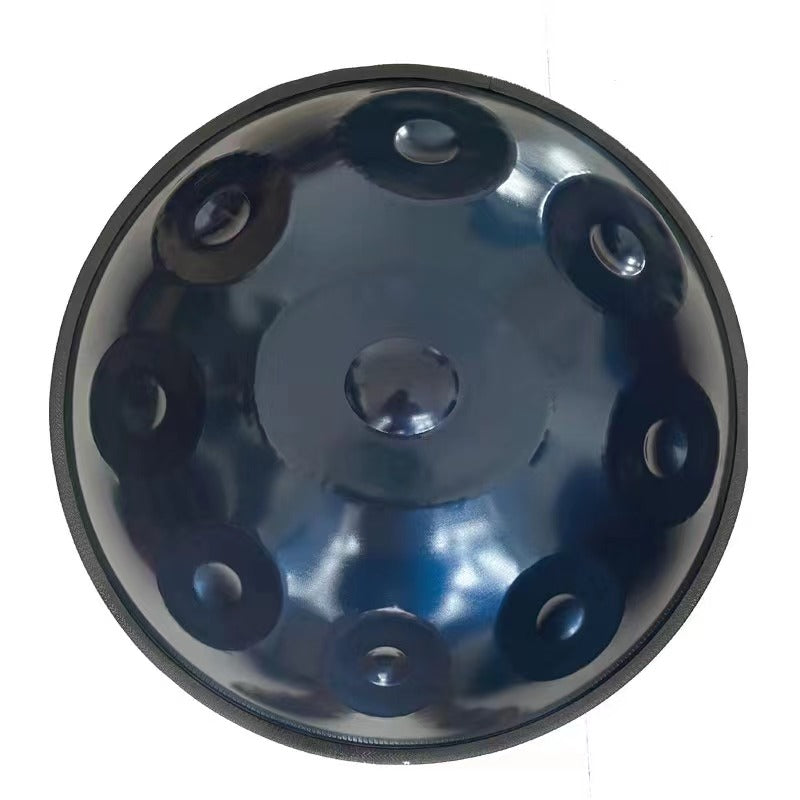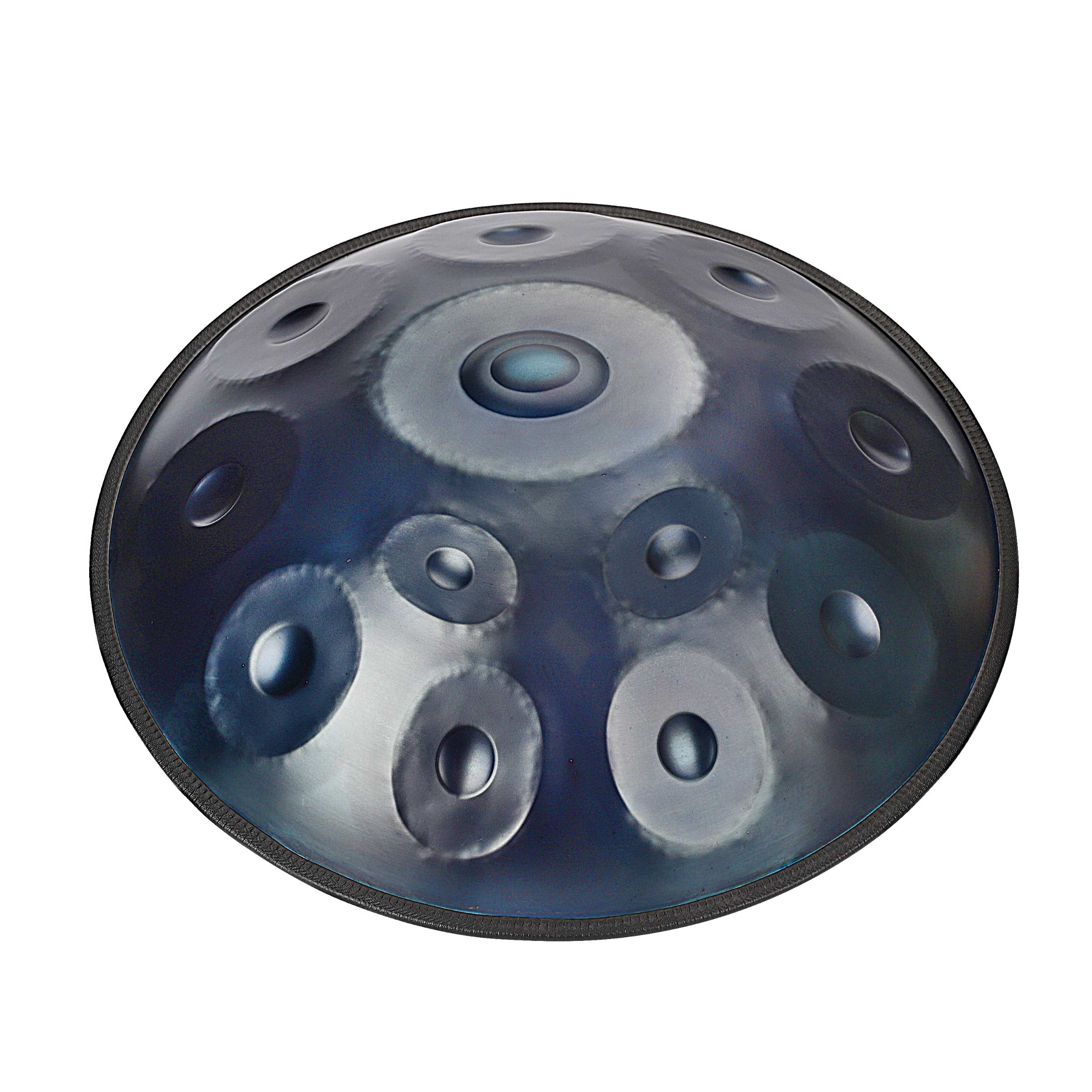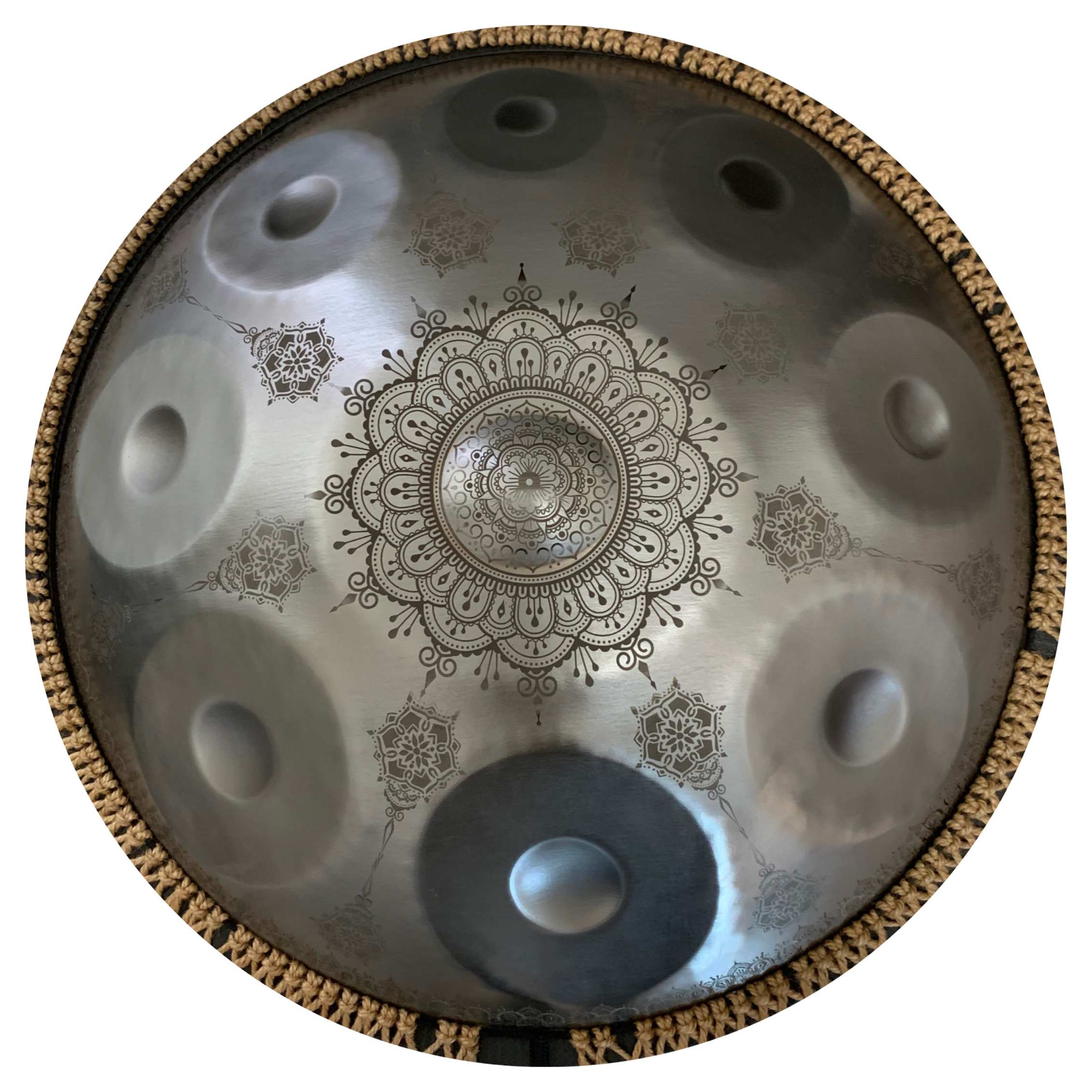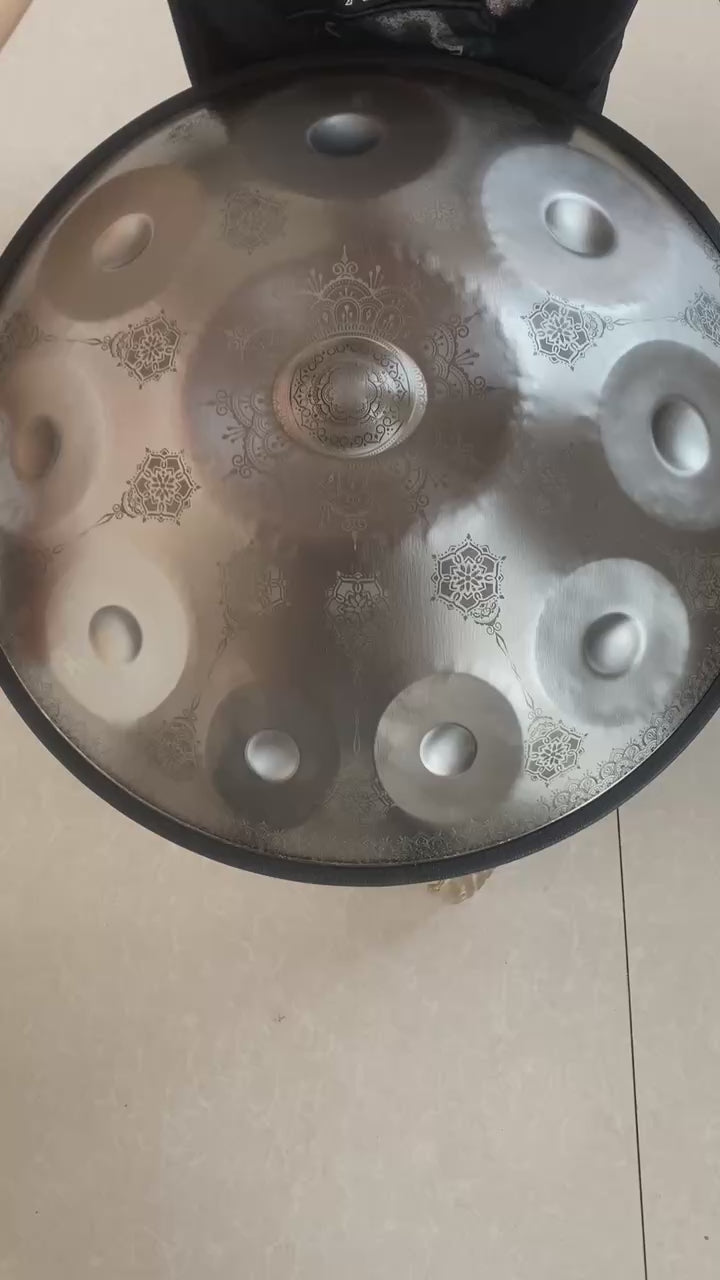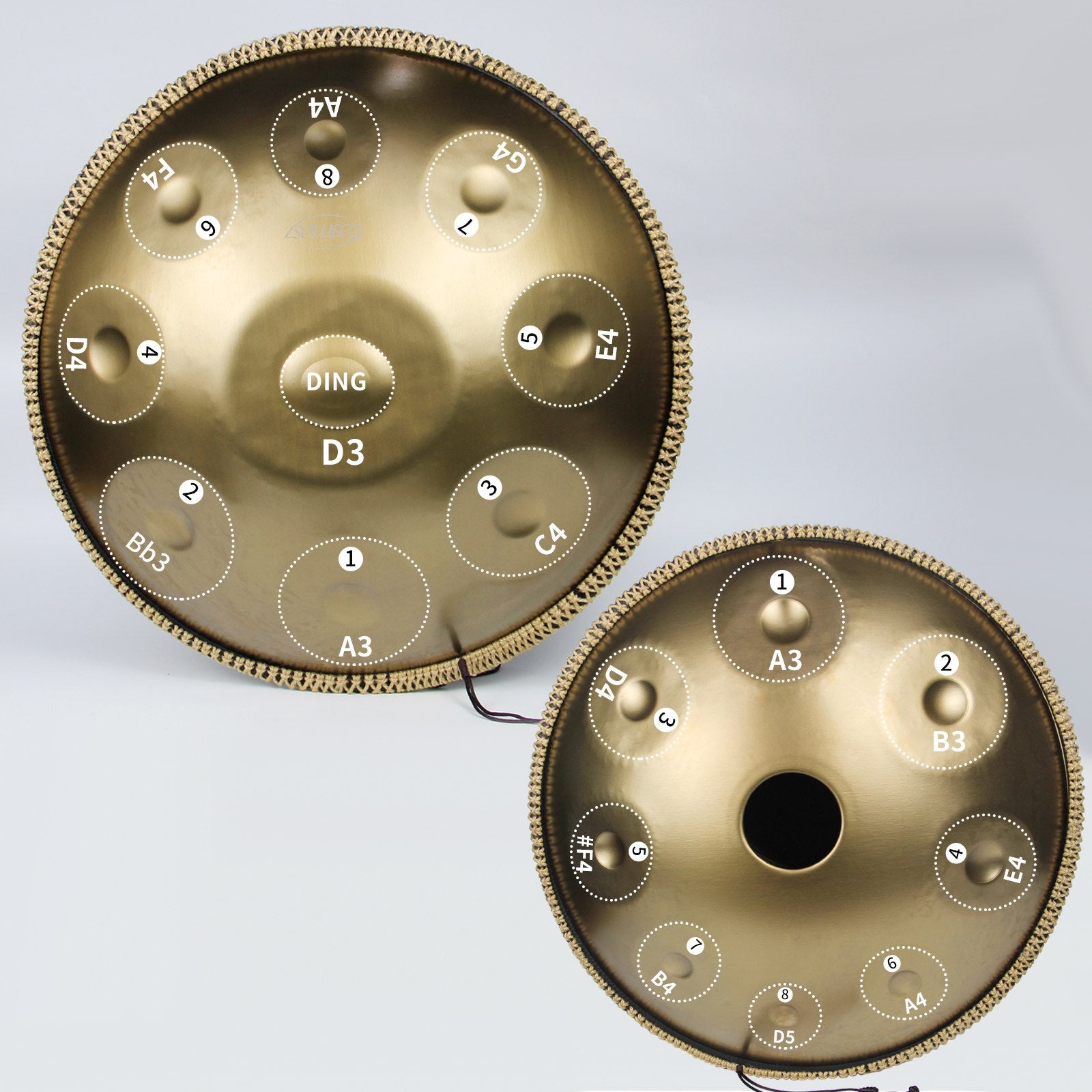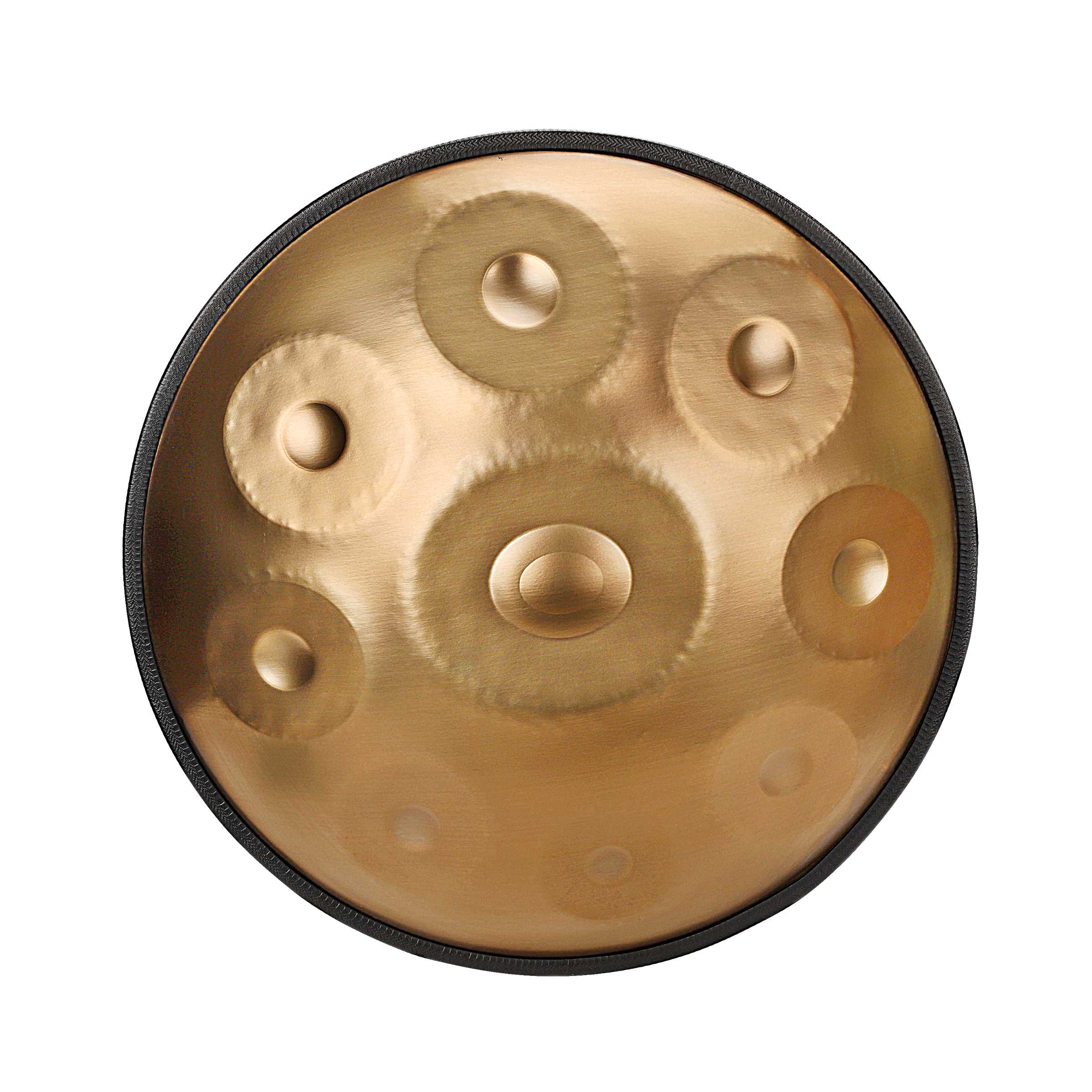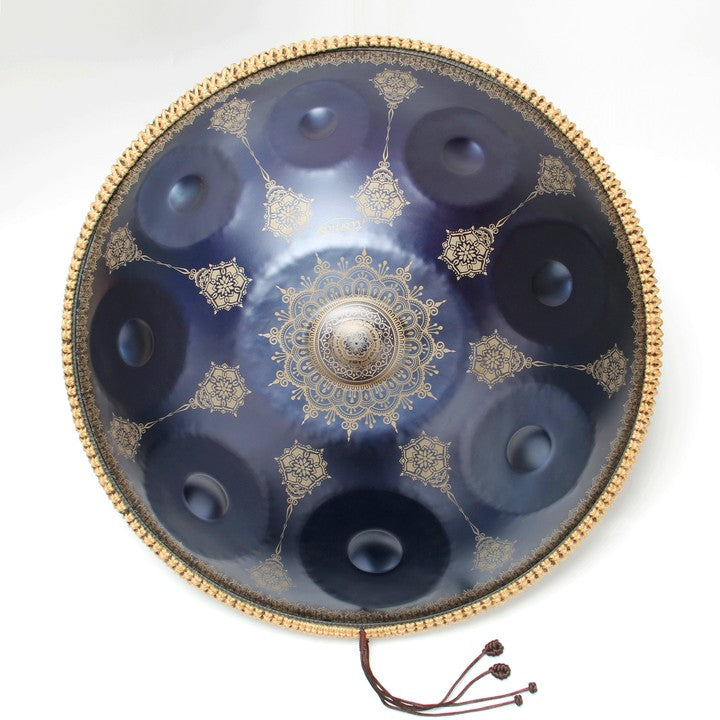

The acoustic landscape of the handpan industry has experienced a radical shift. Ten years ago, an 8-note or 9-note instrument was considered the absolute standard. Today, advanced metallurgy and precision hammer tuning have birthed a new echelon of instruments: the "mutant" or extended-layout handpans. At the absolute forefront of this movement is the e Amara 20 Handpan. This is not an entry-level instrument. It is an engineering marvel that stretches the physical limits of a steel shell, packing twenty distinct tone fields into a single resonating chamber.

From our experience crafting and tuning high-end steel instruments at Cosmos Handpans, we constantly witness players making a critical error: purchasing a massive 20-note instrument without understanding the acoustic physics or playing technique required to tame it. Squeezing 20 notes onto a standard 53cm or 54cm shell introduces severe challenges regarding sympathetic resonance, impedance, and harmonic bleed. If you do not possess the touch control to mute ringing frequencies, this instrument will sound like a chaotic wall of noise rather than a melodic masterpiece. In this uncompromising guide, we will dissect the architecture of the e Amara 20 Handpan, evaluate its true commercial and artistic utility, and dictate precisely whether you should make this substantial investment.
Quick Answer
The e Amara 20 Handpan is a professional-grade, extended-layout steel instrument tuned to the E minor Celtic scale (often referred to as Amara). It features 20 distinct notes distributed across both the top and bottom hemispheres of the shell. We recommend this instrument exclusively for advanced players, studio composers, and professional performers who require a massive melodic range and complex chordal capabilities. It is highly advised that you understand how many notes should a handpan have based on your skill level before purchasing. For beginners, a 20-note pan is overwhelming and counterproductive; you are much better off starting with a standard 9-note or 10-note layout to master basic isolation techniques.
Table of Contents
- What It Is: The E Amara 20 Ecosystem
- How It Works: Managing 20 Tone Fields
- The 6 Defining Features of the e Amara 20 Handpan
- Acoustic and Compositional Benefits
- Limitations and Hidden Bottlenecks
- Comparison Table: e Amara 20 vs Standard 9-Note
- Who Should Use It & Who Does Not Need It
- Common Mistakes When Upgrading
- Buying Considerations & Cost-Benefit
- Pros and Cons Table
- Expert Recommendation from Cosmos Handpans
- Frequently Asked Questions (FAQ)
What It Is: The E Amara 20 Ecosystem
To understand the e Amara 20 Handpan, you must first understand its voicing. The "Amara" scale is the handpan community's nomenclature for a minor scale that omits the 6th degree, deeply rooted in Celtic minor tonalities. In the key of E, the central Ding is tuned to E3, and the surrounding notes typically form an ethereal, slightly melancholic but highly resolved sequence (e.g., G3, B3, C4, D4, E4, F#4, G4, B4).
However, an instrument with 20 notes completely shatters the standard boundary. To fit 20 notes, manufacturers utilize a "mutant" design. This involves placing high-register notes on the top shell (sometimes squeezed between standard tone fields) and embedding an array of deep bass extensions and lower octave notes on the bottom shell (the Gu side). This transforms the handpan from a simple percussive drum into a full-range acoustic synthesizer. If you are struggling with scale theory, we highly suggest referencing a handpan notes chart to visualize this massive layout.
How It Works: Managing 20 Tone Fields
The fundamental physics of a handpan rely on Helmholtz resonance. When you strike a tone field, it excites the air inside the chamber, which escapes through the bottom port (the Gu). In our testing, engineering an e Amara 20 Handpan requires absolute metallurgical mastery. Because there are 20 tone fields on a single shell, each note is physically closer to its neighbor.
How it works in practice is a matter of isolation. Every single note on a handpan is tuned with three frequencies: the fundamental, the octave, and the compound fifth. When you strike the E3 Ding, you are actually triggering E3, E4, and B4 simultaneously. On a 20-note pan, striking that Ding sends shockwaves through the steel that can accidentally activate the B4 tone field located on the bottom shell. The player must use advanced muting techniques—resting a palm or a spare finger on certain notes—to prevent this sympathetic resonance from muddying the sound.
The 6 Defining Features of the e Amara 20 Handpan
1. The Celtic Minor (Amara) Voicing
The emotional core of this instrument is its scale. The E Amara scale lacks the aggressive tension of a Hijaz or the overt brightness of a Major scale. It sits in a pocket of deep, reflective resonance. The omission of specific half-steps gives the player massive freedom to improvise without ever hitting a "wrong" or dissonant note, making it incredibly popular for sound healing and cinematic composition.
2. Extensive Bottom Note Architecture
A standard handpan has a smooth bottom shell. The e Amara 20 features up to 10 notes hammered into the bottom dome. In most professional situations, players access these notes by either reaching underneath the rim with their thumbs or utilizing a specialized stand that allows the instrument to be played vertically. This feature doubles your bass response and chordal layering options.
3. Stainless Steel or Ember Steel Composition
You will rarely find a 20-note handpan made of standard nitrided steel. To support the extreme high frequencies (often reaching C6 or D6) without choking out, manufacturers utilize 1.0mm to 1.2mm stainless steel or proprietary ember steel alloys. These materials offer an incredibly long sustain profile, allowing slow, ambient chords to ring out beautifully.
4. Complex Harmonic Bleed Management
Because the tone fields are densely packed, makers must engineer physical isolation barriers. You will notice deeper, wider dimples and more pronounced interstitial borders (the flat space between notes) on an e Amara 20. This is a deliberate architectural feature designed to stop frequencies from bleeding into adjacent notes.
5. Symmetrical Layout for Advanced Arpeggios
Despite the high note count, the e Amara 20 is designed with strict ergonomic symmetry. The left and right hands alternate naturally up the scale. The top shell houses the primary melody, while the bottom shell is typically reserved for extended bass roots and extreme high accents. For an analytical breakdown of how these notes interact, reviewing the understanding handpan notes guide is critical.
6. Hyper-Sensitive Touch Response
Due to the tension required to tune 20 notes, the instrument's surface tension is incredibly high. This results in a hyper-sensitive touch response. You do not need to strike an e Amara 20 hard; a mere brush of the fingertip activates the fundamental frequency. For heavy-duty applications or aggressive busking, this sensitivity can be a liability, but for studio recording, it is a massive asset.
Acoustic and Compositional Benefits
The primary benefit of the e Amara 20 Handpan is the complete removal of creative limitations. A standard 9-note pan locks you into a single octave and a handful of chords. With 20 notes, you have access to three full octaves. You can play a driving, rhythmic bassline with your left hand reaching underneath the shell, while your right hand plays a soaring, complex melody on the top. It allows a single player to sound like a duet.
Limitations and Hidden Bottlenecks
We must use commercial and practical judgment here: a 20-note handpan is an acoustic tightrope walk. The most severe limitation is tuning stability. With 20 notes packed into a shell, the instrument is highly susceptible to going out of tune if dropped, left in a hot car, or played with heavy hands. If one note shifts, it can pull adjacent notes out of tune due to the shared tension. Furthermore, determining how much does a handpan cost becomes a sobering reality; 20-note instruments require weeks of manual labor and easily cost double or triple the price of a standard pan.
| Feature | e Amara 20-Note Handpan | Standard D Kurd 9-Note Handpan |
|---|---|---|
| Scale Range | Up to 3 full octaves | Slightly over 1 octave |
| Note Placement | Top and Bottom Shells | Top Shell Only |
| Sustain & Resonance | Massive sustain, high risk of crosstalk | Controlled sustain, high note isolation |
| Required Skill Level | Advanced / Professional | Beginner to Intermediate |
| Maintenance Needs | Frequent tuning checks required | Highly stable, infrequent tuning |
Who Should Use It & Who Does Not Need It
For commercial users, studio musicians, and professional composers: If you are recording cinematic scores, performing complex solo concerts, or require an instrument that can carry a full melodic and bass arrangement simultaneously, the e Amara 20 Handpan is the ultimate tool. Its depth allows you to compose music that rivals classical harp or piano arrangements.
Who does not need it: If you are just starting your musical journey, buying a 20-note pan is a critical mistake. It will overwhelm you. The bottom notes require complex body mechanics to reach, and the sympathetic resonance will frustrate you. We strongly advise beginners to consult a best handpan for beginners guide and purchase a high-quality 9 or 10-note instrument to master the fundamental touch techniques first.
Common Mistakes When Upgrading to 20 Notes
The most devastating mistake players make is striking the instrument too hard. Because a 20-note handpan has extreme internal tension, heavy striking will cause the metal to warp, permanently knocking the instrument out of tune. You must play with "hot fingers"—striking and pulling away instantly.
Additionally, failing to maintain the instrument is a costly error. You must understand how to tune a handpan and exactly when to send it back to the maker for a professional retune. A 20-note pan requires a touch-up tune significantly more often than a simpler instrument.
Buying Considerations & Cost-Benefit Analysis
| Consideration | What to Demand | Why It Matters |
|---|---|---|
| Maker Reputation | Verified master tuners only. | Tuning 20 notes without creating a muddy, discordant mess requires elite metallurgical skill. Do not buy cheap knock-offs. |
| Material Choice | 1.0mm - 1.2mm Stainless Steel. | Nitrided steel struggles to support the extreme high notes of a 20-note layout. Stainless provides the necessary sustain and rust resistance. |
| Bottom Note Layout | Ergonomic reach testing. | Ensure the bottom notes are placed where your thumbs can actually reach them without contorting your wrists painfully. |
| Pros of the e Amara 20 | Cons of the e Amara 20 |
|---|---|
| Provides an unparalleled 3-octave melodic range. | Highly susceptible to sympathetic resonance (crosstalk). |
| Allows for massive chordal structures and basslines. | Extremely high purchase price and long waitlists. |
| Celtic minor scale is emotionally evocative and highly intuitive. | Requires advanced muting techniques to play cleanly. |
| Eliminates the need to carry two separate handpans to a gig. | Heavier and more fragile than standard handpans. |
Expert Recommendation from Cosmos Handpans

In most professional situations, upgrading to an e Amara 20 Handpan is the final evolution of a percussionist's journey. However, you must approach this instrument with the respect it commands. It is not a toy; it is a highly volatile, tension-loaded acoustic resonator.
In the heart of Colorado, USA, Cosmos Handpan shines as a guiding light of musical innovation and soulful resonance. We have more than a decade of expertise in creating handpans and tongue drums. Passion, precision, and an unwavering pursuit of musical excellence steep our musical journey.
Our crafters pour their heart into each handpan, and when dealing with 20-note mutant layouts, that intricate workmanship is tested to its absolute limit. If you have mastered the 9-note pan and find yourself searching for missing accidentals or deeper bass roots, the e Amara 20 is the definitive upgrade. We recommend ensuring your playing environment is suited for its massive sustain—such as sound baths, studio recordings, or acoustic halls. If you are ready to forge cosmos connections through ethereal melodies, a masterfully tuned 20-note instrument will completely redefine your sonic identity.
Frequently Asked Questions (FAQ)
Yes, unequivocally. A 20-note handpan is overwhelmingly difficult for a novice. The presence of bottom notes requires complex hand coordination and spatial awareness. More importantly, the high risk of sympathetic resonance means the player must know how to actively mute ringing notes while striking others. Beginners lack this touch control and will end up creating a muddy, dissonant sound. Start with a standard 9-note pan.
The Amara scale is a proprietary naming convention within the handpan community for a minor hexatonic scale (specifically, a Celtic minor scale that omits the 6th degree). It creates a highly resolved, uplifting yet deeply melancholic sound. Because it lacks harsh dissonant intervals, it is perfectly suited for intuitive, flowing improvisation and sound healing.
Manufacturers place notes on the bottom shell (the Gu side) to extend the musical range of the instrument without increasing the physical 53cm diameter of the top shell. The top shell simply runs out of surface area. Utilizing the bottom shell allows makers to add deep bass roots and extreme high notes, turning a standard drum into a full-range acoustic synthesizer.
Authoritative References & Acoustic Standards
To ensure our acoustic analyses and tuning guidelines align with empirical physics, we reference the following authoritative organizations:
- Acoustical Society of America (ASA): Providing peer-reviewed research on Helmholtz resonance, modal analysis, and the non-linear dynamics of steel shells in percussion instruments. Explore ASA Research
- Percussive Arts Society (PAS): The premier organization for drummers and percussionists, setting the standard for performance techniques, striking mechanics, and instrument maintenance. Review PAS Guidelines
- Journal of the Acoustical Society of America (JASA): The definitive scientific journal detailing the exact vibrational modes (fundamental, octave, and compound fifth) required to properly tune a handpan tone field. Access JASA Tuning Data