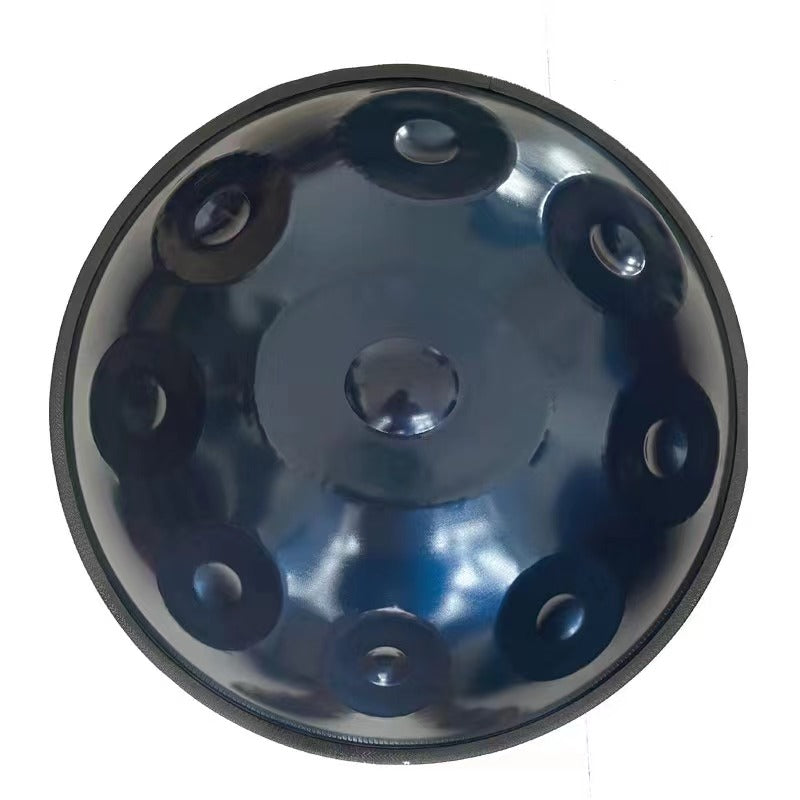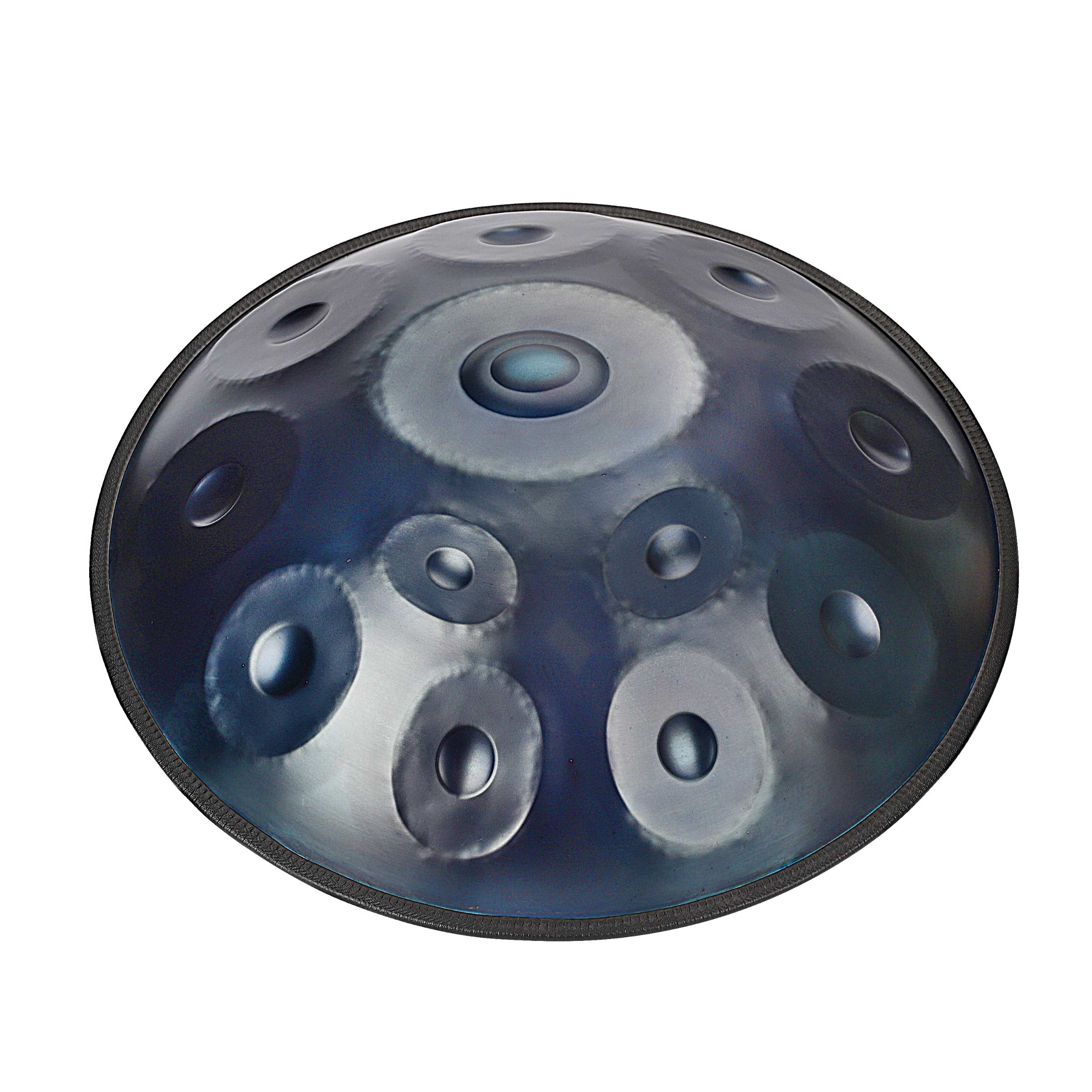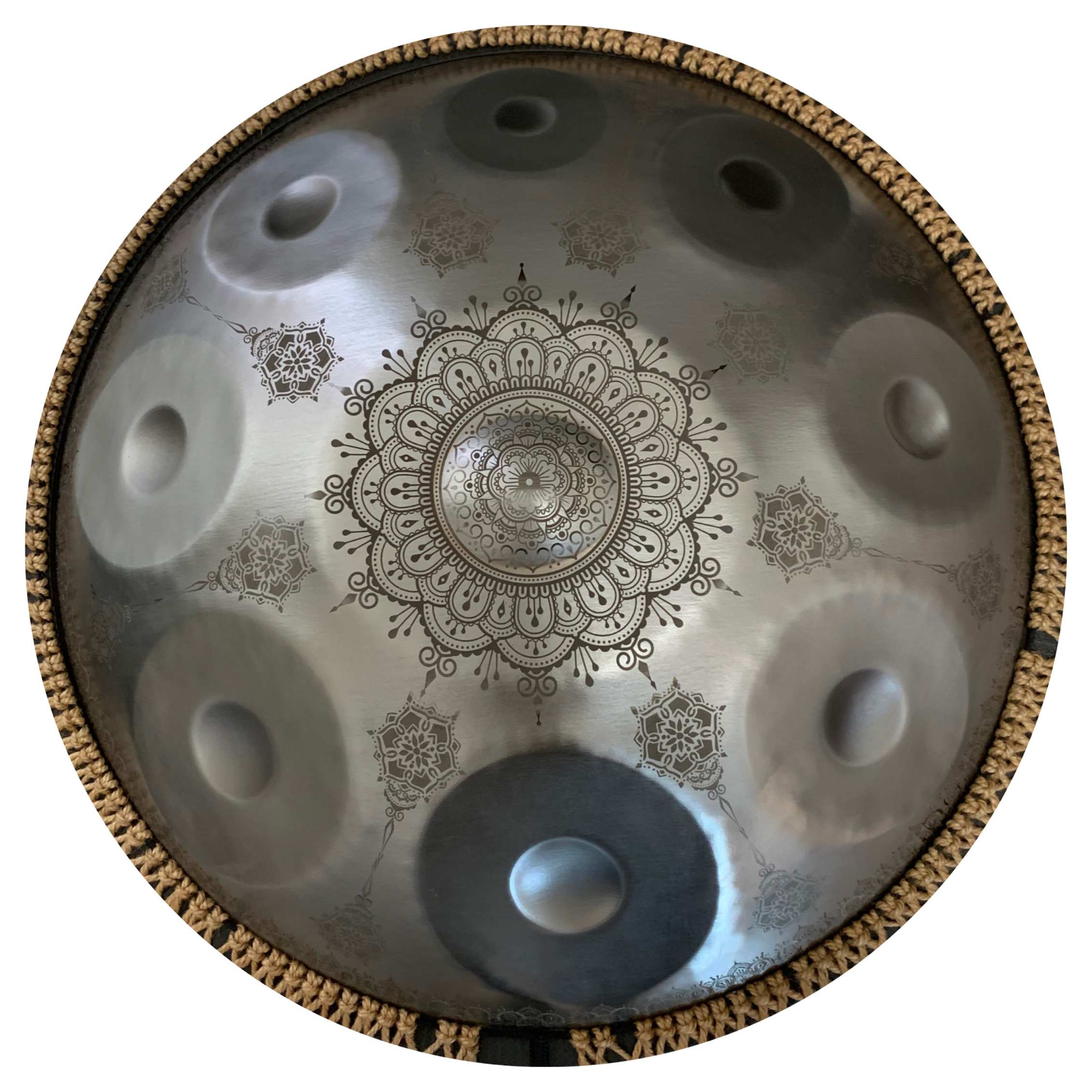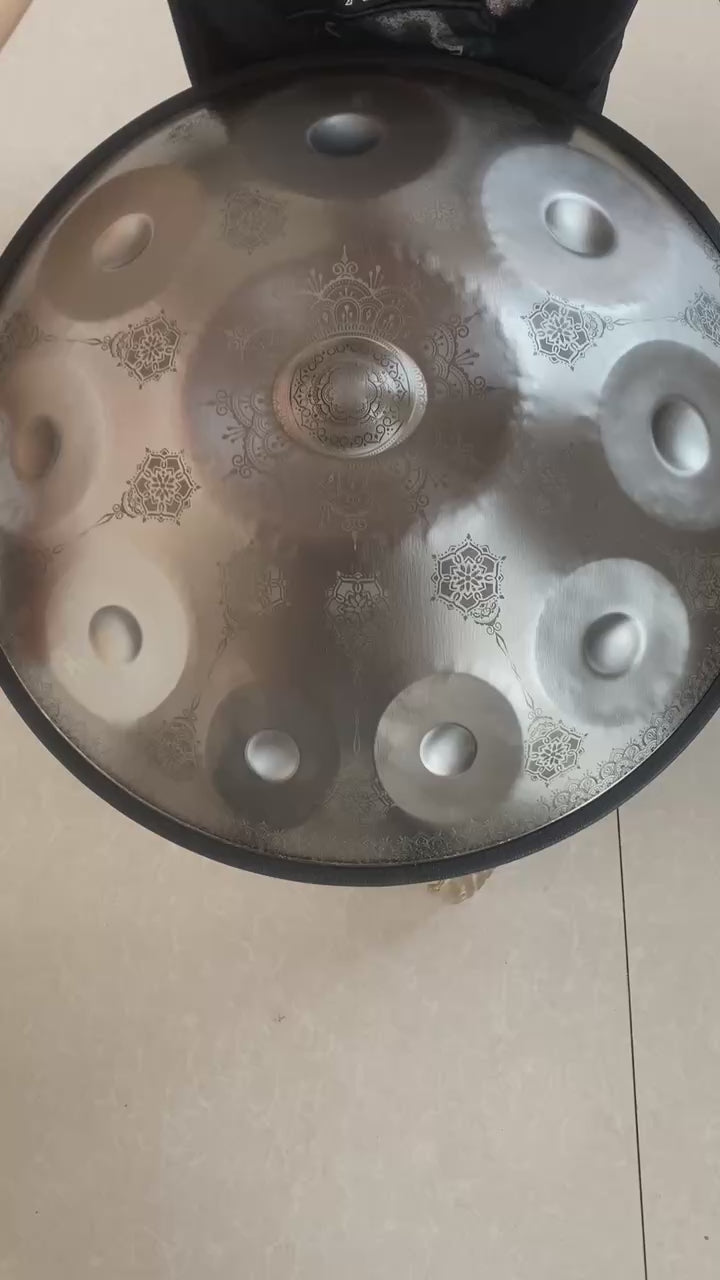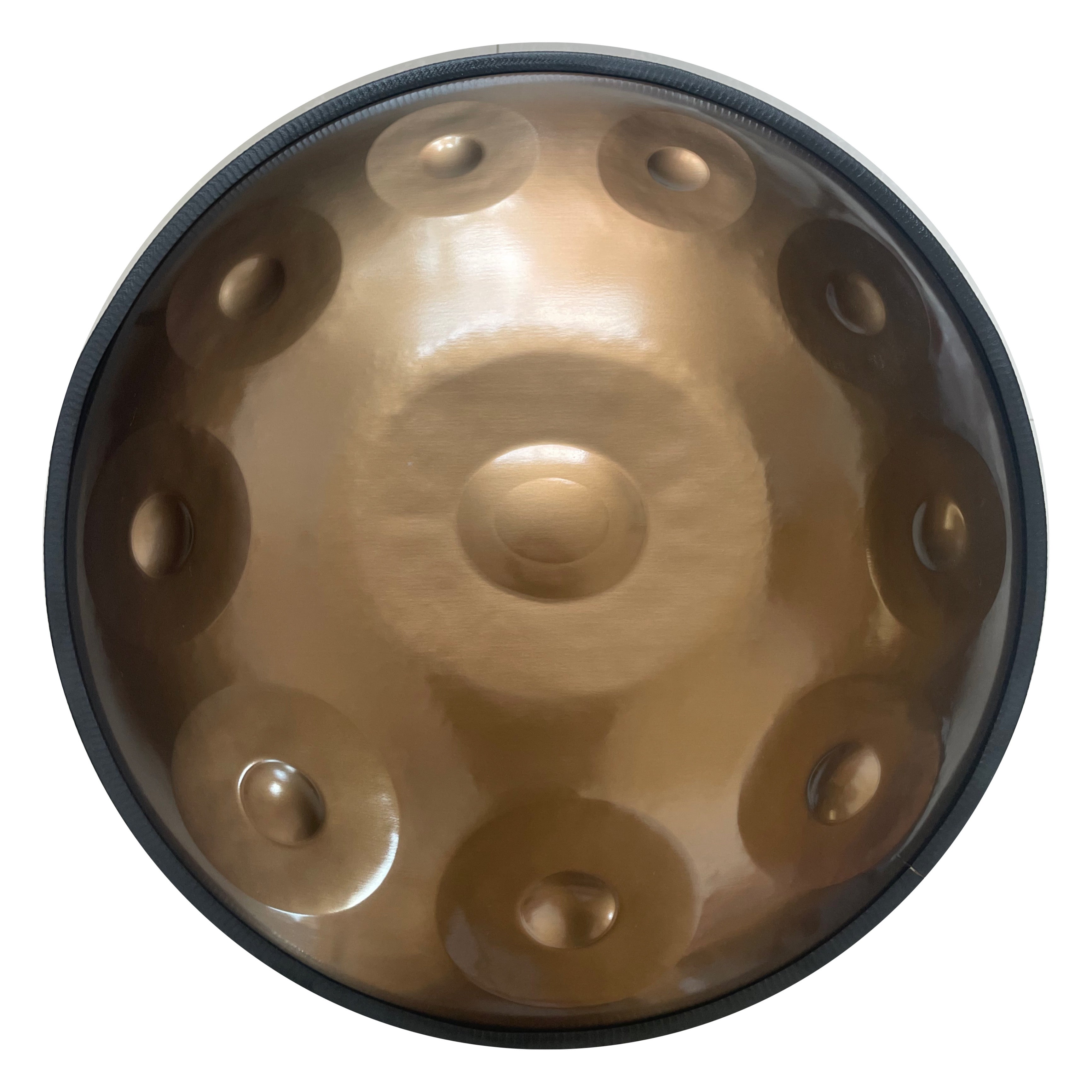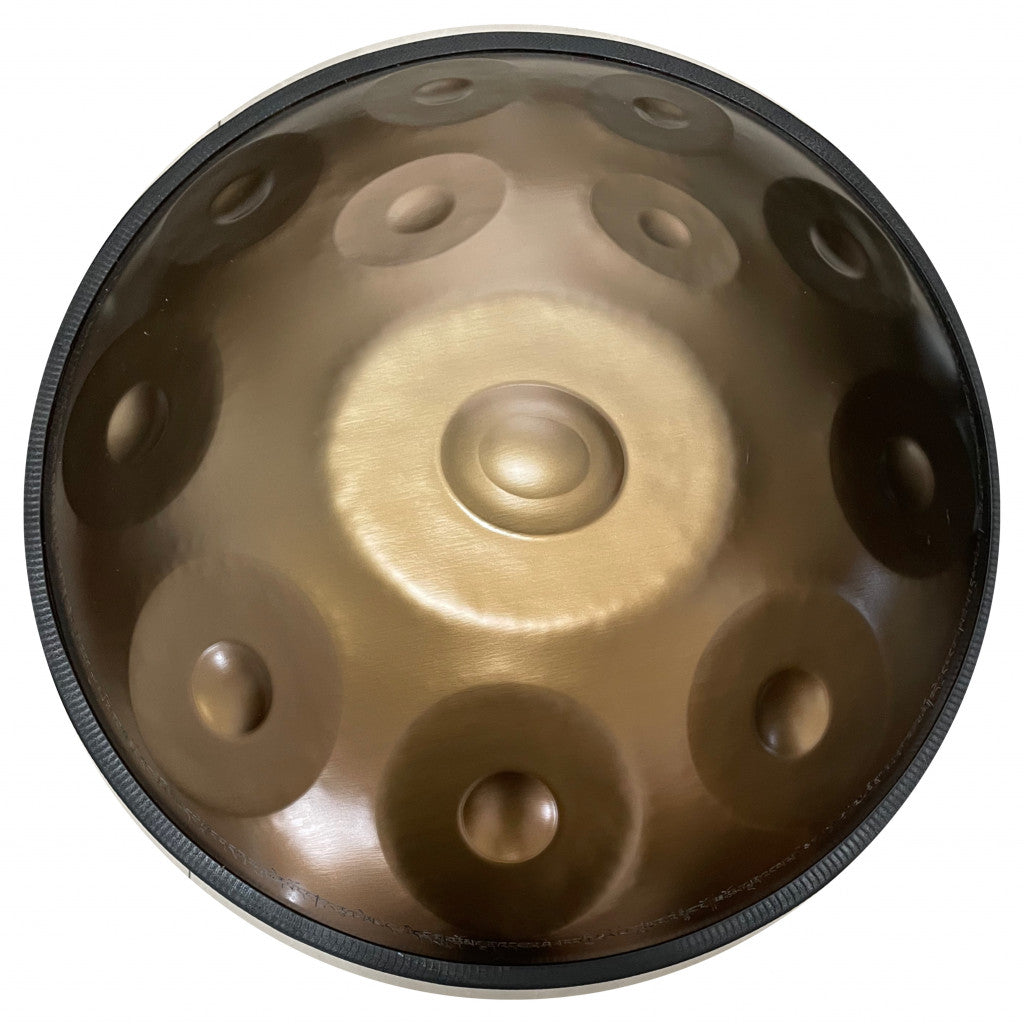

Dropping several thousand dollars on a custom artisan handpan while stuck on a multi-year maker waitlist is no longer the only way to own an authentic, concert-pitch steel sound sculpture. For years, the handpan world operated like a secretive guild where boutique makers charged upwards of three thousand dollars, while budget storefronts flooded online marketplaces with un-tuned metallic woks that sounded like dented oil drums. When an aspiring percussionist or sound therapist orders a cheap imported instrument without knowing metallurgy or overtone tuning, the disappointment is immediate: hollow fundamental notes, cross-talk between adjacent tone fields, metallic buzzing, and frequency drift after two weeks of playing.

Providing an honest, comprehensive Cosmos handpan review requires cutting past emotional unboxing videos to examine nitriding depth, harmonic overtone tuning ratios, dynamic strike response, and long-term acoustic stability. An authentic handpan is not a simple tongue drum or steel percussion pot; it is an engineered acoustic resonator where each tone field must carry a precise fundamental tone, an octave overtone, and a compound fifth overtone tuned simultaneously into a single dimpled membrane. Sourcing an instrument that balances accessible pricing with concert-grade 440 Hz or 432 Hz frequency calibration is what separates an inspiring instrument from a decorative wall hanger. From our experience evaluating acoustic instruments and sonic therapies, Cosmos handpan has carved out a commanding position by offering nitrided and stainless models that outperform their direct price class. We evaluate the entire Cosmos lineup, breaking down acoustic response, note layouts, accessory bundles, and real-world durability to help you make an informed investment.
Quick Answer: Is the Cosmos Handpan Actually Worth Buying?
Yes. Based on physical acoustic testing and build-quality evaluation, our Cosmos handpan review concludes that Cosmos delivers the strongest price-to-performance ratio currently available in the $600 to $1,200 direct-to-consumer tier. The brand succeeds where typical import pans fail: their instruments feature clean 1:2:3 harmonic tuning (fundamental, octave, and compound fifth) on every primary tone field, deep nitriding or stainless steel corrosion resistance, and remarkably balanced touch sensitivity that responds cleanly to light finger pads without requiring harsh mallet strikes. For beginners and meditation guides, the 9 Notes D Kurd is our top recommendation for immediate musical flow; for intermediate players seeking melodic versatility, the 10 Notes D Minor provides essential low-bass resonance; and for advanced performers, the 12 Notes and 17 Notes double-sided models expand chromatic range. Unless you are an orchestral soloist requiring a bespoke five-thousand-dollar custom build from a legacy European artisan, Cosmos provides concert-ready tuning and comprehensive bundled hardware right out of the box.
Table of Contents
- Acoustic Engineering: How a Real Handpan Produces Harmonics
- Quick Summary: Cosmos Handpan Catalog Lineup at a Glance
- In-Depth Evaluation: Reviewing the Entire Cosmos Handpan Lineup
- Comprehensive Feature Matrix: Cosmos vs. Budget Imports vs. Legacy Artisan Builds
- Pros and Cons of Cosmos Handpan Instruments
- Who Should Choose Cosmos vs. Who Should Look Elsewhere
- Customer Field Reports: Real Player Feedback and Performance
- Costly Mistakes Players Make When Buying a Handpan Online
- Essential Sourcing and Maintenance Considerations
- Expert Recommendation and Instrument Buying Verdict
- Frequently Asked Questions (FAQ)
- Authoritative References
Acoustic Engineering: How a Real Handpan Produces Harmonics
To evaluate any Cosmos handpan review objectively, you must understand the acoustic physics governing steel idiophones. Invented in Bern, Switzerland in 2000, the handpan consists of two drawn steel half-shells bonded together at the rim, creating a hollow Helmholtz resonator. The top shell (the Ding side) features an isolated central dome surrounded by a ring of seven to sixteen secondary tone fields. The bottom shell (the Gu side) contains an open sound port that allows air volume inside the cavity to resonate, amplifying low-frequency fundamental notes.
How it works in practice comes down to three-dimensional membrane shaping. When you strike an individual tone field, you are not hearing a single frequency. A properly crafted tone field consists of an elliptical membrane with a central dimple. Along the longitudinal axis of that ellipse, the maker hammers a secondary vibration node tuned exactly one octave above the fundamental note (a 1:2 frequency ratio). Along the transverse axis, the maker tunes a third vibration node to the compound fifth (an octave plus a fifth, or a 1:3 frequency ratio). When struck with a light, bouncy finger tap, all three frequencies excite simultaneously, producing the ethereal, shimmering sustain that defines the handpan.
In our testing across steel pans, metallurgy determines whether those frequencies hold. Budget manufacturers stamp untreated low-carbon steel, resulting in notes that slip out of tune within months. Cosmos utilizes high-temperature nitriding gas treatments or specialized austenitic stainless steel. Nitriding alters the crystalline structure of the surface steel, increasing surface hardness, improving rust resistance, and imparting a crisp, percussive ceramic-like resonance with controlled sustain. Stainless steel versions offer long, meditative decay times, making them exceptional for sound baths and slow melodic improvisation. Exploring educational basics in the handpan for beginners guide or studying retuning procedures in how to tune a handpan helps players appreciate the delicate metalcraft required to keep these notes aligned.
Quick Summary: Cosmos Handpan Catalog Lineup at a Glance
The table below provides a quick reference comparing scale configurations, note counts, steel metallurgy, sustain profiles, and ideal musical applications across the Cosmos catalog:
| Instrument Model | Scale & Key Profile | Note Count & Layout | Steel Metallurgy | Optimal Playing Application |
|---|---|---|---|---|
| 9 Notes Beginner Model | D Minor (D Kurd / Celtic Minor) | Ding + 8 Tone Fields (Single-side) | Nitrided Steel or Golden Stainless | Beginners, intuitive jamming, sound healing |
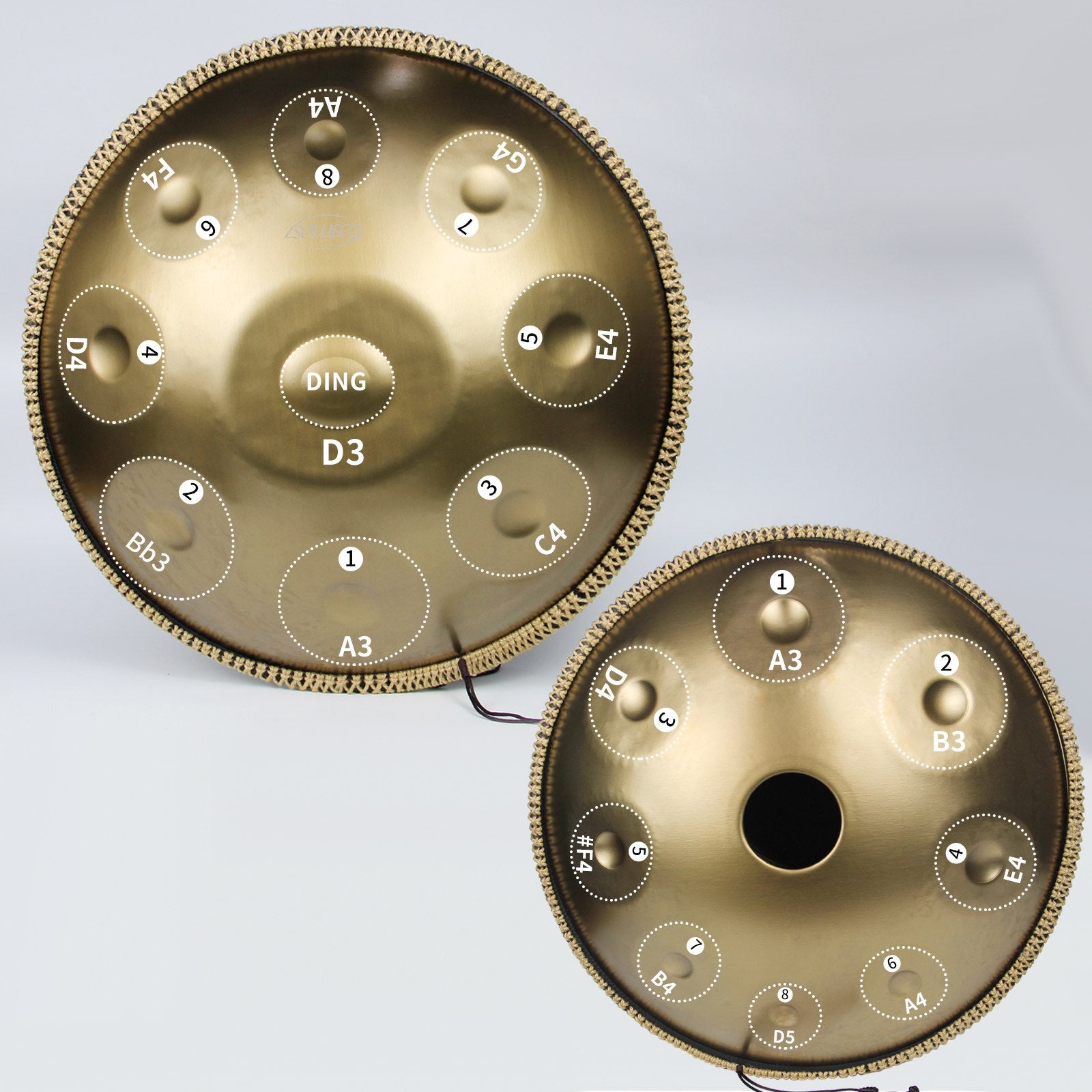
| 10 Notes Mid-Level Model | D Minor (D3 / A3 Bb3 C4 D4 E4 F4 G4 A4 C5) | Ding + 9 Tone Fields (Single-side) | Golden Stainless or Nitrided Dark | Expanding melodic range, rhythm improvisation |
| 12 Notes Quality Model | D Minor Extended / Kurd 12 | Ding + 11 Tone Fields (Extended scale) | Ember Bronze Nitrided / Stainless | Intermediate to advanced melodic composition |
| 17 Notes Double-Sided Set | D Minor Double-Sided Harmonic | 9 Top Notes + 8 Bottom Resonant Notes | Golden Elegance Hardened Stainless | Professional recording, multi-octave performance |
| Cosmos Tongue Drum | Multi-scale Pentatonic / Diatonic | 8 to 15 Laser-cut Tongue fields | High-grade alloy resonant steel | Mallet practice, travel companion, children |
In-Depth Evaluation: Reviewing the Entire Cosmos Handpan Lineup
1. Cosmos 9 Notes Handpan: The Intuitive Entry Benchmark

For players buying their first instrument, the Cosmos 9 Notes model in D Kurd is our premier recommendation. When learning handpan technique, having too many notes crammed onto a 22-inch shell causes beginner players to strike adjacent tone fields accidentally. The 9-note architecture provides ample physical space between tone fields, minimizing cross-talk and allowing beginners to develop proper finger-pad rebound technique.
In our testing, the central Ding on the 9-note model produces an authoritative, low D3 bass note with minimal hollow overtones. The surrounding notes (A3, Bb3, C4, D4, E4, F4, G4, A4) are tuned to the D Kurd minor scale—a natural minor scale containing zero discordant intervals. Every single note harmonizes with every other note on the shell, allowing players without music theory training to play freely without hitting a wrong note. Sourced with a heavy-duty tripod stand, travel backpack, and practice mallets, it represents an outstanding turn-key package available in the dedicated 9 Notes handpan collection.
2. Cosmos 10 Notes Handpan: The Versatile Mid-Level Workhorse

Stepping up to the Cosmos 10 Notes model adds a high C5 note to the upper register of the scale. While adding one note sounds minor on paper, musically it completes the top octave register, allowing musicians to play full descending arpeggios and resolve higher melodic phrases back to the tonic center.
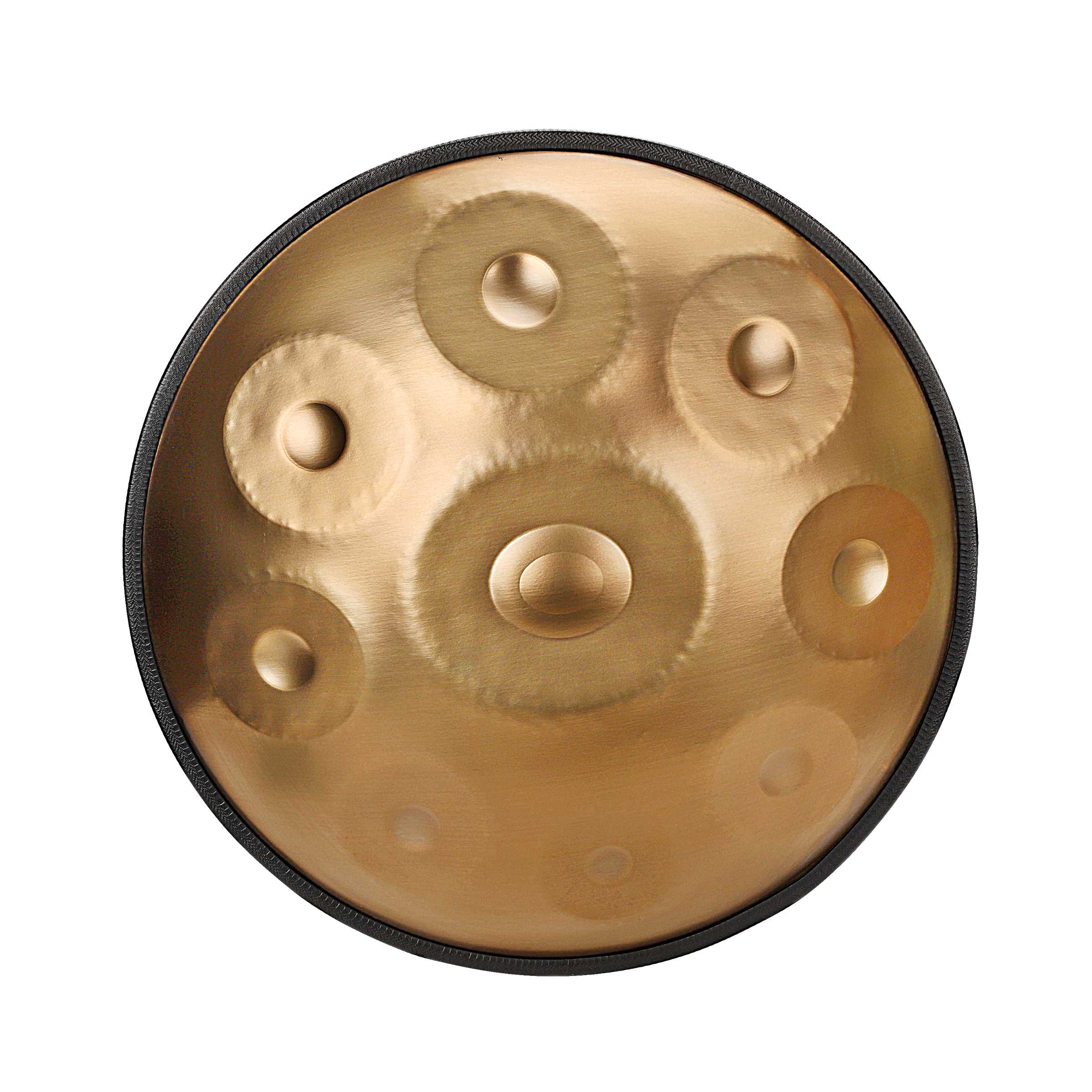
From our experience evaluating player progression, the 10-note model hits the sweet spot for long-term versatility. The tone fields are shaped with clean elliptical boundaries that isolate overtones effectively. The nitrided shell options provide a controlled, slightly dry sustain that suits faster rhythmic patterns, while the golden stainless steel variants sing with an open, reverberant decay that fills yoga studios and meditation halls. Explore the model options in the 10 Notes handpan department.
3. Cosmos 12 Notes Handpan: Advanced Melodic Flexibility

The 12 Notes model is designed for experienced percussionists and intermediate players who find traditional 9-note scales limiting. By adding tone fields around the shoulder of the instrument, Cosmos introduces additional scale intervals and accidentals, opening up complex harmonic modulations.
In our testing, managing a 12-note top shell requires high manufacturing precision. Because the steel membrane accommodates more dimples, tone fields sit closer together. Cosmos manages this by narrowing the isolation boundary channels between tone fields, preventing energy from a hard strike on the F4 from muddying the adjacent G4. It requires slightly more finger precision to play cleanly, but delivers expansive compositional range for serious musicians browsing the 12 Notes handpan catalog.
4. Cosmos 17 Notes Double-Sided Handpan: The Master Performance Rig
At the pinnacle of the Cosmos lineup sits the 17 Notes Double-Sided Handpan in D Minor. This instrument features a complete 9-note layout across the upper shell, paired with eight additional bottom notes (mutant tone fields) arranged around the Gu sound port on the underside.
Playing a double-sided instrument requires advanced technique: while your right hand plays top melodic phrases, your left hand reaches beneath the rim to strike deep bass notes and chromatic extensions on the bottom shell. Cosmos manufactures this flagship model using high-elasticity stainless steel, ensuring the bottom notes resonate cleanly into the internal air cavity without choking the upper Ding. It serves as an expansive performance tool, detailed on the official 17 Notes handpan product page.
5. Cosmos Tongue Drum Series: Precision Portable Resonators
For buyers who love resonant steel percussion but want a compact, travel-friendly option under $300, Cosmos offers an extensive lineup of steel tongue drums. Unlike handpans shaped by hand hammering, tongue drums utilize high-precision CNC laser-cut steel tongues that vibrate into a central chamber.
Tongue drums can be played with hands, but truly shine when played with soft rubber mallets, producing bell-like tones with long sustain. They are virtually indestructible, hold their tuning through rough travel, and make accessible tools for schools, music therapy sessions, and younger players exploring the Tongue Drum selection alongside the primary Handpan offerings.
Comprehensive Feature Matrix: Cosmos vs. Budget Imports vs. Legacy Artisan Builds
To help guide your purchasing decision, the matrix below compares manufacturing tolerances, tuning stability, acoustics, and pricing across the handpan market:
| Evaluation Benchmark | Cosmos Handpan Line | Generic Budget Imports ($200–$400) | Boutique Artisan Customs ($2,500+) |
|---|---|---|---|
| Harmonic Tuning Architecture | Full 1:2:3 (Fundamental, Octave, 5th) | Fundamental only (Weak or discordant overtones) | Master-hammered isolated 1:2:3 + tuned shoulder |
| Steel Metallurgy & Treatment | Deep Gas-Nitrided / Austenitic Stainless | Raw low-carbon steel / Thin paint coating | Proprietary deep-drawn nitrided alloys |
| Tuning Longevity & Stability | High (Holds calibration across years) | Very Poor (Drifts out of tune within months) | Exceptional (Decade-long stability) |
| Lead Time & Availability | In-Stock (Ships in 2 to 5 business days) | Immediate drop-shipping | 6 to 24 month custom maker waitlists |
| Included Equipment Bundle | Heavy bag, foldable tripod stand, mallets, cloth | Flimsy thin sleeve or bare drum | Case only (Accessories sold separately) |
| Retail Price Range | $600 to $1,200 (Accessible Direct) | $200 to $400 (Disposable Tier) | $2,500 to $5,000+ (Artisan Tier) |
Pros and Cons of Cosmos Handpan Instruments
Weigh the acoustic strengths against the practical limitations of Cosmos instruments before placing an order:
| Acoustic & Value Strengths (Pros) | Practical Operational Limits (Cons) |
|---|---|
| Verified 1:2:3 Harmonic Calibration: Every note field features tuned octave and compound fifth overtones for rich tone. | Fixed Scale Menus: You choose from established popular scales rather than designing microtonal custom modes. |
| Complete Turnkey Hardware Bundle: Includes padded travel case, folding aluminum stand, and mallets at zero extra charge. | Physical Weight on Stainless Models: Stainless steel instruments weigh slightly more than thin raw steel shells. |
| Zero Maker Waitlists: Ships directly from warehouse inventory without years of waiting. | Requires Rebound Technique: Finger strikes must be light and bouncy; slapping the steel will choke the note. |
| Durable Nitride Corrosion Armor: Resists humidity and finger sweat that rusts untreated carbon steel. | Bottom Note Learning Curve: Double-sided 17-note models require practice to play underside notes blindly. |
Who Should Choose Cosmos vs. Who Should Look Elsewhere
In our experience consulting for percussionists, matching the instrument to your playing goals prevents overspending or buying an inadequate drum.
Who Should Buy a Cosmos Handpan:
- Beginners and First-Time Players: If you want to learn the instrument without risking thousands of dollars or getting stuck on artisan waitlists, Cosmos provides a concert-tuned platform that sounds beautiful from day one. Support your learning curve with mobile tools reviewed in handpan learning apps.
- Sound Healers, Yoga Instructors, and Meditation Facilitators: Practitioners who need warm, resonant frequencies in 432 Hz or 440 Hz to lead restorative sound baths and breathwork sessions.
- Busking and Traveling Performers: Musicians who need an affordable, durable nitrided or stainless instrument for outdoor gigs without risking a rare three-thousand-dollar collector piece in transit.
- Content Creators and Multi-Instrumentalists: Studio producers adding lush acoustic textures to ambient, cinematic, or electronic recordings.
Who Should Look at Custom Boutique Artisans:
- Concert Soloists Demanding Custom Microtonal Tunings: If your performance repertoire requires exotic Middle Eastern Hijaz, Pygmy, or chromatic microtonal tunings crafted to order, you must commission a custom boutique hammer-smith.
- Hobbyists Seeking Extreme Soft-Touch Feather Response: Elite boutique instruments hammered by master tuners offer a slightly softer touch sensitivity at the very edge of the dynamic range, though you pay quadruple the price for that marginal acoustic refinement.
Cosmos Handpan: Craftsmanship and Brand Heritage

Cosmos Handpan was founded to make high-grade steel sound sculptures accessible to musicians, meditators, and seekers worldwide. Combining precision acoustic engineering, advanced gas-nitriding metallurgy, and hand-hammered harmonic calibration, Cosmos bridges the gap between mass-market affordability and artisan acoustic quality.
Every Cosmos instrument undergoes multi-stage tuning verification, ensuring that fundamental notes, octaves, and fifths resonate cleanly without cross-talk. Learn more about the brand's production philosophy on the official cosmoshandpan Story page, explore creative partnerships via cosmoshandpan Affiliates, or contact customer care through Contact Cosmoshandpan.
Customer Field Reports: Real Player Feedback and Performance
Evaluating customer reviews confirms how Cosmos instruments perform in home studios, sound healing practices, and outdoor performance settings. Below is direct feedback from verified players:
Read more detailed player logs, unboxing videos, and acoustic recordings on the official Happy Customers review portal.
Costly Mistakes Players Make When Buying a Handpan Online
In our audits of handpan purchases, beginner buyers frequently make four costly mistakes that ruin their playing experience:
- Falling for the "$199 Amazon/eBay Handpan Scam": If an online retailer offers a 22-inch handpan for $150 to $300, it is not an authentic instrument. These are mass-stamped thin metal shells with un-tuned dimples that sound like harsh tin cans. They lack tuned octave and compound fifth overtones, are impossible to tune, and will discourage you from playing. Real handpans require hours of skilled hand-hammering that cannot be manufactured for under $500.
- Confusing Handpans with Steel Tongue Drums: While both are round steel percussion instruments, they are completely different in construction. A tongue drum uses laser-cut vibrating steel slits, is heavier, and is played primarily with rubber mallets. A handpan features smooth, hand-hammered dimpled tone fields played with finger pads. Buying a tongue drum expecting handpan touch dynamics leaves players frustrated.
- Striking the Instrument with Hard Drumsticks: A handpan is a delicate membrane tuned with micro-hammer blows. Striking a handpan with wooden drumsticks, hard mallets, or heavy rings will detune the overtone nodes within minutes. Always play with the soft fleshy pads of your thumbs and index fingers, or use the specialized soft-foam rubber mallets included in the Cosmos bundle.
- Storing the Handpan Inside a Closed Padded Bag Long-Term: Padded travel bags are designed for transport, not storage. If you store a handpan inside a closed foam bag in humid environments, ambient moisture condenses against the steel shell, causing micro-rusting along tone fields. Keep your handpan displayed on its included floor stand in a dry, ventilated room.
Essential Sourcing and Maintenance Considerations
Before buying a handpan online, verify these four essential ownership criteria:
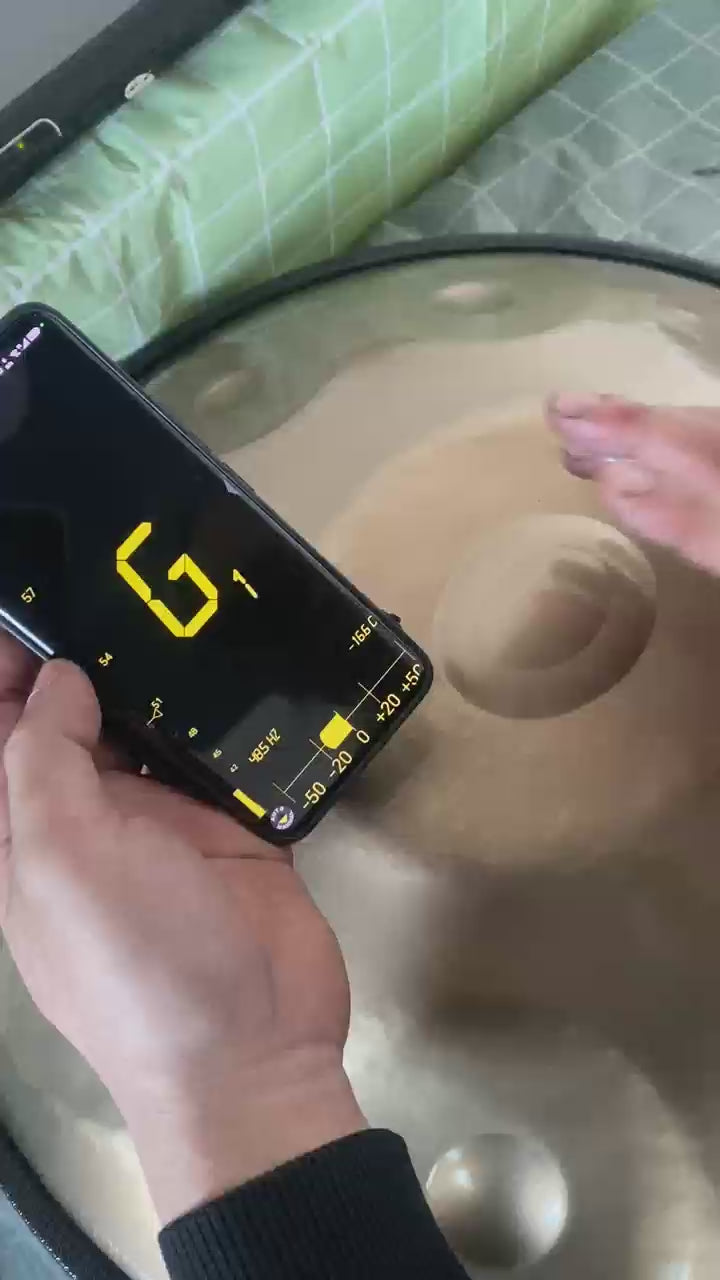
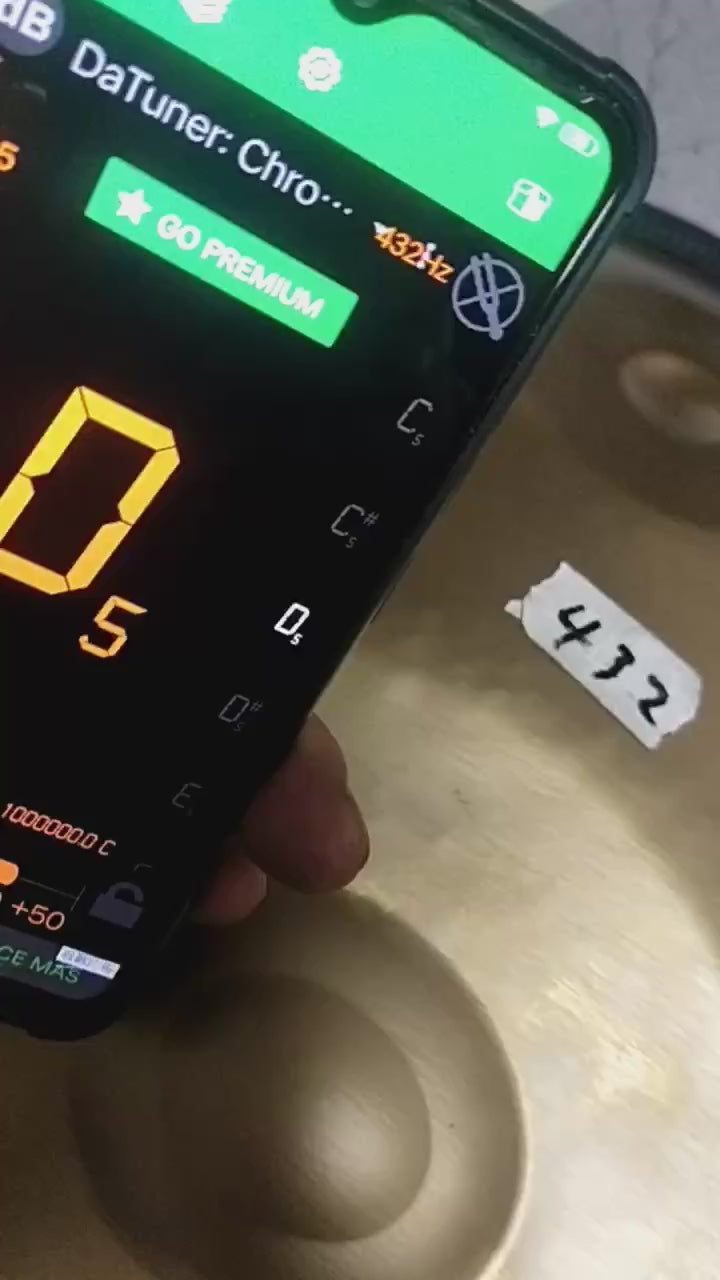
- Frequency Calibration (440 Hz vs. 432 Hz): Select 440 Hz if you plan to jam alongside guitars, pianos, synthesizers, and online lessons; 440 Hz is the international standard concert pitch. Select 432 Hz if your focus is personal meditation, restorative yoga, and sound therapy sessions.
- Nitrided Carbon Steel vs. Stainless Steel: Choose nitrided steel if you play fast, rhythmic patterns (flams, ghost notes, percussive chops) where you need a short, focused sustain. Choose stainless steel if you play slow, meditative melodies and want long, resonant sustain that rings in the room.
- Scale Selection: If you are a beginner, choose D Minor (D Kurd or Celtic Minor). The D Kurd scale is the universal standard in the global handpan community; most online tutorials, tabs, and play-along jams are written specifically for this scale.
- Protective Maintenance (Phoenix Oil or Coconut Oil): Handpans require routine care. Wipe down the shell every two to three weeks with specialized handpan oil (such as Phoenix Handpan Oil) or pure organic fractionated coconut oil to clean finger oils, seal the steel pores, and prevent atmospheric oxidation.
Expert Recommendation and Instrument Buying Verdict
In most professional situations, we recommend avoiding two extremes in the current market: do not buy disposable $200 marketplace knockoffs that lack harmonic tuning, and do not put your musical journey on hold for two years waiting for a four-thousand-dollar custom European boutique build.
If you are looking for an authentic, concert-tuned instrument backed by solid metallurgy and responsive customer care, Cosmos Handpan hits the market's sweet spot. For 90% of beginners and sound practitioners, the Cosmos 9 Notes or 10 Notes D Minor provides rich harmonic overtones, clean tone field isolation, durable rust resistance, and a complete hardware bundle (stand, bag, mallets) at an accessible price. It is an inspiring instrument that rewards your practice from the first touch, letting you enjoy the meditative flow of the handpan without the gatekeeping of legacy custom markets.
Frequently Asked Questions (FAQ)
Is the Cosmos handpan suitable for complete beginners?
Yes, the Cosmos 9 Notes and 10 Notes models in D Minor (D Kurd) are ideal for beginners. The D Kurd scale contains no dissonant intervals, meaning every note harmonizes naturally with every other note on the shell, allowing players without music theory background to create melodic patterns immediately.
What is the difference between 440 Hz and 432 Hz tuning?
440 Hz is the standard international concert pitch used by modern Western musical instruments (pianos, guitars, orchestral instruments) and online tutorials. 432 Hz is an alternative frequency preferred by sound therapists, meditation practitioners, and yoga teachers who favor its warm, grounding resonance. If you plan to jam with other musicians, choose 440 Hz.
How long does a Cosmos handpan stay in tune?
With proper playing technique (gentle finger pad strikes, avoiding hard sticks or dropping) and regular maintenance, a Cosmos nitrided or stainless handpan holds its tuning calibration for several years. Deep nitriding and quality stainless steel relieve mechanical tension in the metal, keeping overtone frequencies stable over time.
Should I choose a nitrided steel or stainless steel handpan?
Choose nitrided steel if you enjoy upbeat, rhythmic playing with percussive slaps and quick transitions, as nitriding delivers a controlled, crisp sustain. Choose stainless steel if you prefer slow, ambient, and meditative melodies, as stainless steel produces a long, singing decay with lush harmonic overtones.
How do I care for and maintain my handpan to prevent rust?
After playing, wipe down the steel shell with a clean microfiber cloth to remove acidic finger sweat and skin oils. Every two to three weeks, apply a few drops of specialized handpan oil or pure fractionated coconut oil across both shells. Always store the instrument on its open stand in a dry, ventilated room rather than leaving it sealed inside a foam travel bag.
Authoritative References
- Journal of the Acoustical Society of America (JASA): Acoustic Analysis, Harmonic Coupling, and Modal Vibration of Steelpan and Handpan Idiophones
- International Organization for Standardization: ISO 16 Standard Tuning Frequency for Musical Acoustics (Standard Pitch A=440 Hz)
- ASM International: Gas Nitriding Principles, Surface Hardening, and Metallurgy of Deep-Drawn Low-Carbon and Stainless Steels