A D Kurd 9 handpan is an excellent instrument for learning intuitive melody, but beginners often make the same mistake: they try to play complicated patterns before understanding how the notes work together. The D Kurd scale is particularly rewarding because its arrangement encourages flowing melodies, atmospheric improvisation, and expressive rhythms without requiring advanced music theory.
In this D Kurd 9 handpan tutorial, we will explain the note layout, show you how to develop proper handpan striking technique, introduce practical exercises, and guide you through your first melodies. Whether you have just purchased your first handpan or want to improve your improvisation, the goal is to help you make music confidently rather than simply memorize note sequences.

Direct Answer: How Do You Play a D Kurd 9 Handpan?
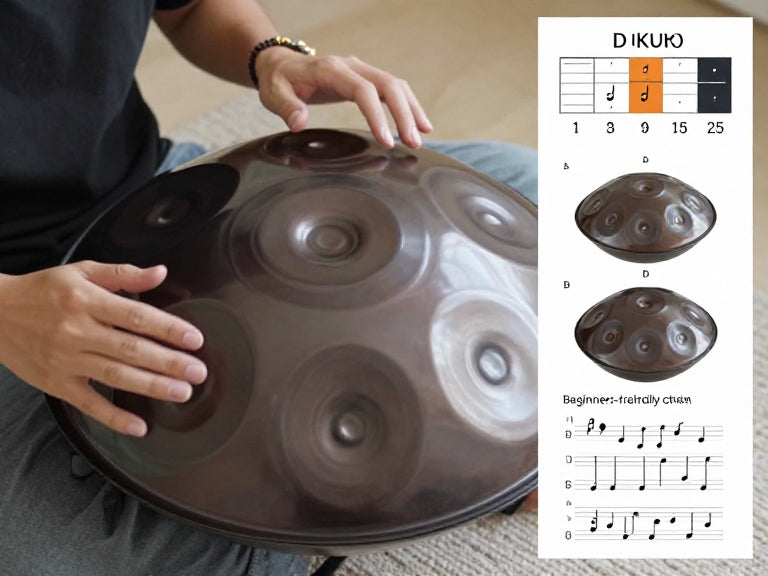
To play a D Kurd 9 handpan, begin by understanding the central D note and the eight surrounding notes. Use relaxed fingertips to strike the tone fields near their outer playing areas, allowing each note to resonate naturally. Start with individual notes, practice simple ascending and descending sequences, and then combine the notes into short rhythmic phrases.
We recommend beginning with slow, three-to-five-note patterns rather than attempting fast melodies. A D Kurd handpan is designed to make musical exploration accessible, but good tone, timing, and controlled movement still require practice.
Quick Answer: D Kurd 9 Handpan Tutorial
- What it is: A beginner-friendly handpan arrangement based on the D Kurd scale, with nine playing notes in the instrument's layout.
- How it works: Each tuned tone field produces a musical pitch when struck correctly. The notes work together to create melodic and rhythmic patterns.
- Benefits: Accessible improvisation, expressive melodies, rhythmic development, and an enjoyable introduction to percussion and melody.
- Limitations: A fixed tuning limits the available notes, and good playing technique still requires coordination and practice.
- Who should use it: Beginners, hobby musicians, meditation practitioners, and experienced percussionists exploring melodic instruments.
- Who does not need it: Players who specifically require chromatic versatility, complex modulation, or a wide range of musical keys.
- Common mistakes: Hitting too hard, striking the center of every note, rushing exercises, and ignoring sustain.
- Buying considerations: Scale accuracy, tuning stability, tone quality, note layout, materials, and included accessories.
- Expert recommendation: Learn the central D note first, develop a relaxed touch, and build short musical phrases before attempting advanced improvisation.
Quick Summary: D Kurd 9 Handpan Learning Guide
| Learning Area | What to Learn | Our Recommendation |
|---|---|---|
| Scale | D Kurd | Understand the tonal relationship between the central note and surrounding notes. |
| Instrument Layout | 9-note configuration | Memorize the physical position of each note. |
| Basic Technique | Finger and hand strikes | Use relaxed fingertips and controlled rebounds. |
| First Exercise | Ascending and descending notes | Practice slowly with an even sound. |
| Rhythm | Simple repeated patterns | Establish timing before increasing speed. |
| Melody | Short musical phrases | Leave space between phrases and listen to sustain. |
| Improvisation | Combining scale notes | Experiment with repetition, pauses, and dynamics. |
| Practice Routine | 15–20 minutes | Prioritize consistency over long, irregular sessions. |
Table of Contents
- What Is a D Kurd 9 Handpan?
- Understanding the D Kurd 9 Note Layout
- Basic D Kurd Handpan Playing Technique
- Five Beginner Handpan Exercises
- Learn Your First D Kurd Melody
- Developing Rhythm and Improvisation
- A Practical Daily Practice Routine
- Common D Kurd Handpan Mistakes
- D Kurd 9 vs. Other Handpan Scales and Sizes
- How to Choose a D Kurd 9 Handpan
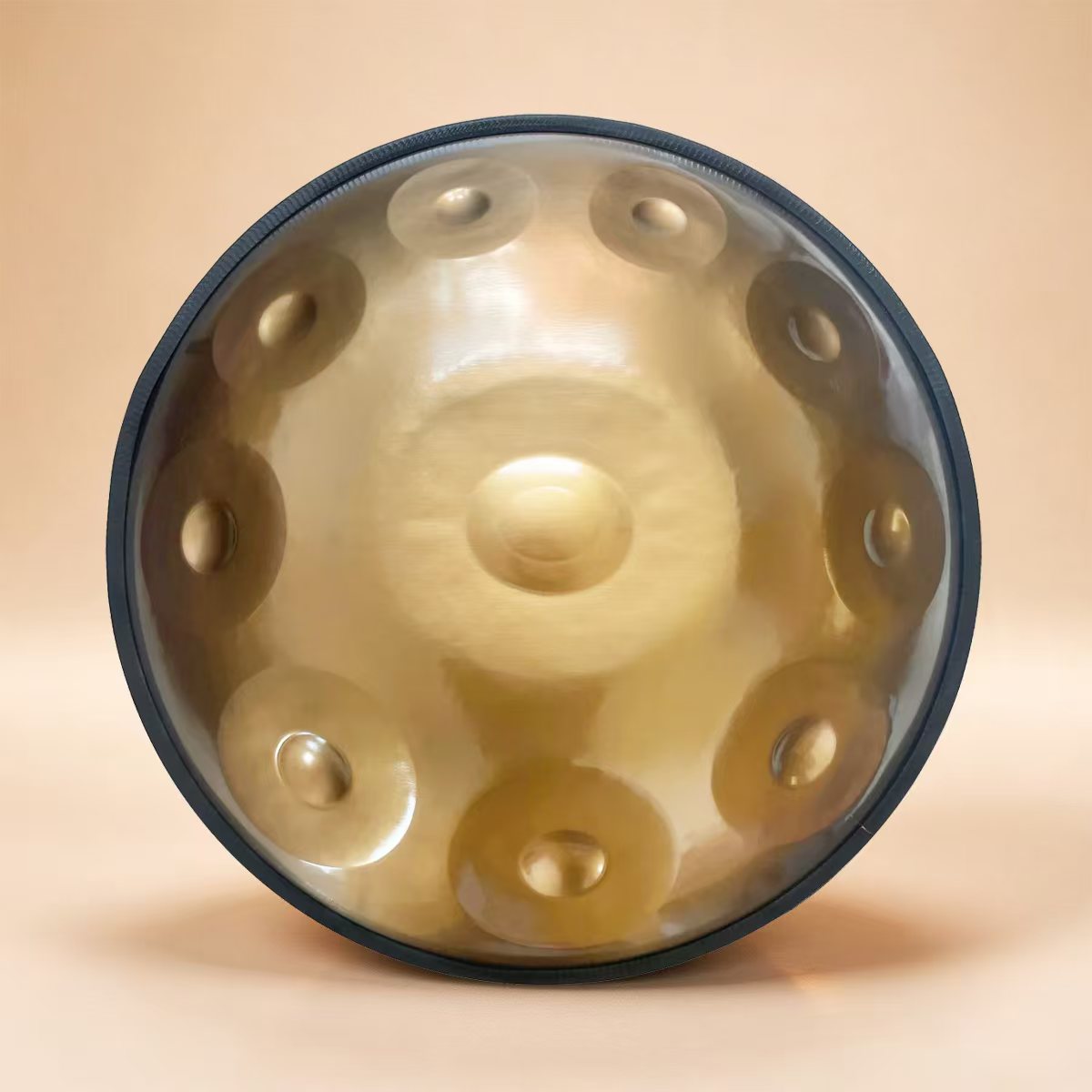
- Cosmos Handpan Golden Elegance 9 Notes D Minor
- Pros and Cons
- Frequently Asked Questions
- References
1. What Is a D Kurd 9 Handpan?

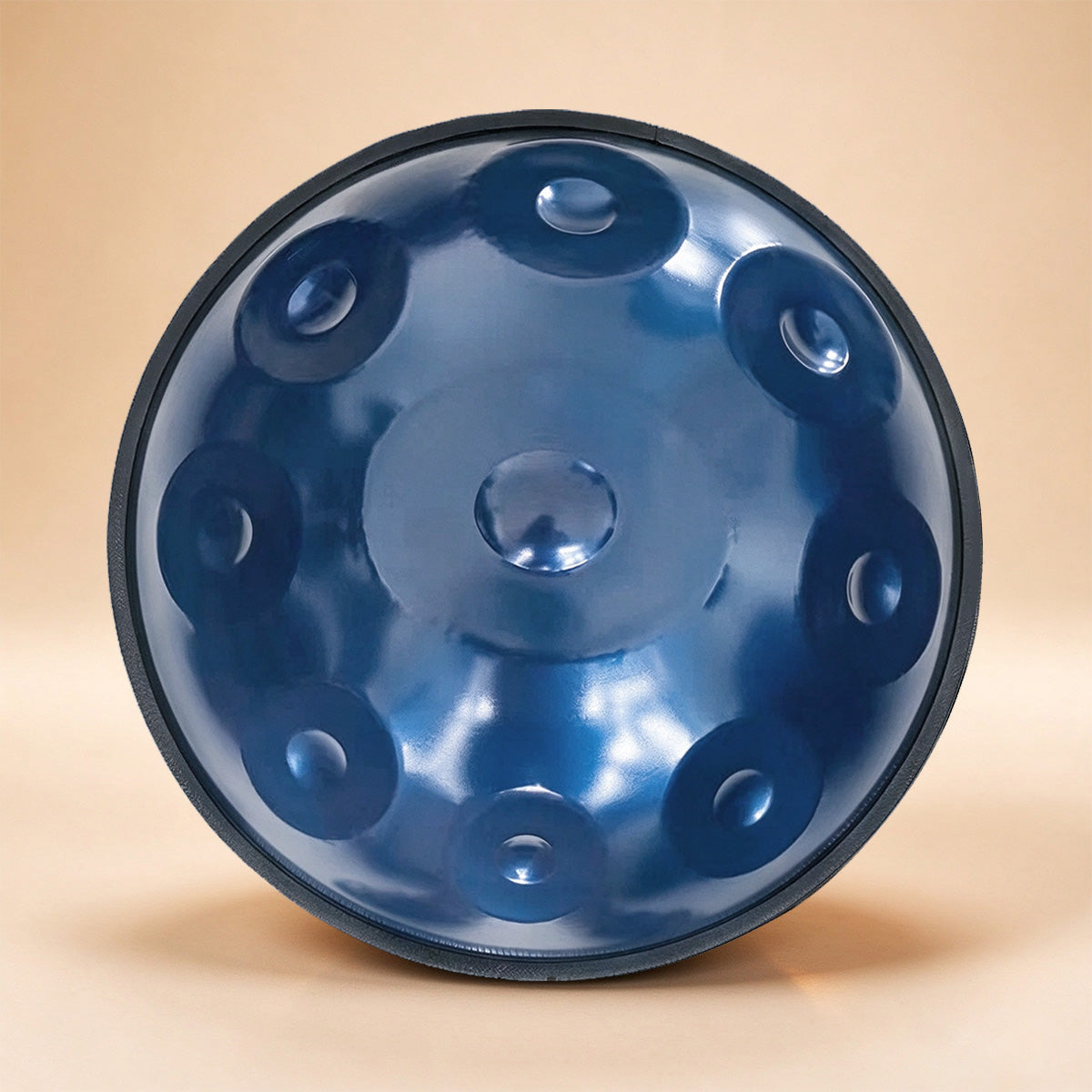
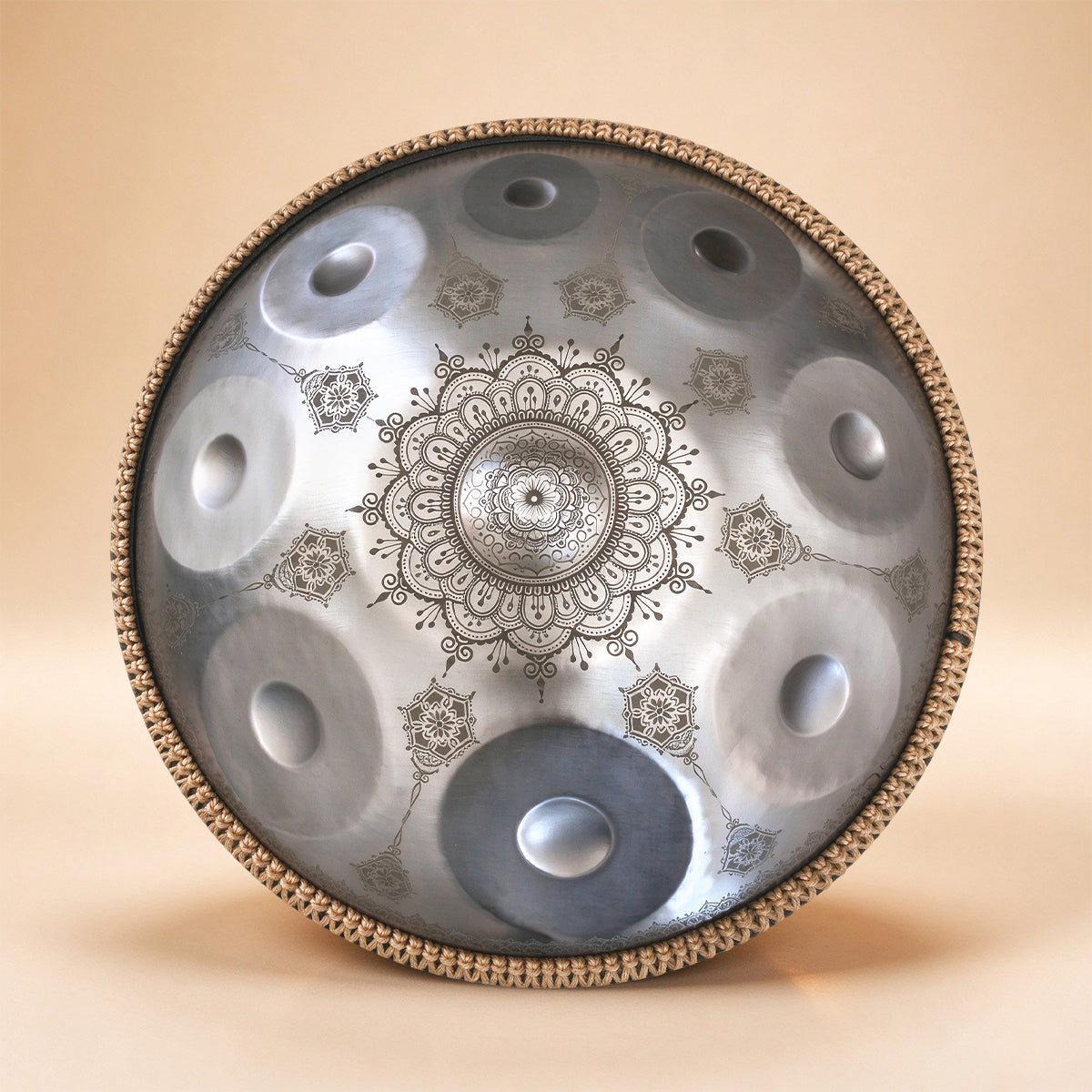
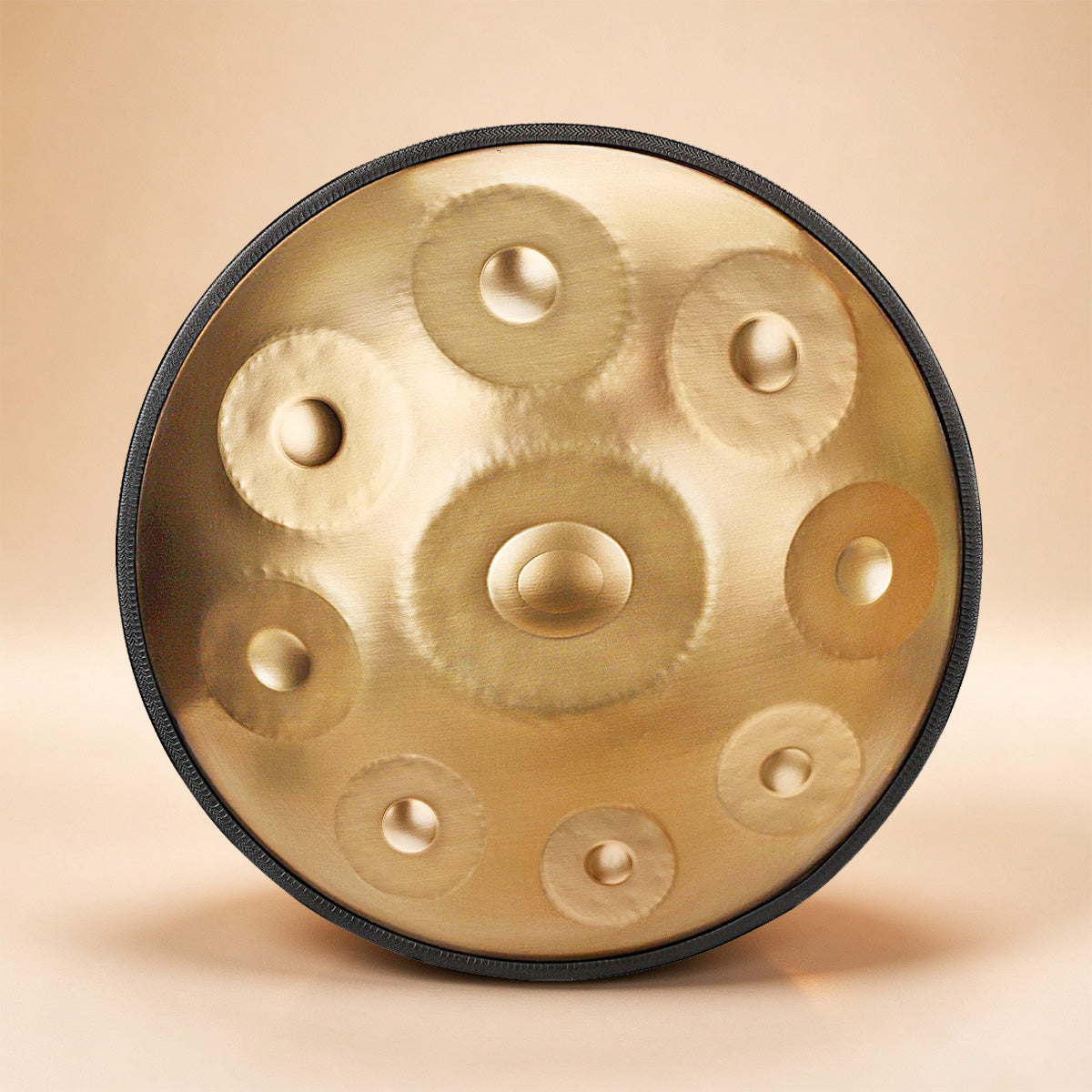
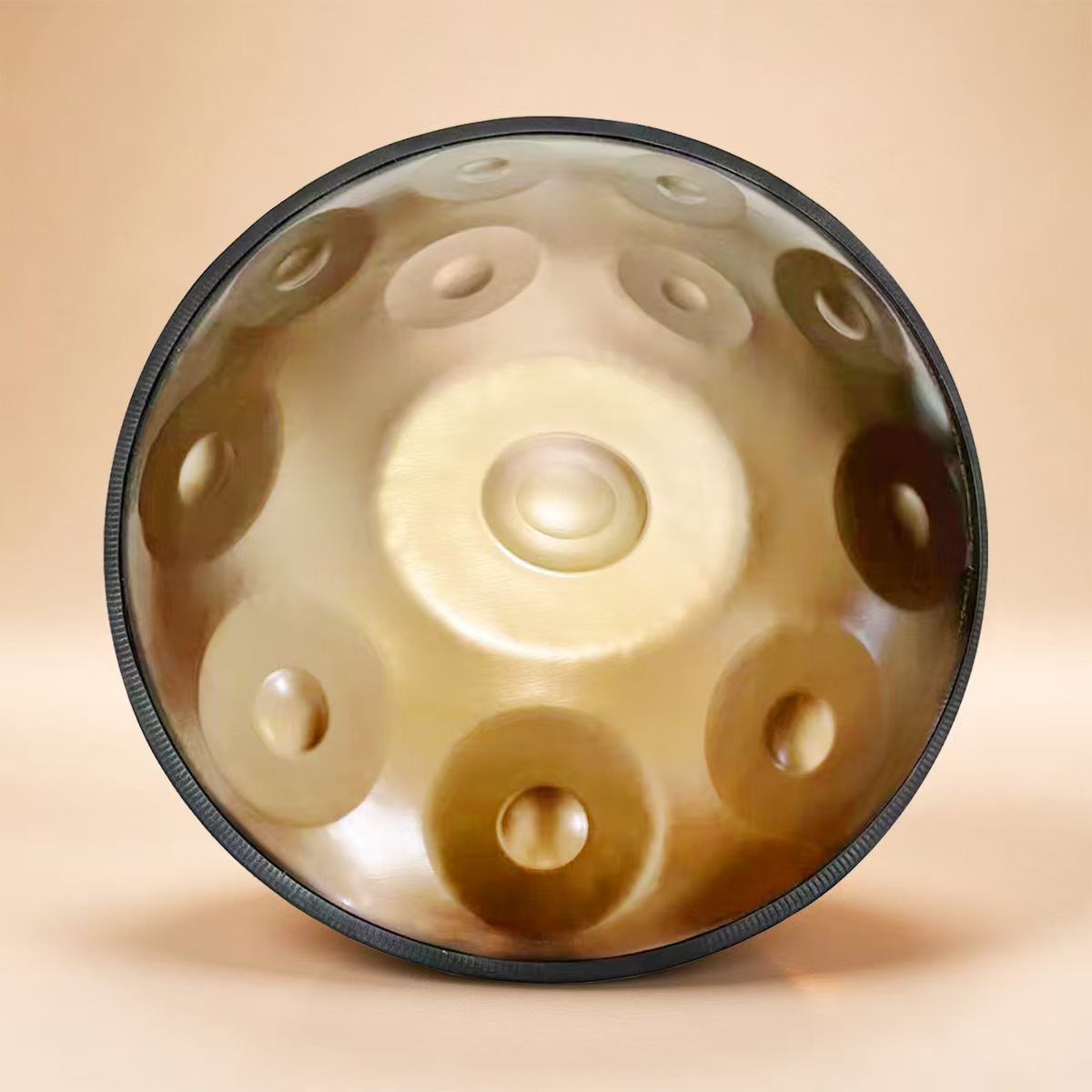
A D Kurd 9 handpan is a steel melodic percussion instrument tuned around the D Kurd scale. It typically has one central Ding note and eight surrounding tone fields, creating nine playable notes in total.
Unlike a traditional drum, which is primarily used for rhythmic patterns, a handpan combines melody, rhythm, and resonance. Each playing area is carefully tuned to produce a specific pitch, and the arrangement allows players to move between notes using their hands and fingers.
The D Kurd scale is particularly popular because of its atmospheric and expressive sound. Its intervals create a minor tonal character that works naturally for reflective melodies, repetitive patterns, and improvisational music.
Why Is D Kurd Popular With Beginners?
There are three practical reasons why we recommend considering D Kurd for a first handpan.
- Intuitive note relationships: The scale offers a coherent musical palette, making it easier to experiment without constantly worrying about choosing unrelated notes.
- Expressive sound: Its minor character works well for slow melodies, atmospheric compositions, and meditative playing.
- Flexible musical possibilities: Players can create short melodic phrases, repeated rhythmic patterns, and longer improvisations using the available notes.
However, beginners should understand that a scale being accessible does not mean every combination automatically sounds musical. Timing, articulation, and the way notes are connected are still important.
What Does the Number 9 Mean?
The number 9 refers to the total number of playing notes in the instrument's configuration, usually including the central Ding and eight surrounding notes.
This is an important distinction when comparing handpans. A 9-note model provides a focused selection of pitches, while larger instruments offer more melodic options.
For someone learning basic technique and improvisation, nine notes are usually sufficient to develop a strong foundation.
2. Understanding the D Kurd 9 Handpan Note Layout
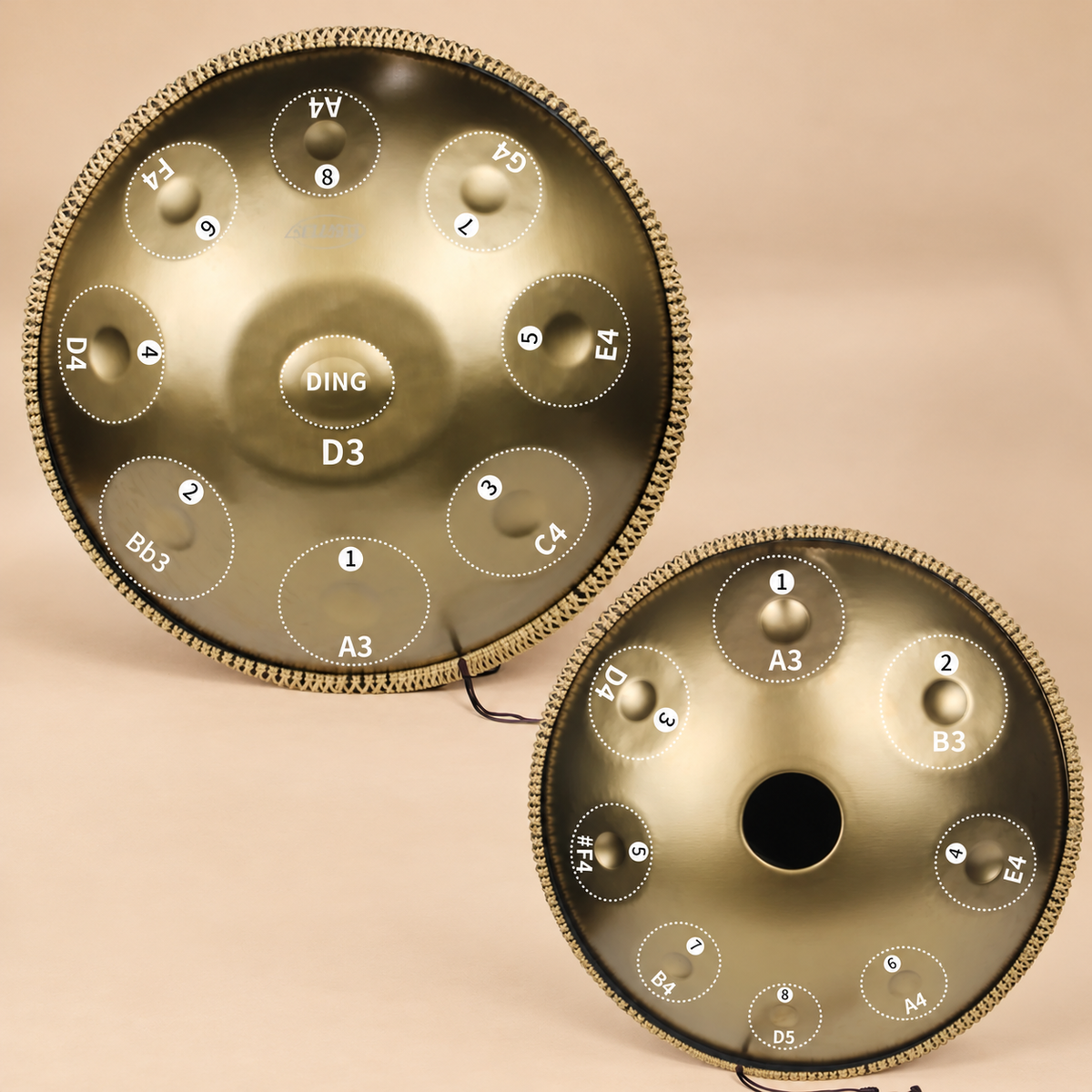
Before practicing melodies, learn where the notes are located. A handpan is not a keyboard, and its physical layout requires you to develop spatial awareness.
The Central Ding
The central note is called the Ding. In a D Kurd handpan, it is generally tuned to D and acts as the main tonal reference for your playing.
Think of the Ding as your musical home base. Returning to it after playing several surrounding notes can create a sense of resolution and completeness.
Practice striking the Ding gently and allowing the sound to fade before repeating it. This helps you understand its sustain and resonance.
The Surrounding Tone Fields
The eight surrounding notes provide the melodic material for your D Kurd handpan. Each tone field has its own tuned pitch and physical position.
Although D Kurd is a commonly used scale configuration, note arrangements can vary between manufacturers and models. Therefore, do not assume that every D Kurd 9 instrument has exactly the same physical note positions.
Check the manufacturer's note chart or ask for the exact tuning information before following a numbered tutorial.
How to Memorize the Notes
We recommend using a simple three-stage method:
- Identify the central Ding and learn to recognize its sound.
- Play each surrounding note individually, moving clockwise around the instrument.
- Repeat the sequence in reverse, then practice selecting notes without looking at the layout.
Do this for five minutes before moving into melody exercises. Knowing where your notes are located will make improvisation much easier.
3. Basic D Kurd Handpan Playing Technique
Correct striking technique makes a bigger difference than playing speed. Beginners often believe that a louder strike produces a better handpan sound. In practice, excessive force can create harsh tones and interfere with resonance.
Step 1: Position Your Handpan Correctly
Place your handpan on a stable stand or a suitable playing surface. It should remain secure without excessive movement.
Keep your shoulders relaxed and position your hands so that you can reach the surrounding tone fields comfortably.
A stand is particularly useful for longer practice sessions because it provides a consistent playing height and reduces the need to support the instrument with your legs.
Step 2: Relax Your Fingers
Keep your wrists loose and your fingers naturally curved. Avoid stiffening your hands or pressing your fingers against the steel surface.
Most beginner handpan techniques use the fingertips or the softer areas near the fingertips to create a controlled strike.
The objective is to produce a brief, clean contact followed by a natural rebound.
Step 3: Strike the Correct Area
Each tone field has a designated playing area. The best striking position depends on the instrument's design and tuning geometry.
As a general starting point, experiment with the outer region of the tone field rather than hitting the exact center of every note.
Use gentle strikes and listen carefully. If the note sounds dull, excessively sharp, or rattles, adjust your striking position and technique.
Step 4: Let Each Note Resonate
One of the most attractive characteristics of the handpan is its sustain. A note continues to resonate after the initial strike, allowing several sounds to overlap.
Do not rush to strike the next note immediately. Listen to how the first sound develops and fades.
From our experience with beginner learning routines, players who develop listening skills early often build more musical phrasing than those who focus exclusively on speed.
Step 5: Practice Both Hands
Although many beginners naturally favor one hand, developing coordination with both hands is essential.
Start by alternating hands on two surrounding notes. Once the movement becomes comfortable, add the Ding as a third note.
Do not force symmetrical movement if a particular layout makes one direction more comfortable. The goal is balanced control, not identical hand movements in every exercise.
4. Five D Kurd 9 Handpan Exercises for Beginners
The following exercises are designed to build familiarity with your instrument. They do not require sheet music, advanced theory, or previous percussion experience.
For the numbered exercises below, use the note numbers from your own instrument's chart. The numbers are practice labels rather than a universal D Kurd note sequence.
Exercise 1: Single-Note Control
Choose the central Ding and one surrounding note.
Practice the following pattern:
Ding – Pause – Ding – Pause
Surrounding Note – Pause – Surrounding Note – Pause
Repeat the pattern slowly. Concentrate on producing a consistent tone each time.
Recommended practice time: 3 minutes.
Exercise 2: Ascending Notes
Select three or four surrounding notes in their physical clockwise order.
Note 1 – Note 2 – Note 3 – Note 4
Play each note once and allow enough time for the sound to develop.
Repeat the pattern with alternating hands when possible. This exercise improves note recognition, coordination, and control.
Exercise 3: Descending Notes
Reverse the previous exercise.
Note 4 – Note 3 – Note 2 – Note 1
Descending melodies are useful for creating a sense of musical closure. Practice them at a steady pace rather than accelerating toward the final note.
Exercise 4: Ding and Surrounding Notes
Now combine the central Ding with two surrounding notes.
Ding – Note 1 – Note 2 – Ding
Repeat the pattern several times. Experiment with leaving a short pause before returning to the Ding.
This is one of the simplest ways to begin developing a recognizable musical phrase.
Exercise 5: Create Your First Repeating Rhythm
Choose three notes that sound comfortable together.
Note 1 – Note 2 – Ding – Note 2
Note 1 – Note 2 – Ding – Pause
Keep the rhythm steady and change only one element at a time. For example, you can make the final note softer or leave a longer pause.
Recommended practice time: 4–5 minutes.
5. Learn Your First D Kurd Handpan Melody
Once you understand the note layout and basic striking technique, you can begin creating short melodies.
A useful beginner melody should have three characteristics:
- A clear starting point.
- A simple middle section with a little movement.
- A final note or phrase that creates a sense of resolution.
Beginner Melody: A Calm Four-Part Sequence
Use the following structure. Replace the numbered notes with suitable notes from your D Kurd instrument.
Ding – Note 1 – Note 2
Part 2 – Development
Note 3 – Note 2 – Note 1
Part 3 – Variation
Ding – Note 2 – Note 3 – Note 2
Part 4 – Resolution
Note 1 – Note 2 – Ding
This is a learning framework, not a fixed traditional composition. Its purpose is to help you understand how repeated notes and small melodic changes can create a coherent musical idea.
How to Make the Melody Sound More Musical
Once you can play the sequence comfortably, introduce three variations.
Change the dynamics. Play some notes softly and others slightly more firmly. Avoid using excessive force.
Introduce pauses. Silence is part of music. Leaving space between phrases allows the handpan's resonance to become part of the melody.
Change the rhythm. Try playing the same notes with different spacing. A melody can sound completely different without changing its pitches.
This approach is more valuable than memorizing dozens of patterns without understanding how they work.
6. Developing D Kurd Rhythm and Improvisation
Improvisation is one of the main reasons people choose a handpan. Unlike instruments that require extensive technical preparation before producing recognizable melodies, a handpan allows beginners to experiment with musical ideas relatively quickly.
However, good improvisation is not random striking. It involves repetition, timing, dynamics, and awareness of how different notes relate to one another.
Use Repetition to Build Musical Structure
Start with a short three-note pattern and repeat it several times.
After the pattern becomes familiar, change its ending or introduce a pause. This creates variation without making the melody difficult to follow.
Practice Different Rhythmic Feelings
Try playing your notes with different rhythmic approaches:
- Slow and spacious: Allow every note to resonate before playing the next.
- Steady and flowing: Maintain an even pulse while moving between surrounding notes.
- Repeated rhythmic phrases: Use the Ding as a recurring reference point.
- Dynamic improvisation: Alternate soft notes with moderately stronger accents.
Should Beginners Learn Handpan Music Theory?
Basic music theory is useful, but you do not need to master it before playing.
For beginners, understanding the central note, scale layout, rhythmic pulse, and melodic repetition is enough to begin making music.
As your technique develops, learning intervals, note relationships, and musical phrasing will help you improvise more intentionally.
If you prefer structured digital learning, our guide to handpan learning apps and online tools explains how technology can support your practice routine.
7. A Practical Daily D Kurd 9 Handpan Practice Routine
For beginners, we recommend practicing for approximately 15–20 minutes per session. A short, consistent routine is generally easier to maintain than occasional long sessions.
| Practice Stage | Duration | Objective |
|---|---|---|
| Warm-up | 2 minutes | Relax your wrists and establish comfortable striking movements. |
| Note Familiarization | 3 minutes | Identify the Ding and surrounding notes. |
| Technique Exercises | 5 minutes | Improve accuracy, rebound, and alternating-hand coordination. |
| Melody Practice | 5 minutes | Play short phrases and repeat them consistently. |
| Free Improvisation | 3–5 minutes | Explore different rhythms and musical combinations. |
What Should You Achieve After One Week?
Do not expect to become an advanced player in seven days. A more realistic first-week target is to:
- Recognize the central Ding and surrounding note positions.
- Produce a clear sound without striking excessively hard.
- Play basic ascending and descending sequences.
- Alternate between both hands comfortably.
- Create one short repeating melody.
How to Progress After One Month
After several weeks of consistent practice, focus on improving musical control.
Work on playing at different tempos, creating longer phrases, and maintaining a steady rhythm. You can also begin learning simple compositions written specifically for your scale.
Recording your playing once a week is useful. It allows you to identify uneven strikes, rushed transitions, and improvements in tone quality.
8. Accessories That Make Handpan Learning Easier
The instrument itself is the main investment, but a few accessories can improve the playing experience and help protect your handpan.
Protective Carry Bag
A padded carry bag protects the instrument during storage and transportation. It is particularly important because handpan steel surfaces and tuned tone fields can be damaged by impacts.
Handpan Stand
A stand provides stable positioning and allows you to practice at a comfortable height. For beginners who want to develop a consistent playing posture, this is a useful accessory.
Cleaning Cloth
Handpans can accumulate fingerprints, moisture, and surface residue. Use a suitable cleaning cloth and follow the manufacturer's care instructions.
Avoid aggressive household cleaners or abrasive materials that may damage the finish or protective coating.
Mallets
Some handpan sets include mallets. These provide another way to explore the instrument's sound, but they are not a substitute for learning hand technique.
For beginners, we recommend developing finger control first. Once you understand the instrument's response, you can explore additional playing approaches if the manufacturer permits them.
9. Common D Kurd 9 Handpan Mistakes and How to Fix Them
Mistake 1: Hitting Too Hard
Excessive force often creates an unpleasant sound and reduces control.
Solution: Use lighter strikes and allow the tone field to vibrate naturally. Concentrate on clean articulation rather than volume.
Mistake 2: Playing Too Fast Too Early
Beginners sometimes increase speed before they can produce consistent notes.
Solution: Practice slowly with an even rhythm. Increase tempo only when your strikes remain controlled.
Mistake 3: Ignoring the Sustain
Handpan music depends heavily on resonance. Playing every note too close together can make a melody sound crowded.
Solution: Experiment with pauses and listen to the natural decay of each note.
Mistake 4: Using the Same Hand for Everything
Favoring one hand can limit movement and make more complex patterns difficult.
Solution: Introduce alternating-hand exercises from the beginning.
Mistake 5: Copying Tutorials Without Learning Your Own Layout
A tutorial designed for another D Kurd handpan may show a different note arrangement.
Solution: Match the tutorial's notes to your instrument's actual tuning chart before practicing.
Mistake 6: Neglecting Instrument Maintenance
Handpans require appropriate care to preserve their surface condition and tuning stability.
Solution: Keep the instrument clean and dry, avoid unnecessary impacts, and store it in a suitable protective bag.
If you notice a persistent change in pitch or unusual buzzing, consult a qualified handpan tuner rather than attempting to adjust the instrument yourself. Our guide explains how handpan tuning works and which tools are involved.
10. D Kurd 9 vs. Other Handpan Scales and Note Configurations
Choosing a handpan involves two separate decisions: which scale you prefer and how many notes you need.
These choices influence the instrument's musical character, learning experience, and long-term versatility.
D Kurd vs. Other Common Handpan Scales
| Scale | General Musical Character | Potential Use | Buying Consideration |
|---|---|---|---|
| D Kurd | Minor, atmospheric, expressive | Improvisation, reflective music, relaxation | A strong option for beginners who enjoy minor tonal colors. |
| D Celtic Minor | Reflective and melodic | Ambient compositions and expressive melodies | Compare its specific intervals with D Kurd before purchasing. |
| D Amara | Minor-oriented and atmospheric | Intuitive melodic exploration | Listen to the actual instrument rather than choosing by scale name alone. |
| Celtic-style Major Scales | Often brighter and more uplifting | Light melodic compositions | Useful when you prefer a different tonal mood. |
Scale names alone cannot tell you exactly how an instrument sounds. Manufacturers may use different note arrangements and octave combinations. Always listen to a recording of the specific tuning before buying.
9 Notes vs. 10 Notes vs. 12 Notes
| Configuration | Advantages | Limitations | Best For |
|---|---|---|---|
| 9 Notes | Focused layout and straightforward learning | Smaller available note range | Beginners and intuitive improvisation |
| 10 Notes | Additional melodic options | Requires learning one more playing position | Players seeking a little more flexibility |
| 12 Notes | Broader melodic possibilities | More complex layout and potentially higher cost | Developing and experienced musicians |
For a first instrument, we generally recommend prioritizing sound quality and comfortable playability over the largest possible note count.
Explore the 9-note handpan collection if you want a focused entry-level instrument. If you already have basic playing experience, compare the 10-note handpan selection and 12-note handpan collection to understand the additional musical options.
11. How to Choose a D Kurd 9 Handpan: Buying Advice
Buying a handpan is not like purchasing an ordinary percussion instrument. Its tuning, resonance, manufacturing quality, and playing comfort all influence the experience.
From our perspective, beginners should focus on six factors before making a purchase.
1. Confirm the Exact Scale and Note Configuration
Check that the instrument is actually tuned to D Kurd and confirm the complete note layout.
Do not rely on product photographs alone. Request a tuning chart or demonstration if the note configuration is unclear.
2. Listen to Real Sound Demonstrations
Product descriptions can explain materials and specifications, but sound recordings are essential when choosing a handpan.
Listen for:
- Clear individual notes.
- Balanced volume across the instrument.
- Natural and controlled sustain.
- Unwanted buzzing or rattling.
- Consistent tonal character between notes.
For beginners, a balanced instrument is generally more useful than one that simply sounds loud or unusually bright.
3. Understand 432Hz and 440Hz Tuning
Some handpans are offered with 432Hz or 440Hz tuning references.
These figures describe different tuning reference standards, not different levels of instrument quality.
440Hz is the widely used modern concert pitch reference for A4. A 432Hz reference lowers that pitch standard. The actual pitches and tuning relationships should be confirmed through the manufacturer's tuning documentation.
Our recommendation is simple: if you intend to play with other musicians or conventional instruments, consider compatibility with the 440Hz reference. If you mainly play solo, choose the reference that suits your musical preference.
4. Check Materials and Construction
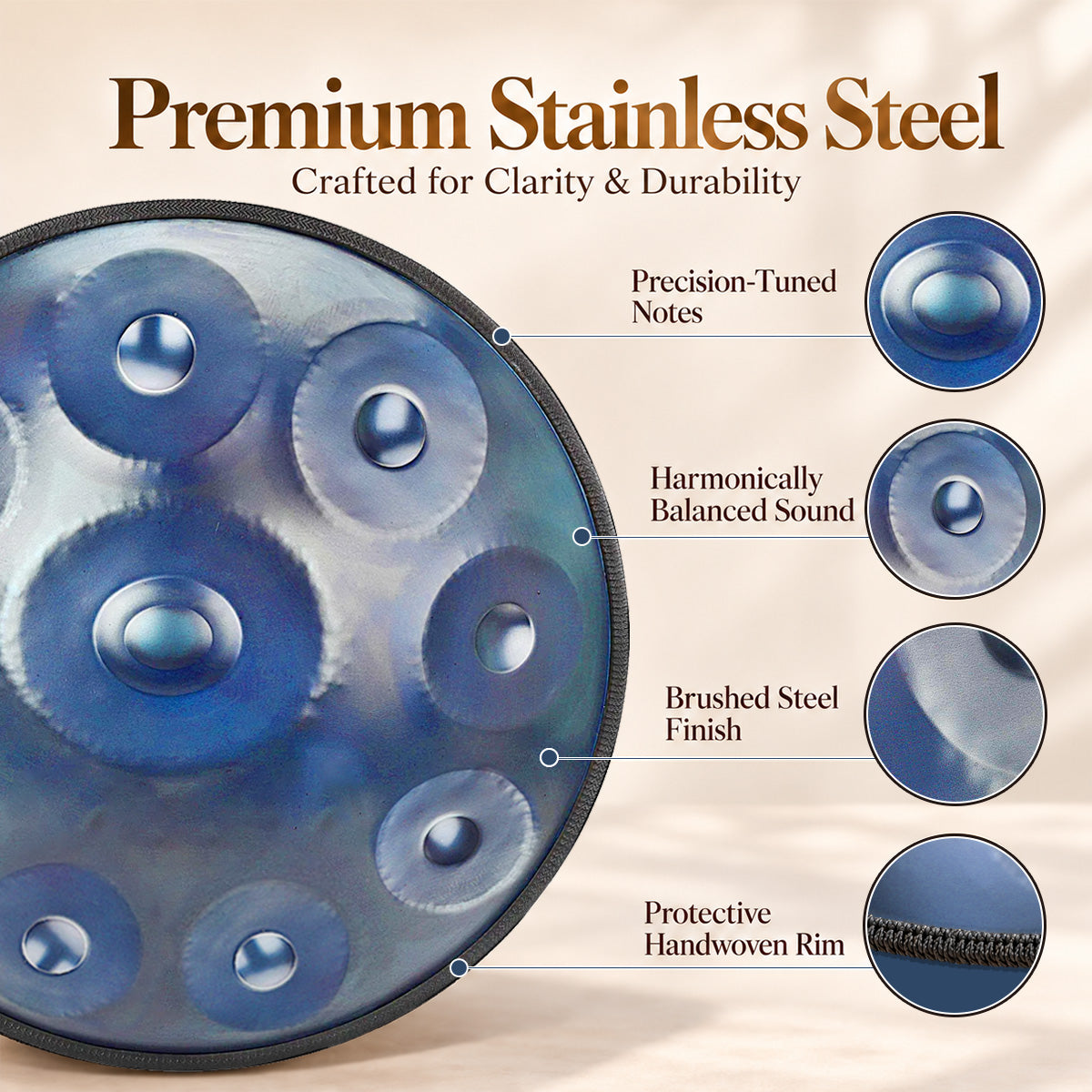
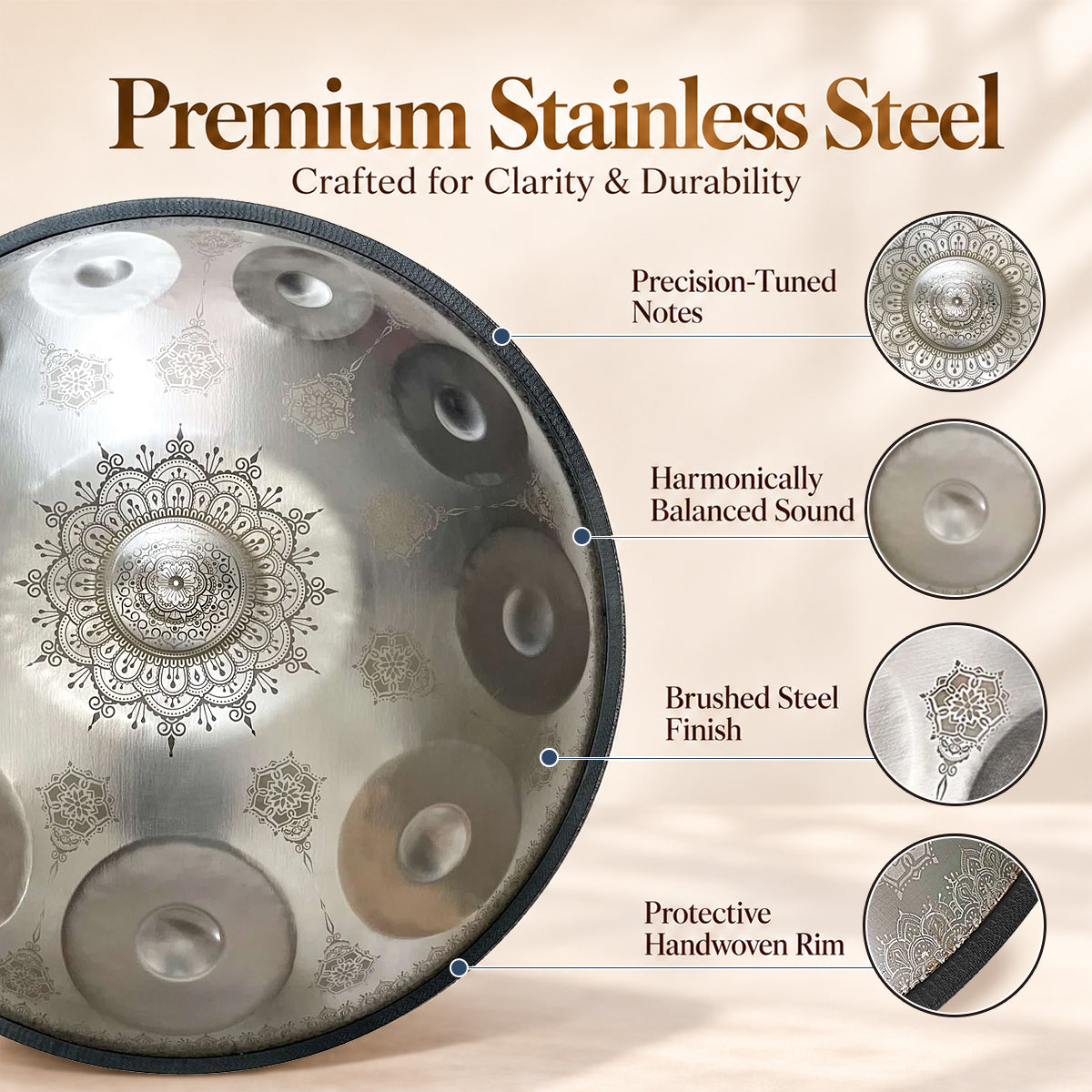
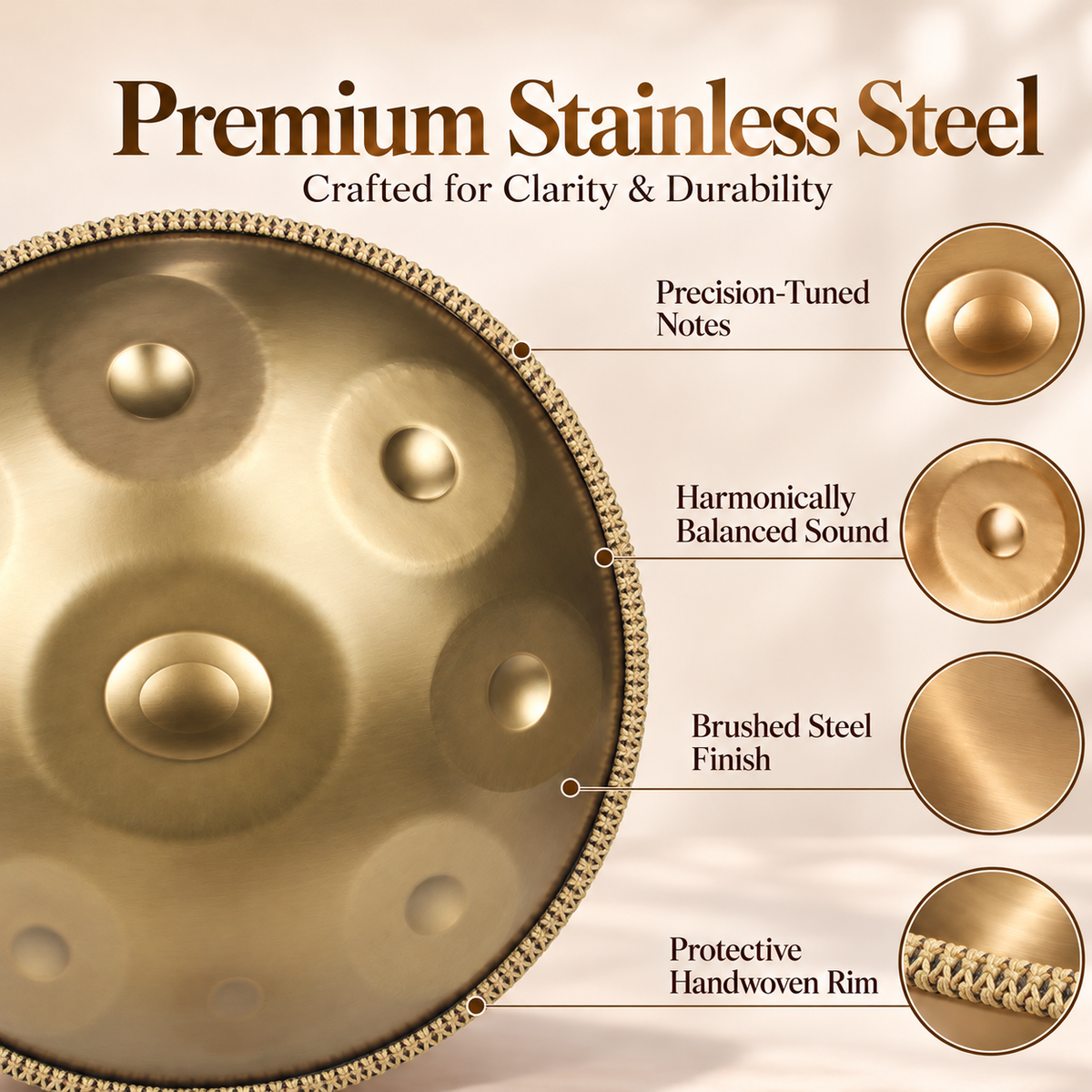
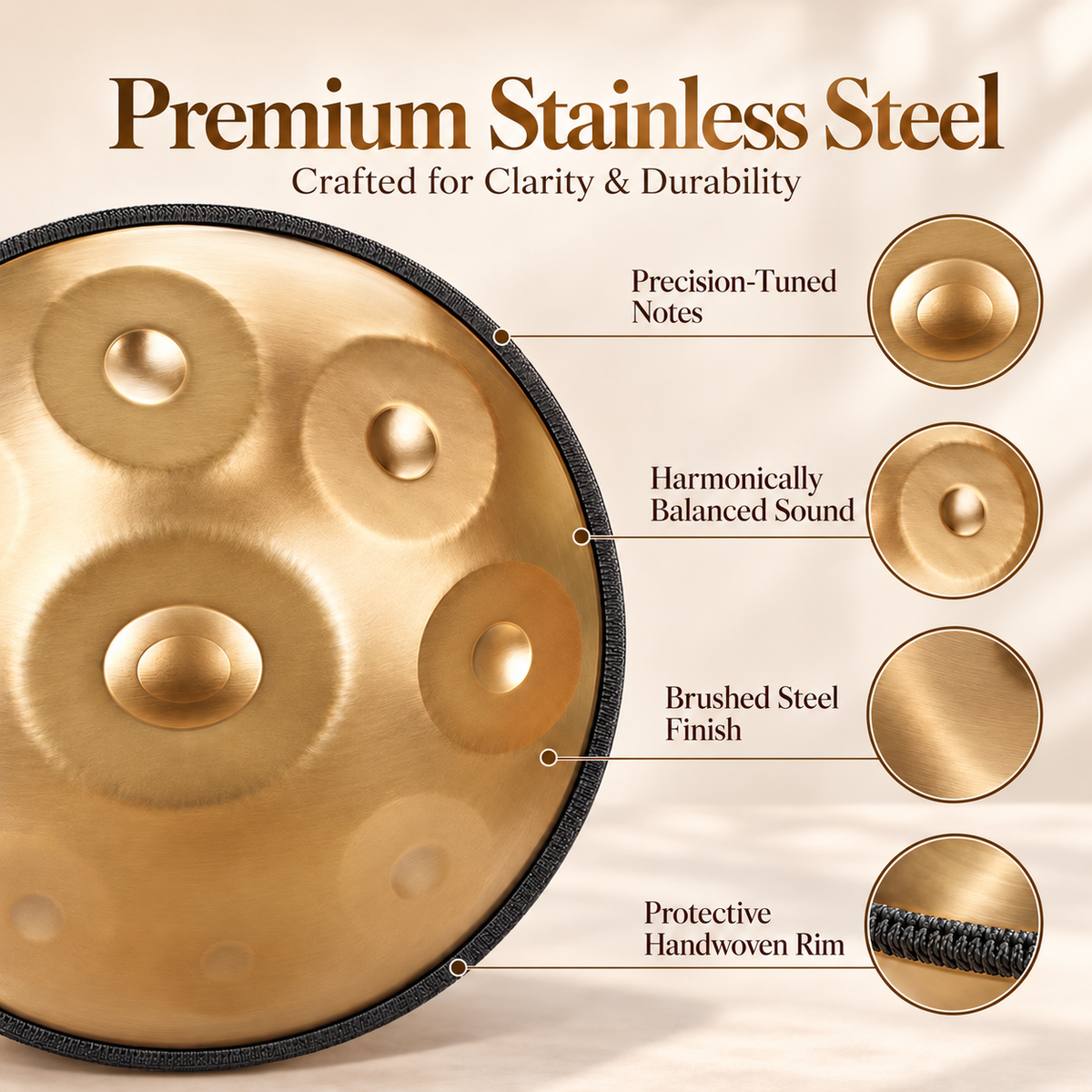
Handpan manufacturing involves careful metal forming, shaping, and tuning. The material and manufacturing process influence the instrument's response, durability, and tonal characteristics.
Ask about the steel type, surface treatment, protective finish, and maintenance requirements.
5. Evaluate the Complete Package
A handpan set can include accessories that would otherwise need to be purchased separately.
Compare the actual contents rather than assuming every package includes the same items.
6. Consider Manufacturer Support
Handpans are precision-tuned instruments. A manufacturer should provide clear product specifications, care instructions, and a way to obtain support if you have questions about the instrument.
Before purchasing, check the manufacturer's policies and communication channels.
12. Cosmos Handpan Golden Elegance – 9 Notes D Minor Gift Set
For beginners who want a ready-to-use 9-note instrument, the Cosmos Handpan Golden Elegance offers a D Minor layout with a coordinated accessory package.
Its main selling point is the combination of a familiar minor-scale playing experience, a distinctive golden finish, and accessories that make getting started more convenient.

Cosmos Handpan Golden Elegance – 9 Notes D Minor Gift Set
Scale: D Minor, 9-note layout
Tuning options: 432Hz or 440Hz
Sound: Clear sustain with a smooth, calming tone
Best for: First-time buyers, meditation, relaxation, and small performances.
View Golden Elegance HandpanWhat Makes This Handpan Suitable for Beginners?
The nine-note arrangement offers a manageable starting point for learning note positions and developing basic playing techniques.
Its D Minor configuration is suitable for players interested in expressive, atmospheric melodies. Beginners can start with the central Ding, explore the surrounding notes, and gradually develop their own musical phrases.
The included accessories also reduce the number of separate purchases required before the first practice session.
What's Included in the Gift Set?
| Accessory | Practical Purpose |
|---|---|
| Protective Carry Bag | Helps protect the instrument during storage and transportation. |
| Handpan Stand | Provides a convenient and stable playing position. |
| Pair of Mallets | Provides an alternative way to explore the instrument's sound. |
| Cleaning Cloth | Helps remove fingerprints and surface residue. |
Is the Golden Elegance 9-Note Handpan Worth Buying?
For beginners, the main advantage is that the instrument and essential accessories are offered together. This makes it easier to start practicing without researching and purchasing every accessory separately.
It is also suitable for people who want a dedicated instrument for personal music-making, relaxation, and small performances.
However, experienced musicians who need a wider note range may prefer comparing larger configurations before purchasing.
Cosmos Handpan's approach is to provide instruments for different stages of musical development. You can learn more about the brand through the Cosmos Handpan story.
13. Pros and Cons of Learning on a D Kurd 9 Handpan
| Advantages | Limitations |
|---|---|
| Manageable nine-note configuration for learning basic technique. | Limited note range compared with larger handpans. |
| Minor tonal character suitable for expressive melodies. | Not every musical style fits the available scale. |
| Supports intuitive improvisation without extensive music theory. | Advanced compositions may require additional notes. |
| Combines melodic and rhythmic playing. | Requires practice to develop clean articulation and coordination. |
| Can be used for solo music and small performances. | Playing with other instruments requires attention to tuning compatibility. |
| Suitable for developing listening and musical creativity. | Quality instruments require careful maintenance and handling. |
Overall, we recommend a D Kurd 9 handpan for players who value simplicity, expressive melodies, and an accessible learning process. It is less suitable for musicians who immediately need chromatic playing or a wide range of musical keys.
14. How to Maintain Your D Kurd Handpan
A quality handpan is a precision-tuned instrument, so maintenance should be part of your regular routine.
Clean the Surface After Playing
Use a soft, clean cloth to remove fingerprints and moisture. Sweat and environmental moisture can affect the surface over time, particularly if the instrument is stored without proper care.
Store It in a Dry Environment
Avoid leaving the handpan in damp areas or exposing it to extreme temperature changes. Use its protective carry bag when it is not being played.
Avoid Impact and Excessive Pressure
Never place heavy objects on the instrument or use hard objects to strike the tone fields. Even a relatively small impact can affect a precision-tuned playing area.
Do Not Attempt Unqualified Retuning
If a note sounds different from before or develops an unusual vibration, seek professional advice. Retuning requires specialist knowledge and tools.
For long-term instrument care, follow the manufacturer's maintenance recommendations rather than experimenting with unverified cleaning products or tuning techniques.
15. Final Recommendation: Is D Kurd 9 the Right Handpan for You?
A D Kurd 9 handpan is a practical choice for beginners who want to learn melody, rhythm, and improvisation without dealing with an unnecessarily complicated note layout.
Its nine-note configuration provides enough musical material for a wide variety of short melodies and expressive playing patterns. The D Minor character also makes it suitable for atmospheric compositions, reflective music, and personal practice.
However, choosing the correct instrument is only half the decision. You should also consider sound quality, tuning accuracy, construction, accessories, and the type of music you want to create.
Our Recommendations by Player Type
- Complete beginners: Start with a well-made 9-note D Kurd handpan and focus on note recognition, controlled strikes, and basic melodies.
- Hobby musicians: Choose based on the sound character you enjoy and whether the instrument fits your preferred playing style.
- Meditation and relaxation users: Prioritize clear sustain, comfortable playing, and a sound that suits your personal preferences.
- Developing musicians: Consider a 10-note or 12-note configuration if you regularly need additional melodic options.
- Performers: Pay particular attention to tuning compatibility, note balance, projection, and the instrument's response in different environments.
16. Frequently Asked Questions About D Kurd 9 Handpan Tutorials
1. Is a D Kurd 9 handpan good for beginners?
Yes. A D Kurd 9 handpan provides a manageable note configuration that allows beginners to focus on basic technique, note recognition, rhythm, and improvisation. Its minor tonal character is also suitable for expressive melodies and atmospheric music.
2. How many notes does a D Kurd 9 handpan have?
A standard D Kurd 9 handpan has nine playing notes, generally consisting of one central Ding and eight surrounding tone fields. The exact note positions and octave arrangements can vary by instrument.
3. What is the difference between D Kurd and D Minor?
D Kurd is a commonly used handpan scale name associated with a minor tonal character. D Minor describes a broader musical tonal concept. Specific handpan note layouts should always be checked because manufacturers may use different scale naming conventions and note arrangements.
4. How long does it take to learn a D Kurd handpan?
Many beginners can learn basic striking techniques and simple melodies within their first few practice sessions. Developing consistent tone, rhythm, coordination, and improvisation takes longer. Practicing for 15–20 minutes regularly is a practical starting point.
5. Can I play songs on a D Kurd 9 handpan?
Yes, provided the song's notes fit the instrument's available scale and octave range. Some melodies can be adapted, while others may require notes that are not present. D Kurd is particularly suitable for original melodies and improvisation.
6. Should I learn handpan with fingers or mallets?
We recommend starting with your fingers because they provide direct control over striking intensity and articulation. Mallets can offer another playing approach, but they should only be used according to the instrument manufacturer's guidance.
7. Is 432Hz or 440Hz better for a D Kurd handpan?
Neither tuning reference is inherently better. 440Hz is the widely used concert pitch reference and can make playing with conventional instruments more convenient. 432Hz offers a different tuning reference that some solo players prefer. Choose according to your musical needs and verify the instrument's exact tuning.
8. Can I use a D Kurd handpan for meditation?
Yes. Its sustained notes and expressive minor tonal character can work well for personal meditation, relaxation, and sound-based activities. The experience is subjective, so choose an instrument whose tone you find comfortable and enjoyable.
9. Is a 9-note handpan better than a 12-note handpan?
Not necessarily. A 9-note handpan is easier to approach for many beginners because its layout is focused. A 12-note handpan offers additional melodic possibilities but requires learning more playing positions. Choose based on your experience and musical requirements.
10. How do I keep my D Kurd handpan in tune?
Handle the instrument carefully, avoid impacts, store it in a dry environment, and follow the manufacturer's maintenance instructions. If a note becomes noticeably unstable or develops unusual buzzing, consult a qualified handpan tuner rather than attempting to retune it yourself.
11. Can I learn D Kurd handpan without reading sheet music?
Absolutely. Many beginners start through listening, note-position exercises, imitation, and simple rhythmic patterns. Sheet music can be useful later, but it is not necessary for learning basic handpan technique or developing improvisation skills.
12. What accessories should come with a beginner handpan?
A protective carry bag, suitable stand, cleaning cloth, and optional mallets are useful accessories. A complete package can reduce additional purchases, but instrument quality and tuning should remain the main buying priorities.
17. References and Further Learning
These resources provide useful background on handpan instrument development, music learning, musical acoustics, and the relationship between music and wellbeing.
-
University of California, Irvine – Music and Cognition Research.
Explore UCI arts and music research resources
Useful background for understanding music perception, listening, and musical learning. -
Encyclopaedia Britannica – Musical Instrument.
Explore musical instrument classifications and principles
Provides broader context on how musical instruments produce sound and how percussion instruments are classified. -
National Endowment for the Arts – Arts and Health.
Explore arts, health, and wellbeing resources
Provides information about the relationship between arts participation, music, and wellbeing.
Explore More Handpan Learning Resources
Learning a handpan becomes easier when you combine regular practice with a clear understanding of your instrument. These additional Cosmos Handpan resources can help you develop your skills and explore other musical options.
- Handpan for Beginners: A Step-by-Step Guide
- Digital Handpan Instruments: A Guide for Musicians
- How Handpan Music May Affect the Brain
- Handpans in Therapy: Applications and Benefits
- Explore Cosmos Handpan Tongue Drums
If you are ready to choose your first instrument or have questions about the D Kurd 9-note configuration, you can contact Cosmos Handpan for product information.
About this tutorial: This guide is intended for general music education and instrument-selection purposes. Note positions and tuning arrangements may vary between handpan models. Always refer to the tuning chart supplied with your specific instrument when following numbered exercises or learning melodies.