Walk into any percussion showroom or outdoor music festival, and you will inevitably hear someone misidentify the instrument they are looking at. From our experience at Cosmos Handpan, the acoustic percussion market is plagued by a massive terminology problem. Customers frequently reach out to us asking to purchase a "steel drum" when they actually want a handpan, or they ask for a "hang drum" when referring to a traditional Caribbean steel pan. Understanding the exact difference between handpan and steel drum architecture is not just a matter of semantics—it dictates how you play, where you play, and how much you will spend.

In most professional situations, treating these two instruments as interchangeable is a costly commercial mistake. One is a high-volume, mallet-struck ensemble instrument born in the industrial yards of Trinidad and Tobago. The other is a modern, finger-struck, resonant sound sculpture designed for intimate solo performance and therapeutic resonance. If you are preparing to invest hundreds or thousands of dollars into a metal acoustic instrument, you must apply commercial and practical judgment to your purchase. We are going to break down the acoustic mechanics, the structural designs, and the specific use cases to help you make a definitive buying decision.
Quick Answer: The 6 Key Differences
If you are deciding which instrument to purchase, here is the direct breakdown of the 6 difference between handpan and steel drum models:
- Architecture: A handpan is convex (bulges outward like a UFO), while a steel drum is concave (dips inward like a bowl).
- Playing Mechanics: Handpans are played exclusively with the bare hands and fingertips. Steel drums are played forcefully with rubber-tipped mallets.
- Acoustic Projection: Steel drums are incredibly loud and bright, designed to cut through outdoor festival noise. Handpans are intimate, resonant, and ethereal.
- Acoustic Resonance: Handpans utilize a hollow internal chamber with a bottom port (the Gu) to create deep Helmholtz resonance. Steel drums have an open bottom skirt with no internal chamber.
- Scale Layout: Handpans feature a fixed, intuitive scale around a central bass note (the Ding). Steel drums often follow a chromatic or diatonic layout spread across the entire inner bowl.
- Portability: Handpans rest comfortably on the player's lap. Steel drums require a heavy metal stand and floor space.
Expert Recommendation: For personal meditation, solo melodic expression, or sound healing, purchase a handpan. For playing in a loud, energetic band or Caribbean ensemble, purchase a steel drum.
Table of Contents
- What It Is: Defining the Instruments
- The 6 Core Differences Explained
- How It Works: Acoustic Mechanics
- Benefits of Each Instrument
- Limitations to Consider
- Who Should Use What (And Who Does Not Need It)
- Common Mistakes for Beginners
- Commercial Buying Considerations
- Quick Summary Comparison Table
- Pros and Cons Table
- Cosmos Handpan Recommendation
- Frequently Asked Questions
What It Is: Defining the Instruments
Before we dissect the mechanics, we must establish the historical and structural definitions. If you read into handpan origin and history, you will find that the handpan (originally trademarked as the Hang by PANArt in 2000) was actually inspired by the steel drum. However, the inventors inverted the concept. Instead of striking a concave drum with sticks, they created a convex shape designed to be played by hand.
The traditional steel drum (or steel pan) originated in Trinidad and Tobago in the 1930s. It was historically hammered out of 55-gallon oil barrels. The top of the barrel is stretched downward into a bowl, and specific geometric shapes are hammered into the metal to create distinct notes. It is a highly percussive instrument that defined the calypso and soca music genres.
The 6 Core Differences Explained
1. Convex vs. Concave Architecture
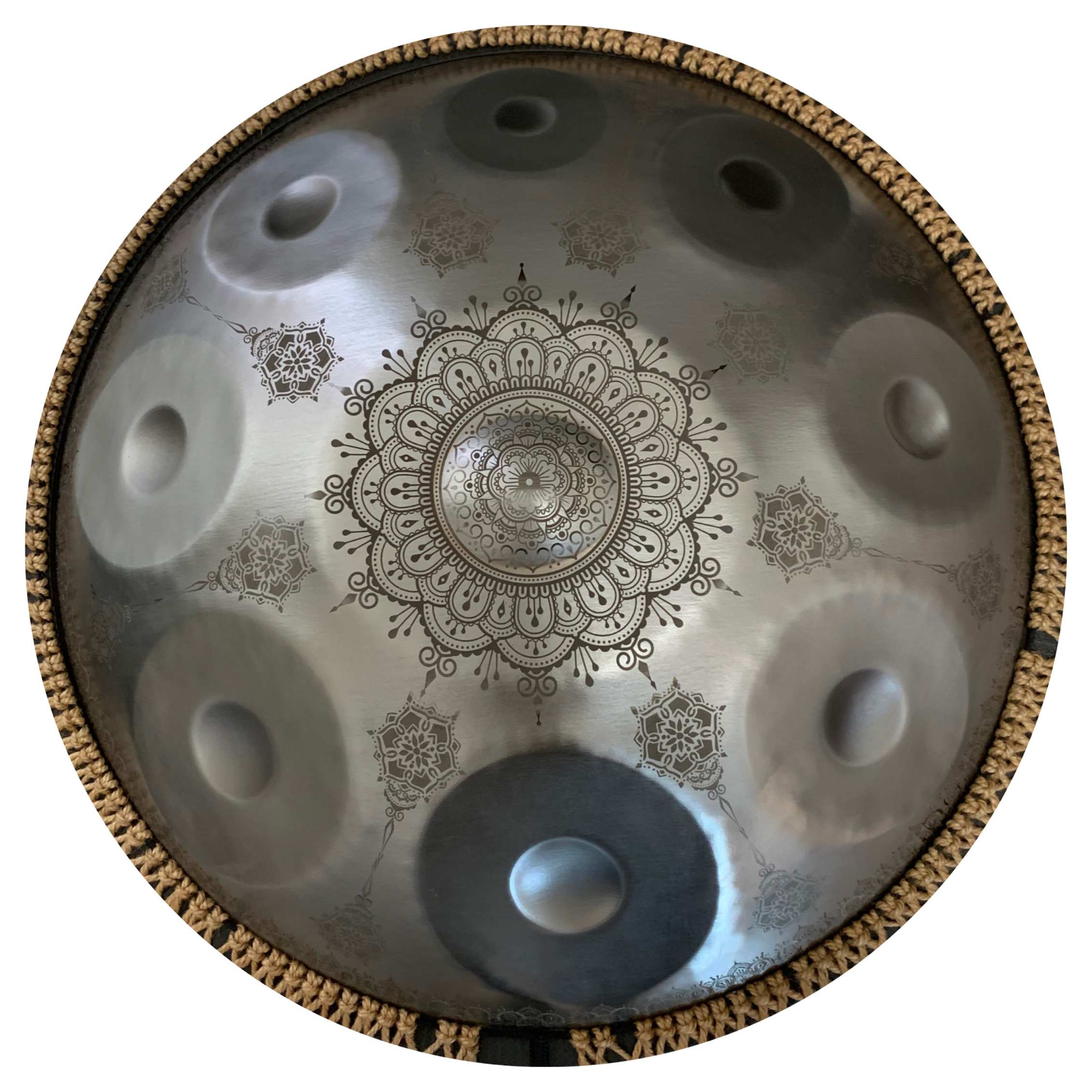
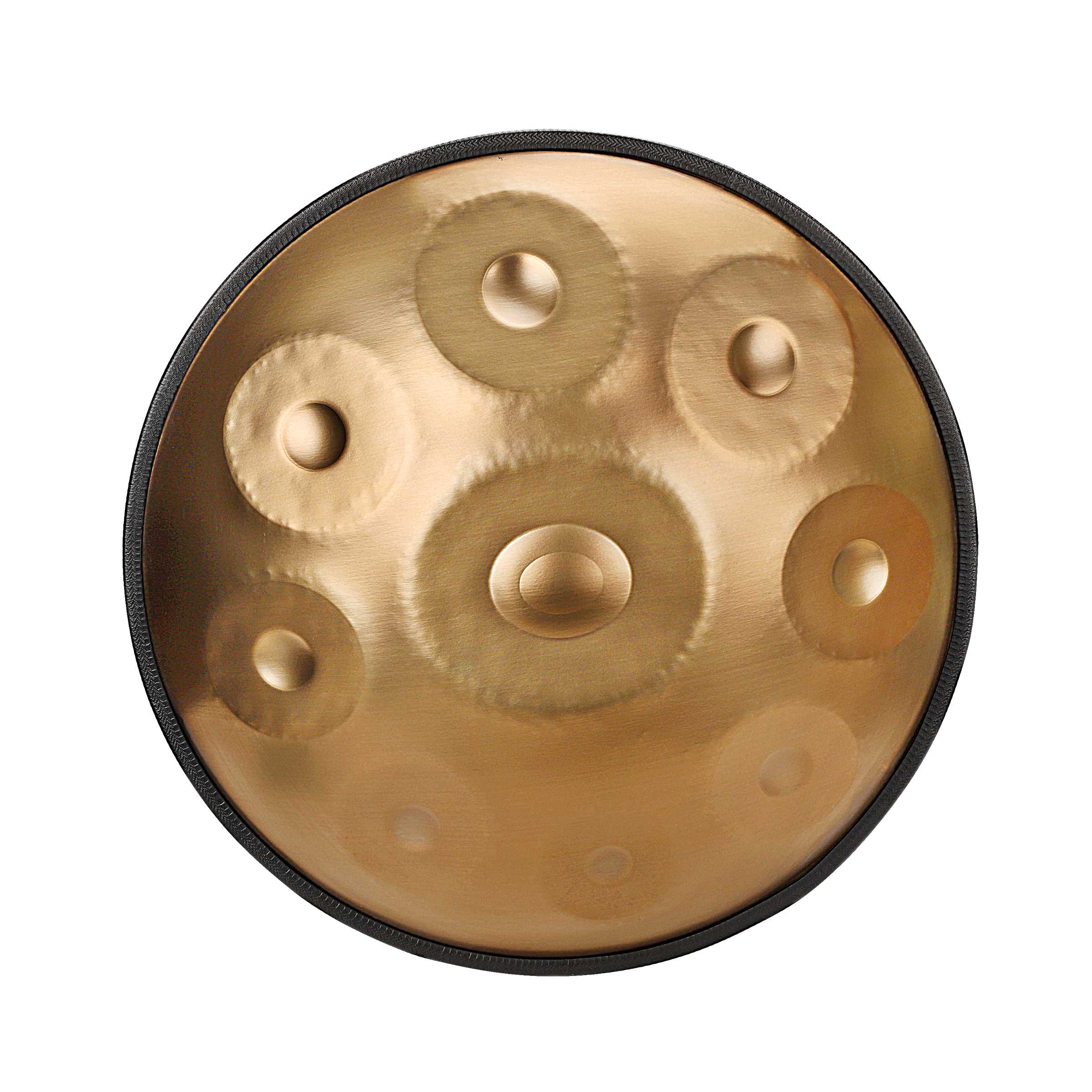
The visual distinction is absolute. A handpan consists of two deep-drawn or spun metal shells glued together at a rim, creating a convex, lens-like shape. The notes protrude outward. A steel drum is a single barrel cut to a specific length (the skirt), with the playing surface hammered deep into a concave bowl. The notes on a steel drum are sunken depressions.
2. Hand vs. Mallet Playing Mechanics
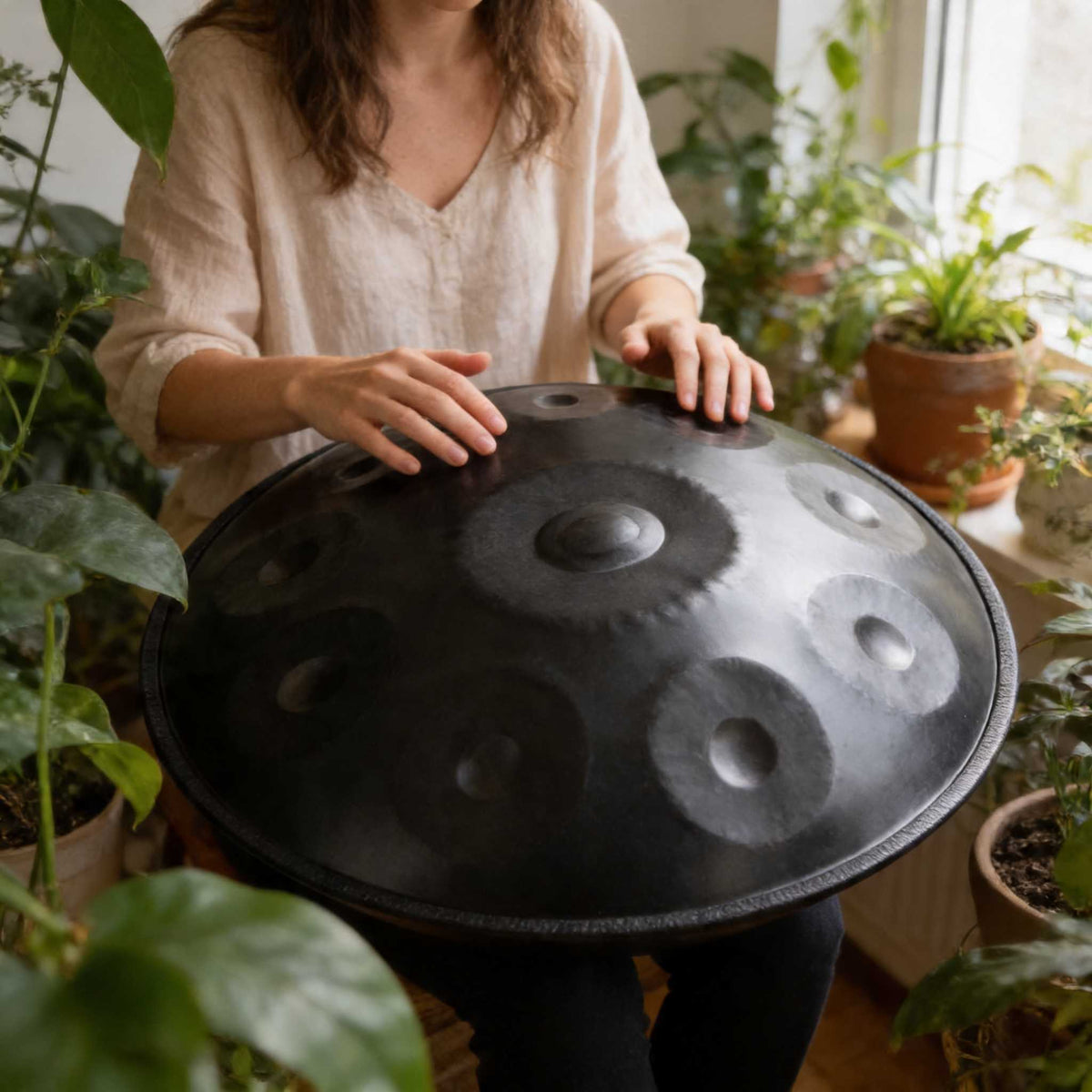
In our testing, this is where most physical damage occurs. Handpans are engineered for human touch. The metal is thin, and the tuning is highly sensitive. You tap the tone fields lightly with your thumbs and fingertips. Conversely, a steel drum requires rubber-tipped mallets to activate the thick metal. Never use mallets on a handpan; it will destroy the tuning instantly.
3. Tonal Quality and Sustain
The difference in sound is massive. If you listen to popular handpan music tracks, you will hear a deep, lingering sustain filled with harmonics and a warm, bell-like quality. A steel drum produces a bright, sharp, metallic "ping" with a much faster decay. The handpan sings; the steel drum strikes.
4. Volume and Acoustic Projection
For commercial users organizing live events, volume dictates the booking. Steel drums are aggressively loud. A single steel drum can project across a loud outdoor parade without amplification. A handpan is an inherently quiet instrument. While beautiful, a handpan requires high-quality microphones to be heard in any setting larger than a living room or a quiet yoga studio.
5. Scale Layout and Intuitiveness
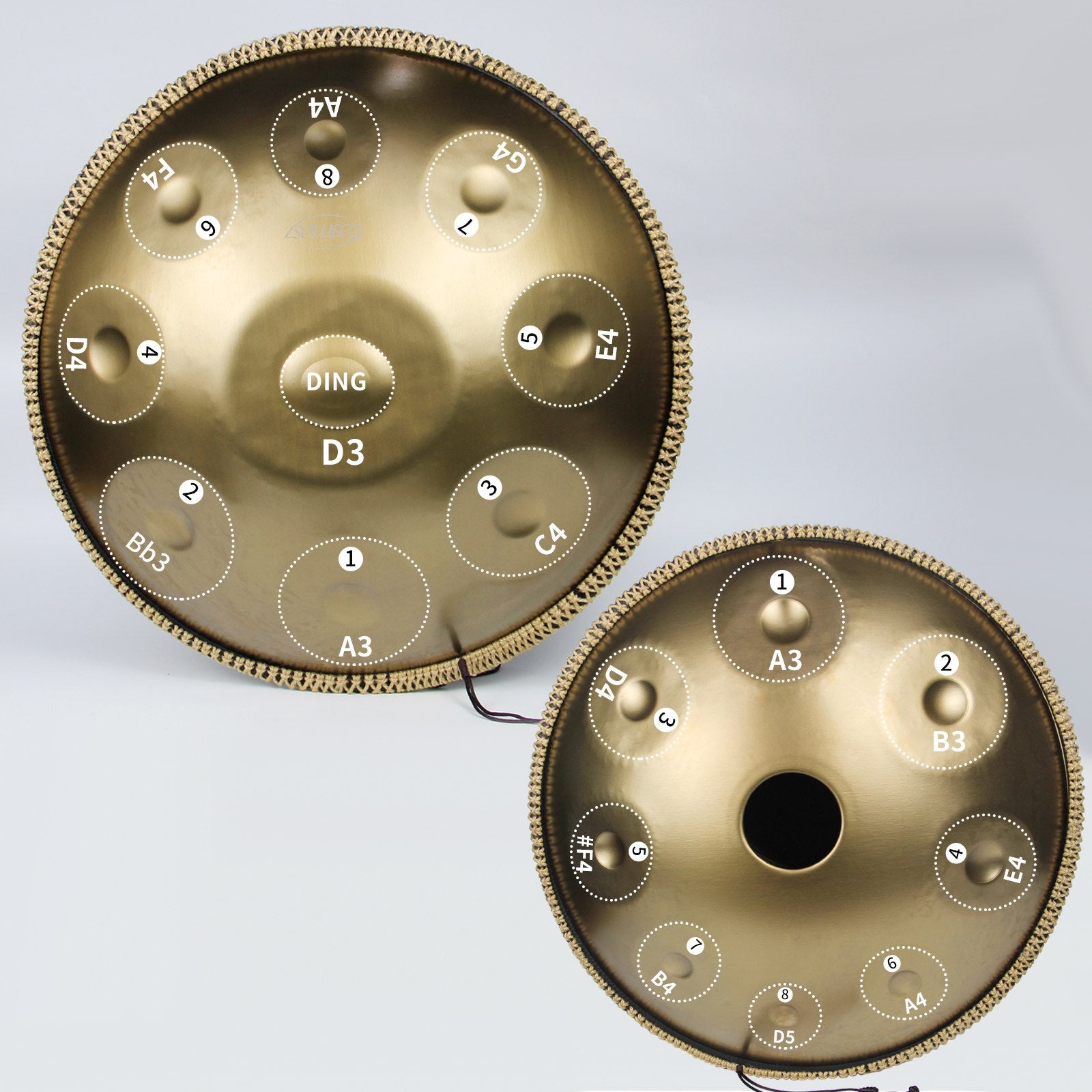
For beginners, the handpan offers immediate gratification. Handpans are typically tuned to a single diatonic scale (e.g., D Minor, C Major). There are no "wrong" notes; everything you hit is in harmony with the central bass note. Steel drums, particularly "Tenor" or "Lead" pans, are laid out in a circle of fifths or a chromatic scale. You must learn complex musical theory and precise striking patterns to play a melody accurately.
6. Portability and Setup
A handpan is an intimate travel companion. You place it directly on your lap, cross-legged on the floor, or on a small folding stand. It is entirely self-contained. A steel drum cannot be played on the lap. It requires a heavy, specialized metal stand to suspend the drum freely by its rim so the skirt can vibrate. Transporting a steel drum setup is significantly more cumbersome.
How It Works: Acoustic Mechanics
We must explain the physics to justify the cost of these instruments. The handpan operates on the principle of Helmholtz resonance. The bottom shell contains a circular opening called the "Gu." When you strike the top shell, the air inside the hollow cavity vibrates, pushing air in and out of the Gu port, creating a deep bass frequency that underpins the higher notes. This is why handpan therapy benefits are so pronounced—the physical vibration is profound.
A steel drum lacks an enclosed cavity. It relies entirely on the isolation of the hammered tone fields on the concave surface. The long metal skirt acts as a resonator to project the sound forward, but it does not trap air to create a bass frequency in the same manner. To explore the lineage of these resonant devices, you can read our comparison on hang drum vs handpan.
Benefits of Each Instrument
Benefits of the Handpan: It is intuitively playable with zero musical background. The deep resonance makes it exceptional for solo performance, street busking in quiet areas, and clinical sound therapy. It requires no accessories to play.
Benefits of the Steel Drum: It is unmatched in acoustic volume and rhythmic energy. It is a fully chromatic instrument (depending on the model), allowing the player to perform any song in any key, making it ideal for jazz bands, marching ensembles, and professional orchestral applications.
Limitations to Consider
For heavy-duty applications, the handpan is fragile. The thin nitrided steel or stainless steel can easily detune if bumped against a doorway or left in a hot car. Furthermore, because a standard handpan is fixed to one scale, you cannot easily play complex jazz chord progressions. If you want multi-scale versatility, you might need to look into digital handpan instruments.
The steel drum's primary limitation is its learning curve. It requires strict memorization of the note layout and refined mallet technique to avoid producing harsh, clanging overtones.
Who Should Use What (And Who Does Not Need It)
Who Should Use a Handpan: We recommend handpans for yoga instructors, music therapists, solo acoustic musicians, and hobbyists looking for a deeply relaxing, personal musical outlet.
Who Should Use a Steel Drum: We recommend steel drums for percussionists joining Caribbean bands, school music programs, and musicians who need to cut through the mix of a loud ensemble.
Who Does Not Need Either: If you are looking for an instrument to play complex classical sonatas with a massive octave range, neither of these is appropriate. You would be better served exploring a piano or looking through a comprehensive string instruments list.
Common Mistakes for Beginners
In most professional situations, we see beginners make two catastrophic errors. First, they search for cheap "steel drums" online, accidentally buy a toy tongue drum, and expect it to sound like the instruments played by the best handpan players. Second, they attempt to play a high-end handpan with drumsticks. This will immediately dent the tone fields and ruin the intonation, requiring a costly retuning from a professional maker.
Commercial Buying Considerations
When executing a purchase, apply strict commercial judgment. Handpans are notoriously expensive, ranging from $1,000 to $3,000+. This cost is justified by the excruciating manual labor required to tune each note by hand with a hammer. Steel drums are generally less expensive to enter, but professional "Lead" pans still command high prices.
For handpan buyers, you must choose between Nitrided Steel (warmer, punchier, requires rust oil maintenance) and Stainless Steel (longer sustain, rust-resistant, better for slow playing). Always buy from reputable makers; avoid cheap, mass-produced knockoffs on giant retail sites. Ensure you are purchasing from the best instrument stores online that specialize in acoustic percussion.
Quick Summary Comparison Table
| Feature | Handpan | Steel Drum (Steel Pan) |
|---|---|---|
| Shape | Convex (UFO shape) | Concave (Bowl shape) |
| Playing Method | Fingers, thumbs, hands | Rubber-tipped mallets |
| Acoustic Volume | Low to Medium (Intimate) | Very High (Ensemble) |
| Scale / Notes | Fixed scale (usually 8-12 notes) | Often chromatic/diatonic (many notes) |
| Setup | Played on the lap | Requires a suspended metal stand |
Pros and Cons Table
| Instrument | Pros | Cons |
|---|---|---|
| Handpan | Highly intuitive for beginners. Deeply relaxing, sustained resonance. Easy to transport in a backpack case. | Very expensive. Fragile tuning. Limited to a single musical key per instrument. |
| Steel Drum | Loud enough for live outdoor performance. Chromatic models allow playing in any key. Distinct cultural sound. | Steep learning curve. Heavy and cumbersome with the required stand. Harsh overtones if struck incorrectly. |
Expert Recommendation: The Cosmos Handpan
If you have evaluated the difference between handpan and steel drum acoustics and decided that the intimate, melodic resonance of the handpan is right for you, we recommend starting with a high-quality D Minor scale. D Minor is the industry standard for beginners due to its universally appealing, slightly melancholic but resolving tone.
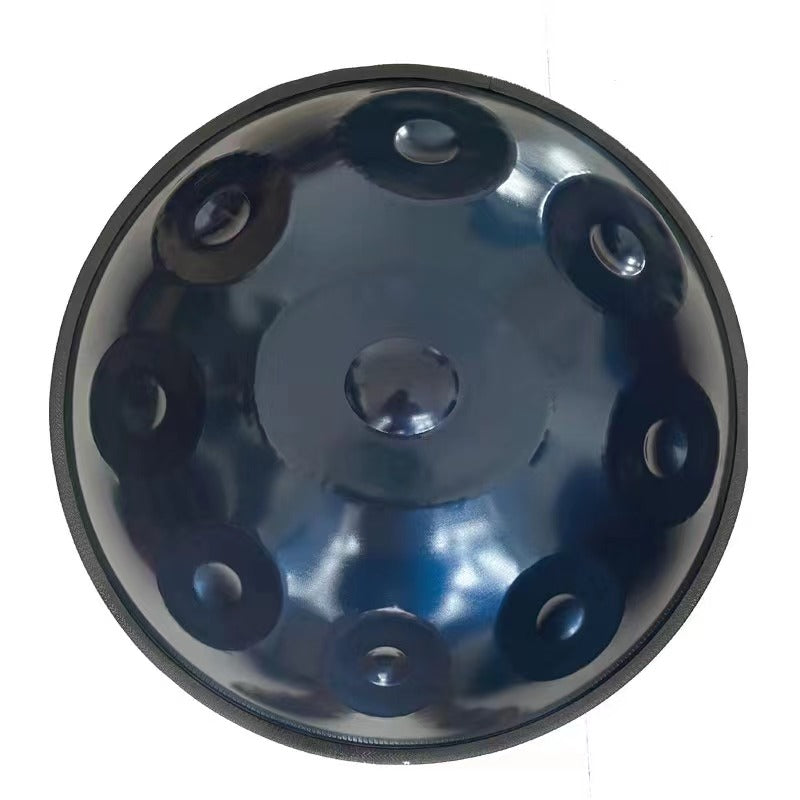
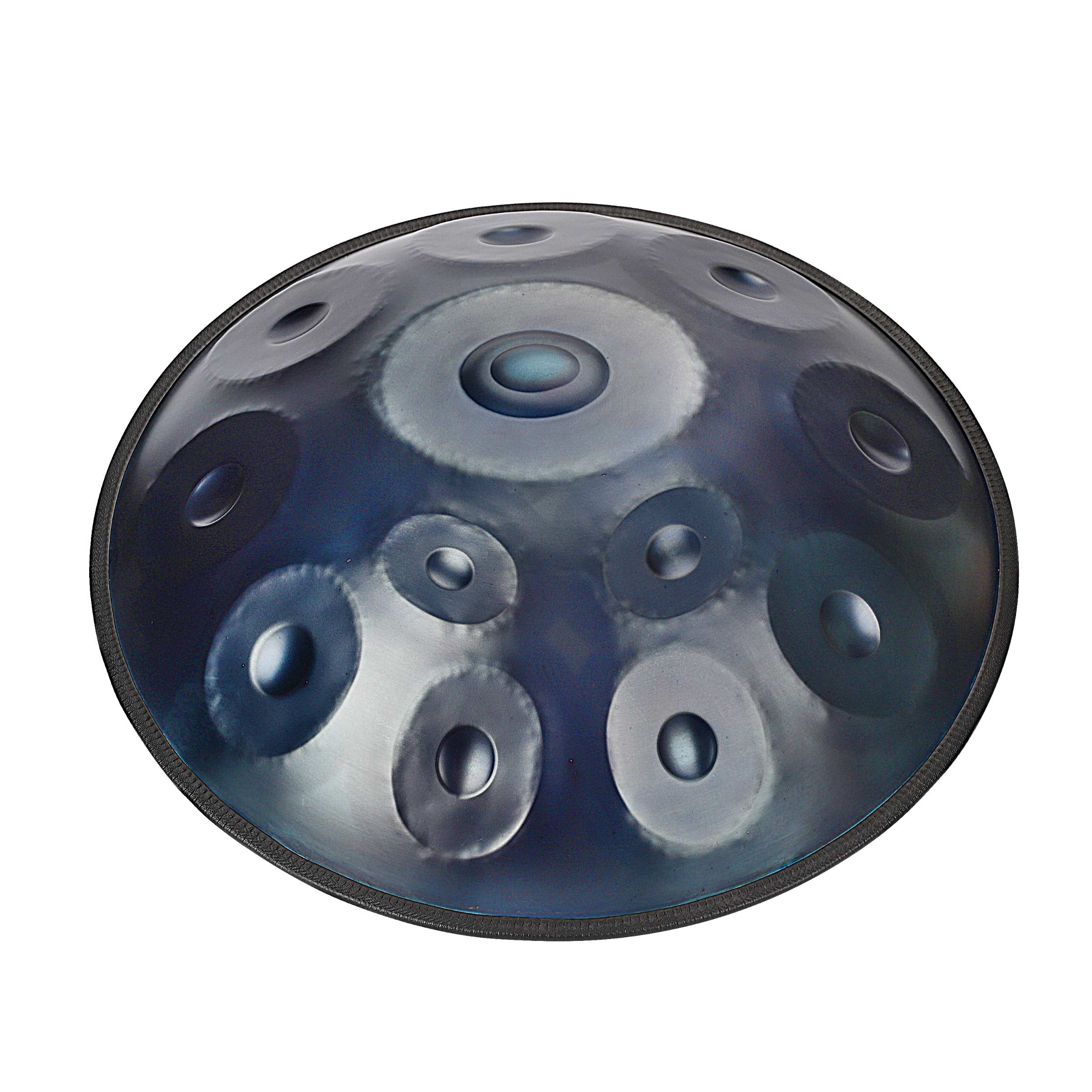
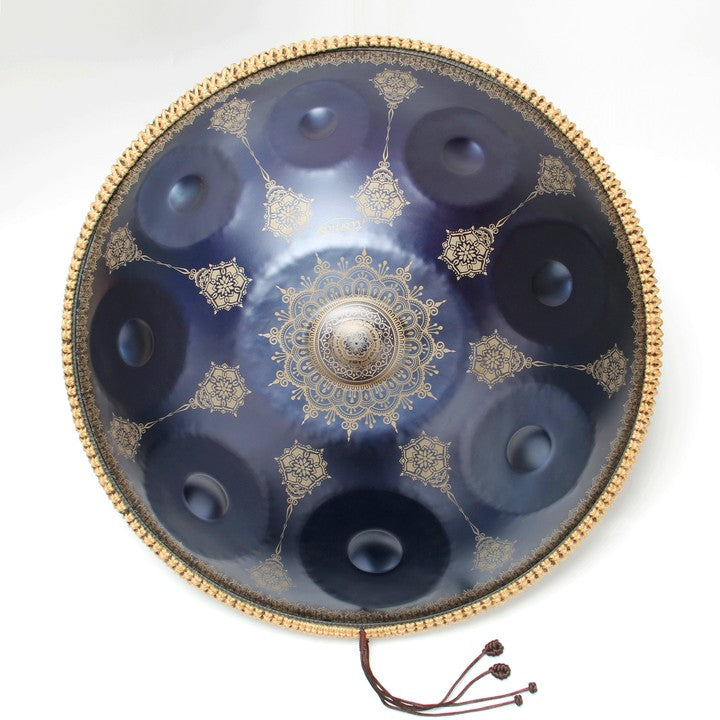
Cosmos Handpan - Serene Blue 9 Notes in D Minor - Tambourine Gift Set
The Cosmos Handpan in Serene Blue is designed explicitly for melodic practice, meditation, and performance. The note layout supports intuitive improvisation, ensuring a balanced playing experience for both beginners and seasoned sound healers.
- Scale: D Minor (Celtic)
- Note Options: 9 Notes (Including the central Ding)
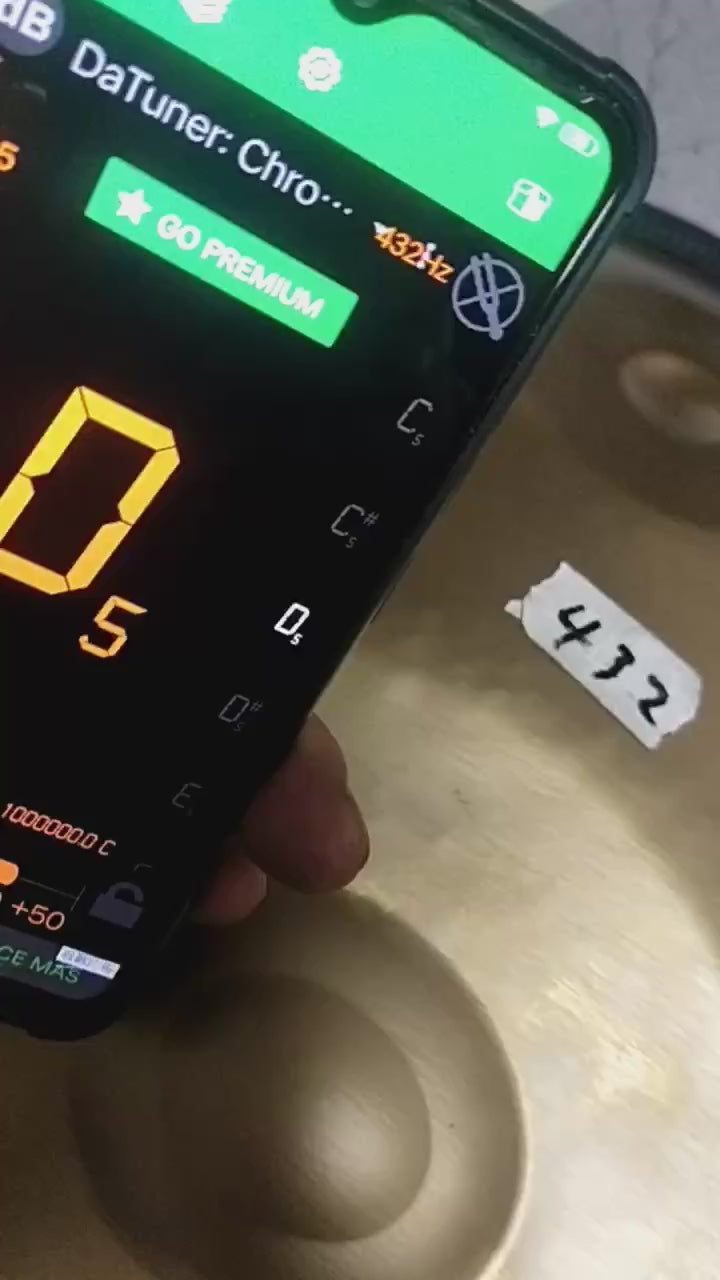
- Tuning Options: 432HZ or 440HZ
- Material: Nitrided steel (1.07 mm) for punchy, warm articulation
- Dimensions: Diameter: 22 in | Height: 10.2 in
- Finish: Quenching; Nitriding & color treatment for rust resistance
Frequently Asked Questions
Is a Hang drum the same as a steel drum?
No. "Hang" is the original trademarked name for the handpan, created by PANArt in Switzerland. While it was inspired by the steel drum, it is convex and played by hand, whereas the steel drum is concave and played with mallets. Today, "handpan" is the generic term for instruments styled after the Hang.
Can I use mallets on my handpan?
Absolutely not. Handpans are made from relatively thin metal tuned to precise harmonic frequencies. Striking a handpan with rubber or wooden mallets will immediately bend the metal, ruin the tuning, and void any manufacturer warranty.
Which is easier to learn, the handpan or the steel drum?
From our experience, the handpan is vastly easier for beginners. Because it is tuned to a single diatonic scale, you do not need to understand music theory to produce beautiful, harmonious sounds. The steel drum requires significant technique and scale memorization.
Why are handpans so much more expensive than other drums?
Handpans cannot be fully mass-produced by machines. The final tuning requires a highly skilled artisan to strike the metal thousands of times with a hammer to align the fundamental note, the octave, and the compound fifth on every single tone field. You are paying for intense, skilled manual labor.
References & Industry Standards
To ensure our acoustic and commercial analysis meets the highest standards of E-E-A-T (Experience, Expertise, Authoritativeness, and Trustworthiness), we align our technical definitions with the following authoritative bodies:
- Percussive Arts Society (PAS): The global authority on percussion instrument classification, historical lineage, and performance standards for both hand percussion and idiophones. Review PAS Standards
- Acoustical Society of America (ASA): Publisher of peer-reviewed research regarding the physics of musical instruments, specifically the nonlinear mode coupling and Helmholtz resonance in modern steel acoustic instruments. Review ASA Acoustics Research
- Journal of Music Therapy (Oxford Academic): Authoritative clinical research evaluating the physiological and psychological benefits of resonant acoustic instruments (like handpans) in clinical therapeutic settings. Review Music Therapy Research