
Entering the world of acoustic steel instruments is a massive financial and emotional investment. Handpans are precision-engineered acoustic sculptures, and choosing the wrong dimensions will physically hinder your playing mechanics and acoustically disappoint your expectations. A staggering number of new players mistakenly purchase instruments purely based on scale or color, completely ignoring the structural diameter and dome height. If you do not understand the physics of Helmholtz resonance or how shoulder abduction impacts your reach, you are gambling with a thousand-dollar purchase.

From our experience working closely with master tuners and observing thousands of students, the physical dimensions of the instrument dictate your ergonomic comfort, the spacing between tone fields, and the deepest bass frequency the shell can produce. You must approach this purchase with commercial and practical judgment. In this definitive guide, we will break down the structural realities of acoustic steel, identify the 4 best handpan size for beginners, and explain whether a compact travel model is actually worth buying over a full-sized studio instrument.
Quick Answer: Which Size Should You Buy?
The absolute best handpan size for beginners is the Standard 22-inch (56cm) diameter with a 9-note layout. This size offers the perfect acoustic volume for deep bass resonance (like a D Minor or C# Minor central Ding) while maintaining optimal tone field spacing so your hands do not accidentally strike adjacent notes. If you have a smaller physical frame or require strict portability, a 21-inch (53cm) compact handpan is the only acceptable alternative. We strictly advise against purchasing 18-inch mini handpans or over-crowded 14-note instruments as your first purchase, as they severely compromise acoustic sustain and require advanced striking precision.
Table of Contents
- What It Is: Understanding Handpan Dimensions
- How It Works: Acoustics and Physics
- The 4 Best Handpan Sizes for Beginners
- Benefits of Choosing the Right Size
- Limitations of Extreme Sizes
- Who Should Use Standard Sizes
- Who Does Not Need a Full-Size Pan
- Common Mistakes Buyers Make
- Critical Buying Considerations
- Summary and Comparison Tables
- Expert Recommendation
- Frequently Asked Questions
What It Is: Understanding Handpan Dimensions
When industry professionals discuss the standard handpan size, we are evaluating three distinct measurements: the outer diameter across the rim, the total height of the upper and lower domes (the chamber volume), and the spatial layout of the tone fields. A handpan is not a stamped generic product; it is a meticulously hammered steel membrane.
The standard size recognized globally is 22 inches (approximately 56 centimeters) in diameter, with a height of roughly 10 to 11 inches. However, the market has evolved to include 21-inch, 20-inch, and 18-inch models. Size does not merely dictate how heavy the instrument is to carry; it fundamentally governs the instrument's pitch floor. You simply cannot tune a low B2 bass note onto an 18-inch shell because the internal air volume is insufficient to support the wavelength of that frequency.
How It Works: Acoustics and Physics
In most professional situations, luthiers design handpans based on the principle of the Helmholtz resonator. The hollow steel chamber amplifies the vibration struck on the surface tone fields. A larger internal volume (a 22-inch or 24-inch handpan) allows long, low-frequency sound waves to propagate fully, resulting in deep, haunting bass notes with immense sustain.
Conversely, a smaller shell (20-inch or 18-inch) physically cannot sustain low bass notes. Therefore, smaller handpans are typically tuned to higher scales, such as F major or G minor. Furthermore, size dictates surface area. When learning how many notes should a handpan have, beginners must realize that cramming 12 notes onto a 20-inch shell shrinks the size of each tone field. This forces the beginner to strike with absolute pinpoint accuracy to avoid triggering dissonant crosstalk from neighboring notes.
The 4 Best Handpan Sizes for Beginners
Based on our strict evaluation of acoustic yield, ergonomic accessibility, and learning curves, here is the definitive ranking of the best handpan size for beginners.
1. The 22-Inch (56cm) Standard Model
This is the gold standard of the industry. The 22-inch diameter provides a generous surface area, meaning the tone fields are large, well-spaced, and highly forgiving to a beginner's unrefined striking technique. This size effortlessly supports popular, deeply resonant beginner scales like D Minor and C# Minor. If you are an average-sized adult, this is the only size you should seriously consider for a primary studio or home instrument.
2. The 21-Inch (53cm) Compact Model
The 21-inch handpan bridges the gap between acoustic depth and physical ergonomics. For players under 5'4" (162cm), reaching across a 22-inch handpan to strike the furthest notes can cause uncomfortable shoulder abduction and wrist strain. The 21-inch model shaves off just enough circumference to make lap-playing incredibly comfortable for smaller frames, while still retaining enough chamber volume to support a D Minor scale with respectable sustain.
3. The 20-Inch (50cm) Travel Size
If you live out of a van, hike to remote locations, or fly frequently, the 20-inch handpan is a viable secondary option. Because of its reduced volume, it speaks with a brighter, tighter voice (often tuned to E, F, or G scales). The decay of the notes is faster, which is actually advantageous for players who want to play fast, percussive, rhythmic patterns without the notes muddying together. However, we do not recommend this as a first instrument if your goal is slow, meditative sound healing.
4. The 9-Note Spatial Layout (The Macro-Size Feature)
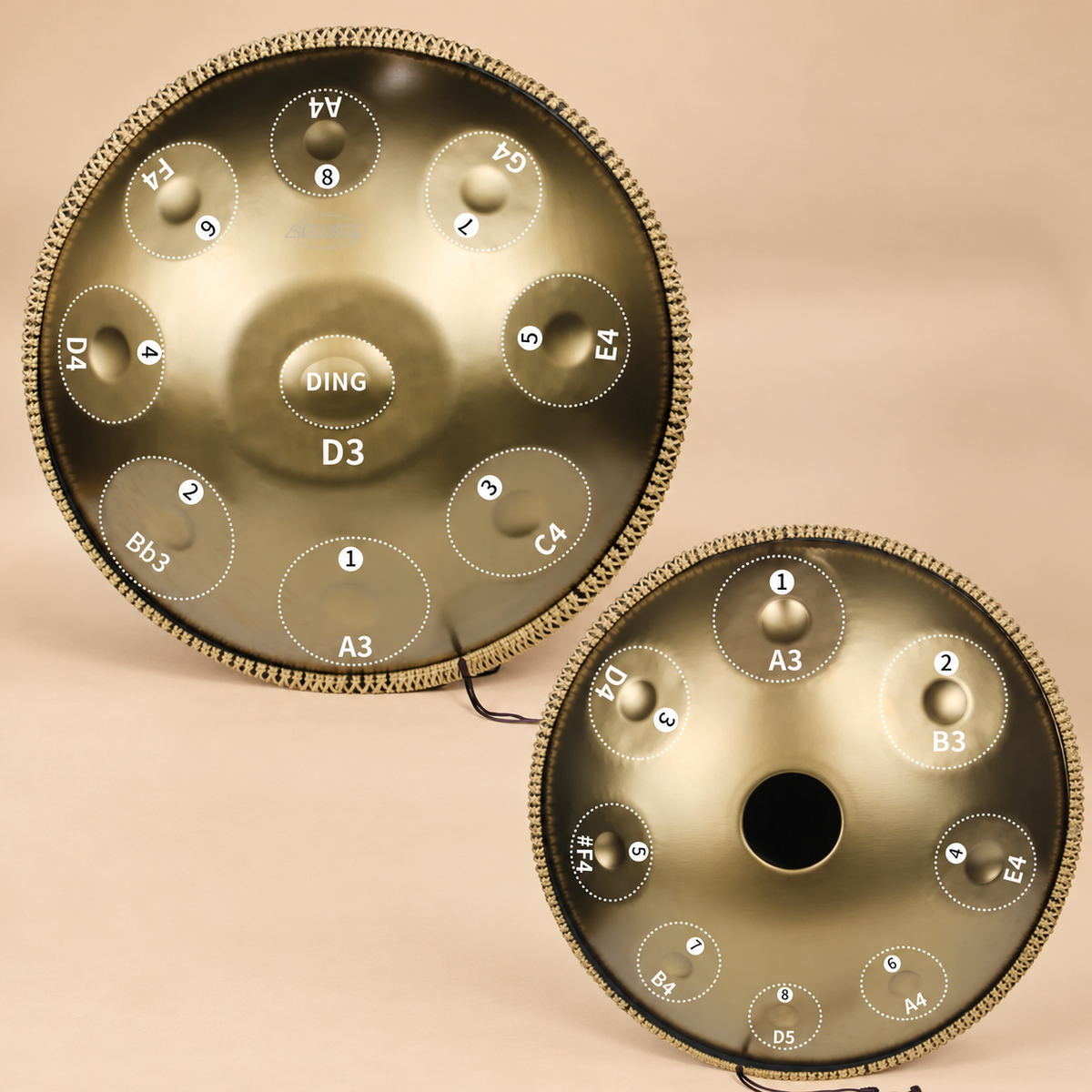
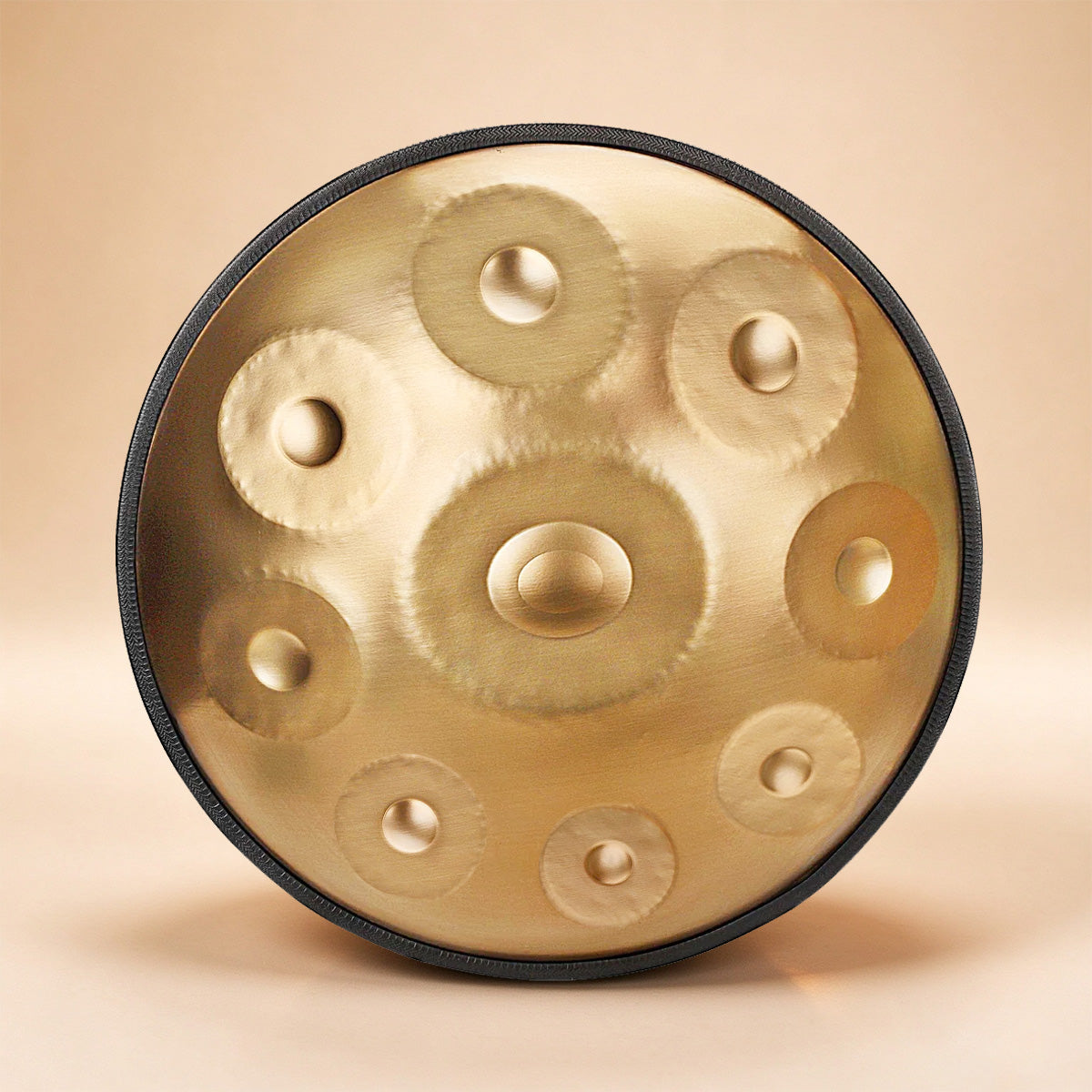
While diameter is crucial, the layout "size" is equally vital. The 9-note configuration (1 central Ding + 8 circle notes) is the ultimate handpan size for beginners. It provides a complete octave to express full melodies, but leaves enough dead steel between the notes to act as acoustic isolators. When you review a handpan notes chart, you will see that 9 notes on a 22-inch shell is the mathematical sweet spot for clarity and isolation.
Benefits of Choosing the Right Size
Selecting the correct handpan size for beginners yields immediate dividends in your learning progression. A 22-inch 9-note handpan ensures that when your thumb strikes the steel, the note activates cleanly without requiring a perfect strike angle. This prevents early frustration. Ergonomically, resting the correct diameter across your thighs ensures your spine remains straight, mitigating lower back pain during extended practice sessions. If you are exploring the handpan therapy benefits, the deep bass resonance of a full-sized 22-inch shell is scientifically proven to stimulate vagus nerve relaxation far better than high-pitched mini handpans.
Limitations of Extreme Sizes
We must address the extremes of the market. Avoid 24-inch "mutant" handpans. While they offer cavernous bass, they are excessively heavy, ergonomically disastrous to balance on your lap, and notoriously difficult to keep in tune due to the massive, unstable tone fields. Conversely, 18-inch mini handpans sound akin to steel tongue drums; they lack the ethereal, haunting sustain that defines the true handpan sound. In our testing, mini handpans require aggressive, highly precise finger strikes that beginners simply do not possess.
Who Should Use Standard Sizes
We recommend the standard 22-inch size for 90% of new players, sound healers, yoga instructors, and studio musicians. If your primary goal is to sit in your living room, close your eyes, and immerse yourself in acoustic overtones, the standard size is non-negotiable. For heavy-duty applications like outdoor busking, the robust volume output of a 22-inch nitrided steel shell will cut through ambient city noise far better than a compact model.
Who Does Not Need a Full-Size Pan
You do not need a 22-inch handpan if you are buying an instrument specifically for a child, or if you are a backpacker who physically cannot carry a hardcase exceeding 22 inches on commercial airlines. In these highly specific niches, migrating to a 20-inch travel handpan or exploring digital handpan instruments might be a more practical, albeit acoustically limited, decision.
Common Mistakes Buyers Make
The most catastrophic mistake beginners make is purchasing a handpan with 12 to 14 notes on a standard 22-inch shell. More notes do not equate to a better instrument. To fit 14 notes on the top shell, the tuner must shrink the tone fields drastically. This forces the notes too close together, resulting in severe "crosstalk" (where striking one note unintentionally activates the neighboring note). If you are understanding handpan notes for the first time, stick strictly to a 9-note or 10-note layout.
Another profound error is buying a cheap 14-inch steel tongue drum on Amazon and expecting it to sound like a handpan. Tongue drums are cut with lasers; handpans are hammered under tension. They are completely different instruments with vastly different acoustic properties.
Buying Considerations
When locking in your handpan size for beginners, you must simultaneously evaluate the tuning frequency and material. Most commercial music is tuned to 440Hz. However, many sound healers prefer the slightly lower 432Hz tuning, which is believed to resonate more naturally with the human body. We strongly advise reading our 432 hz handpan guide before making a final selection.
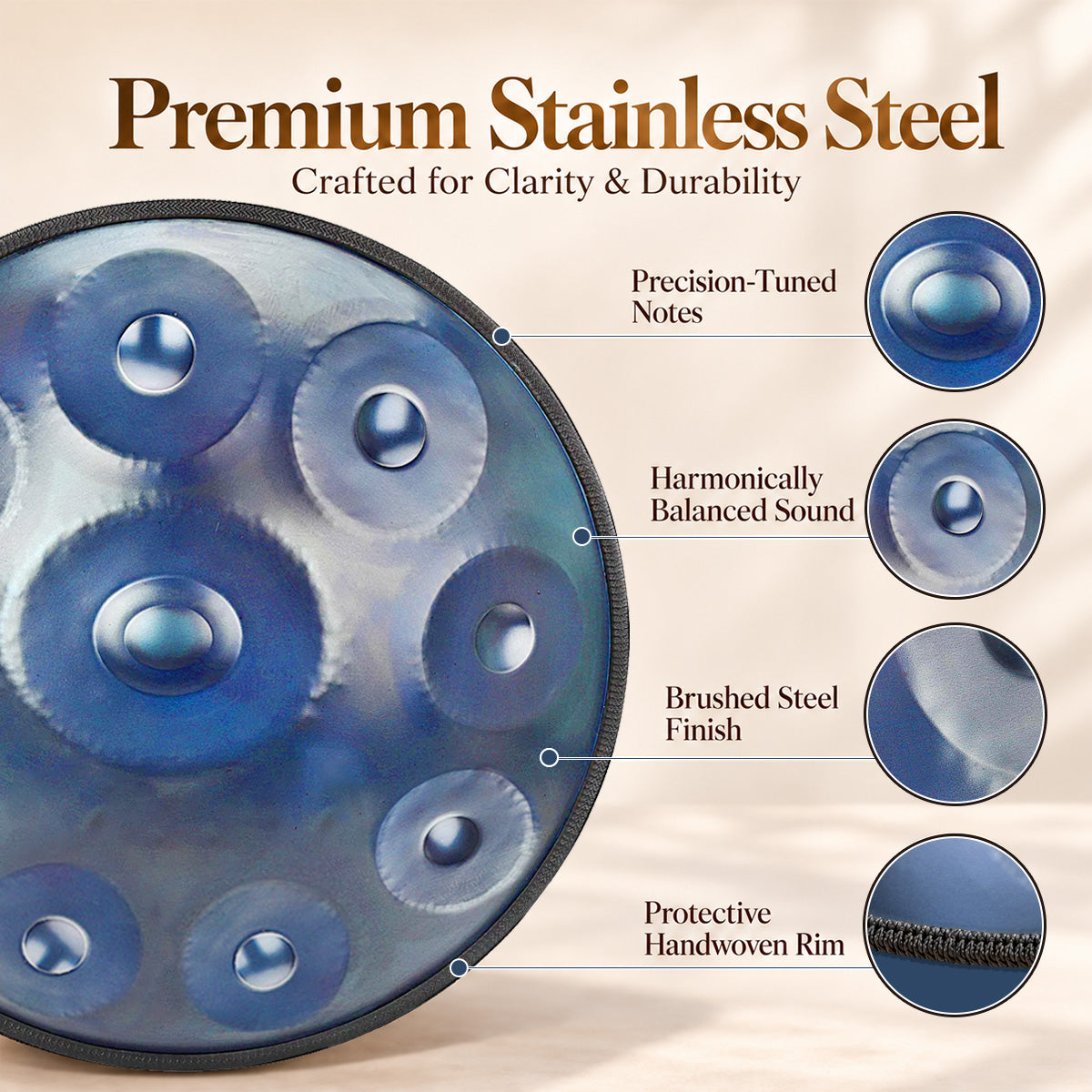
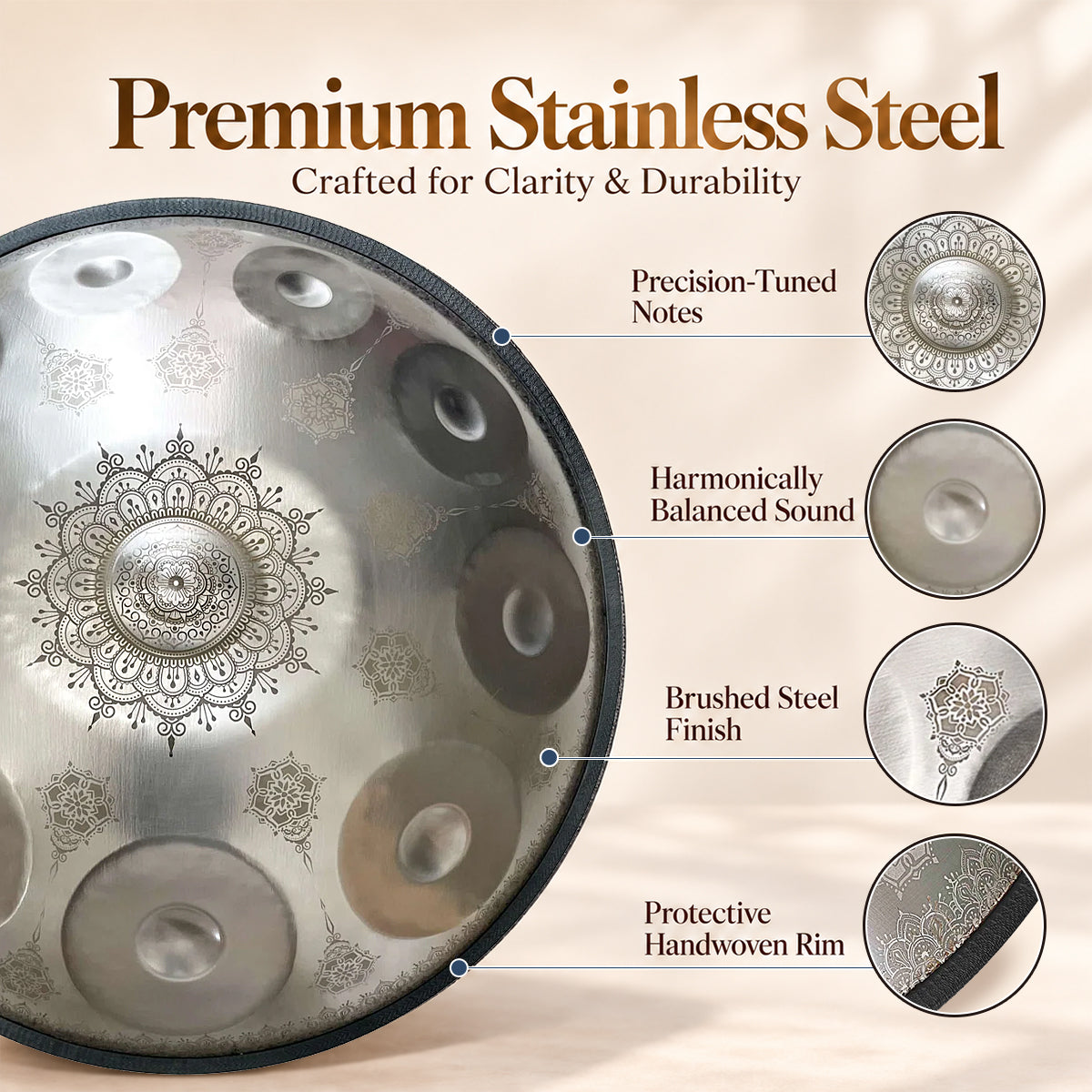
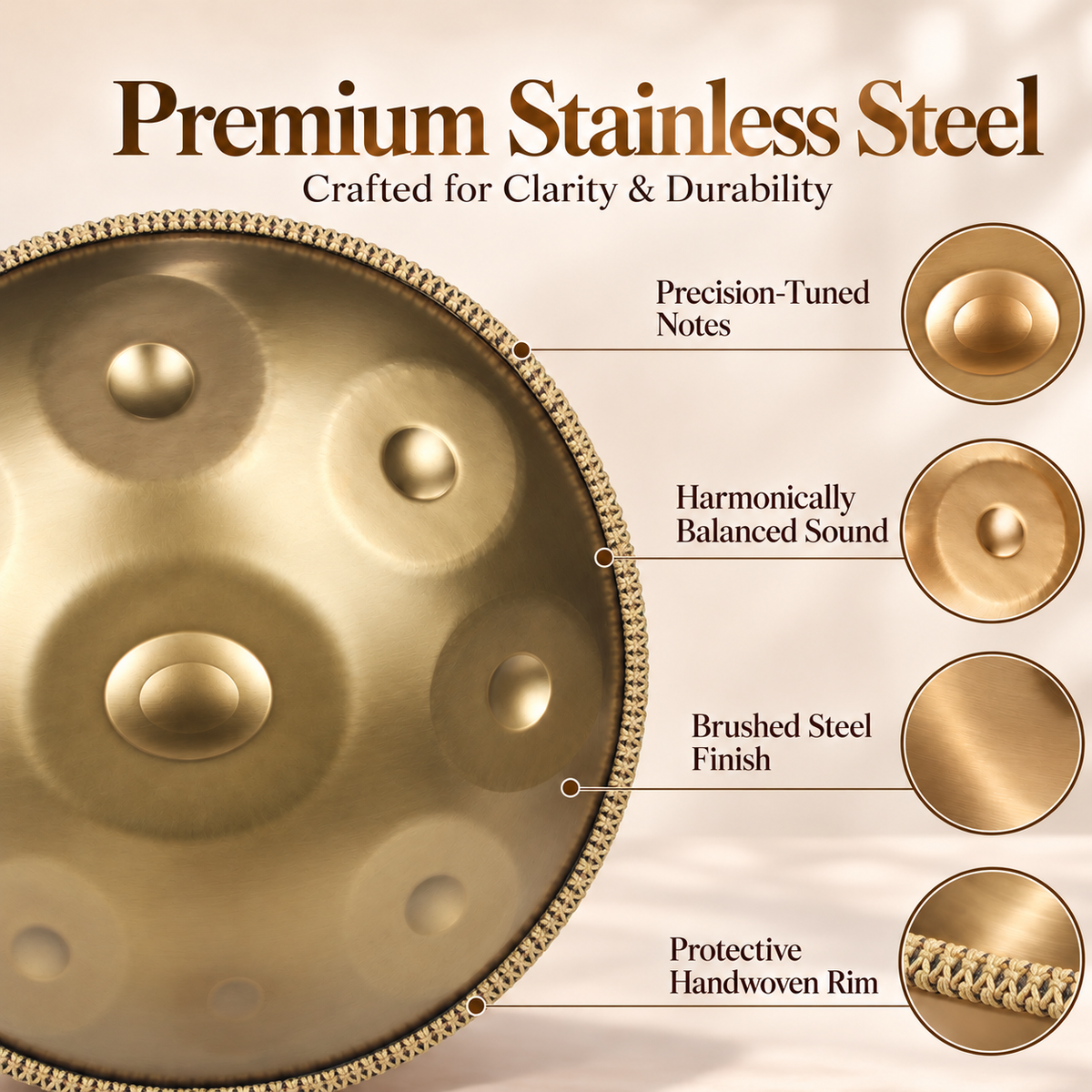
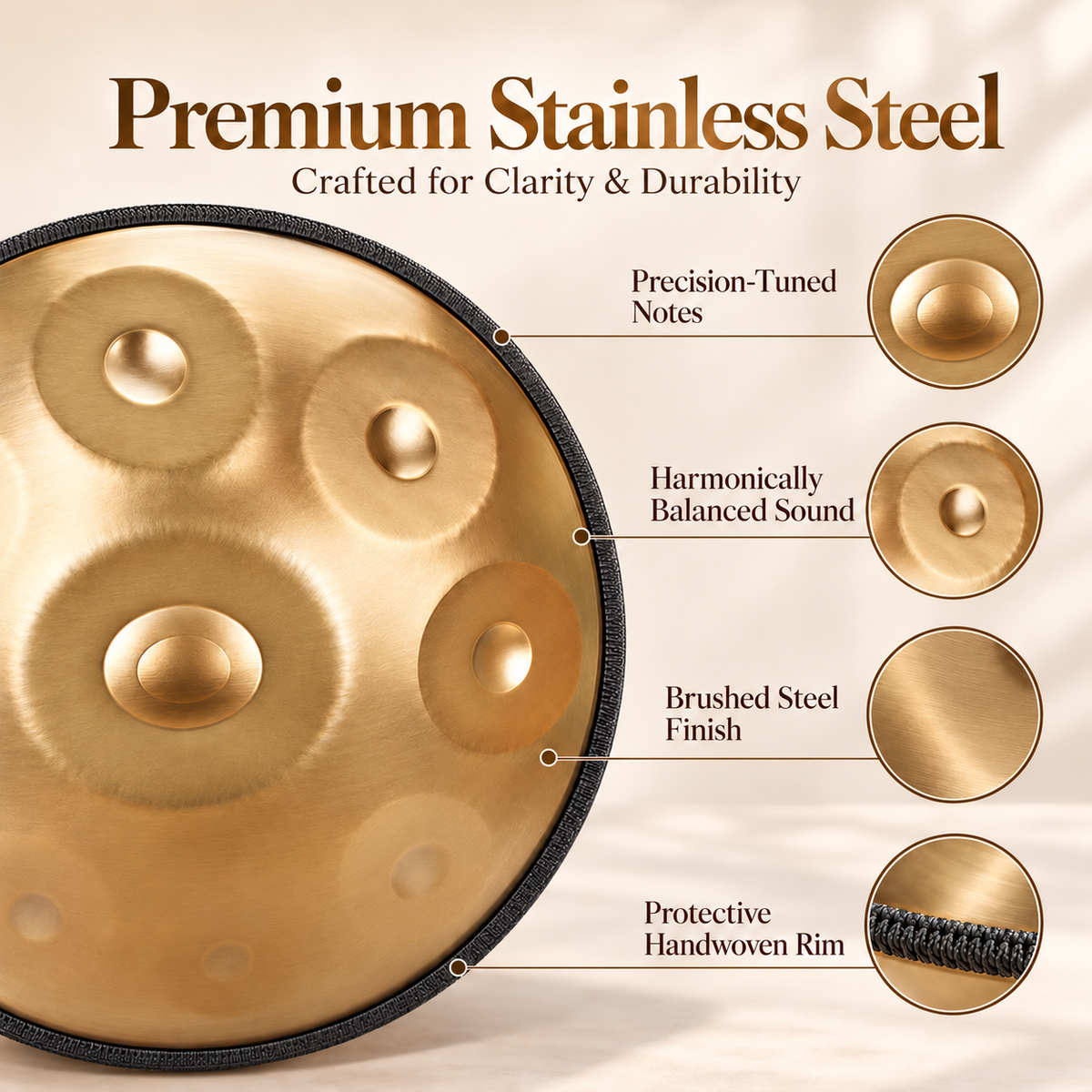
Furthermore, consider the material. Nitrided steel is preferred for beginners because it offers a shorter, more controlled sustain, preventing the notes from washing into a muddy blur. Stainless steel offers massive, endless sustain, which is beautiful but requires advanced muting techniques to play cleanly.
Summary and Comparison Tables
| Handpan Diameter | Ideal Note Count | Best Suited For | Acoustic Profile |
|---|---|---|---|
| 22-Inch (56cm) | 9 to 10 Notes | Average adults, studio players, sound healers. | Deep bass, rich sustain, highest volume. |
| 21-Inch (53cm) | 9 Notes | Players under 5'4", ergonomic priority. | Balanced bass, excellent clarity. |
| 20-Inch (50cm) | 8 to 9 Notes | Frequent travelers, backpackers. | Bright, percussive, shorter sustain. |
| 18-Inch (45cm) | 8 Notes | Children, extreme ultralight travel. | Very high pitch, lacks deep resonance. |
| Feature | 9-Note Layout (Recommended) | 12+ Note Layout (Not Recommended) |
|---|---|---|
| Tone Field Size | Large, forgiving to inaccurate strikes. | Small, requires absolute pinpoint accuracy. |
| Crosstalk Interference | Minimal; excellent acoustic isolation. | High; striking one note activates others. |
| Tuning Stability | Highly stable, requires tuning rarely. | Volatile, requires frequent professional retuning. |
| Learning Curve | Fast, intuitive for absolute beginners. | Steep, frustrating for unrefined techniques. |
| Standard 22-Inch Pros & Cons | Mini 20-Inch Pros & Cons |
|---|---|
| Pro: Delivers the true, deep "handpan sound". | Pro: Fits in airplane overhead compartments. |
| Pro: Large tone fields are easy to hit cleanly. | Pro: Faster decay is great for quick, percussive playing. |
| Con: Can be bulky to transport on public transit. | Con: Lacks the hypnotic, meditative bass frequencies. |
| Con: May require reaching for smaller players. | Con: Tone fields are smaller and harder to strike perfectly. |
Expert Recommendation
To conclude with absolute clarity: do not compromise on the size of your first instrument. A 22-inch diameter shell with a 9-note layout is the undisputed champion for anyone starting their musical journey. This exact configuration ensures you have the acoustic depth necessary for profound sound therapy while maintaining an ergonomic layout that welcomes inexperienced hands. Instead of worrying about how to tune a handpan or dealing with complex 14-note arrays, buy a properly sized, professionally tuned 9-note D Minor.

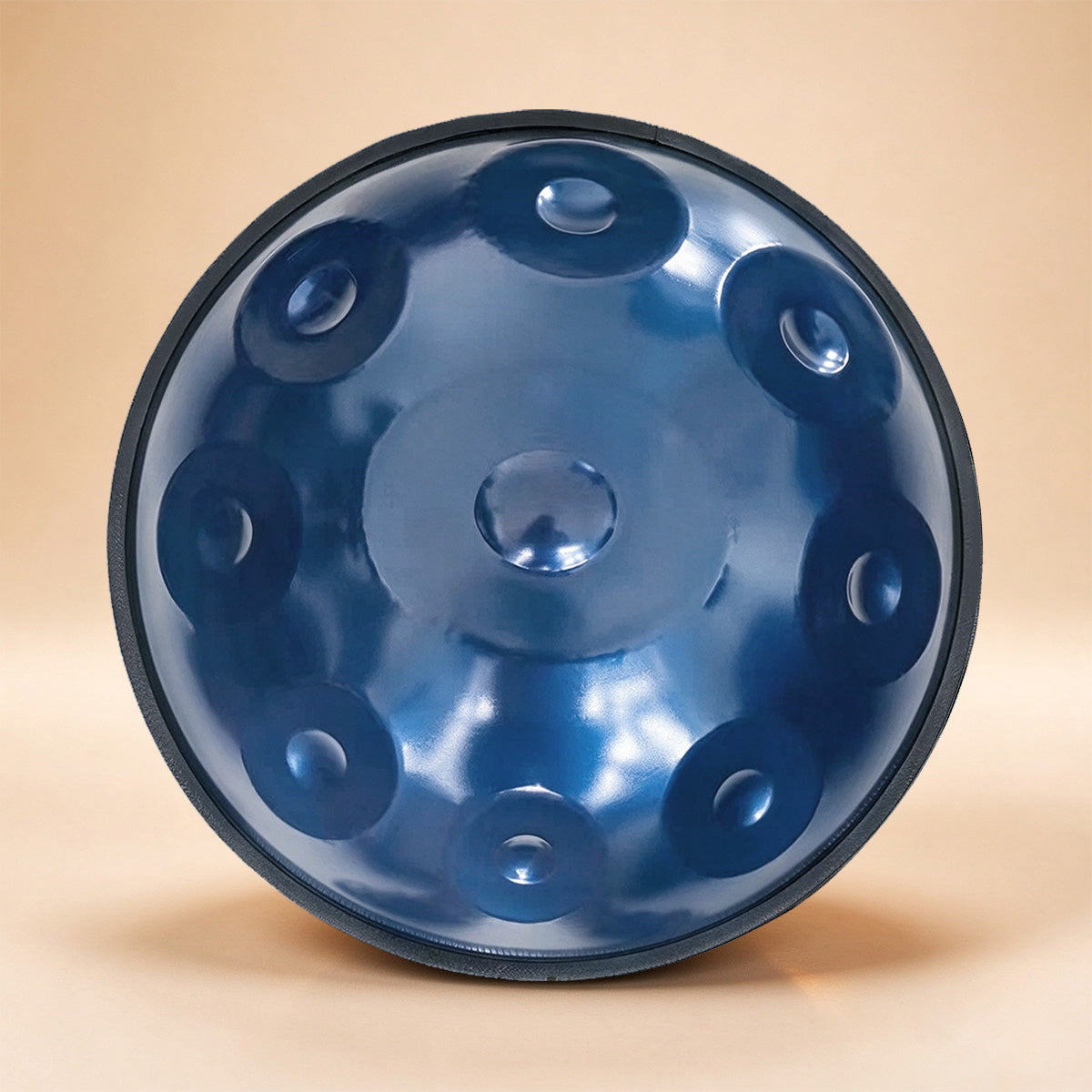
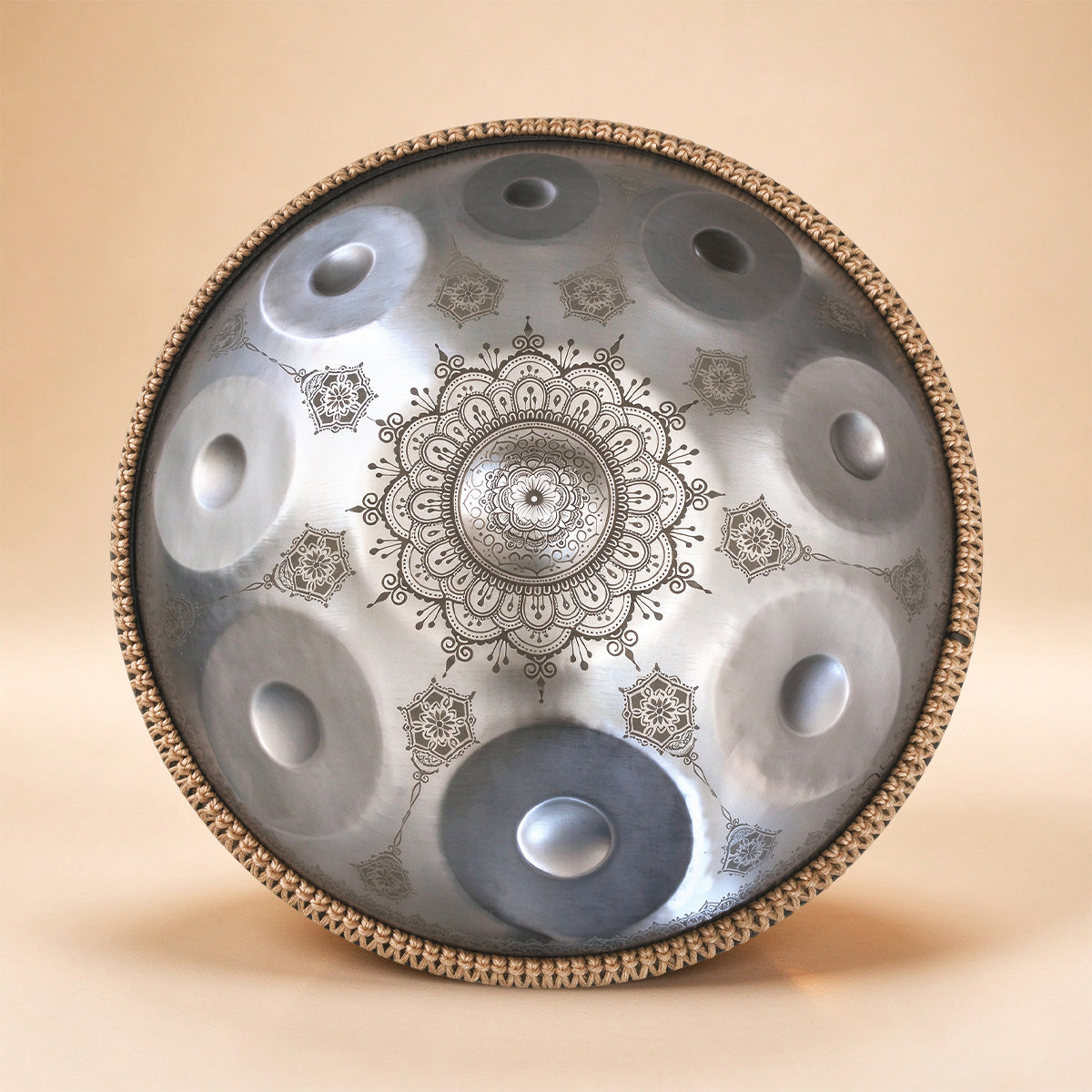
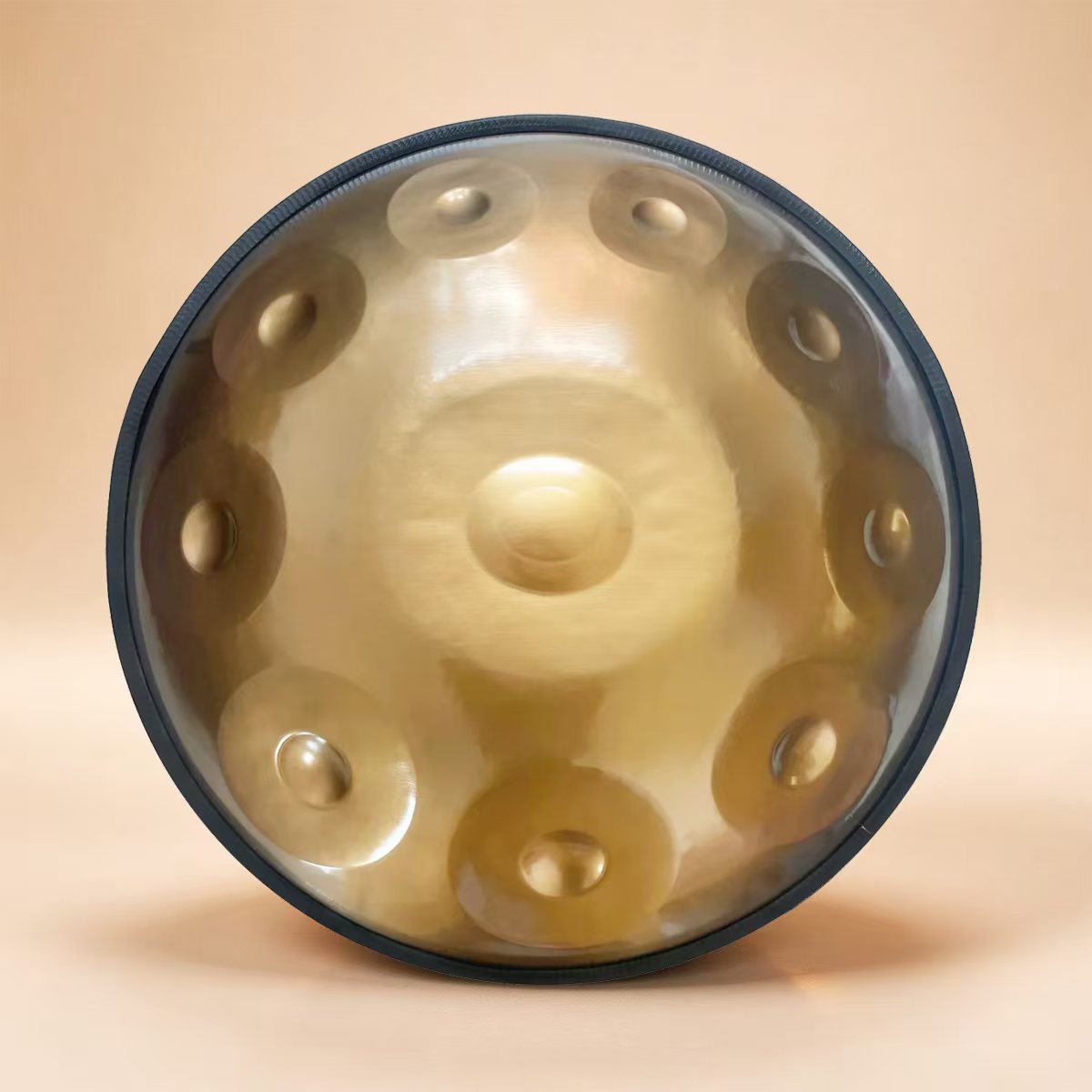
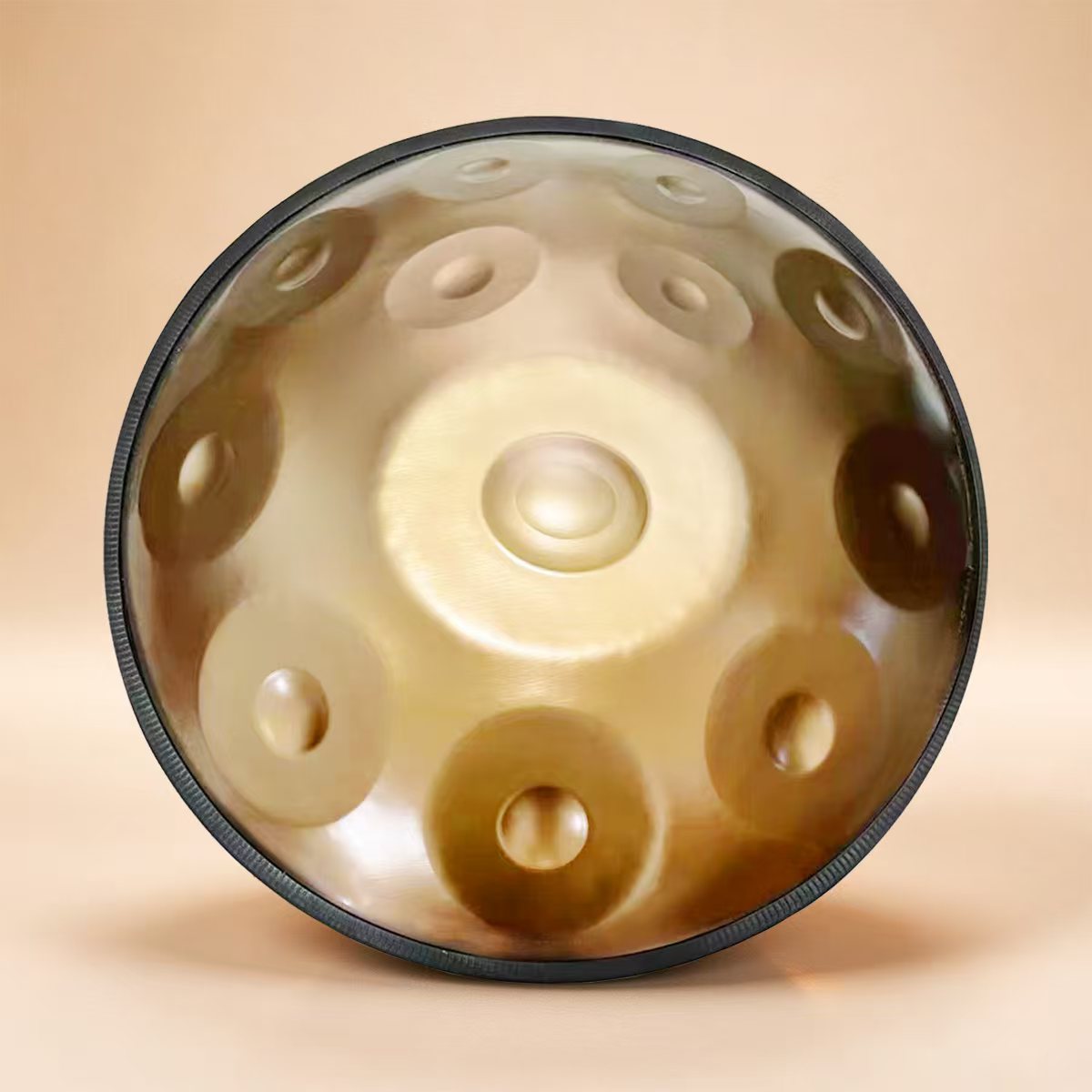
Cosmos Handpan Golden Elegance - 9 Notes D Minor Gift Set
The Golden Elegance 9-note handpan is a beginner-friendly instrument with a warm visual finish and a D Minor scale that is easy to improvise on from the very first session. Designed strictly to the optimal 22-inch standard, it guarantees deep resonance and perfect tone field spacing.
- Scale: D Minor 9-note layout (The most popular beginner scale).
- Tuning options: Available in 432Hz or standard 440Hz.
- Best for: First-time handpan buyers, meditation, relaxation and small performances.
- Sound: Clear sustain with a smooth, calming tone perfectly balanced across the shell.
- Included gift set: Protective carry bag, Handpan stand, Pair of mallets, and a Cleaning cloth.
Frequently Asked Questions
Is a 12-note handpan too big for a beginner?
It is not the physical outer dimension that is too big, but the layout complexity. Adding 12 notes to a standard 22-inch shell forces the tone fields to be physically smaller and closer together. This requires advanced striking accuracy and makes it very difficult for beginners to play without hitting two notes simultaneously. We strongly advise beginners to stick to a 9-note or 10-note handpan size for beginners to ensure clean, isolated sounds. To help your journey, check our handpan for beginners guide.
Can I bring a 22-inch handpan on an airplane?
A 22-inch handpan in a standard padded softcase generally exceeds standard airline carry-on dimensional limits. However, many airlines will allow it as a special musical instrument if stored in the overhead bin or a coat closet. For guaranteed carry-on compliance, a 20-inch compact handpan or a specially designed hardcase is required, though you sacrifice the deep acoustic bass of the 22-inch model.
Does the height of the handpan dome affect the sound?
Absolutely. The height of the upper and lower domes dictates the total internal cubic volume of the instrument. A higher dome creates a larger chamber, which is necessary to support low-frequency bass waves (like the D3 or C#3 central Ding). Instruments that are too flat will sound metallic, choked, and lack the ethereal sustain handpans are famous for.
Authoritative Industry References
To ensure our acoustic and ergonomic advice adheres to the highest scientific standards, we base our structural recommendations on data from the following authorities:
- Acoustical Society of America (ASA) - Peer-reviewed physics research regarding Helmholtz resonance, non-linear membrane vibration, and the acoustic properties of tuned steel shells.
- ASTM International - Global metallurgical standards for the nitriding processes and thermal stability of deep-drawn carbon steel sheets used in instrument manufacturing.
- Occupational Safety and Health Administration (OSHA) - Ergonomic guidelines for seated repetitive motion and shoulder abduction, dictating the biomechanical necessity of matching instrument diameter to the player's physical frame.