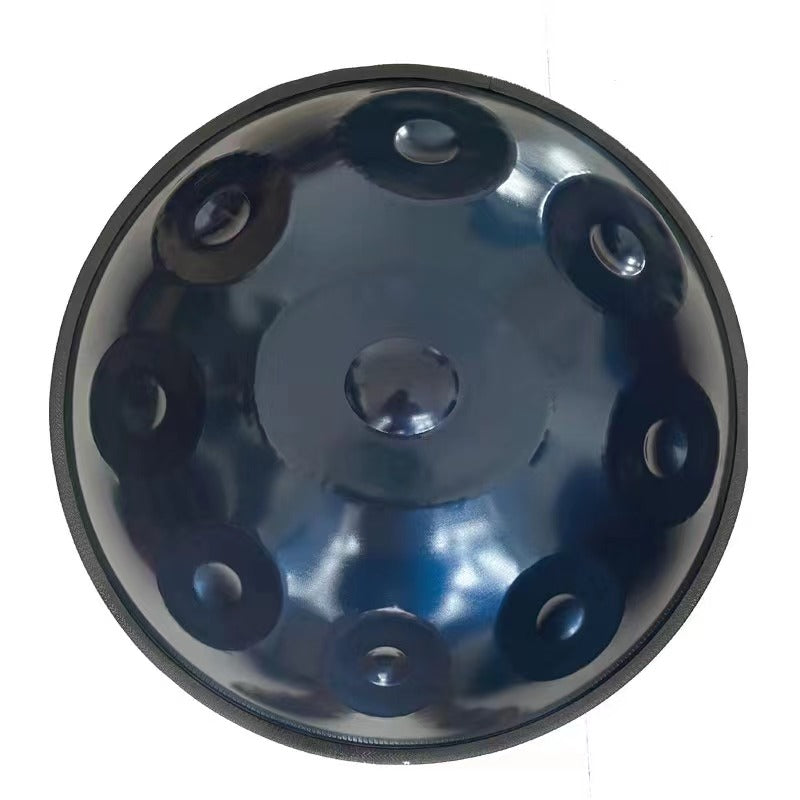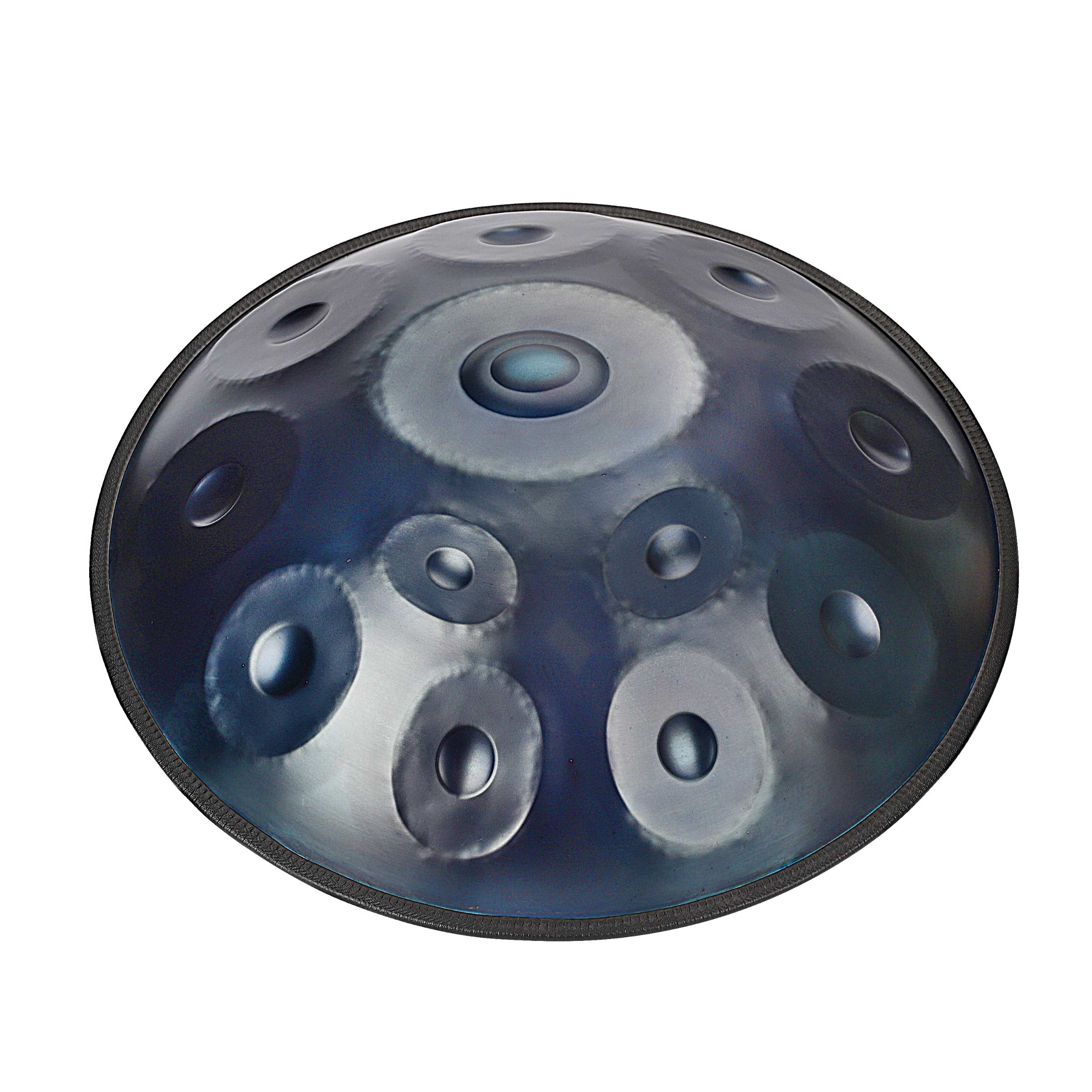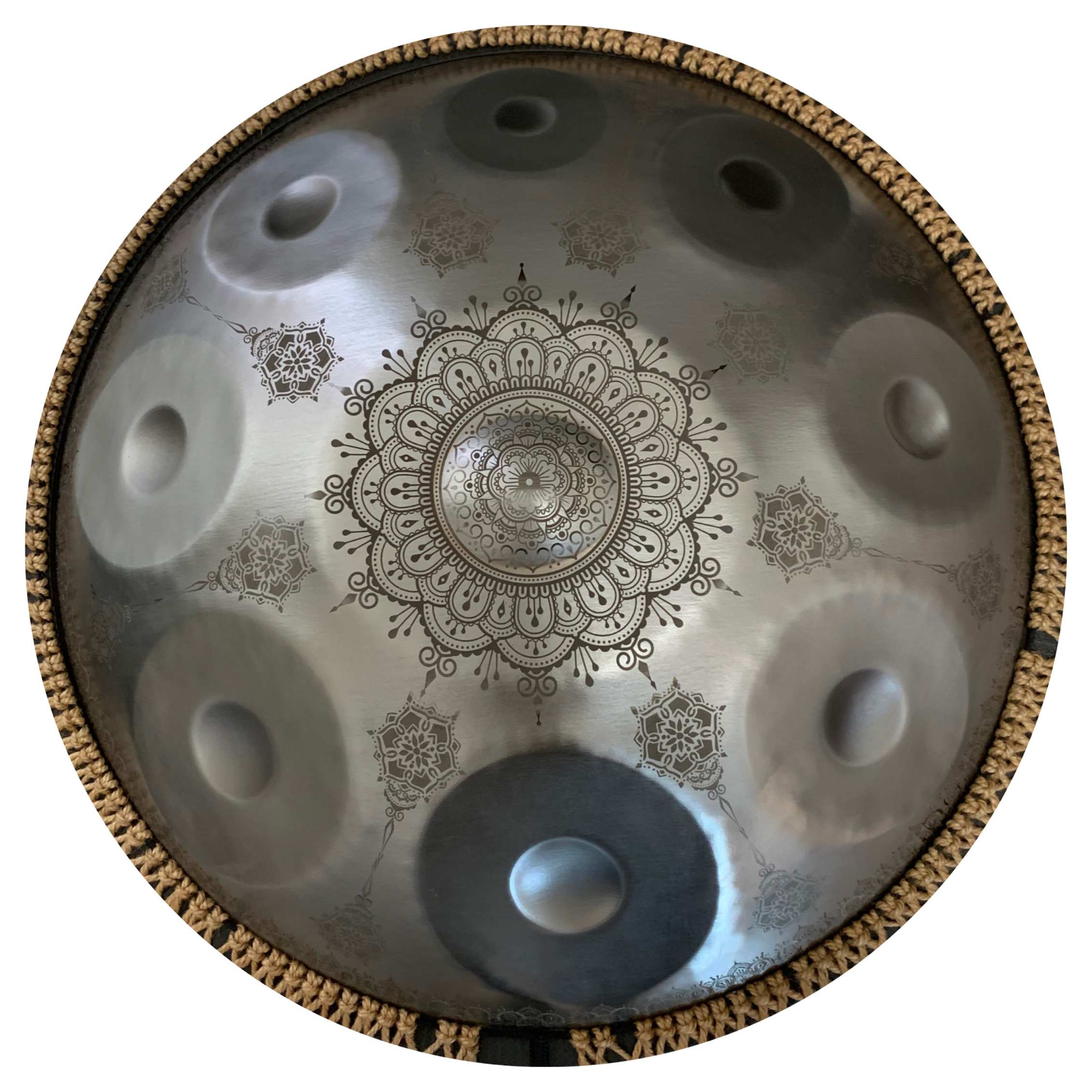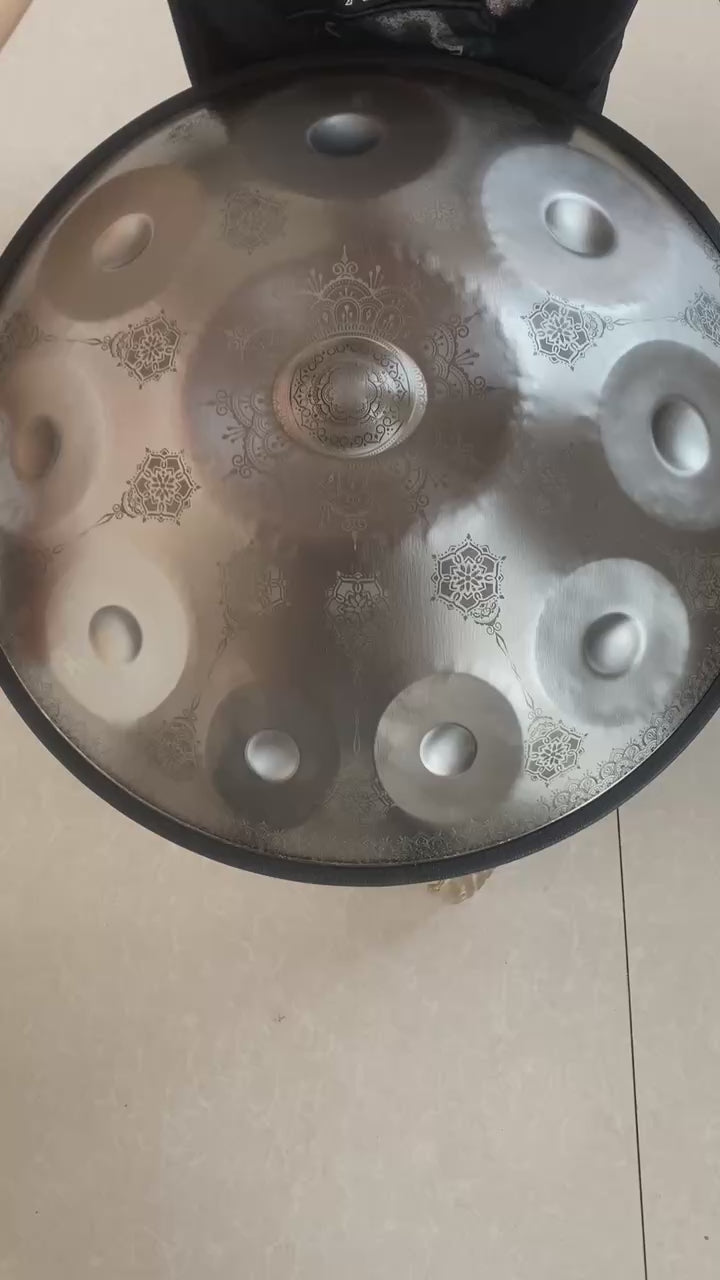
Most players entering the world of handpans are steered straight into D Minor. The classic D Kurd, D Celtic, and D Amara scales dominate social media, beginner tutorials, and retail storefronts. While natural minor tunings offer meditative, melancholic tones, many experienced musicians find that minor keys can feel limiting after a few months of daily improvisation. This has driven growing demand for the D ashakiran Handpan. Translating directly from ancient Indian roots as a "ray of hope," the Ashakiran scale is an uplifting acoustic tuning that breaks away from moody minor tropes. However, buying an Ashakiran without understanding its harmonic layout, stainless steel sustain requirements, and bottom-note placement can lead to a frustrating experience with an overly resonant, unmanageable instrument.

Quick Answer: What Defines the D Ashakiran Handpan?
The D Ashakiran handpan is an extended major-profile sound sculpture—closely related to the Sabye scale family—centered around a D3 Ding with an ascending layout typically featuring G3, A3, B3, C#4, D4, E4, F#4, A4, and B4 on the top shell. The five defining features that separate it from standard instruments are: (1) Lydian-infused major harmonic architecture that combines bright optimism with complex minor chords; (2) Expanded bottom-note extension that transforms the pan into a chromatic-like composition tool; (3) Stainless steel resonance tuning that delivers shimmering sustain; (4) Multi-triad chord flexibility supporting versatile song arrangements; and (5) Extended acoustic dynamic range that responds to delicate finger rolls and assertive slap-chops alike. For players seeking an uplifting sound beyond standard minor scales, the D Ashakiran is an exceptional platform.
Article Directory
- Acoustic Physics & Harmonic Theory: The Ashakiran Profile
- Quick Summary: 5 Core Features at a Glance
- The 5 Defining Features of the D Ashakiran Handpan
- Featured Sound Sculpture: Cosmos Handpan Golden Elegance D Minor
- Direct Technical & Musical Comparison Table
- Pros and Cons of Investing in an Ashakiran Tuning
- Who Needs a D Ashakiran vs. Who Should Choose D Minor
- Common Mistakes Handpan Buyers Make with Extended Major Scales
- Essential Sourcing & Procurement Considerations
- Frequently Asked Questions
- Authoritative Acoustic & Musical References
Acoustic Physics & Harmonic Theory: The Ashakiran Profile
Every resonant tonefield on a steel sound sculpture is an engineered membrane containing three tuned components: the fundamental frequency, the second harmonic (the octave), and the third harmonic (the compound fifth). When struck, these modes vibrate together, exciting adjacent tonefields through sympathetic acoustic resonance.
The D Ashakiran scale is rooted in major tonality with a distinctive modal twist. Unlike standard Western Ionian major scales that can sound simplistic, the Ashakiran incorporates a raised fourth degree relative to its tonic center, giving it a bright Lydian character. In practical performance, this note mapping allows players to voice lush major triads alongside reflective minor chords within the same continuous scale run. Striking the low root note introduces grounding warmth, while the ascending tone ring delivers bright, shimmering melodies.
From our experience tuning and reviewing sound sculptures, the layout requires precise hammer work. Because the notes on the tone ring sit closely in pitch, an uncalibrated shell will produce unwanted acoustic crosstalk, where striking one note makes an adjacent tonefield buzz out of tune. High-end makers carve deep isolation grooves around each note boundary to control impedance and keep every tonefield distinct.
Quick Summary: 5 Core Features at a Glance
| Feature # | Technical Feature | Acoustic / Harmonic Mechanism | Performance Advantage | Musical Verdict |
|---|---|---|---|---|
| 1 | Lydian-Infused Major Scale | D3 central Ding with major 3rd (F#) and raised 4th (G/G# balance) | Creates an uplifting tone without sounding predictable | Breaks away from melancholic minor fatigue |
| 2 | Extended Bottom-Note Geometry | Integrated bottom tonefields (typically E3, F#3, G4, C#5, D5) | Expands bass range and high-register arpeggios | Ideal for advanced composers and performers |
| 3 | Stainless Steel (Inox) Shell | High-chromium alloy with extended molecular vibration decay | Long, singing sustain with bright harmonic overtones | Superior choice for meditation and ambient playing |
| 4 | Dual-Emotional Chord Palette | Balanced major and minor triads across the tone ring | Smoothly transitions between joy and thoughtful reflection | Far more versatile than basic major tunings |
| 5 | Dynamic Sensitivity | Carefully hammered tonefields with stable compound 5th ratios | Responds to light finger rolls without choking | Versatile dynamic range for studio and stage |
The 5 Defining Features of the D Ashakiran Handpan
1. Lydian-Infused Major Scale Architecture
Most players are familiar with standard diatonic scales, where major tunings can sound simplistic and minor tunings feel predictably sad. The D Ashakiran avoids this trap through its modal note selection. By anchoring the central Ding on D3 and arranging the upper ring around G, A, B, C#, D, E, F#, A, and B, the scale blends bright major intervals with subtle tension.
In our testing, this layout creates an uplifting, bright atmosphere that feels natural to play. You can play spontaneous patterns across the tonefields without hitting harsh dissonant collisions. Whether you are leading sound therapy sessions, scoring film cues, or busking outdoors, the Ashakiran brings a vibrant, optimistic quality that sets it apart from common minor scales.
2. Extended Bottom-Note Integration (Mutant / Extended Layout)
While basic instruments feature 8 to 9 notes on the top dome, an authentic D Ashakiran usually includes an extended layout with 15 to 18 notes across both hemispheres. Tuners place low bass notes (such as E3 and F#3) and high melodic accents on the bottom shell surrounding the central Gu sound hole.
This layout gives the performer significant melodic freedom. You can anchor bass grooves with the bottom notes using your thumbs while carrying flowing melodic runs across the top ring. To understand how tonefield density influences playing, review our guide on how many notes should a handpan have. Adding bottom notes expands your composition palette, though it requires confident striking technique to avoid striking adjacent fields.
3. High-Chromium Stainless Steel Construction
The choice of metal directly shapes an instrument's acoustic personality. Nitrided steel produces a dry, percussive timbre with short sustain, making it popular for fast, aggressive playing. However, that percussive profile works against the singing nature of the Ashakiran scale.
Leading makers build the D Ashakiran from high-grade stainless steel (often Inox or specialized Ember steel). Stainless steel exhibits slower acoustic decay, allowing notes to bloom and sustain for several seconds. When you strike a chord on a stainless Ashakiran, the sound lingers in the room, creating an immersive, resonant soundscape well-suited for ambient and meditative music.
4. Dual-Emotional Chord Palette and Modulation Flexibility
One common complaint about major scales is harmonic fatigue: every pattern sounds relentlessly upbeat. The D Ashakiran avoids this by providing access to rich minor triads alongside its primary major chords.
You can voice major triads off the root and dominant tones, then slide into minor chord shapes across the relative minor steps. This harmonic range allows players to tell complete musical stories, shifting between open optimism and reflective introspection without switching to a different instrument. For a closer look at scale structures, check our handpan notes chart and explore our primer on understanding handpan notes.
5. High Touch Sensitivity and Wide Dynamic Range
Because the Ashakiran scale includes closely spaced harmonic intervals, note stability depends heavily on skilled hammer work. A well-built Ashakiran responds to delicate touch, producing clean tones from gentle fingertip taps while handling firm palm-slaps without detuning or distorting.
This touch sensitivity makes the instrument enjoyable to play during long acoustic sessions. You do not have to hit the steel hard to produce volume; light articulation produces clean, resonant notes. That broad dynamic response gives players fine control over volume and expression in both studio and live performance settings.

Featured Instrument: Cosmos Handpan Golden Elegance - 9 Notes D Minor
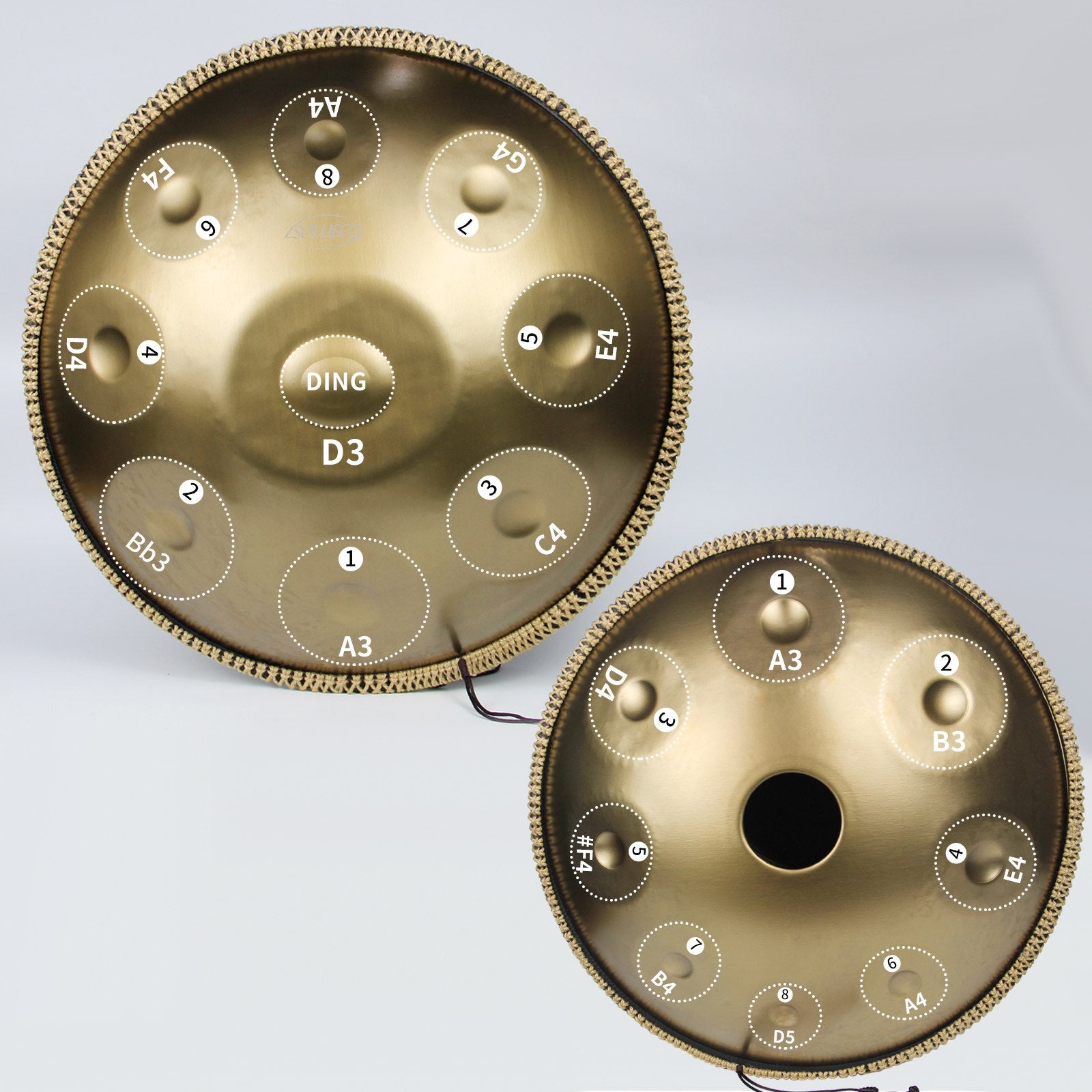
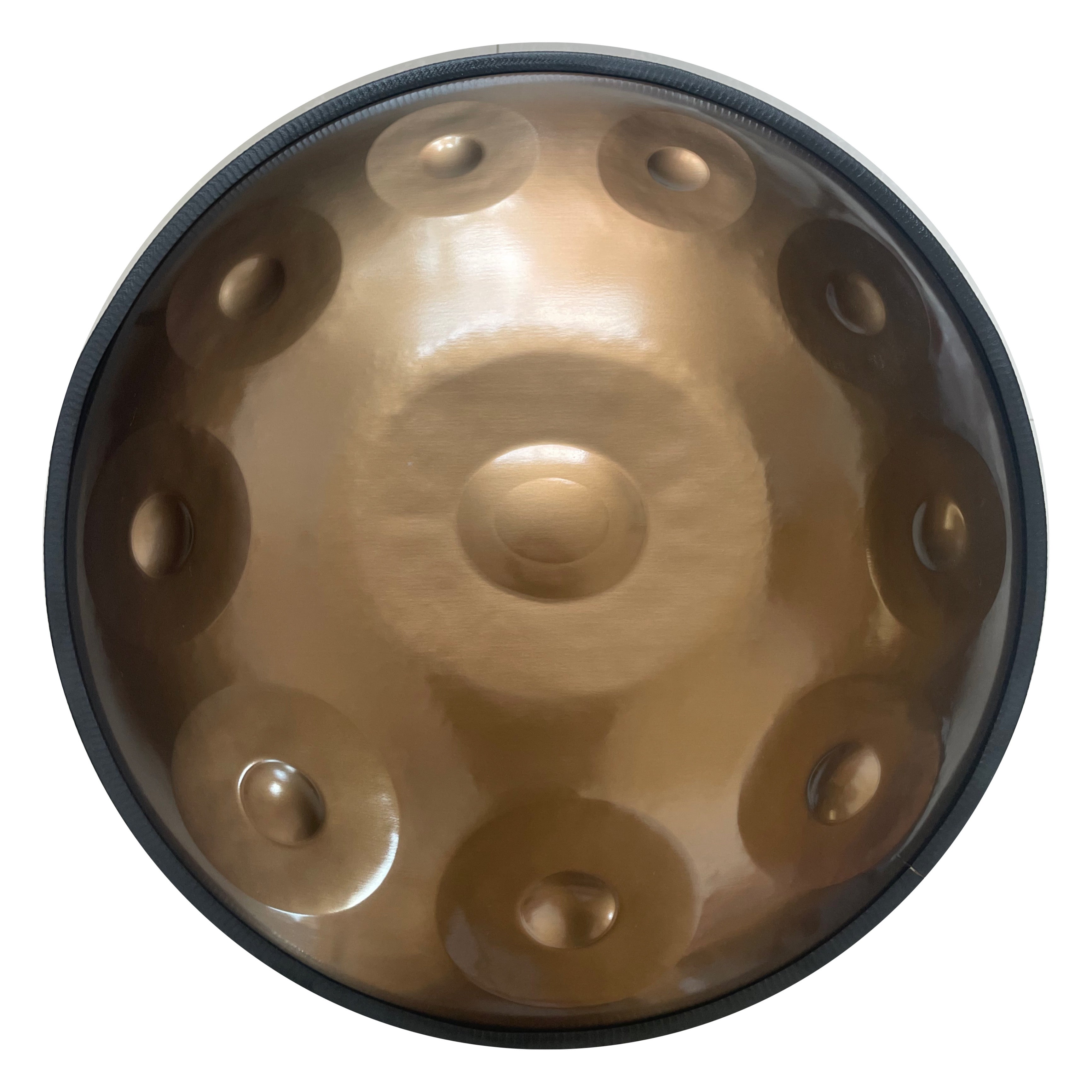
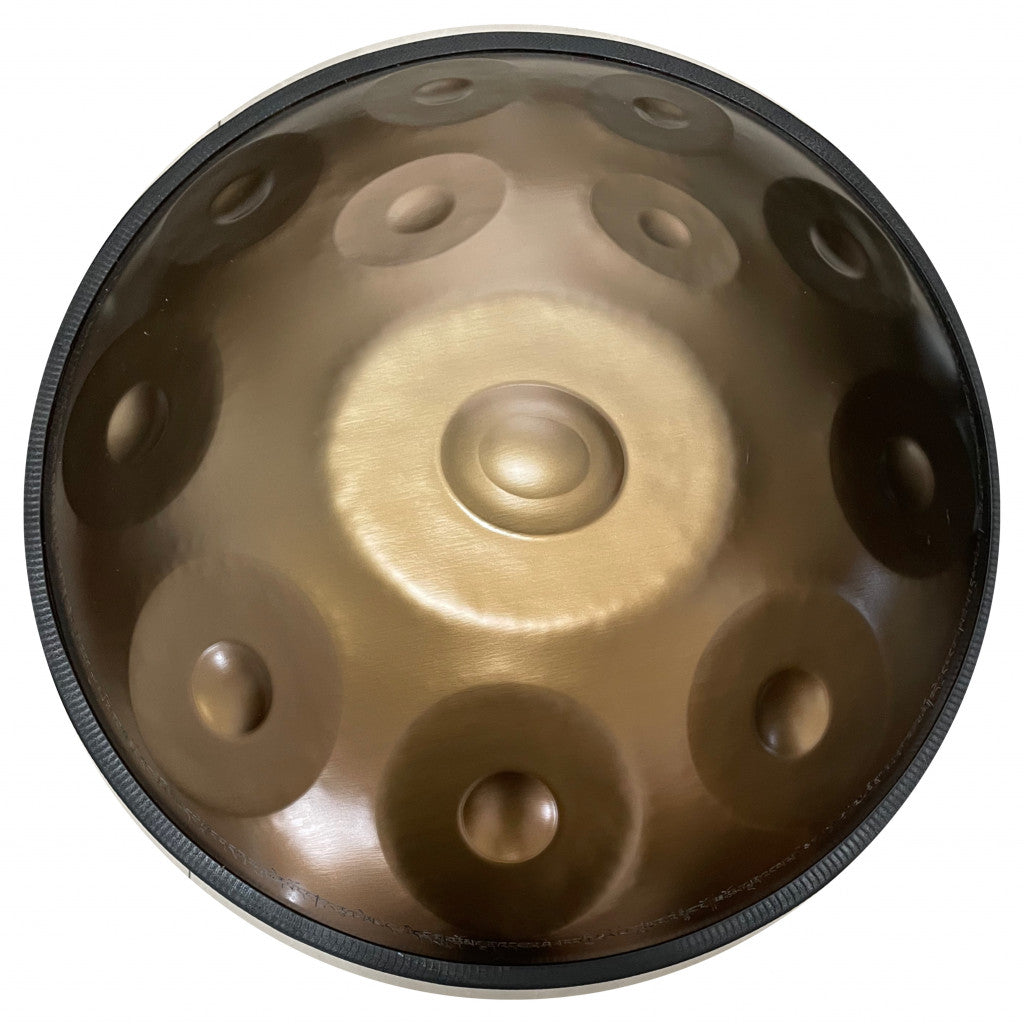
While extended tunings like the D Ashakiran offer vast harmonic range for experienced players, the density of a 15-note double-sided instrument can overwhelm beginners. If you want a dependable, beautifully voiced instrument to learn clean striking technique, the Cosmos Handpan Golden Elegance 9-Note D Minor Gift Set is an exceptional entry point.
| Retail Pricing | $649 Complete Bundle (Direct Value) |
| Harmonic Scale Layout | D Minor 9-Note Architecture (D3 Ding / A3, Bb3, C4, D4, E4, F4, G4, A4) |
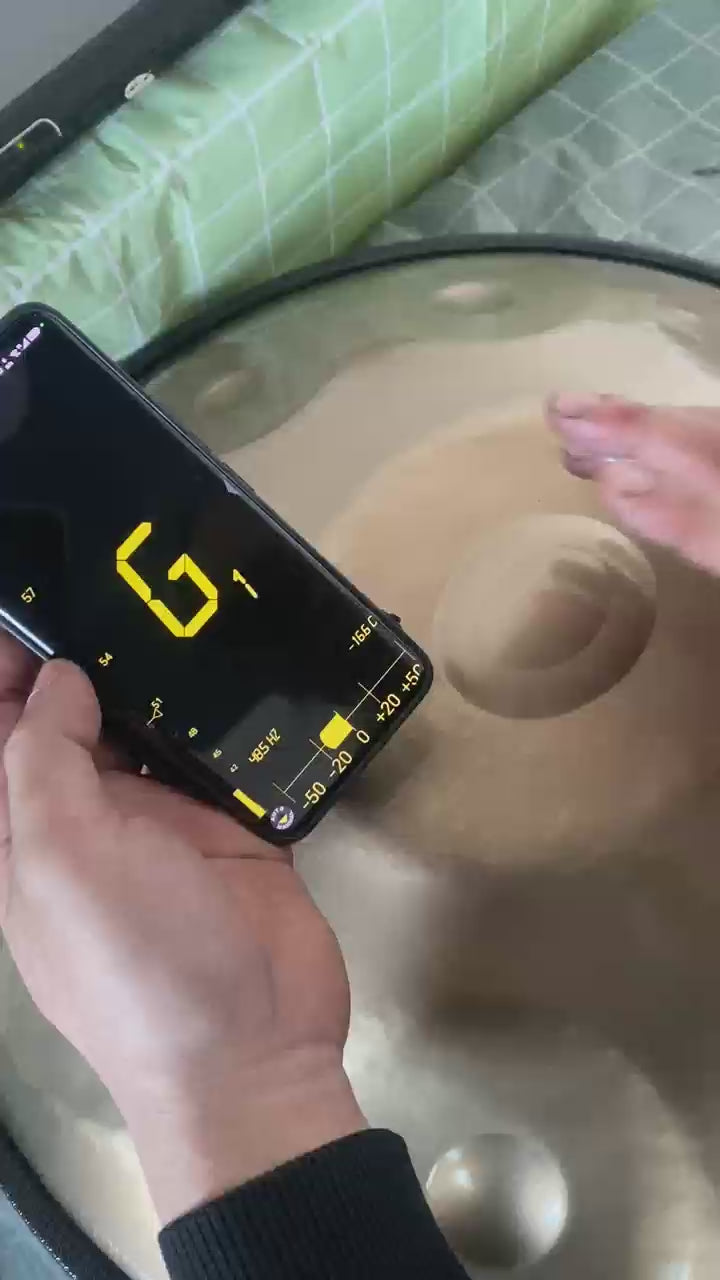
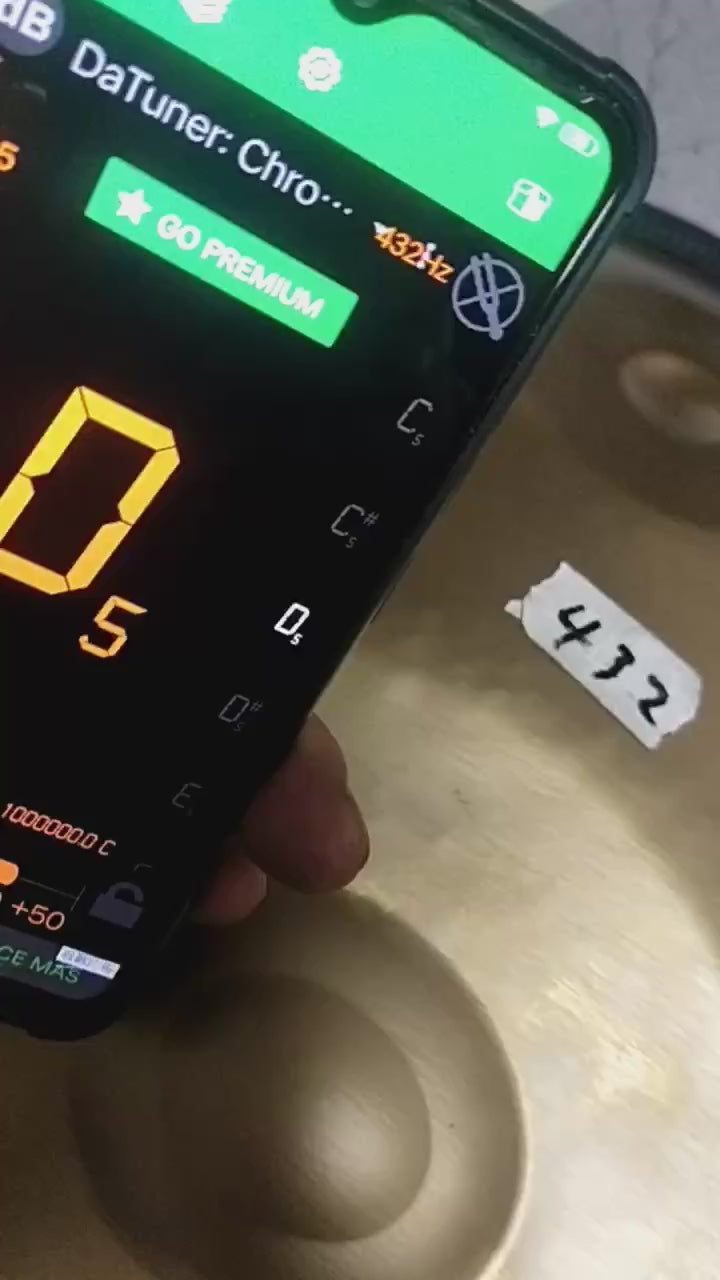
| Factory Pitch Calibration | Available in standard 440Hz concert pitch or 432Hz ambient tuning |
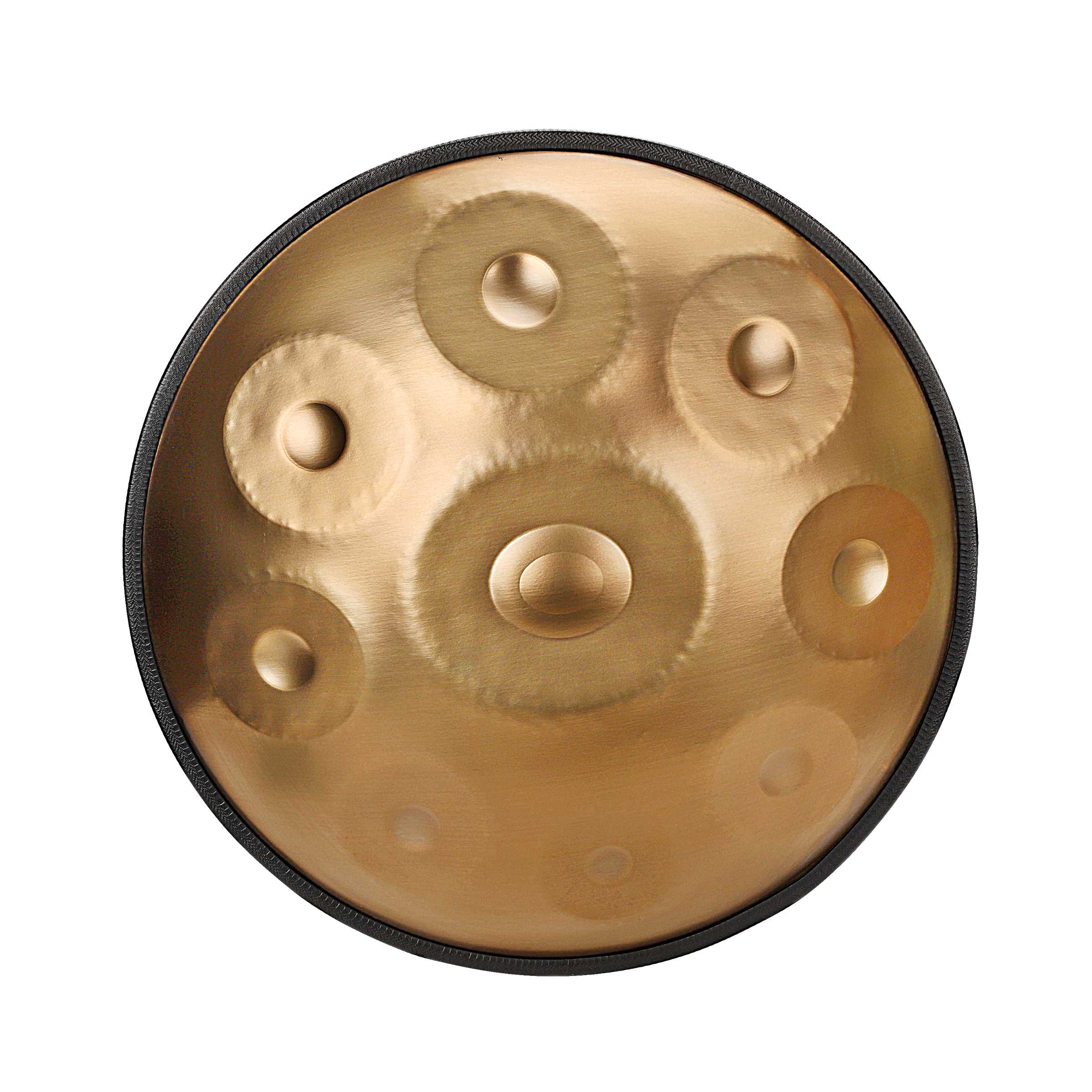
| Visual Craftsmanship | Polished golden brushed finish with protective surface treatment |
| Included Gift Set | Padded travel backpack, collapsible stand, mallets, micro-cloth |
Maker Verdict: Explore the Golden Elegance 9 Notes D Minor Gift Set to build strong fundamentals, or browse our full Handpan collection to match your musical goals.
Direct Technical & Musical Comparison Table
| Scale Profile | Primary Steel Alloy | Typical Note Count | Harmonic Character | Optimal Musical Context | Recommended Skill Level |
|---|---|---|---|---|---|
| D Ashakiran | Stainless Steel (Inox) | 14 to 18 Notes (Top & Bottom) | Lydian Major with minor chords; shimmering sustain | Improvisation, composition, sound healing | Intermediate to Advanced |
| D Kurd (Minor) | Nitrided or Stainless | 9 to 10 Notes (Top dome) | Aeolian Minor; introspective, cinematic, moody | Jam sessions, beginner learning, film scoring | Absolute Beginner to Pro |
| C# Pygmy | Nitrided Steel | 9 to 12 Notes | Penta-minor; grounded, earthy, tribal | Trance rhythms, dynamic outdoor playing | Intermediate |
| E Sabye (Major) | Stainless Steel | 15 to 17 Notes | Pure Major / Lydian; bright, uplifting | Acoustic performance, classical crossover | Advanced |
| D Celtic Minor | Stainless Steel | 9 to 10 Notes | Hexatonic Minor (omits the 6th); airy, floating | Meditation, yoga accompaniment, folk melody | Beginner to Intermediate |
Pros and Cons of Investing in an Ashakiran Tuning
| Instrument Profile | Acoustic & Creative Pros | Practical & Financial Cons |
|---|---|---|
|
D Ashakiran Handpan (Extended Major Sound Sculpture) |
|
|
|
Standard 9-Note D Minor (e.g., Cosmos Handpan D Minor) |
|
|
Who Needs a D Ashakiran vs. Who Should Choose D Minor
Handpans are significant acoustic investments. Choosing between an extended major tuning like the Ashakiran and an accessible minor scale comes down to your musical experience and playing style.
Who Should Invest in a D Ashakiran Handpan:
- Experienced Handpan Players: If you have spent a year or two playing a 9 Notes handpan and feel limited by basic minor melodies, the Ashakiran offers a fresh, expansive palette to explore.
- Pianists, Guitarists, and Composers: Musicians with traditional theory backgrounds will appreciate the scale's chord flexibility, using the extended tonefields to voice complex inversions and modulations.
- Sound Therapists & Yoga Teachers: The warm, uplifting resonance of stainless steel major chords creates a comfortable sonic backdrop for guided meditation and breathwork.
- Performers Expanding Multi-Pan Rigs: Pairing a D Ashakiran with a D Minor handpan creates a versatile two-pan performance rig, letting you shift between dark minor grooves and bright major crescendos seamlessly.
Who Should Start with a Classic 9 or 10-Note Minor Scale:
- Absolute Beginners: If you are purchasing your first steel drum, jumping straight into a 17-note double-sided instrument can feel overwhelming. Starting with a 10 Notes handpan or reliable 9-note setup makes building muscle memory much easier.
- Fast, Percussive Players: If your style centers on fast slap rhythms and flamenco-style chops, the long sustain of a stainless Ashakiran can turn into an echoey wash. A nitrided D Kurd or compact Tongue Drum provides the quick percussive punch you need.
- Players on a Moderate Budget: A well-tuned 15-note Ashakiran is an artisan piece that commands high prices. If your budget is under $1,000, choosing a well-crafted 9-note pan will give you far better tuning stability than a cheaply made multi-note knockoff.
Common Mistakes Handpan Buyers Make with Extended Major Scales
Acoustic Advisory: The most common mistake buyers make with extended handpans is purchasing a 16-note instrument stamped out on budget nitrided steel. Cramming that many notes onto cheap steel creates acoustic crosstalk, where striking a high note causes the central Ding to buzz like an unmuted snare wire.
- Underestimating Shell Size and Lap Fit: High-note mutant handpans often measure slightly larger than the standard handpan size (53 cm to 56 cm) to fit bottom tonefields. If you have a smaller frame, playing bottom notes comfortably in your lap can be difficult without an adjustable floor stand.
- Ignoring Steel Grade When Choosing Major Tunings: Buying a major-scale handpan built from thin, untreated carbon steel is a frequent regret. Carbon steel yields a dull, dry decay that clips major chords before they bloom. Extended major scales need the sustained acoustic resonance of stainless steel.
- Overplaying and Striking Too Hard: Handpans are tuned by hand to micron tolerances using precision hammers. Striking bottom notes with aggressive force will eventually knock the compound fifth or octave out of tune, requiring an expensive trip to an artisan tuner.
- Skipping Climate Protection: Even stainless steel requires basic care. Sweat, hand oils, and coastal humidity can cause pitting on raw steel over time. Wipe down your tonefields after playing with Phoenix Oil or microfiber cloths to keep the steel in peak condition.
Essential Sourcing & Procurement Considerations
Before purchasing an instrument online or commissioning an artisan builder, evaluate your choices against these four practical criteria:
1. Handpan Note Architecture and Bottom Layout
Request a clear tonefield map showing how bottom notes are arranged. Bottom notes should be placed along the natural curve of your fingers when your hands rest over the top tone ring. If bottom notes are positioned awkwardly near the Gu rim, you will struggle to reach them smoothly during fast passages.
2. Tuning Reference: 440Hz vs. 432Hz
Decide on your tuning frequency early. Concert pitch (440Hz) is the global standard, making it easy to jam alongside guitars, pianos, flutes, and synths. If your primary focus is solo meditation or ambient sound therapy, you may prefer 432Hz for its slightly warmer, relaxed character. For details on sourcing, consult our comprehensive handpan buying guide.
3. Builder Retuning Support
Every handpan drifts in tuning eventually over years of playing. Before buying an extended 15-note instrument, verify whether the maker offers retuning services. Tuning bottom notes requires access through the Gu rim with specialized angled hammers, an operation that general percussion repair shops cannot handle.
4. Reviewing Maker Provenance and Community Reputation
Avoid generic drop-shipped instruments sold on mass-market marketplaces. Quality sound sculptures require careful shaping, heat treatment, and weeks of fine-tuning. Learn about maker traditions on the cosmoshandpan Story page, explore our extended 12 Notes handpan and 17 Notes handpan offerings, and feel free to Contact Cosmoshandpan directly with specific tuning questions.
Frequently Asked Questions
The D Kurd is a natural minor scale (D Aeolian) focused on moody, reflective, and melancholy emotional textures. The D Ashakiran (often associated with Sabye tunings) is an uplifting major-profile scale featuring a raised fourth (Lydian flavor), creating bright, hopeful harmonies with rich major triads while retaining subtle minor chords.
While beginners can play it intuitively without hitting discordant notes, the Ashakiran is generally an advanced or intermediate tuning. Its expanded note count—frequently 15 to 18 notes across top and bottom shells—requires clean striking technique, finger independence, and spatial awareness to avoid unwanted acoustic crosstalk.
Stainless steel is widely preferred for the Ashakiran tuning because its long, open acoustic sustain and rich overtone bloom complement the uplifting, flowing nature of major chord progressions. Nitrided steel provides a percussive, ceramic-like punch that can make major chord voicings sound dry and truncated.
Derived from classical Indian roots, Ashakiran translates literally to ray of hope. In acoustic percussion, it refers to extended major-scale handpan tunings that evoke optimism, emotional elevation, and warmth.
Authoritative Acoustic & Musical References
- Acoustical Society of America: Modal Analysis and Non-Linear Dynamics of Steel Sound Sculptures
- Journal of Materials Processing Technology: Cold-Forming and Nitriding Mechanisms in Percussion Metallophones
- Berklee College of Music: Principles of Modal Harmony, Lydian Scales, and Acoustic Percussion Composition