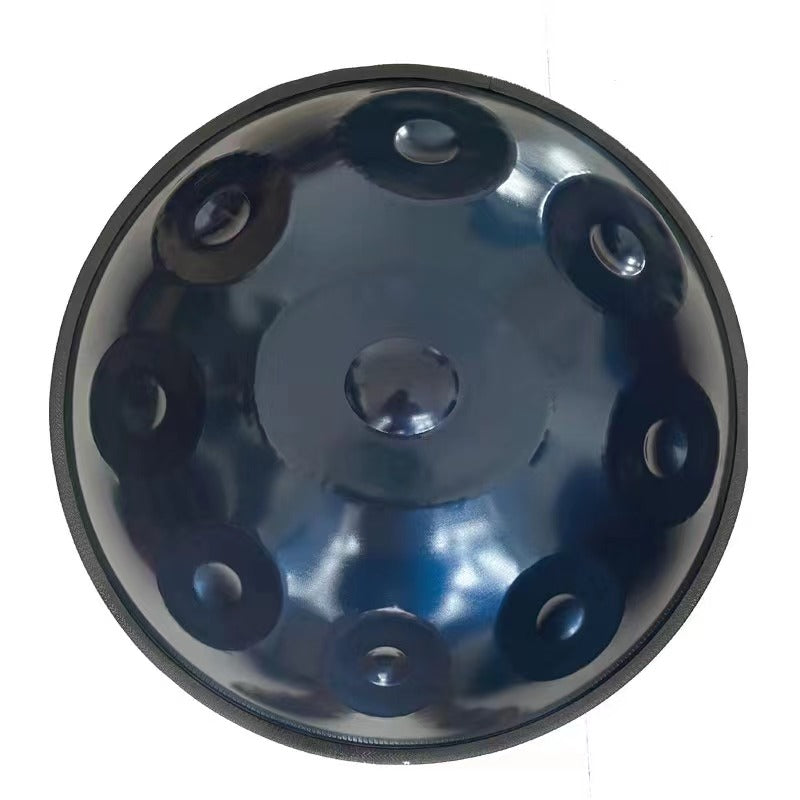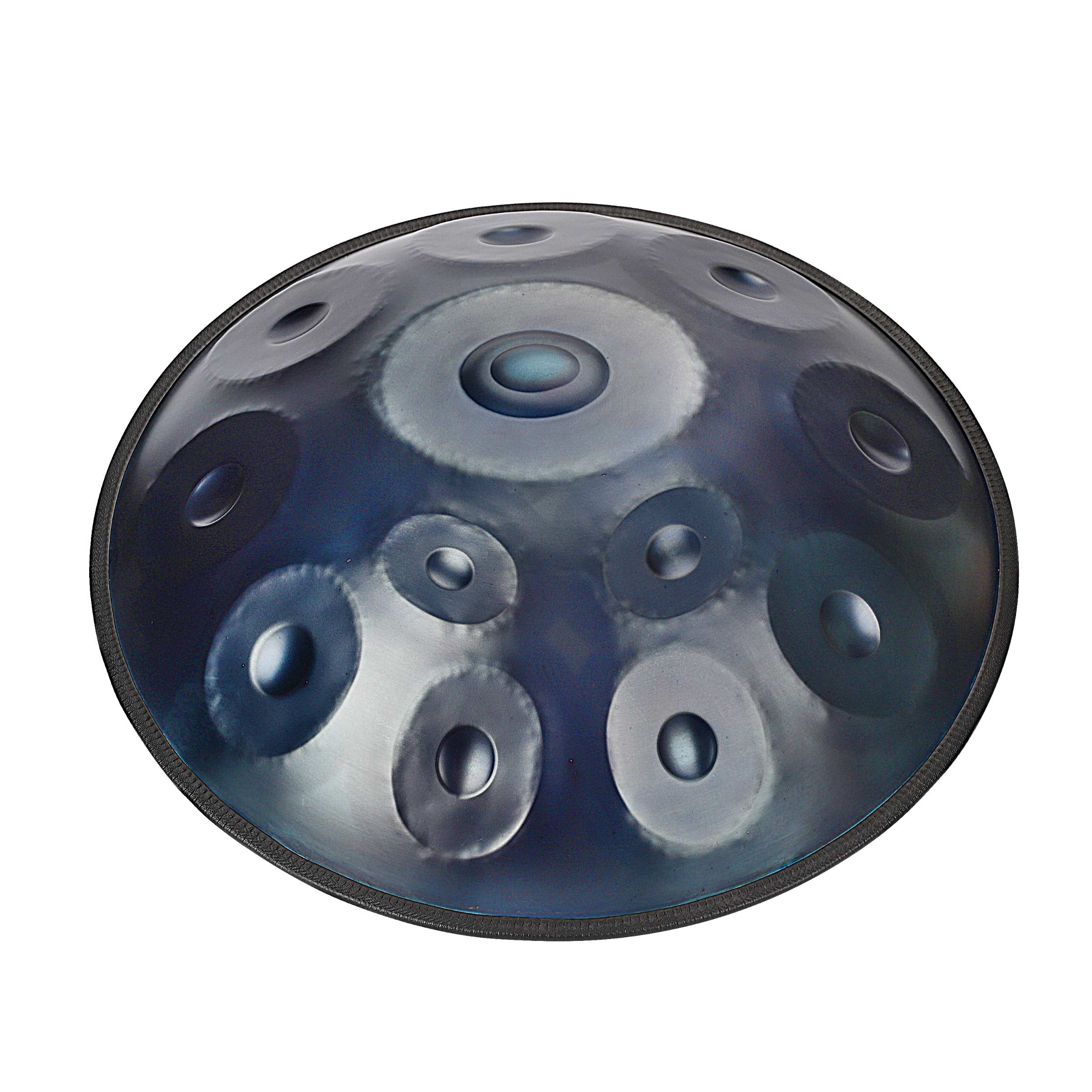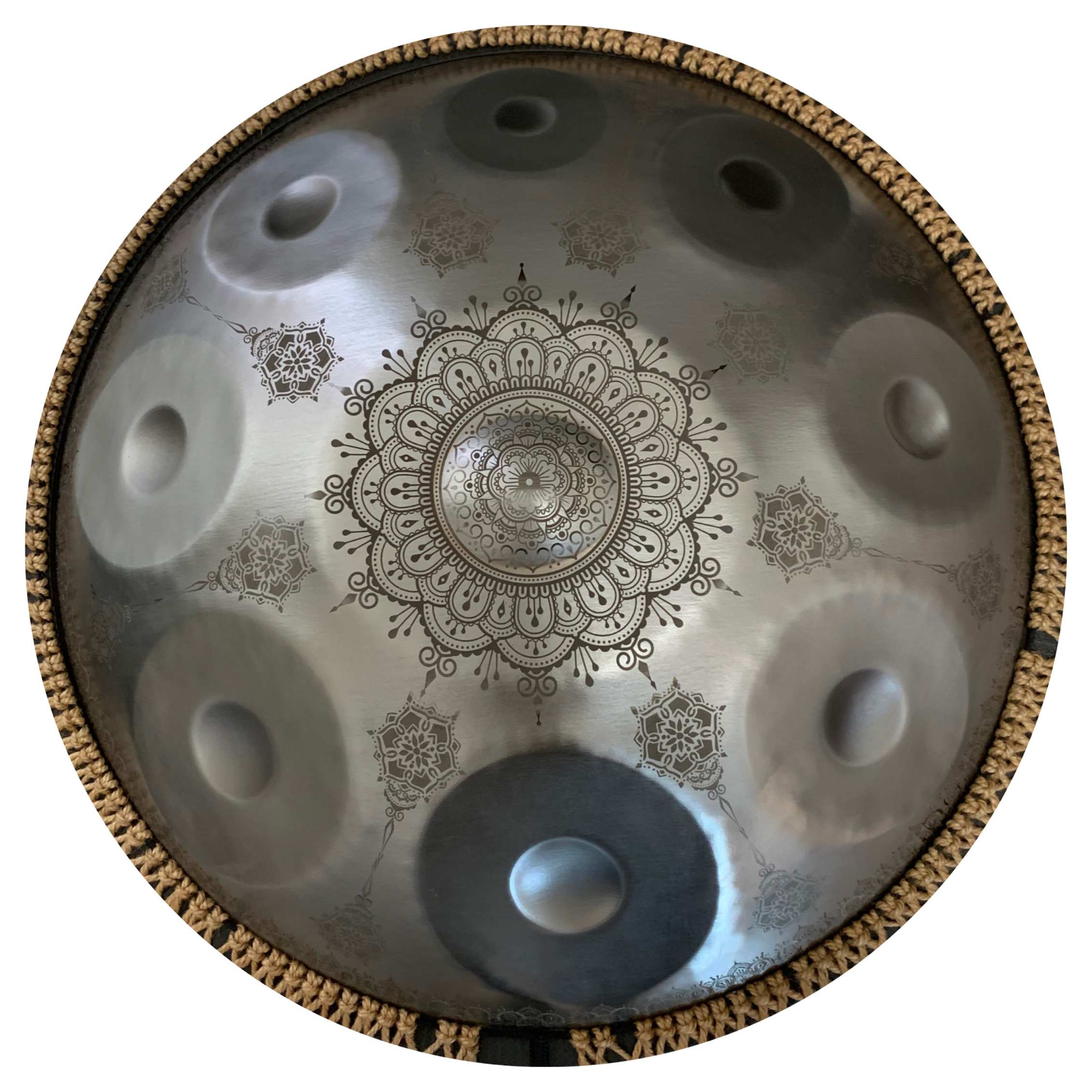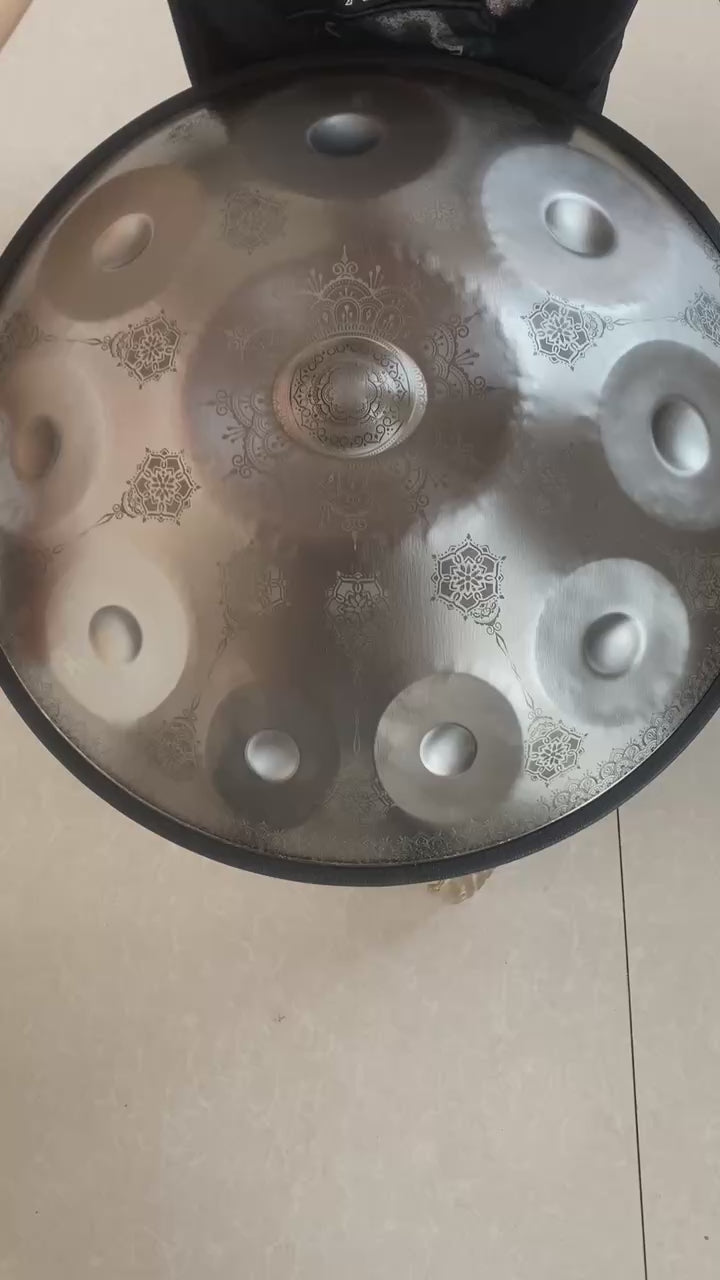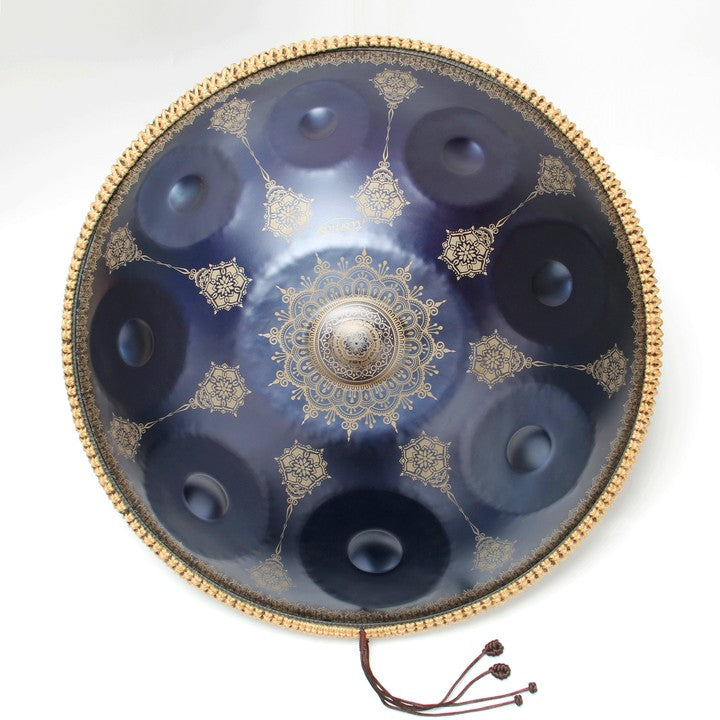

Let us confront a brutal reality in the modern handpan market: novice players and even seasoned percussionists routinely purchase instruments based entirely on visual aesthetics or a generic scale recommendation, completely ignoring the mechanical and ergonomic realities of the instrument's physical dimensions. When our clients ask us, "How do I know exactly what size handpan I need?", they are often looking for a simple, one-word answer. From our experience, we refuse to provide one. The diameter and depth of your handpan dictate its acoustical physics, its ergonomic compatibility with your body, and its logistical portability. Treating size as an afterthought is a guaranteed path to poor playing posture, muted acoustics, and deep buyer's remorse.

In the heart of Colorado, USA, Cosmos Handpan shines as a guiding light of musical innovation and soulful resonance. We have more than a decade of expertise in creating handpans and tongue drums. Passion, precision, and an unwavering pursuit of musical excellence steep our musical journey. We forge cosmos connections because our story begins with a shared love for music and a profound desire to create instruments that transcend sound. Our instruments and melody resonate deeply with the spirit of every musician. Our crafters pour their heart into each handpan and tongue drum with intricate workmanship and dedication. Our artisans infuse each instrument with ethereal melodies that stir the senses and uplift the spirit. Because we understand the metallurgy and geometry required to shape raw steel into a perfectly tuned acoustic vessel, we can definitively state that the size of your instrument is the foundational metric of your musical journey.
In this relentlessly practical, expert-led analysis, we will deconstruct the physics, ergonomics, and logistical constraints that dictate instrument sizing. We will aggressively dispel the myth of the "one-size-fits-all" handpan and provide you with an authoritative framework to conclusively answer the question: what size handpan I need to master my craft?
Table of Contents
- 1. The Acoustical Physics of Diameter and Pitch
- 2. The Ergonomic Reality: Arm Span and Spinal Alignment
- 3. Metallurgy, Sustain, and the Note Layout
- 4. Portability and the Lifestyle Factor
- 5. When Acoustic Constraints Demand Digital Alternatives
- 6. Summary Matrix: The Handpan Sizing Guide
- 7. Frequently Asked Questions (FAQs)
- 8. Authoritative References
1. The Acoustical Physics of Diameter and Pitch
If you are struggling to figure out what size handpan I need, you must first understand the fundamental laws of acoustic resonance. The handpan operates as a Helmholtz resonator. The internal volume of air, dictated by the diameter and the depth of the two bonded steel shells, directly determines the frequency capabilities of the central note (the Ding) and the lowest notes on the tone circle.
If you desire a deep, melancholic, bass-heavy scale—such as a C# Annaziska or a B2 Celtic Minor—you mathematically cannot achieve a rich, blooming resonance on a compact 50cm (19.6-inch) instrument. The internal air cavity is simply too small to support low-frequency sound waves. To push lower octaves without the sound becoming choked or metallic, you must upgrade to a larger 53cm (21-inch) or 56cm (22-inch) diameter shell. These larger chambers allow low-frequency waves to develop and sustain, which is precisely why larger instruments are universally preferred when leveraging handpan therapy benefits in clinical sound healing environments.
Conversely, if you prefer bright, energetic, and percussive scales in higher octaves (such as an E Major or F Integral), a massive 56cm pan will actually work against you. The large internal volume can cause high frequencies to become lost in a wash of unwanted overtones. A smaller 50cm or 53cm shell tightens the resonance, creating crisp, articulate, and punchy notes that cut through a mix beautifully. When you evaluate the cognitive impact of these frequencies through handpan music benefits, matching the physical volume of the steel to your desired pitch is a non-negotiable acoustic requirement.
2. The Ergonomic Reality: Arm Span and Spinal Alignment

We adamantly reject the industry trend of pushing massive 56cm instruments onto players of smaller stature simply because low scales are currently trendy. When deciding what size handpan I need, your physical anatomy must overrule acoustic desires. The handpan is traditionally played seated cross-legged on the floor or on a low stool, resting in the lap.
If you have a shorter torso and a limited arm span, resting a 56cm (22-inch) steel shell in your lap forces your elbows outward and upward to an unnatural degree. To reach the notes positioned on the far axis of the tone circle, you will have to lean your torso forward constantly. Over a 45-minute playing session, this repetitive forward flexion destroys lumbar alignment, causes severe trapezius strain, and leads to chronic repetitive stress injuries in the wrists. For players with smaller frames, a 50cm or 53cm handpan is structurally necessary. The tighter cluster of tone fields allows the player to strike every note with the thumbs and index fingers while keeping the elbows comfortably tucked against the ribcage and the spine completely neutral.
If you are newly entering this discipline, you must prioritize physical comfort to build proper muscle memory. We highly recommend reviewing our comprehensive handpan for beginners guide to understand how posture dictates playing velocity and dynamic control before you commit to a specific diameter.
4. Metallurgy, Sustain, and the Note Layout
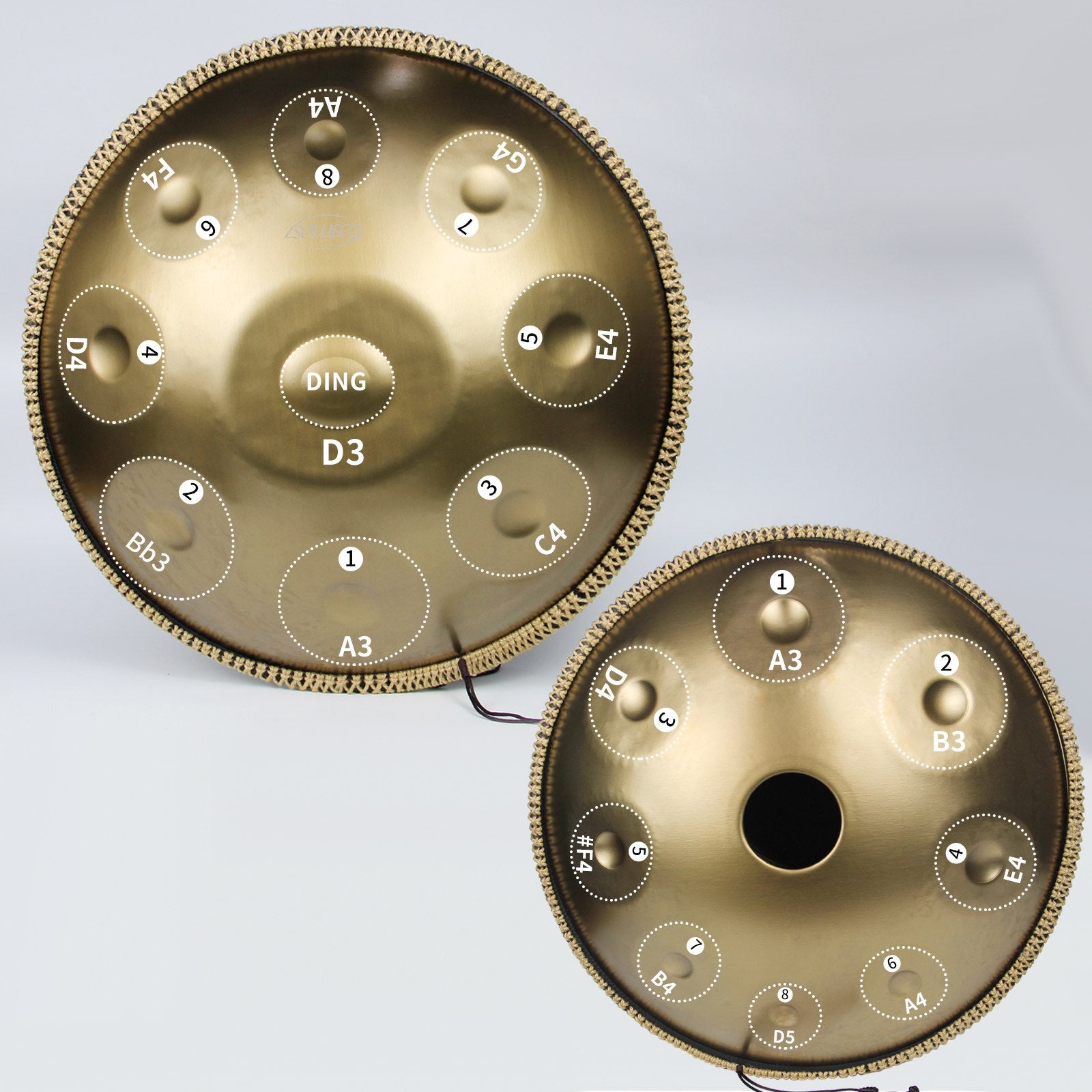
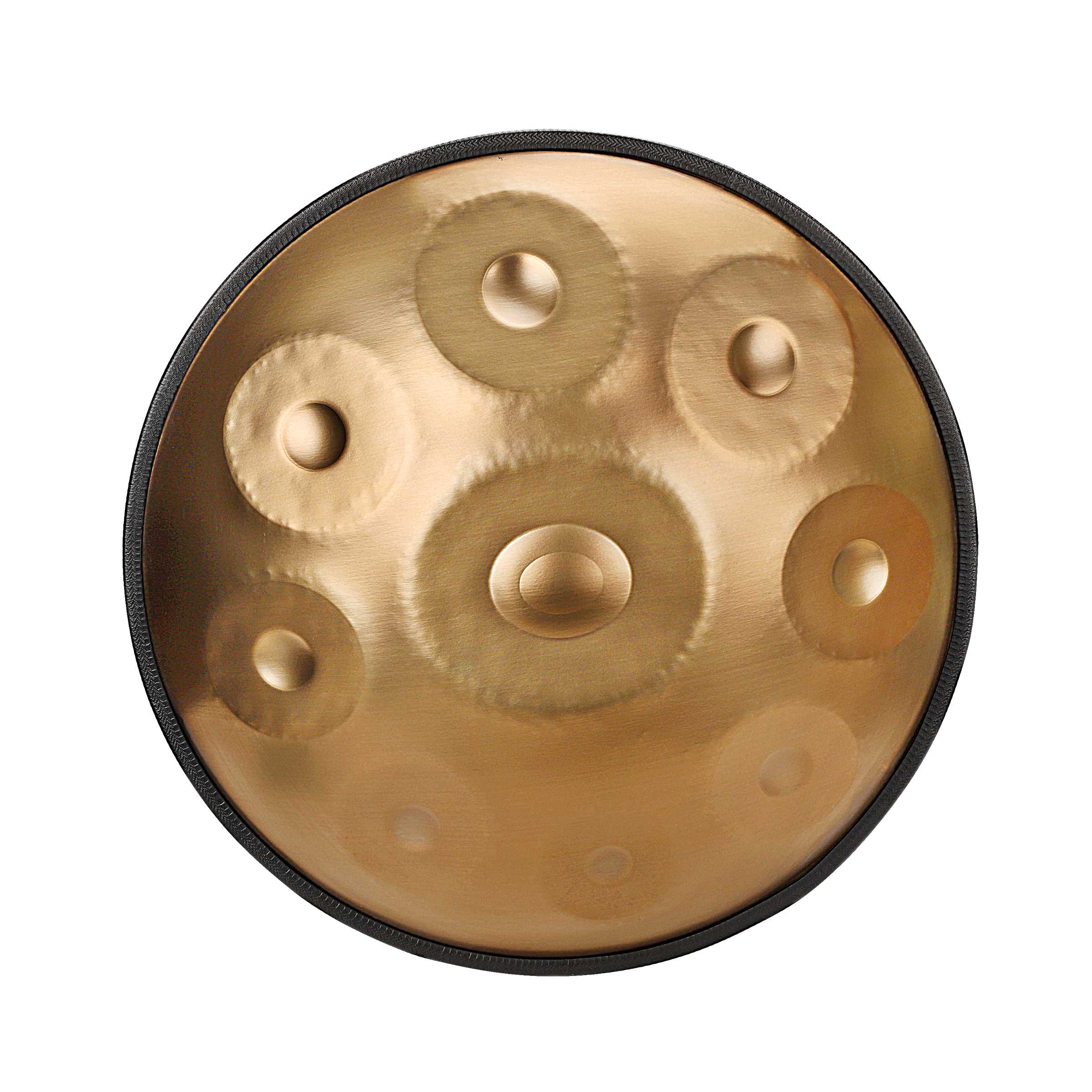
The diameter of the handpan does not just dictate pitch and posture; it dictates the physical real estate available for note placement. A standard handpan features a central Ding and 7 to 8 notes in the surrounding circle (often referred to as an 8 or 9-note pan). This layout fits comfortably on a standard 53cm shell.
However, the modern progression of the instrument involves extended "mutant" scales featuring 12, 15, or even 20 notes, utilizing both the top shell and the bottom (Gu) side. If you are determined to play complex, classical adaptations highlighted in any comprehensive handpan songs list, you need more notes. Packing 10 notes onto the top of a small 50cm pan is an acoustic disaster. The tone fields will be placed too close together, leading to "crosstalk" or "note bleeding"—where striking one note unintentionally activates the adjacent note, creating muddy dissonance.
To safely accommodate extended scales, you must upgrade to a larger 56cm diameter, which provides the necessary surface area to isolate the tone fields. Furthermore, you must consider the material. Stainless steel has a massive, echoing sustain. When determining what size handpan I need for a fast, percussive playing style, a large stainless steel pan will turn your rapid notes into a blurry wash of sound. For fast, highly articulated playing on a large pan, nitrided steel—which features a more controlled, ceramic-like sustain—is the superior metallurgical choice.
4. Portability and the Lifestyle Factor
A handpan is a delicate acoustic vessel. It must be transported in a rigid, padded hardcase. The difference between traveling with a 50cm instrument and a 56cm instrument is staggering. When clients ask what size handpan I need, we immediately ask them about their lifestyle. Are you a street busker? Do you hike into the mountains to play? Are you an international touring musician who flies constantly?
A 56cm handpan in an armored fiberglass hardcase can weigh upwards of 9 kilograms (20 lbs) and is incredibly bulky. It frequently exceeds airline carry-on dimensions, forcing you into the terrifying position of checking your custom-tuned steel instrument into the cargo hold. A 50cm or 53cm instrument, packed tightly in a premium soft-shell or slim hardcase, is vastly more maneuverable. It fits securely in overhead bins, rests comfortably on your back during a hike, and navigates crowded urban transit systems without becoming a physical burden. Before you invest, listen to premium handpan music tracks to decide if the deep bass of a massive pan is truly worth the logistical nightmare of transporting it.
5. When Acoustic Constraints Demand Digital Alternatives
We are traditional artisans at Cosmos Handpans; we revere raw steel. However, we are also pragmatists. If you live in an environment where strict noise ordinances prevent acoustic playing, or if your physical living space simply cannot accommodate the storage of a massive 56cm steel shell, attempting to force a traditional instrument into your life is a mistake.
In these highly restrictive scenarios, we recommend bypassing acoustic size constraints entirely by exploring digital handpan instruments. While they lack the organic, tactile feedback of hammered metal, digital models offer headphone connectivity, infinite scale switching, and a standardized, highly compact physical footprint. They serve as a brilliant compromise for urban musicians. For those utilizing digital platforms, you can leverage vast MIDI libraries and download handpan music templates to expand your repertoire without increasing your physical instrument footprint.
6. Summary Matrix: The Handpan Sizing Guide
To assist in your final procurement decision, we have synthesized the critical variables regarding handpan dimensions into an uncompromising reference matrix.
| Diameter Metric | Acoustic Capability | Ergonomic Profile | Optimal Use Case |
|---|---|---|---|
| 50cm (19.6 inches) | Bright, articulate, higher octaves. Tight resonance. | Ideal for smaller frames, short arms, and children. Zero spinal strain. | Frequent air travel, busking, fast percussive playing. |
| 53cm (21 inches) | The industry standard. Balanced highs and moderate lows. | Comfortable for average adult heights. Easy lap placement. | General studio recording, standard 8-9 note scales, everyday playing. |
| 56cm (22 inches) | Deep, blooming bass. Massive Helmholtz resonance. | Requires long arm span. May cause back strain for short players. | Sound therapy, deep meditation, complex 12+ note mutant scales. |
7. Frequently Asked Questions (FAQs)
If I buy a larger handpan, does it naturally project more volume?
From our engineering experience, size does not equal volume; it equals frequency depth. A massive 56cm handpan will produce lower, deeper, more resonant bass notes that you can physically feel in your chest, but it will not necessarily be "louder" in decibels than a tightly tuned 50cm pan. Volume is dictated by the energy of your strike, the thinness of the steel, and the specific heat treatment applied during the nitriding process.
How do I know what size handpan I need if I want to play highly complex, fast melodies?
If your goal is to play rapid, highly articulated, percussive melodies, we strongly recommend a 53cm instrument crafted from nitrided steel. A massive 56cm stainless steel pan has a very long sustain. If you play too fast on a highly sustained, large instrument, the sound waves will collide and wash each other out, creating a muddy, discordant noise. A smaller diameter tightens the sustain, allowing fast, distinct notes to punch through cleanly.
Can a tall person play a small 50cm handpan comfortably?
Yes, absolutely. A tall person with a wide arm span will have no mechanical difficulty reaching the notes on a compact 50cm handpan. In fact, many tall, professional touring musicians prefer 50cm or 53cm pans simply for their lightweight portability and ease of transport in airplanes. The ergonomic restriction only goes one way: a very short person cannot comfortably play a massive 56cm pan without compromising their spinal health.
8. Authoritative References
To ensure your understanding of acoustic resonance and physiological ergonomics aligns with verified scientific standards, we advise consulting the following specialized resources:
- Acoustical Society of America (ASA): The premier international scientific society providing rigorous, peer-reviewed data on the physics of tuned steel instruments, Helmholtz resonance, and non-linear modal coupling in idiophones.
- National Institutes of Health (NIH) - Musculoskeletal Disorders in Musicians: Authoritative clinical research detailing the severe biomechanical risks, repetitive strain injuries, and postural degradation associated with utilizing improperly sized acoustic instruments.
```