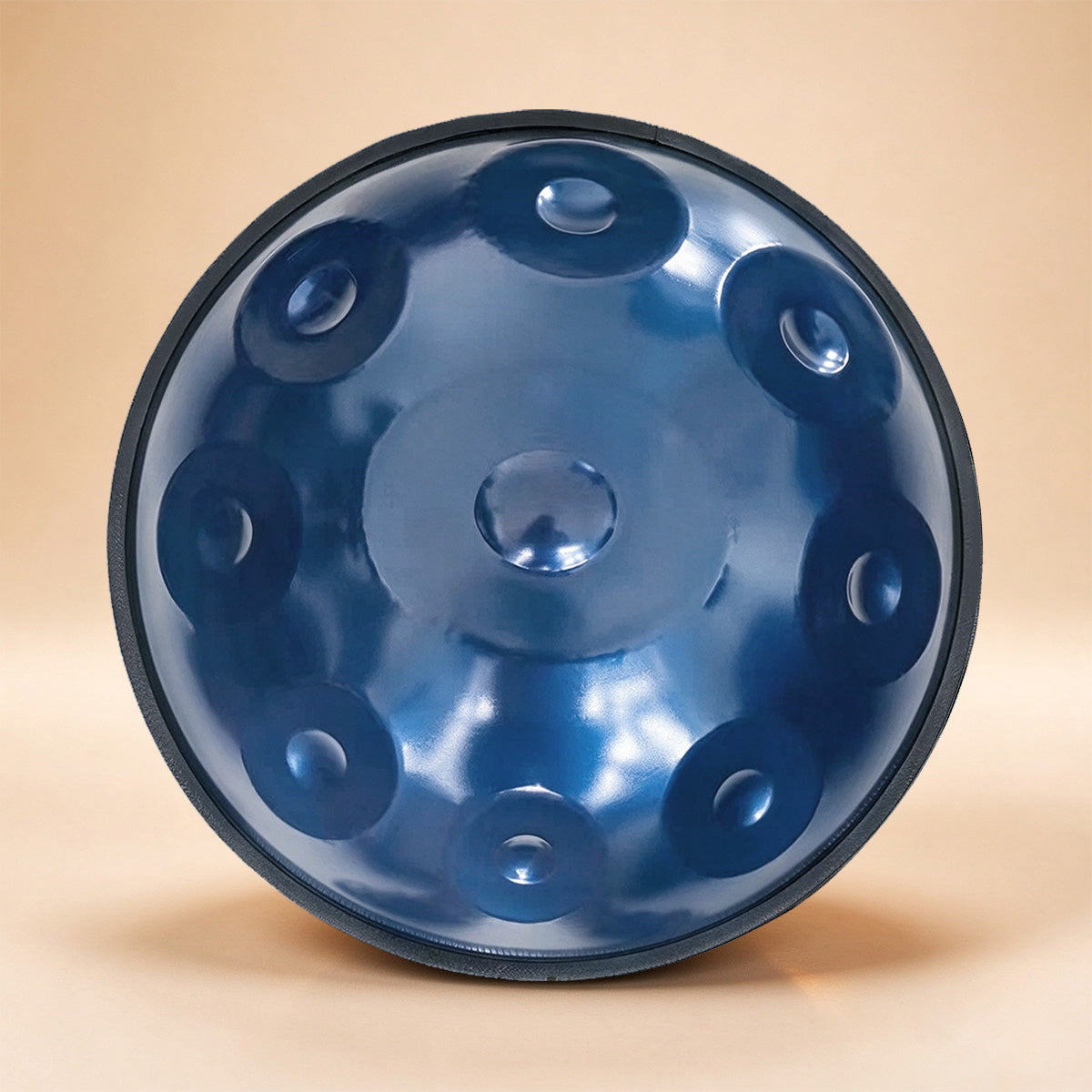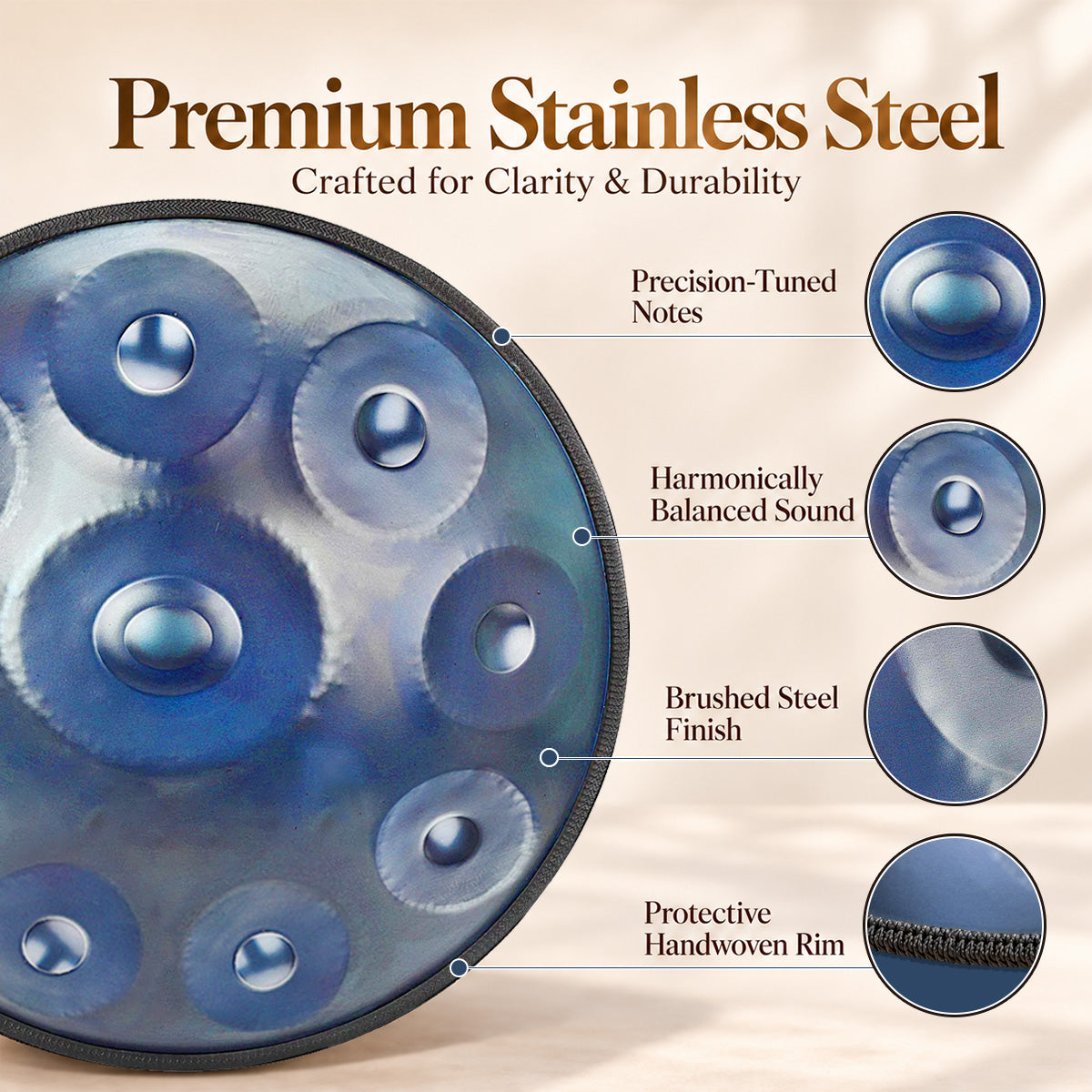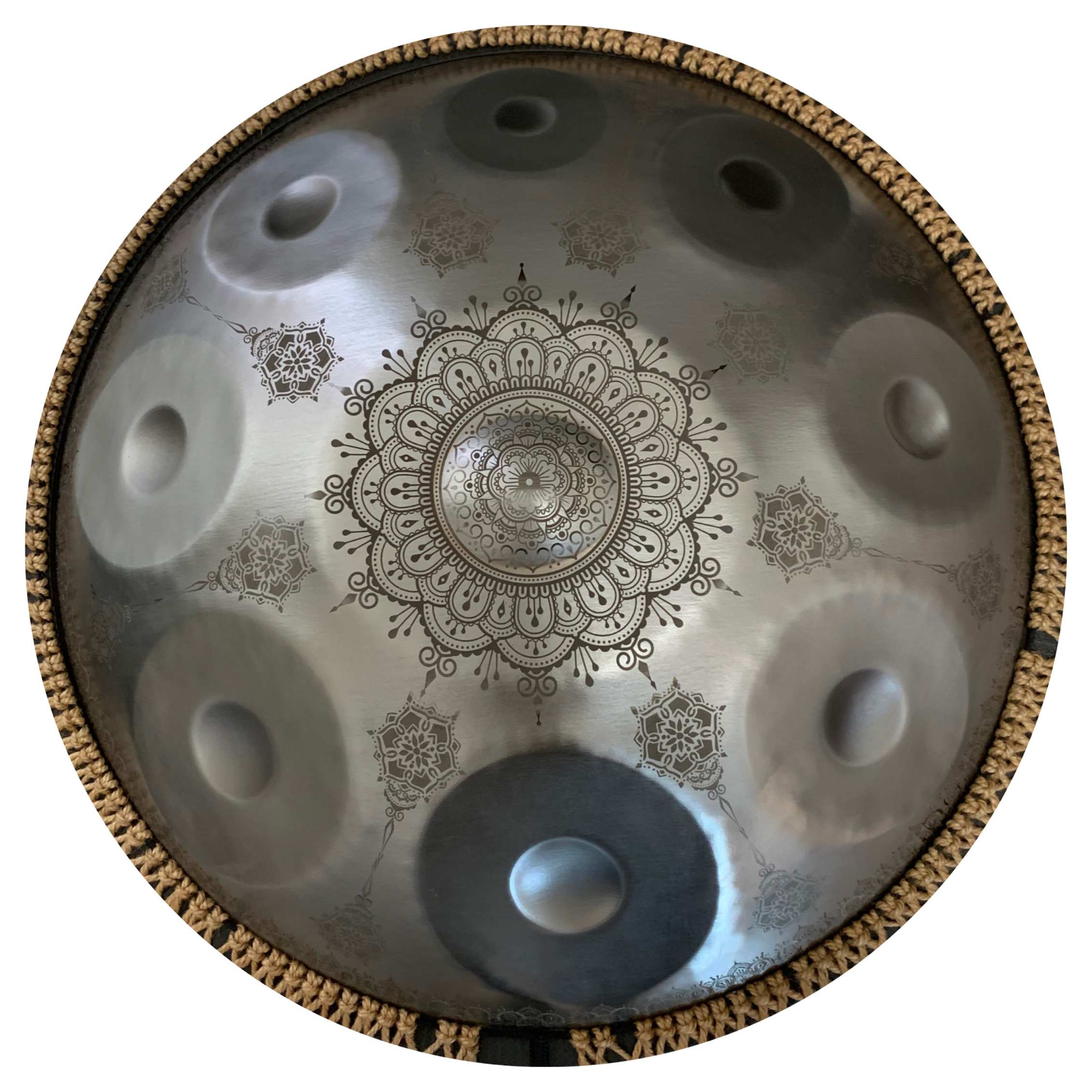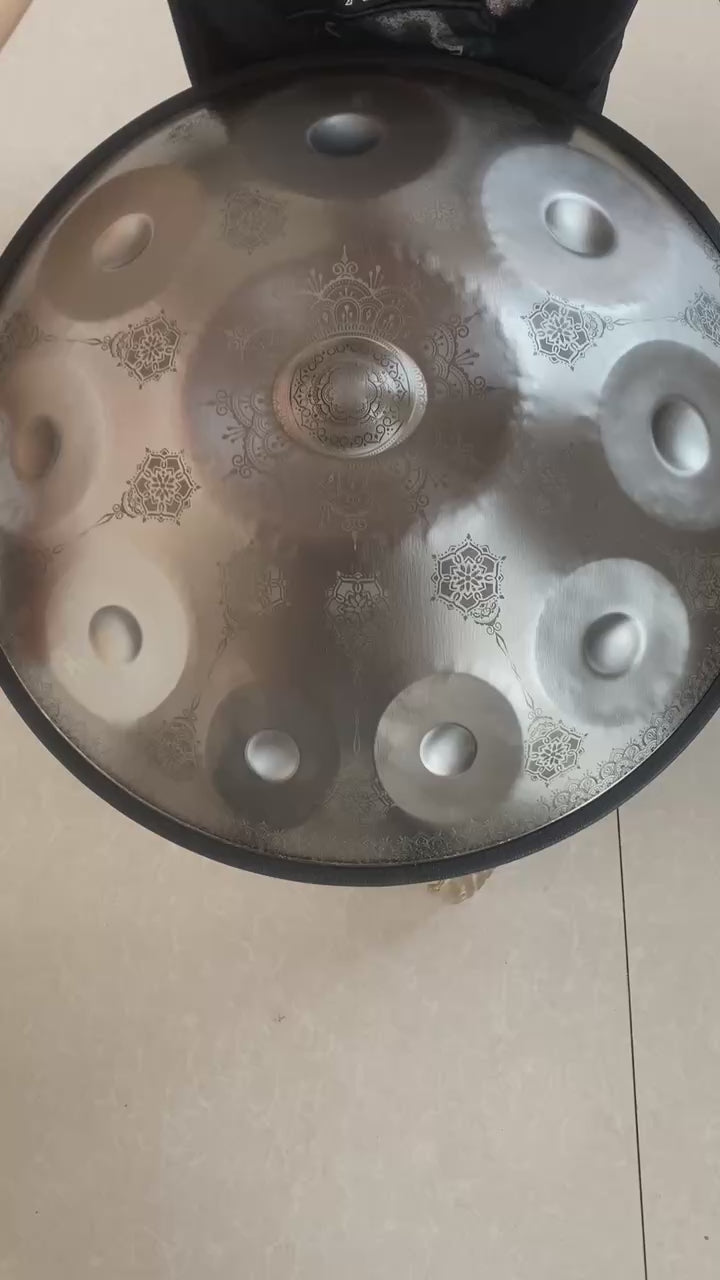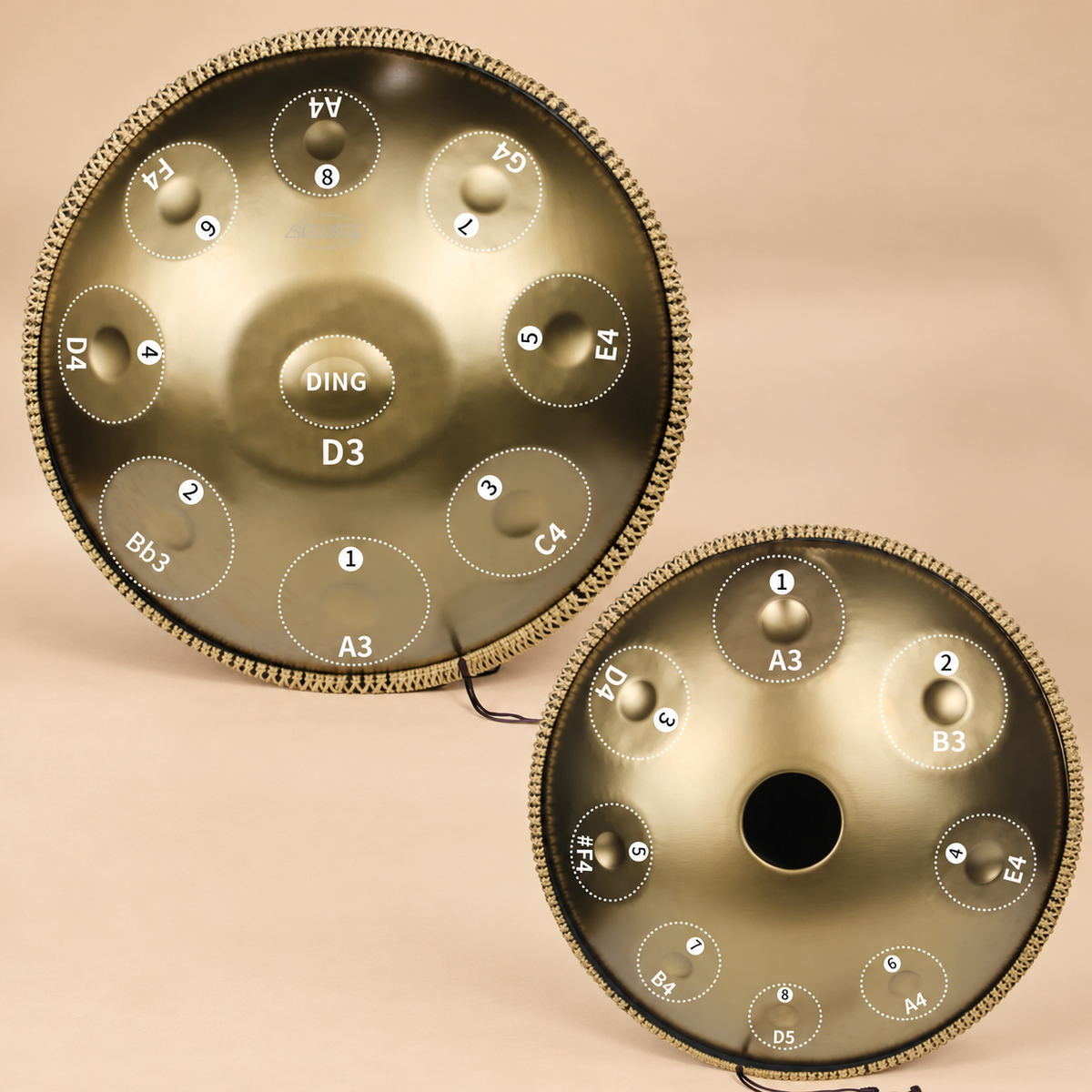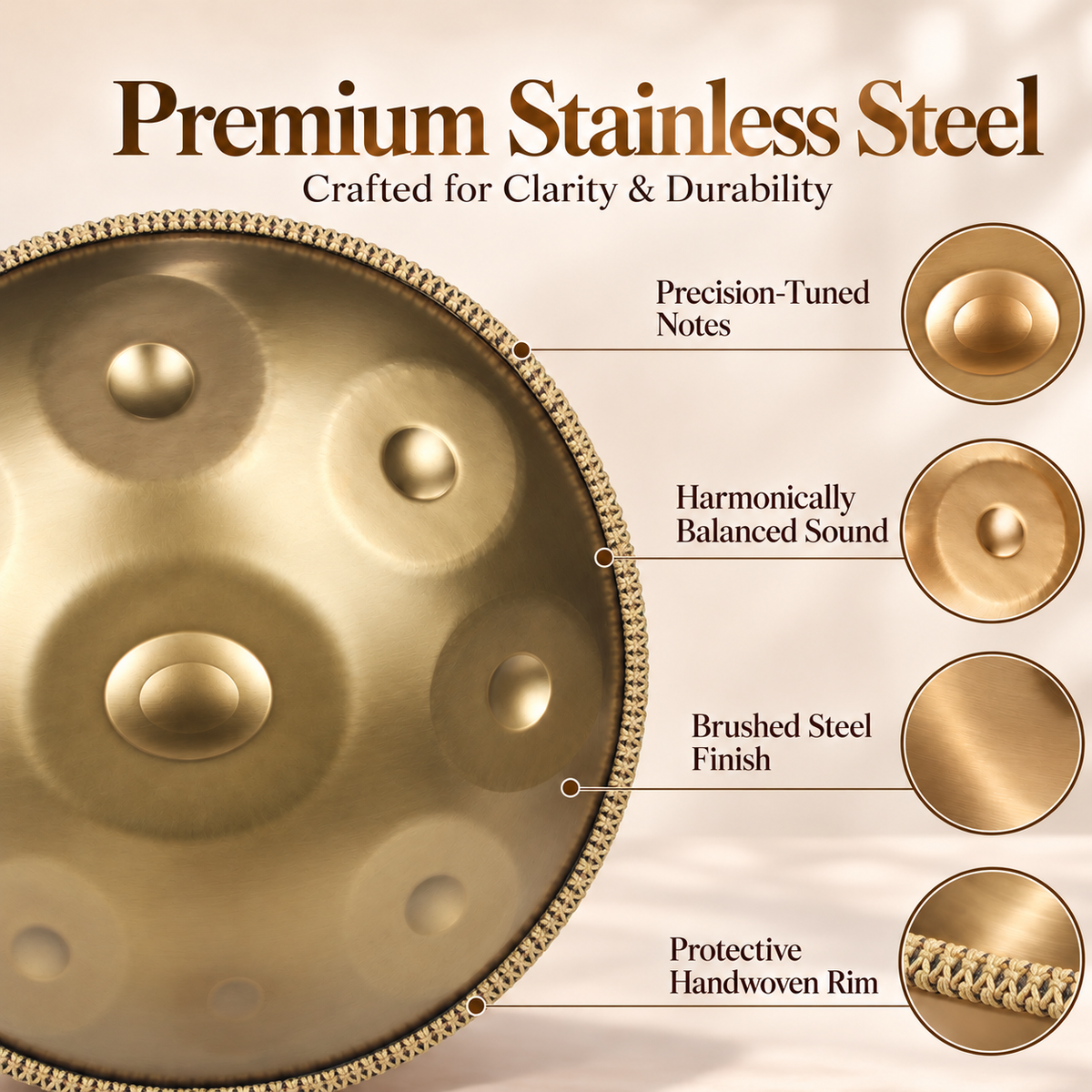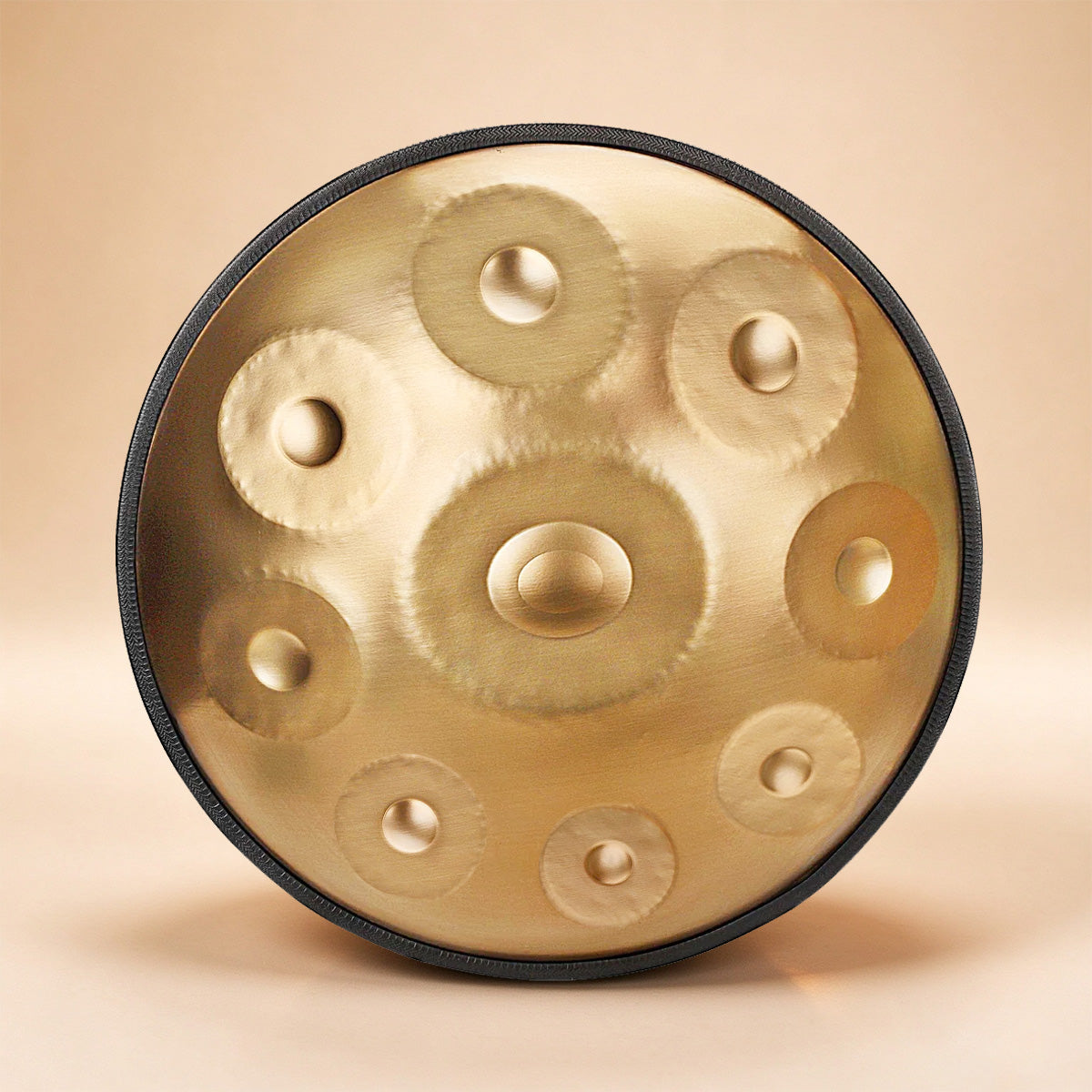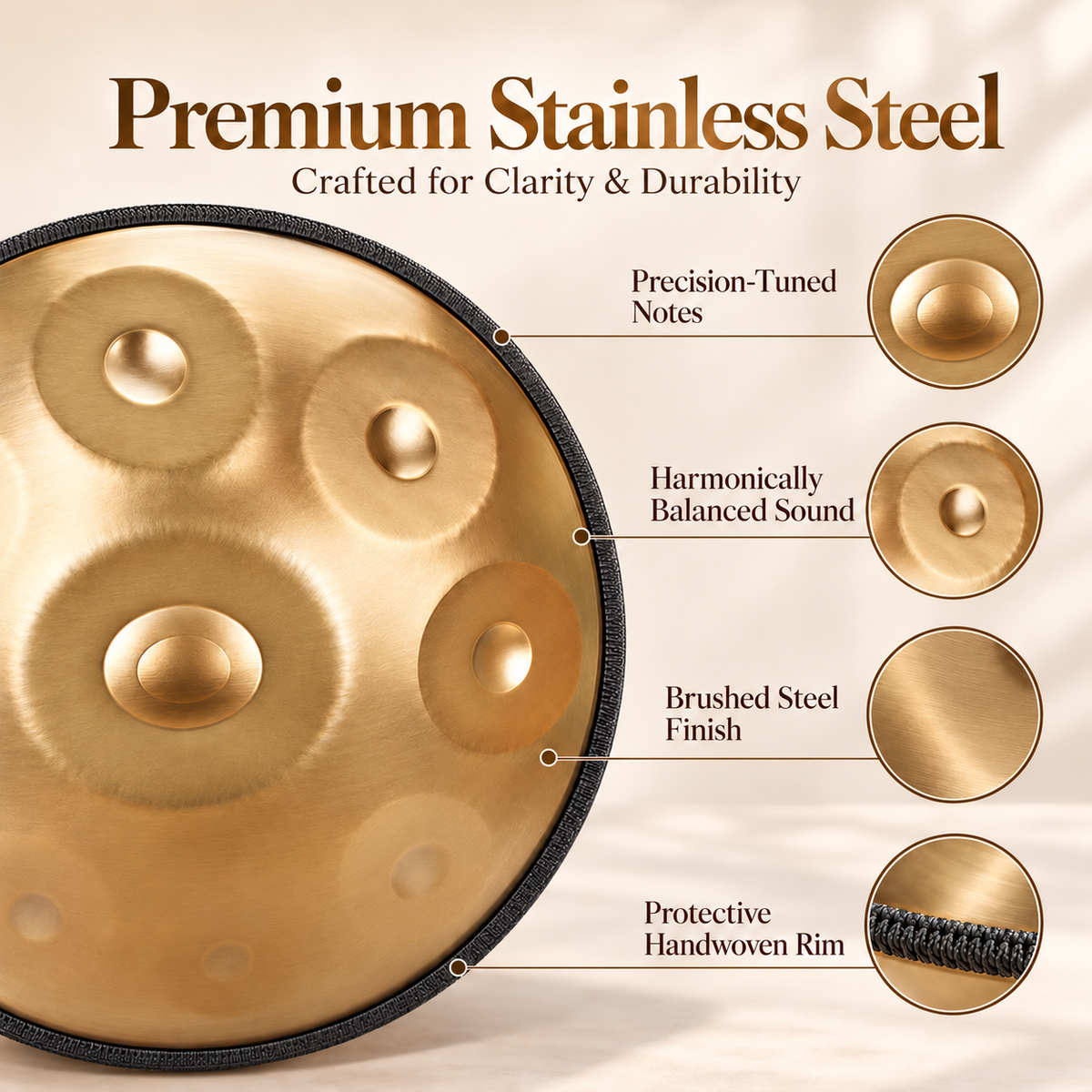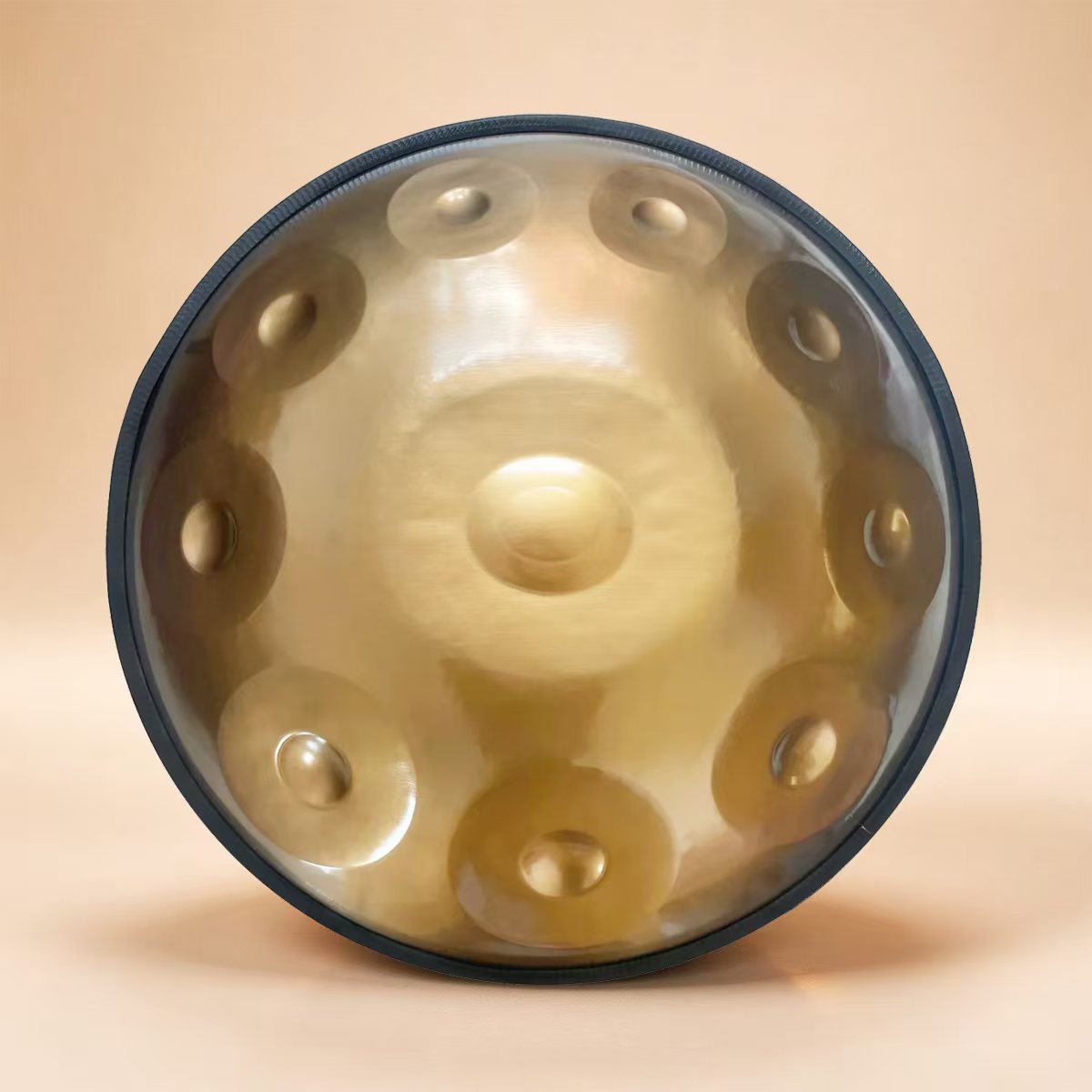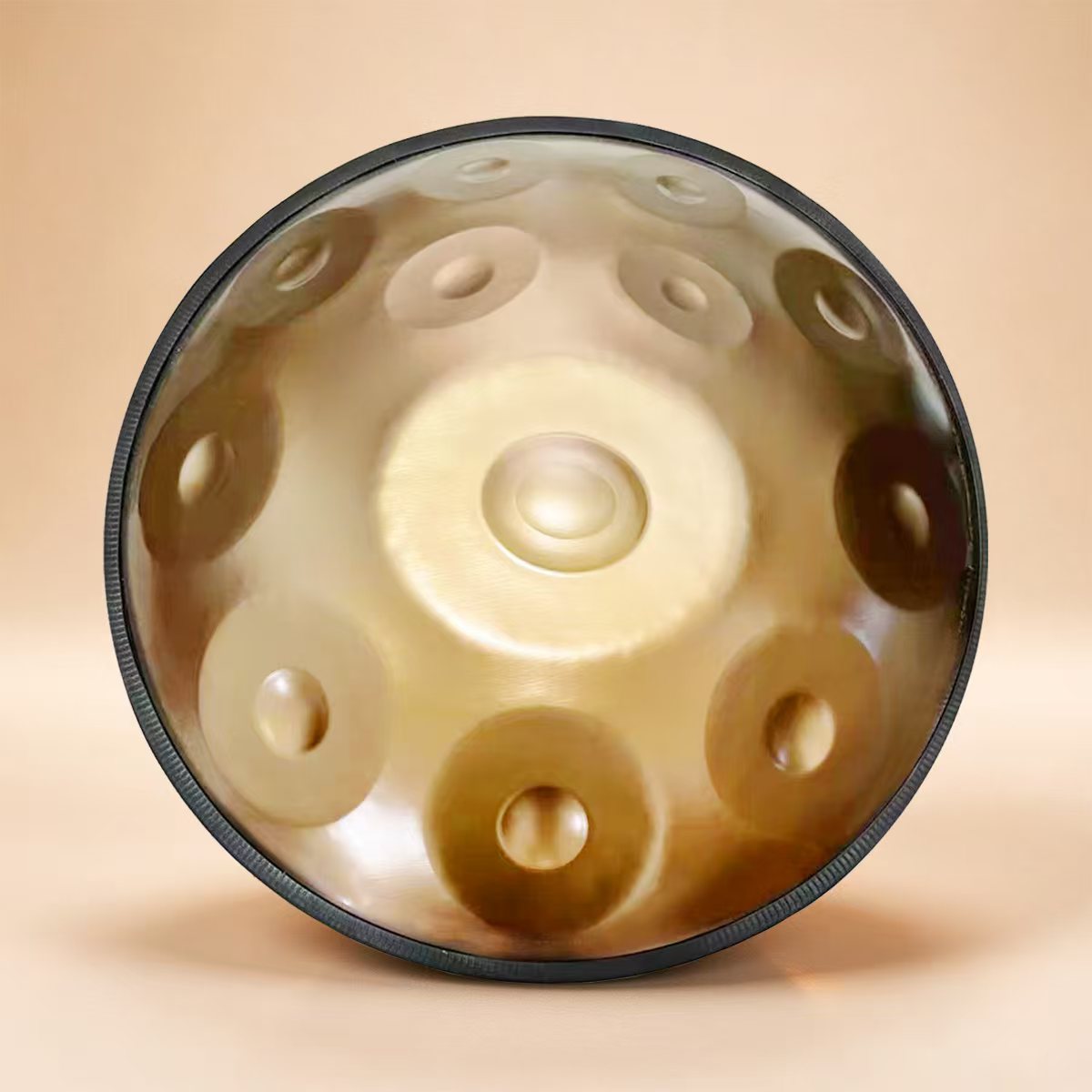
When you first hear the ethereal chime of a handpan, it is easy to imagine it was forged from stardust. These instruments, often referred to as "sounding pots," have captivated the global music community with their hauntingly beautiful resonance. However, the true magic of the handpan lies in the metallurgy. The question of what material are handpans made of is central to understanding why two seemingly identical drums can sound worlds apart. In 2026, the handpan industry has reached a pinnacle of material science. From the original nitrided steel to the modern brilliance of stainless and the prestigious Ember Steel, the choice of metal dictates everything from the sustain of a note to how often you need to apply protective oil.

Table of Contents
- 1. Introduction to Handpan Metallurgy
- 2. The Story of Cosmos Handpans
- 3. Nitrided Steel: The Percussive Traditionalist
- 4. Stainless Steel: The Modern Resonance
- 5. Ember Steel: The Premium Hybrid
- 6. Raw Steel and Painted Finishes
- 7. How the Manufacturing Process Impacts Material
- 8. Comparison Table: Choosing Your Material
- 9. Frequently Asked Questions (FAQs)
- 10. References and Resources
1. Introduction to Handpan Metallurgy
Understanding what material are handpans made of is the first step for any aspiring player or seasoned musician. At its core, a handpan is an idiophone—an instrument that creates sound through the vibration of its own body. Because the body is made of steel, the specific alloy and the way it is treated determine how those vibrations move through the metal. In 2026, the standard for a professional handpan drum instrument is defined by its ability to hold a stable tune while offering a rich harmonic profile.
The quest for the perfect material began in 2000 with the invention of the Hang by PANArt. Since then, makers have experimented with various grades of low-carbon steel, industrial alloys like DC04, and high-chromium stainless steels to find the ideal balance between sustain, rust resistance, and warmth.
The Story of Cosmos Handpans

In the heart of Colorado, USA, Cosmos Handpan shines as a guiding light of musical innovation and soulful resonance. We have more than a decade of expertise in creating handpans and tongue drums. Passion, precision, and an unwavering pursuit of musical excellence steep our musical journey.
Cosmos’ story begins with a shared love for music and a profound desire to create instruments that transcend sound. Our instruments and melody resonate deeply with the spirit of every musician. Our crafters pour their heart into each handpan and tongue drum with intricate workmanship and dedication. Our artisans infuse each instrument with ethereal melodies that stir the senses and uplift the spirit.
Cosmos Handpan commitment to excellence enriches your musical journey. We partner with well-known creators worldwide and ensure that every Cosmos Handpan and tongue drum creation speaks of its unparalleled quality and sonic brilliance. Before shipping, we inspect and test each instrument to guarantee an unmatched playing experience that inspires, captivates, and transports you to a realm of cosmic harmony.
Explore Our Professional Range:
Buy handpans and tongue drums for your expertise level – 9 to 17 notes for Handpans and 10 to 14 inches for tongue drums – enjoy your instrument and create a symphony that transcends worlds.
3. Nitrided Steel: The Percussive Traditionalist
When asking what material are handpans made of, nitrided steel is the most historical answer. Nitriding is a thermochemical process where nitrogen is diffused into the surface of a low-carbon steel shell (often DC04 steel). This creates a case-hardened layer that is significantly more resistant to rust than raw steel.
The sonic profile of nitrided steel is often described as "ceramic" or "earthy." Because the surface is hardened, the notes have a shorter sustain, usually between 3 and 5 seconds. This makes nitrided handpans ideal for fast, percussive playing styles. The notes remain distinct and do not "bleed" into each other, which is perfect for rhythmic compositions. However, they require regular oiling to prevent moisture from penetrating the protective layer over time.
4. Stainless Steel: The Modern Resonance
In recent years, stainless steel has become the gold standard for many players. Usually crafted from alloys like AISI 430, these handpans are naturally rust-resistant due to their high chromium content. If you are looking for a handpan for beginners that requires less maintenance, stainless steel is the superior choice.
The sound of stainless steel is "wet," bright, and singing. It offers an incredible sustain of 8 to 10 seconds, allowing for a dreamy, ambient quality. This makes it a favorite for sound healing, meditation, and slow, melodic exploration. The trade-off is that the long sustain can sometimes lead to "crosstalk," where playing one note causes others to ring out sympathetically. Professional makers like Cosmos Handpan use precise hammer-tuning to manage this resonance, ensuring a clean, crystalline output.
5. Ember Steel: The Premium Hybrid
Ember Steel is a specific type of high-performance stainless steel that has taken the industry by storm in 2025 and 2026. While technically a stainless alloy, Ember Steel undergoes specialized heat treatments (annealing) that give it a unique "ember" or golden-purple patina. It is widely considered one of the best answers to what material are handpans made of for professional-grade instruments.
Ember Steel combines the best of both worlds: it has the long, lush sustain of traditional stainless steel but with a "warmer" and more "controlled" timbre similar to nitrided steel. It is exceptionally stable, meaning it stays in tune longer even under varied striking forces. Many musicians feel that Ember Steel allows for a greater emotional range, as the metal is highly sensitive to the touch.
6. Raw Steel and Painted Finishes
Early or budget-friendly handpans were sometimes made of raw, untreated steel. These are rarely recommended today because they rust almost immediately upon contact with the oils from a player's hands. To combat this, some makers use painted or powder-coated finishes. While these provide excellent rust protection, they often dampen the sound, leading to a dull, metallic "thud" rather than a resonant ring. High-quality makers avoid thick paints, preferring the molecular bond of nitriding or the natural resistance of stainless alloys.
7. How the Manufacturing Process Impacts Material
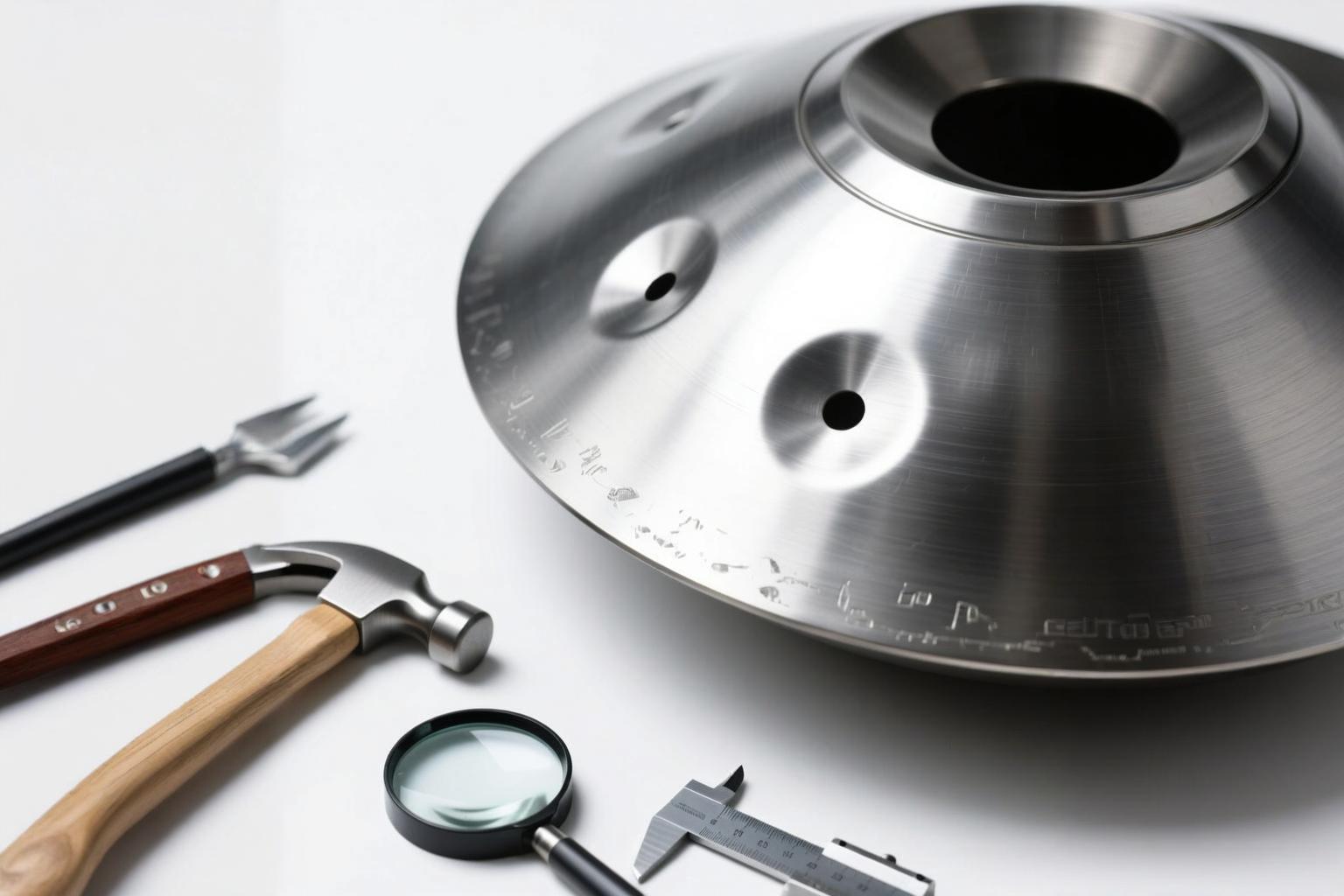
The material is only half the battle; how that material is shaped matters just as much. Most handpans start as flat sheets of steel about 1.0mm thick. In 2026, professional makers use three primary methods to form the shells:
- Deep Drawing: A hydraulic press pushes the steel into a perfect dome. This provides a very consistent thickness, which is vital for the stability of stainless steel.
- Hydroforming: Using water pressure to shape the dome, which minimizes the mechanical stress on the metal.
- Manual Sinking: The traditional method of hammering a flat sheet into a bowl. This is labor-intensive and creates a unique "voice" for every instrument.
After shaping, the material undergoes heat treatment. For nitrided steel, this involves a nitrogen-rich oven at temperatures reaching 500°C. For stainless, it involves annealing to relieve the internal stress caused by the press. This meticulous process ensures that when you buy a 12 notes handpan, every note field responds with the same harmonic integrity.
8. Comparison Table: Choosing Your Material
| Material Type | Sustain Duration | Maintenance Level | Sound Character | Best For |
|---|---|---|---|---|
| Nitrided Steel | Short (3-5s) | Medium (Monthly Oiling) | Earthy, Percussive, Ceramic | Fast rhythms, Outdoor busking |
| Stainless Steel | Long (8-12s) | Low (Wipe after play) | Bright, Singing, Ethereal | Meditation, Sound Healing |
| Ember Steel | Moderate-Long | Very Low | Warm, Balanced, Harmonic | Professional Performance |
| Raw/Painted Steel | Very Short | High / Poor Sound | Metallic, Dull | Not Recommended |
9. Frequently Asked Questions (FAQs)
Does the material affect how many notes a handpan can have?
Indirectly, yes. Stainless steel and Ember Steel are generally better for high note counts (like a 17 notes handpan) because their natural resonance helps the smaller, higher-pitched notes sing more clearly. Nitrided steel can become "tight" or "choked" if too many notes are squeezed onto the surface.
Which material is best for a beginner?
Stainless steel is usually the best handpan for beginners. It is much more forgiving regarding rust maintenance and its long sustain allows even a simple strike to sound magical. Nitrided steel requires a more precise technique to get a "full" sound.
Why is Ember Steel more expensive?
Ember Steel is a specialized alloy that is harder for the tuner to work with. It requires multiple rounds of heat treatment and hours of meticulous hammering to stabilize. The result is a superior instrument, but the labor involved increases the price.
Can a handpan rust even if it is stainless steel?
Yes. While stainless steel is highly resistant, it is not "stain-never." Exposure to salt air, high humidity, or acidic sweat can cause surface pitting. Always wipe your handpan with a dry microfiber cloth after every session.
10. References and Resources
- Handpan Herald (2025): "The Evolution of Handpan Alloys: From PANArt to 2026."
- Cosmos Handpan Academy: "The Science of Handpan Sounds: Why It Feels So Magical."
- ASTM International: "Standards for Stainless Steel in Musical Instrument Manufacturing."