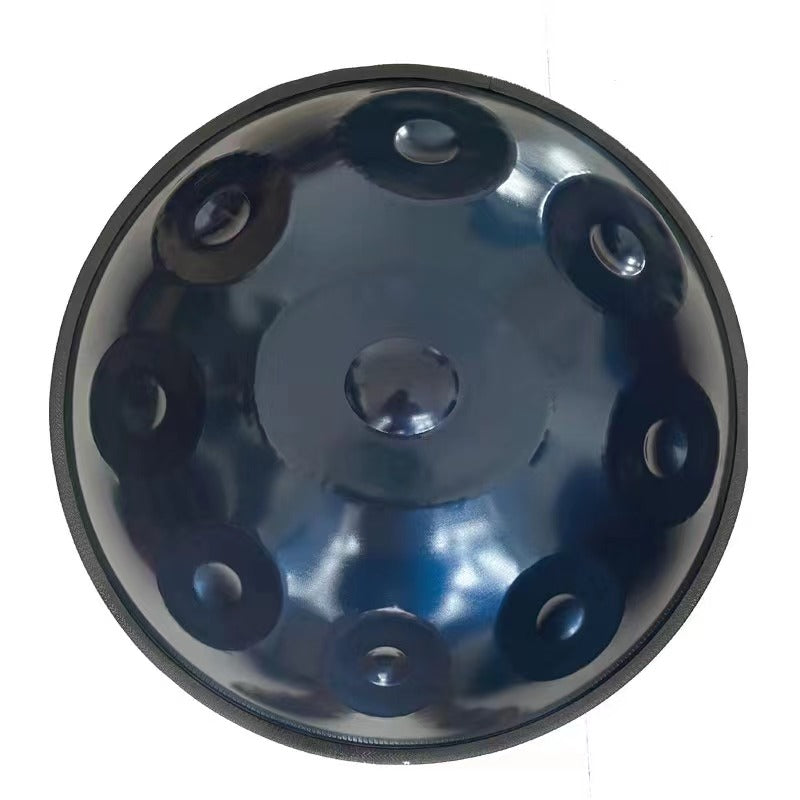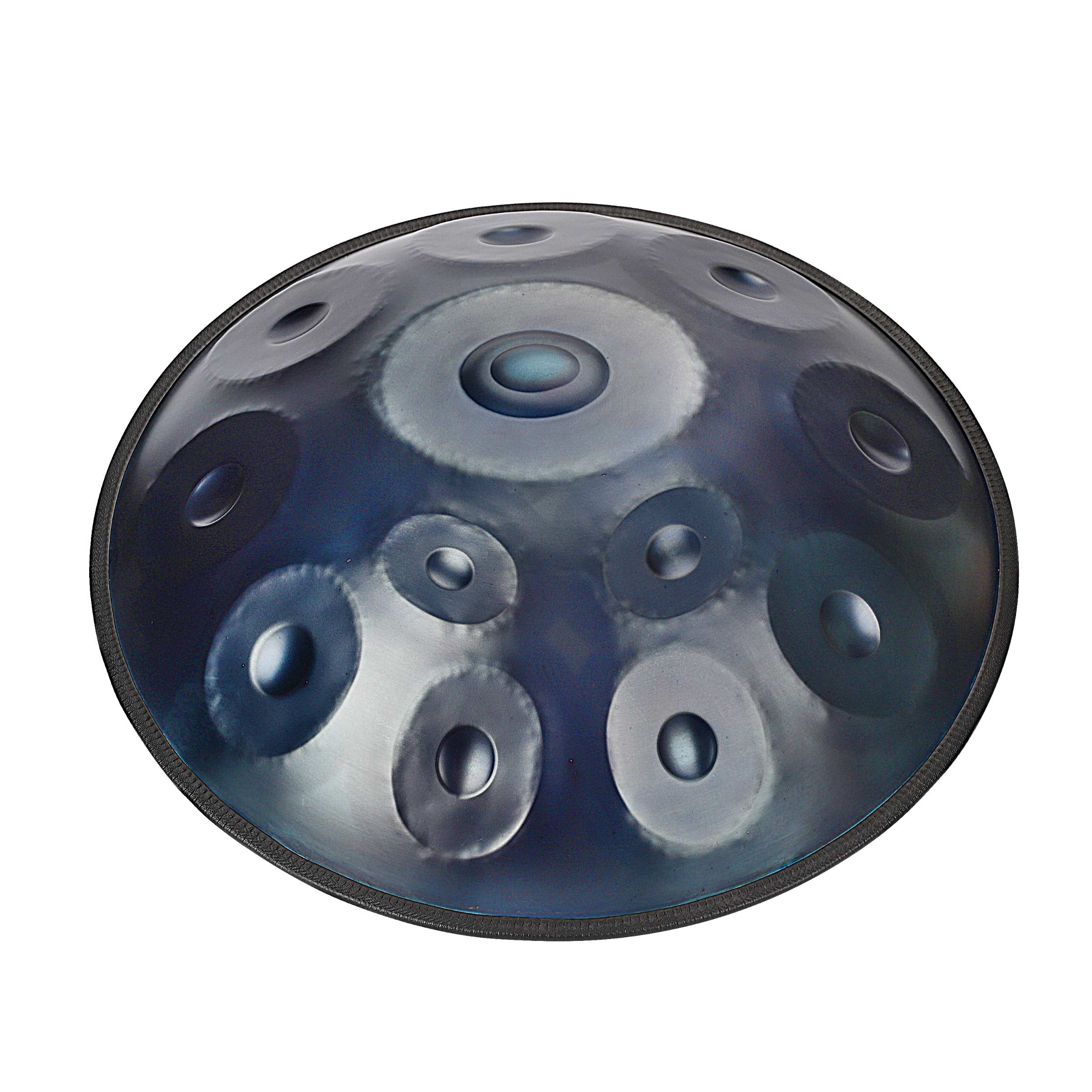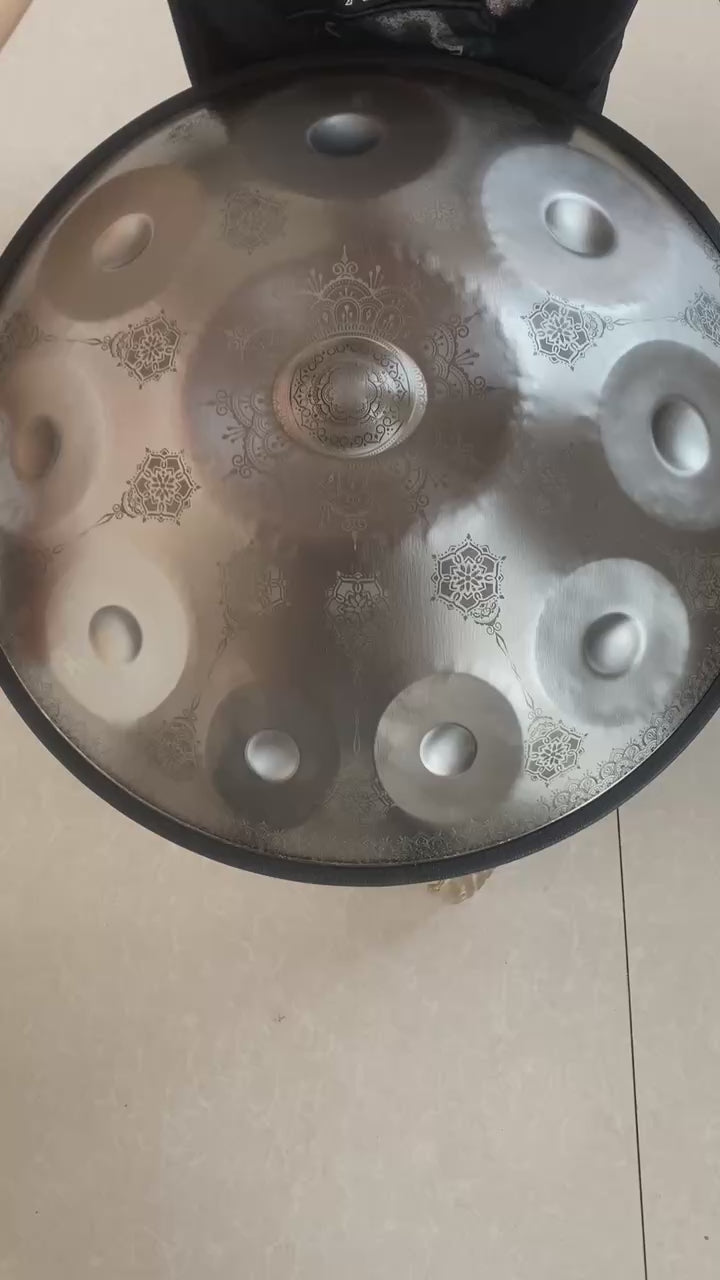
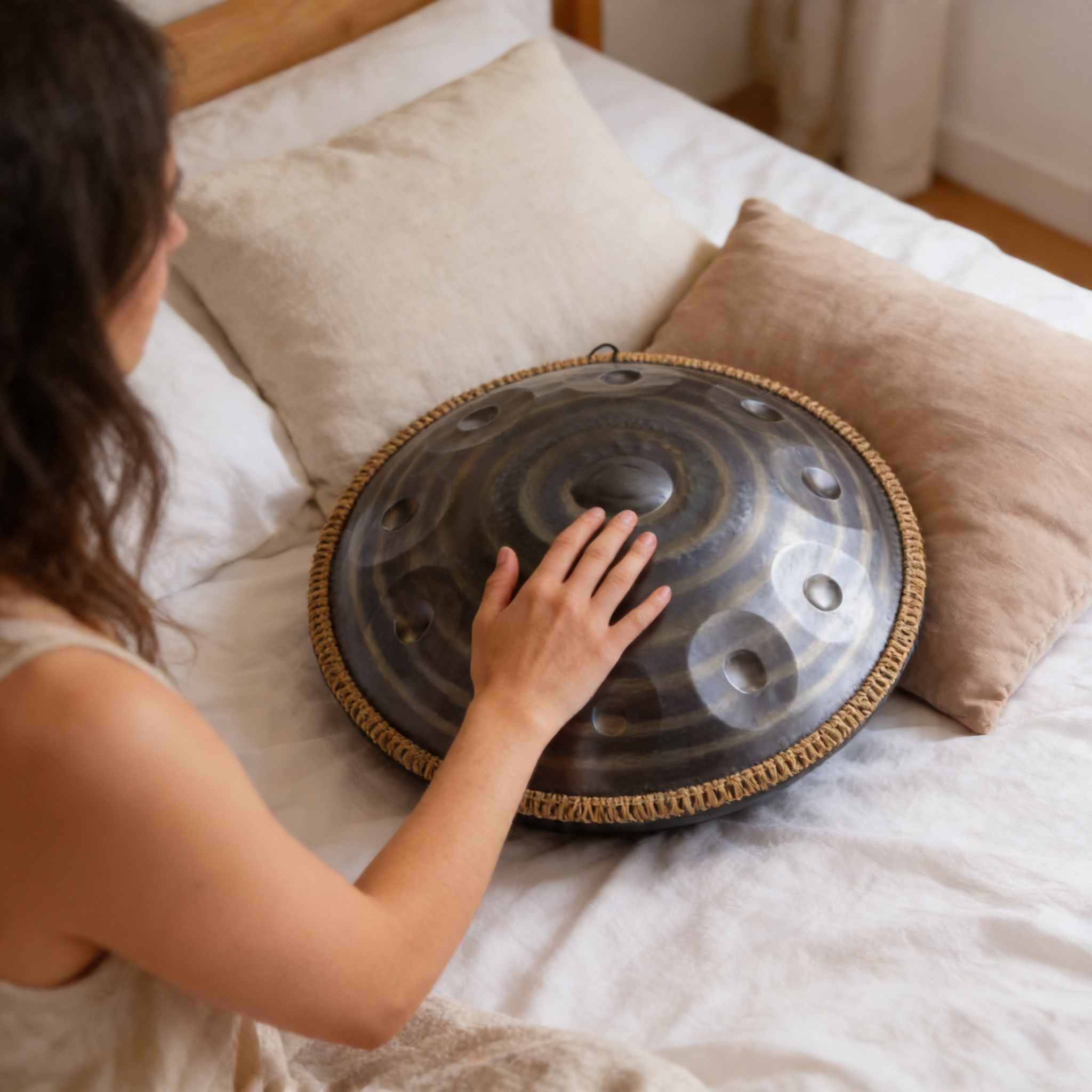
Let us confront an inconvenient reality within the modern steel percussion community: the traditional 22-inch architectural standard for handpans is a massive logistical nightmare for travelers, mobile sound therapists, and daily commuters. Carrying a massive, heavy steel shell through airports or hiking trails is exhausting, frequently leading to dropped instruments, disrupted tunings, and physical fatigue. However, scaling down a handpan is not a simple matter of shrinking the metal template. When physical surface area decreases, the laws of acoustic physics work directly against the instrument. Smaller air cavities choke lower fundamental frequencies, and tightly packed tone fields run a high risk of crosstalk, turning an expensive instrument into a dissonant tin can.

From our experience engineering elite percussive instruments at Cosmos Handpans, conquering this spatial limitation requires advanced metallurgical formulation, precision structural heat treatments, and meticulously designed acoustic geometry. The market in 2026 has finally matured, providing compact options that refuse to compromise tonal clarity for portable convenience. Finding the absolute Best small handpans demands looking beyond deceptive online product descriptions and focusing exclusively on spatial architecture, fundamental isolation, and material response. We recommend approaching compact instruments with highly critical ears, prioritizing pitch stability and isolation over mass-produced novelty templates.
In this comprehensive, expert-led breakdown, we will analyze the top 5 portable configurations currently transforming the acoustic landscape. We will detail how micro-geometry influences resonance, examine the physical properties of elite stainless and titanium alloys, and guide you toward the ideal layout for your portable lifestyle. True portability should empower your creative expression, not hold your music hostage.
Table of Contents
- 1. The Acoustic Physics of Micro-Geometry and Shell Containment
- 2. Detailed Review of the 5 Best Small Handpans & Portable Structural Alternatives
- 3. Metallurgical Science: Stainless Alloys versus Steel-Titanium
- 4. The Pedagogical and Neurological Impact of Portable Percussion
- 5. Definitive Performance Evaluation Matrix
- 6. Frequently Asked Questions (FAQs)
- 7. Authoritative Reference Materials
1. The Acoustic Physics of Micro-Geometry and Shell Containment
To understand what separates the absolute Best small handpans from cheap, mass-market clones, one must dive deep into the mechanics of Helmholtz resonance. A standard-sized handpan relies on a specific internal volume of air to amplify the lowest note on the instrument—the central Ding. When you shrink the total outer diameter down to 18 or 20 inches, the internal volume drops exponentially. If a tuner simply stamps a standard D3 scale onto a compressed shell, the air inside will fail to reinforce that low D note. This results in a dead, percussive click completely lacking in bass presence.
Furthermore, space management on the upper shell is a relentless battle against physics. Every tone field must house three distinct frequencies tuned to absolute geometric perfection: the fundamental tone, an exact octave ratio across the longitudinal axis, and a compound minor or major fifth across the transverse axis. If these note borders are placed too close to one another due to an uncalibrated small shell, the energy from a single finger strike leaks across the metal. This mechanical leakage forces neighboring notes to ring out of turn. This phenomenon, known as crosstalk, turns complex chord progressions into a muddy, chaotic sound profile. The elite small configurations of 2026 overcome this problem by either shifting the overall pitch registers higher (such as building in F Minor or G Minor) or transitioning toward structured, thick-walled alloys that constrain internal wave dispersion.
For those taking their first steps into this demanding world, we advise mapping your expectations via a detailed handpan for beginners guide before buying an experimental format. Knowing how structural scaling impacts standard tuning architectures ensures you buy a portable instrument capable of actual artistic utility.
2. Detailed Review of the 5 Best Small Handpans & Portable Structural Alternatives
We have meticulously evaluated the current global inventory, testing structural stability under extreme temperatures, drop resistance, and acoustic clarity. These 5 portable solutions stand out as superior options for traveling musicians.
1. Cosmos Steel Tongue Drum (10 Inch 8 Notes Tank Drum)

For musicians seeking an ultra-compact, virtually indestructible portable instrument, the Cosmos Steel Tongue Drum 10 Inch 8 Notes is an absolute triumph. When a true handpan shell is scaled down past a certain threshold, its delicate tuning stability becomes highly fragile. This 10-inch tank drum completely bypasses that structural vulnerability by utilizing a high-density Steel-Titanium alloy built to resist corrosion and structural distortion.
Subjected to an extensive external heat treatment process, this instrument provides clear pitch containment and an elite level of durability. It is perfect for outdoor entertainment, family environments, yoga training, and high-frequency meditation sessions. While traditional handpans are highly sensitive to aggressive play or sharp temperature drops, this 10-inch powerhouse retains its tuning profile perfectly. If space efficiency is your primary focus, it represents one of the Best small handpans and portable alternative percussion instruments on the global market today.
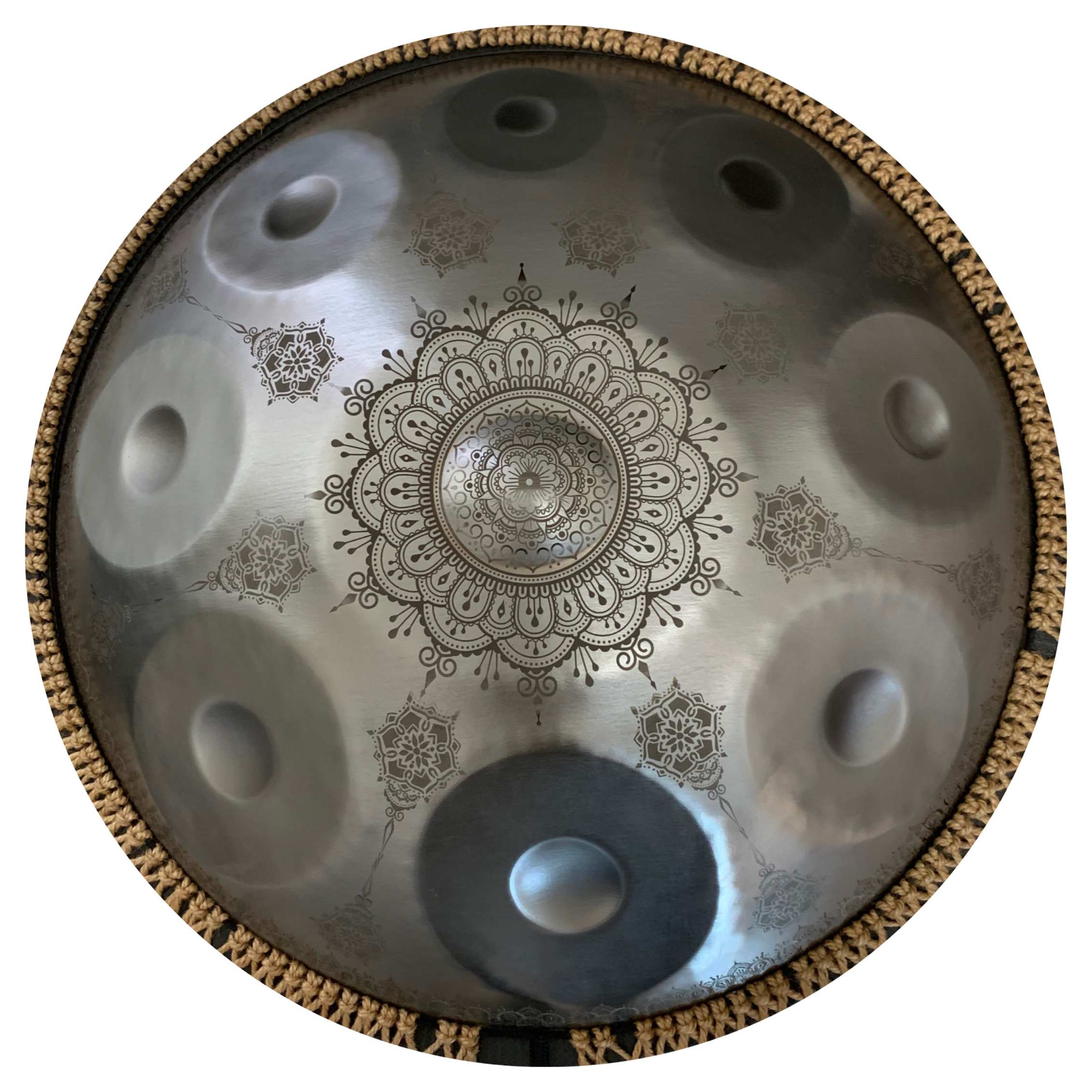
2. Cosmos Handpan - Exquisite 9 Notes in D Minor (Golden Elegance)
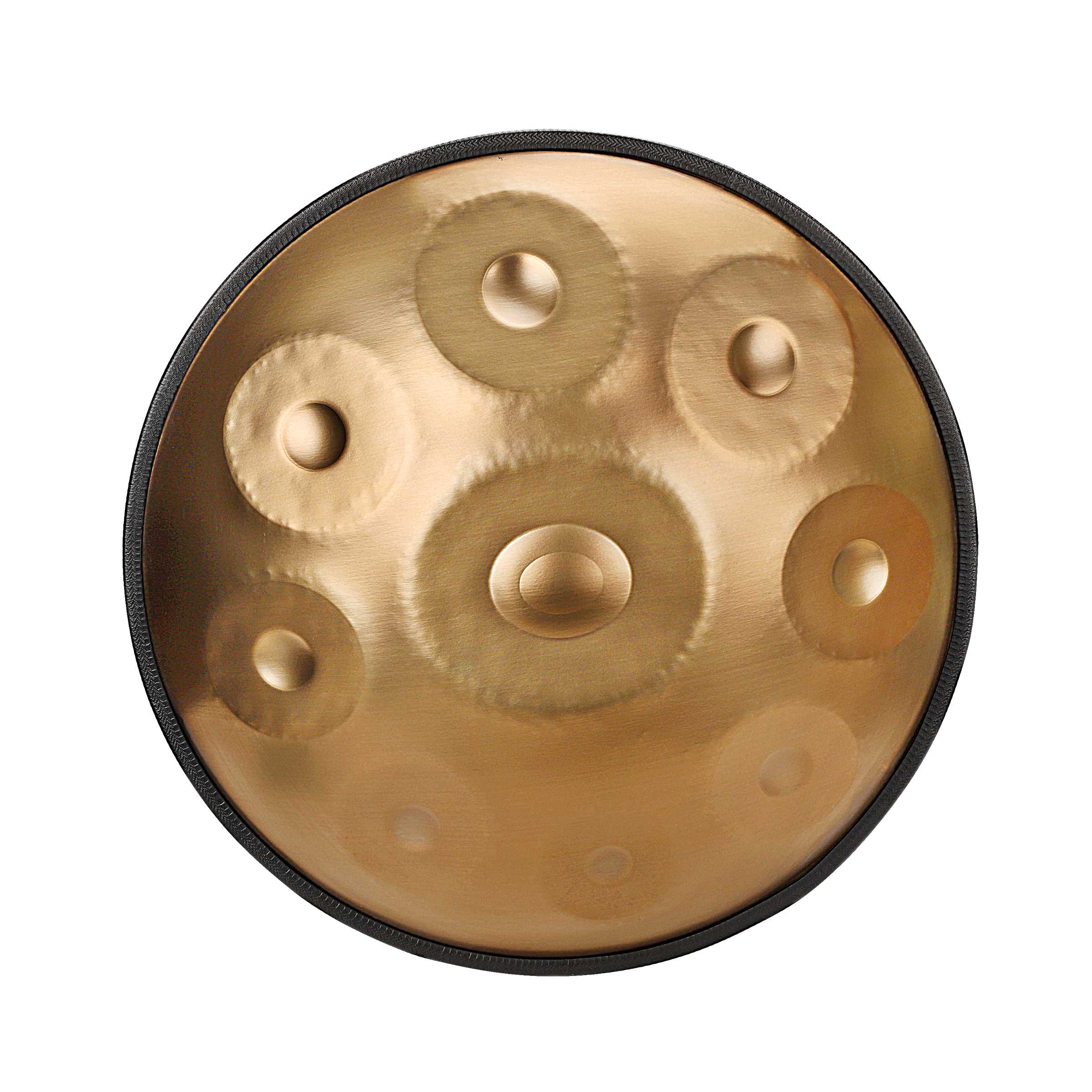
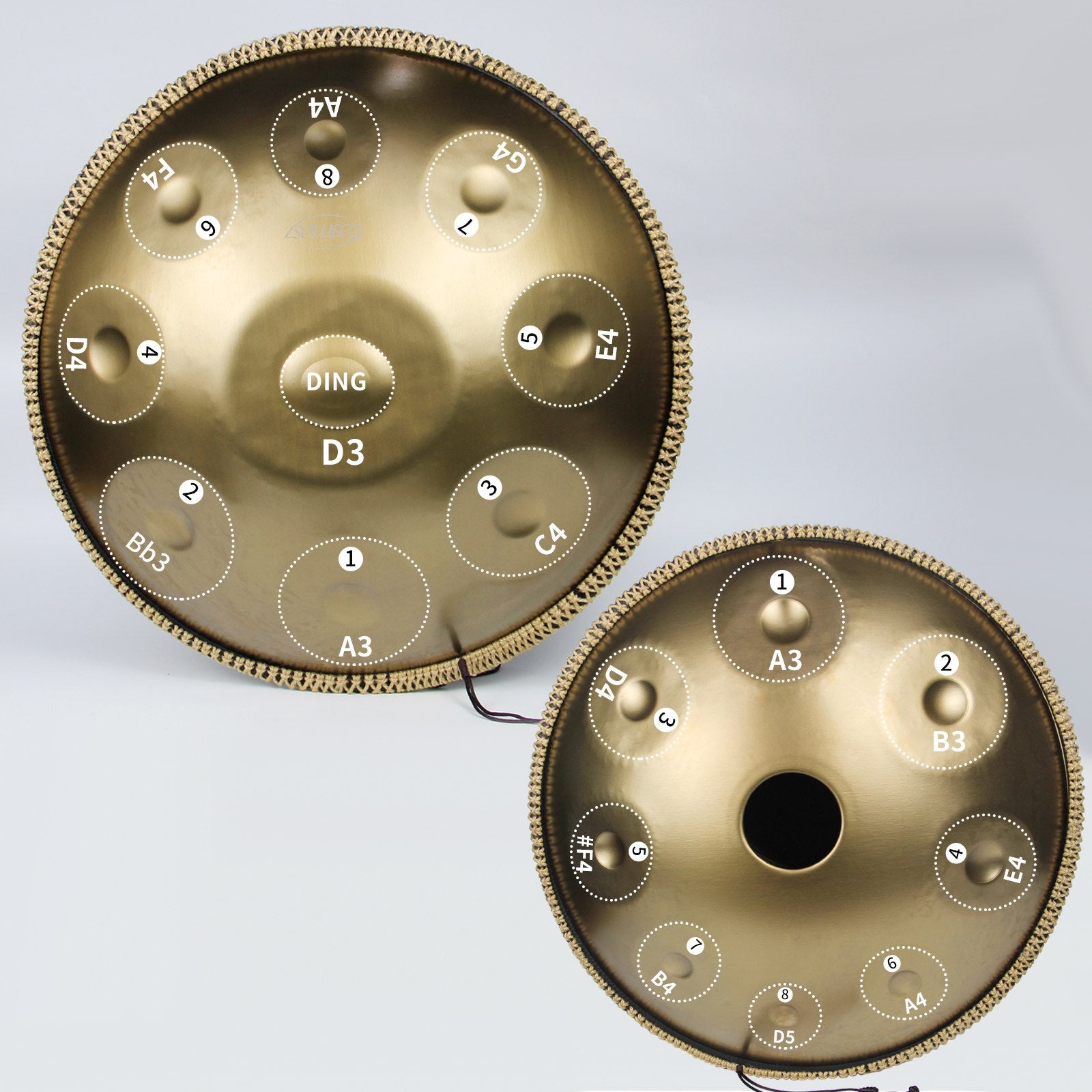
While this instrument features a classical 22-inch diameter and a height of 10.2 inches, we mandate its inclusion as the structural benchmark against which all small formats must be measured. The Pure Golden 9 Notes D minor model (D3/A3 Bb3 C4 D4 E4 F4 G4 A4) is a masterclass in modern physical tuning. Constructed from high-hardness stainless steel with a thickness of 1.07 mm, it undergoes a complex quenching process to achieve its premium finish and a significant sustain effect.
This model is highly beginner-friendly and delivers a deep, enveloping acoustic profile that scaled-down travel pans fight desperately to copy. From our experience, serious travelers often choose this highly stable, professional setup inside a reinforced flight case rather than settling for unproven micro-shells. It provides a reliable benchmark for evaluating the sustain and depth of compressed travel models.
3. The 20-Inch European Nitrided Travel Pan (F Minor Scale)
This configuration represents a highly successful compromise in true small handpan design. By dropping the outer rim diameter down to exactly 20 inches, tuners have removed critical bulk while keeping the traditional structural layout intact. To prevent the choked bass responses common in small spaces, the scale is shifted up to F Minor. Nitrided steel provides a dry, highly percussive touch with rapid note decay, ensuring that fast rhythms remain beautifully defined and clean. It is highly resistant to surface scratches and is an excellent selection for street performers and nomadic percussionists.
4. The 18-Inch Stainless Ultra-Pocket Pan (Apx. 45cm)
This is the smallest true handpan architecture capable of holding professional-grade multi-harmonic isolation. Measuring a mere 18 inches across, this micro-pan relies on ultra-thick 1.2mm stainless steel to counteract the loss of shell volume. The heavier metal slows down structural wave travel, allowing the instrument to mimic the long, dreamlike sustain of a much larger model. However, players must adapt to a highly compressed physical layout. The tone fields are small and tightly packed, requiring perfect finger accuracy to avoid striking neighboring notes during fast tempos.
5. The High-Frequency 19-Inch Titanium Hybrid
Titanium alloys give portable handpans a distinctive sonic presence. A 19-inch titanium model offers a crystal-clear, bright high-end response that cuts through ambient noise with ease. Titanium’s excellent strength-to-weight ratio allows tuners to thin out the shell borders, dropping total weight while preserving impressive structural stability. Tuned to uplifting major scales like C Major or A Akebono, it delivers an active, shimmering resonance. The main downside is that titanium can be overly bright, requiring a precise, soft playing technique to avoid harsh overtones.
3. Metallurgical Science: Stainless Alloys versus Steel-Titanium
When selecting your ideal instrument from the Best small handpans or high-performance compact alternatives, your choice of metal alloy determines everything about the instrument's longevity and sonic personality. This choice cannot be made based on appearance alone.
Stainless steel options, particularly those built around a 1.07 mm to 1.2 mm thickness framework, are celebrated for their incredible sustain and warm, deep bass notes. The metal is naturally rust-resistant, making it excellent for players living in humid climates or coastal cities. However, because stainless steel is softer and more flexible, micro-sized shells are highly sensitive to physical impacts and can drift out of tune if exposed to high heat or direct sunlight for extended periods.
Conversely, advanced combinations like the Steel-Titanium alloys used in high-quality tongue drums offer extreme hardness and structural stability. The inclusion of titanium locks the metallic crystalline framework in place, making it impossible for environmental factors to distort the tuning. It creates a well-controlled, focused acoustic profile where each note decay is tightly managed. This makes it an ideal choice for fast rhythmic play, outdoor environments, and therapeutic settings where reliability is absolutely mandatory.
For individuals who love modern electronic production, these acoustic profiles serve as the foundation for modern electronic sampling. If you want to expand your technical options, we recommend checking out our comprehensive guide to digital handpan instruments. This resource explains how electronic sound synthesis models can capture or mimic these unique metallic signatures for studio production workflows.
4. The Pedagogical and Neurological Impact of Portable Percussion
The practice of sitting with a compact resonant instrument has profound neurological implications. Medical research confirms that the pure sine-wave overtones produced by tuned steel instruments instantly alter human brainwave states. Striking these precise frequencies encourages a rapid transition from high-stress Beta waves down into calming Alpha and Theta wave states. This shift lowers cortisol production, reduces blood pressure, and promotes deep relaxation.
From our experience, compact instruments accelerate this cognitive shift by removing structural barriers to play. When an instrument is light enough to be held on a lap anywhere, it integrates naturally into daily life. To understand how these sonic frequencies interact with human biology, read our detailed white paper on how handpan music benefits neurological health. Additionally, sound therapists regularly use these compact tools to help patients overcome emotional blocks. You can explore real-world clinical applications in our analysis of handpan therapy benefits.
To support your ongoing personal practice or professional therapeutic sessions, we highly recommend exposing your ears to diverse acoustic styles. You can discover masterfully arranged compositions through our curated handpan music tracks. Studying the arrangements found on a classic handpan songs list will teach you how to translate famous melodies onto a simplified, portable layout. If you want to build a local, offline audio library for meditation or therapy sessions, you can download handpan music directly via verified high-fidelity platforms. Modeling your technique after the world's best handpan players will unlock the full potential of your compact instrument, proving that smaller gear can deliver massive artistic value.
5. Definitive Performance Evaluation Matrix
To streamline your tracking and procurement process, our engineering team has summarized the core features of these compact setups into an easy-to-read reference table.
| Instrument Profile | Diameter Size | Alloy Composition | Tonal Profile & Sustain | Durability Rating |
|---|---|---|---|---|
| Cosmos 10-Inch Drum | 10 Inches | Steel-Titanium Alloy | Focused, clear notes; controlled decay | Exceptional / Weather-Proof |
| 20-Inch Nitrided Pan | 20 Inches | Nitrided Carbon Steel | Dry, crisp, and highly percussive | High / Scratch-Resistant |
| 18-Inch Pocket Pan | 18 Inches | 1.2mm Thick Stainless | Dreamy, long, singing sustain | Moderate / Requires Care |
| 19-Inch Titanium Hybrid | 19 Inches | Titanium-Steel Blend | Bright, singing high frequencies | High / Great Structural Memory |
| Cosmos Golden Elegance | 22 Inches | 1.07mm Stainless Steel | Deep, multi-layered resonance | Professional Standard / Keep Cased |
6. Frequently Asked Questions (FAQs)
Do the best small handpans lose their tuning faster than larger models?
From our experience, true handpans built on micro-shells (18 inches or smaller) can experience faster tuning drift if they are manufactured from low-grade carbon steel. Because the physical tension across a compressed shell is much higher, temperature changes cause rapid metal movement. However, if you purchase an option engineered from thick stainless steel or choose a structured Steel-Titanium tongue drum model, the tuning remains exceptionally stable and secure.
Can I use standard protective bags for a compact handpan?
We strongly advise against using oversized bags. If a Perspective 18-inch travel pan is placed inside a standard 22-inch soft case, the instrument will shift around constantly during transit. This movement can put uneven mechanical stress on the outer note rims, eventually knocking the notes flat. Always buy a custom-fit hard case or an EVA molded shell bag designed specifically for your instrument's exact diameter.
What scales work best for scaled-down handpan shells?
Avoid low scales like B2 Ethereal or C# Minor on small shells; they will sound choked and dead. We recommend selecting scales centered in higher, brighter registers, such as F Minor, G Minor, or A Major. These frequencies harmonize perfectly with smaller air cavities, delivering brilliant volume and clear projection.
7. Authoritative Reference Materials
To verify the acoustic engineering principles and therapeutic data outlined in this document, we advise reviewing these authoritative resources:
- Acoustical Society of America (ASA): The leading scientific organization investigating the physical mechanics of percussion instruments and musical acoustics.
- Percussive Arts Society (PAS): The premier global authority establishing educational and historical standards for acoustic steel percussion instruments.